To reach Burano by public waterbus, take ACTV line 12 from Fondamente Nove; for Murano, check line 3 from Piazzale Roma or Ferrovia when operating, or lines 4.1 and 4.2. The AVM Venezia Official App is the most direct source for route planning, timetables, service updates, and tickets. This practical 2026 guide explains the routes, the official prices, and why a vaporetto is different from a private water taxi or a gondola.
What the vaporetto actually is
A vaporetto is a public waterbus, not a private sightseeing boat. ACTV operates scheduled services on the Grand Canal, around the historic center, and to islands in the lagoon. Passengers share the boat with residents, workers, commuters, and other visitors. Like an urban bus, it follows a route and serves designated stops rather than collecting each traveler at a hotel.
That simple distinction explains most practical decisions. If you want affordable scheduled transport, use ACTV. If you need a private departure from a suitable pier, investigate a licensed water taxi. If you want a traditional short romantic ride, a gondola is a different experience altogether. Confusing these services can produce expensive mistakes, especially when arriving with luggage or planning an island excursion.
Start with the destination, not the line number
Venice’s network makes more sense when you identify the precise stop you need before selecting a line. The Grand Canal has several stops, while the northern lagoon routes depart from places that may be a walk away from your hotel. A route that looks convenient on a schematic map can require a transfer or a detour in real life.
Use the official ACTV route map and journey planner to identify the origin, destination, direction, and departure time. Then check the actual electronic display or posted notice at the pontoon. This two-stage method is more reliable than memorizing a single number from a travel blog, because service patterns and boarding arrangements can change.
Line 1: the Grand Canal experience
ACTV line 1 is the familiar stopping service along the Grand Canal. It connects major transport and sightseeing areas while serving many intermediate landings. For a first-time visitor, it can be a memorable introduction to the city because the route passes historic palaces and bridges that are difficult to appreciate from the streets.
Its usefulness comes with a trade-off: a stopping service is not always the quickest way between two distant points. If you are trying to reach a train, timed museum entry, or island connection, compare alternatives before choosing line 1 simply because it is famous. When boarding, remain aware that commuters may be using the same vessel for ordinary journeys.
Line 2 and the faster-service idea
Line 2 serves important Grand Canal and lagoon-side connections, generally with a different stopping pattern from line 1. Travelers often use it when they want to cover a longer section more efficiently. However, route variants and operating patterns must be checked on the current official timetable.
Do not assume that a number alone guarantees a particular travel time or that every line 2 departure serves every stop you recognize. The destination displayed on the vessel matters. If your stop is not on that departure’s route, you may need a different boat or a short walk. Checking the direction before boarding prevents a common and avoidable mistake.
Lines 4.1 and 4.2 around the city
Lines 4.1 and 4.2 are circular services that connect parts of the historic center with Murano. Their paired numbers identify different directions around the route. They are especially useful when your starting point is closer to an outer waterfront stop than to the Grand Canal.
The practical trap is assuming that the two numbers are interchangeable. They may eventually connect similar areas but take very different amounts of time depending on direction. Read the stops and destination on the departure board, not merely the route family. If you are heading to Murano, check which island landing best suits your plans rather than getting off at the first familiar name.
Lines 5.1 and 5.2
The 5.1 and 5.2 services provide another circular set of connections around Venice, including important stops such as Fondamente Nove and Lido. They can be useful for reaching a transfer point without navigating the busiest Grand Canal route.
They are not the same as the airport bus sometimes referred to as line 5. Venice transport numbers appear across different modes, so a route number without its operator and vehicle type can be misleading. Confirm that you are looking at the waterbus timetable, and check the direction of travel before joining the boarding queue.
Line 3 to Murano
ACTV line 3 is a useful direct connection between Piazzale Roma, Ferrovia, and Murano when it is operating. It can save a transfer for travelers starting at the road terminal or Santa Lucia railway station. The official timetable lists this corridor, although its frequency and operating days should always be checked.
Do not build a tight itinerary around the assumption that line 3 runs at all times. Service patterns may vary, and a traveler who misses a departure could face a meaningful wait. If you have a glass workshop appointment, plan with the actual timetable and keep an alternative route in mind.
Line 12 to Burano
For most visitors starting in central Venice, the essential route to Burano is ACTV line 12 from Fondamente Nove. The official route runs via Murano and Mazzorbo toward Burano and onward to lagoon destinations including Treporti and Punta Sabbioni. The island journey is longer than a quick crossing of the Grand Canal.
The key is reaching Fondamente Nove efficiently and then boarding in the correct direction. The line can be busy, particularly when many visitors choose the same late-morning departure. A full boat or a missed connection may change your day. Treat the published departure time as a planning tool, not a promise that every passenger will find immediate space.
Fondamente Nove as a lagoon gateway
Fondamente Nove is a long northern waterfront with several ACTV boarding points. It is one of the most important departure areas for the northern lagoon. Travelers heading to Burano should find the correct line 12 pontoon rather than assuming every nearby floating stop serves the same route.
This is a local logistics detail that many generic guides overlook. Arriving at the waterfront is only half the task. You still need to identify the letter or exact boarding position, check the departure display, and join the appropriate queue. Allow a margin for that last step, especially when traveling with children or meeting a timed activity on an island.
How to reach Murano from the station
If you arrive at Venezia Santa Lucia, check the current line 3 timetable for a direct service toward Murano. If it is not convenient, the circular services can provide alternatives depending on your destination and the direction of travel. Murano has several stops, so the best one depends on whether you are visiting a particular glass studio, museum, or neighborhood.
A traveler carrying luggage should avoid assuming that a route to Murano is as simple as one uninterrupted cruise. You may need to walk between platforms or wait for a less crowded boat. Ask your accommodation for the exact stop name and landing instructions. On Murano, a short distance on a map may still involve crossing a bridge.
How to reach Murano from San Marco
From the St. Mark’s area, consult the current ACTV map for a suitable connection toward Murano, often involving an outer-route service rather than the slowest Grand Canal option. Depending on your starting location, walking to a better departure stop may be quicker than riding around the entire historic center.
The fastest-looking route is not always the easiest for every traveler. If you have reduced mobility, children, or heavy bags, a route with fewer changes may be preferable even if it takes longer. Compare total door-to-door time rather than just the boat’s advertised travel duration.
How to reach Burano from the station
Travelers starting at Santa Lucia generally need to reach the northern lagoon connection before continuing to Burano. One practical approach is to use a suitable ACTV service to Fondamente Nove and transfer to line 12. Depending on operating schedules, another route may connect through Murano Faro.
Check the current journey planner rather than assuming the same transfer will always be optimal. A change that looks simple on paper may involve a wait, a crowded platform, or a different pontoon. Because Burano is farther away, a missed departure can have more impact than a missed short Grand Canal ride.
Murano and Burano in one day
A combined visit is possible by public transport, but the order matters. Starting with Murano can make sense if you have a morning glass demonstration or workshop appointment, followed by a journey to Burano. Alternatively, travelers who prioritize Burano may prefer going there first and visiting Murano on the return.
The important question is not whether the islands fit on a map. It is how much time you actually want to spend in each place. Add walking, waiting, and boarding time to the timetable. A hurried day that consists mostly of queues and transfers may be less rewarding than a relaxed visit to one island.
Murano Faro and the transfer decision
Murano Faro is an important stop because line 12 serves it on the route toward Burano. If you are exploring Murano first, check whether Faro is the most convenient departure point for your onward trip. The correct answer depends on where you are on the island and the current service pattern.
Do not assume that every Murano stop has a direct boat to Burano. This is one of the most useful distinctions to learn before leaving a glass studio. Identify your onward departure stop in advance and save its location. A little planning can prevent a long detour across Murano when your next boat is approaching.
Mazzorbo is not the same as Burano
Line 12 also serves Mazzorbo, a quieter island connected to Burano by a pedestrian bridge. Travelers interested in a slower lagoon experience may enjoy approaching Burano from Mazzorbo, provided the current stop pattern and their mobility needs make it practical.
The bridge connection does not make the islands interchangeable for every itinerary. If you have a specific restaurant reservation or limited walking ability, confirm which stop best serves your destination. Choosing Mazzorbo deliberately can be rewarding; choosing it accidentally because the names sounded familiar can create unnecessary confusion.
Torcello requires another connection
Torcello is a separate island and typically requires a connection from Burano, commonly using ACTV line 9 when it is operating. The official network map identifies the Burano–Torcello service. Visitors should verify the actual timetable and the return departure before setting out.
This matters because Torcello is quieter and has fewer spontaneous alternatives than central Venice. Do not arrive assuming you can hail a public boat whenever you wish. Plan the return leg first, then decide how much time to spend exploring the island. A memorable visit should not depend on racing back to the pontoon.
How long the island day really takes
The journey to Burano is substantially longer than a short ride to Murano, and actual door-to-door time includes reaching the departure point, waiting, boarding, and walking after arrival. Many travel articles quote only the time spent on the boat, which can make an itinerary seem much easier than it is.
For a realistic day, build in a generous buffer. The line 12 ride from Fondamente Nove to Burano is often around forty minutes, but you should consult the timetable for your departure. When returning, account for the walk back to the stop and the possibility of queues. This is particularly important if you have an evening train or airport transfer.
Reading the ACTV stop sign
Every vaporetto stop has a name, and larger boarding areas can have multiple pontoons marked with letters. Check the sign at the actual landing stage for the line, direction, and stops served. A boat approaching from the right direction may still be on a different service than the one you need.
A simple habit saves time: compare the route shown on your phone with the physical sign, then verify the destination displayed on the arriving boat. If something does not match, ask an ACTV staff member before boarding. It is easier to resolve uncertainty on the pier than after traveling twenty minutes in the wrong direction.
The official ACTV app
The AVM Venezia Official App is the most directly relevant app for public transport in Venice. ACTV says it supports journey planning, timetables, service news, ticket purchasing, and ticket activation. It is available for major smartphone platforms, with certain ticketing functions requiring account registration.
Its main advantage is that it belongs to the transport operator’s own system. Use it to check the journey you intend to make and to review official service information. Keep in mind that an app still depends on network access, a charged battery, and correct ticket activation. Do not rely on a screenshot of an inactive ticket as proof of validity.
Venezia Unica for tickets and passes
Venezia Unica is the official platform for purchasing visitor transport tickets and time-based passes. It is useful for comparing the cost of individual journeys with 24-hour, 48-hour, 72-hour, or seven-day options. It also helps clarify which transport services are included.
The crucial distinction is between an ACTV visitor ticket and other transport services. An ACTV pass is not automatically valid on Alilaguna airport boats or a private water taxi. Read the ticket conditions before buying. If you are planning several island journeys, calculate your likely rides rather than assuming that the longest pass is always the best value.
Google Maps and other navigation apps
Google Maps can be helpful for orientation, walking directions, and an initial sense of the distance between stops. It is familiar to many American visitors and can reduce the anxiety of navigating a city with unfamiliar street names. But its proposed transport connection should be checked against the current ACTV timetable and service alerts.
The most reliable workflow uses different tools for different tasks. Let a mapping app show where you are, then let the official transport system confirm the boat and departure. When disruptions occur, official notices and staff instructions take priority over an automated route suggestion. This is especially important on busy weekends or during unusual weather.
A three-step app strategy
First, save your hotel’s nearest stop and the island stop you intend to use. Second, check the route in the AVM Venezia Official App and review any service news. Third, save a backup route or screenshot of the network map in case your mobile connection is poor.
This approach is more effective than installing several nearly identical tourist apps. Each additional app can create contradictory information or unnecessary notifications. The goal is not to collect digital tools; it is to know which source is authoritative when a timetable, pier, or route changes.
How much a vaporetto ticket costs
The official Venezia Unica visitor tariff lists the standard 75-minute ticket at €9.50, the 24-hour pass at €25, the 48-hour pass at €35, the 72-hour pass at €45, and the seven-day pass at €65. These are published visitor prices, not the lower rates available to eligible holders of certain local cards.
Prices and conditions can change, so check the official purchase page before traveling. The key is to calculate your own journey pattern. Two single rides cost less than a day pass at these rates, while three separate paid rides can make the 24-hour pass financially attractive. Do not forget to consider the validity rules and any excluded services.
Understanding the 75-minute ticket
The standard visitor ticket is valid for 75 minutes from its first validation on eligible ACTV services, subject to the operator’s conditions. It is not a magical all-day island ticket and should not be treated as a guaranteed round-trip fare. A long visit to Burano will normally extend beyond its validity window.
If you plan to spend several hours visiting islands and then return, a time-based pass may be easier to manage. Read the official rules carefully, including exclusions and validation requirements. A ticket can be perfectly valid for one leg and expired when you attempt the return. That is a common source of confusion among first-time visitors.
When a day pass makes sense
A day pass can be particularly useful if you expect to make several separate ACTV trips, such as reaching Murano, continuing to Burano, and returning to Venice. It also offers flexibility if you want to move between different areas without purchasing a new single ticket each time.
The economic advantage depends on the number of rides and their timing. A visitor who intends to walk most of the day may spend less on individual tickets. A family should compare the total cost for every traveler, including any age-specific conditions. Avoid using one adult fare calculation as if it automatically applies to all passengers.
Validation and boarding
ACTV requires passengers to validate their tickets according to the applicable rules. For digital tickets purchased in the official app, activation creates a dynamic QR code used for access. The operator explains that app tickets are held on the smartphone rather than transferred to a physical Venezia Unica card.
Activate or validate at the correct moment and keep the device available for inspection. If your phone battery is low, address that before reaching the pier. Ticket controls are part of ordinary public transport, and visitors are responsible for carrying a valid fare. The safest approach is to follow the instructions displayed by the official ticketing system.
Airport boats are a different question
Travelers arriving at Marco Polo Airport often see boats advertised alongside public transport information. Alilaguna operates airport-oriented water routes, while ACTV runs the city and lagoon waterbus network. A standard ACTV visitor ticket does not automatically cover Alilaguna services or every airport connection.
This distinction matters at the beginning of a trip, when visitors may be tired and carrying luggage. Before buying, identify the operator, the departure pier, and the destination stop. A ticket valid on one boat company may be useless on another. If your hotel has direct water access, a private transfer may be a separate option, but it has a different price and service model.
Water taxi versus vaporetto
A licensed water taxi is a private motorboat service booked for a specific journey, subject to access and operating conditions. It can be more convenient for luggage, private transfers, and groups who want to travel together without a public-transport queue. Its price is generally charged for the boat or journey rather than at the low per-person public-transit rate.
However, a private boat cannot guarantee door-to-door access to every hotel. Narrow canals, bridges, tides, traffic rules, and available landing stages can affect the route. The correct comparison is not simply fast versus slow. It is a scheduled shared service versus a customized private service with different constraints and costs.
Gondola versus vaporetto
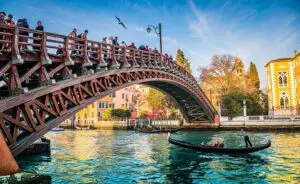
A gondola is a traditional Venetian rowing boat used primarily for a short scenic experience. It is not the practical equivalent of a scheduled ACTV service to Murano or Burano. Visitors should not book a gondola expecting it to replace a waterbus or provide an ordinary island transfer.
The distinction is straightforward: choose a gondola for the experience of being rowed through Venetian waterways; choose a vaporetto to move along a public route; choose a licensed water taxi when you need a private motorboat journey. Each has its own purpose, pricing structure, and operating limitations. Understanding this before arrival prevents unrealistic expectations.
The traghetto is a fourth category
Venice also has traditional gondola ferries, called traghetti, that cross the Grand Canal at certain points when operating. They are different from a private sightseeing gondola ride and from the ACTV waterbus network. They serve short crossings rather than extended journeys.
Travelers should check whether a specific crossing is operating before planning around it. Hours and availability can vary, and a traghetto is not an alternative for reaching the lagoon islands. This additional category helps explain why seeing a gondola-shaped boat does not always tell you what kind of service it provides.
Accessibility and boarding conditions
Public waterbuses have varying boarding conditions, and the suitability of a particular service depends on the vessel, stop, and mobility needs. The City of Venice publishes accessibility guidance for routes to Murano and Burano, including details about some wheelchair-capable services.
If you use a wheelchair or have difficulty with steps, consult current official accessibility information and contact the operator where necessary. A boat may be accessible while the walking route to its stop is not. Avoid relying on a generic statement that Venice is either entirely accessible or entirely inaccessible. The reality depends on the specific itinerary.
Traveling with luggage
Luggage changes the experience of a crowded vaporetto. You may have to move through a busy pontoon, board with other passengers, and find a safe place for your bags. This can be manageable with a small suitcase, but less comfortable with several large pieces or a family group.
Before deciding, consider the entire journey: the walk from your arrival point, the boat ride, the stop nearest your hotel, and the bridges after disembarking. A private transfer may reduce some of those challenges, but only if the hotel and pier are accessible. Ask your accommodation for exact instructions instead of assuming that every waterfront property has a usable private landing.
Crowds on the Burano route
Line 12 is an essential connection for both residents and visitors, and popular departure times can attract substantial queues. Travelers sometimes focus on the published journey duration while overlooking the possibility of waiting for a departure or being unable to board the first full boat.
If your schedule is flexible, consider an earlier start or a different order for the islands. If you have a timed reservation, allow a significant margin. Avoid promising that a public boat will always reach Burano in a fixed number of minutes from your hotel. The full trip includes walking, queuing, transfers, and conditions on the day.
What to do when a boat is full
If a departure is full, follow ACTV staff instructions and wait for the next available service. Do not push past other passengers or obstruct the boarding area. The public network must accommodate people going to work and school as well as tourists heading to the islands.
A backup plan can make the delay less frustrating. Know the next departure, identify a nearby place to wait without blocking the waterfront, and reconsider any tight reservation. A private boat might be an option for some groups, but its availability and price cannot be assumed on demand. The best preparation is enough flexibility that one missed departure does not ruin the day.
Weather and lagoon conditions
Wind, fog, and other conditions can affect lagoon transport, sometimes requiring operational changes. Do not assume a timetable printed weeks earlier is a guarantee for every day. Check official notices when weather is unsettled and listen to staff instructions at the stops.
A visit to Burano involves more exposed water than a short Grand Canal crossing. If a traveler is uncomfortable on boats or worried about a return connection, that difference deserves consideration. The sensible response is not alarm but preparation: check the forecast, carry appropriate clothing, and avoid scheduling a nonrefundable onward journey too tightly.
A realistic half-day on Murano
For a Murano-focused half-day, select one or two meaningful experiences rather than trying to visit every glass shop. Check the opening times of any museum or workshop you want to see, travel to the most suitable ACTV stop, and leave time to walk through the island.
If a glass demonstration is important, confirm whether it requires a reservation and what is actually included. Not every furnace offers the same visitor experience, and commercial demonstrations can vary. A thoughtful visit leaves time to appreciate the island’s streets and waterfront rather than treating Murano as a quick sales stop between boat rides.
A realistic day on Burano
Burano rewards slow walking, especially away from its busiest photographed streets. Allow time to appreciate the island’s colorful houses, everyday spaces, and lace-making heritage. If you want lunch, check restaurant availability rather than assuming you can arrive at peak time without waiting.
The public-transport journey should be part of the day plan, not an afterthought. Check the return line 12 departures before exploring, and avoid leaving the island at the very last moment before an important appointment. A comfortable Burano visit often requires more time than first-time visitors expect.
The local guide’s logistical insight
The most useful local advice is that the correct boat is not necessarily the one with the shortest travel time printed on an app. The walk to the departure pier, the direction of a circular route, the crowd at the boarding point, and the distance from the arrival stop to your actual destination can all change the result.
Tour Leader Venice’s team, with licensed guide Igor Scomparin guiding since 1997, regularly considers these practical realities when organizing private experiences. That does not mean public transport is inferior. It means choosing a mode that matches the traveler’s priorities: budget, independence, accessibility, comfort, luggage, and the amount of time available.
Three complementary articles
For the broader reason Venice developed such an unusual transport system, read why Venice has no cars and how its logistics work. To understand the working city behind the visitor experience, see the people who keep Venice moving before sunrise.
For historical details that can enrich your island day, explore ten overlooked details that tell Venice’s real story. These three published articles complement this route-focused guide without repeating its specific comparison of ACTV lines, travel apps, and boat services.
The practical bottom line
For Murano, check line 3 from Piazzale Roma or Ferrovia when operating, or the appropriate 4.1 or 4.2 connection. For Burano, line 12 from Fondamente Nove is the central route to understand. For Torcello, check the connection from Burano. Use the AVM Venezia Official App and the current ACTV map to verify departures and boarding points.
Buy the ticket that fits the number of rides you actually plan to make, validate it correctly, and remember that a vaporetto, private water taxi, gondola, and traghetto are different services. With those basics in place, the lagoon becomes much easier to explore independently—and the boat ride becomes part of the pleasure rather than the day’s biggest source of uncertainty.
Official route maps, fares and app information
For current timetables and route variants, consult ACTV navigation timetables and the official network map. Check Venezia Unica visitor fares and the AVM Venezia Official App before travel. Fares and service arrangements may change.
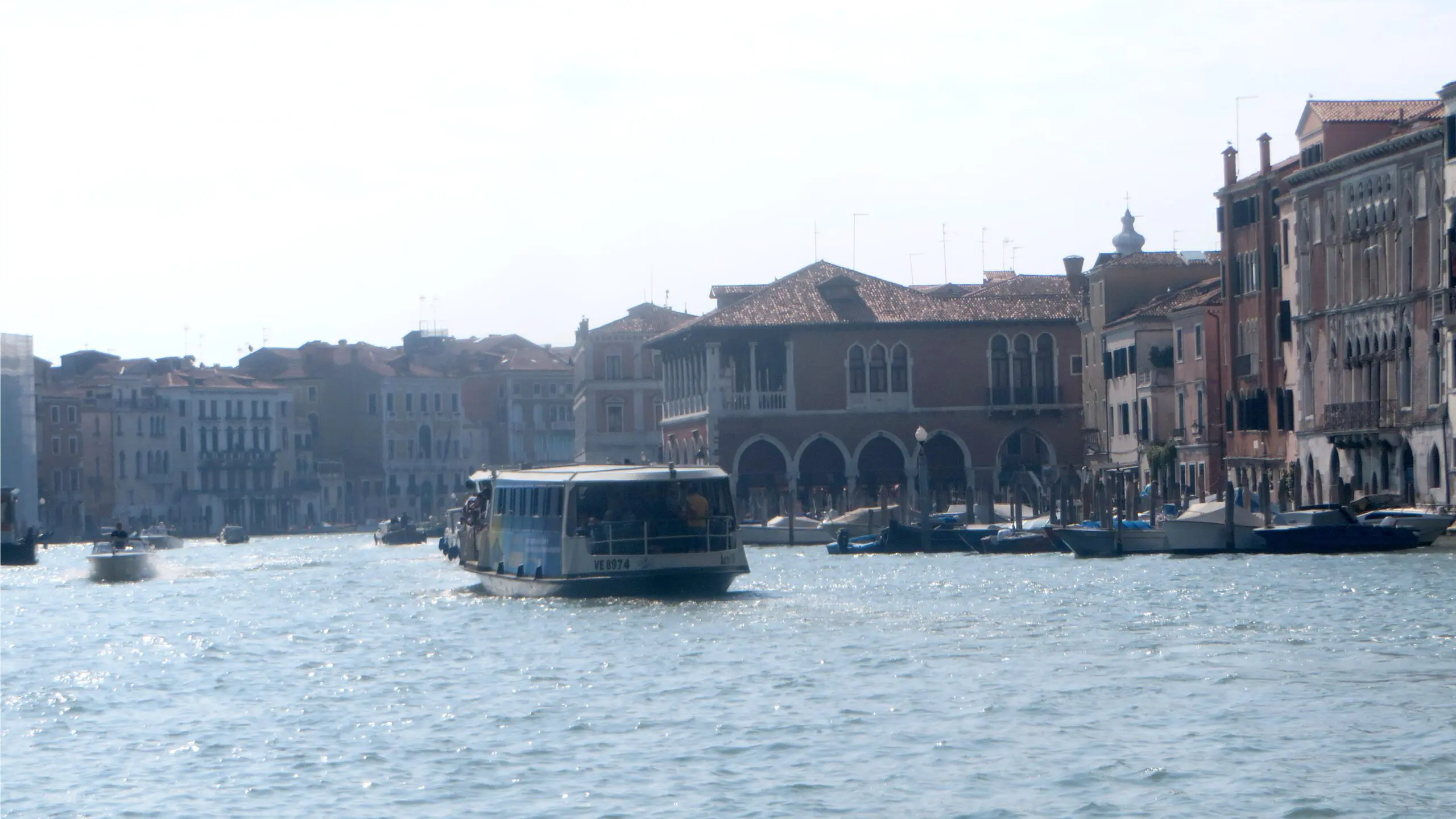
Featured photograph: “Vaporetto on Grand Canal,” photographed by Eden, Janine and Jim, available through Wikimedia Commons under Creative Commons Attribution 2.0. Source: Wikimedia Commons photograph and license. The image is authentic and predates 2026.
Explore related Venice stories
To put this subject into a wider Venetian context, explore the different boats that keep Venice moving, the engineering that supports the floating city and Venice’s water entrances and boat access. Each offers a complementary perspective on the city’s history, daily life, or cultural heritage.
More useful Venice reading
Continue with what to see in Murano; Murano, Mazzorbo, and Burano in the lagoon; the tradition of Venetian glass beads. These complementary guides help connect the topic to a broader Venice visit.
Frequently Asked Questions
Which vaporetto line goes from Venice to Burano?
ACTV line 12 from Fondamente Nove is the principal public waterbus route to Burano, serving Murano Faro and Mazzorbo along the way. Check the current ACTV timetable and correct pontoon before boarding.
What is the best app for Venice vaporetto routes and tickets?
The AVM Venezia Official App is the operator’s app for trip planning, timetables, service news, purchasing and activating tickets. Use the official ACTV map as a cross-check.
What is the difference between a vaporetto, a water taxi, and a gondola?
A vaporetto is a scheduled shared public waterbus; a licensed water taxi is a private motorboat journey; and a gondola is a traditional rowing experience rather than public transport to Murano or Burano.