If you need emergency help in Venice, Italy, call 112 immediately. The number is free and connects callers with the appropriate urgent response, including police, firefighters, and medical services. Venice is unusual because ambulances and firefighters often use boats rather than road vehicles. This detailed guide explains the different agencies, their numbers, and what visitors should say when requesting help.
The number to remember before anything else
If you face an immediate emergency in Venice, call 112. This is the free European emergency number for urgent medical help, police, and firefighters. You do not need to decide which Italian uniform or agency is responsible before making the call. Tell the operator what has happened, where you are, and whether anyone is injured or in immediate danger.
This matters particularly in Venice because the nearest emergency vehicle may be a boat rather than a road ambulance. Dispatchers and responding services understand the local geography and decide what resources are appropriate. A visitor who tries to arrange a private water taxi instead of calling emergency services may waste valuable time. For serious emergencies, contact the official emergency system first.
Why Venice’s emergency system looks different
Venice is a city built around canals and pedestrian streets. Its historic center has no ordinary road network for ambulances, police cars, and fire engines. Emergency services therefore use a combination of boats, personnel on foot, and road vehicles on the mainland or where roads exist.
That does not mean Venice lacks professional emergency response. It means the logistics differ from those in an American city. A water ambulance may reach a suitable landing, while personnel continue to the patient through streets and bridges. Firefighters may approach by boat and carry equipment into buildings. Understanding this helps travelers give useful location information rather than insisting that a conventional vehicle come to a hotel doorway.
How 112 works
The 112 operator receives your urgent request and connects or directs it to the appropriate emergency service. Depending on the situation, that may involve medical dispatch, the police, Carabinieri, or the fire brigade. The caller’s task is to explain the problem accurately, not to diagnose which institution should respond.
The number works across the European Union and is free from fixed and mobile phones. If you are visiting from the United States, do not dial 911 and assume it will work in Italy. Memorize 112 and save it in your phone. If someone is unconscious, having difficulty breathing, or in immediate danger, call without delaying to consult a travel website.
What to say when calling
Begin with the emergency: someone has collapsed, there is a fire, a person is in the water, or you are threatened. Give your location as precisely as possible. In Venice, a hotel name, bridge, church, nearby business, or vaporetto stop can help responders locate you.
If you can see a street name or civic number, share it. Explain whether you are inside a building, on a boat, or near a canal. Tell the operator how many people need help and whether they are conscious and breathing if the situation is medical. Follow the operator’s instructions, remain on the line as directed, and avoid moving an injured person unless immediate danger makes it necessary.
A useful English-language script
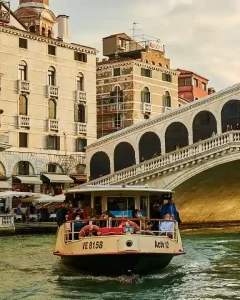
Travelers may feel anxious about explaining an emergency in another country. A short, clear English statement is often the most useful starting point: ‘I need an ambulance. We are in Venice, near Rialto Bridge, outside the entrance of our hotel. One person has collapsed and is not responding.’ Replace the example with the actual facts.
Speak slowly and answer questions. Do not invent an address if you do not know it. Ask for language assistance if necessary, and use the hotel’s staff or a nearby person to help explain the location when safe. The essential information is the nature of the emergency and where responders can find you.
Ambulance and medical emergencies
The Italian emergency medical system is commonly known by the number 118, while 112 is the simplest first number for a visitor needing urgent assistance. Medical dispatch determines what response is appropriate. In Venice’s historic center, that may include a water ambulance, medical personnel traveling by boat, and coordination with hospitals.
Call for potentially life-threatening problems such as severe chest pain, serious breathing difficulty, loss of consciousness, major bleeding, suspected stroke, or severe injury. Do not attempt to diagnose the condition from a travel article. Follow the dispatcher’s instructions and tell them about any immediate hazards. A hotel receptionist may help with directions, but the hotel is not a substitute for emergency dispatch.
Why the ambulance may arrive by boat
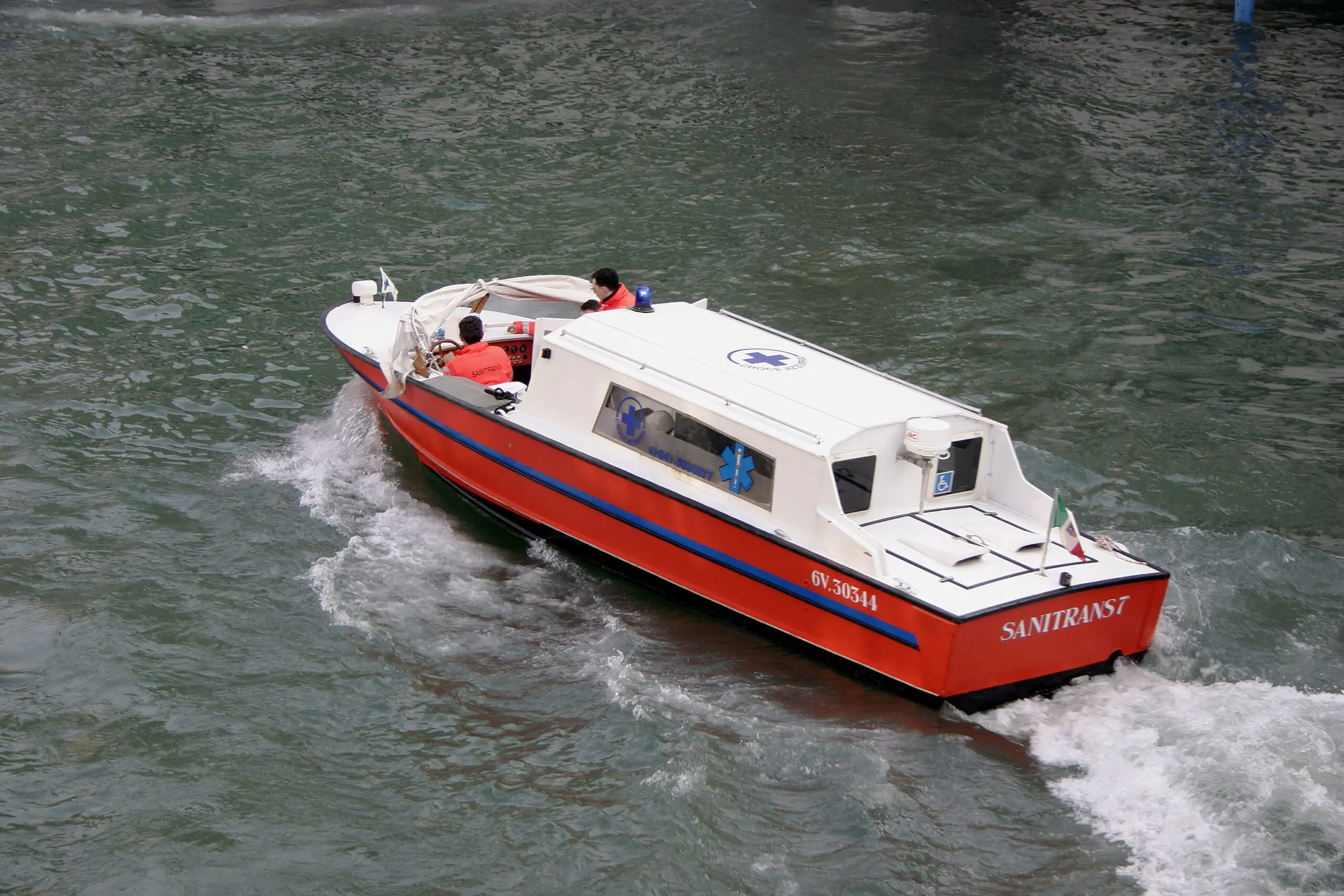
A water ambulance is equipped and staffed for emergency medical transport in the lagoon environment. The crew may need a suitable landing place, and medical personnel may continue on foot to reach a patient. The exact response depends on the location and clinical urgency.
This is one of the practical details that makes Venice unusual. A hotel may have a private water entrance, but that does not mean every emergency boat can use it under every condition. Bridges, canal dimensions, tides, and landing access matter. Let emergency professionals select the route and do not promise a particular arrival time or pier to someone waiting for help.
What if someone falls into a canal?
A person in the water may be at risk from cold, injury, boat traffic, and difficulty climbing out. Call 112 immediately and describe the nearest identifiable location. Do not jump in impulsively if doing so would put you in danger or create another casualty.
If a life ring or other suitable rescue aid is available and can be used safely, follow the emergency operator’s guidance. Keep visual contact with the person if possible and direct responders to the exact canal edge. Venice’s waterways can look calm while still presenting serious hazards. The safest response is to summon professional help quickly.
Police: Polizia di Stato
The Polizia di Stato is Italy’s national civilian police force. It deals with public security and criminal matters, including reports of theft, assault, threats, and other offenses. Its traditional emergency number is 113, but visitors can use 112 for urgent police assistance.
If your wallet is stolen and there is no immediate danger, you may need to file a report at a police office rather than place an emergency call. If someone is threatening you or a crime is happening now, call 112. Distinguishing immediate danger from an administrative report helps the emergency system prioritize urgent situations.
Carabinieri: another national police force
The Carabinieri are a national police force with military status and broad law-enforcement responsibilities. Visitors may encounter them patrolling streets, public spaces, and important sites. They can handle criminal complaints and urgent public-safety incidents, just as the Polizia di Stato can in many situations.
You do not need to choose between the two agencies in the middle of an emergency. Dial 112 and explain what happened. For a nonurgent matter, a hotel or official information source may direct you to the appropriate station. The different uniforms reflect different institutions, not a rule that tourists must solve before asking for help.
Polizia Locale: the municipal police
Venice’s Polizia Locale is the city’s municipal police service. It deals with local regulations, urban safety, municipal enforcement, and aspects of traffic and public-space management. In Venice that can include issues involving pedestrian areas, local rules, and waterways.
The City of Venice lists the Polizia Locale operations center at +39 041 2747070. This is a useful official contact for relevant municipal matters, but it should not replace 112 when someone is in immediate danger. A municipal enforcement issue and an active violent crime are not the same kind of call. Choosing the correct level of urgency protects both visitors and emergency resources.
What the ‘vigili urbani’ name means
Visitors may hear Venetians refer to the municipal police as vigili urbani. This traditional expression broadly points to the Polizia Locale, not to the fire brigade. The similar Italian word vigili can cause confusion for English speakers who assume it describes one service.
Remember the distinction: Polizia Locale concerns municipal policing, while Vigili del Fuoco are firefighters. If you need immediate assistance and cannot remember which name is correct, call 112. You do not need to translate the agency title perfectly to get help. Describe the actual problem and location instead.
Vigili del Fuoco: the fire brigade
Italy’s Vigili del Fuoco respond to fires, rescues, dangerous incidents, and other technical emergencies. Their traditional emergency number is 115, while 112 is the recommended universal number for urgent assistance. In Venice, firefighters operate boats and specialized equipment suited to canals and historic buildings.
If you see smoke from a building, smell a serious fire hazard, or encounter someone trapped in a dangerous location, call immediately. Do not attempt to investigate a burning structure or block access while taking photographs. Venice’s old buildings and narrow approaches make clear information and unobstructed access especially important.
Why fires are complicated in Venice
Historic buildings may have narrow stairways, irregular layouts, timber elements, and limited access from the street. Fire crews may have to bring equipment from boats or through pedestrian routes. Water is everywhere, but that does not make fire response simple.
Visitors should take hotel fire instructions seriously, know the nearest exit, and avoid obstructing corridors with luggage. If a fire alarm sounds, follow staff and emergency personnel rather than assuming it is a false alarm. A canal-side location may be beautiful, but safe evacuation still depends on knowing how to leave the building.
Guardia Costiera and emergencies on the water
The Italian Coast Guard, or Guardia Costiera, has responsibilities connected with maritime safety and rescue. The traditional maritime emergency number is 1530. For a visitor facing an urgent situation on the water, 112 remains a straightforward way to request emergency help and appropriate coordination.
The lagoon contains both urban canals and wider navigable waters, and different authorities may have roles depending on the incident. Do not try to work out jurisdiction while someone is at risk. Describe whether you are aboard a boat, the nearest island or channel, and any identifiable markers. Follow the dispatcher’s instructions.
Guardia di Finanza
The Guardia di Finanza is a national law-enforcement force specializing in financial and economic matters, with additional responsibilities that include maritime operations. Its traditional number is 117. Tourists may see its vessels in the lagoon without knowing why the service exists.
For an ordinary medical emergency, fire, or immediate threat, use 112 rather than trying to contact a specialist force. If your concern involves suspected financial fraud or another nonurgent matter, official police or government information can help identify the appropriate reporting channel. The existence of several agencies should not complicate the first emergency call.
Civil Protection and major events
Protezione Civile is Italy’s civil-protection system for preparing for and coordinating responses to major hazards such as severe weather, flooding, and other disasters. It is not a replacement for an ambulance or police dispatch number. Municipal, regional, and national bodies have different responsibilities according to the event.
Venice’s municipal Civil Protection service publishes information about risks and preparedness. If a severe-weather warning or high-water emergency is issued, follow official city instructions. If someone is in immediate danger, call 112. Distinguishing public alerts from individual emergency response helps visitors avoid confusion.
High water and emergencies
Acqua alta can affect low-lying streets and complicate movement, but a tide forecast is not automatically a personal emergency. Consult official municipal information and follow instructions about routes, transport, and closures. Do not enter flooded areas simply to take photographs if doing so creates a hazard.
If someone is injured, trapped, or in immediate danger because of flooding, call 112. Explain the location and the nature of the threat. Water depth varies across Venice, and conditions can change quickly. A general travel guide cannot replace real-time instructions from the city or responding services.
Lost passport or stolen belongings
A missing passport can be frightening, especially shortly before an international flight. First distinguish a loss from a theft and whether there is immediate danger. If you are safe, contact the appropriate police service for reporting instructions and your embassy or consulate for travel-document assistance.
A stolen phone or wallet does not always require an emergency call if the incident is over and no one is threatened. However, an ongoing assault or confrontation does. Save a separate copy of essential travel information and know how to contact your consular service. The police report and the emergency response serve different purposes.
Pickpocketing and immediate threats
Crowded places can create opportunities for theft, as in many tourist destinations. If you notice property missing later, seek guidance on filing a report. If a theft is occurring and you feel threatened, move toward safety and call 112. Avoid pursuing someone into unfamiliar alleys or escalating a confrontation.
Keep bags secured and remain aware of your surroundings, but do not let fear dominate your visit. Venice is a living city with residents, workers, and ordinary public services. Practical precautions are more useful than sensational descriptions. Knowing the correct emergency number allows you to focus on enjoying the city.
Children and missing persons
If a child is missing and you believe there is immediate danger, call 112 and provide the child’s description, last known location, and time last seen. Italy also recognizes 116000 as the European missing-children hotline. The urgency of the situation determines the appropriate first response.
In crowded squares and transport areas, agree on a simple family plan before separating. Keep a current photograph of each child on your phone and make sure older children know how to approach uniformed staff or police. If a child is missing, do not delay reporting because you are embarrassed or unsure which police force has jurisdiction.
Domestic violence and personal safety
Italy’s 1522 service provides support relating to violence and stalking. It is a specialist assistance service rather than the number for dispatching an ambulance or immediate police response. If you are in immediate danger, call 112 first.
Travelers should know that asking for help is appropriate even when the incident involves someone they know. If possible, move to a safe location and explain the situation clearly. Hotels and trusted companions may help with practical arrangements, but they cannot replace emergency responders when urgent protection is needed.
A medical problem that is not an emergency
Not every illness requires an ambulance. A mild problem, a routine prescription question, or a nonurgent medical concern may be better addressed through appropriate healthcare channels, a pharmacy, or an available medical service. Your hotel may help identify current options.
Do not use a travel article to decide whether chest pain, serious breathing problems, sudden weakness, or altered consciousness can wait. If symptoms may be life-threatening, call 112. When uncertain about urgency, explain the symptoms to the emergency operator rather than delaying because you fear using the wrong service.
What about travel insurance?
Travel insurance can help with costs, documentation, and assistance after an incident, depending on the policy. It is not a substitute for emergency dispatch. If someone needs immediate medical care, call 112 first and contact the insurer once the immediate danger is being addressed.
Keep your policy details accessible offline and understand whether the insurer requires notification for hospitalization or other major expenses. A companion can make the insurance call while another person follows medical instructions. Do not delay essential treatment while trying to obtain prior authorization from an insurance company.
Why exact location matters so much
Venice has streets with similar names, narrow passageways, multiple bridge approaches, and civic numbers that may confuse visitors. An emergency caller should therefore give more than a vague statement such as ‘near the canal.’ Identify a nearby church, hotel, shop, bridge, vaporetto stop, or visible address.
If you can safely share a phone location with responders, follow their instructions. Tell them which side of a canal you are on if that is relevant, and whether the entrance is from a street or waterfront. Never send a rescuer toward an assumed hotel water door without confirming access. Accurate details can be more valuable than a long description of the neighborhood.
What to do while waiting
Follow the instructions provided by the dispatcher. Keep access clear, ask someone to meet responders if safe, and avoid moving a seriously injured person unnecessarily. If instructed to perform first aid or CPR, follow the professional guidance provided on the call.
Do not crowd the scene or film someone in distress. Respect the privacy of the person receiving help. If you are traveling in a group, assign simple tasks: one person speaks to dispatch, another identifies the entrance, and another keeps bystanders clear. Calm, factual cooperation is more useful than improvising your own rescue plan.
Emergency access at hotels
Many Venice hotels occupy historic buildings with complicated entrances. Some have water doors, while others rely on nearby public landings. Tides, bridge clearance, and canal access can affect boats. Hotel staff often know the practical entrance arrangements and can help communicate them.
However, never wait for a hotel manager to authorize an emergency call. Dial 112 immediately when needed, then inform staff so they can assist responders. A private boat booked for a transfer is not an ambulance, and a hotel water landing is not necessarily the correct emergency access point. Let professionals coordinate the response.
Emergency situations on Murano and Burano
The lagoon islands have their own geography, transport links, and access constraints. If an emergency occurs on Murano, Burano, or another island, call 112 and name the island clearly. Give the nearest bridge, church, business, or stop to help identify the exact location.
Do not attempt to return to central Venice on a public vaporetto with someone experiencing a life-threatening condition unless emergency professionals specifically instruct you to do so. Medical dispatch can determine the appropriate response and transport. The fact that an island feels distant does not mean travelers must arrange their own rescue.
A simple emergency contact card
Save 112 in your phone and write it on a small paper card along with your hotel name, address, travel insurance contact, and any essential medical information you choose to carry. If traveling with family, make sure everyone knows the number and the name of the accommodation.
A paper backup matters if your phone is lost, damaged, or out of power. Avoid storing sensitive personal information where it can easily be exposed. The card should be practical rather than complicated. In a stressful moment, knowing the number and being able to identify your location are the two most useful preparations.
Three related articles for context
To understand why emergency logistics are different in a city without ordinary streets for cars, read why Venice has no cars and how its transport system works. For an account of the workers who maintain the city, explore the people who keep Venice functioning before sunrise.
For the details of Venice’s physical layout that visitors often overlook, see ten hidden details that reveal Venice’s real story. These complementary guides explain the setting without duplicating this article’s essential information about emergency numbers and the responsibilities of different services.
The one rule to take away
The different Italian uniforms can be confusing: Polizia di Stato, Carabinieri, Polizia Locale, Vigili del Fuoco, medical crews, and maritime authorities each have responsibilities. In an emergency, however, you do not need to memorize the whole organizational chart. Dial 112 and explain what has happened.
Save the number before traveling, learn your hotel’s address, and remember that Venice’s responders may arrive by boat or on foot. Use official sources for current contact information, follow dispatcher instructions, and reserve nonemergency contacts for nonurgent matters. A little preparation can make a difficult moment much easier to manage.
Emergency numbers at a glance
| Service | Number | What it does |
|---|---|---|
| All urgent emergencies | 112 | Police, ambulance, firefighters and urgent assistance |
| Medical emergencies | 118 | Emergency medical service; 112 is the easiest first call |
| Polizia di Stato | 113 | National police |
| Carabinieri | 112 | National police force with military status |
| Vigili del Fuoco | 115 | Fire and technical rescue |
| Polizia Locale Venezia | +39 041 2747070 | Municipal police operations center |
| Guardia Costiera | 1530 | Maritime rescue |
| Guardia di Finanza | 117 | Financial police |
| Missing children hotline | 116000 | Specialist missing-children assistance |
| Violence and stalking support | 1522 | Specialist support, not emergency dispatch |
Official sources and photo credit
Emergency numbers were checked against the official Italy tourism portal, the Italian Ministry of the Interior, and the City of Venice municipal police contact page. For urgent help, call 112 instead of browsing websites. Featured image: genuine Venice water ambulance photographed by Nino Barbieri in 2004, Wikimedia Commons, CC BY 2.5; it is an archival photograph, not a current operational image.
Explore related Venice stories
To put this subject into a wider Venetian context, explore the different boats that keep Venice moving, the engineering that supports the floating city and Venice’s water entrances and boat access. Each offers a complementary perspective on the city’s history, daily life, or cultural heritage.
Related Venice guides
To understand the city’s infrastructure and plan with more confidence, read about private ways to get oriented in Venice.
Frequently Asked Questions
What number should I call in an emergency in Venice?
Call 112 for an urgent medical, police, or fire emergency. It is the free European emergency number. Tell the operator what happened and your exact location, including a nearby bridge, hotel, church, or vaporetto stop.
How does an ambulance reach someone in Venice without roads?
Emergency medical services may use a water ambulance and personnel on foot, depending on the location. Call 112 and let dispatch coordinate the response rather than booking a private water taxi.
What is the difference between Carabinieri, Polizia di Stato, Polizia Locale, and Vigili del Fuoco?
Carabinieri and Polizia di Stato are national law-enforcement forces; Polizia Locale handles municipal policing and local regulations; Vigili del Fuoco are firefighters and technical rescuers. In immediate danger, call 112 rather than choosing an agency yourself.