Private Venice experiences allow travelers to discover the lagoon city through walking, boating, and thoughtfully planned island visits. For American visitors, the greatest advantage of a private itinerary is flexibility: you can focus on the history, neighborhoods, architecture, or craft traditions that interest you, while accounting for Venice’s bridges, tides, and unusual transportation network.
Why private travel works differently in Venice
Venice rewards curiosity, but its geography complicates conventional sightseeing. There are no streets for cars in the historic center, bridges interrupt many seemingly direct routes, and a destination that looks close across a canal may require a considerable detour to reach on foot. A private itinerary can respond to these realities rather than treating every attraction as a fixed stop on a rigid timetable. The advantage is not simply exclusivity. It is the freedom to spend more time where a story becomes interesting and less time where the experience feels crowded or repetitive.
The most memorable moments are often small: the transition from a busy waterfront into a residential square, a glimpse of deliveries being unloaded from a boat, or the sound of a workshop behind an open doorway. These details are easy to miss when a group is hurrying between famous landmarks. A local guide can connect them to the history of the lagoon and explain why the city still operates differently from most European destinations.
First-time visitors: choose orientation before accumulation
For travelers arriving from the United States, the first day can feel disorienting. Venice’s street signs, ferry stops, bridges, and narrow lanes form a network unlike a typical American city grid. Rather than beginning with an ambitious list of museums, consider an orientation walk that introduces the relationship between San Marco, Rialto, and a quieter district. The purpose is to give you confidence for the remainder of your stay, not to claim you have seen the entire city in three hours.
An orientation tour should answer practical questions as well as historical ones. Where do you board a vaporetto? How can you tell which side of a canal a restaurant is on? Why do the routes shown on a map sometimes seem unnecessarily long? Which streets are public passages and which lead into private residential areas? Understanding these things early makes independent exploration more enjoyable. It also helps you choose which landmarks merit a dedicated visit later.
Private walking tours: build a route around a story
A walking itinerary becomes richer when it follows a theme. One route might examine the merchant city through Rialto’s commercial history, trading connections, and the architecture of old market streets. Another could focus on neighborhood life in Cannaregio, with its canals, squares, and layered Jewish history. A third might concentrate on art and civic identity around churches and confraternity buildings. The exact route should depend on your starting point, opening hours, and interests rather than a promise to cover everything.
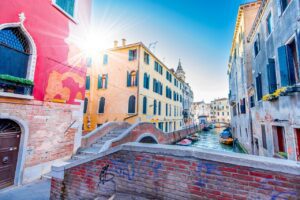
Venetian distances are deceptive. Crossing the city may involve multiple bridges, and a picturesque shortcut can end at a canal without a crossing. A thoughtfully planned private walk groups nearby sites so you spend your energy observing rather than backtracking. For older travelers or families with younger children, a shorter route with time for sitting and refreshments can deliver more insight than an exhaustive itinerary. Tell your guide what matters most and what you are happy to skip.
What a private guide can reveal beyond the monuments
The familiar monuments are important, but Venice’s identity also survives in ordinary urban details. Look at a stone wellhead in a campo and you are seeing evidence of how generations collected and stored rainwater. Notice the wide doors opening onto a canal and you are looking at a transportation system designed around boats. Observe a building’s ground-floor entrance and its upper-level windows, and questions emerge about commerce, flooding, privacy, and domestic life.
A guide with experience in the city can explain these details without turning every doorway into a dramatic legend. Good interpretation distinguishes documented history from popular stories. It also recognizes that Venice is a living community: people commute, shop, deliver goods, take children to school, and maintain buildings in a demanding marine environment. Understanding that working city is one of the most valuable reasons to explore with someone local.
Private boat tours: understand the city from the water
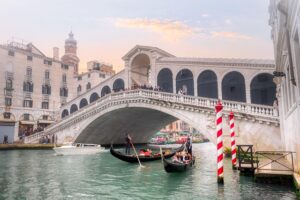
The Grand Canal is not simply a beautiful route past palaces. It is a major urban artery that historically connected trading houses, warehouses, churches, and civic institutions. From a boat, the water-facing façades make architectural sense in a way they often cannot from a narrow pedestrian lane. A private ride can allow a guide to explain the changing styles of palaces and the relationship between transport and wealth, while still leaving space to enjoy the scenery.
The smaller canals offer a different atmosphere, although access is never guaranteed. Water levels, traffic, bridge clearance, and navigation restrictions can affect a planned route. A boat that can travel one canal at one hour may need to take another route later. This is normal in Venice and should be explained before departure. A flexible plan is a sign of responsible local operation, not a flaw in the experience.
Regular water taxi or wooden boat?
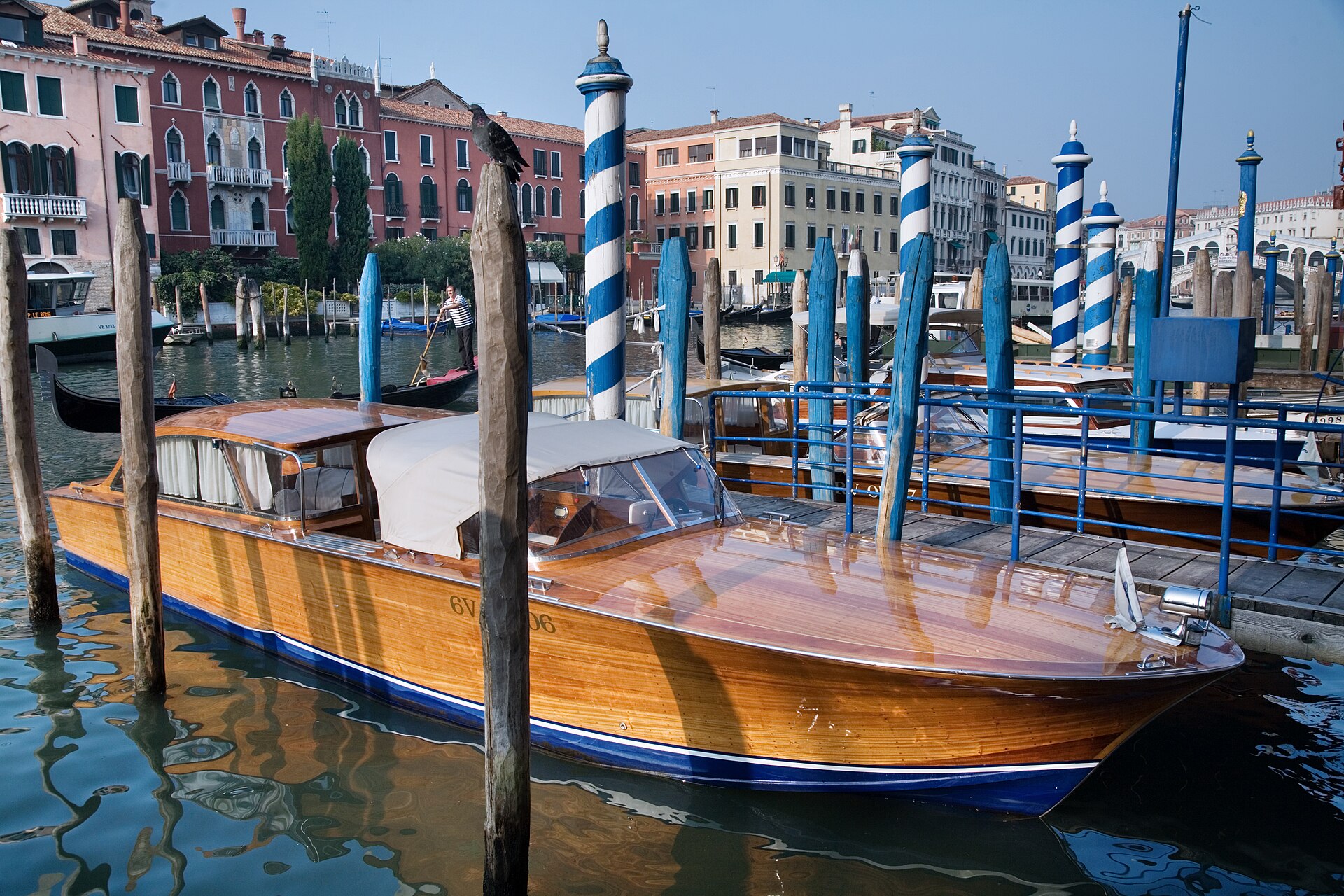
Boat style changes the character of a private outing. A conventional motorboat or water taxi is practical for seeing the Grand Canal and connecting different areas. A classic wooden boat may offer a distinctive aesthetic, depending on the vessel, weather protection, and seating arrangement. Neither choice is automatically better. Ask how many people can sit comfortably, whether part of the cabin is enclosed, how easy boarding will be, and whether the proposed route matches your interests.
For photography, consider the direction of light and whether the boat has an open viewing area. For guests who are sensitive to wind or cold, the possibility of shelter matters more than the boat’s appearance. If a member of your party has reduced mobility, request a clear explanation of the boarding steps and pier conditions. Venice boat access is often beautiful but not equivalent to a level-access dock in an American marina.
A gondola ride is not the same as a guided boat tour
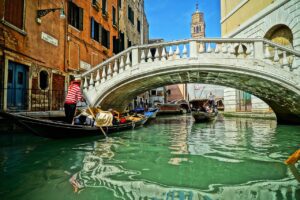
A gondola is one of Venice’s historic symbols and can be a memorable way to experience a small network of canals. It is generally a shorter, quieter, more intimate outing than a motorboat tour. A guided private motorboat experience, by contrast, can cover a wider area and provide historical commentary. These are different products with different strengths, and neither should be presented as a substitute for the other.
If you are planning both, avoid scheduling them back to back without a purpose. You might use the motorboat for an overview of the Grand Canal and save a gondola for a separate moment in a quieter neighborhood. If your stay is short, choose the experience that best serves your priorities. Travelers interested in architecture may value a narrated boat journey; couples seeking an iconic Venetian ritual may prefer the gondola.
The lagoon is more than Murano and Burano
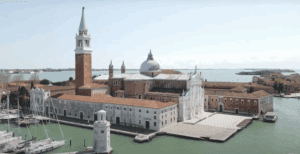
The Venetian Lagoon is an extraordinary cultural landscape of islands, waterways, marshes, and settlements. Murano is associated with glassmaking, Burano with colorful houses and lace traditions, and Torcello with early lagoon history. Mazzorbo offers a quieter perspective on the northern lagoon, while Sant’Erasmo is linked to market gardening. Each island has its own character. Treating them as interchangeable photo stops misses what makes them interesting.
A private lagoon outing works best when it has a clear priority. If glassmaking is central, allow sufficient time for a meaningful workshop visit rather than only a quick demonstration. If photography and village life matter more, leave room to walk and observe. If food and landscape are your interests, consider an itinerary that explores the lagoon’s agricultural side. The most satisfying day may involve fewer islands than a conventional highlights tour.
Murano: learn to distinguish craft from retail theater
Murano’s glass tradition is both an artistic achievement and an active commercial industry. Not every demonstration represents the same level of craftsmanship, and not every shop is an independent workshop. Before booking, ask what you will actually see: a furnace demonstration, a studio conversation, a gallery visit, or an opportunity to meet the makers. Understand whether shopping is optional and whether any visit is connected to a retail showroom.
A good visit introduces the skill and physical demands of working with molten glass. It may also explore design, family businesses, and the challenges of maintaining production on an island. Resist the temptation to judge an artisan’s work only by how quickly an object is made. Years of training and the preparation behind a finished piece are part of its value. If you buy something, ask about origin, shipping, and care rather than assuming every object on display was produced locally.
Burano and the value of unhurried time
Burano’s brightly colored façades are photogenic, but the island is not a film set. People live behind those doors, and narrow lanes can become congested when visitors stop abruptly for photographs. Walk respectfully, avoid blocking entrances, and explore beyond the most photographed waterfronts. The island’s lace heritage deserves attention as well, especially when you can learn about the labor involved rather than treating lace as a generic souvenir.
Public boats can be crowded at popular times, and connections between islands consume more of the day than many first-time visitors expect. A private boat changes the logistics, but it does not eliminate walking or the need for realistic timing. If your aim is to have lunch, photograph the canals, and learn something about local craft, give Burano enough time to be a destination in its own right.
Mazzorbo, Torcello, and quieter alternatives
Mazzorbo is connected to Burano by a pedestrian bridge yet feels different in scale and pace. Its open spaces and agricultural associations help visitors imagine a lagoon that is more than canals and monuments. Torcello, meanwhile, provides an opportunity to consider the early history of settlement in the lagoon. Neither is a sensible addition merely to increase the number of islands on an itinerary.
For travelers with limited time, the right choice depends on the question you want to explore. Are you curious about the origins of Venice, the relationship between agriculture and the city, or the rhythms of life away from the central tourist routes? A knowledgeable guide can help select one meaningful addition rather than building a rushed sequence of transfers. Seasonal access and individual venues should always be checked before departure.
How to combine walking and boating in one day
One of the most effective private Venice experiences combines a neighborhood walk with a boat journey. A morning walk can introduce the city’s physical structure and street-level life; a later boat ride reveals the façades and waterways that shaped its development. The combination makes architectural details easier to interpret because you have seen the city from two complementary perspectives.
The order matters. If your hotel has suitable boat access and conditions permit, you might start from the water. If your accommodation is on a narrow canal affected by high or low tide, walking to a nearby pier may be more practical. Avoid assuming every hotel with a water entrance can receive a boat at all times. Bridge clearance, mooring rules, and local traffic may determine the actual pickup location on the day.
Families: turn the city into a discovery exercise
Children often respond more enthusiastically to Venice when they are invited to notice patterns rather than memorize dates. Count the different types of boats, look for carved animals on buildings, compare bridge shapes, or imagine how groceries reach a home without a car. These observations make the city’s history tangible. A family itinerary should allow questions, snack breaks, and time to look at the water without pressure to keep moving.
For teenagers, photography, design, engineering, and the stories of maritime trade can provide strong entry points. Younger children may enjoy a shorter walking segment paired with a boat ride. Be realistic about the number of bridges and the possibility of tired feet. A private format helps because the pace can adapt to the family, but advance planning still matters when museums, timed tickets, or boat reservations are involved.
Couples: prioritize atmosphere rather than a packed checklist
For couples, the appeal of a private itinerary is often the freedom to explore without an audience. A quieter neighborhood walk, an architectural boat ride, or an island visit can create time for conversation. Venice changes character throughout the day: a square that feels busy at midday may be calmer in the morning, while a waterfront becomes especially atmospheric toward evening.
Do not assume sunset is automatically the best time for every experience. Light changes with the season, and evening boat conditions can be cooler or windier. A local guide can suggest a sensible sequence, but weather and navigation remain variable. If you are celebrating an occasion, mention it during planning so that the itinerary can be shaped around a realistic moment rather than a rigid promise.
Travelers with mobility concerns: ask specific questions
Venice’s bridges and steps make accessibility more complex than a standard city walking tour. Some bridges have ramps, but many do not; public boats and private vessels have different boarding arrangements; and even hotels with water doors may require several steps between the boat and entrance. It is important to discuss mobility needs in concrete terms before confirming a route.
Explain whether a traveler uses a cane, walker, or wheelchair, whether steps are possible with assistance, and how long they can stand. Ask about restroom opportunities, places to sit, and the number of bridges on the proposed walk. A private tour can reduce unnecessary transfers and help choose a suitable route, but it cannot make every historic site step-free. Clear expectations protect both comfort and safety.
Cruise passengers and short-stay visitors
If you are visiting Venice for only a few hours, timing is the central design constraint. Your actual arrival point, transfer arrangements, luggage, and required return time can consume a meaningful portion of the day. A private experience should be planned backward from the latest safe return, leaving a margin for traffic, boat availability, and unexpected delays.
For a short visit, choose a single strong theme: a guided orientation, a boat-based introduction, or a focused neighborhood walk. Attempting San Marco, Rialto, Murano, and Burano in a compressed window often produces more transit than discovery. Confirm the location of your ship or transport hub rather than relying on a generic reference to the Venice cruise terminal, since arrival arrangements can differ.
When to visit: seasons, crowds, and local rhythm
Spring and fall can offer pleasant walking conditions, but neither season guarantees empty streets. Venice hosts exhibitions, festivals, conventions, and major holiday periods that change demand. Summer often brings heat and intense visitor traffic, while winter may offer a different atmosphere with shorter daylight and colder boat rides. The best season depends on your interests, tolerance for crowds, and preferred activities.
For American travelers, remember that weather forecasts should be interpreted alongside practical conditions. A temperature of 50°F is about 10°C, and wind on an open boat can make it feel colder. In warm weather, carry water and allow breaks; in cooler months, bring layers. High water, rain, and strong winds may affect routes, but individual conditions should be checked close to your visit rather than predicted months in advance.
Choosing the right starting point
Your accommodation affects the route more than many visitors realize. Two hotels that appear close on a map may sit on opposite sides of a canal, while a hotel with a boat entrance may have restricted access during particular tide conditions. Give the guide your exact hotel name and address, not simply the neighborhood. If you are staying in an apartment, agree on an easy-to-identify public meeting point.
Starting at the hotel can be convenient, but it is not always the most efficient option. Sometimes meeting at a nearby square or vaporetto stop saves time and avoids difficult canal navigation. A responsible local operator should explain the difference and recommend the practical choice rather than promising a pickup that might not be possible.
Tickets, museums, and opening times
Private guiding and admission tickets are separate considerations. Some museums and churches require timed entry, and opening hours may change for religious services, maintenance, special exhibitions, or institutional decisions. Before paying for tickets, confirm that the time fits the planned route and that your guide can accompany you under the venue’s rules.
Do not rely on a generic claim that a private tour always includes skip-the-line access. Some venues have official reservation systems, security checks, and rules that apply to everyone. If St. Mark’s Basilica or the Doge’s Palace is a priority, clarify exactly what is included, who purchases tickets, and whether the itinerary can adapt if entry arrangements change.
The real cost of a private experience
Private tour pricing reflects more than the number of hours spent with a guide. Depending on the experience, costs may include the professional guide, boat and captain, transportation logistics, museum admission, workshop visits, and special arrangements. Ask for a written description of what is included and what is not. For families and small groups, a total group price may be easier to compare than a per-person quote.
The cheapest itinerary is not necessarily the most economical use of a short stay. A complicated series of public transfers can consume valuable vacation time, especially when boats are crowded. Conversely, a private boat may be unnecessary if your interests are concentrated in one walkable neighborhood. Choose transport based on the experience you want, not simply as a marker of luxury.
Responsible travel in a living city
Venice’s appeal depends on residents, craftspeople, workers, and neighborhood businesses who keep the city functioning. Visitors can contribute positively by choosing genuine local services, respecting private doorways, and understanding that not every canal or square exists for photography. Avoid blocking narrow bridges or delivery points, particularly when carrying large bags or setting up cameras.
The goal of responsible travel is not to avoid famous places. It is to experience them with context and to spread attention toward less crowded areas without turning residential streets into another spectacle. A thoughtful private guide can explain local customs and help visitors make choices that benefit their understanding of the city as well as their enjoyment.
How to brief your guide before arriving
A useful inquiry describes your party, date, accommodation, interests, and limitations. Mention whether you have visited before, whether you prefer art or everyday history, and whether a boat is essential or simply an option. If you are traveling with children or someone who cannot comfortably manage steps, say so early. This allows the itinerary to be designed around actual needs.
It also helps to identify one or two nonnegotiable priorities and several optional interests. A private experience should not become a minute-by-minute performance in which every surprise is eliminated. The best planning creates a clear framework with room for discovery, weather changes, and the natural rhythm of Venice.
A sample half-day for first-time visitors
Begin with a walk through a neighborhood that introduces the city’s street plan and daily routines. Pause at a campo to discuss its historical function, then move toward a major landmark to place the quieter streets in a broader context. If your interests include architecture, examine the relationship between public buildings and waterways rather than rushing into every interior.
After a break, continue with a private boat ride that puts the earlier walk into perspective. This approach is deliberately flexible: the meeting point, order, and exact route depend on your hotel, mobility needs, traffic, and tides. It offers a framework for understanding Venice rather than an inflexible checklist of sites.
A sample full day for returning travelers
Returning visitors may enjoy a day focused on one district and one lagoon destination. Spend the morning with a guide examining architecture, local craft, and neighborhood history, then travel by boat to an island that fits your interests. Murano makes sense for glass; Burano for lace traditions and village streets; Mazzorbo for a quieter lagoon landscape.
Leave enough time for lunch and unplanned observation. The temptation to add more stops is understandable, but a full day already includes walking, boat transfers, and the physical effort of navigating historic spaces. A thoughtful itinerary makes the transitions part of the experience rather than treating them as wasted time.
How Tour Leader Venice approaches private planning
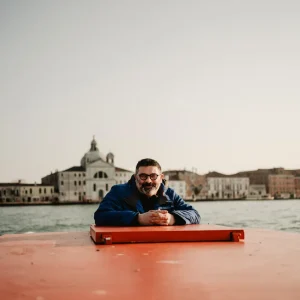
Tour Leader Venice focuses on private experiences rather than shared group departures. The team’s local perspective is grounded in professional guiding experience in Venice, including Igor Scomparin’s work as a licensed guide since 1997. The practical value of that experience is not a claim that every day will run perfectly; it is the ability to anticipate how routes, boats, crowds, and local customs can shape a visit.
A strong itinerary begins with listening. Some travelers want a lively introduction to the city’s history, others a quiet architectural walk, and others a carefully paced lagoon journey. The right choice is the one that suits the people traveling, their available time, and the realities of Venice on that particular day.
Continue exploring
Read our guide to Venice’s overlooked historical details, discover how the car-free city works, and explore the history behind Venice’s black gondolas. To discuss a private itinerary, contact Tour Leader Venice.
Frequently asked questions
Can private Venice experiences be tailored to our interests?
Yes. Share your interests, preferred pace, and any practical needs when making your inquiry. These details help the team discuss an itinerary suited to your party.
Can we combine a walking tour and a private boat experience?
A combination can be discussed when planning your visit, subject to availability and local conditions. Explain how much time you have and what you would most like to see.
What information should we provide when requesting a tour?
Include your preferred date, number of guests, accommodation, and main interests. Mention mobility needs and fixed travel arrangements so these can be considered in the proposal.