“Where are the best views in Venice besides San Marco? Are there hidden viewpoints tourists don’t know about? How do I see Venice from above without climbing the Campanile?”
These questions appear from travelers who recognize that Piazza San Marco’s famous perspectives (the Campanile bell tower, the Basilica terrace, the waterfront views) represent just one visual angle on Venice, wanting to discover less-crowded vantage points revealing different aspects of the city, seeking panoramas that show authentic neighborhoods rather than tourist epicenter, or simply looking for photographic opportunities beyond the Instagram-saturated landmark shots everyone takes.
The honest answer: Venice’s most rewarding views exist far from San Marco — the Fondaco dei Tedeschi rooftop terrace overlooking the Rialto Grand Canal curve, the Scala Contarini del Bovolo’s spiral staircase revealing 360-degree city panoramas, island campanili on San Giorgio Maggiore and Torcello showing Venice in complete lagoon context, bridge perspectives capturing neighborhood canal life, fondamenta viewpoints along quiet waterways, and the simple act of looking up while wandering residential streets discovering rooflines, chimneys, and architectural details invisible to those rushing between landmarks staring at maps.
After 28 years experiencing Venice from every conceivable angle — climbing obscure bell towers, photographing from countless bridges and canal-side positions, understanding which elevations and orientations reveal Venice’s authentic character versus tourist-performance zones, knowing when light and atmospheric conditions transform ordinary viewpoints into extraordinary perspectives, working with photographers and travelers who want distinctive images rather than generic landmark documentation — I know that Venice’s visual richness extends infinitely beyond the San Marco perspectives that dominate guidebooks and social media.
The fundamental realities most travelers miss:
San Marco represents Venice’s most monumental but least authentic space — the Piazza functions primarily as tourist stage set, the businesses serve visitors not locals, the overwhelming crowds obscure genuine Venetian character, and the views from San Marco Campanile or Basilica terraces show tourist-dominated center rather than residential neighborhoods where Venice’s living culture persists.
The best views often require minimal effort beyond awareness — no expensive tickets, challenging climbs, or advance reservations, just knowing where to look, when optimal light occurs, and which lesser-known positions provide superior perspectives on Venice’s architectural beauty, canal networks, lagoon geography, and daily life.
The Biennale art venues (Giardini and Arsenale) occupy Venice’s eastern edge where several exceptional viewpoints exist — understanding these perspectives enhances Biennale visiting by revealing the geographic context within which contemporary art installations operate, showing how Venice’s unique urban fabric creates the backdrop for world-class exhibitions.
Understanding that “view” means more than tourist panorama — the intimate canal perspective from quiet bridge showing gondola passing beneath, the roofline composition visible from residential campo, the lagoon horizon from eastern fondamenta, these human-scale observations often provide more memorable visual experiences than spectacular elevated vistas.
This is the completely honest Venice viewpoints guide — identifying specific underrated locations providing exceptional perspectives beyond San Marco, explaining what makes each viewpoint distinctive and when optimal conditions occur, revealing the simple awareness practices transforming ordinary navigation into continuous visual discovery, describing how to photograph Venice distinctively versus replicating million identical San Marco shots, and helping you understand that Venice’s genuine visual treasures reward observation over elevation.
The Accessible Elevated Perspectives
Understanding specific locations providing height advantage with minimal crowds and effort.
Fondaco dei Tedeschi Rooftop Terrace:
What it is: Historic palazzo near Rialto Bridge (originally German merchant headquarters, now luxury department store) with rooftop terrace offering 360-degree Venice views
Access: Free but requires advance online reservation (book several days ahead during high season), security check, elevator to top floor then stairs to rooftop
Why it’s exceptional:
The Rialto Grand Canal perspective — positioned directly adjacent to Rialto Bridge, the terrace shows the Grand Canal’s dramatic S-curve in both directions, the bridge itself from above revealing its crowded pedestrian traffic versus your peaceful elevated position, gondolas and vaporetti navigating the canal below
The residential roofscape — looking beyond the tourist-packed Rialto immediate area, the terrace reveals Venice’s terracotta rooftops extending in all directions, chimneys creating vertical forest, the density of medieval urban fabric, understanding Venice’s complete horizontal extent rather than just famous landmarks
The 360-degree orientation — rotating on the terrace allows seeing north toward Cannaregio residential neighborhoods, south toward San Marco (identifying the Campanile), east toward Castello and Arsenale Biennale area, west toward the train station, creating complete geographic comprehension
The intimate elevation — at approximately 5 stories, the terrace sits high enough for panoramic views but low enough to see street-level detail (people, boats, daily activities), maintaining connection to ground reality versus extreme height creating abstract distance
Optimal timing: Late afternoon (4:00-6:00 PM) when western light illuminates building facades and creates warm color tones, avoiding midday harsh overhead light; early morning (9:00-10:00 AM) offers fewer visitors and fresh atmospheric conditions
The photographic advantage: Completely different angle than ubiquitous San Marco shots, showing the working Grand Canal versus monumental Piazza, capturing Venice’s density and roofscape versus isolated landmarks
Scala Contarini del Bovolo:
What it is: 15th-century external spiral staircase (bovolo means snail in Venetian dialect) attached to Palazzo Contarini, hidden in courtyard near Campo Manin, providing unique architectural feature and excellent city views
Access: Modest admission fee (€8-10), limited visitors at one time preventing crowding, open daily though hours vary seasonally
Why it’s exceptional:
The architectural marvel — the spiral staircase itself is the attraction, climbing the exterior helix with open arches creating beautiful compositional frames at each level, Renaissance architecture as functional sculpture
The progressive revelation — as you climb, each level reveals slightly different perspective, the city gradually emerging as you ascend, creating dynamic visual progression versus static single viewpoint
The 360-degree summit — the top platform (5-6 stories) provides complete rotation viewing all Venice directions, identifying major campanili (San Marco, San Giorgio Maggiore, others), understanding the sestieri relationships, seeing how canals cut through urban fabric
The peaceful atmosphere — far fewer visitors than San Marco Campanile (which accommodates hundreds simultaneously creating crowding), the Bovolo maintains intimate quiet character allowing contemplative observation
The hidden location discovery — finding the Bovolo requires navigation through narrow calli and small courtyard, the journey revealing authentic neighborhood character before reaching the monument, creating layered experience versus isolated landmark visit
Optimal timing: Morning (9:00-11:00 AM) for eastern light illuminating the staircase’s architectural details, fewer visitors during early hours; late afternoon (4:00-5:30 PM before closing) for warm light and relative quiet after midday crowds disperse
The photographic advantage: The spiral staircase creates unique foreground compositional element absent from other Venice viewpoints, the arched openings frame city views creating natural borders, the architecture-plus-vista combination unavailable elsewhere
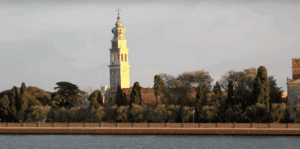
San Giorgio Maggiore Campanile:
What it is: Bell tower on San Giorgio Maggiore island (Palladio church directly across from Piazza San Marco), elevator to top providing exceptional Venice panorama
Access: Short vaporetto ride (Line 2 from San Marco stops, 5 minutes), modest admission fee (€6-8), elevator to summit preventing strenuous climb
Why it’s exceptional:
The complete San Marco perspective — viewing FROM San Giorgio toward San Marco shows Piazza, Basilica, Doge’s Palace, waterfront in complete composition versus being within San Marco unable to see its urban context, understanding San Marco as peninsula point rather than isolated landmark
The lagoon geography revelation — the island position shows Venice’s relationship to surrounding lagoon, the barrier islands (Lido) protecting from Adriatic, the channels connecting to open water, the complete aquatic ecosystem context
The Giudecca Canal perspective — looking west shows the wide Giudecca Canal separating Venice from Giudecca island, the Redentore church, cruise ship terminal, industrial port, revealing Venice’s working waterfront beyond tourist zones
The Dorsoduro and eastern Venice — viewing toward the Salute church point, Academia area, and eastern neighborhoods shows residential Venice extending beyond San Marco tourist epicenter
The superior elevation — San Giorgio Campanile reaches similar height as San Marco Campanile (approximately 60-75 meters) but with fraction of visitors creating uncrowded observation platform
Optimal timing: Sunrise or early morning (7:00-9:00 AM when church opens) for eastern light illuminating San Marco across the water and minimal crowds; late afternoon (4:00-6:00 PM) for golden-hour warm light and relatively fewer visitors than midday
The photographic advantage: The classic Venice postcard view (San Marco from across the water with gondolas in foreground) originates from San Giorgio, providing immediately-recognizable composition; also allows photographing toward less-documented eastern Venice and lagoon expanses
The Canal and Bridge Perspectives
Understanding ground-level viewpoints revealing Venice’s water-based character and daily life.
Ponte de l’Accademia (Academia Bridge):
What it is: Wooden bridge spanning the Grand Canal near Academia galleries, one of four bridges crossing the canal
Why it’s exceptional:
The Grand Canal vista — standing at bridge apex shows the canal extending in gentle curve toward Salute church (southwest direction), the perspective capturing palazzo facades, boat traffic, the relationship between water and architecture that defines Venice
The Salute composition — Santa Maria della Salute’s white Baroque domes provide perfect focal point framing the Grand Canal view, the architectural monument anchoring the perspective creating classical Venice composition
The boat traffic observation — vaporetti, water taxis, gondolas, delivery boats, police boats passing beneath providing dynamic activity, experiencing the Grand Canal as working transportation network not static museum piece
The accessible elevation — bridge height provides just enough elevation to see over canal walls and down the waterway without requiring building access or fees
The social atmosphere — the Academia Bridge attracts locals and tourists alike, the casual social mixing, people pausing to photograph or simply enjoy the view, creating authentic shared appreciation versus staged tourist performance
Optimal timing: Late afternoon/early evening (5:00-7:00 PM) for warm light on Salute’s white stone and romantic atmosphere; avoid midday when harsh overhead light flattens the scene and crowds peak
Photography considerations: Extremely popular viewpoint means your photos will replicate thousands of others; for distinctive images, focus on boat traffic details, people on the bridge as subjects, weather variations (fog, rain), seasonal light rather than standard Salute postcard shot
Ponte de Rialto (Rialto Bridge):
What it is: The most famous Grand Canal bridge, iconic Venice landmark and major tourist congestion point
The honest assessment:
Yes, it’s crowded and touristy — the Rialto Bridge accommodates thousands daily creating shoulder-to-shoulder conditions particularly 10:00 AM-6:00 PM
But the views genuinely justify the crowds:
The Grand Canal commercial activity — the Rialto position shows the canal’s working character with market delivery boats, water buses, gondolas servicing tourists, the complete spectrum of Venice’s canal usage
The palazzo architecture — Gothic and Renaissance facades line both banks, the Ca’ Farsetti and Ca’ Loredan (13th-14th century palaces now city government), Ca’ d’Oro visible in one direction, architectural density creating the quintessential Grand Canal character
The historical significance perspective — understanding you’re viewing from Venice’s original bridge (first crossing built 12th century, current structure 1591), the economic and geographic center of the Republic, adds conceptual depth to visual experience
Making it work despite crowds:
Sunrise visit (6:00-7:30 AM) — the bridge sits nearly empty allowing unobstructed views and peaceful observation impossible during daytime
Late evening (9:00-10:30 PM) — after shops close and most tourists return to hotels, the bridge regains some calm, illuminated palaces create romantic night perspective
Quick stop versus lingering — if visiting during crowded hours, take your photos quickly and move on rather than fighting for position; the view from Fondaco dei Tedeschi terrace (adjacent) provides better perspective anyway
Ponte de Chiodo (Cannaregio):
What it is: One of only two remaining bridges in Venice without railings (the other is in Dorsoduro), located in residential Cannaregio neighborhood on small canal
Why it’s exceptional:
The authentic neighborhood character — this bridge sits in working-class Cannaregio far from tourist routes, the surrounding area shows genuine Venetian residential life with laundry hanging from windows, locals going about daily activities, neighborhood shops serving residents
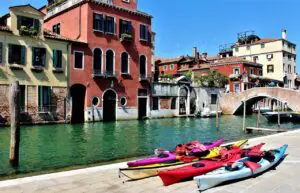
The human-scale canal perspective — small narrow canal versus Grand Canal monumentality, the intimate character revealing how ordinary Venetians experience their water-based city, seeing neighborhood gondola parking, small delivery boats, the working infrastructure of Venice
The architectural vernacular — modest houses and buildings versus grand palazzi, understanding the complete social spectrum of Venetian architecture not just wealthy merchant class, appreciating how ordinary people lived in this unique urban form
The no-railing experience — the bridge’s historic character (most Venice bridges received railings in 19th-20th centuries for safety), walking across without barriers creates more immediate connection to canal below
The discovery value — finding this bridge requires intentional navigation or productive getting lost in Cannaregio, the journey revealing neighborhood character making the destination more meaningful
Optimal timing: Any time — this area lacks tourist crowds making visit timing flexible; morning (8:00-10:00 AM) shows neighborhood life awakening, locals buying bread, heading to work, children going to school
Ponte de le Tette (San Polo):
What it is: Small bridge in San Polo neighborhood, named “Bridge of Tits” for historical reason (prostitutes displayed themselves from windows here during Republic era attracting clients)
Why it’s worth including:
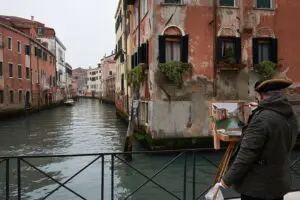
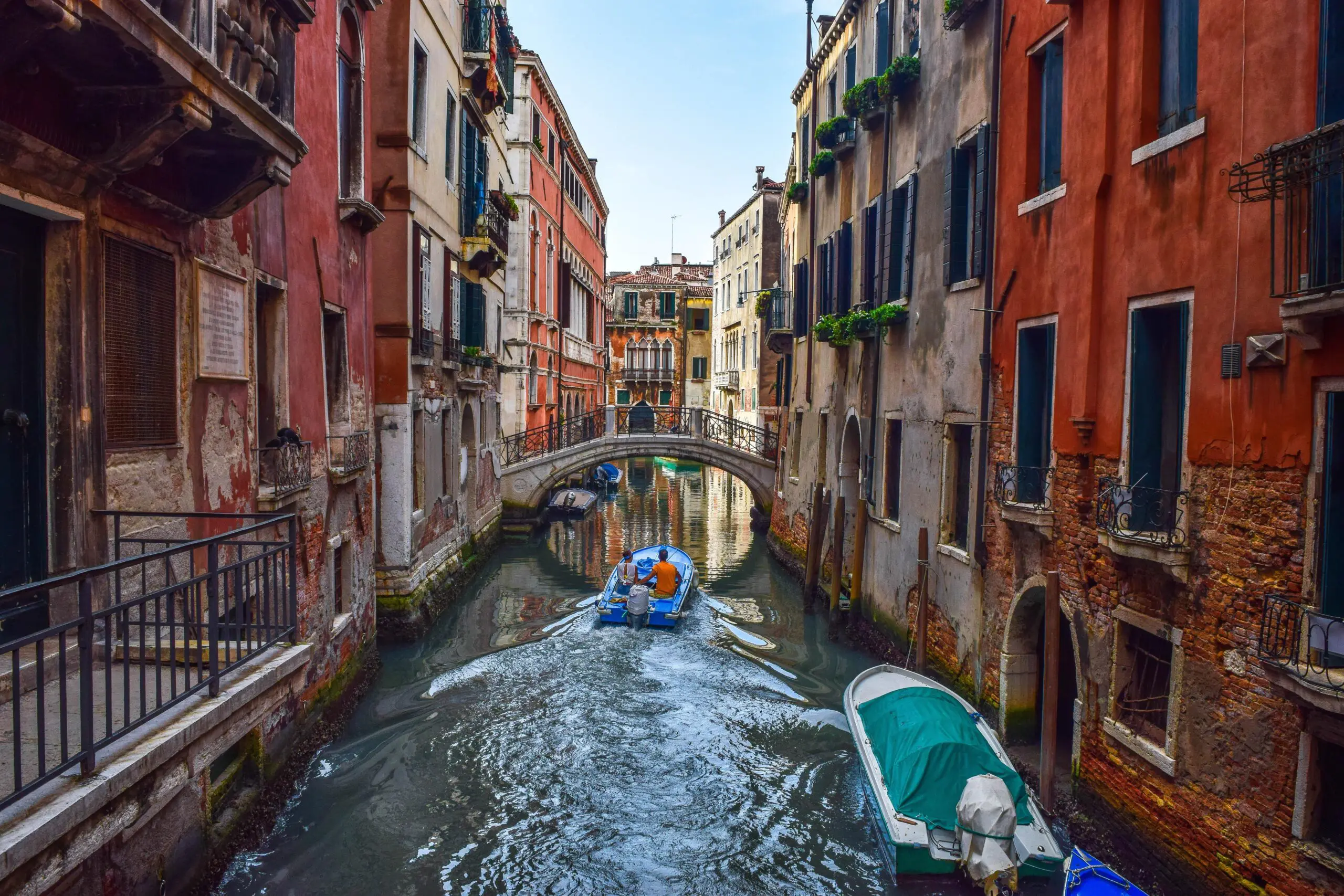
The small canal intimacy — narrow canal perspective with colorful buildings on both sides, laundry hanging, potted plants on windowsills, the domestic Venice character
The historical context — the bridge name references Venice’s fascinating relationship with prostitution (legally regulated during Republic, specific neighborhoods designated for the trade), adding cultural-historical dimension to simple bridge
The off-route location — situated between Rialto and San Polo church requiring deliberate seeking or accidental discovery, creating quieter authentic experience versus main thoroughfares
The photographic composition — the canal curve and building facades create naturally pleasing composition, particularly with gondola passing through adding traditional Venice element
The Fondamenta and Waterfront Perspectives
Understanding canal-side and lagoon-facing viewpoints revealing Venice’s aquatic existence.
Fondamenta de la Misericordia (Northern Cannaregio):
What it is: Long canal-side walkway in northern Cannaregio, lined with bars, restaurants, and residential buildings
Why it’s exceptional:
The residential authenticity — this fondamenta serves actual Venetian social life more than tourist traffic, locals gather at bars, students from nearby university socialize, neighborhood residents walk dogs and chat with neighbors
The extended perspective — the straight long canal allows seeing considerable distance along the waterway, boats moored, bridges crossing at intervals, the urban fabric extending horizontally creating different compositional dynamic than single-point bridge views
The social observation — evening aperitivo hours (6:00-8:00 PM) transform the fondamenta into lively outdoor social space, tables filled with Venetians (not tourists), the genuine bacari culture observable
The architectural variety — mixture of building styles, colors, heights creating visual rhythm along the canal, understanding Venice’s organic incremental development versus monumental uniformity
Optimal timing: Evening (6:00-9:00 PM) for social atmosphere and warm light; late afternoon (4:00-6:00 PM) for quieter observation and photographic light
The experiential dimension: This isn’t just viewpoint but social space — have spritz at canal-side bar, sit watching the scene, experiencing Venice as living city versus museum artifact
Fondamenta Zattere (Southern Dorsoduro):
What it is: Wide promenade along Dorsoduro’s southern edge facing Giudecca Canal, extending from Punta della Dogana to western neighborhoods
Why it’s exceptional:
The lagoon openness — unlike narrow canals, the Zattere faces wide Giudecca Canal (approximately 200-300 meters) creating open water perspective, feeling less enclosed than typical Venice canals, seeing across to Giudecca island
The light quality — southern exposure means excellent sunshine, the reflections off wide water creating distinctive light impossible in narrow shadowed canals, photographers particularly appreciate afternoon-evening conditions
The local leisure space — Venetians use the Zattere for walking, jogging, dog-walking, sitting on steps, the wide fondamenta functioning as public commons, observing genuine local recreational patterns
The university atmosphere — Dorsoduro houses Venice’s university (Ca’ Foscari), students populate the Zattere creating younger energy different from tourist-dominated areas, cafés and gelaterias serving local student population
The extended walking — the Zattere’s considerable length allows long leisurely strolls without navigation complexity, simply following the waterfront east-west, perfect for evening passeggiata (stroll)
Optimal timing: Late afternoon through sunset (4:00-7:30 PM depending on season) for warm light and social atmosphere; Sunday mornings (9:00-11:00 AM) for locals taking weekend walks
The gelato tradition: The Zattere has several famous gelaterias (Gelateria Nico particularly), the tradition of eating gelato while sitting on steps watching Giudecca Canal represents quintessential Venetian pleasure
Riva degli Schiavoni (Eastern Waterfront):
What it is: Wide waterfront promenade extending from San Marco east toward Arsenale and Castello
Why it’s important despite tourist crowds:
The lagoon panorama — facing south-southeast across open lagoon toward San Giorgio Maggiore island and Lido barrier island, the expansive water view showing Venice’s relationship to broader aquatic ecosystem
The sunrise excellence — eastern orientation makes Riva degli Schiavoni ideal for sunrise viewing, sun rising behind San Giorgio creating spectacular dawn colors, early morning hours (5:30-7:00 AM depending on season) show the waterfront empty and magical
The boat traffic variety — vaporetti, water taxis, private boats, gondolas, cruise ship tenders (when ships anchor in lagoon), complete spectrum of Venice’s water-based transportation
The atmospheric variations — the open water exposure means weather creates dramatic effects: fog rolling in from lagoon, storm clouds gathering over the Adriatic, sunset reflections on water, seasonal and daily atmospheric diversity
The eastern continuation — walking beyond the crowded San Marco stretch toward Arsenale and Giardini, the waterfront becomes quieter and more residential, Biennale visitors walking this route discover authentic neighborhoods
Making it work: The stretch immediately adjacent to San Marco gets overwhelmingly crowded 10:00 AM-6:00 PM; walk 10-15 minutes east toward Arsenale for similar views with fraction of crowds, or visit at sunrise when even San Marco stretch sits nearly empty
The Island Perspectives
Understanding how leaving Venice proper reveals the city in complete context.
Torcello Campanile:
What it is: Bell tower on Torcello island (ancient settlement predating Venice, now nearly abandoned with only 10-15 permanent residents), accessible by climbing interior stairs
Access: Vaporetto Line 12 to Torcello (approximately 50 minutes from Venice), modest admission fee to climb campanile
Why it’s exceptional:
The complete lagoon geography — from Torcello’s elevation (approximately 55 meters), the entire northern lagoon spreads out: Venice visible as compact archipelago to the south, the mainland shore to the north, Burano’s colorful houses to the east, Sant’Erasmo’s agricultural flatness to the southeast, understanding the lagoon as complete aquatic system rather than just Venice
The isolation perspective — Torcello’s near-abandonment (once housed 20,000 residents in medieval period, now virtually empty) creates eerie beautiful contrast, seeing what pre-Venice lagoon settlement looked like before Venice became dominant
The marsh and mudflat visibility — the shallow lagoon’s barene (mudflats) visible below, understanding the ecosystem supporting Venice, the relationship between land and water constantly shifting with tides
The uncrowded experience — while Torcello receives day-trippers, the campanile itself sees far fewer visitors than San Marco or even San Giorgio, providing peaceful contemplative observation
The historical imagination — standing where Byzantine civilization flourished before Venice’s rise, visualizing the lagoon’s layered settlement history, adds depth to visual experience
Optimal timing: Morning (9:00-11:00 AM) for clear light and fewer visitors; afternoon (2:00-4:00 PM) for dramatic light but potentially more crowded vaporetti returning
The journey value: The 50-minute boat ride to Torcello passes Murano, Burano, agricultural Sant’Erasmo, creating comprehensive lagoon exploration beyond just the viewpoint destination
San Francesco del Deserto (Advanced/Special Access):
What it is: Small lagoon island housing Franciscan monastery, positioned between Sant’Erasmo and Burano
Access: No regular vaporetto service; requires private water taxi or calling monastery ahead to arrange boat pickup; visits by appointment only, monks give tours
Why it’s exceptional:
The complete isolation — the island’s remoteness and limited access create extraordinary peace, the monastery gardens, the lagoon solitude, experiencing Venice’s aquatic environment without any tourist infrastructure
The 360-degree lagoon panorama — from the island’s modest elevation (ground level plus monastery upper floor), complete views of northern lagoon: Venice skyline to southwest, Burano close by, Sant’Erasmo’s farmland, the Dolomites visible on clear days to north, understanding the geographic relationships
The spiritual dimension — the functioning monastery (Franciscan friars live here maintaining contemplative life) adds meaningful context versus secular tourist viewpoint, the monks’ hospitality and island explanation creating human connection
The birds and nature — the island name “of the desert” references isolation not landscape; abundant bird life (herons, egrets, ducks) using lagoon ecosystem, natural environment rarely experienced in urban Venice
Practical reality: This requires significant effort (arranging visit, water taxi cost, timing coordination), appealing to serious Venice enthusiasts wanting unique experience, not casual day-trippers seeking convenient viewpoint
The Simple Observational Practices
Understanding how awareness transforms ordinary navigation into continuous visual discovery.
Looking Up:
The missed dimension — most Venice visitors walk looking down (avoiding stumbling on uneven pavement, watching for puddles during acqua alta, checking maps) or straight ahead (navigating crowds, finding landmarks), rarely looking up
What you discover looking up:
Roofline compositions — terracotta tiles creating textured horizontal planes, chimneys rising like vertical forest (Venice’s density means thousands of chimneys creating distinctive skyline), TV antennas and satellite dishes showing contemporary life, architectural variety revealing centuries of construction and modification
Architectural details — corbels supporting upper floors, decorative friezes, Gothic window tracery, Byzantine arches, Renaissance proportions, building-top altane (wooden roof terraces historically used for bleaching hair in sun), understanding Venice’s layered architectural history visible in elevation
The sky relationships — how buildings frame sky creating negative space compositions, cloud formations visible between structures, the changing light affecting building facades throughout day, seasonal atmospheric variations
Campanili orientation — seeing bell towers from ground level scattered throughout neighborhoods, using them as navigation landmarks (San Marco’s tall distinctive campanile, Santo Stefano’s leaning tower, San Pietro di Castello, others), understanding the parish church network organizing medieval Venice
The practice: Pause regularly to simply look up, photograph vertical compositions, notice details invisible when focused on ground-level navigation; this costs nothing, requires no special access, reveals beauty hiding in plain sight
Sitting in Campi:
The stationary observation — rather than rushing between landmarks, deliberately sitting in neighborhood campo (square) for 30-60 minutes observing, allows seeing what movement misses
What you discover:
Daily life rhythms — local residents crossing the campo running errands, children playing after school (increasingly rare as Venice’s population ages and families leave), elderly sitting on benches socializing, the neighborhood as living social organism
Building facade changes — how light shifts across facades during your sitting period, understanding the relationship between sun angle and architectural features, seeing what photographers mean by “good light”
The social geography — who uses the campo, when, for what purposes; morning might bring market activity, afternoon shows children and tourists, evening brings locals emerging for passeggiata and aperitivo, understanding temporal layering of space usage
The architectural whole — rather than isolated palace or church, seeing how complete campo functions as urban room, the proportions between buildings and open space, how different architectural styles coexist, the wellhead traditionally providing water now serving decorative function
The practice: Choose campo that appeals (Campo Santa Margherita in Dorsoduro for student atmosphere, Campo Santa Maria Formosa for mixed character, Campo San Giacomo dell’Orio in Santa Croce for authentic local space), buy coffee or spritz, sit minimum 30 minutes simply observing
Canal-Side Pausing:
The moving water meditation — standing on fondamenta or bridge watching canal water creates contemplative state revealing Venice’s aquatic essence
What you discover:
Tidal movement — the water level slowly rising or falling depending on tide cycle, understanding how twice-daily Adriatic tides affect Venice, seeing which buildings show water staining revealing historical flood levels
Boat varieties — garbage collection boats (distinctive orange ACTV vessels), delivery boats, private vessels, gondolas, water taxis, understanding the complete maritime traffic spectrum maintaining Venice’s daily functions
Reflections — building facades reflected in still canal water during calm periods, creating mirror images doubling visual impact, understanding why photographers love early morning when wind hasn’t disturbed water surface
The sounds — water lapping against stone, boat motors echoing off building walls, the distinctive soundscape of Venice audible when pausing versus rushing, the absence of automotive noise allowing water sounds dominance
The practice: During navigation, resist rushing between destinations; when crossing bridge or walking fondamenta, pause 5-10 minutes watching canal activity, allowing Venice’s water-based character to register emotionally not just intellectually
Photographic Strategies for Distinctive Venice Images
Understanding how to create unique visual documentation versus replicating standard tourist shots.
Avoiding the Instagram Clichés:
The problem: Venice suffers from visual over-documentation — millions of identical Rialto Bridge shots, San Marco Piazza panoramas, gondola clichés creating visual noise where distinctive personal documentation becomes difficult
The solution strategies:
Shoot what’s NOT famous — neighborhood campi, residential canals, working boats, daily life moments, architectural details, creating images documenting authentic Venice versus tourist Venice
Include people doing real activities — local buying morning bread, artisan working in shop, children playing, elderly sitting, worker making delivery, human activity creating narrative versus empty architectural documentation
Weather and atmospheric conditions — photograph during rain (reflections, umbrellas, wet stone), fog (atmospheric mystery), dramatic clouds, golden-hour light, seasonal variations (autumn colors, winter starkness), creating mood and specificity versus generic sunny postcards
Vertical compositions — most Venice photography shows horizontal canal perspectives; shooting vertical emphasizes buildings’ height, architectural details, sky-building relationships, creating different visual dynamic
Detail over vista — rather than sweeping panorama, photograph specific elements: door knocker, wellhead decoration, chimney cluster, window boxes, Gothic tracery, creating intimate documentations revealing Venice’s accumulated detail
Series over single shot — document a neighborhood through multiple related images, a single campo from different angles and times, a day’s light progression, creating narrative sequence versus isolated greatest-hit
The Light Quality Awareness:
Golden hours — roughly one hour after sunrise and one hour before sunset, the low-angle sun creates warm color temperature and dramatic shadows photographers prize
Blue hour — 20-30 minutes before sunrise and after sunset, the deep blue atmospheric light while some artificial illumination remains creating ethereal quality
Overcast advantages — cloudy days create soft even light without harsh shadows, excellent for architectural details and canal reflections, avoiding the mistake of only shooting during “good” sunny weather
Seasonal light — summer’s bright Mediterranean quality versus autumn’s golden tones versus winter’s dramatic low-angle light, understanding that returning to same location across seasons creates completely different images
Our Guided Photography and Viewpoint Tours
If you want expert guidance discovering Venice’s best perspectives — combining 28 years local knowledge with photographic and compositional insights — we offer specialized viewpoint tours tailored to serious photography or distinctive visual discovery.
What We Provide:
Optimal timing coordination — visiting viewpoints when light conditions are ideal, avoiding crowds at popular locations through early/late timing, understanding seasonal and daily variations
Access to lesser-known positions — rooftop terraces requiring special permission, private palaces with exceptional views, island locations requiring coordination, creating experiences beyond public viewpoints
Compositional guidance — explaining what makes certain perspectives work visually, identifying foreground-background relationships, teaching observation skills applicable beyond Venice
Historical and cultural context — explaining what you’re seeing beyond visual surface: architectural significance, neighborhood character, lagoon geography, daily life patterns, enriching visual experience with understanding
Flexible responsive routing — adjusting to weather conditions, your photographic interests (architecture, people, details, panoramas), energy levels, creating optimal experience versus rigid schedule
The teaching dimension — rather than just showing viewpoints, teaching you to see Venice independently, recognizing good light, identifying promising compositions, understanding what makes Venice visually unique
Understanding Complete Venice Context
For exploration approaches: Venice without a plan, getting lost productively, neighborhood characters.
For optimal timing: Sunrise experiences, seasonal considerations.
For geographic understanding: Lagoon helicopter perspectives, Biennale aerial views.
For Venice essence: What makes Venice unique, authentic experiences.
For all experiences: Complete tour options.
Venice’s Best Views Exist Beyond San Marco — Fondaco dei Tedeschi Rooftop Shows Rialto Grand Canal Curve, San Giorgio Maggiore Campanile Reveals Complete Lagoon Context, Scala Contarini del Bovolo Provides 360-Degree City Panorama, Bridge Perspectives Capture Neighborhood Canal Life, Fondamenta Viewpoints Along Quiet Waterways, Simple Observational Practices Transform Navigation Into Visual Discovery
After 28 years experiencing Venice from every angle and being featured by Rick Steves, NBC, and US Today, I know the most rewarding perspectives exist far from tourist epicenter — Fondaco dei Tedeschi rooftop terrace (free reservation required) overlooking Rialto Bridge and residential roofscape, Scala Contarini del Bovolo’s Renaissance spiral staircase revealing progressive 360-degree views, San Giorgio Maggiore campanile showing complete San Marco composition and lagoon geography with fraction of crowds versus San Marco Campanile, Academia Bridge capturing classic Salute-framed Grand Canal vista, residential neighborhood bridges revealing authentic canal life, Fondamenta della Misericordia and Zattere waterfront promenades showing local social patterns, island perspectives from Torcello campanile displaying complete northern lagoon ecosystem. Simple practices enhance visual discovery: looking up reveals rooflines and architectural details, sitting in neighborhood campi observes daily life rhythms, canal-side pausing connects with Venice’s aquatic essence. Distinctive photography avoids Instagram clichés through shooting neighborhoods not monuments, including genuine human activity, embracing weather variations, creating detail-focused series versus isolated vistas. Optimal timing employs golden-hour warm light, sunrise empty locations, seasonal atmospheric changes. We offer guided viewpoint tours combining 28-year local knowledge with photographic insights, optimal timing coordination, access to lesser-known positions, compositional guidance, historical context. Contact us for experiences revealing Venice’s visual treasures beyond San Marco tourist performance. Let’s show you perspectives most visitors never discover.
Contact us for guided Venice viewpoint experiences — discovering exceptional perspectives with expert insights.
Frequently Asked Questions
Is climbing the San Marco Campanile worth it despite being touristy, or should I skip it entirely for less-crowded alternatives?
San Marco Campanile provides genuinely exceptional 360-degree Venice panorama making it worth experiencing once despite tourist crowds and expense (€10-15 admission, potential 30-60+ minute queue during peak times), but the less-crowded alternatives (San Giorgio Maggiore, Scala Contarini del Bovolo, Fondaco dei Tedeschi) offer comparable or superior perspectives with better experiences. San Marco Campanile advantages: highest elevation in Venice center (98.6 meters) creating maximum viewing distance, recognizable landmark providing orientation reference, elevator access (no strenuous climbing), complete rotation seeing all sestieri and lagoon geography, historical significance (originally 9th century, current reconstruction 1912 after 1902 collapse). San Marco Campanile disadvantages: overwhelming crowds particularly 10:00 AM-4:00 PM creating jostling and difficulty photographing, expensive relative to alternatives, long queues wasting vacation time, the enclosed observation platform creates distance from ground reality versus more intimate lower elevations. The strategic approach: If you have multiple Venice days, climb San Marco Campanile once for the comprehensive high-elevation experience (go early morning 9:00-9:30 AM when it opens or late afternoon 4:30-6:00 PM avoiding midday crush), then spend remaining time exploring alternatives providing different perspectives, better light, uncrowded observation, distinctive compositions. If limited time: Skip San Marco Campanile entirely in favor of San Giorgio Maggiore campanile (similar height and views, fraction of crowds, better San Marco composition viewing FROM San Giorgio versus being on San Marco) plus Fondaco dei Tedeschi rooftop (free, excellent Rialto perspective, modern facility). The honest assessment: San Marco Campanile works as one-time orientation experience understanding Venice’s complete geography, but the alternatives create more rewarding repeated visual discoveries without crowds and expense.
What are the best times of day for photography at these viewpoints, and does seasonal timing matter significantly?
Light quality varies dramatically by time of day and season creating completely different photographic conditions at identical viewpoints. Daily timing hierarchy: (1) Golden hours (first hour after sunrise, last hour before sunset) provide warm color temperature, dramatic shadows from low sun angle, the light photographers specifically seek — Venice’s Istrian stone and terracotta roofs glow beautifully in golden-hour conditions. (2) Sunrise/blue hour (30 minutes before/after sunrise) creates ethereal quality with deep blue atmospheric light plus some artificial illumination, excellent for waterfront locations like Riva degli Schiavoni facing east. (3) Overcast days provide soft even light without harsh shadows, excellent for architectural details, canal reflections, avoiding common mistake of only shooting sunny weather. (4) Midday (11:00 AM-2:00 PM) creates harsh overhead light flattening scenes and washing out colors — generally avoid for serious photography, acceptable for casual snapshots. Seasonal variations: (1) Spring (April-May) brings fresh clear air after winter, pleasant temperatures for extended outdoor photography, longer days than winter allowing multiple golden-hour sessions. (2) Summer (June-August) provides maximum daylight (sunrise 5:30 AM, sunset 9:00 PM) but heat haze reduces distant visibility, tourist crowds peak affecting compositions. (3) Autumn (September-October) offers optimal conditions — crisp air, dramatic clouds, warm color tones, comfortable temperatures, fewer tourists than summer. (4) Winter (November-February) creates dramatic low-angle light, potential fog creating atmospheric mystery, but cold temperatures, short days (sunrise 7:30 AM, sunset 5:00 PM), increased rain requiring weather flexibility. Specific viewpoint timing: Eastern-facing locations (Riva degli Schiavoni, San Giorgio looking toward lagoon) excel at sunrise; western-facing positions (Zattere looking toward sunset over Giudecca) work best late afternoon; rooftop terraces (Fondaco dei Tedeschi, campanili) benefit from any golden hour allowing rotation for optimal light direction.
Can I visit these viewpoints as part of spontaneous wandering, or do they require advance planning and reservations?
Most exceptional Venice viewpoints accommodate spontaneous visits requiring minimal advance planning, with few exceptions needing reservations. No reservation needed (spontaneous OK): Academia Bridge, Rialto Bridge, Ponte de Chiodo, all fondamenta waterfront locations (Misericordia, Zattere, Riva degli Schiavoni), neighborhood campi, canal-side positions — these are public spaces accessible anytime allowing completely spontaneous wandering approach. Modest admission but walk-up access: Scala Contarini del Bovolo (€8-10, no reservation required, limited capacity means potential brief wait during peak times but rarely more than 10-15 minutes), San Giorgio Maggiore campanile (€6-8, walk-up access after brief vaporetto ride), San Marco Campanile (€10-15, long queues possible but no reservation system — just wait in line). Advance reservation recommended: Fondaco dei Tedeschi rooftop requires free online booking (website allows reservation several weeks ahead, fills quickly during high season particularly April-October, absolutely book 3-7 days minimum before desired visit, walk-up access extremely limited). Special coordination required: San Francesco del Deserto monastery island (must contact ahead arranging visit and boat transport, requires days-to-weeks advance planning, not spontaneous option). The balanced approach: For spontaneous Venice exploration, focus on public bridges/fondamenta plus walk-up admission campanili allowing complete flexibility; if you know you want Fondaco dei Tedeschi rooftop (genuinely excellent perspective), make that single advance reservation while keeping everything else spontaneous; avoid over-planning multiple timed reservations creating schedule rigidity defeating Venice’s invitation to responsive wandering. Weather consideration: The advantage of spontaneous viewpoints is adjusting to conditions — beautiful afternoon light encourages bridge photography walk, rain makes indoor museum day preferable to exposed rooftop visits, weather-responsive flexibility impossible with rigid pre-booked schedule.