How did Venice help shape the history of medicine? Through its maritime spice trade, professional apothecaries, celebrated theriac preparations, and early public-health institutions, the Venetian Republic became an influential center of European medical commerce and regulation. Its achievements mattered, but they were not the same as modern evidence-based healthcare. This guide explores the history behind the pharmacy storefronts rather than repeating our existing list of beautiful historic shops.
Venice at the crossroads of medicine
The history of medicine in Venice begins with movement: ships, people, ideas, and ingredients crossing the Mediterranean. At Rialto, imported spices were not simply luxuries for wealthy diners. They could be ingredients in perfumes, household remedies, and complex preparations ordered by physicians. This overlap made the city’s commercial geography part of its medical geography. But the presence of a substance in an old prescription does not prove it was effective. Venetian medical culture combined practical observation, inherited theories, commercial ambition, and religious beliefs. Its legacy is best understood as a long series of institutional developments, not a sudden invention of modern healthcare.
For a visitor, the practical insight is to look beyond the surviving architecture and ask what relationships once made the place function. A bridge, warehouse, or shop could connect the daily life of residents to distant markets and professional authorities. That network is usually invisible in a photograph, but it is central to the historical story.
Why spices mattered to physicians
Cinnamon, cloves, pepper, saffron, and other imported materials moved through Venice’s trading networks. They could be valued for taste, scent, or medicinal properties attributed to them by contemporary authorities. The same ingredient might appear in a kitchen, a perfumer’s stock, or an apothecary’s recipe. This does not mean that spice merchants and pharmacists performed identical work. Historical Venetian trades were regulated and distinguished by their activities. The city’s municipal historical research describes both bulk spice sellers and apothecaries preparing medicines. Understanding that division reveals a sophisticated economy rather than a romantic collection of mysterious bottles.
It is equally important to separate contemporary understanding from the language of historical sources. A substance described as medicinal centuries ago may not be safe or effective. Likewise, a regulatory measure can reveal a serious concern without proving that the problem was solved. Such distinctions make the story more credible, not less.
Rialto as an international supply chain
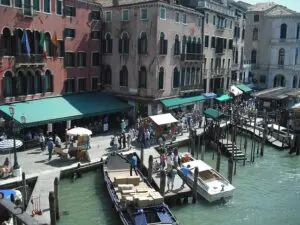
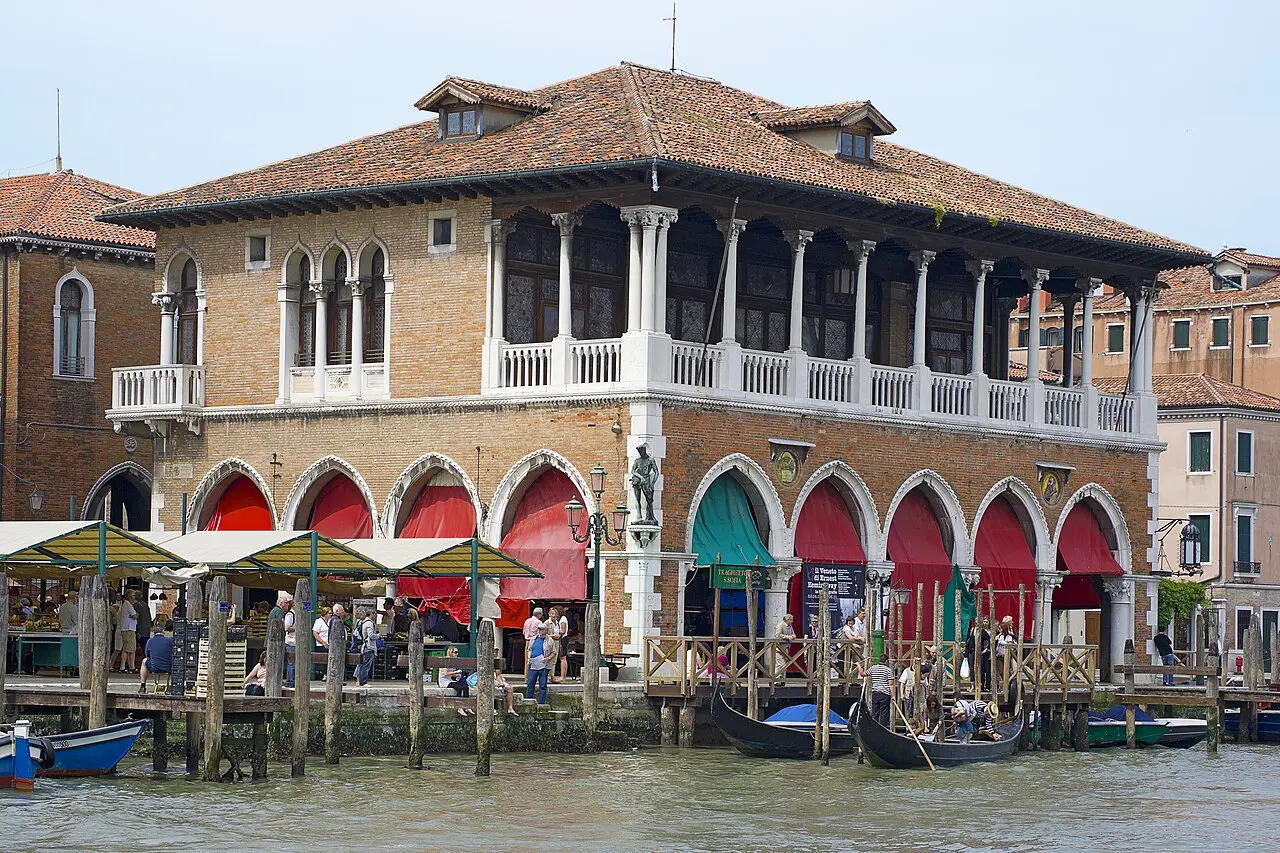
Rialto was a commercial district where imported goods could be unloaded, stored, weighed, processed, and sold. Its position on the Grand Canal made the movement of merchandise fundamental to everyday life. Medicinal ingredients reached the city through networks connecting the eastern Mediterranean, Africa, and other markets. A customer buying a remedy might never see the ships or brokers behind its ingredients. Yet availability, quality, and price depended on those distant connections. This is why Venice’s contribution to medical history was partly logistical: it brought together goods and specialists who otherwise might never have encountered one another.
The sources also show why no single institution deserves all the credit. Traders, household caregivers, officials, physicians, and skilled apothecaries participated in overlapping systems. Their interests sometimes aligned and sometimes conflicted. Venice’s distinctive contribution was the way those systems interacted within a commercially connected maritime republic.
What a Venetian speziale did
The Venetian word speziale describes an occupational world that differed from the contemporary pharmacist’s. Some specialists compounded medicines; others traded spices and related products in bulk. The Republic’s rules attempted to define professional responsibilities and limit dangerous practices. An apothecary could be a skilled preparer of remedies, a merchant, and a participant in neighborhood social life. Such a shop was neither a modern drugstore nor a laboratory in the present scientific sense. Its authority came from training, guild regulations, established recipes, and reputation, not from clinical trials of the kind expected today.
For a visitor, the practical insight is to look beyond the surviving architecture and ask what relationships once made the place function. A bridge, warehouse, or shop could connect the daily life of residents to distant markets and professional authorities. That network is usually invisible in a photograph, but it is central to the historical story.
The difference between medicine and merchandise
Medicinal substances were also commercial products. They had suppliers, buyers, transport costs, risks of spoilage, and reputations for quality. A profitable preparation might circulate widely even if its therapeutic claims were doubtful. That tension is not peculiar to Venice, but the city’s trade connections made it especially visible. The best historical question is therefore not merely what people believed cured them. We must also ask who imported the ingredients, who inspected them, who sold them, and who benefited from their popularity. These questions reveal the economic structure beneath the history of healing.
It is equally important to separate contemporary understanding from the language of historical sources. A substance described as medicinal centuries ago may not be safe or effective. Likewise, a regulatory measure can reveal a serious concern without proving that the problem was solved. Such distinctions make the story more credible, not less.
The merchants who connected continents
Historian Andrea Mozzato studied the business of Agostino Altucci, a Tuscan apothecary active in Venice between 1465 and 1475. His trade involved medicinal substances moving between Venice, Syria, and Spain. The documented materials included sugar, scammony, cloves, and resins. The research found that commerce in raw substances was particularly important. This is a valuable correction to the image of an apothecary spending every day mixing elaborate potions. Much of the business involved buying and moving ingredients. A surviving merchant’s record can reveal the workings of healthcare more clearly than an attractive antique cabinet.
The sources also show why no single institution deserves all the credit. Traders, household caregivers, officials, physicians, and skilled apothecaries participated in overlapping systems. Their interests sometimes aligned and sometimes conflicted. Venice’s distinctive contribution was the way those systems interacted within a commercially connected maritime republic.
What the Altucci records reveal
Altucci’s documented exchanges demonstrate that the city’s medical economy was international and interconnected. He was not simply a Venetian figure rooted in one neighborhood: he was a trader operating across regions. The materials he handled reflect both demand for remedies and the commercial possibilities created by maritime connections. His example also warns against describing all apothecaries as if they performed the same tasks. Some were more deeply involved in importation and resale, while others focused on preparation and local customers. A real name, dates, and documented goods provide stronger historical insight than an invented anecdote about a secret recipe.
For a visitor, the practical insight is to look beyond the surviving architecture and ask what relationships once made the place function. A bridge, warehouse, or shop could connect the daily life of residents to distant markets and professional authorities. That network is usually invisible in a photograph, but it is central to the historical story.
The professional rules of the spezieri
Venetian authorities recognized that selling medicines carried responsibilities. Municipal historical accounts describe oaths taken by medicinal apothecaries and restrictions on the distribution of poisons. Rules sought to regulate behavior and protect the community, although their existence does not establish that they were always followed. The important historical development is the recognition that medicines were not ordinary goods. Their misuse could have serious consequences. This created a role for professional standards, civic supervision, and penalties. Modern pharmacy regulation rests on far more advanced science, but some of the underlying questions were already being debated.
It is equally important to separate contemporary understanding from the language of historical sources. A substance described as medicinal centuries ago may not be safe or effective. Likewise, a regulatory measure can reveal a serious concern without proving that the problem was solved. Such distinctions make the story more credible, not less.
The problem of dangerous ingredients
Historical remedies could include substances capable of harming the patient. The Republic restricted certain poison sales and required authorization under specified circumstances. This reflected concern about deliberate poisoning as well as the dangers associated with potent materials. A medicine’s traditional reputation was not a guarantee of safety. Dosage, contamination, and interactions were difficult to assess without modern analytical tools. When we encounter an old prescription, it is essential to distinguish its historical significance from medical advice. None of the formulas discussed here should be prepared or consumed as a treatment.
The sources also show why no single institution deserves all the credit. Traders, household caregivers, officials, physicians, and skilled apothecaries participated in overlapping systems. Their interests sometimes aligned and sometimes conflicted. Venice’s distinctive contribution was the way those systems interacted within a commercially connected maritime republic.
Theriac, Venice’s famous compound
Theriac became one of the most celebrated remedies associated with Venice. Sometimes called Venetian treacle in English, it was promoted for an extraordinary variety of complaints. Its prestige depended on elaborate recipes, imported ingredients, and the reputation of those who prepared it. Scholarly studies describe preparations containing many botanical and animal materials, sometimes including opium and viper flesh. The historical claims made for theriac were much broader than modern evidence could support. Its significance today lies in what it reveals about medical belief, manufacturing standards, public ceremony, and commercial competition.
For a visitor, the practical insight is to look beyond the surviving architecture and ask what relationships once made the place function. A bridge, warehouse, or shop could connect the daily life of residents to distant markets and professional authorities. That network is usually invisible in a photograph, but it is central to the historical story.
A panacea is not a proven cure
Theriac’s long popularity should not be mistaken for proof that it treated every disease attributed to it. Opium is pharmacologically active, but that fact cannot validate an entire mixture or its many advertised uses. Historical practitioners worked within theories and evidence standards different from ours. Some preparations may have altered symptoms while also exposing patients to substantial risks. The modern distinction between ingredient identity, safety, and demonstrated clinical benefit is crucial. Venice helped develop practices intended to establish authenticity, but authenticity alone cannot tell us whether a medicine actually works.
It is equally important to separate contemporary understanding from the language of historical sources. A substance described as medicinal centuries ago may not be safe or effective. Likewise, a regulatory measure can reveal a serious concern without proving that the problem was solved. Such distinctions make the story more credible, not less.
Why recipes were so complicated
Historical theriac formulas could involve dozens of ingredients. Complexity was part of the product’s identity and could make its preparation a specialized undertaking. Yet complexity also increased the difficulty of ensuring consistent quality. Raw materials varied, substitutions were possible, and different authorities disputed the proper recipe. A patient could hardly verify what was inside a finished jar. That uncertainty made professional reputation and inspection important. The story resembles an early struggle over manufacturing standards, but it must not be confused with contemporary pharmaceutical testing, which evaluates products in ways unavailable to Renaissance physicians.
The sources also show why no single institution deserves all the credit. Traders, household caregivers, officials, physicians, and skilled apothecaries participated in overlapping systems. Their interests sometimes aligned and sometimes conflicted. Venice’s distinctive contribution was the way those systems interacted within a commercially connected maritime republic.
When medicine became public theater
Scholarly research describes public ceremonies in which theriac ingredients were displayed and inspected before preparation. Physicians and spectators could witness the process. The display served several purposes: it made materials visible, asserted professional competence, and advertised the producer’s reputation. Public supervision did not guarantee effectiveness, but it could help discourage certain forms of substitution or fraud. This blending of medicine, ceremony, and marketing is among Venice’s most revealing contributions to the history of pharmacy. The city did not merely sell a product; it staged confidence in the product’s authenticity.
For a visitor, the practical insight is to look beyond the surviving architecture and ask what relationships once made the place function. A bridge, warehouse, or shop could connect the daily life of residents to distant markets and professional authorities. That network is usually invisible in a photograph, but it is central to the historical story.
The spectacle near Ponte dei Bareteri
The University of Padua’s historical exhibition on theriac discusses a seventeenth-century account of medicinal materials displayed near Ponte dei Bareteri. The preparations were presented with considerable ceremony, including carefully arranged ingredients. For a traveler, this is an unusually specific connection between a recognizable Venetian place and the history of medicine. The bridge was not a modern clinical facility; it was part of a city where trade and public life unfolded in the streets. No one should expect a comparable ceremony today, but knowing the history changes how the surrounding neighborhood can be understood.
It is equally important to separate contemporary understanding from the language of historical sources. A substance described as medicinal centuries ago may not be safe or effective. Likewise, a regulatory measure can reveal a serious concern without proving that the problem was solved. Such distinctions make the story more credible, not less.
The political power of a medicine
Barbara Di Gennaro Splendore’s study The State Drug examines how theriac became intertwined with public authority. In Venice and other Italian cities, rulers and medical institutions could strengthen their reputations by controlling the production of a popular remedy. Apothecaries and physicians sometimes disagreed over recipes, authority, and commercial advantage. Regulation could be motivated by concern for consumers and by the desire to display competent government. Those motivations were not mutually exclusive. This is an important lesson in the history of public health: institutions may protect people while also seeking prestige and legitimacy.
The sources also show why no single institution deserves all the credit. Traders, household caregivers, officials, physicians, and skilled apothecaries participated in overlapping systems. Their interests sometimes aligned and sometimes conflicted. Venice’s distinctive contribution was the way those systems interacted within a commercially connected maritime republic.
What early quality control achieved
Inspecting ingredients, restricting manufacturers, and supervising preparation addressed practical problems of identity and fraud. A producer could be required to demonstrate that certain materials were present and that an accepted procedure had been followed. These measures anticipated questions later central to medicines regulation. But they did not establish therapeutic efficacy by modern standards. A perfectly authentic compound might still fail to help a patient. Venice’s contribution was therefore institutional rather than miraculous. It helped develop ways to govern medical commerce within the scientific limits of its age.
For a visitor, the practical insight is to look beyond the surviving architecture and ask what relationships once made the place function. A bridge, warehouse, or shop could connect the daily life of residents to distant markets and professional authorities. That network is usually invisible in a photograph, but it is central to the historical story.
Pharmacies were centers of conversation
Historian Filippo De Vivo has shown that early modern Venetian pharmacies were important places for exchanging news. People visited them not only to buy remedies but also to discuss politics, religion, and current affairs. Their clientele could include diplomats, patricians, informers, and people excluded from formal political institutions. A pharmacy was therefore a place where information moved through society. This role is easy to overlook when visiting a historic shop today. Behind the elegant shelving was once a lively social environment in which news, commerce, and health concerns could meet.
It is equally important to separate contemporary understanding from the language of historical sources. A substance described as medicinal centuries ago may not be safe or effective. Likewise, a regulatory measure can reveal a serious concern without proving that the problem was solved. Such distinctions make the story more credible, not less.
Why the government listened
The exchange of information could make pharmacies politically sensitive spaces. De Vivo’s research draws on inventories, inquisitorial documents, and reports from informers to reconstruct how conversation circulated through these establishments. A shopkeeper did not need to be a political conspirator for conversations to attract official attention. In a closely monitored republic, ordinary discussion could carry significance. The physical layout of a shop, its regular customers, and its commercial networks helped determine its social role. This aspect of medical history connects the apothecary directly to the wider history of communication and state power.
The sources also show why no single institution deserves all the credit. Traders, household caregivers, officials, physicians, and skilled apothecaries participated in overlapping systems. Their interests sometimes aligned and sometimes conflicted. Venice’s distinctive contribution was the way those systems interacted within a commercially connected maritime republic.
Household remedies and hidden expertise
Not all medical knowledge came from licensed professionals. Families prepared remedies, shared observations, and preserved recipes across generations. Historian Sabrina Minuzzi has documented the movement of medicinal knowledge between households and apothecaries in Venice. Her research highlights the contributions of women and men whose practical expertise did not always fit neat professional categories. Some traditional remedies were ineffective or unsafe, while others contributed observations that later practitioners examined. A careful history avoids portraying every nonprofessional healer as either a genius or a fraud. The reality was more varied and socially connected.
For a visitor, the practical insight is to look beyond the surviving architecture and ask what relationships once made the place function. A bridge, warehouse, or shop could connect the daily life of residents to distant markets and professional authorities. That network is usually invisible in a photograph, but it is central to the historical story.
Women in the history of healing
Written histories often focus on prominent male physicians, pharmacists, and officials. Yet the daily work of caring for sick relatives and maintaining household remedies involved many people outside those institutions. Women could play significant roles in transmitting practical knowledge, even when they lacked access to formal professional status. Minuzzi’s research offers a more inclusive view of how medicinal practices moved through society. This does not mean that household knowledge was always medically reliable. It means that the history of healing cannot be told solely through universities, government offices, and famous men.
It is equally important to separate contemporary understanding from the language of historical sources. A substance described as medicinal centuries ago may not be safe or effective. Likewise, a regulatory measure can reveal a serious concern without proving that the problem was solved. Such distinctions make the story more credible, not less.
The Black Death and collective action
The plague of 1348 forced Venice to confront disease as a problem affecting the entire community. Treccani records temporary health officials appointed during the emergency. Such measures reflected the need for collective responses, even though contemporary explanations of disease differed from modern microbiology. Authorities attempted to manage risks using the observations and assumptions available to them. Some measures could reduce contact and movement; others reflected fears or theories that would later be revised. Venice was an influential early example of organized epidemic governance, not the sole inventor of modern public health.
The sources also show why no single institution deserves all the credit. Traders, household caregivers, officials, physicians, and skilled apothecaries participated in overlapping systems. Their interests sometimes aligned and sometimes conflicted. Venice’s distinctive contribution was the way those systems interacted within a commercially connected maritime republic.
A permanent health magistracy
Venetian public-health administration developed through several stages. Treccani records a decision in 1460 toward continuous oversight and the establishment of a stable health authority in 1485. The Provveditori alla Sanità later acquired broader responsibilities. This chronology is important because it shows institutional learning rather than one sudden reform. Repeated epidemics created pressure for ongoing coordination, records, and authority. The city gradually developed an administrative structure intended to protect collective health. Its methods were imperfect, but the decision to make health a continuing government responsibility was historically significant.
For a visitor, the practical insight is to look beyond the surviving architecture and ask what relationships once made the place function. A bridge, warehouse, or shop could connect the daily life of residents to distant markets and professional authorities. That network is usually invisible in a photograph, but it is central to the historical story.
Quarantine in a maritime city
Venice’s wealth depended on ships arriving from distant ports. The same movement raised fears that disease could enter with passengers and goods. The lagoon offered locations where travelers and cargo could be separated from densely inhabited neighborhoods. Lazzarettos became part of the city’s public-health landscape. Their story involves observation, isolation, logistical planning, and the human cost of restrictions. Quarantine was not a simple triumph to celebrate without qualification. It could protect a community while also imposing hardship on individuals. The relationship between commerce and epidemic control shaped Venetian policy over centuries.
It is equally important to separate contemporary understanding from the language of historical sources. A substance described as medicinal centuries ago may not be safe or effective. Likewise, a regulatory measure can reveal a serious concern without proving that the problem was solved. Such distinctions make the story more credible, not less.
Hospitals, charity, and the sick
The Republic’s medical world included hospitals, charitable organizations, physicians, surgeons, apothecaries, and religious institutions. Their responsibilities differed, and access to care was influenced by social conditions and historical circumstances. It would be inaccurate to describe this network as a modern universal healthcare service. Yet it provided important forms of assistance and helped establish traditions of institutional care. For a contemporary comparison, read how Venice’s hospital and water ambulances work today. The modern system is fundamentally different, but the city’s long concern with health remains visible.
The sources also show why no single institution deserves all the credit. Traders, household caregivers, officials, physicians, and skilled apothecaries participated in overlapping systems. Their interests sometimes aligned and sometimes conflicted. Venice’s distinctive contribution was the way those systems interacted within a commercially connected maritime republic.
Padua and the scientific world of the Veneto
Venice’s mainland territories included Padua, a major center of university learning. The Republic took control of Padua in 1405 and supported its university. Medical teaching, anatomical investigation, and botanical study contributed to the intellectual environment of the Veneto. Scientific developments did not immediately replace older remedies, however. Ideas competed and changed over time. The Botanical Garden of Padua provides a valuable companion story about medicinal plants and education. Venice’s commercial and regulatory history belongs within this wider regional setting.
For a visitor, the practical insight is to look beyond the surviving architecture and ask what relationships once made the place function. A bridge, warehouse, or shop could connect the daily life of residents to distant markets and professional authorities. That network is usually invisible in a photograph, but it is central to the historical story.
Printing and the circulation of ideas
Venice became a major European center of printing during the Renaissance. Medical texts, recipes, arguments, and critiques could circulate more widely through printed books. Printing made knowledge easier to reproduce, but it did not automatically make every claim accurate. Mistakes and outdated theories could travel alongside genuine advances. The city’s significance lay in the interaction of commerce and communication. Ships brought ingredients while presses distributed ideas. Physicians and apothecaries operated in a world increasingly connected by both material goods and texts. That combination helped shape the long transformation of European medical practice.
It is equally important to separate contemporary understanding from the language of historical sources. A substance described as medicinal centuries ago may not be safe or effective. Likewise, a regulatory measure can reveal a serious concern without proving that the problem was solved. Such distinctions make the story more credible, not less.
Why modern medicine emerged slowly
The transition from inherited medical theories to evidence-based practice took centuries and involved many places. Anatomy, chemistry, experimental methods, clinical observation, and public-health science developed unevenly. Familiar products such as theriac remained popular even as their value was questioned. Commercial success could outlast scientific confidence. Venice contributed important institutions and professional practices, but it did not single-handedly invent modern medicine. The most accurate account recognizes both achievement and limitation. Historical progress is not a straight line from ignorance to certainty; it is a process of revising claims, methods, and responsibilities.
The sources also show why no single institution deserves all the credit. Traders, household caregivers, officials, physicians, and skilled apothecaries participated in overlapping systems. Their interests sometimes aligned and sometimes conflicted. Venice’s distinctive contribution was the way those systems interacted within a commercially connected maritime republic.
Walking the history around Rialto
A thoughtful historical walk can begin near Rialto, where imported goods entered a commercial network that supplied kitchens and apothecaries. From there, visitors can consider the old trades and the documented tradition of theriac production near Ponte dei Bareteri. The point is not to claim that every present-day shop occupies an unchanged Renaissance pharmacy. Buildings, businesses, and streets have evolved. For a separate look at surviving storefronts, read our guide to Venice’s historic pharmacies. This article instead explains the medical and commercial system behind them.
For a visitor, the practical insight is to look beyond the surviving architecture and ask what relationships once made the place function. A bridge, warehouse, or shop could connect the daily life of residents to distant markets and professional authorities. That network is usually invisible in a photograph, but it is central to the historical story.
Reading Venice through old street names
Some Venetian street names preserve memories of occupations and communities whose businesses have disappeared. The language of the spezieri belongs to that larger urban history. A name can suggest an association, but it does not automatically prove that a particular pharmacy stood at a precise address continuously for centuries. Historical interpretation requires documentary support. Our companion article explains how trades, families, and parishes shaped Venice’s street names. Together, these stories show how commercial history remains embedded in the city’s everyday geography.
It is equally important to separate contemporary understanding from the language of historical sources. A substance described as medicinal centuries ago may not be safe or effective. Likewise, a regulatory measure can reveal a serious concern without proving that the problem was solved. Such distinctions make the story more credible, not less.
What travelers should remember
The historic remedies discussed here are not instructions for self-treatment. Theriac and other old compounds could contain dangerous ingredients, and their celebrated claims were not established by modern medical testing. For healthcare needs today, consult a qualified professional or a licensed pharmacy. Travelers should also avoid assuming that historic shop displays indicate currently available medicines or public access to private interiors. A respectful visit values documented history without romanticizing harmful practices. Understanding the difference between past belief and current evidence is one of the most useful lessons this subject can offer.
The sources also show why no single institution deserves all the credit. Traders, household caregivers, officials, physicians, and skilled apothecaries participated in overlapping systems. Their interests sometimes aligned and sometimes conflicted. Venice’s distinctive contribution was the way those systems interacted within a commercially connected maritime republic.
Venice’s real medical legacy
Venice’s medical history is not the story of one miraculous cure. It is a history of connected systems: maritime trade, specialized merchants, professional rules, public inspection, household knowledge, universities, printing, and organized responses to epidemics. Those systems sometimes protected people and sometimes failed them. They also helped establish enduring questions about trust, evidence, and responsibility. Igor Scomparin has worked as a licensed guide since 1997, and Tour Leader Venice approaches this subject through documented local history rather than invented anecdotes. Behind the city’s palaces was a society constantly negotiating how to trade, regulate, and care for human life.
For a visitor, the practical insight is to look beyond the surviving architecture and ask what relationships once made the place function. A bridge, warehouse, or shop could connect the daily life of residents to distant markets and professional authorities. That network is usually invisible in a photograph, but it is central to the historical story.
Frequently Asked Questions
Why was Venice important to the history of pharmacy?
Venice’s maritime networks imported medicinal ingredients, while its apothecaries and authorities developed influential systems of commerce, preparation, and oversight.
What was Venetian theriac?
Theriac, also called Venetian treacle, was a historical compound remedy containing numerous ingredients, sometimes including opium. Its broad medical claims were not proven by modern standards.
Did Venice invent modern public health?
No. Venice was an influential early example of organized epidemic response, with permanent health officials established in the late fifteenth century, but modern public health developed across many places and centuries.
Historical Sources and Photo Credit
Research sources: Treccani on Venetian medicine and public health; City of Venice on the spezieri; Andrea Mozzato on Agostino Altucci; The State Drug, Harvard University Press; Filippo De Vivo on pharmacies as communication centers; University of Padua on theriac. Featured image: documentary photograph of the Rialto market by Archaeodontosaurus, Wikimedia Commons, CC BY-SA 4.0; used to illustrate Venice’s historic commercial setting, not a surviving pharmacy.