What is the Venetian Lagoon like in winter? Cooler months reveal a quieter landscape of salt marshes, working fishing boats, wintering waterbirds, and inhabited islands moving at a different pace from the summer tourist season. Herons, cormorants, and other wetland birds may be seen, but sightings depend on conditions. The best winter experience is flexible, respectful of wildlife, and grounded in the practical realities of boat routes, fog, wind, and island services.
Winter changes the lagoon’s scale
The Venetian Lagoon in winter is not an empty summer landscape with fewer boats. The angle of light changes, the air can sharpen distant outlines, and quieter channels make the working geography easier to understand. On a clear morning the low islands can seem surprisingly close; in mist they may vanish behind a pale horizon. These shifts are not just photographic effects. They influence how a visitor perceives the distance between settlements, marshes, fishing areas, and navigation channels. The quieter season rewards patient observation rather than a checklist of attractions.
To make the most of this detail, compare what you can see from an authorized public viewpoint with the broader geography on a reliable map. Water, mudflat, marsh, and navigable channel may appear continuous from a distance, yet they serve very different ecological and practical functions. Learning those distinctions adds depth without requiring entry into fragile areas.
Where the winter lagoon begins
The lagoon extends far beyond the postcard circuit around St. Mark’s Square. Northern waters near Torcello, Burano, Mazzorbo, and the marshes have a different character from the busy central waterways. The southern lagoon also has broad open views and working shorelines, but it should not be treated as one uniform habitat. Wind exposure, salinity, water depth, boat traffic, and access vary. A thoughtful winter excursion starts with the geography and the day’s conditions, not the assumption that any boat can travel safely through any stretch of water.
Seasonal variation is the central caveat. The scene may look different after strong wind, during an unusual tide, or on a day with little bird activity. A useful travel guide should describe possibilities and constraints, not promise that a particular photograph or wildlife encounter can be reproduced on demand.
Why winter can be a rewarding season
Cooler months can offer quieter visitor conditions and opportunities to observe wintering waterbirds. The appeal is not guaranteed solitude: local residents still work, public boats still operate, and popular islands may remain busy at certain times. Nor does winter promise constant clear skies. Rain, wind, and fog can radically change a planned outing. The reward is a different rhythm of attention. Without summer’s emphasis on sun and crowded terraces, visitors often notice marsh vegetation, distant bell towers, working boats, and the movement of birds.
Consider the perspective of someone who uses the lagoon for daily life. A quiet channel can still be a workplace, a public transport route, or a habitat requiring protection. Allowing those purposes to take precedence over sightseeing is one of the simplest ways to travel respectfully.
The lagoon as a winter habitat
Coastal wetlands support birds through a variety of seasonal patterns. Some species are present year-round, some migrate through, and others use the northern Adriatic wetlands in colder months. The abundance visible on a particular day depends on weather, tides, habitat, and disturbance. It is important not to label every bird seen in December as a winter migrant. A careful observer looks at behavior as well as species: feeding along a shallow edge, resting in sheltered water, or moving between roosting and foraging areas.
To make the most of this detail, compare what you can see from an authorized public viewpoint with the broader geography on a reliable map. Water, mudflat, marsh, and navigable channel may appear continuous from a distance, yet they serve very different ecological and practical functions. Learning those distinctions adds depth without requiring entry into fragile areas.
Herons along the shallows
Gray herons and little egrets are among the recognizable long-legged birds of Venetian wetland environments. Their slow movements can make them seem like permanent fixtures of the shoreline, yet their feeding depends on water depth and prey availability. A heron standing motionless is not necessarily asleep; it may be hunting. Visitors should watch from a respectful distance and avoid approaching nesting or roosting areas. Good binoculars reveal far more than moving closer by boat. The experience is strongest when the bird can continue its normal behavior undisturbed.
Seasonal variation is the central caveat. The scene may look different after strong wind, during an unusual tide, or on a day with little bird activity. A useful travel guide should describe possibilities and constraints, not promise that a particular photograph or wildlife encounter can be reproduced on demand.
Cormorants and winter silhouettes
Cormorants are often noticed on posts or near channels, their dark outlines especially striking against pale winter water. They are diving birds, and their behavior differs from that of surface-feeding ducks or wading herons. A photograph of a cormorant with spread wings may invite simple explanations, but behavior is influenced by several factors. The safest interpretation is observational: the bird has emerged from the water and is holding a characteristic posture. Watching quietly offers a glimpse of the lagoon’s food web without claiming to know an individual bird’s intention.
Consider the perspective of someone who uses the lagoon for daily life. A quiet channel can still be a workplace, a public transport route, or a habitat requiring protection. Allowing those purposes to take precedence over sightseeing is one of the simplest ways to travel respectfully.
Ducks and sheltered water
Ducks and other waterfowl use suitable wetland habitats around the lagoon, but exact species composition and numbers change with season and local conditions. Identification can be difficult at distance, especially in poor light. Instead of promising a fixed list of rare sightings, focus on the contrast between birds resting on open water and those feeding in shallow areas. An experienced birdwatcher may distinguish species by silhouette, bill shape, and flight pattern. For newcomers, a field guide and patience are more useful than a hurried boat ride.
To make the most of this detail, compare what you can see from an authorized public viewpoint with the broader geography on a reliable map. Water, mudflat, marsh, and navigable channel may appear continuous from a distance, yet they serve very different ecological and practical functions. Learning those distinctions adds depth without requiring entry into fragile areas.
Flamingos: a possibility, not a guarantee
Greater flamingos occur in parts of the wider northern Adriatic wetland system and have been recorded in the Venetian Lagoon, but they should never be advertised as a guaranteed sight on a private excursion. Their presence is variable, and suitable observation points may be distant or protected. Responsible guides avoid steering close to feeding flocks merely to secure a photograph. If flamingos are absent, the lagoon remains interesting: its ecological richness is not measured by one spectacular species. Honest expectations protect both wildlife and the traveler’s experience.
Seasonal variation is the central caveat. The scene may look different after strong wind, during an unusual tide, or on a day with little bird activity. A useful travel guide should describe possibilities and constraints, not promise that a particular photograph or wildlife encounter can be reproduced on demand.
Gulls, terns, and common birds
Gulls are familiar in Venice, but their presence does not mean every wetland bird is a gull. Some species are seasonal, and identification requires attention to plumage, size, calls, and behavior. Terns are often associated with warmer-season breeding or passage patterns, so a winter article should not promise them in large numbers. The broader lesson is that ordinary birds deserve careful observation. A common species interacting with tide and wind can tell a visitor more about the place than a distant rare bird glimpsed for a second.
Consider the perspective of someone who uses the lagoon for daily life. A quiet channel can still be a workplace, a public transport route, or a habitat requiring protection. Allowing those purposes to take precedence over sightseeing is one of the simplest ways to travel respectfully.
The significance of tides for birdwatching
Water level changes which mudflats and shallow feeding areas are exposed. Some waders take advantage of exposed sediment, while other birds use deeper water or sheltered edges. This does not translate into a universal rule that low tide is always the best moment for every species. Local geography and weather matter. The city’s tide forecast is therefore a useful planning tool, but it is not a wildlife-sighting forecast. Observers should remain on authorized paths and avoid walking onto exposed mud, which can be hazardous and ecologically sensitive.
To make the most of this detail, compare what you can see from an authorized public viewpoint with the broader geography on a reliable map. Water, mudflat, marsh, and navigable channel may appear continuous from a distance, yet they serve very different ecological and practical functions. Learning those distinctions adds depth without requiring entry into fragile areas.
Barene: the islands of salt grass
A barena is a salt-marsh landform, not a miniature tourist island waiting to be explored. Its vegetation tolerates conditions that would challenge many garden plants. Winter colors may be muted, revealing channels and subtle differences in elevation. Marshes are ecologically important and vulnerable to erosion and disturbance. Boats should use permitted navigable routes rather than crossing shallow areas for a closer look. The quiet beauty of the landscape comes partly from allowing it to remain undisturbed. Respectful distance is an essential part of the experience.
Seasonal variation is the central caveat. The scene may look different after strong wind, during an unusual tide, or on a day with little bird activity. A useful travel guide should describe possibilities and constraints, not promise that a particular photograph or wildlife encounter can be reproduced on demand.
The sound of winter water
One of the most memorable winter sensations is acoustic. Wind against reeds, water moving around posts, a distant engine, and the calls of birds can seem more distinct when fewer recreational boats are passing. The lagoon is never literally silent, and fishing or transport activity should not be romanticized as scenery created for visitors. The quieter soundscape helps reveal that the landscape is still being used. Listening becomes a way to understand the balance between habitat, commerce, and daily life.
Consider the perspective of someone who uses the lagoon for daily life. A quiet channel can still be a workplace, a public transport route, or a habitat requiring protection. Allowing those purposes to take precedence over sightseeing is one of the simplest ways to travel respectfully.
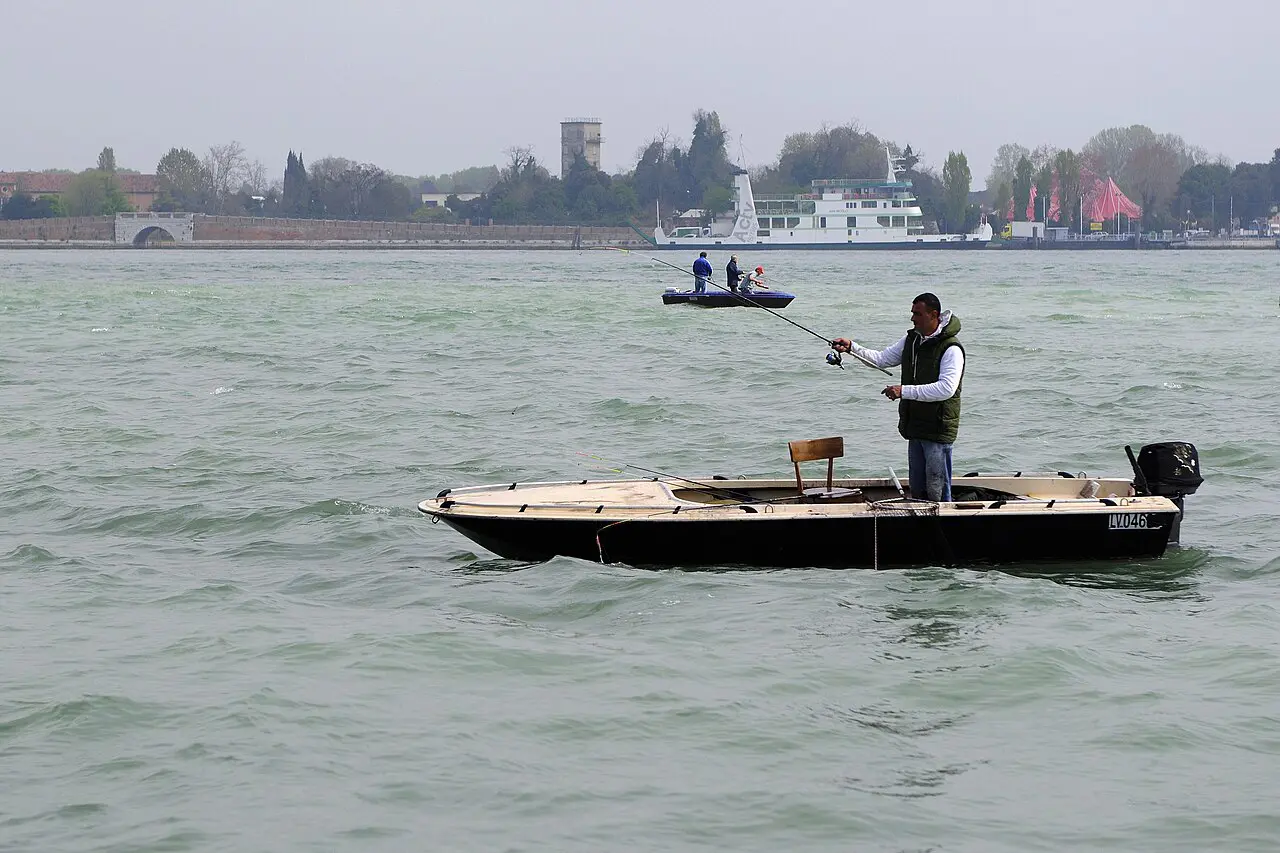
Fishermen at work
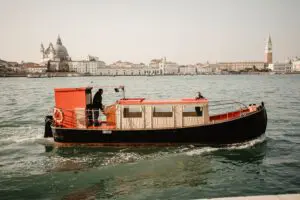
Fishing has long been part of lagoon livelihoods, but it is a regulated contemporary activity rather than a reenactment of the republic’s past. Gear, target species, permitted areas, and seasons depend on applicable rules. A working fishing boat may be heading to grounds, servicing equipment, or returning to port; an observer cannot infer the catch from its silhouette. Visitors should not approach or photograph individuals at close range without permission. The best interpretation respects fishermen as professionals whose schedules and decisions are shaped by weather, markets, and regulation.
To make the most of this detail, compare what you can see from an authorized public viewpoint with the broader geography on a reliable map. Water, mudflat, marsh, and navigable channel may appear continuous from a distance, yet they serve very different ecological and practical functions. Learning those distinctions adds depth without requiring entry into fragile areas.
What traditional fishing structures tell us
Fixed fishing installations and characteristic poles can appear in parts of the lagoon, but not every arrangement of timber identifies the same technique. Some structures mark navigational channels, moorings, or other uses. A guide should explain only what can be identified reliably. Historic fishing methods changed over time, and contemporary regulations may differ from older descriptions. It is tempting to turn every post into a picturesque story. The more interesting approach is to ask how people learned to work with water depth, currents, and seasonal movement of fish.
Seasonal variation is the central caveat. The scene may look different after strong wind, during an unusual tide, or on a day with little bird activity. A useful travel guide should describe possibilities and constraints, not promise that a particular photograph or wildlife encounter can be reproduced on demand.
Why winter is not simply the off-season for fishing
The availability of fish and shellfish varies by species, season, environmental conditions, and rules governing harvest. It would be inaccurate to promise that a particular traditional catch is always being landed in January. Fishing activity also depends on market demand, equipment maintenance, and safe weather windows. Our guide to the fish of the Venetian Lagoon explores species and ecological pressures in greater depth. This winter article focuses on the people and landscapes a respectful observer may encounter.
Consider the perspective of someone who uses the lagoon for daily life. A quiet channel can still be a workplace, a public transport route, or a habitat requiring protection. Allowing those purposes to take precedence over sightseeing is one of the simplest ways to travel respectfully.
Cold weather changes the workday
A cold morning on open water can feel much harsher than the same air temperature in a sheltered Venetian street. Wind exposure, spray, and the absence of windbreaks affect comfort and working conditions. Fishermen and transport crews prepare for these realities as part of their jobs. Visitors should not assume that a beautiful sunny photograph means a warm boat ride. Layers, a wind-resistant outer garment, and sensible footwear matter. The local lesson is simple: dress for the water, not for the hotel lobby.
To make the most of this detail, compare what you can see from an authorized public viewpoint with the broader geography on a reliable map. Water, mudflat, marsh, and navigable channel may appear continuous from a distance, yet they serve very different ecological and practical functions. Learning those distinctions adds depth without requiring entry into fragile areas.
The view from Mazzorbo
Mazzorbo provides a useful transition between inhabited island life and the wider northern lagoon. Its relationship with Burano makes it accessible without pretending to be a remote wilderness. Winter light can emphasize low walls, quiet paths, and the contrast between buildings and open water. The island is also home to residents and businesses, so visitors should respect private spaces and working routines. A visit is most rewarding when it includes time to walk slowly rather than rushing from one photograph to the next.
Seasonal variation is the central caveat. The scene may look different after strong wind, during an unusual tide, or on a day with little bird activity. A useful travel guide should describe possibilities and constraints, not promise that a particular photograph or wildlife encounter can be reproduced on demand.
Burano beyond its colors
Burano’s painted houses remain vivid in winter, but the island’s deeper character comes from its waterways, working traditions, and daily life. It is not always deserted outside summer, and visitors should avoid treating residents’ doorways as photographic props. Winter can make the surrounding lagoon more noticeable, especially when the air is clear. Look beyond the main streets toward the relationship between the settlement and its waters. Our guide to Murano, Mazzorbo, and Burano covers practical island visiting in more detail.
Consider the perspective of someone who uses the lagoon for daily life. A quiet channel can still be a workplace, a public transport route, or a habitat requiring protection. Allowing those purposes to take precedence over sightseeing is one of the simplest ways to travel respectfully.
Torcello and the sense of distance
Torcello’s open spaces and surviving historic monuments make it a natural place to think about the relationship between settlement and environment. The island is not uninhabited, and its past should not be reduced to a simple story of a city swallowed by water. In winter, a walk through accessible areas can reveal broad views across low land and channels. Conditions can be wet underfoot, and services may operate on seasonal schedules. Check opening arrangements before making a journey solely for a museum or church interior.
To make the most of this detail, compare what you can see from an authorized public viewpoint with the broader geography on a reliable map. Water, mudflat, marsh, and navigable channel may appear continuous from a distance, yet they serve very different ecological and practical functions. Learning those distinctions adds depth without requiring entry into fragile areas.
Sant’Erasmo and the agricultural lagoon
Sant’Erasmo reminds visitors that the lagoon is not exclusively a maritime landscape. Cultivated land, paths, and settlements coexist with waterways and marshes. Winter fields can appear subdued, but the island’s agricultural identity remains important. It is not a theme park, and visitors should not enter working land without permission. Public transport can provide access, although frequencies and stop locations should be checked. The pleasure here lies in observing a different way of living within the lagoon, not in expecting a conventional sightseeing circuit.
Seasonal variation is the central caveat. The scene may look different after strong wind, during an unusual tide, or on a day with little bird activity. A useful travel guide should describe possibilities and constraints, not promise that a particular photograph or wildlife encounter can be reproduced on demand.
The northern lagoon’s quieter edges
Some of the most atmospheric winter views are not named attractions. A stretch of water with distant reeds and a few channel markers can feel more memorable than a famous monument. But quietness does not mean open access. Many areas are shallow, ecologically sensitive, or unsuitable for landing. A responsible itinerary stays within navigable routes and uses established public access points. The goal is to see the lagoon’s character without disturbing the places that make it special.
Consider the perspective of someone who uses the lagoon for daily life. A quiet channel can still be a workplace, a public transport route, or a habitat requiring protection. Allowing those purposes to take precedence over sightseeing is one of the simplest ways to travel respectfully.
Fog and the disappearing horizon
Winter fog can transform familiar geography, but it can also disrupt transport and reduce navigational visibility. A foggy morning is not an invitation to insist on a private boat departure at any cost. Qualified operators must make safety decisions based on conditions and regulations. For photographers, the temptation to chase an atmospheric scene should never override those decisions. A flexible plan may shift to an accessible island walk or postpone an excursion. The best winter memories often come from adapting to the weather rather than fighting it.
To make the most of this detail, compare what you can see from an authorized public viewpoint with the broader geography on a reliable map. Water, mudflat, marsh, and navigable channel may appear continuous from a distance, yet they serve very different ecological and practical functions. Learning those distinctions adds depth without requiring entry into fragile areas.
Wind across open water
The Bora and other wind patterns can make parts of the northern Adriatic and lagoon uncomfortable or unsuitable for certain excursions. A sheltered canal in the historic center does not reveal conditions across more exposed water. Boat type, route, and forecast all matter. It is misleading to quote a universal wind threshold for every craft. Operators assess conditions within their procedures and applicable rules. Visitors should ask about flexibility and weather arrangements before booking, particularly if their itinerary has only one possible day.
Seasonal variation is the central caveat. The scene may look different after strong wind, during an unusual tide, or on a day with little bird activity. A useful travel guide should describe possibilities and constraints, not promise that a particular photograph or wildlife encounter can be reproduced on demand.
The color of winter light
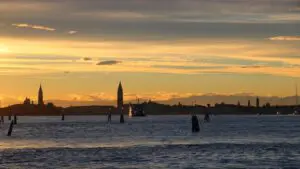
Low winter sunlight can create long shadows and illuminate the pale facades of distant islands. Reflections vary with cloud cover, water texture, and the direction of the view. A clear afternoon may produce luminous conditions; an overcast day can emphasize soft grays and the subtle colors of marsh vegetation. There is no guaranteed golden hour experience. For photography, flexibility is more valuable than chasing an exact image seen online. Bring protection for equipment against spray and moisture, and avoid obstructing working docks for the perfect composition.
Consider the perspective of someone who uses the lagoon for daily life. A quiet channel can still be a workplace, a public transport route, or a habitat requiring protection. Allowing those purposes to take precedence over sightseeing is one of the simplest ways to travel respectfully.
How to photograph birds ethically
A long lens or binoculars allows close observation without physically approaching animals. Avoid flushing resting birds into flight, particularly during cold periods when energy conservation matters. Do not use recorded calls or bait to attract wildlife without understanding the potential impact and local rules. Stay on established paths and obey protected-area restrictions. A photograph is not worth causing a flock to abandon a feeding site. Ethical observation usually produces better encounters because animals continue behaving naturally.
To make the most of this detail, compare what you can see from an authorized public viewpoint with the broader geography on a reliable map. Water, mudflat, marsh, and navigable channel may appear continuous from a distance, yet they serve very different ecological and practical functions. Learning those distinctions adds depth without requiring entry into fragile areas.
Choosing between public boats and private excursions
ACTV public boats connect inhabited islands and can be suitable for a winter day of walking and observing landscapes from established routes. They are transport services, not dedicated wildlife cruises, and passengers should not expect captains to slow for photographs. A private excursion may offer greater route flexibility, but only within navigational, safety, and environmental limits. Neither option guarantees sightings. Choose based on your interests, mobility, budget, and tolerance for weather-related changes rather than assuming the more expensive option is always better.
Seasonal variation is the central caveat. The scene may look different after strong wind, during an unusual tide, or on a day with little bird activity. A useful travel guide should describe possibilities and constraints, not promise that a particular photograph or wildlife encounter can be reproduced on demand.
A realistic half-day plan
For a practical winter outing, begin by checking weather, tide information, and public transport notices. Travel to an accessible northern-lagoon island, spend time walking in public areas, and leave space for a warm indoor break. If visiting Burano and Mazzorbo, avoid adding too many distant stops simply to fill a list. A slower route makes it easier to notice working boats and bird activity. Return arrangements deserve attention because services may be less frequent than a traveler expects. Confirm the last useful connection before departing.
Consider the perspective of someone who uses the lagoon for daily life. A quiet channel can still be a workplace, a public transport route, or a habitat requiring protection. Allowing those purposes to take precedence over sightseeing is one of the simplest ways to travel respectfully.
A longer day with Torcello
Travelers with a full day can combine Burano, Mazzorbo, and Torcello when services and weather allow. The sequence should reflect boat connections and opening hours rather than a rigid photograph schedule. Torcello’s quieter setting offers historical context, while Burano and Mazzorbo show continuing island life. Allow time for the unexpected: a change in light, a pause to watch birds, or a delayed connection. A winter itinerary succeeds when it leaves room for the lagoon’s own rhythm.
To make the most of this detail, compare what you can see from an authorized public viewpoint with the broader geography on a reliable map. Water, mudflat, marsh, and navigable channel may appear continuous from a distance, yet they serve very different ecological and practical functions. Learning those distinctions adds depth without requiring entry into fragile areas.
What to pack for the lagoon
Bring layered clothing, a windproof outer layer, comfortable water-resistant shoes, and protection for hands and ears in cold conditions. Binoculars can add more to a wildlife outing than a second camera lens. Carry water, and check whether the island you plan to visit has suitable food or restroom facilities during your travel period. A charged phone and downloaded transport information are sensible precautions. Do not assume that every remote stop has the same services as central Venice.
Seasonal variation is the central caveat. The scene may look different after strong wind, during an unusual tide, or on a day with little bird activity. A useful travel guide should describe possibilities and constraints, not promise that a particular photograph or wildlife encounter can be reproduced on demand.
Understanding seasonal opening hours
Restaurants, small museums, and visitor services on lagoon islands may have different winter schedules. Some businesses close for holidays or maintenance, while others remain open. There is no single island-wide calendar. Check the individual establishment rather than relying on a summer guide. Public boat schedules may also change, and weather can affect service. This practical detail is especially important for travelers who expect to spend several hours away from the historic center. A warm place to rest can make the difference between an enjoyable outing and an uncomfortable one.
Consider the perspective of someone who uses the lagoon for daily life. A quiet channel can still be a workplace, a public transport route, or a habitat requiring protection. Allowing those purposes to take precedence over sightseeing is one of the simplest ways to travel respectfully.
Winter safety and shallow channels
The lagoon’s open appearance is deceptive. Shallow areas, marked channels, tidal changes, and working traffic make independent navigation demanding. Visitors should never rent or operate a boat without appropriate competence and compliance with local rules. Even on shore, exposed mudflats are not safe shortcuts. The water can hide soft sediment and unexpected depth changes. Follow established paths, respect signs, and trust qualified operators. The best way to experience the quietest landscape is not to push into the least accessible one.
To make the most of this detail, compare what you can see from an authorized public viewpoint with the broader geography on a reliable map. Water, mudflat, marsh, and navigable channel may appear continuous from a distance, yet they serve very different ecological and practical functions. Learning those distinctions adds depth without requiring entry into fragile areas.
Why the lagoon needs protection
Winter wetlands are not empty space waiting for recreational use. They provide feeding and resting habitat, and human disturbance can affect wildlife. Salt marshes also form part of a changing coastal ecosystem exposed to erosion and relative sea-level rise. Conservation is not just about rare birds; it concerns the processes that allow the lagoon to function. Responsible travel means staying on permitted routes, reducing noise, and treating fishing and farming as livelihoods rather than entertainment. Quiet observation is a practical form of respect.
Seasonal variation is the central caveat. The scene may look different after strong wind, during an unusual tide, or on a day with little bird activity. A useful travel guide should describe possibilities and constraints, not promise that a particular photograph or wildlife encounter can be reproduced on demand.
A local guide’s logistical insight
Igor Scomparin has been a licensed guide since 1997, and Tour Leader Venice’s approach to lagoon visits emphasizes the realities of boat access. A place that looks close across shallow water may require a substantial detour through a navigable channel. In winter, wind and visibility can change the feasibility of that detour. This is why the most appealing view on a map is not automatically the best destination for a particular day. A knowledgeable local itinerary begins with conditions and safe access, then builds the experience around them.
Consider the perspective of someone who uses the lagoon for daily life. A quiet channel can still be a workplace, a public transport route, or a habitat requiring protection. Allowing those purposes to take precedence over sightseeing is one of the simplest ways to travel respectfully.
A different relationship with Venice
Winter lagoon travel shifts attention away from the idea that Venice is only its famous monuments. Fishermen, island residents, transport workers, birds, marshes, and cultivated land all belong to the same living environment. The landscape does not become authentic only when tourists disappear; it is authentic because people and ecosystems continue their routines regardless of visitors. The role of a thoughtful traveler is to notice those routines without demanding that they change. That attitude creates a richer experience than searching for an untouched secret location.
To make the most of this detail, compare what you can see from an authorized public viewpoint with the broader geography on a reliable map. Water, mudflat, marsh, and navigable channel may appear continuous from a distance, yet they serve very different ecological and practical functions. Learning those distinctions adds depth without requiring entry into fragile areas.
The quietest landscape is not always the farthest
It is easy to equate remoteness with quality. Yet a patient walk near an accessible island can reveal more than a fast boat journey through several distant channels. A heron feeding beside a quiet bank, a fisherman returning to a landing, or a changing reflection may offer a memorable encounter. The point is not to collect sightings or photographs but to learn how the lagoon works. In winter, the most rewarding itinerary often has fewer stops, more observation, and a willingness to accept what the day offers.
Seasonal variation is the central caveat. The scene may look different after strong wind, during an unusual tide, or on a day with little bird activity. A useful travel guide should describe possibilities and constraints, not promise that a particular photograph or wildlife encounter can be reproduced on demand.
Conclusion: winter’s patient beauty
The Venetian Lagoon in winter offers a perspective on Venice that is both beautiful and grounded. Birds use its habitats, fishermen work within its seasonal rhythms, and inhabited islands continue their ordinary lives. Weather can make an outing extraordinary or force a change of plan. Neither outcome diminishes the value of understanding the place. Come prepared, use official information, respect protected areas, and give yourself time. The lagoon’s quietest landscapes are best experienced not as a spectacle, but as a living world.
Consider the perspective of someone who uses the lagoon for daily life. A quiet channel can still be a workplace, a public transport route, or a habitat requiring protection. Allowing those purposes to take precedence over sightseeing is one of the simplest ways to travel respectfully.
Frequently Asked Questions
Continue your visit with a private tour of the Venetian Lagoon.
What birds can you see in the Venetian Lagoon in winter?
Depending on habitat and conditions, visitors may observe herons, egrets, cormorants, gulls, ducks, and other wetland birds. Specific species and sightings are never guaranteed.
Can you visit Burano, Mazzorbo, and Torcello in winter?
Yes, these inhabited islands are accessible by scheduled public transport, subject to current routes and weather conditions. Check ACTV timetables and individual attraction or restaurant opening hours before traveling.
Is a winter boat tour of the Venetian Lagoon worth it?
It can be rewarding for quiet landscapes, birdwatching, and local life, but wind, fog, and cold may affect comfort and departures. Choose a qualified operator and allow flexibility rather than expecting guaranteed wildlife sightings.
For a complementary introduction to the lagoon’s year-round wildlife, see our guide to the amazing wildlife of the Venetian Lagoon. Winter observation is one part of a much wider seasonal story.
Planning sources and image credit
For current navigation and island connections, consult ACTV. For tidal conditions, consult the City of Venice tide forecast center. For protected habitats and regional conservation information, consult Regione Veneto and ISPRA. Featured photograph: Son of Groucho, Fishing in the Lagoon, licensed CC BY 2.0 via Wikimedia Commons. This is a real documentary photograph, not an AI illustration; it does not claim to depict a specific winter day.