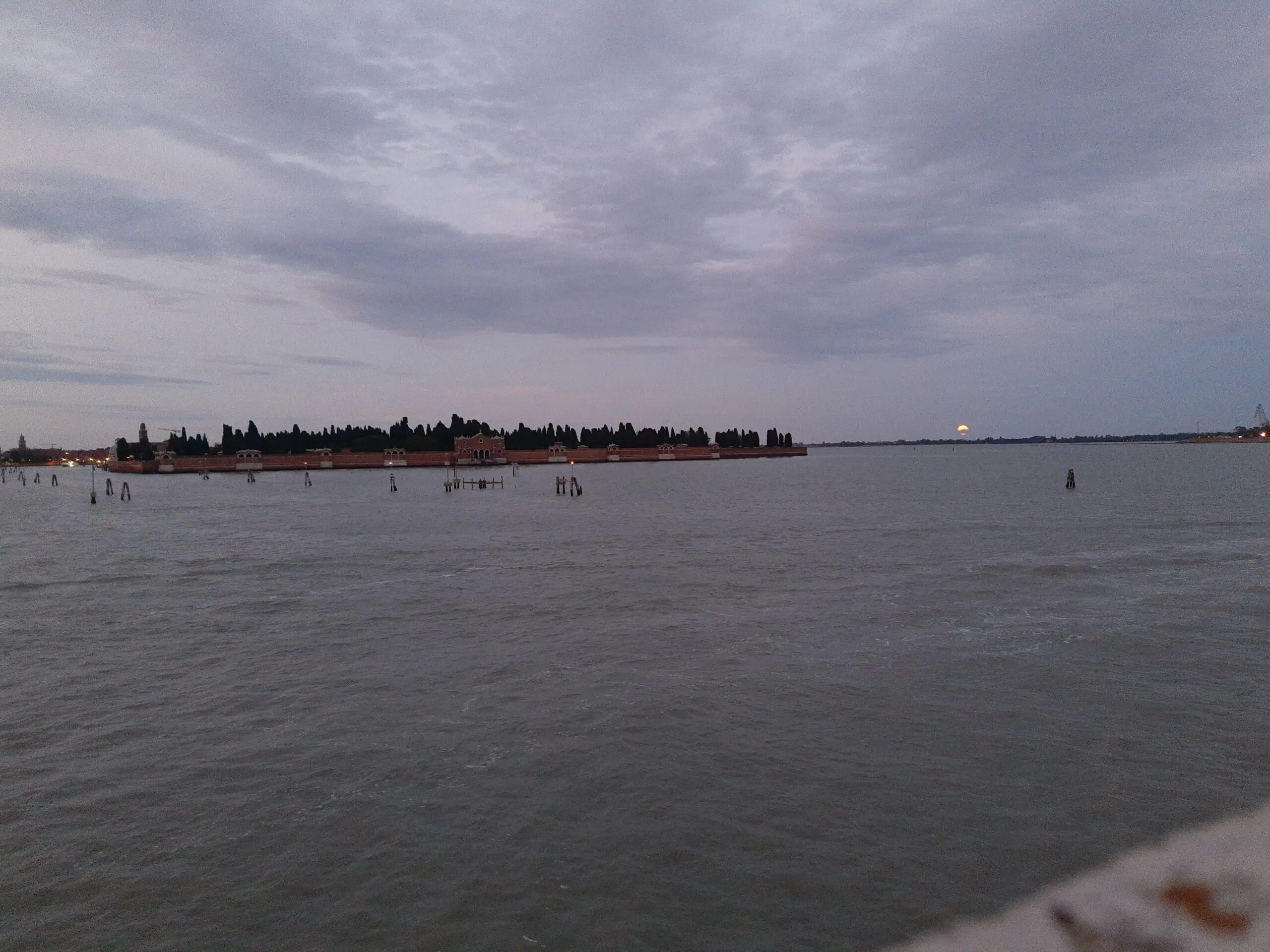
All Souls Day in Venice falls on November 2, when families remember deceased relatives through cemetery visits, flowers, prayers, and personal traditions. San Michele, the cemetery island between Venice and Murano, is central to this story. This guide explains the observance, its historical context, and how travelers can understand it respectfully.
Meaning
November 2 is the Catholic Commemoration of All the Faithful Departed. Venetian families may mark it through prayer, flowers, cemetery visits, and private memory. It is not a festival staged for tourists. The central experience belongs to people remembering relatives and friends. Visitors can learn about the day while recognizing that its emotional significance is personal.
From a visitor’s standpoint, the distinction between observing and participating is important. Historical understanding can come from public information and the visible setting without asking residents to explain their private experiences. That approach is particularly appropriate on a day associated with mourning and family remembrance.
Calendar
November 1 is All Saints Day and a national holiday in Italy. November 2 is All Souls Day and is not generally a national public holiday. Families may observe the two dates together, but their religious meanings differ. Shops, churches, and public transport may follow different schedules on each date. Accurate planning starts by keeping these distinctions clear.
Planning also requires attention to Venice’s geography. Short distances on a map do not always translate into short journeys, because bridges, boat schedules, and pedestrian routes shape movement. A flexible itinerary reduces stress and leaves room for unexpected delays or local ceremonies.
San Michele
The cemetery island of San Michele lies between Venice and Murano. Its position in the lagoon gives remembrance a particular geography: families cross water to visit graves. The journey may seem picturesque to travelers, but for residents it serves an ordinary and important purpose. San Michele remains an active cemetery, not simply an architectural attraction.
The historical story should be separated from current operating conditions. A church, cemetery, or boat service may change its hours or access rules, and a past description is not a guarantee. Confirm details directly with the responsible institution before setting out.
Burial history
Burial practices in Venice changed through the centuries. Earlier traditions were associated with parish churches and religious communities. Public-health reforms during the Napoleonic era encouraged cemetery facilities away from densely inhabited neighborhoods. San Michele and San Cristoforo della Pace became part of the city’s cemetery landscape. Their development reflects changing civic needs as well as religious custom.
From a visitor’s standpoint, the distinction between observing and participating is important. Historical understanding can come from public information and the visible setting without asking residents to explain their private experiences. That approach is particularly appropriate on a day associated with mourning and family remembrance.
The church
San Michele in Isola is an important early Renaissance church, distinguished by its pale façade. Its architecture deserves attention, but worship and funerary activity take precedence over sightseeing. Visitors should verify access and follow local instructions. A cemetery church is not equivalent to an ordinary museum gallery, especially when people have gathered to remember the dead.
Planning also requires attention to Venice’s geography. Short distances on a map do not always translate into short journeys, because bridges, boat schedules, and pedestrian routes shape movement. A flexible itinerary reduces stress and leaves room for unexpected delays or local ceremonies.
The boat journey
Public waterbus services connect the historic city with San Michele. Consult ACTV for the current route, frequency, and notices. A short crossing can still require a wait at a landing. During the remembrance period, give space to residents carrying flowers and avoid blocking boarding areas with luggage. This is everyday public transport serving a community need.
The historical story should be separated from current operating conditions. A church, cemetery, or boat service may change its hours or access rules, and a past description is not a guarantee. Confirm details directly with the responsible institution before setting out.
A local planning tip
Igor Scomparin has been a licensed Venice guide since 1997. One useful logistical principle is to avoid placing a San Michele visit immediately before a train departure or timed museum ticket. Boats, weather, and the appropriate pace of a cemetery visit introduce uncertainty. A generous schedule is both more practical and more respectful.
From a visitor’s standpoint, the distinction between observing and participating is important. Historical understanding can come from public information and the visible setting without asking residents to explain their private experiences. That approach is particularly appropriate on a day associated with mourning and family remembrance.
Famous names
San Michele contains the graves of cultural figures such as Igor Stravinsky and Ezra Pound. These names attract international attention, but most memorials belong to ordinary families. During All Souls Day, the cemetery should not become a celebrity scavenger hunt. Travelers mainly interested in literary or musical history may prefer to visit outside the busiest commemorative period.
Planning also requires attention to Venice’s geography. Short distances on a map do not always translate into short journeys, because bridges, boat schedules, and pedestrian routes shape movement. A flexible itinerary reduces stress and leaves room for unexpected delays or local ceremonies.
Flowers
Flowers are associated with cemetery visits in many Italian communities. They can represent care and continuity between generations, though practices vary. Some families bring arrangements, others pray, and others remember relatives at home. There is no single mandatory ritual. Visitors should resist turning private gestures into photographic subjects or assuming every family observes identically.
The historical story should be separated from current operating conditions. A church, cemetery, or boat service may change its hours or access rules, and a past description is not a guarantee. Confirm details directly with the responsible institution before setting out.
Flower logistics
A seemingly simple act of bringing flowers involves Venice’s unusual infrastructure. Goods travel by boat and are often carried through pedestrian streets. Florists, boat operators, and cemetery staff help make the season possible. This practical detail connects a personal custom with the less visible work of maintaining daily life in a city without road traffic through its historic center.
From a visitor’s standpoint, the distinction between observing and participating is important. Historical understanding can come from public information and the visible setting without asking residents to explain their private experiences. That approach is particularly appropriate on a day associated with mourning and family remembrance.
Parish churches
All Souls Day is observed beyond the cemetery island. Neighborhood churches may offer services or prayers, with schedules varying by parish. Check notices rather than assuming a citywide program. A Mass is a religious service, not a visitor performance. Those who attend should remain discreet, respect the congregation, and avoid intrusive photography.
Planning also requires attention to Venice’s geography. Short distances on a map do not always translate into short journeys, because bridges, boat schedules, and pedestrian routes shape movement. A flexible itinerary reduces stress and leaves room for unexpected delays or local ceremonies.
Candles
Lighting a candle can be an act of prayer or remembrance. Its meaning depends on personal faith and family custom. Not every Venetian practices in the same way, and contemporary Venice includes residents with diverse beliefs. An accurate account acknowledges the Catholic roots of the observance without suggesting that all residents share one identical religious routine.
The historical story should be separated from current operating conditions. A church, cemetery, or boat service may change its hours or access rules, and a past description is not a guarantee. Confirm details directly with the responsible institution before setting out.
Family memory
Remembering the dead can happen through conversations, photographs, and stories as well as cemetery visits. A street or neighborhood church may remind someone of a parent or grandparent. These associations are largely invisible to travelers. They show that Venice is a living city of personal histories, not only a collection of famous monuments.
From a visitor’s standpoint, the distinction between observing and participating is important. Historical understanding can come from public information and the visible setting without asking residents to explain their private experiences. That approach is particularly appropriate on a day associated with mourning and family remembrance.
Migration
Some people with Venetian family roots now live on the mainland or abroad. Visiting a grave may require planning around travel, work, and relatives’ availability. Others remember from far away. The tradition therefore connects Venice to wider family networks. It should not be imagined as an unchanged custom practiced only by residents of the historic center.
Planning also requires attention to Venice’s geography. Short distances on a map do not always translate into short journeys, because bridges, boat schedules, and pedestrian routes shape movement. A flexible itinerary reduces stress and leaves room for unexpected delays or local ceremonies.
Fave dei morti
Venice has seasonal cookies known as fave dei morti, associated with the remembrance period. Recipes and availability vary. These sweets connect food and inherited memory, but they are not the central meaning of All Souls Day. Their culinary history deserves separate attention and should not replace the religious and family context of November 2.
The historical story should be separated from current operating conditions. A church, cemetery, or boat service may change its hours or access rules, and a past description is not a guarantee. Confirm details directly with the responsible institution before setting out.
Salute distinction
The Madonna della Salute celebration occurs on November 21. Its votive bridge across the Grand Canal commemorates a tradition of thanksgiving after the plague of 1630–1631. It is not an All Souls Day bridge. Visitors should never expect to cross it on November 2 without official confirmation. The two observances have different purposes.
From a visitor’s standpoint, the distinction between observing and participating is important. Historical understanding can come from public information and the visible setting without asking residents to explain their private experiences. That approach is particularly appropriate on a day associated with mourning and family remembrance.
Redentore distinction
Venice also has the Redentore festival in July, associated with another plague episode and a temporary bridge toward Giudecca. Historical bridge traditions involving San Michele are a separate subject again. These customs reveal the city’s relationship with collective memory, but their dates and locations should not be combined into one inaccurate narrative.
Planning also requires attention to Venice’s geography. Short distances on a map do not always translate into short journeys, because bridges, boat schedules, and pedestrian routes shape movement. A flexible itinerary reduces stress and leaves room for unexpected delays or local ceremonies.
Weather
Early November can be cool, wet, and windy. A waterproof layer and comfortable shoes are sensible for exposed boat landings and cemetery paths. Check current forecasts and transport notices. Seasonal averages cannot guarantee conditions on a specific day. Visitors should allow flexibility, especially when traveling with children or older relatives.
The historical story should be separated from current operating conditions. A church, cemetery, or boat service may change its hours or access rules, and a past description is not a guarantee. Confirm details directly with the responsible institution before setting out.
Accessibility
Visitors with reduced mobility should verify waterbus boarding arrangements and cemetery facilities in advance. Historic paths, steps, and changing conditions may present challenges. A private boat does not automatically solve every access issue. A respectful itinerary begins with the person’s practical needs rather than an assumption that all Venetian locations are equally accessible.
From a visitor’s standpoint, the distinction between observing and participating is important. Historical understanding can come from public information and the visible setting without asking residents to explain their private experiences. That approach is particularly appropriate on a day associated with mourning and family remembrance.
Photography
San Michele is an active cemetery. Follow posted rules and avoid photographing mourners without permission. Do not pose beside graves or interrupt ceremonies. Even where architectural photographs are permitted, discretion matters. A visitor can appreciate the setting without recording every moment. Respect for families should guide behavior more than the desire for memorable images.
Planning also requires attention to Venice’s geography. Short distances on a map do not always translate into short journeys, because bridges, boat schedules, and pedestrian routes shape movement. A flexible itinerary reduces stress and leaves room for unexpected delays or local ceremonies.
Children
Families may explain All Souls Day to children as a time to remember people who have died. Some children may welcome a cemetery visit, while others may feel uncomfortable. A quiet church visit or conversation about family history can be a gentler alternative. The day need not become a compulsory sightseeing activity.
The historical story should be separated from current operating conditions. A church, cemetery, or boat service may change its hours or access rules, and a past description is not a guarantee. Confirm details directly with the responsible institution before setting out.
Workers
Maintaining a cemetery island requires paths, vegetation care, administration, transport links, and conservation. These services rarely appear in tourist photographs, but they matter to residents. San Michele is a historic landscape and an essential civic facility. Its operational needs should be considered before visitor convenience, particularly during the commemorative period.
From a visitor’s standpoint, the distinction between observing and participating is important. Historical understanding can come from public information and the visible setting without asking residents to explain their private experiences. That approach is particularly appropriate on a day associated with mourning and family remembrance.
The lagoon
San Michele shows that the Venetian lagoon is not empty space between attractions. Its islands support religious, residential, industrial, and civic functions. A cemetery reached by boat illustrates how water shapes everyday responsibilities. Understanding this geography offers a deeper view of Venice than a quick photograph of the Grand Canal.
Planning also requires attention to Venice’s geography. Short distances on a map do not always translate into short journeys, because bridges, boat schedules, and pedestrian routes shape movement. A flexible itinerary reduces stress and leaves room for unexpected delays or local ceremonies.
Language
Ognissanti, Commemorazione dei Defunti, and Giorno dei Morti are related expressions but not identical. Learning the distinction helps travelers interpret local calendars. November 1 honors the saints; November 2 remembers the dead. Accurate language matters when discussing religious and cultural practices that remain personally significant.
The historical story should be separated from current operating conditions. A church, cemetery, or boat service may change its hours or access rules, and a past description is not a guarantee. Confirm details directly with the responsible institution before setting out.
Not a spectacle
Responsible tourism does not require witnessing every local custom. A visitor may learn about All Souls Day through history, a quiet walk, or a respectful church visit. If the cemetery is busy with families, it may be better to return another day. Choosing not to intrude can demonstrate greater understanding than insisting on entering every place.
From a visitor’s standpoint, the distinction between observing and participating is important. Historical understanding can come from public information and the visible setting without asking residents to explain their private experiences. That approach is particularly appropriate on a day associated with mourning and family remembrance.
A gentle route
A thoughtful visit might begin at a neighborhood church, continue toward Fondamente Nove, and include San Michele if access and circumstances are appropriate. Leave time for boats and walking. On returning, a relaxed stroll through Cannaregio may be more fitting than rushing across the city to another attraction.
Planning also requires attention to Venice’s geography. Short distances on a map do not always translate into short journeys, because bridges, boat schedules, and pedestrian routes shape movement. A flexible itinerary reduces stress and leaves room for unexpected delays or local ceremonies.
Mainland visitors
Travelers staying in Mestre or elsewhere on the mainland should allow time to reach the historic center before boarding a cemetery-bound waterbus. Check connections rather than estimating only the boat crossing. A trip can become unnecessarily stressful when transfers, luggage, or fixed onward travel are overlooked. Simple preparation makes the day easier.
The historical story should be separated from current operating conditions. A church, cemetery, or boat service may change its hours or access rules, and a past description is not a guarantee. Confirm details directly with the responsible institution before setting out.
Official information
Cemetery opening hours, ACTV services, religious schedules, and accessibility arrangements can change. Check current official notices before traveling. Historical context explains why the observance matters, but it cannot guarantee access at a specific hour. Distinguishing stable history from changing logistics is an important part of reliable travel advice.
From a visitor’s standpoint, the distinction between observing and participating is important. Historical understanding can come from public information and the visible setting without asking residents to explain their private experiences. That approach is particularly appropriate on a day associated with mourning and family remembrance.
The older generation
For older residents, November 2 may evoke decades of family memory and changes in the city. Some may need assistance with transport or walking. Courtesy at crowded landings matters. The cemetery visit is not an abstract tradition; it can be a demanding journey for someone carrying flowers or using a mobility aid.
Planning also requires attention to Venice’s geography. Short distances on a map do not always translate into short journeys, because bridges, boat schedules, and pedestrian routes shape movement. A flexible itinerary reduces stress and leaves room for unexpected delays or local ceremonies.
Families abroad
A family member living overseas may be unable to return for the commemoration. Remembering can take the form of a call, photograph, or shared story. This broader perspective prevents the tradition from being reduced to what visitors can see at the cemetery. Memory does not depend on physical presence alone.
The historical story should be separated from current operating conditions. A church, cemetery, or boat service may change its hours or access rules, and a past description is not a guarantee. Confirm details directly with the responsible institution before setting out.
The view from the water
The cemetery walls and trees can appear striking from a passing boat. Yet the same journey may carry people visiting relatives. Travelers can appreciate the landscape without treating fellow passengers as part of a scenic experience. A little restraint and courtesy allow the public boat to serve everyone.
From a visitor’s standpoint, the distinction between observing and participating is important. Historical understanding can come from public information and the visible setting without asking residents to explain their private experiences. That approach is particularly appropriate on a day associated with mourning and family remembrance.
Respectful questions
Curiosity about local traditions is natural, but interrupting a mourner for a personal story is inappropriate. Ask a guide or consult public historical sources instead. Cultural understanding grows through consent and good timing. No resident is obliged to explain a private loss to a stranger.
Planning also requires attention to Venice’s geography. Short distances on a map do not always translate into short journeys, because bridges, boat schedules, and pedestrian routes shape movement. A flexible itinerary reduces stress and leaves room for unexpected delays or local ceremonies.
Religious diversity
The Catholic calendar provides the historical framework for All Souls Day, but contemporary Venice is not religiously uniform. Some people attend services, some visit graves without worship, and others remember privately. A thoughtful article recognizes these differences without suggesting one practice represents every household.
The historical story should be separated from current operating conditions. A church, cemetery, or boat service may change its hours or access rules, and a past description is not a guarantee. Confirm details directly with the responsible institution before setting out.
The ordinary city
Venice is often marketed through exceptional art and architecture. All Souls Day reveals its ordinary responsibilities: transport, family care, cemetery maintenance, and neighborhood life. These may be less photogenic than a gondola ride, but they are essential to understanding the city as a real place.
From a visitor’s standpoint, the distinction between observing and participating is important. Historical understanding can come from public information and the visible setting without asking residents to explain their private experiences. That approach is particularly appropriate on a day associated with mourning and family remembrance.
The central lesson
November 2 is about continuity between generations. Venice gives that memory a distinctive setting of boats, churches, and lagoon islands, but its emotional meaning is widely recognizable. Travelers need not participate in private rituals to appreciate them. Accurate information and respectful distance can be the most meaningful response.
Planning also requires attention to Venice’s geography. Short distances on a map do not always translate into short journeys, because bridges, boat schedules, and pedestrian routes shape movement. A flexible itinerary reduces stress and leaves room for unexpected delays or local ceremonies.
Further reading
Explore the distinction between All Saints and Venice’s votive bridges, learn the history of San Michele cemetery, and discover the Venetian fave dei morti tradition.
More to explore in Venice
For additional context, explore a quiet walk through Cannaregio; Venice through the seasons. These stories expand on the places, people, and traditions discussed above.
Frequently Asked Questions
What happens on All Souls Day in Venice?
Families may visit graves, bring flowers, attend church services, or remember relatives privately. Customs differ between households.
Is November 2 a public holiday in Venice?
November 2 is not generally a national public holiday in Italy. November 1, All Saints Day, is a national holiday.
Can tourists visit San Michele on November 2?
San Michele is an active cemetery. Verify current opening hours and ACTV services, and respect mourners and photography rules.