Who keeps Venice’s vaporetto system running? Not only the person at the helm. ACTV’s public water transport relies on qualified command staff, onboard sailors, marine engineers, landing-stage personnel, maintenance workers, planners, and customer-support teams. Their work makes the city’s canals a transport network rather than simply a beautiful landscape. This guide explains those roles, the practical challenges they face, and how visitors can make their jobs easier.
The people who make the floating city move
The vaporetto is one of Venice’s most familiar sights, but its public transport network is not a moving viewpoint created for tourists. It is an essential service used by residents, students, workers, and visitors. Behind each departure are qualified boat crews, landing-stage staff, maintenance specialists, planners, and customer-service teams. A journey that feels effortless to a passenger requires decisions about navigation, boarding, timing, equipment, and safety. This article looks at those occupations rather than offering another guide to tickets and sightseeing routes.
That distinction is particularly important when visitors compare the journey with a road-based bus service. The water introduces different operational constraints, and the landing stage is not a fixed curb. A traveler who understands those conditions is better equipped to interpret the crew’s instructions without assuming that every delay reflects carelessness.
Who operates Venice’s public water buses?
The public water transport system is operated by ACTV within the AVM group. The network includes urban navigation services and connections serving islands and other destinations. Roles and qualifications differ according to vessel type: a small water bus is not staffed in precisely the same way as a larger motor vessel or ferry. ACTV’s own recruitment notices distinguish deck commanders, personnel qualified to command, marine engine specialists, and other professional positions. Those distinctions help explain why a boat service is an organization, not just a captain and a timetable.
An operational example is useful here: imagine a busy interchange where passengers with luggage and residents with shopping bags are trying to move in opposite directions. The staff member must preserve a safe boarding sequence while the vessel remains alongside. This is an illustrative scenario, not an account of a particular worker or incident. It shows how ordinary passenger behavior can affect the entire stop.
The commander and the waterway
A commander must navigate through an environment shared with water taxis, freight craft, gondolas, private boats, and other public services. Waterways do not have painted lanes and traffic lights that function exactly like roads. Safe navigation requires knowledge of local conditions, vessel behavior, applicable rules, and the actions of nearby traffic. A passenger sees a boat turn toward a stop; the person in command must judge approach speed, available room, wind, wake, and the position of other vessels. That judgment is skilled work.
Official rules, route patterns, and service arrangements should always be checked in their current form. This feature explains the human work behind the network, not an unchanging manual for ACTV operations. Where a detail is subject to annual policy or a specific vessel’s requirements, the operator’s own instructions take precedence over a travel article.
Why stopping is not as simple as parking
An ACTV landing stage is a floating or water-accessible place where people board and leave vessels. Approaching it involves controlled movement, awareness of other craft, and coordination with crew and passengers. The vessel can be affected by wind, currents, wake, and the motion of the water. A departure must also take account of people who are still boarding or standing near the access point. What looks like a routine thirty-second stop is a sequence of safety-sensitive actions. The crew’s practiced coordination is easy to miss from a seat inside.
That distinction is particularly important when visitors compare the journey with a road-based bus service. The water introduces different operational constraints, and the landing stage is not a fixed curb. A traveler who understands those conditions is better equipped to interpret the crew’s instructions without assuming that every delay reflects carelessness.
The role of the marinaio
The Italian word marinaio broadly means sailor or deckhand, and on Venice’s public water transport the onboard crew may assist with docking, passenger movement, and other operational tasks appropriate to the vessel and assigned role. The precise duties depend on service and regulations. ACTV’s published conditions also describe circumstances in which passengers can ask the onboard sailor about ticket purchase. That does not mean every crew member can always stop work to answer tourist questions. Safety and vessel operations remain the priority during arrival and departure.
An operational example is useful here: imagine a busy interchange where passengers with luggage and residents with shopping bags are trying to move in opposite directions. The staff member must preserve a safe boarding sequence while the vessel remains alongside. This is an illustrative scenario, not an account of a particular worker or incident. It shows how ordinary passenger behavior can affect the entire stop.
The split-second decisions at the pontoon
A crowded stop creates a complicated flow of people: those disembarking, those trying to board, travelers with luggage, residents with shopping bags, and passengers needing assistance. Crew members and station personnel must work within boarding rules and the physical capacity of the vessel. A person who pushes toward an opening may see only a missed opportunity; staff must consider whether movement is safe and whether the boarding process can continue. Keeping clear of the doorway until instructed is not merely polite. It helps the people responsible for the service do their jobs.
Official rules, route patterns, and service arrangements should always be checked in their current form. This feature explains the human work behind the network, not an unchanging manual for ACTV operations. Where a detail is subject to annual policy or a specific vessel’s requirements, the operator’s own instructions take precedence over a travel article.
Why the schedule depends on more than the boat
A published timetable represents coordinated work across routes, vessels, crews, stops, and operational support. Delays can arise from congestion, weather, technical problems, or other factors, and their effects may carry forward to later services. A passenger may think only about one late departure. Operations staff have to consider the next stop, the following trip, and the effect on connecting services. The network’s complexity becomes especially apparent on routes that connect Venice with outlying islands, where missing a connection can have significant consequences for daily life.
That distinction is particularly important when visitors compare the journey with a road-based bus service. The water introduces different operational constraints, and the landing stage is not a fixed curb. A traveler who understands those conditions is better equipped to interpret the crew’s instructions without assuming that every delay reflects carelessness.
What happens before the first passenger boards
Before public service begins, vessels and crews must be prepared for their assigned operations. The details depend on the craft, company procedures, and regulatory requirements, so this article does not invent a universal checklist or shift-start time. In general, reliable service requires attention to vessel condition, safety equipment, readiness, and communication. These tasks are rarely visible in the tourist photographs taken later in the day. Our companion feature on the workers who keep Venice running before sunrise places such early activity within the broader working city.
An operational example is useful here: imagine a busy interchange where passengers with luggage and residents with shopping bags are trying to move in opposite directions. The staff member must preserve a safe boarding sequence while the vessel remains alongside. This is an illustrative scenario, not an account of a particular worker or incident. It shows how ordinary passenger behavior can affect the entire stop.
The mechanics passengers rarely meet
A water bus must remain mechanically reliable despite frequent starts, stops, maneuvering, and regular service. Maintenance work can involve engines, propulsion, steering, electrical systems, and other equipment. The appropriate specialist and inspection regime depend on vessel type. A well-maintained boat does not announce the work behind it; it simply operates as expected. That invisibility can make technicians seem less important than the people visible on deck. In reality, the public service depends on both. Mechanical reliability is part of passenger safety and the daily continuity of the network.
Official rules, route patterns, and service arrangements should always be checked in their current form. This feature explains the human work behind the network, not an unchanging manual for ACTV operations. Where a detail is subject to annual policy or a specific vessel’s requirements, the operator’s own instructions take precedence over a travel article.
Different boats require different skills
Venice’s water transport fleet is not one identical class of vessel. Services can use craft with different capacities, operating characteristics, and crew requirements. The skills needed to maneuver a smaller boat through busy waterways are related to, but not identical with, those involved in operating a larger ferry or motor vessel. ACTV’s recruitment categories reflect this variety, including specialist marine engineering roles for vessels where those qualifications are required. A useful visitor insight is that the network is a fleet with several technical and professional profiles, not a row of interchangeable tourist boats.
That distinction is particularly important when visitors compare the journey with a road-based bus service. The water introduces different operational constraints, and the landing stage is not a fixed curb. A traveler who understands those conditions is better equipped to interpret the crew’s instructions without assuming that every delay reflects carelessness.
The training behind a uniform
Professional navigation work requires appropriate qualifications, experience, and familiarity with operational procedures. The exact certification route depends on the role. ACTV announced recruitment in March 2026 for command-related and engineering positions, explicitly referring to professional requirements and internal development pathways. This is evidence that staffing involves structured recruitment and progression rather than simply hiring anyone who knows how to steer. It is also a reminder that marine transport work is a career with technical responsibilities, not a picturesque summer job. The crew member in front of you may have completed substantial training.
An operational example is useful here: imagine a busy interchange where passengers with luggage and residents with shopping bags are trying to move in opposite directions. The staff member must preserve a safe boarding sequence while the vessel remains alongside. This is an illustrative scenario, not an account of a particular worker or incident. It shows how ordinary passenger behavior can affect the entire stop.
Recruitment in 2026
In a March 23, 2026 announcement, AVM reported ACTV recruitment for roles including deck commanders, personnel qualified to command, and engine-room directors. The statement also discussed turnover and internal career development. That is a concrete, dated example of the personnel work needed to sustain the system. It should not be turned into a claim about the exact number of unfilled positions in November or about an inevitable future shortage. Recruitment notices tell us what jobs the operator sought at a particular moment, not every detail of its current staffing situation.
Official rules, route patterns, and service arrangements should always be checked in their current form. This feature explains the human work behind the network, not an unchanging manual for ACTV operations. Where a detail is subject to annual policy or a specific vessel’s requirements, the operator’s own instructions take precedence over a travel article.
The landing stage as a workplace
A vaporetto stop may appear to be little more than a floating shelter, but it is a point of passenger circulation and operational control. Some busy locations have additional staff or boarding arrangements, while others are simpler. The physical environment matters: narrow access, changing water levels, wet surfaces, and crowds can affect movement. Passengers can help by keeping exits clear and following instructions. Treating the pontoon as a workplace rather than a photo platform changes the way a visitor behaves. It also makes the effort of the people coordinating boarding more visible.
That distinction is particularly important when visitors compare the journey with a road-based bus service. The water introduces different operational constraints, and the landing stage is not a fixed curb. A traveler who understands those conditions is better equipped to interpret the crew’s instructions without assuming that every delay reflects carelessness.
The meaning of priority boarding
ACTV publishes priority boarding arrangements at designated stops for eligible frequent users and passengers with reduced mobility. The exact eligibility and gate system are described on its official website. The point is not that every passenger gets to board in the order they personally prefer. Priority procedures are designed to organize access for people with defined needs or rights. Staff may have to explain those rules repeatedly in several languages while maintaining safe circulation. Visitors should consult current signs rather than challenge an employee based on an outdated online comment.
An operational example is useful here: imagine a busy interchange where passengers with luggage and residents with shopping bags are trying to move in opposite directions. The staff member must preserve a safe boarding sequence while the vessel remains alongside. This is an illustrative scenario, not an account of a particular worker or incident. It shows how ordinary passenger behavior can affect the entire stop.
Accessibility is active work
Accessible transport involves more than installing a ramp or reserving space. It can require staff awareness, boarding assistance, coordination, and accurate information about a particular stop. ACTV’s accessible-mobility guidance describes arrangements at Rialto for wheelchair users during evening services, including advance contact for certain boarding situations. These operational details demonstrate why accessibility is a service delivered by people as well as infrastructure. Travelers with mobility needs should consult current official instructions, since a general claim that all boats are accessible does not answer every practical question about a route.
Official rules, route patterns, and service arrangements should always be checked in their current form. This feature explains the human work behind the network, not an unchanging manual for ACTV operations. Where a detail is subject to annual policy or a specific vessel’s requirements, the operator’s own instructions take precedence over a travel article.
The special case of Rialto after dark
ACTV’s published accessibility guidance describes an evening arrangement allowing eligible wheelchair users to use particular Rialto boarding points, subject to advance contact or a request to crew. The details include a twenty-minute notice requirement for specified boarding circumstances. This is an unusually concrete example of behind-the-scenes coordination: a passenger’s safe journey may depend on the operator knowing about a request before the boat arrives. It also shows why an online article should link to the live operator instructions instead of presenting every arrangement as permanent. Service provisions can change.
That distinction is particularly important when visitors compare the journey with a road-based bus service. The water introduces different operational constraints, and the landing stage is not a fixed curb. A traveler who understands those conditions is better equipped to interpret the crew’s instructions without assuming that every delay reflects carelessness.
Connecting buses, trains, and boats
For people arriving at Piazzale Roma or Venezia Santa Lucia, the water-bus network is part of a larger journey. A missed boat may affect a commuter, a student, or someone with a medical appointment, not merely a sightseeing plan. Interchanges require clear information and, in some cases, assistance. ACTV’s Fermata Amica initiative at Piazzale Roma, developed with an organization representing blind and visually impaired people, illustrates how a transport system can provide human support at a complicated transfer point. A successful connection is often the result of staff coordination.
An operational example is useful here: imagine a busy interchange where passengers with luggage and residents with shopping bags are trying to move in opposite directions. The staff member must preserve a safe boarding sequence while the vessel remains alongside. This is an illustrative scenario, not an account of a particular worker or incident. It shows how ordinary passenger behavior can affect the entire stop.
Fermata Amica and human assistance
The Fermata Amica service was developed to assist blind and visually impaired passengers at the Piazzale Roma interchange between road transport and water services. ACTV’s published description explains that assistance can be requested and that a staff member helps the traveler reach the relevant boarding point. Specific hours and contact methods should always be checked on the current service page. This is an important reminder that transport workers are not only the people steering boats. Their responsibilities can include helping passengers navigate a complex environment safely and independently.
Official rules, route patterns, and service arrangements should always be checked in their current form. This feature explains the human work behind the network, not an unchanging manual for ACTV operations. Where a detail is subject to annual policy or a specific vessel’s requirements, the operator’s own instructions take precedence over a travel article.
Ticket questions are part of the work
Visitors often ask the nearest crew member about fares, validation, destinations, and transfers. Some questions are reasonable, but a busy docking operation is not the right moment for an extended explanation. ACTV’s conditions describe onboard ticket sales under specified circumstances and payment methods; these should be verified before travel. Buying and validating tickets in advance when possible can reduce pressure on staff. Our separate guide to vaporetto routes and boat options for Murano and Burano focuses on passenger planning rather than the labor behind the system.
That distinction is particularly important when visitors compare the journey with a road-based bus service. The water introduces different operational constraints, and the landing stage is not a fixed curb. A traveler who understands those conditions is better equipped to interpret the crew’s instructions without assuming that every delay reflects carelessness.
Tourists and residents share the same boat
A single vessel may carry a family on vacation, a hotel worker finishing a shift, a student heading to class, and a resident returning with groceries. Their priorities differ. The traveler may hope for a view; the commuter may simply need a dependable connection. This shared use creates everyday tensions when luggage blocks space or passengers crowd an exit for photographs. Crew members must manage movement without treating the service as a sightseeing cruise. The simplest courtesy is to remember that the boat is public transportation first, even when the scenery is extraordinary.
An operational example is useful here: imagine a busy interchange where passengers with luggage and residents with shopping bags are trying to move in opposite directions. The staff member must preserve a safe boarding sequence while the vessel remains alongside. This is an illustrative scenario, not an account of a particular worker or incident. It shows how ordinary passenger behavior can affect the entire stop.
The island connections matter
For some lagoon communities, scheduled boats are central to access to schools, jobs, healthcare, and services. A route to an outlying island has different practical significance from a scenic trip along the Grand Canal. The operational system must accommodate a network of places rather than one tourist corridor. This does not mean every island receives identical service or frequency. Timetables reflect a range of logistical and policy decisions. The people operating the boats make those planned connections real, and a missed service can matter far more to a resident than to a casual visitor.
Official rules, route patterns, and service arrangements should always be checked in their current form. This feature explains the human work behind the network, not an unchanging manual for ACTV operations. Where a detail is subject to annual policy or a specific vessel’s requirements, the operator’s own instructions take precedence over a travel article.
Weather, visibility, and changing water
Venice’s waterways are exposed to weather, changing water levels, and variable visibility. Conditions can affect navigation and boarding, and the relevant decisions depend on the vessel, route, and applicable safety rules. Passengers should not assume that a calm-looking canal guarantees normal operation across the lagoon. The people responsible for service must consider the actual environment. In fog, wind, or other difficult conditions, the sensible response may involve altered operations or instructions that are inconvenient but necessary. Safety judgments are not an invitation to debate with crew at the landing stage.
That distinction is particularly important when visitors compare the journey with a road-based bus service. The water introduces different operational constraints, and the landing stage is not a fixed curb. A traveler who understands those conditions is better equipped to interpret the crew’s instructions without assuming that every delay reflects carelessness.
Acqua alta and the angle of the ramp
High water can change the geometry of access to a floating landing stage. The City of Venice’s public transport guidance notes that steep ramp angles during particularly high tides can create accessibility problems. This is a practical detail that a timetable alone cannot convey. A boat may be operating while access at a particular point is difficult for someone with limited mobility. Crew and support staff work within those physical constraints. Travelers should check both the service status and the usability of the stop, especially when unusual tides are forecast.
An operational example is useful here: imagine a busy interchange where passengers with luggage and residents with shopping bags are trying to move in opposite directions. The staff member must preserve a safe boarding sequence while the vessel remains alongside. This is an illustrative scenario, not an account of a particular worker or incident. It shows how ordinary passenger behavior can affect the entire stop.
The unseen work of dispatch and planning
Crews are the visible face of a service coordinated by a larger organization. Timetable planners, operational supervisors, administrative staff, customer-service teams, and technical departments all contribute to keeping the network functioning. The exact internal structure may evolve, and it would be inaccurate to invent a control-room scene or describe a particular shift without reporting access. The broad principle is straightforward: a public transport network cannot be managed boat by boat in isolation. A disruption at one point may require decisions elsewhere, and those decisions are made by people passengers rarely encounter.
Official rules, route patterns, and service arrangements should always be checked in their current form. This feature explains the human work behind the network, not an unchanging manual for ACTV operations. Where a detail is subject to annual policy or a specific vessel’s requirements, the operator’s own instructions take precedence over a travel article.
A strike is more than a headline
Public transport workers have employment conditions, collective representation, and rights that can become visible during industrial action. When a strike is announced, travelers need accurate information about affected services and any minimum guaranteed connections. It is not responsible to assume that all boats stop or that every route operates normally. ACTV and associated organizations publish notices for specific actions. The 2026 notices illustrate how the operator communicates the scope of disruption. This article does not take a position on a particular labor dispute; it recognizes that working conditions and service continuity are related questions.
That distinction is particularly important when visitors compare the journey with a road-based bus service. The water introduces different operational constraints, and the landing stage is not a fixed curb. A traveler who understands those conditions is better equipped to interpret the crew’s instructions without assuming that every delay reflects carelessness.
The public service and its human limits
A boat cannot safely carry unlimited passengers, and a crew cannot remove every source of delay. Public expectations can become unrealistic when the service is judged only against the convenience of a single traveler. The operational limits of vessels, landings, and staffing are real. At the same time, residents and visitors have legitimate expectations of reliable information, accessibility, and accountability. Recognizing the humanity of workers does not mean abandoning scrutiny of service quality. It means asking informed questions about how a complex network is resourced and managed.
An operational example is useful here: imagine a busy interchange where passengers with luggage and residents with shopping bags are trying to move in opposite directions. The staff member must preserve a safe boarding sequence while the vessel remains alongside. This is an illustrative scenario, not an account of a particular worker or incident. It shows how ordinary passenger behavior can affect the entire stop.
Why maintenance connects to the shipyards
Every vessel eventually requires inspections, servicing, and repair. Venice’s broader marine economy includes the facilities and specialists that support working craft. Those workshops are not merely heritage attractions. They help maintain transport and other essential services. Our feature on the working shipyards that keep Venice moving explores that infrastructure. The connection is worth emphasizing: a passenger may thank the crew after a safe journey, but the reliability of the vessel also depends on technicians whose work happened earlier and elsewhere.
Official rules, route patterns, and service arrangements should always be checked in their current form. This feature explains the human work behind the network, not an unchanging manual for ACTV operations. Where a detail is subject to annual policy or a specific vessel’s requirements, the operator’s own instructions take precedence over a travel article.
A respectful passenger’s checklist
Arrive with a valid ticket and follow current validation instructions. Allow disembarking passengers to leave before moving toward the entrance. Keep luggage and backpacks out of doorways and passageways, and avoid blocking accessible spaces. Listen to crew instructions, especially during docking. If you need assistance, explain your needs clearly and check official arrangements in advance. These are ordinary public transport habits, but they matter particularly on a moving vessel with narrow boarding points. Small acts of consideration can reduce pressure on the people running the service.
That distinction is particularly important when visitors compare the journey with a road-based bus service. The water introduces different operational constraints, and the landing stage is not a fixed curb. A traveler who understands those conditions is better equipped to interpret the crew’s instructions without assuming that every delay reflects carelessness.
What visitors can learn by watching a stop
Rather than looking only at the canal view, notice the sequence of a routine arrival. The boat approaches, crew members coordinate, passengers wait, people disembark, boarding proceeds, and the vessel departs. The process can look unremarkable precisely because experienced staff have made it familiar. Do not film workers at close range without consent or obstruct their duties. Observation from a safe position can reveal how much choreography lies behind public transportation. It is a lesson in urban infrastructure that no postcard can fully convey.
An operational example is useful here: imagine a busy interchange where passengers with luggage and residents with shopping bags are trying to move in opposite directions. The staff member must preserve a safe boarding sequence while the vessel remains alongside. This is an illustrative scenario, not an account of a particular worker or incident. It shows how ordinary passenger behavior can affect the entire stop.
A guide’s practical observation
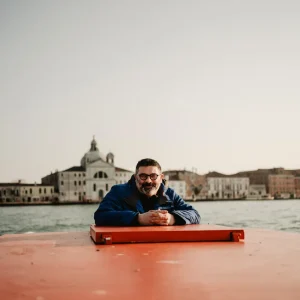
One detail often overlooked by first-time visitors is that a stop name may refer to several nearby landing pontoons serving different directions or lines. Choosing the correct boarding point matters as much as reaching the right neighborhood. At busy interchanges, the difference between platforms can determine whether a traveler catches a boat or misses it. Igor Scomparin, a licensed guide since 1997, and the Tour Leader Venice team emphasize checking the exact landing letter and direction rather than assuming every boat at a named stop follows the same route.
Official rules, route patterns, and service arrangements should always be checked in their current form. This feature explains the human work behind the network, not an unchanging manual for ACTV operations. Where a detail is subject to annual policy or a specific vessel’s requirements, the operator’s own instructions take precedence over a travel article.
The future depends on people as well as vessels
Discussions about Venice’s transport future often focus on fleet technology, fares, and infrastructure. Those subjects matter, but boats do not operate themselves. The network also requires trained navigators, engineers, landing-stage staff, and people who coordinate operations and assist passengers. Recruitment and professional development are therefore part of long-term service resilience. The evidence from ACTV’s 2026 recruitment notices makes that connection concrete. A city built around water needs a workforce capable of keeping water transport safe, accessible, and dependable.
That distinction is particularly important when visitors compare the journey with a road-based bus service. The water introduces different operational constraints, and the landing stage is not a fixed curb. A traveler who understands those conditions is better equipped to interpret the crew’s instructions without assuming that every delay reflects carelessness.
The city behind the timetable
A vaporetto ride can be one of the most memorable experiences of a visit to Venice. It is also the result of ordinary, skilled labor performed repeatedly through the day. Seeing the crew as professionals rather than background figures changes the story of the city. It also encourages better passenger behavior and a more realistic understanding of delays, accessibility, and safety. Venice’s public transport is remarkable not because it floats past palaces, but because people make it work as a public service for a city that still lives on the water.
An operational example is useful here: imagine a busy interchange where passengers with luggage and residents with shopping bags are trying to move in opposite directions. The staff member must preserve a safe boarding sequence while the vessel remains alongside. This is an illustrative scenario, not an account of a particular worker or incident. It shows how ordinary passenger behavior can affect the entire stop.
Frequently Asked Questions
Who drives the vaporetto boats in Venice?
Qualified maritime command personnel operate ACTV public water transport vessels. The exact professional title and required qualifications vary by vessel and assigned duties.
What does the sailor on a Venice vaporetto do?
Onboard crew may assist with docking, boarding, and operational safety according to their assigned role. Follow their instructions, especially while the vessel is arriving or leaving.
How can tourists make vaporetto boarding easier for workers?
Validate tickets as required, let people exit first, keep luggage clear of passageways, follow crew instructions, and check the correct stop and platform before boarding.
Sources and photograph credit
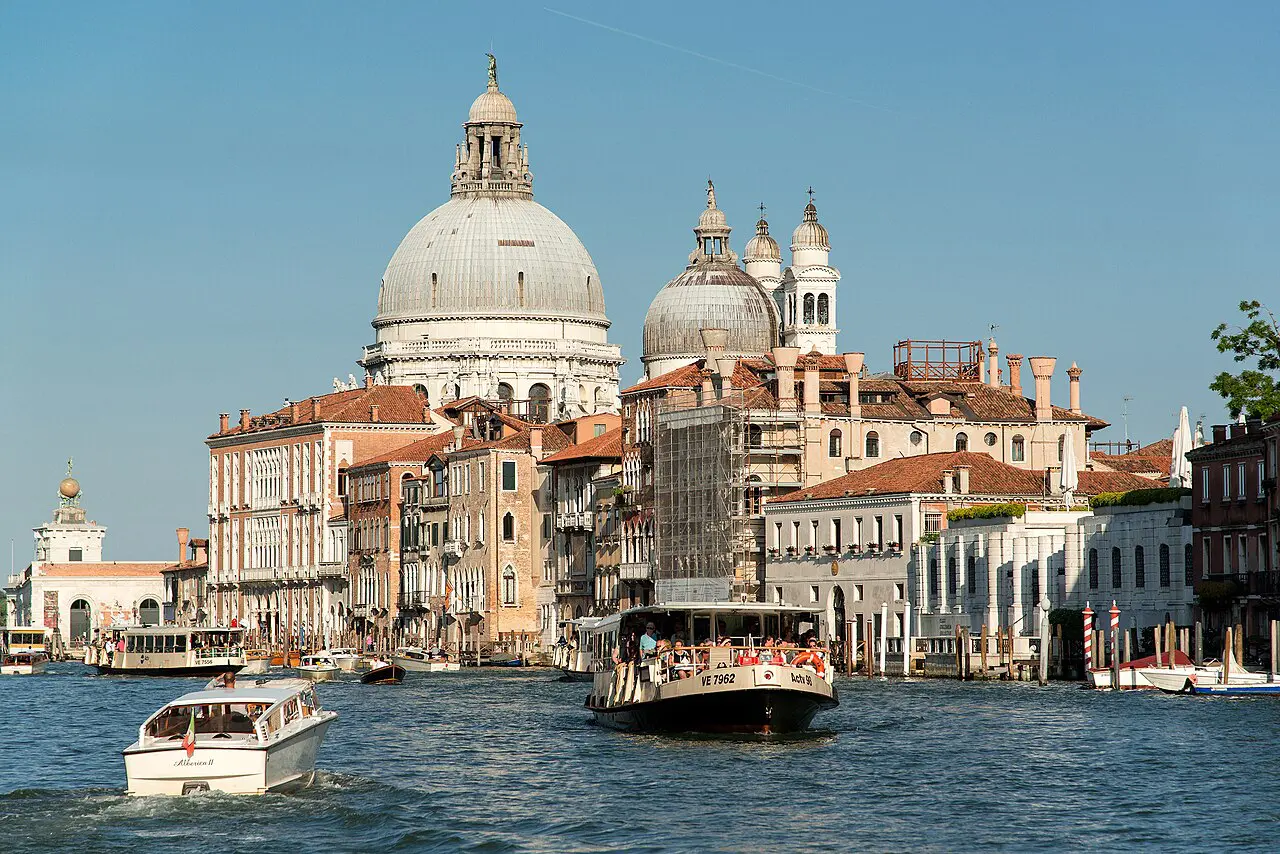
Primary sources: AVM’s March 23, 2026 maritime recruitment announcement; ACTV recruitment notices; ACTV accessible mobility guidance; Fermata Amica; priority boarding guidance; and AVM/ACTV conditions of carriage. Featured photograph: Peter K Burian, Vaporetto, Grand Canal, Venice, CC BY-SA 4.0, via Wikimedia Commons. The photograph is documentary, not a portrait of an interviewed employee.