The city has a second morning
Venice before sunrise is not an empty stage waiting for visitors. It is a workplace. Long before the first sightseeing groups gather in St. Mark’s Square, a network of boat operators, market traders, cleaners, bakers, hotel employees, delivery crews, maintenance specialists, and public-service workers is already moving through the lagoon city. Their work explains something fundamental about Venice: behind its remarkable beauty lies an everyday system that must be rebuilt, supplied, cleaned, and coordinated each day.
If you have only seen Venice between breakfast and dinner, you have seen the most visible part of its daily life, but not necessarily the machinery that makes that life possible. The soundscape changes in the early hours. Engines carry across still water. Wheels rattle over paving stones. A metal shutter rises. Someone opens a café for commuters rather than tourists. None of this is staged, and none of it requires an audience.
This is a guide to understanding that working city respectfully. It is not a promise that every occupation will be visible on every morning, or that any specific quay will be active at a particular minute. Deliveries, municipal services, weather, tides, regulations, and seasonal demand shape the schedule. What remains consistent is the remarkable effort involved in making a roadless historic city function.
Why everything moves differently in Venice
The first practical fact to understand is that Venice’s historic center has no conventional network of roads for trucks and delivery vans. Goods arriving from the mainland must be transferred through logistical access points, carried by boat, moved on handcarts, or brought the last distance by workers on foot. This is a transport system with additional steps that most travelers never see.
A delivery that would be straightforward in another European city may require a road vehicle, a loading area, a workboat, a legal landing place, and a porter with a cart. Each transfer consumes time and labor. Bridges add another obstacle: even when a shop is close to a canal on a map, the shortest walking route may involve steps that complicate the movement of heavy loads.
This geography affects costs, scheduling, staffing, and the design of ordinary businesses. A restaurant does not simply order produce and expect a van at its back door. A hotel cannot always receive supplies directly at its elegant water entrance. Local knowledge means understanding where the practical entrance is, not merely admiring the formal one.
Before the shutters rise: the supply chain
Consider the ingredients for one ordinary breakfast: bread, milk, fruit, coffee, and perhaps pastries. Each item has a supplier, a transport schedule, a destination, and someone responsible for receiving it. Multiply that small list by the thousands of meals served in Venice, and the scale of the daily operation becomes easier to imagine.
Supplies are not necessarily delivered at dawn in every case. Some arrive overnight, others in the morning or at designated windows. The timing depends on the product, the supplier, the receiving business, local restrictions, and the availability of boats and loading space. That variability is precisely why the system requires experienced operators.
When watching a delivery crew, notice the choreography rather than looking for a picturesque photograph. Someone secures the boat. Another person manages crates. A porter checks the route ahead. A narrow passage has to remain clear for pedestrians. The work may look routine, but the surrounding environment makes ordinary movements unusually demanding.
The boats that are not gondolas
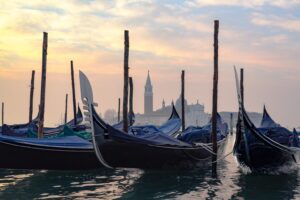
The gondola is Venice’s best-known vessel, yet the working lagoon depends on a much wider range of boats. Cargo boats, refuse-collection vessels, municipal craft, water taxis, public transport, emergency services, and specialized maintenance boats share a constrained aquatic environment. Each has a different role, and not every canal can accommodate every vessel.
For visitors, recognizing these boats changes the way the city appears. A small workboat carrying tools may be more revealing about contemporary Venice than a perfectly composed gondola photograph. It demonstrates that canals are not merely scenic corridors. They are transport routes, service routes, and the equivalent of streets.
Navigation requires attention to bridge clearance, water levels, traffic, and permitted routes. High tide can make a low bridge impassable for certain craft; low water can also complicate access. A local operator may change the route or landing point for reasons that are invisible to a visitor standing on the pavement.
Rialto’s markets and their changing rhythm
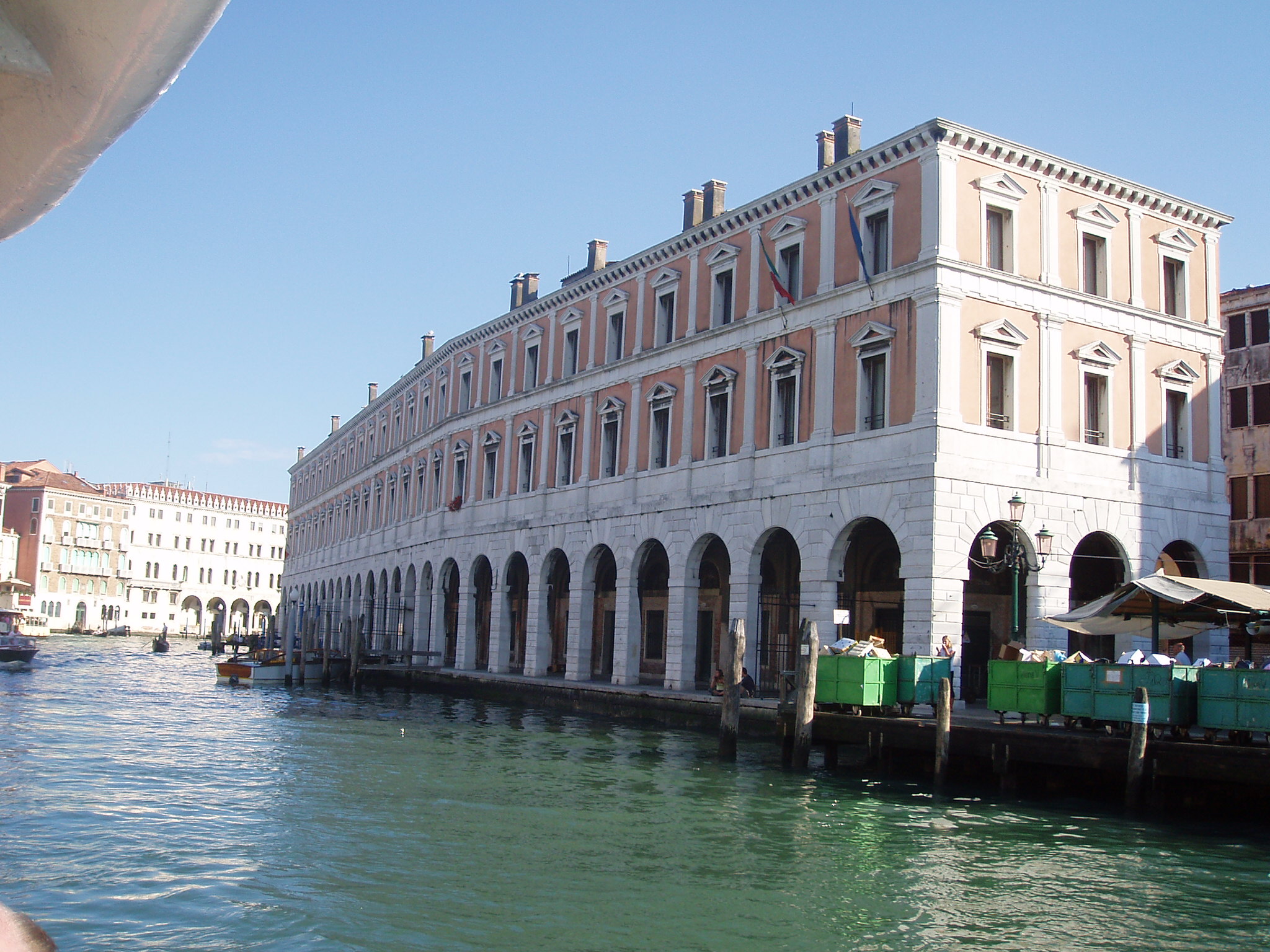
Rialto has been associated with commerce for centuries, and its market area remains one of the clearest places to think about the relationship between Venice and its food supply. The market’s history belongs to the city’s wider trading identity, but the contemporary market should not be mistaken for an unchanged medieval spectacle. It is a working commercial place subject to modern regulations and changing habits.
When stalls are operating, vendors prepare their spaces, organize produce or seafood, handle ice and packaging, and serve customers whose priorities may be very different from those of sightseeing visitors. What appears colorful in a photograph is also inventory, skilled labor, hygiene, timing, and a livelihood.
Do not assume that the fish market is open every morning. In particular, Sunday and Monday are not regular fish-market days, and holiday or seasonal changes may affect operations. If the market is important to your visit, check current schedules before setting out. A closed market can still tell a historical story, but it cannot provide the same experience as a working one.
The fishmonger’s invisible work
Fresh fish does not appear neatly arranged by itself. Behind the counter is a chain of sourcing, transport, temperature control, handling, and preparation. Seafood commerce is especially sensitive to timing and food safety, and those constraints shape how traders organize their mornings.
The interesting question is not simply which fish looks most photogenic. It is how a lagoon city connects its local culinary identity with contemporary supply networks. Not every fish sold in Venice is caught in the lagoon, and visitors should avoid assuming that a traditional-looking market stall guarantees a local origin. Ask respectfully when a seller has time, and accept that traders are there primarily to work.
A useful local observation is that the most authentic market moment may be the least convenient one for photography: workers concentrating on unloading, cleaning, or preparing goods. Give them space. A visitor’s desire for an image should never interfere with a worker’s ability to handle food or move safely.
Bakers, pastry shops, and the first coffee
A different kind of work begins behind bakery and pastry-shop doors. Dough must be prepared, baked goods finished, counters stocked, and coffee machines readied before customers arrive. Some production takes place on site; other businesses receive products from elsewhere. The exact arrangement varies, but the early-morning effort is real.
A café at the beginning of its day can reveal the social side of Venetian routines. Residents, commuters, hospitality employees, and delivery workers may stop for a quick espresso before moving on. The encounter is brief and practical, not the leisurely café scene visitors sometimes imagine.
If you enter a small bar at a busy hour, watch the rhythm of service and follow the lead of local customers. Order clearly, move aside when others need the counter, and do not turn a working breakfast stop into an extended photo session. Buying a coffee is a simple way to participate respectfully in the local economy.
The cleaners who reset the streets
Venice’s public spaces need constant attention. Street cleaning and waste collection are particularly challenging because workers operate around narrow pedestrian routes, bridges, canals, and a large daily flow of visitors. The task is not simply to sweep a broad road with a conventional truck.
Municipal crews and contractors use systems suited to the city’s geography, including manual work, specialized equipment, collection points, and boats. Different areas may be serviced at different times. Visitors sometimes encounter workers transporting waste while the city is still quiet, but there is no single universal dawn schedule for every neighborhood.
Their work is among the easiest to overlook and among the most important to respect. Never block a cart, photograph workers intrusively, or leave rubbish beside an overflowing bin. The romantic city depends on unromantic labor, and acknowledging that fact is part of understanding Venice honestly.
The hidden geography of garbage
Waste has to leave Venice just as supplies have to enter it. This creates a reverse logistics problem: material is gathered from buildings and public spaces, consolidated, transported, and processed through systems that connect the historic center to larger service infrastructure.
For visitors, this is an illuminating reminder that Venice is not exempt from the ordinary needs of urban life. Every restaurant, household, hotel, and shop produces waste. The difference is the difficulty of moving it through a dense, pedestrian city built on islands.
A thoughtful traveler can help by following local disposal instructions, avoiding litter, and treating workers’ routes as essential access corridors. It may sound like a small courtesy, but the accumulated effect of thousands of visitors either cooperating or obstructing is significant.
Porters and the art of crossing bridges
Porters and delivery workers are among the city’s most physically visible professionals. Their carts carry goods through streets that were never designed for modern wheeled freight. Bridges can turn a short route into a demanding sequence of lifts, pushes, and careful maneuvers.
Watch how an experienced worker approaches a corner or bridge. The route is often chosen for practicality rather than scenery. The number of steps, width of a passage, crowd density, and proximity to a usable landing may matter more than the distance shown by a navigation app.
Here is one of the most useful lessons from years of organizing private visits in Venice: the nearest water entrance is not automatically the easiest one. For luggage, equipment, or mobility assistance, a slightly longer route with fewer steps can be the better choice. This principle applies equally to travelers planning hotel transfers and to workers moving essential goods.
Hotel staff before the guests wake
Venice’s hospitality industry begins working long before breakfast is served. Front-desk teams manage departures and arrivals, housekeeping departments coordinate rooms, kitchens prepare service, and hosts confirm transport arrangements. Behind a smooth hotel experience is a set of practical decisions about boats, luggage, access, and timing.
A prestigious water entrance may look like the obvious place for every arrival. In practice, access can depend on the canal, the tide, bridge clearance, boat size, and whether a safe landing is available. Some hotels have alternative access routes, and arrangements may change on the day.
For travelers, the lesson is to confirm logistics rather than assuming a boat can always pull up at the door. This is especially important when traveling with large suitcases, young children, or anyone who has difficulty with steps. Good planning respects the city’s physical limitations instead of pretending they do not exist.
The waterbus network wakes up
Public transportation is another part of Venice’s early working life. ACTV services connect neighborhoods, islands, and major arrival points, carrying residents and commuters as well as visitors. The network is often described as a sightseeing opportunity, but for many passengers it is a daily necessity.
Early services are shaped by published timetables, routes, and operating conditions. Frequencies vary by line and time of day, and not every island has the same connections. A journey that seems simple in a travel guide may require careful attention to the direction of travel, the stop used, and the timetable in effect.
If you ride during commuting hours, remember that you are sharing a service with people going to work or school. Keep bags out of passageways, allow passengers to board and disembark, and avoid occupying space for photography when the boat is busy. The experience becomes more meaningful when you recognize it as public infrastructure rather than an attraction.
The first water taxis and working captains
Private water-taxi captains operate within a different service pattern from public transportation. Early departures, airport transfers, and hotel connections can be part of the working day. Each journey requires coordination between passenger, captain, and landing place.
The romantic image of a boat gliding through a canal can hide the captain’s practical responsibilities. Navigation, passenger safety, loading, traffic, and local conditions all demand attention. A pickup that looks effortless may be the result of several messages and a change of landing point.
Travelers can help by being ready at the agreed time, providing accurate luggage information, and following boarding instructions. A moving boat and wet steps require care. These simple details are part of the professional culture that keeps water transport functioning.
Emergency services in a city without roads
Ambulances, firefighters, police, and other emergency responders must operate in a city whose access routes differ radically from those in most places. Waterborne emergency services are an essential part of Venice’s urban system, supported by personnel trained for the environment in which they work.
Narrow canals, pedestrian routes, bridges, and changing conditions can complicate access. Emergency planning must account for the reality that a location may be reachable by boat, on foot, or through a combination of both. That complexity makes coordination and local knowledge particularly important.
Visitors should never obstruct emergency access or crowd around an incident to take photographs. If a service vessel approaches, follow instructions and leave room. Respecting these operations is a basic responsibility in a city where the waterways serve as vital routes.
Maintenance: keeping an old city functional
Venice requires constant maintenance, from paving and bridges to buildings, drainage, and public infrastructure. Much of this work is less visible than the monuments tourists come to see, but it is indispensable to daily life.
Maintenance crews may need to transport materials by boat, secure work areas, and operate in places with very little room. Historic surroundings add constraints because interventions must account for existing structures, public access, and applicable protections.
A temporary barrier or closed passage is not necessarily an inconvenience created for visitors. It may be evidence of the ongoing work required to keep the city safe and usable. A flexible itinerary makes room for these realities, and a good local guide can often suggest an alternative route without turning a small closure into a major problem.
Tides, weather, and the morning plan
Venice’s daily routines are influenced by water levels and weather. Acqua alta, when elevated water affects low-lying areas, is not simply a dramatic photographic event. It can alter pedestrian access, boat navigation, business operations, and the work of service teams.
Tide forecasts are useful, but local conditions can still complicate plans. Water level is only one factor: wind, visibility, rain, bridge clearance, and traffic also matter. A responsible operator treats these variables as practical considerations rather than promising an identical experience under all conditions.
If you are visiting during a period of elevated water, consult official local information and follow temporary access arrangements. Avoid treating flooded working spaces as a backdrop for entertainment. For residents and businesses, the situation can involve real disruption and additional labor.
The lagoon’s island commuters
Venice’s working day extends beyond the historic center. Residents of Murano, Burano, and other lagoon islands rely on transport links and local services, while artisans, hospitality staff, students, and other workers travel between communities.
The lagoon is not a single compact destination. Distances, connections, and service patterns matter. A person who commutes daily may organize life around departure times that a visitor would barely notice. That dependence on the transport network is part of what makes island life distinctive.
When planning an island visit, leave enough time to understand the place rather than rushing through a checklist. The colorful houses of Burano and the glass workshops of Murano are part of communities with ordinary routines, not just scenery waiting for tourist boats.
The artisans who begin before visitors arrive
Venetian craft traditions depend on preparation as well as performance. In a glass workshop, textile studio, or other artisan setting, work may begin with equipment checks, material preparation, design decisions, and tasks that are not visible during a demonstration.
A visitor who sees only the finished object may underestimate the skill, patience, and repetition involved. Craftsmanship is not created in a few theatrical minutes. It is sustained by years of learning and by businesses that must balance artistic work with the realities of contemporary commerce.
If you book an artisan visit, choose an experience that treats the craftsperson as a professional rather than a prop. Ask thoughtful questions, respect restrictions on photography, and understand that access to working spaces depends on the workshop’s schedule and permission.
The workers visitors almost never notice
Many essential jobs are deliberately unobtrusive. People check systems, move linens, prepare kitchens, maintain equipment, handle deliveries, and coordinate transport without becoming part of the visitor’s narrative. Their absence from postcards does not make their contribution less important.
It is easy to celebrate the elegance of a historic palace without considering the labor needed to keep it operating as a hotel or museum. The same is true of a restaurant overlooking a canal or a beautifully maintained public square. Every apparently effortless setting rests on work.
Recognizing this does not make Venice less magical. It makes the city more interesting. Beauty and practicality are not opposites here. They have existed alongside one another for centuries, and their relationship continues to shape the city today.
A respectful dawn walk: where to go
For an early walk, consider beginning in a neighborhood where residents still follow everyday routines. Cannaregio can offer glimpses of commuting and local cafés; the Rialto area reveals its commercial identity when market activity is scheduled; parts of Castello show another side of residential and working Venice.
These are suggestions for observation, not promises of specific encounters. Workers do not operate on a timetable designed for travelers. The most rewarding walk is often one that follows the city’s ordinary sounds and movements without pursuing anyone. Keep to public routes and allow businesses to prepare before opening.
An hour of slow observation is more useful than a frantic search for dramatic scenes. Notice the landing places, handcarts, shutters, workboats, and the relationship between streets and canals. Ask what problem each feature solves. Venice becomes easier to understand when you start with that question.
What time should you set out?
There is no single perfect time to see working Venice. Sunrise shifts throughout the year, and commercial schedules differ by occupation and neighborhood. A winter dawn is later and often colder; summer light arrives much earlier. Rain, holidays, and the day of the week can change what is visible.
A practical approach is to choose a morning when you are comfortable walking before the busiest visitor hours and check the sunrise time for your dates. If you hope to see the Rialto market, verify its operating days first. Do not plan your entire outing around the assumption that a particular delivery boat will appear.
Wear comfortable shoes with reliable grip, especially if paving is wet. Keep your route simple and avoid blocking narrow bridges. If you are staying outside the historic center, check the first transport connection rather than assuming every service runs continuously.
Photographing workers without intruding
Early light makes Venice exceptionally photogenic, but working people deserve the same respect you would expect in your own neighborhood. A person unloading goods is not automatically consenting to be photographed at close range.
For general street scenes, consider wider compositions that emphasize the environment rather than identifying individuals. When someone is the clear subject, ask permission when practical. Never obstruct a loading operation, step onto a private dock, enter a workshop without invitation, or stand in a narrow passage while a porter is approaching.
If a worker declines a photograph, accept the answer immediately. The point of exploring working Venice is to understand the city, not to collect images at someone else’s expense. Thoughtful observation often produces a richer memory than an intrusive close-up.
What travelers can learn from the early shift
The working morning reveals why Venice requires patience and adaptability. A bridge is more than a pretty crossing when someone must haul a heavy cart over it. A canal is more than a reflection when it serves as the only practical route for a delivery. A market is more than an attraction when it supports livelihoods.
This perspective can change the rest of your visit. You may become more attentive to loading spaces, more understanding of transport delays, and more appreciative of the people who keep hotels, cafés, public services, and neighborhoods functioning.
For those interested in the built environment, a complementary way to explore these clues is our article on hidden details that tell Venice’s real story. It looks at physical traces of the same relationship between geography, labor, and everyday life.
The Venice that deserves to be remembered
By midmorning, Venice may feel like the familiar destination of guidebooks and travel photographs. The squares fill, museum lines form, and boats carry visitors along famous waterways. The city of workers has not disappeared; it has simply become harder to see beneath the visitor experience.
Understanding that other Venice does not require access to a secret club or an invitation into private spaces. It begins with attention. Notice the person guiding a loaded cart around a corner. Watch how a boat is secured to a landing. Look at the market as a place of trade rather than a colorful background.
For Tour Leader Venice, the most meaningful way to explore the city is to connect its beauty with the lives that sustain it. A local guide can help interpret those connections, but curiosity and respect are available to every traveler. Wake early once, walk slowly, and let the working city tell its own story.
Frequently Asked Questions About Venice Before Sunrise
What happens in Venice before sunrise?
Delivery crews, market traders, cleaners, bakers, hotel staff, boat operators, and public-service workers may already be active. Their schedules vary by season, neighborhood, and day.
Where can visitors see everyday working life in Venice early in the morning?
Public streets around Rialto, Cannaregio, and Castello can offer glimpses of ordinary routines. Check market opening days, stay in public areas, and never obstruct workers.
Is the Rialto fish market open every morning?
No. The Rialto fish market does not normally operate on Sundays or Mondays, and schedules can change on holidays. Check current local opening information before visiting.