Festa della Salute in Venice takes place on Saturday, November 21, 2026. The pilgrimage centers on the Basilica of Santa Maria della Salute, candles, prayer, and a temporary votive bridge traditionally used to cross the Grand Canal. This 2026 visitor guide explains the route, etiquette, transport, accessibility, and what must still be confirmed by official announcements. It does not invent bridge hours or a religious schedule.
Festa della Salute 2026: the essentials
Saturday, November 21, 2026, is the annual Festa della Madonna della Salute in Venice. The celebration commemorates a vow made during the plague of 1630–1631 and centers on the Basilica of Santa Maria della Salute. The traditional pilgrimage includes prayer and candles, and a temporary votive bridge has historically helped pedestrians cross the Grand Canal. For 2026, the exact bridge opening, liturgical program, transport changes, and crowd arrangements should be checked through official channels rather than assumed from previous years.
That practical distinction is important in a city without road access to most historic-center destinations. Even a small change in pedestrian circulation can affect the route between two familiar landmarks. Local conditions deserve to be checked on the day, not reconstructed from an attractive photograph or an old itinerary.
Why this is a practical 2026 guide
Several articles already explain the history and emotional meaning of the feast. This guide instead answers the questions a traveler or resident needs to resolve on the day itself: where to approach the church, how to plan a route, how to respect religious services, and which details are not yet confirmed. It is deliberately a dated planning resource. The distinction matters because timeless historical information is reliable across years, while temporary infrastructure, opening hours, and transit arrangements can change from one November to the next.
Remember that residents, pilgrims, staff, and visitors may share the same narrow spaces. Keeping an entrance clear, following temporary signs, and avoiding unnecessary stops can make a meaningful difference. Good visitor behavior is not complicated, but it is particularly valuable when a local religious tradition draws additional people into a small neighborhood.
What the festival commemorates
The feast recalls Venice’s collective response to the devastating plague of 1630–1631. The Venetian Republic made a public vow to build a church dedicated to the Virgin Mary, asking for protection and deliverance. The eventual basilica became a monumental expression of remembrance and thanksgiving. For many people today, the observance is also a personal act of devotion. A visitor should recognize both layers: the state ceremony that shaped the city’s architecture and the individual prayers that give the pilgrimage its continuing meaning.
A responsible guide also distinguishes observation from certainty. You may see a queue, a candle, or a temporary structure, but those details do not by themselves explain an individual’s intention or prove an official timetable. Careful language protects both the accuracy of the article and the dignity of the people participating.
The date and the day of the week
November 21 is the feast date every year; in 2026 it falls on a Saturday. A weekend date may influence visitor interest and travel patterns, but it would be misleading to predict a specific crowd size without official forecasts. The day is associated with the Presentation of Mary in the Catholic calendar. Travelers who have seen a different date on a social media post should verify whether it refers to bridge installation, the eve, a service, or the feast itself. These are related events, not interchangeable dates.
That practical distinction is important in a city without road access to most historic-center destinations. Even a small change in pedestrian circulation can affect the route between two familiar landmarks. Local conditions deserve to be checked on the day, not reconstructed from an attractive photograph or an old itinerary.
The Basilica of Santa Maria della Salute
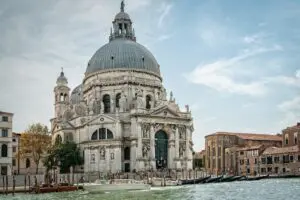
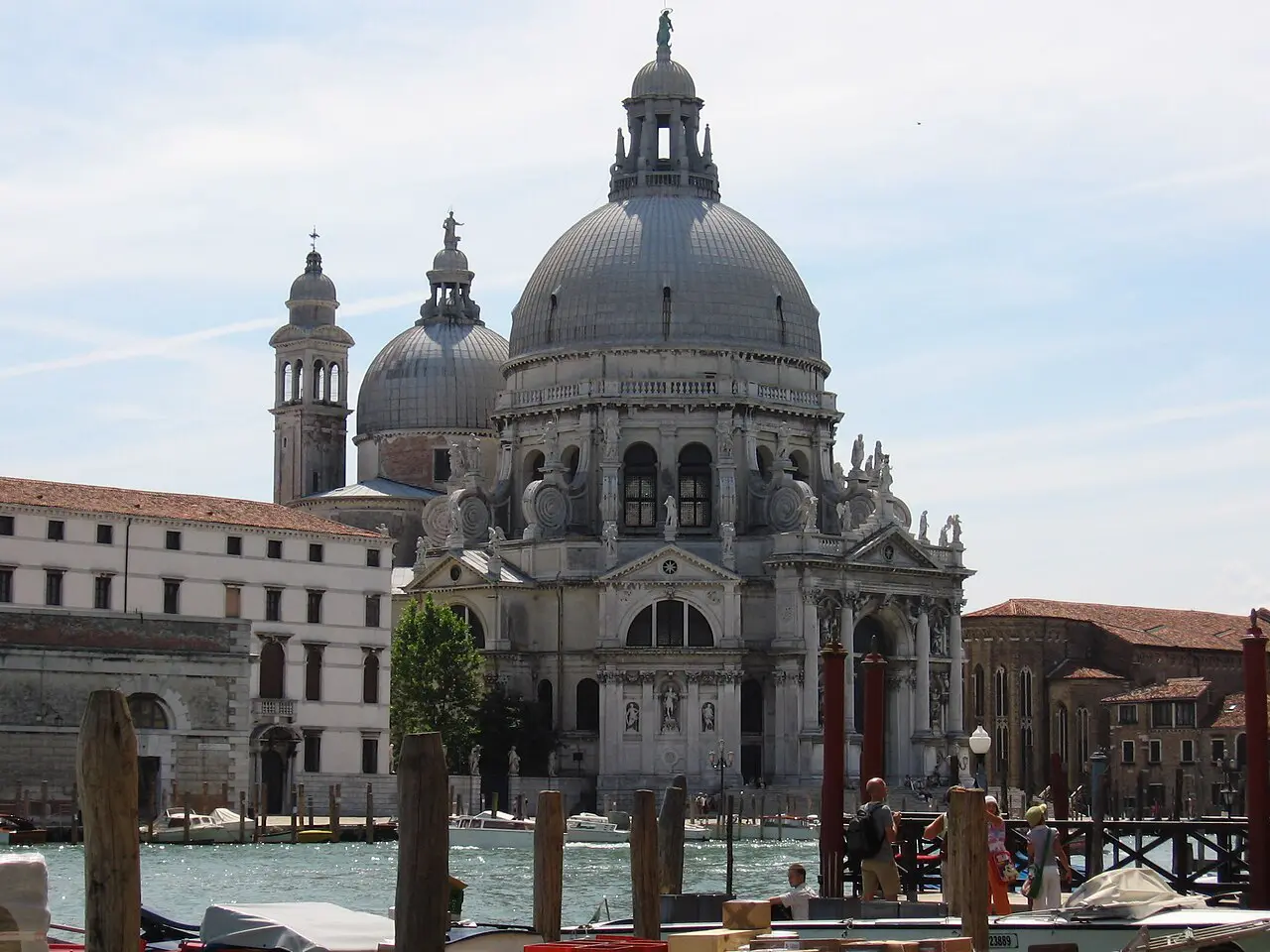
The basilica stands at the entrance to the Grand Canal near Punta della Dogana. Its great dome is one of Venice’s defining silhouettes. Designed by Baldassare Longhena and consecrated in 1687, the church gives permanent architectural form to the seventeenth-century vow. On November 21, however, it is first and foremost a functioning place of worship. Its religious role takes priority over ordinary sightseeing expectations. The building is not simply a beautiful monument hosting a seasonal event; the annual pilgrimage is part of its reason for existing.
Remember that residents, pilgrims, staff, and visitors may share the same narrow spaces. Keeping an entrance clear, following temporary signs, and avoiding unnecessary stops can make a meaningful difference. Good visitor behavior is not complicated, but it is particularly valuable when a local religious tradition draws additional people into a small neighborhood.
Understanding the votive bridge
The ponte votivo is a temporary pedestrian crossing traditionally assembled for the feast, linking the area near Santa Maria del Giglio with the Salute side of the Grand Canal. It changes the normal geography of Venice for a limited period. Exact endpoints, opening times, safety restrictions, and accessibility provisions are subject to annual arrangements. A visitor should never assume that a bridge shown in a previous year’s photograph is already open or that its configuration will be identical. Follow the municipality’s notices and signs on site.
A responsible guide also distinguishes observation from certainty. You may see a queue, a candle, or a temporary structure, but those details do not by themselves explain an individual’s intention or prove an official timetable. Careful language protects both the accuracy of the article and the dignity of the people participating.
Where the bridge begins
The traditional crossing is associated with the San Marco side near Santa Maria del Giglio, rather than with the Rialto Bridge or the railway station. Temporary approaches and pedestrian management can alter the exact route. A useful planning method is to identify both the San Marco-side approach and the Dorsoduro-side destination on a current map, then verify any official festival instructions. Do not rely solely on straight-line distance: water and canal crossings make Venice’s pedestrian geography different from that of a road city.
That practical distinction is important in a city without road access to most historic-center destinations. Even a small change in pedestrian circulation can affect the route between two familiar landmarks. Local conditions deserve to be checked on the day, not reconstructed from an attractive photograph or an old itinerary.
Crossing with the right expectations
For pilgrims, crossing the temporary bridge can be part of the devotional journey. For visitors, it may be a rare opportunity to experience a different perspective on the Grand Canal. These uses coexist, but neither justifies blocking the crossing for photographs. Keep moving when instructed, avoid stopping in the middle, and follow staff guidance. People may be carrying candles or accompanying older relatives. A considerate crossing is a better way to participate in the atmosphere than treating the structure as a private viewing platform.
Remember that residents, pilgrims, staff, and visitors may share the same narrow spaces. Keeping an entrance clear, following temporary signs, and avoiding unnecessary stops can make a meaningful difference. Good visitor behavior is not complicated, but it is particularly valuable when a local religious tradition draws additional people into a small neighborhood.
Is the bridge open all day?
There is no responsible answer to that question without the official 2026 schedule. Bridge access may depend on installation work, safety checks, public opening periods, and conditions on the water. The feast date alone does not guarantee access at a specific hour. Before leaving your hotel, consult the City of Venice’s current announcements and any instructions from local authorities. If access is not available, plan a conventional pedestrian or water-bus route rather than improvising around barriers. Temporary infrastructure should always be approached as an operational facility.
A responsible guide also distinguishes observation from certainty. You may see a queue, a candle, or a temporary structure, but those details do not by themselves explain an individual’s intention or prove an official timetable. Careful language protects both the accuracy of the article and the dignity of the people participating.
The religious program
Masses, prayers, and other observances are central to the feast, but their exact times should be taken from the church or Patriarchate’s 2026 notices. Publishing a guessed timetable would be especially unhelpful because travelers might arrive during a service expecting a sightseeing visit. If you wish to attend worship, check the current program and arrive respectfully. If your goal is architectural sightseeing, consider another day. A church full of worshippers is not a failed tourist experience; it is the event’s essential purpose.
That practical distinction is important in a city without road access to most historic-center destinations. Even a small change in pedestrian circulation can affect the route between two familiar landmarks. Local conditions deserve to be checked on the day, not reconstructed from an attractive photograph or an old itinerary.
Candles and personal intentions
Lighting a candle is a familiar part of the Salute tradition. It may represent gratitude, remembrance, a prayer for health, or another intention known only to the person offering it. Visitors should not infer a stranger’s story from the gesture. Follow local instructions about where candles can be obtained and placed. If queues are present, move patiently and leave space for worshippers. Photography should never interrupt someone in prayer. The quiet dignity of the custom is part of what makes the festival so meaningful.
Remember that residents, pilgrims, staff, and visitors may share the same narrow spaces. Keeping an entrance clear, following temporary signs, and avoiding unnecessary stops can make a meaningful difference. Good visitor behavior is not complicated, but it is particularly valuable when a local religious tradition draws additional people into a small neighborhood.
Why the pilgrimage feels different
Venice hosts many public events, but the Salute celebration is unusual because it joins a monumental historic setting to personal devotion. Some participants come through religious faith; others continue a family tradition or civic habit. There is no single motivation shared by every person in the crowd. The best visitor perspective is to acknowledge that diversity rather than trying to classify everyone as a tourist or pilgrim. The festival’s authenticity does not depend on outsiders finding a hidden ritual; it depends on a tradition continuing in ordinary lives.
A responsible guide also distinguishes observation from certainty. You may see a queue, a candle, or a temporary structure, but those details do not by themselves explain an individual’s intention or prove an official timetable. Careful language protects both the accuracy of the article and the dignity of the people participating.
The difference from the Redentore
Both the Salute and the Redentore are associated with Venice’s plague history and votive churches, but they are different celebrations. The Redentore takes place in July and is associated with the Giudecca church and its own temporary crossing and festivities. The Salute falls on November 21 and centers on the basilica at the Grand Canal entrance. Mixing the two can lead to incorrect practical advice. A summer photograph of a bridge near the Giudecca is not evidence for the November Salute crossing. Each event has its own geography and schedule.
That practical distinction is important in a city without road access to most historic-center destinations. Even a small change in pedestrian circulation can affect the route between two familiar landmarks. Local conditions deserve to be checked on the day, not reconstructed from an attractive photograph or an old itinerary.
The difference from San Michele
Another temporary bridge tradition in Venice concerns commemorations connected with San Michele and the dead. Its route and purpose are separate from the Salute pilgrimage. This distinction matters when searching online because generic captions such as Venice votive bridge can be misleading. Our guide to All Saints and the San Michele crossing explains that tradition. For November 21, focus on Santa Maria della Salute, its religious services, and the relevant Grand Canal crossing.
Remember that residents, pilgrims, staff, and visitors may share the same narrow spaces. Keeping an entrance clear, following temporary signs, and avoiding unnecessary stops can make a meaningful difference. Good visitor behavior is not complicated, but it is particularly valuable when a local religious tradition draws additional people into a small neighborhood.
How to approach from San Marco
Visitors staying near St. Mark’s Square can walk toward the traditional San Marco-side bridge approach, subject to the official route in 2026. Expect narrow streets and possible pedestrian controls near the temporary crossing. Allow time for slow movement and avoid assuming that the most direct-looking alley will remain the easiest. If you have a timed reservation elsewhere, build a buffer into the day. A major local observance is not the ideal occasion for scheduling a tight sequence of unrelated attractions across the same neighborhood.
A responsible guide also distinguishes observation from certainty. You may see a queue, a candle, or a temporary structure, but those details do not by themselves explain an individual’s intention or prove an official timetable. Careful language protects both the accuracy of the article and the dignity of the people participating.
How to approach from Dorsoduro
Visitors already in Dorsoduro may be able to reach the basilica through the ordinary pedestrian network without using the temporary bridge. That can be helpful if the bridge is busy or unavailable. Nevertheless, local access arrangements and queues can affect nearby streets. Keep residential entrances clear and follow any temporary signage. The Salute neighborhood is lived in, not an event enclosure. Walking there with patience and awareness often makes the experience more meaningful than treating the visit as a race to a famous doorway.
That practical distinction is important in a city without road access to most historic-center destinations. Even a small change in pedestrian circulation can affect the route between two familiar landmarks. Local conditions deserve to be checked on the day, not reconstructed from an attractive photograph or an old itinerary.
Coming from the railway station
From Venezia Santa Lucia, travelers must account for a substantial pedestrian route or use public water transport where convenient. The precise best option depends on mobility, luggage, weather, and service updates. Do not assume that the temporary bridge provides a simple shortcut from the station. It is associated with the Grand Canal crossing near the festival area, not a direct connection to every part of the city. Check ACTV information and leave more time than a normal map estimate suggests, especially if you are unfamiliar with Venice.
Remember that residents, pilgrims, staff, and visitors may share the same narrow spaces. Keeping an entrance clear, following temporary signs, and avoiding unnecessary stops can make a meaningful difference. Good visitor behavior is not complicated, but it is particularly valuable when a local religious tradition draws additional people into a small neighborhood.
Using the vaporetto
ACTV water buses remain an important option, but the most convenient line and stop depend on the day’s service plan. Temporary changes are possible around major events, so fixed departure times should not be copied from an older article. Use the official ACTV website or current travel information before setting out. The water bus can reduce walking for some travelers, but boarding areas may still involve steps or crowding. A realistic itinerary considers both the boat journey and the pedestrian section after disembarking.
A responsible guide also distinguishes observation from certainty. You may see a queue, a candle, or a temporary structure, but those details do not by themselves explain an individual’s intention or prove an official timetable. Careful language protects both the accuracy of the article and the dignity of the people participating.
Accessibility and mobility
Venice’s bridges and uneven paving can create significant barriers for wheelchair users and people who have difficulty with steps. A temporary festival bridge should not be described as accessible without current technical information. The safest approach is to verify the 2026 provisions with official sources and consider alternative transport routes. Visitors traveling with older relatives should also allow extra time for queues and standing. An attractive photograph of the crossing reveals very little about its actual gradient, surface, or usability for a particular person.
That practical distinction is important in a city without road access to most historic-center destinations. Even a small change in pedestrian circulation can affect the route between two familiar landmarks. Local conditions deserve to be checked on the day, not reconstructed from an attractive photograph or an old itinerary.
Children and families
Families can appreciate the history and atmosphere of the festival, but the day may involve waiting, slow pedestrian movement, and crowded spaces. Explain to children that the church is an active place of prayer. Agree on a meeting point and keep close to younger children near the water and in crowds. A shorter visit may be more rewarding than trying to see everything. Bring suitable clothing and consider whether a stroller will be practical on routes with bridges and steps. The aim is a respectful, manageable experience.
Remember that residents, pilgrims, staff, and visitors may share the same narrow spaces. Keeping an entrance clear, following temporary signs, and avoiding unnecessary stops can make a meaningful difference. Good visitor behavior is not complicated, but it is particularly valuable when a local religious tradition draws additional people into a small neighborhood.
What to wear in November
Late November in Venice is often cool and can be damp, windy, or rainy. Conditions on November 21, 2026, cannot be known reliably from seasonal averages months in advance. Comfortable shoes with good grip are more useful than dress shoes for a long walk on wet stone. Layers help when moving between outdoor queues and indoor spaces. If you intend to enter the church, dress appropriately for a place of worship. Bring only what you can comfortably carry through pedestrian routes and possible crowd controls.
A responsible guide also distinguishes observation from certainty. You may see a queue, a candle, or a temporary structure, but those details do not by themselves explain an individual’s intention or prove an official timetable. Careful language protects both the accuracy of the article and the dignity of the people participating.
Acqua alta and tide forecasts
High-water conditions can complicate movement in low-lying parts of Venice, but their effects vary across the city. Check the official tide forecast close to your visit rather than assuming November automatically means flooding. The operation of the MOSE barriers and other responses depends on forecast and operational conditions. Temporary event infrastructure may also be affected by safety decisions. Do not cross closed barriers or follow an old route map into an area restricted by authorities. Flexibility is more useful than a rigid photographic itinerary.
That practical distinction is important in a city without road access to most historic-center destinations. Even a small change in pedestrian circulation can affect the route between two familiar landmarks. Local conditions deserve to be checked on the day, not reconstructed from an attractive photograph or an old itinerary.
What the local stalls mean
The Salute celebration is associated with seasonal stalls and food traditions, but individual vendors and locations can change. Treat any particular market layout or product availability as unconfirmed until the current arrangements are announced. Food can contribute to the communal atmosphere, yet it should not overshadow the pilgrimage’s devotional purpose. Our article on the feast’s traditions and food explores that cultural background. This 2026 guide focuses instead on how to plan your visit responsibly.
Remember that residents, pilgrims, staff, and visitors may share the same narrow spaces. Keeping an entrance clear, following temporary signs, and avoiding unnecessary stops can make a meaningful difference. Good visitor behavior is not complicated, but it is particularly valuable when a local religious tradition draws additional people into a small neighborhood.
The feast and Venetian family memory
A recurring pilgrimage can carry family associations that are difficult for an outsider to see. Some people attend because the tradition was part of childhood; others make a personal visit during a difficult year. No visitor should assume that a particular person is participating for a specific reason. This restraint matters when writing about living culture. Historical explanation is valuable, but invented personal stories would diminish the reality. A guide can describe the vow and the church while allowing the individual meanings of devotion to remain private.
A responsible guide also distinguishes observation from certainty. You may see a queue, a candle, or a temporary structure, but those details do not by themselves explain an individual’s intention or prove an official timetable. Careful language protects both the accuracy of the article and the dignity of the people participating.
Photography without intrusion
The exterior of the basilica and the temporary bridge may offer striking images. Yet the most important ethical distinction is between documenting public architecture and intruding on individual worship. Do not stop pedestrian traffic for a photograph or take close-up images of people praying without consent. Avoid flash and follow church rules. If the crowd is dense, put the camera away and concentrate on moving safely. A respectful observer can leave with a memorable experience even without the dramatic photograph they imagined.
That practical distinction is important in a city without road access to most historic-center destinations. Even a small change in pedestrian circulation can affect the route between two familiar landmarks. Local conditions deserve to be checked on the day, not reconstructed from an attractive photograph or an old itinerary.
Where to pause and observe
A good vantage point is one that is publicly accessible, safe, and does not obstruct movement. Do not stand on steps needed by residents, block a bridge, or occupy a church entrance for an extended photo session. The best location can change with crowd controls and weather. A quiet moment a little farther from the main route may reveal the setting more clearly than a congested spot beside the crossing. Observe the flow of people without trying to turn their devotion into a performance for visitors.
Remember that residents, pilgrims, staff, and visitors may share the same narrow spaces. Keeping an entrance clear, following temporary signs, and avoiding unnecessary stops can make a meaningful difference. Good visitor behavior is not complicated, but it is particularly valuable when a local religious tradition draws additional people into a small neighborhood.
The day before: November 20
The eve has a different character from the official feast day. It is a time when practical preparations may be visible and some residents are thinking about the next day’s visit. It should not be advertised as a separate guaranteed procession or fixed candlelight event. We have prepared a dedicated companion article, The Night Before Madonna della Salute, focused on anticipation, preparations, and the atmosphere of November 20. Keeping the two dates distinct helps travelers plan realistically.
A responsible guide also distinguishes observation from certainty. You may see a queue, a candle, or a temporary structure, but those details do not by themselves explain an individual’s intention or prove an official timetable. Careful language protects both the accuracy of the article and the dignity of the people participating.
A sample morning plan
Start by checking official service and bridge notices. If attending worship, choose a service according to the published church schedule and arrive with sufficient time. If observing the exterior, avoid peak pedestrian bottlenecks and do not interfere with people entering. Afterward, walk through Dorsoduro at an unhurried pace, respecting homes and businesses. This is an adaptable sequence, not a timetable. Its value lies in allowing the event’s actual conditions to determine your route rather than imposing a rigid sightseeing agenda.
That practical distinction is important in a city without road access to most historic-center destinations. Even a small change in pedestrian circulation can affect the route between two familiar landmarks. Local conditions deserve to be checked on the day, not reconstructed from an attractive photograph or an old itinerary.
A sample afternoon plan
An afternoon visit can work for travelers with other morning commitments, provided current church access and transport arrangements allow it. Check whether religious services or temporary restrictions affect the time you have in mind. Avoid assuming that the basilica will be open for ordinary sightseeing between services. If access is limited, appreciate the exterior and the surrounding public space without pressing staff for exceptions. Venice rewards flexibility, particularly during a major local observance. A change of plan need not diminish the experience.
Remember that residents, pilgrims, staff, and visitors may share the same narrow spaces. Keeping an entrance clear, following temporary signs, and avoiding unnecessary stops can make a meaningful difference. Good visitor behavior is not complicated, but it is particularly valuable when a local religious tradition draws additional people into a small neighborhood.
Why an overnight stay changes the experience
Visitors staying in Venice can approach the festival without the pressure of a same-day departure. They may have more freedom to adjust to weather, queues, and service times. This does not make the city empty or guarantee a private atmosphere. It simply reduces the need to compress the pilgrimage into a tight schedule. If you are staying on the mainland, check your return transport carefully. The last convenient connection can be as important as the route to the basilica, especially for travelers unfamiliar with the network.
A responsible guide also distinguishes observation from certainty. You may see a queue, a candle, or a temporary structure, but those details do not by themselves explain an individual’s intention or prove an official timetable. Careful language protects both the accuracy of the article and the dignity of the people participating.
Avoiding three common planning mistakes
The first mistake is treating a historic description of the bridge as a confirmed 2026 schedule. The second is assuming the church operates like a museum during the feast. The third is underestimating the effect of canals and pedestrian congestion on travel time. All three are avoidable. Check the official sources, give religious activity priority, and plan more time than you think you need. Those habits are more valuable than any claim that a single secret route will bypass every crowd.
That practical distinction is important in a city without road access to most historic-center destinations. Even a small change in pedestrian circulation can affect the route between two familiar landmarks. Local conditions deserve to be checked on the day, not reconstructed from an attractive photograph or an old itinerary.
A guide’s local logistical insight
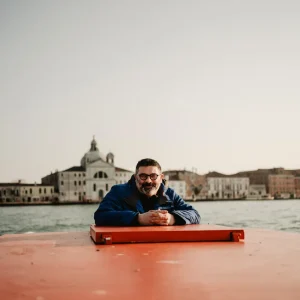
A visitor can see the basilica across the water and assume it is only minutes away. In Venice, the apparent distance between two buildings is often unrelated to the practical walking route. The temporary Salute bridge is memorable partly because it changes that relationship for a short period. When it is unavailable, the route must be reconsidered. Igor Scomparin has worked as a licensed guide since 1997, and the Tour Leader Venice team emphasizes this simple point: understand the crossing before committing to a timed plan.
Remember that residents, pilgrims, staff, and visitors may share the same narrow spaces. Keeping an entrance clear, following temporary signs, and avoiding unnecessary stops can make a meaningful difference. Good visitor behavior is not complicated, but it is particularly valuable when a local religious tradition draws additional people into a small neighborhood.
What remains unconfirmed for 2026
At the time this article was prepared, we have not verified a complete official 2026 schedule for bridge opening, individual Masses, pedestrian restrictions, or special ACTV changes. Those details must not be presented as established facts. They should be added only after checking authoritative announcements. The fixed elements are the annual date, the basilica’s historical connection to the plague vow, and the continuing tradition of pilgrimage. Separating these facts from changeable arrangements is essential to a trustworthy guide.
A responsible guide also distinguishes observation from certainty. You may see a queue, a candle, or a temporary structure, but those details do not by themselves explain an individual’s intention or prove an official timetable. Careful language protects both the accuracy of the article and the dignity of the people participating.
Official sources to check
For civic arrangements and bridge information, use the City of Venice’s announcements. For religious services, consult the Patriarchate of Venice and the basilica’s current notices. For public water transport, consult ACTV. For high water, consult the city’s tide forecast center. Social posts and old travel blogs can provide background but should not be treated as authoritative for operational changes. If a source does not specify 2026, assume its schedule may be outdated until confirmed.
That practical distinction is important in a city without road access to most historic-center destinations. Even a small change in pedestrian circulation can affect the route between two familiar landmarks. Local conditions deserve to be checked on the day, not reconstructed from an attractive photograph or an old itinerary.
A celebration to approach with respect
The Festa della Salute is not only a chance to cross an unusual bridge or photograph an extraordinary church. It is an annual moment in which Venetian history remains connected to present-day devotion. A traveler can learn a great deal by observing respectfully, allowing time, and accepting that some spaces belong primarily to worshippers. The festival’s power lies in that continuity. The most successful visit is not the one with the longest checklist, but the one that leaves room for the city’s own priorities.
Remember that residents, pilgrims, staff, and visitors may share the same narrow spaces. Keeping an entrance clear, following temporary signs, and avoiding unnecessary stops can make a meaningful difference. Good visitor behavior is not complicated, but it is particularly valuable when a local religious tradition draws additional people into a small neighborhood.
Frequently Asked Questions
When is Festa della Salute in Venice in 2026?
The Festa della Madonna della Salute takes place on Saturday, November 21, 2026. Religious service times and civic arrangements should be checked in official announcements.
Where is the Festa della Salute votive bridge in Venice?
The traditional temporary bridge crosses the Grand Canal between the San Marco side near Santa Maria del Giglio and the Salute area. Exact 2026 access points and opening hours require official confirmation.
Can visitors enter the Salute Basilica during the November 21 pilgrimage?
Access depends on the church’s current religious program and visitor rules. Worship takes priority, and visitors should respect services, queues, and photography restrictions.
Official information and photograph credit
Verify updates through the City of Venice, Patriarchate of Venice, ACTV, and the official tide forecast center. Featured image: Santa Maria della Salute, Venice, credited to Stefanmg, CC BY-SA 3.0, via Wikimedia Commons. This is an architectural photograph, not a claim to document the 2026 festival.