What happens in Venice on the night before the Festa della Madonna della Salute? November 20 is a time of preparation and anticipation ahead of the November 21 pilgrimage to Santa Maria della Salute. The annual celebration recalls the Republic’s vow during the plague of 1630–1631. Residents may prepare to visit the church, light candles, and take part in a tradition that blends public memory with private intentions. Exact bridge access, services, and other arrangements for 2026 must be checked against official notices.
This guide deliberately concentrates on the eve rather than repeating our existing articles about the feast day, its history, or its food. It explains the meaning of the preparations, how to approach the basilica respectfully, and how to avoid common logistical misunderstandings.
The evening before Venice’s quietest public promise
On November 20, Venice prepares for the Festa della Madonna della Salute, celebrated on November 21. The next day’s devotion is among the city’s most personal annual traditions. For many residents, the pilgrimage is less about spectacle than about remembering a vow, honoring a family habit, or entering a church with a private intention. The evening before matters because it reveals the practical and emotional work behind a public festival. This article focuses on preparation and anticipation, not on repeating a general guide to the feast itself.
The distinction between an enduring custom and an annual operational plan is especially important. Historic accounts can explain why a ritual exists, but they cannot establish whether a bridge will be open at a particular hour this year. A well-prepared visitor combines historical curiosity with current information from the institutions responsible for the celebration.
Why the date is November 21
The annual celebration commemorates Venice’s response to the devastating plague of 1630–1631. The Republic vowed to build a church dedicated to the Virgin Mary, asking for deliverance from the epidemic. The feast became associated with November 21, the Catholic celebration of the Presentation of Mary. That religious calendar connection helps explain why the date remains fixed while the surrounding civic arrangements change. Visitors should distinguish the historic vow, the later construction of the basilica, and the continuing devotional practices of today’s Venetians.
Venice’s pedestrian scale can make this kind of preparation visible. A short walk brings monumental architecture into contact with ordinary shops, homes, boat landings, and work crews. The festival is therefore experienced within a living neighborhood, not on a separate ceremonial stage. Respect for those everyday surroundings is part of understanding the tradition.
The plague behind the basilica
The epidemic of 1630–1631 caused enormous suffering in Venice. Its exact demographic toll is discussed in historical scholarship, and dramatic numbers should not be repeated without identifying a source and geographic scope. What is clear is that the plague reshaped civic life and prompted an extraordinary collective response. The church of Santa Maria della Salute became a monumental expression of thanksgiving and memory. Its architecture cannot be separated from the fear and loss that led to the vow. That history gives the November pilgrimage an emotional gravity that ordinary sightseeing often misses.
For American travelers, it may help to think of the event as a shared civic memory expressed through Catholic devotion rather than as an attraction with a predictable showtime. That framing avoids both romantic exaggeration and the opposite mistake of reducing a meaningful local custom to a list of practical inconveniences.
A promise made by the Republic
The Senate’s decision to erect a votive church was a public act of government as well as a religious commitment. Venice’s political institutions presented the Republic as a community capable of making and keeping a collective promise. Such ceremonies connected faith, civic identity, and the memory of catastrophe. The anniversary is not simply a modern event invented for visitors. It belongs to a centuries-long pattern of public remembrance. Yet the meaning of participation today can be intensely individual: people may arrive with gratitude, grief, hope, or a quiet sense of belonging.
The distinction between an enduring custom and an annual operational plan is especially important. Historic accounts can explain why a ritual exists, but they cannot establish whether a bridge will be open at a particular hour this year. A well-prepared visitor combines historical curiosity with current information from the institutions responsible for the celebration.
Baldassare Longhena’s extraordinary design
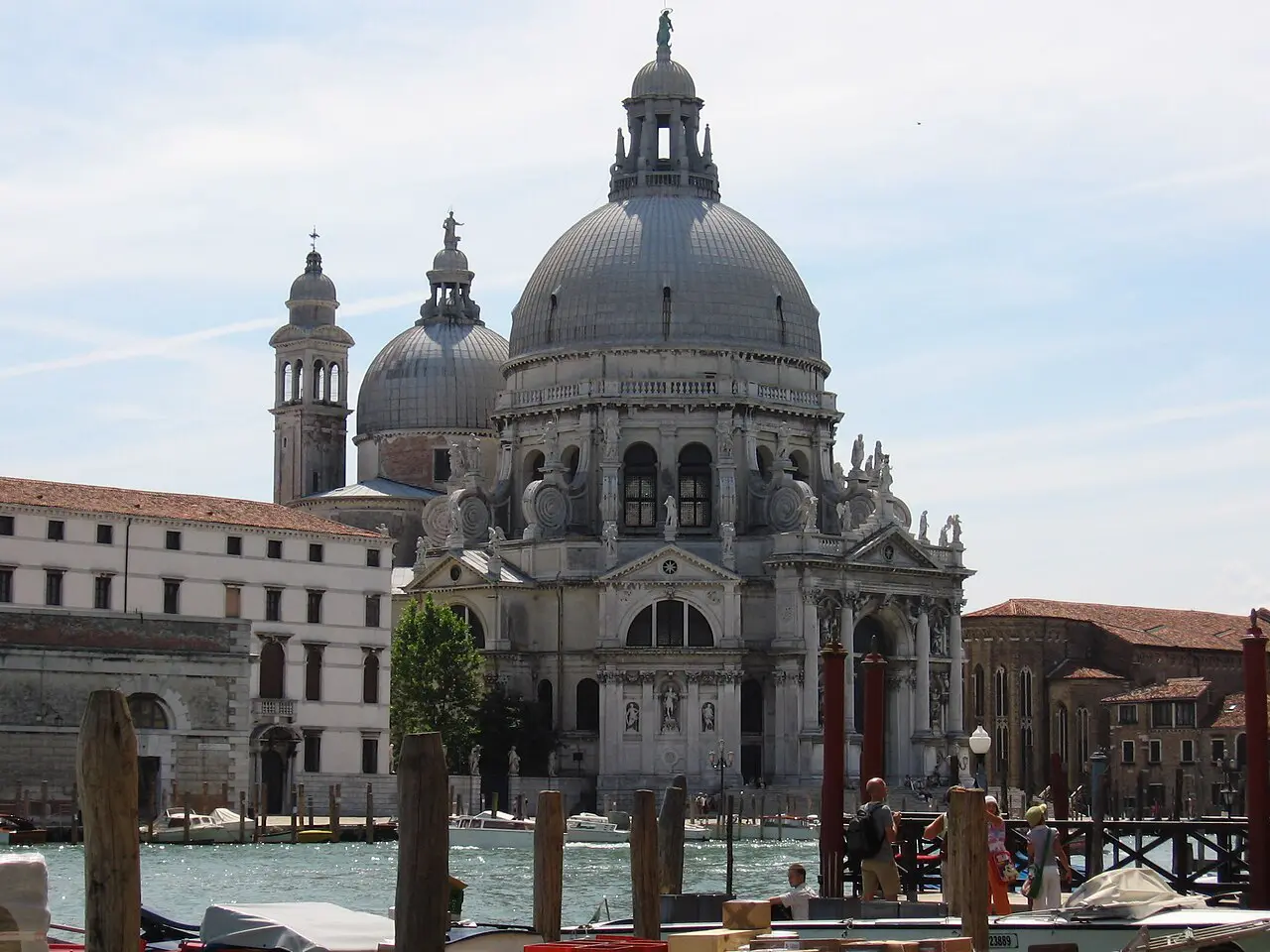
The basilica was designed by Baldassare Longhena, whose dramatic domes help define the entrance to the Grand Canal. Its octagonal form and rich symbolism made the building a highly visible monument to the Republic’s vow. Construction extended over decades, and the church was consecrated in 1687. The time between the epidemic and the completed building is an important part of the story. A city can make a promise in an emergency, but fulfilling it may require generations of labor, money, and institutional persistence.
Venice’s pedestrian scale can make this kind of preparation visible. A short walk brings monumental architecture into contact with ordinary shops, homes, boat landings, and work crews. The festival is therefore experienced within a living neighborhood, not on a separate ceremonial stage. Respect for those everyday surroundings is part of understanding the tradition.
Why the church stands where it does
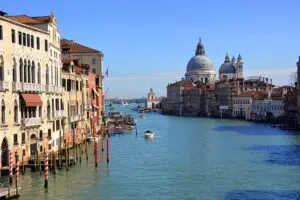
Santa Maria della Salute occupies a prominent position near the meeting of the Grand Canal and the Bacino di San Marco, close to Punta della Dogana. From the water, its domes appear almost theatrical. For pilgrims, however, the church is not primarily a scenic endpoint. It is a destination reached on foot or by boat within the ordinary geography of Venice. The contrast between monumental visibility and private intention makes the festival distinctive. A visitor can admire the architecture without assuming that every person approaching it is there to take a photograph.
For American travelers, it may help to think of the event as a shared civic memory expressed through Catholic devotion rather than as an attraction with a predictable showtime. That framing avoids both romantic exaggeration and the opposite mistake of reducing a meaningful local custom to a list of practical inconveniences.
The temporary votive bridge
One of the festival’s most recognizable features is the temporary pedestrian bridge traditionally provided to help people cross the Grand Canal toward the Salute area. Its configuration and opening arrangements are determined by the authorities for each edition. The bridge is not a permanent crossing, and travelers should not assume that it will be accessible at every hour on November 20. For the 2026 celebration, exact installation, accessibility, and opening details should be checked against official notices closer to the date. A historical custom is not a substitute for a current timetable.
The distinction between an enduring custom and an annual operational plan is especially important. Historic accounts can explain why a ritual exists, but they cannot establish whether a bridge will be open at a particular hour this year. A well-prepared visitor combines historical curiosity with current information from the institutions responsible for the celebration.
The bridge is more than a shortcut
The votive crossing changes the meaning of the route. It temporarily allows a movement that the normal street network does not provide, turning the approach into a shared act. The bridge can attract curious visitors, but its primary purpose is to serve the festival and its participants. A respectful observer makes room for people who have come to fulfill a religious intention. The experience should not be treated as a challenge to cross as quickly as possible or a stage for photographs that block others. The journey matters as much as the destination.
Venice’s pedestrian scale can make this kind of preparation visible. A short walk brings monumental architecture into contact with ordinary shops, homes, boat landings, and work crews. The festival is therefore experienced within a living neighborhood, not on a separate ceremonial stage. Respect for those everyday surroundings is part of understanding the tradition.
Do not confuse the two November bridges
Venice has another votive bridge tradition connected with the commemoration of the dead at San Michele. The two events have different dates, routes, and meanings. In an online search, photographs and captions can sometimes blur the distinction. The Madonna della Salute pilgrimage concerns the basilica at the entrance to the Grand Canal and the November 21 feast. The San Michele crossing belongs to a separate commemorative context. Our guide to All Saints, San Michele, and the votive bridge explains that other tradition.
For American travelers, it may help to think of the event as a shared civic memory expressed through Catholic devotion rather than as an attraction with a predictable showtime. That framing avoids both romantic exaggeration and the opposite mistake of reducing a meaningful local custom to a list of practical inconveniences.
What actually happens on November 20
The eve is a period of preparation, not necessarily a formally programmed public event with one universal schedule. Workers may be finishing logistical arrangements, religious staff may be preparing the church, and residents may be deciding when to visit. Specific services, crowd-management measures, and bridge access depend on the official calendar. It would be misleading to promise a candlelit procession or a special evening Mass without verification. The authentic story is quieter: a city getting ready for a tradition that has endured through changes in government, tourism, and everyday life.
The distinction between an enduring custom and an annual operational plan is especially important. Historic accounts can explain why a ritual exists, but they cannot establish whether a bridge will be open at a particular hour this year. A well-prepared visitor combines historical curiosity with current information from the institutions responsible for the celebration.
The importance of the candles
Candles are among the most recognizable symbols associated with the Salute pilgrimage. Lighting a candle can express prayer, remembrance, gratitude, or hope. The gesture is meaningful precisely because its intention is not always visible to an outsider. Visitors should avoid photographing worshippers at close range or turning a personal act into social-media content without consent. Purchasing or lighting a candle, where permitted, should follow the church’s instructions. The custom is not a souvenir activity, and it deserves the same consideration one would offer in any active place of worship.
Venice’s pedestrian scale can make this kind of preparation visible. A short walk brings monumental architecture into contact with ordinary shops, homes, boat landings, and work crews. The festival is therefore experienced within a living neighborhood, not on a separate ceremonial stage. Respect for those everyday surroundings is part of understanding the tradition.
A family tradition, not a tourist show
For some Venetians, visiting the Salute is something they learned from parents or grandparents. Others may participate irregularly or not at all. No single account can represent every resident’s relationship to the feast. The tradition’s strength lies partly in its ability to hold different meanings within a shared calendar. A family might attend together, while another person visits alone. The night before can be a moment of planning around school, work, transport, and weather. Those ordinary considerations make the event part of lived Venice rather than a reconstructed historical performance.
For American travelers, it may help to think of the event as a shared civic memory expressed through Catholic devotion rather than as an attraction with a predictable showtime. That framing avoids both romantic exaggeration and the opposite mistake of reducing a meaningful local custom to a list of practical inconveniences.
The difference between gratitude and spectacle
The word thanksgiving can help American travelers understand the idea of collective gratitude, but the Festa della Salute is not an Italian version of the U.S. holiday. Its origins, religious meaning, and rituals are distinct. Comparisons can be useful if they illuminate rather than flatten cultural differences. The basilica’s votive history is rooted in plague, Catholic devotion, and Venetian civic identity. Treating the celebration as an exotic Thanksgiving would obscure those specifics. Our earlier article on the feast’s food and thanksgiving traditions provides complementary background.
The distinction between an enduring custom and an annual operational plan is especially important. Historic accounts can explain why a ritual exists, but they cannot establish whether a bridge will be open at a particular hour this year. A well-prepared visitor combines historical curiosity with current information from the institutions responsible for the celebration.
How the neighborhood changes
The Dorsoduro streets near the basilica can feel different during festival preparations and the following day. Pedestrian movement, temporary structures, and local business activity may affect familiar routes. The details depend on each year’s arrangements. A traveler staying nearby should allow extra time rather than expecting the normal shortest path to remain open. For residents, the same changes are part of the annual calendar. The event illustrates how a historic city can temporarily reorganize public space around a shared cultural and religious commitment.
Venice’s pedestrian scale can make this kind of preparation visible. A short walk brings monumental architecture into contact with ordinary shops, homes, boat landings, and work crews. The festival is therefore experienced within a living neighborhood, not on a separate ceremonial stage. Respect for those everyday surroundings is part of understanding the tradition.
The approach from San Marco
Travelers often view the basilica from the San Marco waterfront, where it forms one of Venice’s most recognizable silhouettes. Reaching it on foot requires attention to the actual pedestrian network and any temporary festival crossing. Water-bus routes may provide an alternative depending on service and crowd conditions. The apparent closeness of two points across the water can be misleading in Venice. On the eve of a major festival, that basic geographical lesson becomes especially useful. Consult official ACTV updates before relying on a particular stop or departure.
For American travelers, it may help to think of the event as a shared civic memory expressed through Catholic devotion rather than as an attraction with a predictable showtime. That framing avoids both romantic exaggeration and the opposite mistake of reducing a meaningful local custom to a list of practical inconveniences.
The approach from Dorsoduro
Dorsoduro offers a different perspective: the Salute is part of a neighborhood with homes, schools, businesses, and institutions. Walking toward the basilica through ordinary streets helps restore its local context. The district should not be treated as an empty backdrop for the event. Keep residential doorways clear and be mindful of narrow passages, especially if temporary queues form. A slower approach can be more rewarding than rushing between landmarks. The goal is to understand the setting without intruding on people who live and work there.
The distinction between an enduring custom and an annual operational plan is especially important. Historic accounts can explain why a ritual exists, but they cannot establish whether a bridge will be open at a particular hour this year. A well-prepared visitor combines historical curiosity with current information from the institutions responsible for the celebration.
When should a visitor go?
There is no universally best hour. Those attending religious services may follow a schedule different from travelers interested in observing the atmosphere. Some periods may be crowded, while others are calmer. The exact pattern depends on weather, service times, school and work routines, and bridge arrangements. The night of November 20 may offer a sense of anticipation, but it should not be advertised as guaranteed quiet or guaranteed access. Anyone planning a visit should check the parish or patriarchate’s current announcements and remain flexible.
Venice’s pedestrian scale can make this kind of preparation visible. A short walk brings monumental architecture into contact with ordinary shops, homes, boat landings, and work crews. The festival is therefore experienced within a living neighborhood, not on a separate ceremonial stage. Respect for those everyday surroundings is part of understanding the tradition.
Why November weather matters
Late November in Venice can be damp, chilly, or windy. Rain and acqua alta can complicate pedestrian movement, especially in low-lying areas. Seasonal averages are not reliable forecasts for a particular evening. Wear shoes suited to wet stone and bring layers appropriate to the conditions. If you are visiting with children or someone with limited mobility, pay particular attention to the length of the route and the number of bridges. Current tide forecasts and municipal notices are more useful than generalized promises about autumn weather.
For American travelers, it may help to think of the event as a shared civic memory expressed through Catholic devotion rather than as an attraction with a predictable showtime. That framing avoids both romantic exaggeration and the opposite mistake of reducing a meaningful local custom to a list of practical inconveniences.
Acqua alta and practical access
High water does not affect every part of Venice equally, and flood protection operations depend on forecast conditions. A low waterfront route may be inconvenient while a higher street remains passable. Temporary festival structures introduce additional considerations that authorities manage according to conditions. Visitors should never assume that a bridge or entrance is accessible merely because it appears in a previous year’s photograph. Check current guidance and follow signs and staff directions. Safety and the needs of worshippers take priority over completing a planned photographic route.
The distinction between an enduring custom and an annual operational plan is especially important. Historic accounts can explain why a ritual exists, but they cannot establish whether a bridge will be open at a particular hour this year. A well-prepared visitor combines historical curiosity with current information from the institutions responsible for the celebration.
The question of accessibility
Venice’s bridges, steps, and uneven surfaces can create challenges for people with reduced mobility. A temporary crossing may have its own gradients, surfaces, or restrictions, which must be confirmed for the relevant year. It would be irresponsible to guarantee wheelchair accessibility without official specifications. Visitors should consider an alternative approach by public boat where appropriate and check stop access. Allowing more time can reduce stress, but it cannot remove every physical barrier. Honest accessibility information is more valuable than an overly optimistic itinerary.
Venice’s pedestrian scale can make this kind of preparation visible. A short walk brings monumental architecture into contact with ordinary shops, homes, boat landings, and work crews. The festival is therefore experienced within a living neighborhood, not on a separate ceremonial stage. Respect for those everyday surroundings is part of understanding the tradition.
Inside an active church
Santa Maria della Salute is a functioning religious site, not simply a museum. Worshippers may be praying even when visitors are permitted to enter. Dress and behavior should be appropriate to a place of worship, and any photography restrictions must be respected. During services, silence and unobstructed movement are especially important. Do not stand in front of a person lighting a candle or use flash near a congregation. The privilege of visiting a historic basilica comes with the responsibility to recognize its living purpose.
For American travelers, it may help to think of the event as a shared civic memory expressed through Catholic devotion rather than as an attraction with a predictable showtime. That framing avoids both romantic exaggeration and the opposite mistake of reducing a meaningful local custom to a list of practical inconveniences.
What not to photograph
A panoramic view of the church exterior is different from a close photograph of someone in prayer. Personal devotion can involve grief, illness, or private hopes that strangers have no right to interpret. Avoid photographing children or individuals at vulnerable moments without permission. Keep equipment out of passageways and do not interrupt a religious act for a better angle. These choices are not restrictions on appreciating the festival. They are part of appreciating it accurately: the event belongs first to its participants.
The distinction between an enduring custom and an annual operational plan is especially important. Historic accounts can explain why a ritual exists, but they cannot establish whether a bridge will be open at a particular hour this year. A well-prepared visitor combines historical curiosity with current information from the institutions responsible for the celebration.
The local food around the feast
The Salute celebration is also associated with seasonal foods and neighborhood stalls, although vendors and offerings can change from year to year. Visitors may encounter sweets or festive snacks, but should not assume that a particular stand will operate on the eve. Food adds a communal dimension to the event without replacing its religious core. Our guide to the feast’s traditions, food, and meaning explores that aspect in more detail. This article stays focused on the preparation and atmosphere of November 20.
Venice’s pedestrian scale can make this kind of preparation visible. A short walk brings monumental architecture into contact with ordinary shops, homes, boat landings, and work crews. The festival is therefore experienced within a living neighborhood, not on a separate ceremonial stage. Respect for those everyday surroundings is part of understanding the tradition.
What a guide can explain without inventing stories
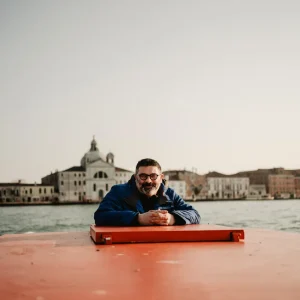
A responsible local guide can explain the plague vow, Longhena’s design, the temporary crossing, and the difference between religious observance and visitor activity. A guide should not claim to know what an individual pilgrim is praying for or manufacture touching family anecdotes. Igor Scomparin has worked as a licensed guide since 1997, and the Tour Leader Venice approach is to place the tradition within documented history and the practical geography of the city. The most valuable insight is often knowing when to speak and when to let the setting remain quiet.
For American travelers, it may help to think of the event as a shared civic memory expressed through Catholic devotion rather than as an attraction with a predictable showtime. That framing avoids both romantic exaggeration and the opposite mistake of reducing a meaningful local custom to a list of practical inconveniences.
Why the eve deserves its own story
Most guides concentrate on November 21 because that is the official feast day. November 20 offers a different perspective: preparation, anticipation, and the logistics that make a public ritual possible. It is not necessarily a separate festival with a fixed sequence of attractions. That distinction is what makes the subject worth exploring. A bridge does not appear by magic, a church does not prepare itself, and a neighborhood does not absorb large crowds without planning. The eve reveals the human work behind a tradition often reduced to one iconic photograph.
The distinction between an enduring custom and an annual operational plan is especially important. Historic accounts can explain why a ritual exists, but they cannot establish whether a bridge will be open at a particular hour this year. A well-prepared visitor combines historical curiosity with current information from the institutions responsible for the celebration.
A respectful plan for November 20
Begin by confirming the current religious schedule, municipal notices, tide conditions, and ACTV services. Choose a public walking route that does not depend on an unconfirmed temporary bridge opening. Admire the basilica from an established viewpoint, then approach Dorsoduro at a considerate pace if access permits. Keep your plans flexible and avoid crowding entrances. If a service is taking place, prioritize the needs of worshippers. The goal is not to tick off a secret ritual, but to understand why the following day matters to the city.
Venice’s pedestrian scale can make this kind of preparation visible. A short walk brings monumental architecture into contact with ordinary shops, homes, boat landings, and work crews. The festival is therefore experienced within a living neighborhood, not on a separate ceremonial stage. Respect for those everyday surroundings is part of understanding the tradition.
A small lesson in Venetian geography
Venice’s waterways can make two buildings appear close while their walking routes remain surprisingly indirect. Temporary bridges alter that geometry for a short time. The Salute pilgrimage is therefore a vivid example of how urban infrastructure and civic ritual intersect. It also shows why a photograph cannot replace local logistical knowledge. A bridge visible in one year’s festival images may not be available when you arrive the next year. Always separate enduring tradition from changeable arrangements.
For American travelers, it may help to think of the event as a shared civic memory expressed through Catholic devotion rather than as an attraction with a predictable showtime. That framing avoids both romantic exaggeration and the opposite mistake of reducing a meaningful local custom to a list of practical inconveniences.
Why the tradition still matters
The Festa della Salute has survived because it continues to connect the city’s historical memory with the lives of people who participate today. Some come in faith, others through family custom or civic attachment. Their reasons need not be identical. The night before offers a chance to understand that continuity without competing for attention with the pilgrims themselves. Venice is most compelling when its extraordinary architecture remains connected to ordinary human commitments. The Salute is a place where that connection becomes especially visible each November.
The distinction between an enduring custom and an annual operational plan is especially important. Historic accounts can explain why a ritual exists, but they cannot establish whether a bridge will be open at a particular hour this year. A well-prepared visitor combines historical curiosity with current information from the institutions responsible for the celebration.
The view from the Grand Canal
At dusk, the basilica’s silhouette can be striking from across the water. That image has appeared in countless paintings and photographs, yet the building’s significance is not exhausted by its appearance. The domes commemorate a public vow made during a devastating epidemic. The people who will approach the church the following day bring contemporary concerns to an old monument. Holding those two times together—the seventeenth century and the present—is a richer way to see Venice than looking only for the perfect reflection.
Venice’s pedestrian scale can make this kind of preparation visible. A short walk brings monumental architecture into contact with ordinary shops, homes, boat landings, and work crews. The festival is therefore experienced within a living neighborhood, not on a separate ceremonial stage. Respect for those everyday surroundings is part of understanding the tradition.
A final thought before the pilgrimage
The night before Madonna della Salute is not a promise of empty streets or a staged candlelight show. It is the threshold of a day that many Venetians consider deeply personal. The city’s preparations, the temporary crossing, the church, and the neighborhood all belong to a living tradition shaped by memory and practical care. Visitors are welcome to learn from it, but should do so with humility. The most lasting experience may be understanding why the ritual continues, rather than trying to make it your own.
For American travelers, it may help to think of the event as a shared civic memory expressed through Catholic devotion rather than as an attraction with a predictable showtime. That framing avoids both romantic exaggeration and the opposite mistake of reducing a meaningful local custom to a list of practical inconveniences.
Frequently Asked Questions
When is the Festa della Madonna della Salute in Venice?
The feast takes place annually on November 21. November 20 is the eve, when preparations may be visible, but exact religious services and public arrangements should be checked with local authorities.
Can visitors cross the temporary Salute bridge on November 20?
Do not assume the temporary votive bridge is open on the eve. Its installation, opening times, and accessibility depend on the arrangements announced for each year’s festival.
Can tourists visit Santa Maria della Salute during the pilgrimage?
Visitors should follow the church’s current access and service rules, respect worshippers, and avoid intrusive photography. Religious observance takes priority over sightseeing.
Sources, Official Updates, and Photograph Credit
For current festival information, consult the City of Venice, the Patriarchate of Venice, ACTV water-bus services, and the Venice tide forecast center. Featured photograph: Stefanmg, Santa Maria della Salute, Venice, CC BY-SA 3.0, via Wikimedia Commons; no claim that the image depicts the festival itself.