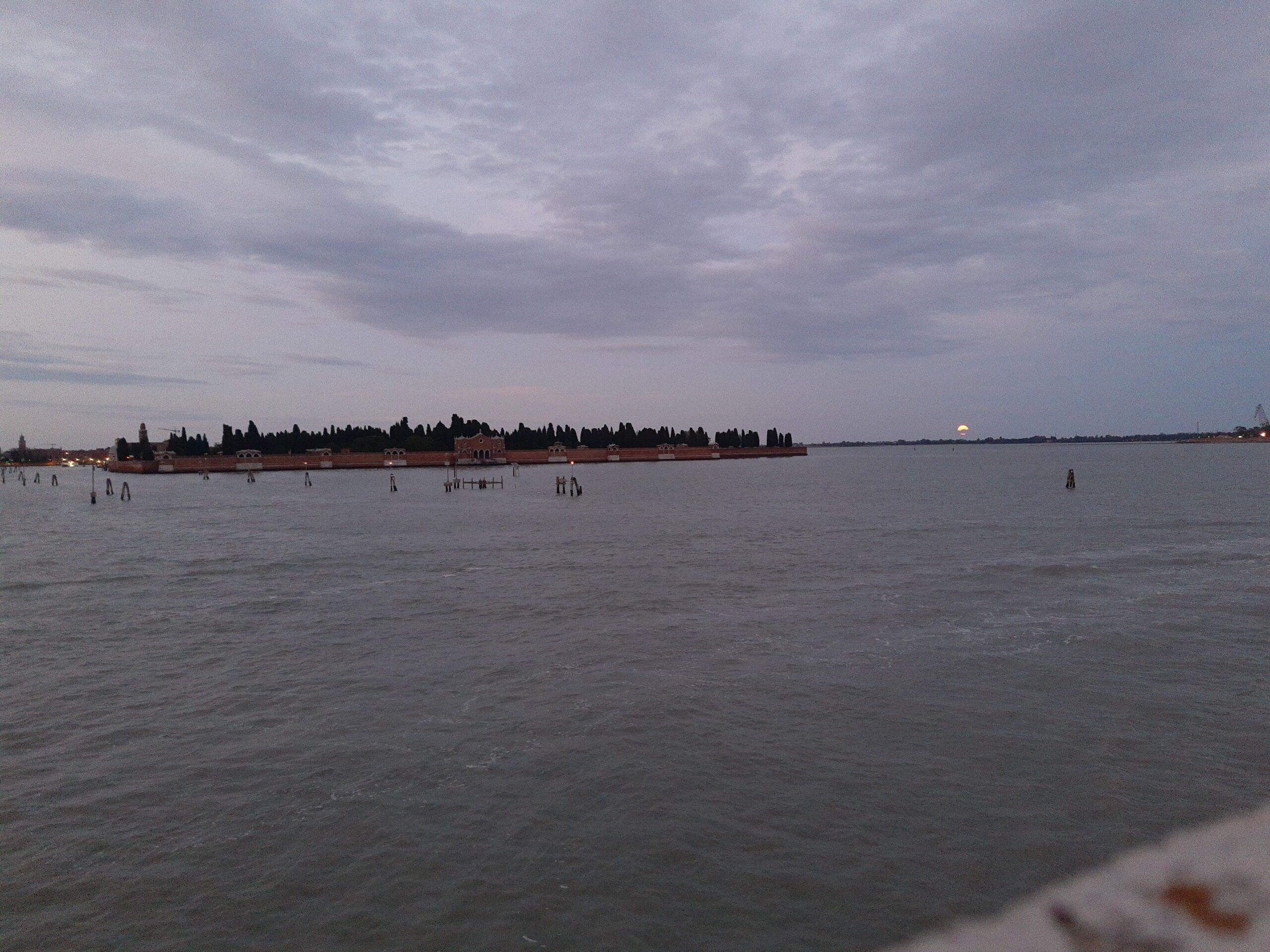
Venice sometimes builds a temporary floating bridge from Fondamente Nove to San Michele cemetery island for the commemoration of the dead. The tradition, interrupted in 1950 and revived in 2019, offers an unusually moving glimpse into the city’s living history. This guide explains what the bridge means, how it works, and why travelers must check official announcements before assuming it will open in 2026.
A bridge that changes the map of Venice
Most travelers learn quickly that Venice is a city of bridges. They cross narrow canals, connect neighborhoods, and turn a short walk into a sequence of discoveries. But there is another kind of bridge here, one that is not part of the permanent map. For a limited period around the commemoration of the dead, a floating pedestrian connection has sometimes been assembled between Fondamente Nove and the cemetery island of San Michele. It crosses open lagoon water rather than a small urban canal. That distinction makes the experience extraordinary: a journey usually made by boat becomes a walk across the water.
The bridge is not an everyday attraction, nor is it a guaranteed annual event. Its construction requires public decisions, maritime coordination, engineering, and safety measures. For residents, its meaning is primarily commemorative. For visitors, understanding that purpose is the key to appreciating the tradition without reducing it to a novelty photograph. The story also reveals how Venice temporarily reshapes its public space for religious and civic occasions.
Why San Michele lies across the water
The island of San Michele occupies a distinct position north of Venice’s historic center. Its enclosing walls and cypress trees make it recognizable from the waterfront, yet its function is easy to overlook when travelers concentrate on the more famous islands of Murano and Burano. San Michele is the city’s principal historic cemetery island. The separation from residential neighborhoods creates a striking contrast between everyday Venetian life and the place where generations of residents are remembered.
The cemetery’s development belongs to a broader history of changing burial practices. In earlier centuries, burial was associated with churches and parish communities throughout the city. Over time, public-health thinking and administrative reforms changed where burials took place. San Michele became central to that transition. The island is therefore not simply a picturesque destination: it records how Venice adapted its customs and urban geography to new civic responsibilities.
The waterfront of Fondamente Nove
Fondamente Nove, often written Fondamenta Nuove, faces the northern lagoon. It is a working edge of the city rather than a theatrical waterfront designed solely for sightseeing. Water buses depart from nearby stops, boats cross toward the islands, and the open view changes dramatically with weather and light. From here, San Michele feels close enough to touch on a clear day, although water normally prevents a direct pedestrian crossing.
That apparent closeness helps explain the emotional power of a temporary bridge. A familiar view suddenly becomes a route. The distance between shore and island is not erased, but transformed into a deliberate passage. When no bridge is installed, the same stretch of water remains part of the cemetery’s character. Standing on the waterfront and looking across is a worthwhile experience even when the temporary connection is absent.
The difference between a permanent and a votive bridge
Venice’s stone bridges solve recurring transportation needs. A votive bridge, by contrast, exists because a community marks a particular occasion. The city’s best-known temporary crossings are associated with the Festa del Redentore and the Festa della Madonna della Salute. Their histories and religious meanings are distinct, but they share a remarkable practical idea: for a short time, boats and modular platforms create a pedestrian route where none normally exists.
The San Michele bridge belongs to this family of temporary structures while serving its own commemorative purpose. Its function is not to shorten the tourist route between attractions. It provides a symbolic and practical connection to a burial place at a moment when remembrance becomes especially important. Understanding the distinction prevents confusion between different Venetian festivals and helps explain why a temporary structure can carry meaning beyond its engineering.
A tradition interrupted and recovered
Municipal accounts describe a historic bridge connection to San Michele that remained in use until 1950. The interruption lasted for decades. In 2019, Venice reintroduced the temporary crossing, an event documented in municipal announcements and public-safety orders. The recovery was presented as a way to restore an older custom of walking to the cemetery during the period of remembrance.
It is tempting to imagine an unbroken ritual continuing unchanged for centuries, but that would distort the history. Traditions can disappear, return, and acquire new practical conditions. The modern bridge uses contemporary modular engineering, current safety regulations, and public administration. Its emotional purpose reaches back to an earlier Venice, yet its physical form belongs firmly to the present. That tension between continuity and reinvention is part of the story.
What happened in 2019
The City of Venice announced the 2019 crossing as a restoration of a tradition abandoned in the middle of the twentieth century. The structure measured approximately 407 meters in length and 15.5 meters in width, according to the municipality’s published information. It was assembled using floating modules and incorporated a navigable opening so that boat traffic could continue to move through the area.
The official order also established pedestrian restrictions and weather-related closures. During the first days, access was reserved for residents or holders of the Venezia Unica card, and strong wind, adverse weather, or high water could lead to suspension. These are not minor administrative details. They show that the bridge is both a meaningful public ritual and a temporary infrastructure project crossing an active waterway.
What happened in 2025
The municipality announced another San Michele votive bridge for the 2025 commemoration. The published plan called for a pedestrian connection from Fondamente Nove to the monumental cemetery entrance, using floating modules similar to those employed for other temporary crossings in Venice. The announced dimensions again exceeded 400 meters in length, with a width of about 15 meters.
The municipality’s subsequent public notice and pedestrian order set specific dates and conditions for the 2025 installation. Those dates belong to 2025 and should not be recycled as if they applied to future years. Travelers reading older online articles may encounter precise opening hours or access rules, but a reliable guide must always distinguish historical records from current announcements. This matters especially when planning around a short-lived event.
What is known about 2026
At the time of writing, the municipal sources consulted establish the bridge’s historic restoration and its 2025 installation; they do not establish an official 2026 opening schedule. That means a responsible article cannot promise that travelers will be able to walk across the lagoon on a particular day in October or November 2026. An attractive photograph from a previous year is not proof that the structure is open now.
Anyone interested in the crossing should check the City of Venice’s official announcements close to the commemorative period. Look for the opening dates, hours, eligibility rules, weather provisions, and any changes to pedestrian circulation. If the bridge is not installed, San Michele can still be visited using authorized public transport. The tradition is worth understanding independently of whether it is physically available during a particular trip.
The engineering behind a temporary crossing
A floating bridge in the lagoon must coexist with moving water, tides, wind, and navigation. The municipal description of the 2019 and 2025 structures refers to modular floating elements rather than a conventional fixed span. These modules form a pedestrian surface while allowing the bridge to be assembled and later removed. A navigable opening is necessary because the lagoon is a working transportation network.
Engineering choices have direct consequences for visitors. The surface may feel different from stone paving, and temporary access points require crowd management. High water and strong wind can affect safety. For this reason, the crossing should never be treated as a guaranteed all-weather walkway. Following official directions is part of respecting both the people using the bridge and the crews responsible for operating it.
Why the route reaches the monumental entrance
The temporary crossing is described by the municipality as connecting Fondamente Nove with San Michele’s monumental cemetery entrance. That destination matters. The bridge does not simply land at an arbitrary point on the island; it creates a ceremonial approach to a place associated with burial and remembrance. The physical journey becomes part of the meaning of the visit.
Consider the contrast between ordinary arrival by water bus and walking along a temporary route across the lagoon. The second journey creates time for anticipation and reflection. Yet it would be misleading to suggest that one form of arrival is inherently more authentic than the other. Many families visit the cemetery by boat throughout the year. The temporary bridge is one expression of a wider relationship between Venice and its dead.
All Saints’ Day and All Souls’ Day
The bridge’s calendar is connected with the Catholic observances of All Saints’ Day on November 1 and the Commemoration of All the Faithful Departed, commonly called All Souls’ Day, on November 2. In Italy, this period often involves visits to cemeteries, flowers, prayers, and family remembrance. Practices vary between households and communities, and not every resident observes the days in the same way.
For an international traveler, the distinction between these dates can be useful. November 1 honors the saints, while November 2 is particularly associated with remembering the departed. The bridge’s purpose is rooted in this season of commemoration rather than in Halloween entertainment. Treating the crossing as a solemn local tradition allows visitors to approach it with the appropriate care and curiosity.
Flowers, visits, and family memory
A cemetery visit in early November may be part of a family’s routine rather than an exceptional public event. Flowers are brought to graves, names are remembered, and relatives may travel from other parts of the city or mainland. These acts rarely appear in the glossy images used to market Venice, but they belong to the city’s living culture.
The temporary bridge makes that private dimension visible in public space. It can be used by many people at once, yet each person may be carrying a very different memory. Visitors should resist photographing mourners or treating the cemetery as a stage set. Quiet observation and respect for personal space are more appropriate than trying to capture every moment on a phone.
A city that moves its boundaries
Venice has always depended on flexible relationships between land and water. Boats perform functions that roads serve elsewhere; public transport stops occupy floating platforms; deliveries and emergency services require waterborne logistics. Temporary bridges are another expression of this adaptable geography. They demonstrate that the city’s routes are shaped not only by permanent architecture but also by the calendar.
This is one of the most revealing details for travelers who want to understand Venice beyond famous monuments. A city that seems fixed in time is continually being managed, repaired, and reorganized. The San Michele crossing turns that invisible work into a visible public event. It also makes clear that the lagoon is not empty space between destinations: it is an active environment with competing needs.
San Michele and the history of burial
San Michele’s role as a cemetery is associated with the nineteenth-century reorganization of burial practices under changing political and public-health conditions. Earlier Venetian burial traditions were dispersed among parishes, religious communities, and their buildings. A centralized cemetery changed both the administration of burial and the geography of mourning.
Visitors who know only the names of famous people buried on the island can miss this larger history. The cemetery is first and foremost a place for Venetian families. Its architecture, religious sections, and ordinary memorials reveal the diversity of the community over time. The temporary bridge makes most sense when understood as a connection to that collective history, not merely to a handful of celebrated graves.
The island’s religious diversity
The City of Venice notes that San Michele contains areas associated with different religious communities, including Greek Orthodox and Protestant sections. These spaces reflect the broader history of a port city shaped by international contact, migration, and varied traditions. Venice was never culturally isolated, even when its public image emphasizes a single familiar style of architecture.
This diversity adds another layer to the story of remembrance. Not everyone buried on the island belonged to the same community or practiced the same rituals. A thoughtful visitor should avoid presenting the cemetery as a uniform religious landscape. The bridge itself is connected to a specific commemorative calendar, while the island preserves a wider range of personal histories.
The work of moving the dead by water
The municipality’s cemetery information points out a practical fact that can surprise visitors: because San Michele is surrounded by water, the transport of the deceased requires suitable boats. Historically, gondolas were sometimes used, including decorated examples for particular funerals. The logistics of burial in Venice therefore reveal how deeply water transport shapes even the most intimate moments of civic life.
This is a useful detail to carry back into the streets. When visitors ask why Venice has no cars, the answer is not simply that the city is charmingly pedestrian. Its essential services have developed alternative systems. Funeral transport, deliveries, waste collection, and emergency response all illustrate the ingenuity required to sustain a community built around canals and islands.
A route to experience without a bridge
Even if no temporary crossing is operating, a walk along Fondamente Nove offers a strong introduction to the story. Start by finding a safe place on the public waterfront where San Michele is clearly visible. Observe the distance across the water, the movement of boats, and the difference between the island’s enclosed silhouette and the open northern lagoon.
Then consider how a temporary walkway would change the experience of this space. A stretch of water normally crossed by boat would become a path for pedestrians, and the view from the waterfront would become a journey. This simple exercise is more revealing than searching for a replica of a photograph from another year. It respects the fact that the bridge may not be present.
Visiting the cemetery respectfully
San Michele is an active cemetery, not a conventional tourist attraction. Visitors should check current opening hours, transport connections, and any restrictions on photography or access. Quiet conversation, appropriate clothing, and sensitivity around funerals and family visits are basic courtesies. If a ceremony is underway, give participants space.
A respectful visit can still be historically rewarding. The architecture and setting invite reflection on the relationship between Venice and the lagoon. Rather than making a hurried list of famous graves, allow time to understand the island as a place of shared memory. If you are unsure whether a particular area is open to visitors, follow posted signs or ask cemetery staff.
How to plan around uncertain dates
Short-lived Venetian events demand a different planning strategy from permanent attractions. Begin with an official source, not a social-media image. Confirm the year of the announcement. Check whether access is open to everyone or limited to particular categories of people. Look for rules affecting arrival, departure, weather, and possible closures.
Build an alternative plan. If the bridge is closed, a waterfront walk and a visit to San Michele by regular public transport may still be possible, subject to current service and cemetery hours. A flexible itinerary is particularly valuable in late October and early November, when weather can change quickly. Do not schedule a tightly timed museum visit immediately after a crossing that might involve queues or temporary restrictions.
Why visitors should not treat it as a spectacle
The idea of walking across open lagoon water is visually compelling, and it is natural to be curious. But the event’s significance comes from the people and memories it serves. A traveler who approaches the crossing only as a rare photo opportunity may miss the most interesting aspect of the tradition: Venice briefly changes its infrastructure to express communal remembrance.
This is a lesson that applies well beyond San Michele. Venice is often presented as a museum city, yet its traditions are not simply performances for outsiders. They arise from residents’ needs, religious calendars, and public institutions. The most rewarding travel experiences begin when curiosity is matched by consideration for the community hosting them.
Three other bridges of meaning
The Redentore crossing, associated with the annual celebration on the Giudecca Canal, and the temporary bridge linked to the Festa della Madonna della Salute are useful comparisons. They demonstrate how Venice uses temporary pedestrian routes to connect places for specific commemorative occasions. Yet their histories should not be merged into one vague story about floating bridges.
Each crossing belongs to its own setting and religious tradition. The Redentore is associated with thanksgiving after the plague of 1575–1577; the Salute commemorates the plague of 1630–1631 and the city’s devotion to the Virgin Mary. San Michele’s bridge concerns remembrance of the dead. Recognizing these distinctions enriches a visitor’s understanding of how history survives through public space.
Local knowledge makes the difference
A knowledgeable Venice guide can help explain why the city uses temporary bridges, how the northern waterfront functions, and why San Michele matters to residents. That interpretation should be grounded in official information and careful observation, not exaggerated claims of exclusive access. Tour Leader Venice’s local guiding experience, including Igor Scomparin’s work as a licensed guide since 1997, offers a perspective shaped by the practical realities of the lagoon.
The most useful advice is often logistical rather than glamorous: verify the current year, allow time for queues, respect restricted access, and do not assume the bridge will remain open in bad weather. Those details can determine whether a visitor experiences a meaningful local occasion or arrives disappointed because an outdated article promised something the city never announced.
Further reading on Venice’s working lagoon
To understand why an island cemetery and temporary pedestrian route are so distinctive, explore the practical reasons Venice functions without cars. The city’s unusual infrastructure is not a decorative detail; it is the foundation of everyday life. This context helps explain why even a short temporary crossing involves significant planning.
For a wider sense of how urban details carry history, read ten hidden details that tell Venice’s real story. If you are interested in how the city functions beyond visitor hours, discover the workers who keep Venice running before sunrise. Together, these perspectives show a living city whose traditions depend on people, labor, and infrastructure.
What the bridge ultimately tells us
The temporary bridge to San Michele is remarkable because it briefly changes something that usually feels permanent: the separation between the historic city and its cemetery island. A route across water becomes possible for a short time, then disappears. The gesture is both practical and symbolic, making the journey of remembrance visible in the lagoon itself.
For travelers, the best response is not to chase the crossing at any cost. Learn its history, verify current information, and approach the commemorative period with respect. Whether you walk across an officially opened bridge or simply look toward San Michele from Fondamente Nove, you are encountering a deeply Venetian relationship between memory, community, and water.
Official sources and further verification
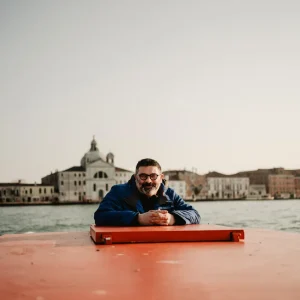
The City of Venice documents the 2025 bridge announcement, the 2019 pedestrian safety order, and information about San Michele cemetery. These are historical sources, not proof of a 2026 opening. The featured photograph is a real CC0 image by Gerda Arendt, showing San Michele across the lagoon; it does not depict the temporary bridge itself.
Explore related Venice stories
To put this subject into a wider Venetian context, explore San Michele’s cemetery and its history, a quieter walk through Cannaregio and how Venice changes through the seasons. Each offers a complementary perspective on the city’s history, daily life, or cultural heritage.
Discover connected Venice stories
Explore Venice’s earlier wooden bridges; the history of Venetian private bridges. These articles offer additional historical and cultural perspectives.
Frequently Asked Questions
Will the San Michele floating bridge open in 2026?
A 2026 opening cannot be confirmed from the municipal announcements cited here. Check the City of Venice for the current year’s dates, access rules, and weather-related restrictions.
Where does the temporary bridge to San Michele start?
When installed, the pedestrian bridge links Fondamente Nove in Venice with the monumental entrance of San Michele cemetery island.
Can tourists visit San Michele if there is no floating bridge?
Yes, the cemetery island can normally be reached by public water transport, subject to current service and cemetery opening hours. Respect the site’s rules and ongoing commemorations.