Why Venice Has No Cars: The Short Answer
Why Venice has no cars is best explained by the city’s geography and history: Venice’s historic island center developed around canals, footpaths, and bridges long before automobiles existed. Its urban form does not provide a connected road network for private cars. Cars can reach the edge of the historic city at Piazzale Roma or parking facilities on Tronchetto, but visitors continue into the pedestrian city on foot or by water.
This is not the same as saying there are no motor vehicles anywhere in the municipality of Venice. Mestre and other mainland districts have roads and cars, and the Lido has road traffic. The familiar car-free experience refers primarily to the historic island center.
For travelers, this distinction matters immediately. A hotel address in Venice may look close to the station or airport on a map, yet reaching it can involve bridges, a vaporetto, or a private water taxi. For more practical advice, read our guide to private boat transfers from Venice Santa Lucia station to your hotel. The last mile is often the most important part of the journey.
A City Built for Boats, Not Cars
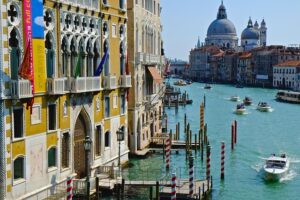
Venice grew as a network of islands linked by water routes. The Grand Canal became a major artery of commerce and prestige, while smaller canals provided access to buildings, workshops, and neighborhoods. Streets and bridges developed alongside this aquatic system rather than replacing it.
Palaces frequently presented their most impressive façades toward the water because arrival by boat was central to Venetian life. A grand doorway facing a canal can still reveal how a building was originally approached. The city’s architecture and transport logic are inseparable.
Retrofitting a conventional road system into this environment would mean confronting dense historic buildings, protected heritage, narrow passages, and countless canals. Venice’s lack of cars is therefore not simply a modern environmental policy; it reflects the structure of the city itself.
Where Cars Actually Stop
Travelers arriving by road generally approach the historic center across the Ponte della Libertà, the causeway connecting the mainland to Venice. Road traffic reaches Piazzale Roma, while Tronchetto provides additional parking and transport connections.
Piazzale Roma is an important transfer point, not the beginning of a normal downtown road grid. From here, luggage and passengers continue by pedestrian routes, public water transport, or private boats. Even an apparently short walk can include several bridges.
If you are driving a rental car, check parking arrangements and costs in advance. Do not assume your accommodation has a driveway or that a taxi can take you to the door. Confirm the hotel’s nearest accessible water landing and the most practical pedestrian approach.
Why Venice’s Bridges Matter So Much
A bridge is a charming landmark to a visitor carrying a camera. It becomes a logistical obstacle when someone is moving a suitcase, delivery cart, stroller, or heavy equipment. The historic center contains hundreds of bridges, and many have steps.
This changes how distances should be understood. Two hotels may be similarly far from the railway station in meters, but one route could require significantly more lifting and turning. The same problem affects porters, couriers, tradespeople, and emergency access.
A local planning principle is to count bridges, not only minutes. For guests with mobility needs or heavy luggage, a longer boat ride to a convenient landing may be easier than a shorter journey followed by several stepped bridges.
How Groceries Reach Shops and Restaurants
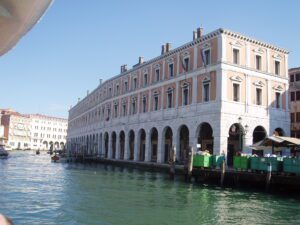
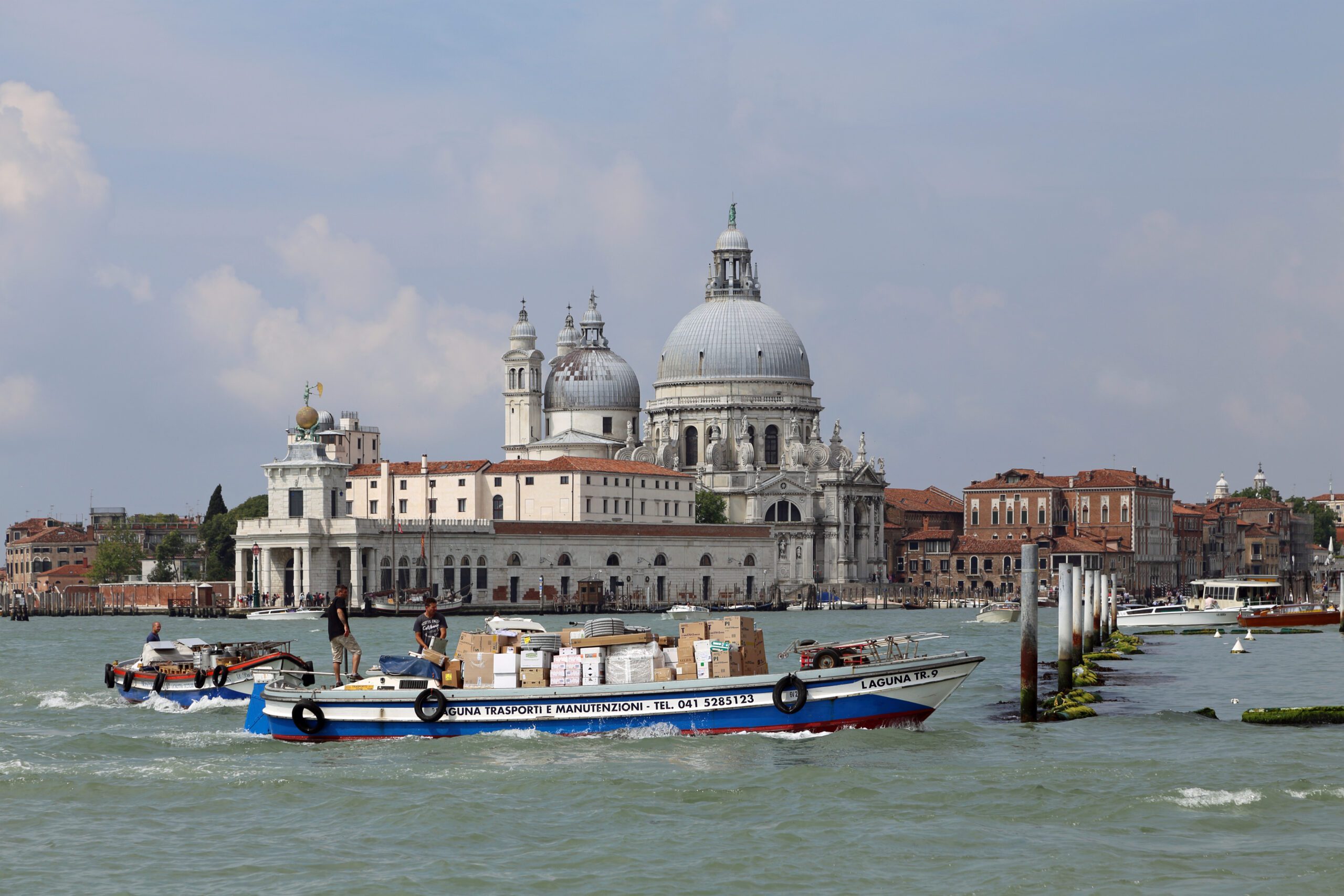
The food served in Venetian restaurants has to arrive somehow. Much of the supply chain begins with road transport on the mainland or at the city’s access points, followed by waterborne freight or handcart delivery through the historic center.
This creates a chain of transfers. Goods must be unloaded, loaded onto suitable boats, delivered to usable landings, and moved through narrow streets to kitchens and storerooms. Weather, water levels, loading rules, and crowded pedestrian routes can affect each stage.
A visitor seeing a cargo boat full of crates is witnessing a crucial part of the urban economy. Allow crews room to unload and avoid treating a busy quay as an uninterrupted photo location. Their work is what makes the celebrated restaurant scene possible.
The Role of Handcarts and Porters
On land, deliveries often depend on specialized carts and workers who know which routes can accommodate them. The geometry of Venice rewards experience: a narrow turn, a stepped bridge, or a crowded alley can determine the route.
A delivery route that appears inefficient on a map may actually be the safest practical choice. Workers must balance weight, space, pedestrian traffic, and the position of loading docks. This is skilled urban logistics, not an improvised workaround.
For tourists, the lesson is simple. When a loaded cart approaches, step aside rather than forcing the worker to stop on a bridge. Respecting the city’s working routes helps everyone move more safely.
The Grand Canal as a Main Street
The Grand Canal is celebrated for its palaces and sweeping views, but it is also a major transport corridor. Public boats, private taxis, service vessels, and other authorized traffic operate along this waterway.
Travelers sometimes compare a vaporetto ride to a sightseeing cruise. For a different perspective, discover our private Grand Canal and hidden canals boat experience. The view can indeed be extraordinary, but the boat is public transport. Passengers may be commuting to work, school, appointments, or home. It is important to keep entrances and exits clear.
A private boat provides more flexibility for some itineraries, but it does not eliminate the realities of navigation. Traffic, authorized routes, tide conditions, and the availability of a safe landing still matter.
How to Get Around Venice Without Cars
Venice’s ACTV vaporetto network is the city’s best-known public water transportation system. Different lines connect the Grand Canal, outer neighborhoods, lagoon islands, and major transport points. Timetables and operating patterns vary.
Tickets should be purchased and validated according to the current rules. Visitors should check the correct stop, direction, and route before boarding. A line that is convenient for sightseeing may not be the fastest option for a particular transfer.
During busy periods, boats can be crowded and boarding may take longer than expected. A traveler with large luggage or limited mobility should consider the full journey, including access to the stop and the distance from the arrival landing to the hotel.
Water Taxis: The Closest Thing to a Car Service
Private water taxis provide point-to-point travel on the waterways where navigation and landing access permit. They can be especially useful for airport arrivals, hotel transfers, and private sightseeing, but they are not a perfect aquatic equivalent of a road taxi.
A water taxi cannot necessarily stop at every doorway. Some canals are too narrow, bridges may be too low at high tide, and particular landings may be unsuitable or unavailable. The captain must follow navigation and safety requirements.
This is one of the most important practical details to discuss before booking a hotel transfer. A promise of direct boat access should be treated as conditional unless the landing and circumstances are confirmed.
The Airport Arrival Surprise
Venice Marco Polo Airport is on the mainland side of the lagoon. Arriving passengers can use road transport to Piazzale Roma or water transport toward suitable stops and landings in Venice, depending on the service selected.
A private water transfer usually involves reaching the airport’s boat dock on foot from the terminal area. Guests should allow time for baggage collection, walking to the dock, boarding, and the water journey itself. An airport pickup is not instantaneous once the aircraft lands.
If you are arriving after a long international flight, share your flight details, hotel address, number of passengers, and luggage requirements in advance. These facts allow a local provider to recommend an appropriate arrival plan.
Why Your Hotel May Not Have Direct Boat Access
A hotel’s attractive position beside a canal does not automatically mean that every boat can reach its entrance. Some properties have land entrances only. Others have water doors in canals affected by bridge clearance, water levels, or traffic.
Even when a hotel has a dock, it may not be usable in every condition. A backup landing can be several minutes away on foot, and that route may involve bridges. Travelers should ask specific questions rather than relying on a generic description of canal access.
For older guests and those with reduced mobility, this is more than a convenience issue. It can determine whether a transfer is appropriate. A realistic assessment before arrival is much better than discovering the problem with luggage in hand.
High Tide, Low Tide, and Boat Navigation
Venice’s water levels change with tides and weather. Elevated water can make low bridges impassable for certain boats, while lower levels can complicate access in shallow canals or at particular landings.
The impact is local and operational. One canal may be accessible while another is not, and a captain may choose an alternative route or docking place. It is therefore misleading to promise that every boat trip follows an identical itinerary.
Visitors should check official forecasts during periods of unusual water levels and follow guidance from their transport provider. Flexibility is part of responsible travel in a lagoon city.
How Emergency Services Operate Without Streets
Venice still needs ambulances, firefighters, police, and other emergency responders. Its historic center uses a combination of waterborne services and pedestrian access, supported by specialized planning and personnel.
The lack of a conventional road grid makes response logistics different from those of most cities. Navigating waterways, reaching suitable landings, and moving equipment through narrow spaces are all part of the challenge.
When emergency personnel or vessels are operating, visitors should keep clear, follow instructions, and avoid filming people in distress. The canals are essential infrastructure, not merely a backdrop.
How Waste Leaves the City
A car-free city still produces household waste, restaurant refuse, and commercial packaging. Collection crews must gather and transport these materials using methods adapted to the pedestrian streets and waterways.
The system relies on coordinated collection arrangements, manual work, carts, and specialized vessels where appropriate. This reverse supply chain is just as important as the boats bringing food and goods into Venice.
Travelers can help by following local waste-disposal rules and never leaving bags or rubbish in narrow passageways. The city’s beauty depends on daily maintenance that is easy to overlook.
Moving Furniture and Building Materials
Consider moving a refrigerator, a sofa, or construction materials into a Venetian building. A task that might involve a truck and elevator elsewhere can require a cargo boat, suitable dock, porters, careful lifting, and a route through historic passages.
Renovations add further complications. Contractors must consider heritage requirements, access limitations, safety, and the transport of materials and debris. These factors can make routine building work unusually expensive and time-consuming.
Seeing a boat carrying timber or equipment offers a glimpse of this hidden economy. It is a reminder that Venice is a functioning city whose residents must solve practical problems every day.
What This Means for Families With Children
Families often underestimate how tiring repeated bridges can be when traveling with a stroller, bags, and young children. Venice can be a wonderful place for children to explore, but route planning matters.
Choose accommodation with a realistic arrival plan. If you intend to walk, consider luggage weight and whether the stroller can be carried safely. Some public transportation options may be convenient, but the final pedestrian route remains important.
Build breaks into the day. A short, engaging private orientation tour may be more enjoyable than trying to cover every major attraction in one exhausting outing.
What Travelers With Limited Mobility Should Know
The absence of cars does not automatically make Venice inaccessible, but it does require more careful planning. Steps, bridges, landing arrangements, boat boarding, and uneven paving can create obstacles.
Some routes and transport facilities offer more accessible options than others. The right solution depends on the traveler’s specific needs, the accommodation, and the services available at the time of travel.
Before booking, describe the actual mobility requirements to the hotel or provider. Ask about each stage of the journey, not just the boat ride itself. An accessible landing is of limited use if the remaining walk involves an unsuitable bridge.
Why Walking Is Still the Best Way to Explore
Despite the logistical challenges, walking remains one of Venice’s greatest pleasures. The city’s compact neighborhoods, intimate squares, and small architectural details reward a pace that would be difficult to experience from a vehicle.
The absence of cars allows travelers to notice conversations, water sounds, church bells, shop windows, and the changing relationship between buildings and canals. The experience can feel remarkably personal, especially away from the busiest routes. Our guide to exploring Venice on foot explains what visitors should expect from the city’s pedestrian layout.
Yet pedestrians must share space with residents and working crews. Walk on the appropriate side where possible, avoid stopping suddenly on narrow bridges, and make room for people carrying goods.
The Environmental Trade-Offs
It is tempting to call Venice a zero-traffic city, but that would be inaccurate. The historic center lacks private road traffic, while motorboats, freight movements, public transport, and services still have environmental impacts.
Boat wakes, emissions, noise, and the condition of the lagoon are important subjects in local debates about sustainable mobility. The absence of cars solves some problems but does not remove the need for responsible transport planning.
Visitors can contribute by using public transport appropriately, walking when practical, and choosing experiences that respect local communities and the fragile lagoon environment.
Venice Without Cars: Practical Arrival Tips
Begin with the exact location of your accommodation. Determine whether you will arrive by train, road, or plane. Then identify the nearest suitable water stop or landing and examine the final walking route.
Next, count your luggage and consider the people traveling with you. A couple with backpacks may happily walk from Santa Lucia station, while a family with large suitcases or an older guest may prefer an arranged transfer.
Finally, confirm the practical details: meeting place, ticket requirements, boat availability, operating conditions, and a contact number. Venice rewards preparation, but good preparation should leave room for unexpected changes.
A Local Guide’s Most Useful Logistics Advice
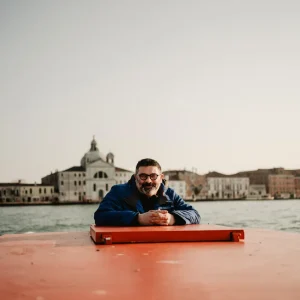
After decades working with visitors in Venice, Igor Scomparin emphasizes one principle: the shortest route is not necessarily the easiest route. A map may show a hotel only a few hundred yards away, yet those yards can include bridges, steps, and crowded lanes.
When arranging a transfer, ask where the boat can actually stop and how far you must walk afterward. If you are traveling with someone who has difficulty boarding boats or climbing steps, discuss those details before confirming the service.
For a broader look at how everyday infrastructure shapes Venetian streets, explore our article about hidden details that tell Venice’s real story. Understanding the working city can make even a short visit more rewarding.
Is Venice Really Floating?
Venice is often described as a floating city, but the buildings do not float like boats. Much of the historic city stands on foundations developed for the lagoon’s ground conditions, including timber piles and masonry construction.
This distinction matters because it shifts attention from fantasy to engineering. Venice’s extraordinary achievement is not that it floats freely, but that generations built and maintained a dense urban environment in a challenging tidal landscape.
The same ingenuity continues in contemporary transport and maintenance. A city that developed around water must still organize its daily life around water.
The Car-Free City as a Living Place
For travelers, the absence of cars is often part of Venice’s magic. The city feels different because its streets do not function like those of a conventional modern metropolis. Every bridge, quay, and canal contributes to that distinctive atmosphere.
For residents and workers, however, car-free living involves compromises and constant coordination. Groceries, waste, building supplies, emergencies, and ordinary commutes all require specialized solutions. Recognizing this effort makes the experience more respectful and more interesting.
Venice is not a museum that happens to prohibit cars. It is a living city whose geography shaped a different way of moving. The best way to appreciate it is to enjoy the quiet lanes while remembering the people and systems that keep them functioning.
Final Thoughts: A Different Definition of Convenience
The question ‘Why does Venice have no cars?’ has a simple geographical answer and a much richer human one. Canals and islands determined the city’s development, and centuries of urban life created a transport system that still operates without a normal street network in the historic center.
Understanding that system will help you plan arrivals, choose accommodation, manage luggage, and move more confidently. It will also change what you notice. A delivery boat, a porter crossing a bridge, or a busy public landing becomes evidence of extraordinary everyday coordination.
Approach Venice with curiosity and realistic expectations. Walk when you can, choose boats thoughtfully, and give workers space. The result is not merely a smoother trip, but a deeper appreciation of the ingenuity behind one of the world’s most remarkable cities.
Five Mistakes to Avoid When Arriving in Venice
Assuming a road taxi reaches every hotel
Check the distinction between the mainland, Piazzale Roma, and the pedestrian historic center. A conventional taxi can take you to a road access point, but it cannot continue along Venice’s narrow canalside lanes. Confirm the onward journey before you travel, especially if you arrive late in the evening or with substantial luggage.
Judging distance without counting bridges
A short distance on a map can conceal repeated steps. Ask your accommodation about the most practical route from the station or boat landing. This is especially important for travelers with strollers, mobility limitations, or multiple heavy bags. Sometimes a longer boat connection reduces the physical effort required at the end.
Assuming every water door is usable
A canal-facing hotel may have a beautiful entrance that is not accessible to every vessel in every condition. Water level, bridge clearance, the captain’s assessment, and local landing arrangements determine what is possible. Ask for a backup landing and whether it involves walking over bridges.
Forgetting that public boats serve residents
Waterbuses are an essential commuting network. Stand clear of boarding areas, keep bags close, and be ready to disembark promptly. If a service is crowded, respect the instructions of the crew rather than treating the boat as a private sightseeing platform.
Planning a schedule with no margin
Boat transfers, walking routes, and baggage collection take time. Allow reasonable flexibility between an airport arrival, a hotel check-in, and any booked activity. Weather, crowds, and changes to transport operations can affect the day. A realistic plan is more enjoyable than an ambitious itinerary that assumes every connection will be immediate.
Frequently Asked Questions About Venice Without Cars
Why are there no cars in Venice, Italy?
The historic island center developed around canals, pedestrian streets, and bridges rather than roads. Cars can reach Piazzale Roma or Tronchetto but cannot drive through the historic center.
How do you get around Venice without a car?
Most visitors walk, use ACTV public waterbuses, or arrange private water taxis. The best option depends on your destination, luggage, mobility, and the operating conditions.
Can a taxi take you directly to your hotel in Venice?
A road taxi cannot drive into the historic island center. A water taxi may reach a hotel’s dock or nearby landing, but access depends on the canal, tide, bridge clearance, and the hotel’s location.