Most Venice guides tell you what to see. Fewer tell you when to do the logistics that actually make or break a trip — booking the right things before you land, navigating arrival with luggage and no cars, structuring your days once you’re here, and getting to the airport without a last-minute scramble. After nearly thirty years running trips through this city, here’s the timeline I actually use with guests, from the weeks before departure to the morning you fly home.
Three to Four Weeks Before Arrival: Lock In the Logistics
This is when I tell guests to handle everything that gets harder or more expensive closer to the date. If you’re arriving on a designated peak date between April and July, register for Venice’s day-tripper access fee if you’re not staying overnight — it runs €5 booked four or more days ahead, rising to €10 for late bookings. Even overnight guests need to register for a free exemption QR code on those dates, so don’t skip this step just because you have a hotel reservation.
This is also the window to book anything requiring skip-the-line access — the Doge’s Palace, the Basilica’s restricted areas, the Accademia if you’re visiting during a major exhibition — and to reserve dinner at any restaurant you have your heart set on. Venice’s better restaurants fill up further in advance than visitors expect, especially during Biennale season or peak summer months.
One to Two Weeks Before: Sort Your Airport Transfer
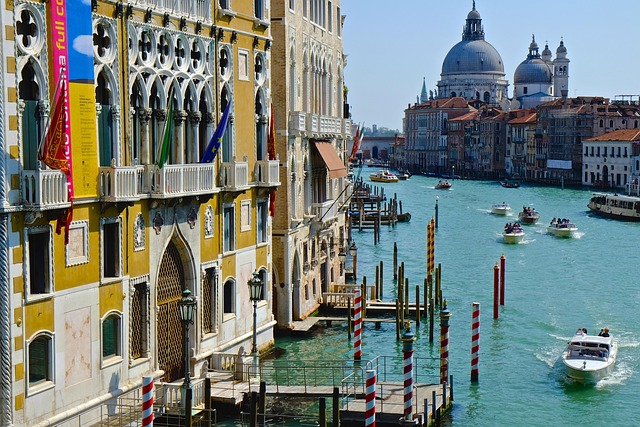
Decide how you’re getting from Marco Polo Airport into the city, and book it rather than figuring it out on arrival. You have three realistic options: the Alilaguna water bus (around €18 one-way, but a genuinely scenic 60-to-90-minute journey with multiple stops), a shared water taxi (roughly €30-40 per person, 25-30 minutes), or a private water taxi (€140-160 for up to four people, the fastest and most direct option, dropping you close to your hotel’s own dock where possible).
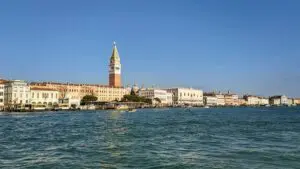
My honest advice: if it’s your first time arriving in Venice and you’re not exhausted from a long-haul flight, the Alilaguna is worth it purely for the experience — watching the city emerge across the lagoon is a genuinely different introduction than a rushed private transfer. If you’re arriving jet-lagged with heavy luggage, or your hotel is far from a vaporetto stop, spend the money on a water taxi.
Arrival Day: Resist the Urge to Sightsee Immediately
Whichever way you arrive, plan to do very little on your actual arrival day beyond checking in and orienting yourself. This is the single most common mistake I see first-time guests make — they land, drop their bags, and immediately try to power through St. Mark’s Square and the Doge’s Palace on zero sleep and travel fatigue. Venice will still be there tomorrow, fresher and more enjoyable to experience.
Instead, I recommend a short, unstructured walk near your hotel, an early dinner, and an early night. If you arrive with energy to spare, a slow evening walk to a nearby campo for an aperitivo is a far better use of the first few hours than checking off a major monument.
Day One: Orientation and the Essentials
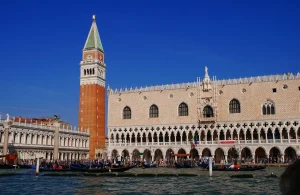
Your first full day should establish your bearings and hit the essentials while you’re at your freshest. Start early at Piazza San Marco — ideally before 9 a.m. — to see the Basilica and Doge’s Palace before the crowds peak. From there, work your way toward Rialto, crossing the bridge and taking in the morning market activity at the erbaria and pescheria if timing allows.
Save the afternoon for a slower pace: wander into Dorsoduro, cross the Ponte dell’Accademia, and let the rest of the day unfold without a rigid plan. This is the day I most often build a private guided tour around, since the historical context of San Marco and Rialto genuinely transforms the experience compared to seeing them cold.
Day Two Onward: Depth Over Breadth
Once the essentials are covered, resist the instinct to rush toward more landmarks and instead go deeper into fewer things. This is the day for the Gallerie dell’Accademia or Scuola Grande di San Rocco if art matters to you, a lagoon excursion to Murano and Burano, or a day trip into the Prosecco Hills if wine is part of your trip. If you’re staying three or more nights, I generally recommend building in at least one day with genuinely minimal structure — a wander through Cannaregio, an extended cicchetti crawl, or simply time on the Zattere with nowhere specific to be.
Every Evening: Let the City Change Around You
Regardless of what’s on your schedule, treat the hours after 5 p.m. as sacred. This is when Venice’s day-trip crowds clear out and the city becomes noticeably different — quieter squares, unhurried dinners, better light for photography. If you only build one consistent rule into your Venice timeline, make it this one: don’t schedule anything that rushes you out of the city before evening.
The Day Before Departure: Confirm Everything
On your second-to-last day, confirm your departure transfer, whether that’s an Alilaguna booking, a water taxi, or a land transfer via Piazzale Roma. Venice’s layout means getting to the airport takes longer than the straight-line distance suggests, especially if you’re departing from a hotel deep in a sestiere without direct water access. This is also the moment to settle any final souvenir shopping — artisan workshops for glass, marbled paper, or masks are best visited with a bit of buffer time rather than squeezed in on departure morning.
Departure Day: Build in More Time Than You Think You Need
Venice consistently surprises visitors with how long it actually takes to reach the airport, particularly if your hotel requires a walk to a vaporetto stop or water taxi dock before the transfer even begins. For the Alilaguna, budget the full 60-to-90-minute journey plus buffer for checking bags at the airport. For a water taxi, 25-30 minutes is realistic under good conditions, but tide levels and weather can add delay.
My general rule for guests: arrive at the airport a minimum of two and a half to three hours before an international flight, given the extra steps involved in a water-based departure. If your flight is very early, consider a hotel closer to the airport for your final night, or at minimum, arrange your water taxi the evening before to avoid any last-minute scrambling.
Why the Timeline Matters as Much as the Itinerary
I’ve watched guests plan meticulous, beautiful itineraries and then lose an entire afternoon to arrival exhaustion, or nearly miss a flight because they underestimated how long it takes to physically leave a city with no roads. Venice rewards careful timing in a way most cities don’t, precisely because its transportation constraints are so different from anywhere else you’ve likely traveled. A trip planned around this rhythm — respecting arrival fatigue, front-loading the essentials, protecting the evenings, and buffering departure day — tends to go far more smoothly than one built purely around a sightseeing list.
If you’d like help building a complete, well-timed Venice itinerary from arrival to departure, I’d be glad to plan it with you. You can learn more about my private tours or get in touch to start planning your visit.
How early should I book my Venice airport transfer?
One to two weeks before arrival is generally enough, though booking earlier is wise during peak season or Biennale dates, when water taxis and popular Alilaguna time slots can fill up.
How much time should I allow to get to Marco Polo Airport from central Venice?
Budget 60 to 90 minutes for the Alilaguna water bus or 25 to 30 minutes for a water taxi, plus buffer time for walking to the dock and checking in — arriving at least two and a half to three hours before an international flight is a safe rule of thumb.
Should I plan sightseeing for my arrival day in Venice?
It’s best to keep arrival day light — a short walk and an early dinner are usually enough, since starting major sightseeing while jet-lagged tends to reduce enjoyment of both that day and the ones that follow.