“Is it easy to get lost in Venice? Should I use Google Maps? How do I navigate Venice’s confusing streets?”
These questions appear from travelers planning Venice visits who’ve heard warnings about the city’s labyrinthine layout, worry about wasting precious vacation time being disoriented, fear missing important landmarks through wrong turns, or simply want reassurance that navigation won’t ruin their experience.
The honest answer: Getting lost in Venice represents essential part of experiencing the city authentically — the narrow calli (streets) twist unexpectedly ending at canals or hidden campi (squares), addresses follow unique numbering creating GPS confusion, the lack of grid pattern or straight routes prevents efficient point-to-point navigation, and this apparent dysfunction actually forces the slow wandering that reveals Venice’s genuine character hidden from those rushing between Instagram landmarks following maps religiously.
After 28 years navigating Venice — knowing virtually every calle, understanding how the city’s organic medieval growth created “illogical” street patterns, watching countless visitors struggle with maps then discover unexpected beauty precisely because they took wrong turns, working with travelers who want authentic experiences beyond checklist tourism — I know that Venice’s navigational difficulty isn’t obstacle to overcome but invitation to different approach valuing discovery over efficiency.
The fundamental realities most travelers miss:
Venice wasn’t designed for navigation — it grew organically over centuries as islands were connected, buildings filled available spaces, streets formed between structures creating paths of convenience rather than planned thoroughfares, resulting in urban fabric that defeats conventional wayfinding strategies.
The “getting lost” advice isn’t romantic nonsense but practical reality — even longtime Venetian residents take wrong turns, discover new routes after decades, find themselves temporarily disoriented in unfamiliar neighborhoods, accepting that perfect navigation knowledge is impossible and occasional confusion is normal.
The Biennale art exhibition venues (Giardini and Arsenale) sit on Venice’s eastern periphery, but the route between them and from central hotels inevitably involves navigating residential neighborhoods where “getting lost” creates encounters with authentic Venice beyond contemporary art focus.
Understanding that getting lost serves discovery rather than wastes time transforms navigation frustration into purposeful exploration, accepting that the 20-minute “wrong turn” revealing neighborhood bakery, local campo, or canal-side scene becomes trip highlight versus time lost.
This is the completely honest Venice navigation guide — explaining why Venice’s layout creates inevitable disorientation, revealing which navigation tools help versus create false confidence, describing the specific discoveries that “wrong turns” facilitate, providing practical strategies for productive wandering versus anxious confusion, and helping you embrace getting lost as essential Venice experience rather than vacation failure.
Why Venice’s Layout Defeats Conventional Navigation
Understanding the specific factors creating inevitable disorientation.
The Organic Medieval Growth Pattern:
Venice wasn’t planned — unlike Renaissance ideal cities (Palmanova) or modern grid cities (Manhattan), Venice evolved through 1,500 years of incremental growth: refugees fleeing barbarian invasions settled lagoon islands in 5th-6th centuries, built homes on available dry ground, connected islands with bridges, filled spaces between buildings with narrow passages, creating street network following convenience and property boundaries rather than geometric logic.
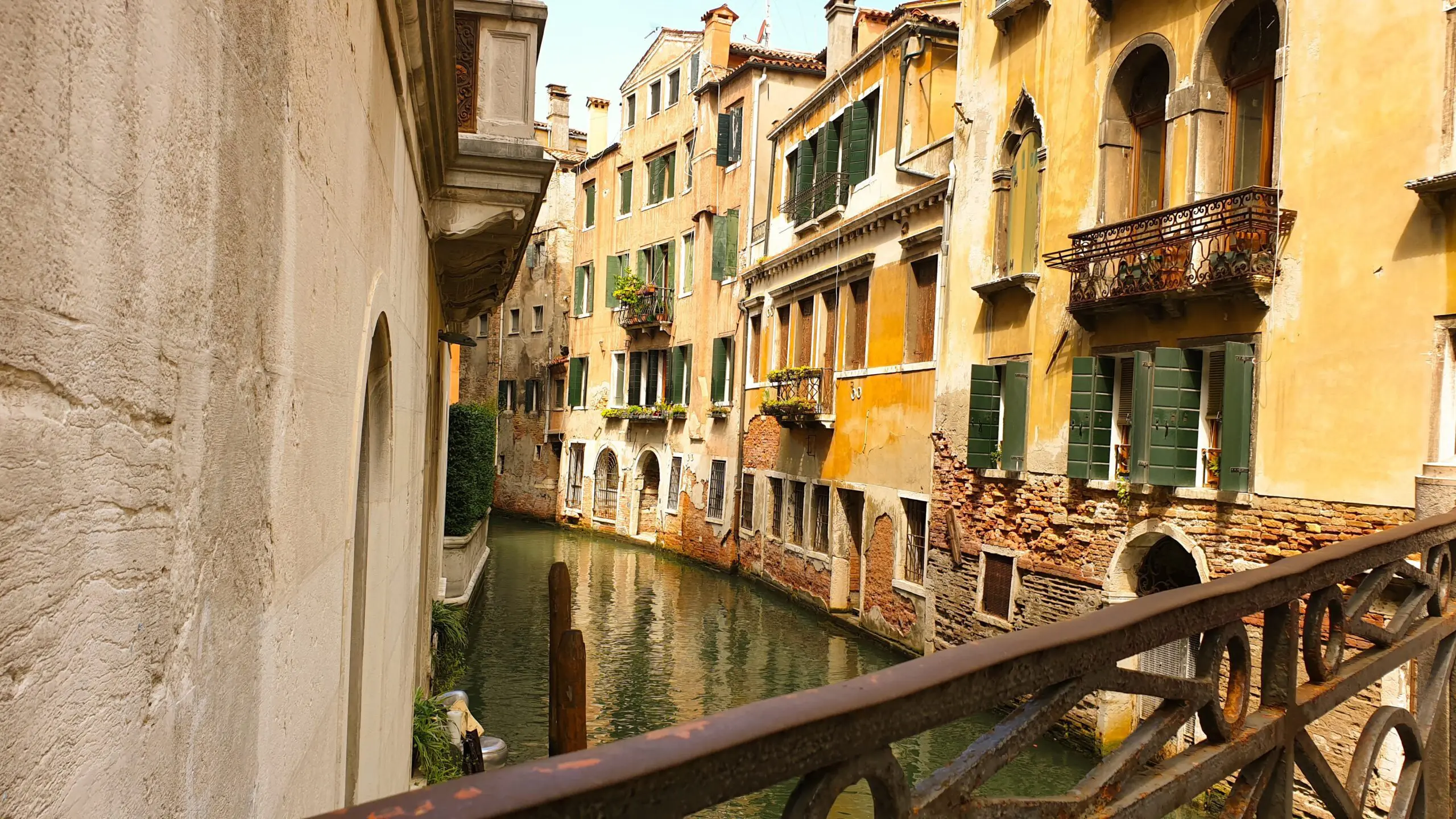
The result: Streets (calli) that curve seemingly randomly, dead-end at canals requiring backtracking, change names every block, split into multiple branches without clear hierarchy, creating navigation patterns defying modern expectations of urban organization.
The water interruptions — approximately 170 canals cut through the city, requiring 400+ bridges to cross, but bridges don’t exist uniformly, meaning the “direct” route often hits canal without crossing, forcing detours that confuse directional orientation.
Building density — structures built wall-to-wall with minimal setbacks create canyon-like streets where seeing ahead is impossible, preventing visual navigation common in cities with open sightlines and visible landmarks.
The Address System Nightmare:
Venice uses sestiere (district) numbering rather than street-specific addresses — each of Venice’s six sestieri (San Marco, Castello, Cannaregio, Santa Croce, San Polo, Dorsoduro) numbers buildings sequentially, creating addresses like “Castello 1234” providing district but no street name, useless for actual wayfinding.
The numbering follows historical order of building construction rather than geographic logic, meaning adjacent buildings might be numbers 2156 and 3847, and searching for specific address requires knowing the street name (often multiple names for one street) rather than relying on number sequence.
Google Maps confusion — even modern GPS struggles with Venice’s unique addressing, often placing pins incorrectly, suggesting “direct” routes through canals (impossible without boats), providing walking times that don’t account for bridge locations or dead-ends.
The Lack of Visual Landmarks:
Most of Venice sits at uniform height (2-4 story buildings) with occasional campanili (bell towers) providing vertical reference, but dense construction blocks sightlines meaning you can’t see campanili from many locations, preventing “navigate toward visible landmark” strategies that work in cities with skylines or dominant monuments.
The Grand Canal provides major orientation feature (everything is either “this side” or “other side”), but the canal’s S-curve means its direction changes, and from within the dense neighborhood fabric you can’t see the Grand Canal making it useless for immediate navigation.
Water everywhere — being surrounded by lagoon should provide orientation (north toward mainland, south toward Adriatic), but again dense buildings prevent seeing lagoon from most locations, and canals cutting through the city create local water features confusing the “which way to lagoon” instinct.
The Deliberate Defensiveness:
Medieval Venice designed confusion — the twisting streets, dead-ends, and complexity served defensive purposes making invader navigation difficult while residents knew the paths, creating intentional disorientation that persists today for everyone including modern visitors.
What “Getting Lost” Actually Reveals
Understanding the specific discoveries that wrong turns facilitate.
The Residential Neighborhoods (Where Venetians Live):
Tourist routes follow major corridors (Rialto to San Marco, train station to Rialto, Academia to San Marco) passing through areas commercially adapted to tourism with mask shops, gelato stands, tourist restaurants.
Wrong turns lead to residential areas — taking the second right instead of first, missing the vaporetto stop and walking through neighborhood, following a promising-looking calle that doesn’t go where you intended — these “mistakes” reveal where actual Venetians live.
What you discover:
Neighborhood campi — small squares serving local communities with children playing, elderly residents sitting on benches, the parish church, the single café serving locals not tourists, washing hanging from windows, creating intimate urban spaces where Venice functions as lived city versus performed tourist destination.
Working businesses — artisan workshops where craftspeople actually produce rather than just sell souvenirs, small grocery stores (alimentari) serving residents not tourists, the neighborhood hardware store (ferramenta), bakeries where locals buy morning bread creating aromas and morning queues.
Authentic architecture — seeing how ordinary Venetians lived historically in modest houses versus the grand palazzi on major routes, understanding the complete social spectrum rather than just wealthy merchant class, appreciating the working-class neighborhoods (Castello particularly, northern Cannaregio) maintaining stronger residential character.
The social fabric — witnessing neighborhood interactions (residents greeting each other, shopkeepers knowing customers by name, children being walked to school by grandparents), experiencing Venice’s community dimension surviving despite tourism pressure and depopulation.
Hidden Campi and Sotoporteghi:
The surprise openings — walking down narrow calle feeling claustrophobic, then suddenly emerging into charming campo you didn’t know existed with wellhead in center, lovely church facade, trees providing rare greenery, café with tables creating perfect rest spot.
The sottoporteghi (covered passages) — walking under buildings through tunnels connecting streets, experiencing Venice’s vertical density where buildings span over public pathways, discovering how three-dimensional urban organization creates shortcuts and atmospheric passages unique to dense island construction.
The canal-side moments — rounding corner to unexpected canal view, seeing gondola passing, discovering peaceful fondamenta (canal-side walkway) where you can sit on steps watching water without tourist crowds, experiencing the water-based reality beyond Grand Canal spectacle.
The architectural details — being lost means walking slowly, looking around, noticing details invisible when rushing: the ornamental wellheads (many decorated with family crests or religious symbols), Gothic window tracery, Byzantine decorative elements, street shrines (capitelli) with Madonna images, building fragments revealing Venice’s layered history.
The Authentic Bars and Bacari:
Tourist restaurants cluster on major routes with multilingual menus, tourist pricing, sometimes mediocre quality banking on transient customers never returning.
Getting lost reveals authentic establishments — the bacaro on a side calle where locals gather, the small osteria with handwritten daily menu in dialect, the wine bar where you’re the only tourist among Venetian regulars, discovering establishments that survive serving neighborhood rather than visitors.
The discovery mechanism — you take wrong turn, it’s 5:00 PM and you’re tired from walking, you notice locals entering unpromising-looking doorway, you follow and discover authentic bacaro serving excellent cicchetti and local wine at fraction of tourist-area prices, creating highlight you never would have found following guidebook recommendations.
The neighborhood character differences — Cannaregio’s working-class bacari versus Dorsoduro’s artsy cafés versus San Polo’s market-adjacent wine bars, understanding that different neighborhoods maintain distinct identities and getting lost in each reveals unique local character.
The Seasonal and Temporal Variations:
Getting lost forces spending time — the inefficient wandering means you’re outside longer, experiencing how Venice changes throughout the day: the dawn quiet (if you’re out early), the morning market rush, the midday heat reflecting off stone, the late afternoon golden light on building facades, the evening passeggiata (stroll) as locals emerge.
The seasonal discoveries — getting lost in spring reveals wisteria blooming over sotoporteghi, autumn shows Virginia creeper turning red on palazzo walls, winter discovers the misty atmospheric quality, each season offering visual elements you only notice when moving slowly through neighborhoods.
The weather variations — being lost during light rain discovers Venice’s romantic wet-stone character, the reflections in puddles, the sound of rain on canal water, experiencing conditions that efficient navigation would minimize but that reveal Venice’s atmospheric range.
The Psychological Shift: From Anxiety to Acceptance
Understanding how embracing disorientation changes the Venice experience.
The Initial Frustration:
Most visitors resist getting lost — they planned specific itineraries (Rialto at 10:00 AM, Academia at 2:00 PM, San Marco at 4:00 PM), purchased guidebooks identifying must-see attractions, have limited vacation days creating pressure to maximize efficiency, fear wasting time on wrong turns when important landmarks await.
The technology dependency — smartphones create false confidence that GPS will prevent disorientation, but Venice defeats Google Maps through unique addressing, dense construction blocking GPS signals, suggested routes through canals or via non-existent shortcuts, creating frustration when technology fails.
The anxiety symptoms — checking maps constantly, feeling stressed when streets don’t match expectations, treating every wrong turn as failure and time waste, missing present surroundings while focusing on screen trying to relocate position.
The Acceptance Moment:
Something shifts — maybe the map completely fails leaving no choice but to wander, maybe you notice something beautiful during a wrong turn and realize the detour had value, maybe exhaustion from navigation stress makes surrendering to confusion feel liberating.
The new mindset: “I’m lost and that’s fine. I’ll wander until I recognize something or emerge at a vaporetto stop. Meanwhile I’ll pay attention to what’s around me.”
The immediate benefits:
Reduced stress — accepting disorientation as normal rather than failure eliminates anxiety from wrong turns, allowing relaxation into the experience
Increased observation — looking around at actual surroundings versus staring at phone screen trying to match position to map, noticing architectural details, people, atmospheric qualities
Serendipitous discoveries — the neighborhood bakery with amazing pastries, the quiet campo perfect for resting, the artisan workshop where the craftsperson invites you to watch, the canal view with no tourists, experiences impossible to plan but available through wandering
Authentic rhythm — moving at Venice’s appropriate pace (slow, observational, responsive) rather than modern efficiency mindset (fast, purposeful, achievement-focused)
The Memorable Experiences:
Post-trip recollections — travelers consistently report that unplanned discoveries from “being lost” become favorite memories: the conversation with elderly Venetian who helped with directions, the family-run trattoria stumbled upon, the unexpected campo where they sat for an hour watching neighborhood life, the atmospheric calle creating perfect photograph.
The Instagram effect reversal — many visitors prioritize photographing famous landmarks (Rialto Bridge, San Marco), but these generic shots duplicate millions of others, while the unique neighborhood scene discovered through wrong turn creates distinctive personal image unavailable through guidebook routes.
The stories worth telling — “We saw the Rialto Bridge” creates boring trip report; “We got completely lost in Cannaregio, ended up at this amazing bacaro where no one spoke English, the owner drew us a map on a napkin, we had the best meal of the trip” creates engaging narrative revealing authentic experience.
Practical Strategies: Productive Wandering vs. Anxious Confusion
Understanding how to get lost purposefully rather than accidentally.
The Basic Orientation Framework:
Learn the six sestieri (districts) and major landmarks creating mental map:
- San Marco — southeast, contains Piazza San Marco, most touristed
- Castello — east, residential character, less touristed, Biennale Giardini area
- Cannaregio — north, residential and Jewish Ghetto, train station on western edge
- Santa Croce — northwest, Piazzale Roma (bus/car terminal)
- San Polo — central-west, contains Rialto Market
- Dorsoduro — southwest, contains Academia, university, artsy character
The Grand Canal divides Venice roughly in half, crossing via four bridges (Scalzi near train station, Rialto in center, Academia in south, Costituzione near Piazzale Roma)
Major landmarks visible from distance: Campanile di San Marco (tallest at 98.6m), Rialto Bridge, Salute church domes (on Dorsoduro point)
The “General Direction” Approach:
Instead of precise navigation, aim for general direction:
“I want to go from my hotel in Castello toward Rialto (in San Polo), so I need to head generally west and north, eventually I’ll hit the Grand Canal or recognize Rialto area.”
The yellow signs (turistico arrows) point toward major destinations (Rialto, San Marco, Academia, Ferrovia/train station, Piazzale Roma), providing general direction without dictating exact route, allowing following arrows while taking interesting-looking side streets.
The inevitable emergence — Venice is small (you can walk end-to-end in 60 minutes), meaning sustained wandering in any direction eventually hits recognizable landmark, major canal, or vaporetto stop allowing reorientation, making it difficult to stay truly lost for extended periods.
The Time Buffer Strategy:
Build wandering into schedule — instead of “Rialto Market at 10:00 AM sharp,” plan “Rialto area mid-morning with time to explore neighborhood,” allowing wrong turns and discoveries without schedule pressure.
The “extra hour” approach — Google Maps suggests 15 minutes to destination, allocate 45-60 minutes accepting you’ll get disoriented, take wrong turns, stop to photograph, discover something interesting, removing time stress from navigation.
The lost-day strategy — dedicate one day to complete wandering without specific destination: “Today we’re exploring Cannaregio, we’ll head there generally and see what we find,” transforming getting lost from accidental frustration to intentional method.
The Analog Tools That Actually Help:
Paper map superiority — counterintuitively, old-fashioned paper maps work better than GPS in Venice because:
- They show the complete area at once allowing pattern recognition (seeing how streets relate versus following GPS dot)
- They work without cell signal or battery
- They encourage looking around to match map to surroundings versus following phone directions blindly
The landmark-to-landmark method — instead of street-by-street navigation, identify visible landmark (campanile, distinctive building, bridge) and navigate toward it, then from there identify next landmark, creating successive short navigations rather than attempting complete route planning.
The “ask locals” approach — Venetians give directions differently than GPS (“walk toward the bridge, cross the canal, take second right after the pharmacy, you’ll see the campo”), creating human-scale wayfinding that works with Venice’s organic layout.
What Not to Do:
Don’t fight the confusion — resisting disorientation creates stress; accepting it creates calm
Don’t stay glued to phone — staring at Google Maps while walking means missing everything that makes getting lost valuable
Don’t panic about time — being 30 minutes “late” to planned attraction doesn’t matter; Venice won’t disappear, monuments don’t close unexpectedly, the schedule is artificial constraint you created
Don’t stick exclusively to major routes — following crowds to Rialto/San Marco means missing 90% of Venice’s genuine character hidden in neighborhoods
Getting Lost During Biennale: The Specific Benefits
Understanding how wandering enhances contemporary art engagement.
The Residential Discoveries Between Venues:
The Giardini and Arsenale Biennale venues sit on Venice’s eastern edge in Castello, connected by 15-20 minute walk through residential neighborhoods that most Biennale visitors rush through following direct route.
Intentional getting lost between venues reveals:
Via Garibaldi — wide street (rare in Venice) with neighborhood market, cafés serving locals, working-class character contrasting with Biennale’s international art world
Sant’Elena — quiet residential neighborhood at Venice’s eastern extreme, parks where Venetian children play, almost zero tourists, providing perspective on how ordinary Venetians live adjacent to world-class art exhibition
Backstreet workshops — artisan studios where craftspeople maintain traditional techniques, the handwork and artistic production continuing Venice’s maker culture parallel to Biennale contemporary art
Neighborhood bars — bacari where you can decompress between venue visits with spritz and cicchetti among locals versus tourist-packed San Marco establishments
The Conceptual Dialogue:
Biennale presents curated contemporary art — intentional, conceptual, often addressing themes like identity, politics, technology, globalization
Getting lost reveals unintentional Venice — the organic city, the authentic daily life, the historical layering, the challenges of depopulation and tourism
The juxtaposition creates depth: Experiencing cutting-edge contemporary art in the morning, then getting lost in medieval streets in afternoon, creates dialogue between human artistic intention and accumulated cultural/architectural history, between what’s deliberately created and what emerges organically over centuries.
The Energy Management:
Biennale visiting is mentally exhausting — hours engaging with challenging contemporary art, reading wall texts, processing conceptual installations, attending curator talks creates cognitive fatigue.
Getting lost provides mental break — wandering through neighborhoods without intellectual demands, simply observing surroundings, allows recovery while maintaining Venice engagement, preventing complete burnout while providing different type of enrichment.
The rhythm variation — alternating between focused Biennale viewing (intellectually intense, goal-directed, stationary) and wandering exploration (relaxed, open-ended, mobile) creates sustainable multi-day visiting pattern versus grinding through pavilions until exhausted.
When Getting Lost Becomes Problem: Safety and Practical Limits
Understanding realistic boundaries for productive wandering.
Venice Is Extremely Safe:
Crime rates among lowest in Italy — Venice’s tourist economy depends on safety, small size makes crime difficult (limited escape routes), strong community surveillance in residential neighborhoods creates protection.
Getting lost poses no physical danger — you won’t wander into dangerous neighborhood (they don’t exist), encounter violent crime, or face threats that make disorientation risky.
The worst outcomes are inconvenience: missing dinner reservation, arriving at museum too late for entry, spending 90 minutes trying to find hotel when tired, walking farther than intended.
The Practical Limits:
Acqua alta (flooding) — during high water events, getting lost becomes more problematic as routes flood and elevated walkways (passerelle) create restricted paths making navigation more complex. Check flooding forecasts and avoid aggressive wandering during significant acqua alta.
Late night — while Venice remains safe, late-night wandering when exhausted and potentially after alcohol increases frustration from disorientation, difficulty finding open establishments for help/directions, and risk of genuine difficulty finding hotel.
Time-sensitive obligations — if you have specific time commitments (restaurant reservation, opera performance, train departure), build significant buffer time or skip the wandering approach for that specific journey.
Physical limitations — Venice requires extensive walking (average visitor walks 15-25km daily), and getting lost adds distance. Those with mobility issues or health conditions limiting walking should navigate more directly versus embracing disorientation.
Weather extremes — getting lost during heavy rain or summer heat extremes (35°C+) transforms enjoyable wandering into miserable slogging; on challenging weather days, navigate more efficiently to minimize outdoor time.
The Emergency Reorientation:
If genuinely stuck:
Find a vaporetto stop — water bus stops are well-marked (yellow ACTV signs), numbered, and appear on maps, providing clear reference points; the vaporetto system can return you to familiar areas
Follow yellow arrows — the turistico signs point toward major landmarks (Rialto, San Marco, Ferrovia/train station) where you can reorient
Ask for directions — Venetians accustomed to helping lost tourists, ask shopkeepers, bar staff, elderly residents sitting in campi; basic “Scusi, dove è [hotel/landmark]?” works
Find a bridge — climb to bridge peak for elevated view allowing identification of campanili or other landmarks providing bearings
Head toward water sounds — following sound of large boats typically leads to Grand Canal or major canal providing orientation
Call hotel — staff can provide directions from current location (if you can identify it) or advise meeting at vaporetto stop
Our Guided Wandering Experiences
If you want the benefits of getting lost with expert context — experiencing the discoveries that wrong turns reveal while understanding the history, culture, and significance of what you’re seeing — we offer guided Venice exploration designed around purposeful wandering rather than checklist tourism.
How Our Approach Works:
Neighborhood immersion — spending 3-4 hours exploring single sestiere (Cannaregio, Castello, Dorsoduro) in depth rather than rushing through multiple districts superficially
The intentional detours — taking “wrong turns” deliberately to reveal hidden campi, artisan workshops, authentic bacari, residential areas while explaining what you’re experiencing
The historical context — explaining why streets follow seemingly illogical patterns (medieval growth, defensive considerations, water interruptions), how neighborhoods developed distinct characters, what architectural details reveal about Venice’s layered history
The cultural insights — identifying which establishments serve locals versus tourists, explaining Venetian dialect shop signs, discussing the depopulation crisis affecting neighborhoods, revealing how Venice functions as living city despite tourism dominance
The flexible pacing — following interesting discoveries rather than rigid itinerary, allowing time to photograph, sit in peaceful campo, stop for espresso at neighborhood bar, creating relaxed exploration versus schedule pressure
The local access — introducing you to shopkeepers and artisans we know, facilitating interactions and insights impossible for independent wanderers
The Biennale Integration:
Morning expert Biennale tour (9:00 AM-1:00 PM) — focused pavilion viewing with curatorial insights
Afternoon neighborhood wandering (3:00-6:00 PM) — exploring residential Venice revealing authentic context for contemporary art exhibition
The balanced experience — intellectual contemporary art engagement plus embodied wandering discovery, neither rushed nor overwhelming
Understanding Complete Venice Context
For neighborhood depth: Sestiere characteristics, where Venetians live, bacari culture.
For Biennale experiences: Expert art guidance, lagoon geographic context.
For different pacing: Sunrise Venice, what makes Venice unique.
For practical planning: How many days, seasonal timing.
For all experiences: Complete tour options.
Getting Lost in Venice Is Essential Experience — Organic Medieval Layout Defeats GPS, Narrow Twisting Calli Create Inevitable Disorientation, Wrong Turns Reveal Residential Neighborhoods, Authentic Bacari, Hidden Campi, Artisan Workshops, Atmospheric Details Impossible Through Efficient Navigation
After 28 years navigating Venice and being featured by Rick Steves, NBC, and US Today, I know getting lost isn’t vacation failure but discovery method — Venice’s organic growth pattern (1,500 years incremental development versus planned grid), unique addressing (sestiere numbering not street-specific), water interruptions (170+ canals requiring 400+ bridges creating detours), dense construction blocking sightlines, and defensive medieval design create inevitable disorientation defeating conventional navigation. The “mistakes” reveal authentic Venice: residential campi where children play and locals socialize, neighborhood bakeries and grocery stores, bacari serving Venetians not tourists, artisan workshops, canal-side moments, architectural details, seasonal variations, creating experiences impossible through guidebook efficiency. The psychological shift from navigation anxiety to acceptance creates reduced stress, increased observation, serendipitous discoveries, authentic rhythm matching Venice’s appropriate pace. Practical strategies include learning basic sestiere orientation, following general directions not precise routes, building time buffers eliminating schedule pressure, using paper maps and landmark-to-landmark navigation, embracing one full wandering day. Biennale visitors particularly benefit — getting lost between Giardini/Arsenale venues reveals residential neighborhoods providing context for contemporary art, creates mental breaks from intensive pavilion viewing, establishes dialogue between curated exhibitions and organic city. Venice remains extremely safe making disorientation inconvenient not dangerous, though acqua alta, late night, time-sensitive obligations require more careful navigation. We offer guided wandering combining purposeful exploration with expert cultural context, neighborhood immersion, Biennale integration. Contact us for experiences embracing Venice’s invitation to get lost productively. Let’s show you the discoveries only wrong turns reveal.
Contact us for guided Venice exploration — purposeful wandering with expert context.
Frequently Asked Questions
How long does it typically take to feel comfortable navigating Venice, and will getting lost waste too much vacation time?
Most visitors never achieve “comfortable navigation” even after week-long stays — Venice’s organic layout, unique addressing, and visual complexity prevent the confident orientation that develops quickly in grid cities, and accepting this reality reduces stress versus fighting it. Typical learning curve: Day 1 feels completely disorienting with constant wrong turns and confusion; Day 2-3 you recognize major landmarks (Rialto, San Marco) and develop rough sense of sestiere locations but still take wrong turns frequently; Day 4-5 you can navigate between major points somewhat efficiently but residential neighborhoods remain confusing; Day 6-7 you’ve internalized general patterns but still discover new areas and occasionally get turned around. Even longtime residents get disoriented in unfamiliar neighborhoods — I’ve lived in Venice 28 years and still occasionally take wrong turns, discover new routes, temporarily lose orientation in areas I visit infrequently. The time “waste” question misunderstands Venice — those 20-30 minute “wrong turns” aren’t wasted time but core Venice experience revealing neighborhood character, authentic life, atmospheric details impossible through efficient navigation. Realistic assessment: You’ll spend 30-60 minutes extra daily being disoriented versus perfect navigation (impossible anyway), but those “extra” hours create trip highlights and authentic encounters versus rushing between landmarks. The efficiency mindset (maximize attractions seen per hour) fundamentally mismatches Venice which rewards slow observational wandering over achievement-focused tourism.
Should I use Google Maps in Venice, or are there better navigation tools for dealing with the confusing street layout?
Google Maps works poorly in Venice creating frustration through inaccurate positioning (GPS struggles with dense stone buildings), impossible route suggestions (directing through canals, via non-existent bridges, through private courtyards), and address confusion (Venice’s unique sestiere numbering system doesn’t match Google’s street-based logic). Better tools and approaches: (1) Paper maps — showing complete area at once allowing pattern recognition, working without cell signal/battery, forcing you to look around matching map to surroundings rather than following GPS dot blindly. Purchase detailed paper map showing all calli and campi, not simplified tourist versions. (2) Yellow arrows (turistico signs) — Venice’s official wayfinding pointing toward major landmarks (Rialto, San Marco, Ferrovia, Academia, Piazzale Roma), providing general direction without dictating exact route, allowing following arrows while taking interesting detours. (3) Vaporetto system as orientation framework — water bus stops are clearly marked, numbered, mapped, creating reference network allowing “I’ll wander this neighborhood knowing I can catch vaporetto at Stop X to return.” (4) Landmark-to-landmark navigation — identify visible campanile or distinctive building, navigate toward it, from there identify next landmark, creating successive short navigations versus attempting complete route. (5) Local directions — Venetians give directions as landmarks and visual cues (“cross the bridge, take second right after the pharmacy, you’ll see the campo with the wellhead”), working better than GPS in Venice’s environment. Hybrid approach: Use Google Maps to identify general area and major landmarks, then navigate by observation, paper map, and yellow arrows accepting wrong turns as normal, reserving phone for genuine emergencies when completely stuck.
Is it actually safe to wander random Venice neighborhoods at night, or should nighttime navigation stick to well-lit tourist routes?
Venice is extraordinarily safe at all hours — crime rates are among Italy’s lowest, violent crime virtually non-existent, tourist economy depends on safety, small compact geography limits criminal escape routes, strong residential community surveillance in neighborhoods creates informal protection making Venice safer than virtually any comparably-sized European city. Night wandering is safe from crime perspective but presents different considerations: (1) Lighting varies dramatically — major routes (Rialto-San Marco, train station corridors) remain well-lit with businesses open creating activity; residential neighborhoods have minimal street lighting with dark calli creating atmospheric but potentially disorienting conditions where navigation becomes more difficult. (2) Fewer people to ask directions — shops and establishments close by 8-10 PM in residential areas, fewer Venetians out late (particularly elderly residents who might help with directions), making genuine disorientation harder to resolve. (3) The romantic atmospheric quality — nighttime Venice offers magical quality with canal reflections, illuminated buildings, profound quiet, creating rewarding wandering experiences for those comfortable navigating with limited visibility. (4) Alcohol consideration — post-dinner wandering after wine means reduced navigation ability, increased frustration from disorientation, making hotel-finding more difficult. Practical recommendation: Night wandering is safe and wonderful for those comfortable with minimal lighting and confident they can eventually find vaporetto stop or major landmark for reorientation; those anxious about navigation should stick to well-lit routes or return to hotel before full darkness; solo travelers particularly women report feeling safe walking Venice at any hour. The “worst case” isn’t danger but spending 60-90 minutes trying to find hotel when tired and frustrated — inconvenient and annoying but not threatening your safety or wellbeing.