What happened to Venice during World War I? Between 1915 and 1918, the city lived under air raids, blackouts, military restrictions, food shortages, and the threat of invasion. Its monuments were protected, civilians fled, and the lagoon became part of a strategic defensive landscape. Farther east, on the Piave front, a young American Red Cross volunteer named Ernest Hemingway was wounded in July 1918—an experience that later influenced his writing.
Published for November 11, this guide explores the Venice behind the front lines, from the Arsenale and St. Mark’s Basilica to the aerial bombardments, civilian life, and Hemingway’s wartime connection to the Veneto. November 11 commemorates the Western Front armistice; the Italian front’s armistice took effect on November 4, 1918. Understanding that distinction is part of telling the story accurately.
Venice in 1915: a city suddenly at war
When Italy entered World War I on May 24, 1915, Venice became a vulnerable city near an active theater of war. Its centuries-old identity as a maritime power could not protect it from aircraft, modern explosives, or the disruption of supply routes. The lagoon was still a defensive landscape, but it no longer guaranteed safety.
The first attacks arrived almost immediately. Treccani’s history of wartime Venice records bombs falling on the city on the very day Italy entered the conflict. What had been an internationally admired center of art and commerce now faced blackout rules, military controls, and the fear of raids from the air.
What makes this detail important for travelers is its ability to change the way an ordinary street or monument looks. The present-day city encourages leisurely observation, but the same spaces once demanded vigilance and practical decisions under pressure. Historical context helps us see beyond the postcard without imagining that every surviving wall carries a visible scar.
Why Venice was strategically important
Venice was not simply an innocent town far from military activity. Its port, naval infrastructure, and position on the northern Adriatic gave it strategic significance. The Arsenale and maritime installations connected the city to naval defense, while the lagoon offered sheltered routes and positions for military activity.
That strategic role helps explain why Venice became a target, though it cannot justify attacks that killed civilians or damaged cultural monuments. The wartime city contained both military functions and vulnerable residential neighborhoods. Understanding both realities is essential to avoiding a simplistic account of the conflict.
A careful interpretation separates what records establish from what visitors might picture. Photographs, official histories, and documented memorials can support specific claims; romanticized anecdotes cannot. This approach is particularly valuable in Venice, where familiar buildings have accumulated centuries of stories and where a dramatic tale can easily outlive its evidence.
The Arsenale in a new kind of war
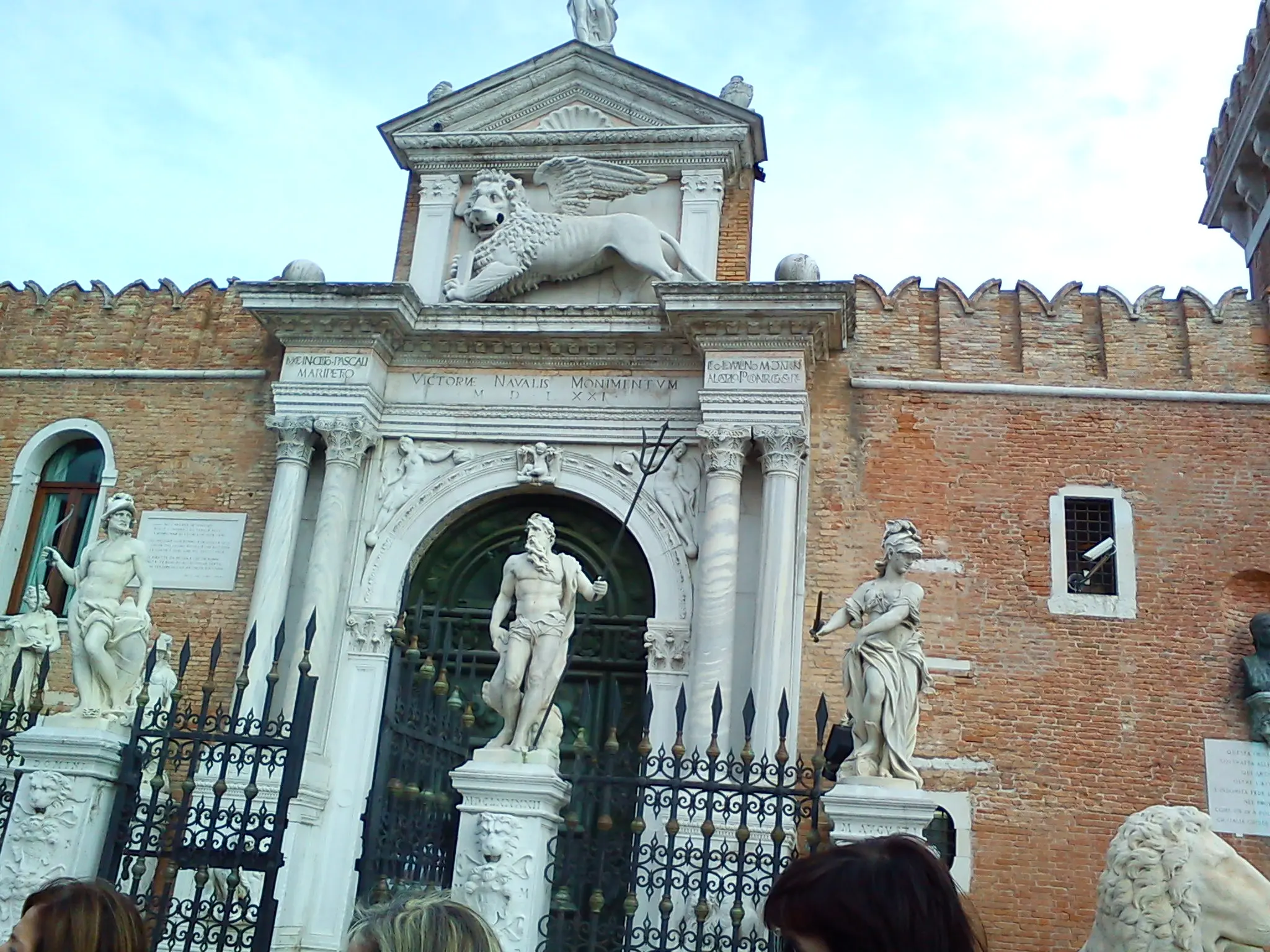
For centuries the Venetian Arsenale symbolized the shipbuilding capacity of the republic. By 1915, Venice was no longer an independent maritime empire, but its naval geography remained relevant. Wartime activity in the area connected an ancient industrial landscape to modern Italian military operations.
Today the Arsenale is also associated with architecture and contemporary art. To appreciate its longer history, read our guide to the Arsenale’s architecture and changing uses. Its peaceful contemporary identity makes the story of wartime militarization particularly striking.
What makes this detail important for travelers is its ability to change the way an ordinary street or monument looks. The present-day city encourages leisurely observation, but the same spaces once demanded vigilance and practical decisions under pressure. Historical context helps us see beyond the postcard without imagining that every surviving wall carries a visible scar.
The first bombs and the end of normal life
The opening raids made clear that the city was exposed to attack from above. Historic canals and narrow streets offered no reliable protection against aircraft. Residents who had never imagined a modern aerial assault on their neighborhood were forced to adjust quickly to alarms and the possibility of destruction.
The threat was not constant in the same way every night, and attacks varied in intensity. Yet uncertainty itself transformed ordinary life. A family preparing for sleep could not know whether the night would remain quiet. The war entered homes long before every household experienced a direct strike.
A careful interpretation separates what records establish from what visitors might picture. Photographs, official histories, and documented memorials can support specific claims; romanticized anecdotes cannot. This approach is particularly valuable in Venice, where familiar buildings have accumulated centuries of stories and where a dramatic tale can easily outlive its evidence.
Blackout Venice: the city without its famous lights
Authorities imposed restrictions on lighting and nighttime movement. Treccani describes a city that spent years under stringent blackout conditions, with public life controlled and pedestrians using shielded lanterns. The visual experience must have been radically different from the illuminated waterfront familiar to today’s visitors.
A blackout was intended to make targets harder to identify, but it also made navigation and social life more difficult. Venice already depended on careful movement through narrow streets and across bridges. Darkness added anxiety to errands, work, and the simple act of returning home.
What makes this detail important for travelers is its ability to change the way an ordinary street or monument looks. The present-day city encourages leisurely observation, but the same spaces once demanded vigilance and practical decisions under pressure. Historical context helps us see beyond the postcard without imagining that every surviving wall carries a visible scar.
Lookouts on Venetian rooftops
Venice’s rooftop terraces, or altane, became part of the city’s defense. Historical accounts describe observation posts where watchers scanned the sky for approaching aircraft. Ships and shore positions supported antiaircraft efforts, while searchlights attempted to locate raiders in the dark.
This is a detail ordinary travel blogs rarely explore: a rooftop feature now admired for its view once served as a place to watch for danger. The architectural skyline became an improvised network of military observation. The city’s historic form was pressed into service against technology for which it had never been designed.
A careful interpretation separates what records establish from what visitors might picture. Photographs, official histories, and documented memorials can support specific claims; romanticized anecdotes cannot. This approach is particularly valuable in Venice, where familiar buildings have accumulated centuries of stories and where a dramatic tale can easily outlive its evidence.
The limits of early air defense
Early antiaircraft defense was uncertain and imperfect. Aircraft were relatively new weapons, and tracking them at night posed major challenges. Searchlights, guns, observers, and other experimental measures could not guarantee protection. Military leaders debated how best to respond to repeated raids.
These difficulties should not be interpreted as proof that the city’s defenders were indifferent. Rather, Venice was experiencing the broader transformation of warfare in which civilians and urban heritage were suddenly vulnerable from the air. Defensive responses themselves could sometimes create risks.
What makes this detail important for travelers is its ability to change the way an ordinary street or monument looks. The present-day city encourages leisurely observation, but the same spaces once demanded vigilance and practical decisions under pressure. Historical context helps us see beyond the postcard without imagining that every surviving wall carries a visible scar.
The attack on Santa Maria degli Scalzi
In October 1915, incendiary bombs struck the church of Santa Maria di Nazareth, commonly called the Scalzi, near the railway station. The episode became a symbol of the danger facing Venice’s artistic heritage. The church was subsequently restored and reopened for worship during the war.
For visitors arriving at Santa Lucia station, this story changes the meaning of the surrounding area. The familiar route toward the Grand Canal passes a site associated with the vulnerability of sacred art and architecture. It is a reminder that wartime damage did not stop at military targets.
A careful interpretation separates what records establish from what visitors might picture. Photographs, official histories, and documented memorials can support specific claims; romanticized anecdotes cannot. This approach is particularly valuable in Venice, where familiar buildings have accumulated centuries of stories and where a dramatic tale can easily outlive its evidence.
Protecting St. Mark’s treasures
Venice took extraordinary precautions to protect its monuments and artworks. Soon after Italy entered the war, the famous horses on the facade of St. Mark’s Basilica were removed to a safer location within the Doge’s Palace complex, according to Treccani’s historical account.
Protection involved difficult choices: moving fragile objects could itself create risks, while leaving them exposed was also dangerous. The city faced the task of safeguarding irreplaceable heritage while coping with shortages, military controls, and the needs of a frightened population.
What makes this detail important for travelers is its ability to change the way an ordinary street or monument looks. The present-day city encourages leisurely observation, but the same spaces once demanded vigilance and practical decisions under pressure. Historical context helps us see beyond the postcard without imagining that every surviving wall carries a visible scar.
The summer of 1916: bombs over the city
The raids of August 1916 were particularly destructive. Treccani records more than 200 bombs dropped during attacks between August 9 and 16, with fires and civilian deaths. Industrial buildings, homes, and public spaces were exposed to damage.
A useful historical lesson is that air warfare did not produce neat boundaries between civilian and military space. Fires could spread, people could be injured away from an intended target, and the city’s tightly built fabric increased the danger. The loss was material, cultural, and deeply personal.
A careful interpretation separates what records establish from what visitors might picture. Photographs, official histories, and documented memorials can support specific claims; romanticized anecdotes cannot. This approach is particularly valuable in Venice, where familiar buildings have accumulated centuries of stories and where a dramatic tale can easily outlive its evidence.
A scar still recorded in Venice
Italy’s national cultural heritage catalog documents a memorial inscription at Palazzo Marcello, San Marco 3666, recalling bomb damage on August 10, 1916. The official record describes damage to part of the roof and upper floor during an air raid.
This is a rare chance to connect an exact surviving place to a documented wartime event without inventing a local legend. Memorial inscriptions should be approached respectfully and their location verified before a visit. They remind us that the war reached ordinary buildings, not just famous monuments.
What makes this detail important for travelers is its ability to change the way an ordinary street or monument looks. The present-day city encourages leisurely observation, but the same spaces once demanded vigilance and practical decisions under pressure. Historical context helps us see beyond the postcard without imagining that every surviving wall carries a visible scar.
The scale of the raids
Treccani records 42 air raids on Venice during the war, with 52 civilian deaths and 84 injuries. These numbers describe a historical toll rather than a complete account of every family’s suffering. Buildings, industries, and cultural heritage also sustained damage.
Statistics are important because they resist romantic exaggeration. Venice was neither untouched nor reduced to ruins. It remained inhabited and functioning under pressure, and its people endured repeated episodes of fear, disruption, and loss.
A careful interpretation separates what records establish from what visitors might picture. Photographs, official histories, and documented memorials can support specific claims; romanticized anecdotes cannot. This approach is particularly valuable in Venice, where familiar buildings have accumulated centuries of stories and where a dramatic tale can easily outlive its evidence.
Caporetto and the fear of invasion
The Italian defeat at Caporetto in autumn 1917 transformed the strategic situation. As forces retreated and the front shifted toward the Piave, the possibility that Venice might be endangered by a larger military advance became urgent.
Authorities debated evacuation and defense while residents confronted uncertainty. The city was not simply a distant spectator to battles in the mountains. The military crisis reshaped transport, supplies, public confidence, and the future of households that had already lived through years of raids.
What makes this detail important for travelers is its ability to change the way an ordinary street or monument looks. The present-day city encourages leisurely observation, but the same spaces once demanded vigilance and practical decisions under pressure. Historical context helps us see beyond the postcard without imagining that every surviving wall carries a visible scar.
The difficult decision to leave
Wartime evacuation was not a single orderly departure. Some residents left voluntarily, others faced official pressures, and many had limited resources or nowhere obvious to go. Treccani describes debate among military and civilian authorities over how and when to reduce the population.
The human cost of leaving should not be overlooked. Venice was a home, workplace, and social network. Abandoning it meant more than escaping a danger zone. Families risked losing income, contact with neighbors, and a sense of security in unfamiliar places.
A careful interpretation separates what records establish from what visitors might picture. Photographs, official histories, and documented memorials can support specific claims; romanticized anecdotes cannot. This approach is particularly valuable in Venice, where familiar buildings have accumulated centuries of stories and where a dramatic tale can easily outlive its evidence.
The bombardments of early 1918
The first months of 1918 brought further severe attacks. Treccani describes especially intense bombing in February and the departure of tens of thousands of people from the city. The raids affected the urban fabric and reinforced the uncertainty of daily life.
It is easy to imagine Venice’s monuments as immovable and eternal. The wartime experience reveals their fragility. Preservation depended on protective measures, repair, and the endurance of residents and workers who continued to support the city during a prolonged emergency.
What makes this detail important for travelers is its ability to change the way an ordinary street or monument looks. The present-day city encourages leisurely observation, but the same spaces once demanded vigilance and practical decisions under pressure. Historical context helps us see beyond the postcard without imagining that every surviving wall carries a visible scar.
Rationing and the price of daily necessities
Food shortages and rationing changed domestic routines. The Museo Correr’s archival exhibition on wartime Venice documented bread rationing, shelters, hospitals, and the difficulties of life under blackout. The city needed supplies even as military demands complicated transportation.
For families, war was measured in meals, queues, heating, and anxiety as much as in battlefield reports. A shortage that appears as a line in an official record could shape the entire day. This civilian perspective belongs at the center of any history of Venice during World War I.
A careful interpretation separates what records establish from what visitors might picture. Photographs, official histories, and documented memorials can support specific claims; romanticized anecdotes cannot. This approach is particularly valuable in Venice, where familiar buildings have accumulated centuries of stories and where a dramatic tale can easily outlive its evidence.
Women, work, and households under pressure
With men serving in the armed forces and the economy disrupted, women and other civilians carried significant responsibilities for households, care, and everyday work. The exact pattern differed by occupation and family circumstances, and it should not be reduced to a single heroic stereotype.
War also increased the burden on hospitals, charitable institutions, and support networks. Understanding these forms of labor broadens the story beyond generals and aircraft. Venice survived through the efforts of people who kept essential services functioning.
What makes this detail important for travelers is its ability to change the way an ordinary street or monument looks. The present-day city encourages leisurely observation, but the same spaces once demanded vigilance and practical decisions under pressure. Historical context helps us see beyond the postcard without imagining that every surviving wall carries a visible scar.
The lagoon as a military landscape
The lagoon’s channels, islands, and access routes acquired new strategic meaning during the war. Naval operations and defenses had to account for water depth, sheltered positions, and the approaches to the Adriatic. The same environment that visitors admire today was part of an active military geography.
The lagoon was never simply an empty protective moat. It was a network of settlements, waterways, working areas, and military positions. Seeing it as a connected landscape helps explain why defending Venice involved much more than guarding St. Mark’s Square.
A careful interpretation separates what records establish from what visitors might picture. Photographs, official histories, and documented memorials can support specific claims; romanticized anecdotes cannot. This approach is particularly valuable in Venice, where familiar buildings have accumulated centuries of stories and where a dramatic tale can easily outlive its evidence.
The Lido and the northern Adriatic
The Lido and surrounding coastal approaches formed part of the wider defensive environment. Coastal positions and maritime activity helped protect routes into the lagoon. Air and naval threats could arrive across a landscape that seemed peaceful from the city center.
Modern travelers often cross the lagoon to the Lido for beaches and architecture. During the war, the same water and coastline had a very different meaning. The shift in perspective is a reminder that geography remains constant while its political and military significance changes.
What makes this detail important for travelers is its ability to change the way an ordinary street or monument looks. The present-day city encourages leisurely observation, but the same spaces once demanded vigilance and practical decisions under pressure. Historical context helps us see beyond the postcard without imagining that every surviving wall carries a visible scar.
The Piave: the front that mattered to Venice
The Piave River became a crucial defensive line after the Italian retreat in 1917. The battles of 1918 were fought beyond the historic center, but close enough to shape the city’s sense of danger and hope. Venice’s fate was tied to events across the Veneto.
The river landscape is essential for understanding why Venice was behind the front lines but never detached from them. A visitor interested in the war should look beyond the lagoon to the broader region, where memorials and former battle areas preserve different aspects of the conflict.
A careful interpretation separates what records establish from what visitors might picture. Photographs, official histories, and documented memorials can support specific claims; romanticized anecdotes cannot. This approach is particularly valuable in Venice, where familiar buildings have accumulated centuries of stories and where a dramatic tale can easily outlive its evidence.
Ernest Hemingway arrives in Italy
In 1918, an 18-year-old American named Ernest Hemingway volunteered with the American Red Cross and served on the Italian front. He was not a Venetian soldier, and his famous wartime injury did not occur in St. Mark’s Square or on the Grand Canal.
Hemingway’s connection belongs to the broader Veneto and Piave front. The National WWI Museum and Memorial describes his work delivering supplies to Italian soldiers near Fossalta di Piave. That distinction matters: his experience illuminates the war affecting Venice, but it should not be falsely relocated into the city itself.
What makes this detail important for travelers is its ability to change the way an ordinary street or monument looks. The present-day city encourages leisurely observation, but the same spaces once demanded vigilance and practical decisions under pressure. Historical context helps us see beyond the postcard without imagining that every surviving wall carries a visible scar.
Hemingway at Fossalta di Piave
Hemingway’s duties near the Piave included carrying coffee, chocolate, cigarettes, and other comforts to soldiers close to the front. According to the National WWI Museum, he often traveled by bicycle rather than driving an ambulance at that stage of his service.
This detail corrects a common simplification. Hemingway is often described as an ambulance driver, which reflects his Red Cross service, but his activities at Fossalta involved canteen work close to the trenches. The distinction gives a clearer picture of what the young American actually experienced.
A careful interpretation separates what records establish from what visitors might picture. Photographs, official histories, and documented memorials can support specific claims; romanticized anecdotes cannot. This approach is particularly valuable in Venice, where familiar buildings have accumulated centuries of stories and where a dramatic tale can easily outlive its evidence.
The night Hemingway was wounded
On July 8, 1918, an Austrian mortar exploded near Hemingway on the Piave front, severely wounding him. He was only eighteen. The event became a defining episode in his life and helped shape his later understanding of violence, vulnerability, and survival.
After initial treatment, Hemingway recovered at an American Red Cross hospital in Milan. This is another important geographical correction: the best-known hospitalization associated with his injury was in Milan, not Venice. The literary connection to the Veneto remains powerful without inventing a Venetian hospital episode.
What makes this detail important for travelers is its ability to change the way an ordinary street or monument looks. The present-day city encourages leisurely observation, but the same spaces once demanded vigilance and practical decisions under pressure. Historical context helps us see beyond the postcard without imagining that every surviving wall carries a visible scar.
From the Piave to A Farewell to Arms
Hemingway’s experience in Italy helped inform his later fiction, especially A Farewell to Arms, published in 1929. The novel is not a literal diary of everything he witnessed, and its fictional characters should not be treated as historical witnesses.
His later writing explored the emotional aftermath of war, love, and loss. For American visitors, the Piave offers a way to connect a familiar literary name to real geography. Read our Hemingway in Venice and the Veneto itinerary for the wider literary story.
A careful interpretation separates what records establish from what visitors might picture. Photographs, official histories, and documented memorials can support specific claims; romanticized anecdotes cannot. This approach is particularly valuable in Venice, where familiar buildings have accumulated centuries of stories and where a dramatic tale can easily outlive its evidence.
Hemingway’s later relationship with Venice
Hemingway returned to Italy and developed a later association with Venice and the Veneto. His postwar visits and social life belong to a different chapter from his service in 1918. Mixing these periods creates attractive but inaccurate anecdotes.
A good historical itinerary separates the young Red Cross volunteer on the Piave from the established writer who later frequented Venetian places. Both stories are worth telling, but they illuminate different eras and different versions of Hemingway.
What makes this detail important for travelers is its ability to change the way an ordinary street or monument looks. The present-day city encourages leisurely observation, but the same spaces once demanded vigilance and practical decisions under pressure. Historical context helps us see beyond the postcard without imagining that every surviving wall carries a visible scar.
November 11 and the end of the war
November 11, 1918, marks the armistice that ended fighting on the Western Front, a date remembered in the United States as Veterans Day. Italy’s armistice with Austria-Hungary, however, was signed at Villa Giusti on November 3 and took effect on November 4.
That distinction is particularly relevant for an article scheduled for November 11. The date offers an opportunity for reflection, but it should not be presented as the exact day fighting ended on the Italian front. Different national commemorations reflect different histories.
A careful interpretation separates what records establish from what visitors might picture. Photographs, official histories, and documented memorials can support specific claims; romanticized anecdotes cannot. This approach is particularly valuable in Venice, where familiar buildings have accumulated centuries of stories and where a dramatic tale can easily outlive its evidence.
What Venice remembers today
The city contains memorials, plaques, and places connected with its wartime history. Some are prominent; others are easy to miss while walking between famous attractions. The national heritage catalog and historical scholarship provide a more reliable foundation than unverified local legends.
A respectful walk can connect the Arsenale, the Scalzi area, and documented commemorative sites. Not every location is freely accessible, and current access should always be checked. The aim is to understand the landscape, not to turn sites of loss into theatrical photo opportunities.
What makes this detail important for travelers is its ability to change the way an ordinary street or monument looks. The present-day city encourages leisurely observation, but the same spaces once demanded vigilance and practical decisions under pressure. Historical context helps us see beyond the postcard without imagining that every surviving wall carries a visible scar.
How to explore the history responsibly
Begin with the city itself: look at the Arsenale as a naval site, consider the vulnerability of the railway-station district, and learn why protecting St. Mark’s treasures became urgent. A historical walk can then be complemented by a separate trip toward the Piave.
Do not assume that a private guide can enter military areas or restricted sites. The most valuable experience may be an informed conversation from public spaces, supported by archival images and a clear understanding of what has changed since 1918.
A careful interpretation separates what records establish from what visitors might picture. Photographs, official histories, and documented memorials can support specific claims; romanticized anecdotes cannot. This approach is particularly valuable in Venice, where familiar buildings have accumulated centuries of stories and where a dramatic tale can easily outlive its evidence.
Why the civilian story matters
Traditional accounts of World War I often focus on battles and commanders. Venice reveals another dimension: civilians under aerial attack, monuments at risk, families leaving their homes, and workers maintaining essential services in darkness.
This history resonates with the working city today. For a contemporary companion, read how workers keep Venice functioning before sunrise. The situations are not equivalent, but both invite us to notice people behind the city’s monumental appearance.
What makes this detail important for travelers is its ability to change the way an ordinary street or monument looks. The present-day city encourages leisurely observation, but the same spaces once demanded vigilance and practical decisions under pressure. Historical context helps us see beyond the postcard without imagining that every surviving wall carries a visible scar.
A city that survived but was changed
Venice emerged from World War I with scars, losses, and altered memories. Its survival was not inevitable, and its architectural beauty should not obscure the fear experienced by residents during repeated air raids.
The strongest way to remember the city behind the front lines is to hold two truths together. Venice remained an extraordinary artistic capital, and it was also a vulnerable place where ordinary people confronted modern war. Hemingway’s story on the Piave helps place that experience within the wider Veneto and the history of Americans in Italy.
A careful interpretation separates what records establish from what visitors might picture. Photographs, official histories, and documented memorials can support specific claims; romanticized anecdotes cannot. This approach is particularly valuable in Venice, where familiar buildings have accumulated centuries of stories and where a dramatic tale can easily outlive its evidence.
Frequently Asked Questions About Venice in World War I
Was Venice bombed during World War I?
Yes. Venice endured repeated air raids between 1915 and 1918. Treccani records 42 raids, 52 civilian deaths, and 84 injuries, along with damage to buildings and artworks.
Was Ernest Hemingway wounded in Venice during World War I?
No. Hemingway was wounded on July 8, 1918, near Fossalta di Piave while serving with the American Red Cross on the Italian front. He later recovered in Milan.
Why is November 11 important to World War I history in Venice?
November 11 marks the 1918 armistice on the Western Front and is Veterans Day in the United States. Fighting on the Italian front ended under the armistice effective November 4, 1918.
Historical Sources and Photo Credit
Historical facts checked against Treccani’s history of Venice in the Great War, the National WWI Museum’s Hemingway research, and Italy’s national heritage catalog. Featured image: photograph of the Arsenale entrance by MarcoBeriotto, Wikimedia Commons, CC BY-SA 3.0; photograph taken after the war and used to illustrate a surviving site, not a wartime scene. Photo source and license.