I’ve had this conversation more times than I can count. A guest tells me they’re doing Venice as a day trip from their cruise ship, or slotting in a few hours between Florence and Milan, and asks if that’s really enough time to “see” the city. My honest answer, after nearly thirty years living and guiding here, is this: you can see Venice in a day. You cannot experience it. And the single best reason to add one more night to your trip has nothing to do with fitting in more sights. It’s about being here after everyone else leaves.
What Actually Happens After 5 P.M.
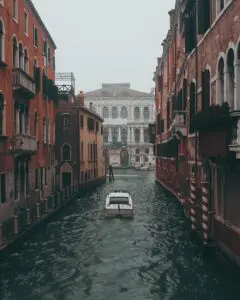
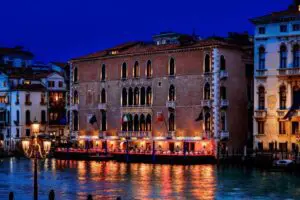
Venice’s day-trip crowds — the cruise passengers, the coach tours, the visitors squeezing the city into a single afternoon between other stops — overwhelmingly clear out by early evening. What’s left behind is a genuinely different city. The light over the Grand Canal turns a shade of gold I’ve never been able to fully describe to guests beforehand. The campi empty out enough that you can hear your own footsteps on the stone. Restaurants stop rushing table turnover. Residents reclaim their own neighborhoods.
This isn’t a subtle shift. Venice’s population within the historic center has dwindled to well under 50,000, while the number of tourist beds in the city has actually overtaken that figure — meaning that for a few hours each evening, once the day-trippers depart, the ratio of the city briefly tips back toward something resembling its own life rather than a stage set for visitors passing through. I’ve watched guests physically relax during this transition, often without realizing why.
The Access Fee Makes the Math Simple
There’s also a very practical argument for staying, one that’s become more relevant since Venice introduced its day-tripper access fee in 2024. In 2026, day visitors pay €5 to €10 to enter the historic center on roughly sixty designated peak dates between April and July, with the fee applying only between 8:30 a.m. and 4 p.m. Overnight guests are exempt from the fee itself, though they still need to register for a free QR code confirming that exemption.
What this means in practice: if you’re staying overnight anyway, you’re already paying the city’s separate lodging tax rather than the day-tripper fee, and you get unrestricted access to the historic center in the evening hours when the fee doesn’t apply to anyone at all. A day-tripper who leaves before dinner has paid for a narrower, more crowded slice of Venice than an overnight guest gets for free after 4 p.m.
Dinner Without the Rush
One of the more subtle rewards of staying is simply eating dinner properly. Restaurants that spend their lunch and early evening hours turning over tables for day-trippers on tight schedules settle into a different rhythm once that pressure lifts. A reservation becomes an invitation to linger rather than a fifty-minute obligation. I’ve had guests tell me, more than once, that the best meal of their entire Italy trip happened on the one night they’d originally debated skipping.
A Different Kind of Photograph
Photographers in particular have every reason to stay. The blue hour after sunset, when the sky still holds color but the streetlamps and window lights have come on, is when Venice photographs at its most cinematic — and it’s simply unavailable to anyone who’s left the city by early evening. Spots like the Ponte dell’Accademia or the Riva degli Schiavoni, crowded and difficult to photograph well at midday, become genuinely peaceful an hour after sunset.
The Morning After Matters Too
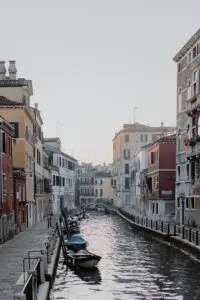
Staying one extra night doesn’t just buy you an evening — it buys you the following morning, before the next wave of day-trippers arrives. Venice before 8 a.m. is close to unrecognizable compared to its midday self: the erbaria and pescheria markets setting up near Rialto, a handful of locals walking dogs across empty campi, fog occasionally still sitting on the lagoon. Guests who’ve only ever seen Venice at its most crowded are often stunned by how different — how genuinely quiet — the same streets can be just a few hours earlier or later in the day.
Who Benefits Most From Staying an Extra Night
Almost everyone, honestly, but a few types of travelers see the clearest return: photographers chasing better light, food and wine travelers who want an unhurried dinner, couples looking for the romantic version of Venice rather than the crowded one, and anyone whose only prior experience of the city was a rushed cruise excursion and wants to understand what all the fuss is actually about.
Making the Extra Night Count
An extra night is only worth as much as what you do with it. I generally encourage guests to resist the urge to cram in one more museum and instead treat the evening as unstructured time — a bacaro crawl through Dorsoduro or Cannaregio, a slow walk with no destination, or simply a quiet dinner somewhere without a view of St. Mark’s Basilica competing for your attention. The version of Venice worth staying for isn’t found by doing more. It’s found by doing less, later in the day, when almost no one else is around to see it with you.
If you’re weighing whether to add a night to your Venice trip, or want help designing an evening that actually takes advantage of it, I’d be glad to help plan it. You can learn more about my private tours or get in touch to start planning.
Do overnight guests pay Venice’s day-tripper access fee?
No — overnight guests are exempt from the access fee itself, though they still need to register for a free QR code confirming the exemption on designated fee dates.
What time do Venice’s crowds typically thin out in the evening?
Most day-trip crowds, including cruise passengers and coach tours, clear out by early evening, generally after 5 p.m., leaving the city noticeably quieter for overnight guests.
Is one extra night in Venice really worth it?
For most travelers, yes — an extra night provides access to the city’s quieter evening and early-morning hours, better restaurant experiences, and photography light that simply isn’t available to day-trippers on a tight schedule.