ntroduction: You Know Venice. You Probably Don’t Know the Veneto.
Ask an American traveler what “Veneto” means, and most of the time you’ll get a blank stare, followed by, “isn’t that just… Venice?”
It’s a completely understandable mix-up, and I hear it from guests almost every week. But Venice is a city. The Veneto is a region, one of Italy’s twenty administrative regions, and Venice just happens to be its capital, the way New York City is the biggest city in New York State without being the whole state. The Veneto stretches from the Adriatic coast in the east to Lake Garda in the west, and from the flat farmland of the Po Valley in the south up into the jagged peaks of the Dolomites in the north. It’s home to roughly five million people, four of Italy’s most historically important cities, one of the country’s most famous lakes, a mountain range recognized by UNESCO as one of the most beautiful landscapes on Earth, and a wine region so distinctive that UNESCO gave an entire hillside a World Heritage listing just for how people have farmed it.
I’ve spent nearly thirty years guiding people, most of them Americans, through this part of Italy, and the single biggest missed opportunity I see, over and over, is travelers who fly into Venice, spend two or three days completely absorbed by the city (understandably), and then fly home without ever realizing there was an entire region right outside the door. It’s a bit like visiting San Francisco and never learning that Napa Valley, Yosemite, and Lake Tahoe are all within a few hours’ drive. You didn’t do anything wrong by staying in the city. You just didn’t know what else was there.
This guide is my attempt to fix that. I’m going to walk you through what the Veneto actually is: its geography, its history, its cities, its UNESCO World Heritage Sites, its food and wine, and its landscapes, written specifically for someone who has never set foot here and is trying to figure out, in plain English, why this region deserves more of your trip than just a Venice layover. By the end, I hope you’ll understand not just what’s here, but why I’ve spent my entire career showing it to people, and why I think it might be the most rewarding, least crowded, most underrated part of Italy for an American visiting for the first time.
Let’s start with the basics.
A Few Numbers That Put the Region in Perspective
Before we go further, it helps to have a rough sense of scale, because most Americans have no frame of reference for how big “a region” actually is in Italy. The Veneto covers about 18,400 square kilometers, roughly comparable in area to the state of New Jersey, but spread across a far more varied landscape: coastline, farmland, hills, and mountains, rather than a relatively uniform mid-Atlantic geography. It’s home to close to five million residents, more people than live in the entire state of Alabama, and it generates one of the largest regional economies in Italy, built on manufacturing, agriculture, and tourism in roughly equal measure.
Culturally and economically, the Veneto is not a sleepy rural backwater waiting to be discovered; it’s one of Italy’s wealthiest and most productive regions, home to global fashion and eyewear brands, a thriving wine export industry, and some of the country’s oldest universities. What it lacks, at least among American travelers, is name recognition beyond Venice itself. That gap between how significant this region actually is and how little most Americans know about it beyond one famous city is exactly what this guide is trying to close.
To put it in terms an American traveler might relate to more directly: imagine if visitors to New York City routinely had no idea that the Hudson Valley, the Catskills, and Long Island’s wine country all sat within easy reach, simply because “New York” in the popular imagination meant only Manhattan. That’s roughly the situation “Venice” occupies in most Americans’ mental map of Italy, and it’s a genuine shame, because the region surrounding it is every bit as worth exploring as the city itself.
Where Is the Veneto, Exactly?
The Veneto sits in northeastern Italy, tucked between the Adriatic Sea to the east and the Dolomite mountains to the north, bordered by the Alps and Austria above, Lombardy and Lake Garda to the west, and the Emilio-Romagna region to the south. If you picture Italy as a boot, the Veneto is roughly where the top of the boot’s shaft would be, on the inland, eastern side, not the famous Tuscan or Amalfi side most Americans picture when they think “Italy.”
Its capital is Venice, but the region includes six other provinces: Padua, Vicenza, Verona, Treviso, Rovigo, and Belluno, each centered on a city of its own, and each with a genuinely distinct character. Verona feels almost like a different country from Venice: dry, continental, closer in spirit to Lombardy. Belluno, tucked into the Dolomites, is alpine, quiet, and mountain-focused. Treviso is a smaller, calmer echo of Venice with its own canals and none of the crowds. This isn’t one homogenous “Veneto experience”; it’s a region with real internal variety, which is part of why it rewards more than a single day trip.
Geographically, the region breaks into three rough bands. In the south and east, along the coast and the Po Valley, the land is flat, agricultural, and lagoon-adjacent, this is Venice’s territory. In the middle, a band of gentle hills runs east to west, including the volcanic Euganean Hills near Padua and the steep, terraced Prosecco Hills near Treviso. And in the north, the land rises sharply into the Dolomites, part of the Alps, culminating in dramatic limestone peaks around towns like Cortina d’Ampezzo, which hosted the Winter Olympics in 1956 and will host them again in 2026.
For an American planning a trip, the practical takeaway is this: almost everything described in this guide sits within a two-hour radius of Venice, most of it within one hour, which means you can base yourself in Venice for your whole trip and still reach nearly all of it as day trips, or you can build a slower loop through the region and experience it properly, spending a night or two in each place rather than rushing back to Venice every evening.
Getting to the Veneto From the United States
Most Americans flying into the region land at Venice Marco Polo Airport (VCE), which has a growing number of direct flights from major U.S. hubs, though many travelers still connect through a larger European gateway like Frankfurt, Amsterdam, London, or Paris. A smaller but genuinely useful alternative is Treviso’s Antonio Canova Airport (TSF), about thirty minutes north of Venice, served primarily by European budget carriers but occasionally worth checking if your itinerary starts or ends in the Treviso or Prosecco Hills area, particularly for travelers arriving from other parts of Europe rather than flying directly from the United States.
If your trip includes a meaningful amount of time around Verona or Lake Garda, it’s also worth checking flights into Verona Villafranca Airport (VRN), which can sometimes work out to be a more convenient entry or exit point than Venice, particularly if you’re planning the westward loop through this guide (Vicenza, Verona, Garda) before finishing in Venice, or the reverse.
Once you’re in the region, the good news is that you don’t need to rent a car to experience a large share of it. Trenitalia and Italo run frequent, reliable train service connecting Venice, Padua, Vicenza, and Verona along a single main line, with journey times under ninety minutes between any two of them. A car, or a private driver, becomes genuinely useful once you want to explore Lake Garda’s shoreline, the Prosecco Hills, or the Euganean Hills in real depth, since the best parts of those areas sit outside the towns the trains actually reach. Many travelers I work with split the difference: they use trains for the Padua-Vicenza-Verona stretch, then arrange a private driver or guide specifically for the day or two spent in wine country or along the lake, getting the efficiency of rail travel where it works well and the flexibility of a car exactly where it’s actually needed.
A Very Short History of the Veneto (Just Enough to Make Everything Else Make Sense)
You don’t need a history degree to enjoy the Veneto, but a little context changes how you see everything here, so bear with me for a few paragraphs.
For over a thousand years, from the 7th century until Napoleon dissolved it in 1797, this entire region, and a great deal more territory beyond it, was controlled by the Republic of Venice, often called La Serenissima, “the Most Serene Republic.” This wasn’t a minor regional power. At its height, Venice controlled trade routes stretching across the Mediterranean and into the Middle East, and it governed its mainland territories, what’s now the rest of the Veneto region, as a rich, carefully administered hinterland that supplied the capital with food, wine, timber, soldiers, and tax revenue.
This matters because it explains why the Veneto feels connected rather than random. The defensive walls at Peschiera del Garda, the villas built for wealthy Venetian merchant families around Vicenza, the trade routes that carried wine down from the Prosecco hills, all of it was part of the same political and economic system, radiating outward from the lagoon. When Venice grew rich from maritime trade, that wealth built palaces on the Grand Canal and country villas in the countryside. When the Republic needed to defend its mainland border, it built fortresses like the one at Peschiera. Nothing here happened in isolation.
After Napoleon, control of the region passed through Austrian hands before the Veneto joined the newly unified Kingdom of Italy in 1866, one of the last regions to do so. That layered history, Venetian Republic, then Austrian rule, then unified Italy, is part of why cities like Verona and Vicenza have such visibly distinct architectural personalities even though they’re less than an hour apart: Roman foundations, medieval fortifications, Renaissance villas, and later Austrian-era touches, all stacked on top of each other.
Understanding this history isn’t just trivia. It’s the thread that ties every UNESCO site, every city, and every landscape in this guide back to the same source: a maritime republic that, for a thousand years, treated the entire Veneto as its own extended homeland.
It’s also worth knowing that Venice governed all of this not as a monarchy but as an oligarchic republic, elected officials, a complex system of checks on any single family’s power, and a genuine emphasis on institutional stability that let the Republic survive for over a millennium without a single successful foreign conquest until Napoleon finally ended it. That governing philosophy shaped how the mainland territories were administered too: less through brute military occupation and more through a mix of economic integration, shared infrastructure, and, when necessary, the kind of defensive fortifications you’ll see at Peschiera. Wealthy Venetian families were encouraged to invest their trading profits into agricultural land on the mainland, which is precisely why the countryside around Vicenza and Treviso is dotted with elegant villas rather than simple farmhouses: these were working agricultural estates built to also serve as elegant summer residences for Venice’s merchant aristocracy, a genuinely unusual combination of function and grandeur that Palladio’s architecture captured perfectly.
The Nine UNESCO World Heritage Sites of the Veneto
UNESCO doesn’t hand out World Heritage status lightly. A site has to demonstrate “outstanding universal value,” meaning it matters not just locally but to the story of human civilization as a whole. The Veneto has nine such sites, more than most entire countries, and I want to walk through each of them, because together they form the best possible outline of what makes this region worth exploring.
1. Venice and Its Lagoon (inscribed 1987)
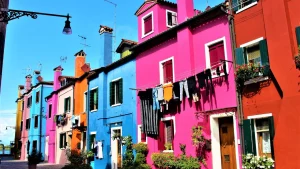
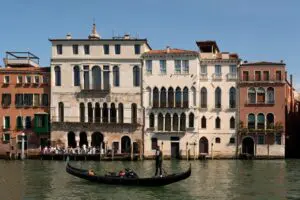
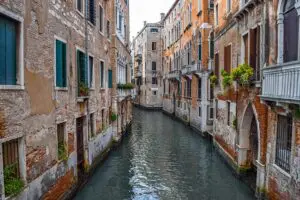
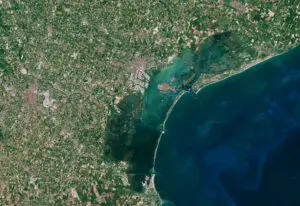
This is the one everyone already knows, and rightly so. But the UNESCO listing covers more than the city center; it protects the entire lagoon ecosystem, including Murano, Burano, Torcello, and the surrounding wetlands. Venice was built almost impossibly, on wooden pilings driven into mud, in a saltwater lagoon that its inhabitants spent centuries carefully managing to keep the city from either flooding or silting up entirely. It remains, to this day, one of the only cities on Earth with no cars, no roads, only water and footpaths, and it’s the starting point for understanding everything else in this guide. Most visitors never make it past the main tourist route between the train station, the Rialto, and St. Mark’s Square, which means they never see Torcello, the lagoon’s original power center before Venice itself existed, or the quieter northern lagoon where fishing traditions dating back centuries are still practiced today.
2. The City of Vicenza and the Palladian Villas (inscribed 1994, expanded 1996)
If you’ve ever admired a stately American building with columns, a triangular pediment, and a symmetrical facade, from a courthouse to a state capitol to Monticello or the White House itself, you’ve admired the legacy of Andrea Palladio, the 16th-century architect who did nearly all of his defining work in and around Vicenza. Forty-seven Palladian buildings across the Veneto are protected under this listing, including Vicenza’s Basilica Palladiana and the extraordinary Teatro Olimpico, the oldest surviving indoor theater in the world.
3. The Botanical Garden of Padua (inscribed 1997)
Founded in 1545, this is the oldest university botanical garden in the world still in its original location. It was established to grow medicinal plants for teaching purposes at the University of Padua, one of the oldest universities in Europe, and it remains active as both a research institution and a genuinely beautiful place to walk through.
4. The City of Verona (inscribed 2000)
Verona compresses two thousand years of continuous urban history into a walkable historic center, anchored by a first-century Roman amphitheater, the Arena, that still hosts opera performances today. It’s the most immediately recognizable Veneto city after Venice itself, thanks in large part to its association with Shakespeare’s Romeo and Juliet. What earned Verona its UNESCO listing, though, isn’t any single monument but the way the city layers Roman, medieval, and Renaissance elements on top of one another within essentially the same footprint, the original Roman street grid is still visible in the modern city plan, and the Scaliger dynasty’s medieval fortifications sit comfortably alongside later Venetian-era and Austrian-era additions, making Verona a genuinely rare, continuously inhabited record of two millennia of urban development.
5. The Dolomites (inscribed 2009)
A UNESCO natural site rather than a cultural one, the Dolomites are recognized for their extraordinary geology: pale limestone peaks, dramatic cliffs, and a landscape shaped by millions of years of erosion, tectonic movement, and glaciation. They stretch across the Veneto and neighboring Trentino-Alto Adige, and they offer a side of Italy most Americans never associate with the country: genuine alpine mountain scenery, world-class hiking in summer and skiing in winter. UNESCO’s own assessment describes them as among the most beautiful mountain landscapes anywhere in the world, and having guided guests through both the Alps and the American Rockies in conversation, I can say the comparison isn’t hyperbole; the scale and drama of these peaks genuinely rival anything in North America’s mountain ranges.
6. Prehistoric Pile-Dwelling Sites Around the Alps (inscribed 2011)
A lesser-known, multi-country listing protecting the remains of Bronze and Iron Age stilt settlements built over lakes and wetlands across the Alpine region. Several sites fall within the Veneto, including locations near the Euganean Hills, quiet reminders that people have been settling and adapting to this landscape for thousands of years before the Venetian Republic ever existed.
7. The Venetian Works of Defence Between the 16th and 17th Centuries (inscribed 2017)
This multi-country listing, shared with Croatia and Montenegro, protects the defensive fortification systems the Venetian Republic built to defend its vast territories. In the Veneto, the star-shaped fortress town of Peschiera del Garda is the standout example: remarkably intact walls designed by Renaissance military engineers, still fully walkable today.
8. The Prosecco Hills of Conegliano and Valdobbiadene (inscribed 2019)
Italy’s 55th UNESCO site, and one of the most unusual: an entire wine-growing landscape recognized as a “cultural landscape” for the way centuries of hand labor shaped steep, narrow hillside ridges into terraced vineyards too steep for machinery. Growers still cultivate grassy terraces called ciglioni largely by hand today, exactly as their ancestors did, which is precisely the ongoing, living relationship between people and land that earned the site its UNESCO recognition rather than a preserved historical relic frozen in time. It’s the source of authentic Prosecco Superiore, and it’s one of the most beautiful drives in the entire region, a landscape of narrow, winding roads through vineyards, medieval villages, and small family-run wineries.
9. Padua’s Fourteenth-Century Fresco Cycles (inscribed 2021)
The most recent addition to the Veneto’s UNESCO list, this inscription protects eight fresco cycles across Padua, most famously the Scrovegni Chapel, painted by Giotto between 1303 and 1305. Art historians consider these frescoes a genuine turning point in the development of Western painting, the moment figures on a wall started to look like real people with real emotions rather than flat medieval symbols.
Nine sites, and I haven’t even started on the cities themselves, the food, or the wine. That’s the point I want you to sit with: this is an extraordinarily dense concentration of world-recognized heritage, packed into a region small enough to explore without ever needing an internal flight.
The Cities of the Veneto, Beyond Venice
Let me introduce you to the places most Americans have never heard of, and a few they’ve heard of without realizing they’re this close to Venice.
Verona: The City of Shakespeare (and Two Thousand Years of Real History)
Verona is, for most Americans, a name attached to a play they read in high school. Romeo and Juliet were never real people, and “Juliet’s balcony” in the city center is a 20th-century tourist invention, not a historical site, I tell every guest this directly. But the fictional association actually undersells the city, because the real Verona is more interesting than the legend.
The Arena di Verona, a first-century Roman amphitheater nearly as large as the Colosseum, still hosts opera performances on summer nights, an experience that genuinely rivals anything else in Italy. The medieval Piazza delle Erbe sits directly on top of the original Roman forum, and the Scaliger family’s fortified bridges and tombs tell the story of the powerful dynasty that ruled the city in the Middle Ages. Verona is compact, walkable, visually stunning, and, crucially, it doesn’t feel like a museum. People actually live and work in the historic center, which gives it an energy that some more purely touristic Italian cities lack.
Beyond the headline sights, Verona rewards a slower pace. Climb up to Castel San Pietro, either on foot or via the small funicular, for the best overview of the city’s dramatic bend in the Adige River, the same natural feature that shaped where the Romans originally chose to settle. Wander into the Veronetta neighborhood across the river, less polished and more residential, for a sense of daily Veronese life away from the main tourist path. And don’t skip the food: Verona sits at the doorstep of the Valpolicella wine region, so a proper Veronese meal typically means a glass of Amarone or Valpolicella alongside dishes like pastissada de caval (a slow-braised horse meat stew, a genuine local specialty that surprises most American visitors) or risotto all’Amarone, rice cooked directly in the region’s signature red wine.
Vicenza: The City Palladio Built
I mentioned Palladio’s influence on American architecture already, but Vicenza itself deserves a proper introduction. This is a mid-sized, prosperous, elegant city that most American itineraries skip entirely, which is honestly one of the greatest oversights in Italian travel planning that I encounter.
Walking through Vicenza’s historic center is walking through the physical source code of a huge share of Western civic and residential architecture. The Basilica Palladiana anchors the main square with its distinctive double-tiered loggia. The Teatro Olimpico, built in the 1580s, remains the oldest surviving indoor theater in the world, complete with Palladio’s original stage set, a permanent trompe-l’oeil cityscape creating the illusion of streets receding into the distance. And just outside the city, Villa Almerico Capra, known as La Rotonda, is the building that essentially became the template Palladio’s followers copied for the next four centuries, all the way to Thomas Jefferson’s Monticello.
Vicenza is also, quietly, one of Italy’s wealthiest cities, historically built on goldsmithing and, more recently, on manufacturing and fashion. That prosperity shows up in small, pleasant ways: the city center is immaculately maintained, the aperitivo culture along Corso Palladio in the early evening is lively without being touristy, and the overall pace feels closer to how prosperous mid-sized Italian cities actually function day to day, rather than the more performance-oriented tourist zones of Venice or Florence. If you want to understand what Italian daily life looks like outside the postcard version, Vicenza is one of the best places in the entire region to spend an afternoon.
Padua: A University City With Nearly 800 Years of History
Padua is home to one of the oldest universities in the world, founded in 1222, and it still feels like a university town today: energetic, youthful, filled with cafés and bicycles, a genuinely different atmosphere from the more purely historic centers of Verona or Vicenza. Galileo Galilei taught here for eighteen years. The city holds two of the Veneto’s nine UNESCO sites: the Botanical Garden, the oldest of its kind still in its original location, and the fresco cycles including Giotto’s Scrovegni Chapel, one of the most important single rooms in the history of Western art.
Padua is also, practically speaking, one of the easiest cities in this entire guide to visit, sitting roughly thirty-five minutes from Venice by train, which makes it an ideal introduction for travelers testing out their first day trip beyond the lagoon. Beyond the university and the frescoes, don’t skip Prato della Valle, one of the largest public squares in Europe, an elliptical green space ringed by statues and a small canal, or the Basilica of Saint Anthony, an enormous pilgrimage church that draws visitors from across the Catholic world and gives the city a spiritual gravity that’s easy to underestimate from the outside. A word of practical advice: the Scrovegni Chapel limits visitors to short, timed entry slots to protect Giotto’s frescoes from humidity and light damage, so book your ticket in advance rather than showing up and hoping to walk in.
Treviso: Venice’s Quieter, Calmer Cousin
Treviso rarely makes it onto an American’s radar before their trip, and that’s exactly why I love sending people there. It’s a smaller city, threaded with its own canals (locals sometimes call it “Little Venice,” though it has its own distinct character rather than being a copy), with porticoed medieval streets, a lively covered fish market, and none of the crowds that can occasionally wear down a Venice visit in peak season.
Treviso is also the gateway to the Prosecco Hills, sitting closer to Conegliano and Valdobbiadene than Venice does, which makes it a genuinely excellent base for anyone planning to spend real time in wine country rather than treating it as a single rushed afternoon.
Treviso’s Pescheria, a small island in the middle of one of its canals, has hosted a fish market for centuries and remains genuinely functional today, not a recreated tourist attraction but a working market where locals actually shop. Walk the porticoed streets in the early evening, when the aperitivo crowd spills out of wine bars along the water, and you’ll get a version of Venetian atmosphere, canals, arched bridges, waterside cafés, at a fraction of the pace and crowd density. It’s also worth knowing that spritz, the orange, bubbly aperitivo now recognizable across American cocktail menus, has deep roots in this part of the Veneto, and a Treviso-made Aperol or Select spritz, sipped canal-side, is about as close as you’ll get to drinking the region’s history in a single glass.
Belluno and the Dolomite Foothills
Further north, Belluno marks the transition from the flat Veneto plain into full alpine terrain, and it’s the gateway to towns like Cortina d’Ampezzo, one of Italy’s most famous mountain resorts, set to host events for the 2026 Winter Olympics. This isn’t a day-trip destination from Venice; it’s a genuinely different kind of Italian vacation, mountain scenery, hiking, skiing, alpine cuisine, and it’s worth knowing about even if it doesn’t fit into a shorter Venice-centered trip, because it shows just how much variety exists within a single Italian region.
The Dolomites themselves earned their UNESCO natural-site status for a reason worth understanding: the pale, almost luminous limestone that gives the range its name (locals sometimes call them the Monti Pallidi, the “pale mountains”) formed from ancient coral reefs beneath a tropical sea over 200 million years ago, later thrust upward and sculpted by glaciers into the jagged, dramatic peaks visible today. The scenery genuinely doesn’t resemble the softer, rolling hills most Americans associate with rural Italy; it’s closer in character to the American Rockies or the Swiss Alps, complete with alpine meadows, mountain refuges (rifugi) serving hearty meals to hikers, and a food culture influenced by the region’s long history under Austrian rule, think hearty dumplings, cured meats, and mountain cheeses alongside the pasta and risotto found further south in the region. If your trip has room for it, even a single overnight in the Dolomites, whether in Cortina or a smaller mountain town, adds a dimension to an Italy trip that almost no first-time visitor expects to find.
Lake Garda and the Landscape Beyond the Cities
Cities aren’t the whole story. Lake Garda, Italy’s largest lake, sits at the western edge of the Veneto region (its shoreline is actually shared among three regions: Veneto, Lombardy, and Trentino-Alto Adige), and it offers a completely different register of scenery from anything in Venice or the historic town centers.
The lake’s personality shifts dramatically as you move along its shore. The northern end, near Riva del Garda, is mountainous and dramatic, with cliffs plunging almost directly into the water. The southern end, near Sirmione and Peschiera, is milder, warmer, and dotted with olive groves and even lemon trees, an almost Mediterranean climate this far north thanks to the lake’s moderating effect. Peschiera del Garda, on the southeastern shore, is where the Venetian Republic built one of its most sophisticated defensive structures, a star-shaped fortress town with walls still largely intact today, part of the UNESCO-listed Venetian Works of Defence.
The best way to understand Lake Garda is genuinely from the water. A boat trip along the shore reveals how much the landscape changes within just an hour of travel, something you simply can’t appreciate from a single town’s waterfront.
A handful of towns are worth knowing by name if Lake Garda makes it onto your itinerary. Sirmione, on a narrow peninsula jutting into the southern lake, combines Roman ruins (the sprawling villa complex known as the Grotte di Catullo), a medieval castle, and natural thermal springs, though its popularity means it’s genuinely crowded in summer. Bardolino, on the eastern shore, gives its name to a light, easy-drinking red wine and offers a calmer, more residential lakeside atmosphere. Malcesine, further north on the same shore, sits directly beneath Monte Baldo, reachable by a rotating cable car that offers sweeping views back down over the lake, popular with hikers and paragliders alike. And Peschiera itself, beyond its UNESCO-listed fortress walls, functions as a genuinely pleasant small town to walk through, with canals running through the historic center connecting the lake to the Mincio River.
Lake activities extend well beyond boat trips and sightseeing: windsurfing and sailing are popular on the lake’s northern end, where consistent afternoon winds funnel down between the surrounding mountains, and the surrounding hills support both vineyards and, further south, genuine olive groves, producing a regional olive oil that surprises visitors who assume all Italian olive oil comes from further south in the country.
The Prosecco Hills and the Euganean Hills: Two Very Different Kinds of Hill Country
Between Venice and the mountains, the Veneto’s landscape rises into two distinct hill regions, and I think Americans planning a trip benefit from understanding the difference.
The Prosecco Hills, around Conegliano and Valdobbiadene in the province of Treviso, are steep, narrow ridges, geologists call the formation “hogback”, worked by hand for centuries because the slopes are too steep for tractors or other machinery. Grape growers built grassy terraces called ciglioni that follow the natural contours of the land, and the resulting landscape earned UNESCO World Heritage status in 2019 specifically because of how visibly human labor and natural terrain combined over generations. This is the source of true Prosecco Superiore, a meaningfully different product from the mass-market Prosecco most Americans have encountered at home, and driving or riding a scooter through these hills, past small family wineries and medieval villages, is one of the most purely pleasant things you can do in the entire region.
The Euganean Hills, south of Padua, are geologically unrelated: a cluster of volcanic cones rising unexpectedly out of the flat Po Valley plain. They’re less famous than the Prosecco Hills among American travelers, but they hold thermal spa towns dating back to Roman times (Abano Terme and Montegrotto Terme remain popular wellness destinations today), the medieval hill village of Arquà Petrarca, where the poet Petrarch spent his final years, and vineyards producing wines from indigenous grape varieties you won’t find represented on a typical American wine list.
What makes the Euganean Hills worth a special mention is how differently they’re experienced compared to almost everywhere else in this guide. This is a place built for doing less, not more: a soak in a thermal spa, a slow lunch at a hillside trattoria, a short walk through Arquà Petrarca’s stone lanes, rather than a checklist of monuments to work through. For American travelers whose itineraries often tip toward over-scheduling, I sometimes recommend the Euganean Hills specifically as a deliberate pause, a day built around doing genuinely little, which after a fast-paced week bouncing between Venice, Verona, and Vicenza can be exactly the right note to end a trip on.
The Food and Wine of the Veneto: What Makes This Region’s Table Different
If Tuscany means olive oil, bread, and Chianti to most Americans, the Veneto has its own, distinct culinary identity, one built on rice, polenta, seafood from the lagoon and the Adriatic, and a genuinely different set of wines than the ones that dominate American Italian-restaurant menus.
Wine is where the Veneto quietly punches above its weight on the world stage. Prosecco, made primarily in the Veneto (with a smaller neighboring zone in Friuli), is Italy’s most exported sparkling wine, and the version from the UNESCO-listed hills around Conegliano and Valdobbiadene represents its highest expression. Further west, around Verona, the Valpolicella wine region produces Amarone, a rich, powerful red made from partially dried grapes, widely considered one of Italy’s greatest wines, along with the lighter, everyday Valpolicella and the crisp white Soave, made near the town of the same name just east of Verona. Few American travelers realize that some of the wine already sitting on their local shelves back home was very likely grown within an hour of the city they just flew into.
It’s worth understanding a bit more about how Amarone gets made, because the process itself is part of what makes it special, and it’s a story most Americans have never heard even if they’ve had a glass. After harvest, the grapes, mostly Corvina and Rondinella varieties, are laid out on bamboo or plastic racks in ventilated lofts for three to four months, a drying process called appassimento, which concentrates their sugars and flavors before fermentation even begins. The result is a wine with far more body and alcohol than a typical red, often 15% or higher, and a flavor profile closer to dried cherries and raisins than fresh fruit. Many of the same producers who make Amarone also make Recioto della Valpolicella, a sweet dessert version of the same drying technique, and Ripasso, a clever middle step where regular Valpolicella wine is “re-passed” over the leftover Amarone grape skins to pick up extra depth and body. If you only try one Veneto wine beyond Prosecco, Amarone is the one worth seeking out, ideally at a Valpolicella winery near Verona rather than from an export bottle back home.
Food here leans on ingredients shaped by geography: rice from the paddies of the Po Valley shows up in risi e bisi, a springtime risotto with fresh peas, and countless other risotto variations built around seasonal vegetables or seafood. Polenta, cornmeal porridge, appears constantly, often paired with baccalà mantecato, a creamy whipped salt-cod spread that’s a genuine Venetian specialty rather than a tourist invention. Sarde in saor, sweet-and-sour marinated sardines, reflects Venice’s centuries of trade with the eastern Mediterranean, since the preservation technique originally kept fish edible on long sea voyages. Inland, around Treviso, radicchio di Treviso, a bitter red chicory, shows up grilled, in risotto, and in salads, a genuinely regional ingredient that rarely appears on American menus outside of specialty Italian restaurants.
And then there’s cicchetti, Venice’s answer to tapas: small plates served at neighborhood bacari (wine bars) throughout the city, meant to be eaten standing up with a glass of local wine, a completely different, far more casual dining culture than the sit-down, multi-course dinner most Americans associate with “eating in Italy.” I always tell first-time guests that an evening of cicchetti-hopping between two or three bacari teaches you more about how Venetians actually eat than any single restaurant meal will.
A few more dishes worth knowing before you sit down at a Veneto table: bigoli in salsa, a thick, hearty pasta in a slow-cooked onion and anchovy sauce, a genuine Venetian comfort food that rarely makes it onto tourist-menu translations; fegato alla veneziana, calf’s liver sautéed with onions, a dish that sounds unassuming and consistently surprises American guests who try it; and, on the sweeter side, tiramisu, which, depending on who you ask in Treviso, actually originated in that city rather than anywhere else in Italy, a genuinely contested but locally proud claim. Portion sizes and course structure also differ from what many Americans expect: a proper Veneto meal often moves through an antipasto (starter), a primo (pasta or risotto), a secondo (meat or fish), and only sometimes a dolce (dessert), and it’s entirely normal, even expected, to order just one or two of those courses rather than working through the whole sequence at every meal.
Why Explore the Veneto Beyond Venice? The Honest Case
I want to make the case directly, because I think it matters more than another list of attractions.
You’ll understand Venice better. The Venetian Republic’s wealth, power, and culture didn’t exist in isolation; it was built on trade routes, agricultural territory, and defensive infrastructure that extended across the entire region. Seeing Peschiera’s fortress walls, or a Palladian villa built for a wealthy Venetian merchant family, or the hillside vineyards that supplied the capital with wine, fills in context that makes the city itself make more sense.
You’ll avoid the crowds without sacrificing quality. Venice, wonderful as it is, gets crowded, particularly around St. Mark’s Square and the Rialto Bridge in peak season. Vicenza, Padua, the Prosecco Hills, and the Euganean Hills offer world-class experiences with a fraction of the visitors, which changes the texture of a trip in a way that’s hard to appreciate until you’ve experienced both.
You’ll get more variety in less time than almost anywhere else in Italy. Within roughly two hours of Venice, you have canals, Roman amphitheaters, Renaissance villas, Alpine mountains, a major lake, volcanic thermal hills, and a UNESCO-protected wine landscape. Very few regions in Italy, or honestly anywhere in Europe, pack this much genuine diversity into such a compact, easily connected area.
You’ll come home with a completely different story than every other American who “did Venice.” Almost everyone who visits Italy sees Venice, or Rome, or Florence. Far fewer come home having eaten cicchetti in Treviso, ridden through the Prosecco Hills, walked Peschiera’s fortress walls, or stood in front of La Rotonda. It’s not about being contrarian for its own sake; it’s that this region genuinely holds some of Italy’s best experiences, and most visitors simply never learn they’re there.
Your dollar goes further, too. Hotel rates, restaurant prices, and tour costs in Verona, Vicenza, Padua, and the Prosecco Hills are consistently lower than comparable experiences inside Venice itself, where scarce land and constant demand keep prices elevated year-round. A week that splits time between Venice and the surrounding region often ends up more affordable overall than a week spent entirely inside the city, while delivering considerably more variety.
A Sample Seven-Day Veneto Itinerary
To make all of this concrete, here’s a version of the itinerary I most often build for American guests who have a week to dedicate to Venice and the wider region, rather than just the city alone.
Days 1–3: Venice. Give the city itself proper time before heading anywhere else. Explore the main sights, but also get lost deliberately in neighborhoods like Cannaregio and Dorsoduro, take a lagoon boat trip out to Murano, Burano, and Torcello, and spend at least one evening doing a cicchetti crawl through a few neighborhood bacari.
Day 4: Padua. A straightforward morning train (about 35 minutes) gets you to Padua for a half or full day: the Scrovegni Chapel, the Botanical Garden, and a wander through Prato della Valle. Return to Venice in the evening, or continue on toward Vicenza if you’re ready to change base.
Day 5: Vicenza. Another short train ride (about an hour from Venice, or roughly 20 minutes from Padua) brings you to Palladio’s city: the Basilica Palladiana, the Teatro Olimpico, and, if you have a car or a guide for the afternoon, a stop at La Rotonda just outside town.
Day 6: Verona and Lake Garda. This is the day to rent a car or arrange a driver, since combining Verona’s historic center with even a brief stop at Lake Garda works far better without depending on train connections. Spend the morning in Verona around the Arena and Piazza delle Erbe, then head west to Peschiera del Garda for an afternoon walking the fortress walls and, if time allows, a short boat trip on the lake itself. Overnight near the lake or back in Verona.
Day 7: The Prosecco Hills, on the way back toward Venice. If your route allows it, loop back through Treviso and up into the hills around Conegliano and Valdobbiadene for a final morning or afternoon among the vineyards before returning to Venice for your flight home, or for one last night in the city that started the whole trip.
This is obviously just one version, and I adjust it constantly based on a guest’s specific interests, whether that’s leaning harder into wine, architecture, or simply slowing the pace down further. But it illustrates the core point of this entire guide: a full, varied, genuinely memorable trip through the Veneto beyond Venice is entirely achievable in a single week, without exhausting yourself in transit.
Common Misconceptions Americans Have About the Veneto
A few misunderstandings come up often enough with first-time guests that I think they’re worth addressing directly.
“It’s all just an extension of Venice.” As I hope this entire guide has made clear, it isn’t. Verona’s dry, continental character, Vicenza’s understated prosperity, Padua’s university energy, and the Dolomites’ alpine drama are all genuinely distinct from lagoon life, not variations on a theme.
“You need a car for everything.” Not true. Padua, Vicenza, and Verona are all easily reached by train with no car required. A car (or a driver) becomes useful specifically for Lake Garda’s shoreline, the Prosecco Hills, and the Euganean Hills, but you can absolutely build a rewarding week-long trip around train travel alone if you prefer not to drive in Italy.
“It’s all crowded like Venice in July.” Venice’s crowding is genuinely specific to Venice, driven by its status as a singular, must-see global destination and by its physically constrained streets. Verona, Vicenza, Padua, and especially the Prosecco and Euganean Hills see a small fraction of that visitor density, even in peak season, which is a large part of why I recommend them so consistently.
“Prosecco is just cheap sparkling wine.” The Prosecco most Americans know from grocery store shelves is a mass-market product from the broader, larger DOC zone. The Prosecco from the UNESCO-listed hills around Conegliano and Valdobbiadene, particularly wines labeled DOCG or Rive, is a meaningfully different, more serious product, made in far smaller quantities on steep, hand-worked terrain. Tasting it at the source changes most people’s opinion of the category entirely.
Practical Planning: How to Actually See the Veneto
Here’s the honest, practical framework I give guests who are trying to figure out how much of this to include in a real trip.
If you have 2–3 extra days beyond Venice: Pick one full day for Verona (easily reached by train, roughly an hour to ninety minutes), and one half-day for Padua or Vicenza, both under an hour away and easy on public transport. This gives you a genuine taste of the region without overcomplicating your itinerary.
If you have 4–6 extra days: Add an overnight in the Prosecco Hills or around Lake Garda, ideally both if your schedule allows. This is the sweet spot for experiencing the region properly rather than skimming it: enough time to actually slow down in wine country or lakeside towns rather than treating them as rushed day trips.
If you have a full week or more beyond Venice: Consider the full loop: Padua, Vicenza, Verona, Lake Garda and Peschiera, then back through the Prosecco Hills before returning to Venice. This is genuinely doable at a relaxed, non-exhausting pace, and it’s the itinerary I build most often for guests who’ve already experienced Venice on a previous trip and are ready to see everything around it.
Getting around: Padua, Vicenza, and Verona are all easily reached from Venice by train, with frequent service and journey times under ninety minutes. Lake Garda’s Peschiera has its own train station too. The Prosecco Hills and the Euganean Hills, however, are genuinely difficult to explore well without a car, a scooter, or a private driver, since their best villages, viewpoints, and wineries sit outside the towns train lines actually serve.
A few practical driving notes for Americans considering a rental car: Italy’s historic city centers, including Verona’s and Vicenza’s, are governed by restricted traffic zones known as ZTL (Zona a Traffico Limitato), monitored by cameras that issue automatic fines to unauthorized vehicles, so plan to park outside the historic core and walk in rather than attempting to drive directly to your hotel door. Italian regional trains, by contrast, are inexpensive, reliable, and require no advance booking for short hops between the main cities, making them the lower-stress option for the core Padua-Vicenza-Verona leg of any itinerary, with a car reserved specifically for the days you’re headed into wine country or along the lake.
When to go: Late April through early June, and mid-September through mid-October, are the best windows for this entire region: comfortable temperatures, manageable crowds outside Venice itself, and full access to everything from villa gardens to hillside wineries. Summer brings Verona’s outdoor opera season, worth planning around if that appeals to you, but also heat and higher prices, especially around Lake Garda. Winter is quiet almost everywhere except the Dolomites, which come alive for skiing.
A Region, Not Just a City
If there’s one thing I hope you take from this guide, it’s that “Venice” and “the Veneto” are not the same word for the same place, even though most travel planning treats them that way. Venice is the extraordinary, singular jewel at the eastern edge of a region that spent a thousand years building, defending, cultivating, and shaping the land around it, and that legacy is still fully visible today, in Palladio’s villas, in Peschiera’s fortress walls, in the terraced vineyards of the Prosecco Hills, in the frescoes on a chapel wall in Padua, in the opera echoing through a two-thousand-year-old amphitheater in Verona.
You don’t need to choose between Venice and the rest of the region. You need time, a workable plan, and, ideally, someone who already knows the roads, the train schedules, and the villa opening hours to help you use that time well. That’s been my job for nearly thirty years, and I genuinely believe the Veneto beyond Venice is one of the best-kept secrets left in Italian travel, not because it’s unknown to Italians or Europeans, who visit constantly, but because so few Americans ever learn it’s there.
Nine UNESCO sites. Four remarkable cities beyond Venice itself. A lake, a mountain range, and two entirely different kinds of hill country. A food and wine culture that most American travelers have barely scratched the surface of. All of it sitting quietly around one of the most famous cities in the world, waiting for travelers to look past the postcard and notice everything else that’s there.
Now you know. The rest is just deciding how many days you can spare.
Frequently Asked Questions
Is the Veneto the same thing as Venice?
No. Venice is a city, and it’s the capital of the Veneto, a much larger Italian region that also includes Verona, Vicenza, Padua, Treviso, Lake Garda, the Dolomites, and the Prosecco and Euganean Hills. Visiting Venice alone means seeing only a small piece of the region.
How many UNESCO World Heritage Sites are in the Veneto?
Nine: Venice and its Lagoon, the City of Vicenza and the Palladian Villas, the Botanical Garden of Padua, the City of Verona, the Dolomites, the Prehistoric Pile-Dwelling Sites around the Alps, the Venetian Works of Defence (including Peschiera del Garda), the Prosecco Hills of Conegliano and Valdobbiadene, and Padua’s 14th-Century Fresco Cycles.
How much time should I plan for the Veneto beyond Venice?
Even two to three extra days beyond a Venice stay is enough to add real depth to a trip, typically a day in Verona and a half-day in Padua or Vicenza. A full week allows a relaxed loop through all of the region’s main highlights: the cities, Lake Garda, and the Prosecco Hills, without feeling rushed. And if you have the flexibility for ten days or more, adding an overnight or two up in the Dolomites rounds out the picture entirely, showing you a side of the Veneto, genuine alpine mountains, that has nothing in common with the lagoon you started your trip in, and proving just how much variety a single Italian region can actually hold.