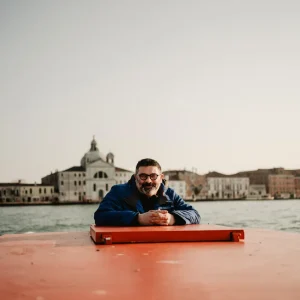
By Igor Scomparin, licensed Venice guide since 1997.
The Gallerie dell’Accademia are the best place to understand the evolution of Venetian painting, from Giovanni Bellini to Titian, Tintoretto, Veronese, and Carpaccio. This October guide explains the masterpieces worth slowing down for, how to read their stories, and how to combine the museum with a rewarding walk through Dorsoduro.
Why the Accademia belongs on a Venice itinerary
The Gallerie dell’Accademia are among the essential museums for understanding Venice because they preserve a concentrated history of painting from the city’s artistic tradition. This is not merely a collection of beautiful pictures. It is a record of how a maritime republic represented faith, civic identity, wealth, and daily life over several centuries. For travelers who have already walked through St. Mark’s Square or admired the Grand Canal, the museum supplies a missing visual vocabulary. After looking at its paintings, architectural details across Venice often begin to make more sense.
The most useful way to approach the galleries is not to rush from one famous name to the next. Instead, look for connections: how artists represented light on fabric, how a religious scene could incorporate a recognizably Venetian setting, and how large canvases helped institutions project their values. October can be a particularly appealing time to spend several hours indoors, but visitor numbers and opening arrangements must always be checked before arrival.
A museum born from an academy
The museum’s history is closely connected to Venice’s Accademia di Belle Arti, founded in the eighteenth century. As the institutions evolved, works associated with Venetian artistic education and with the transformations of the city after the fall of the Republic came together in a major public collection. This institutional history explains why the galleries offer both a survey of artistic achievement and a record of changing attitudes toward preservation.
A visitor does not need to memorize administrative dates to appreciate that background. It is enough to recognize that museums are not timeless containers. Their collections grow through decisions made by governments, religious institutions, scholars, and conservators. The Accademia’s rooms reflect that process. They gather works once experienced in churches, confraternity buildings, or other civic settings, and present them in a new environment devoted to study and public access.
The building is part of the experience
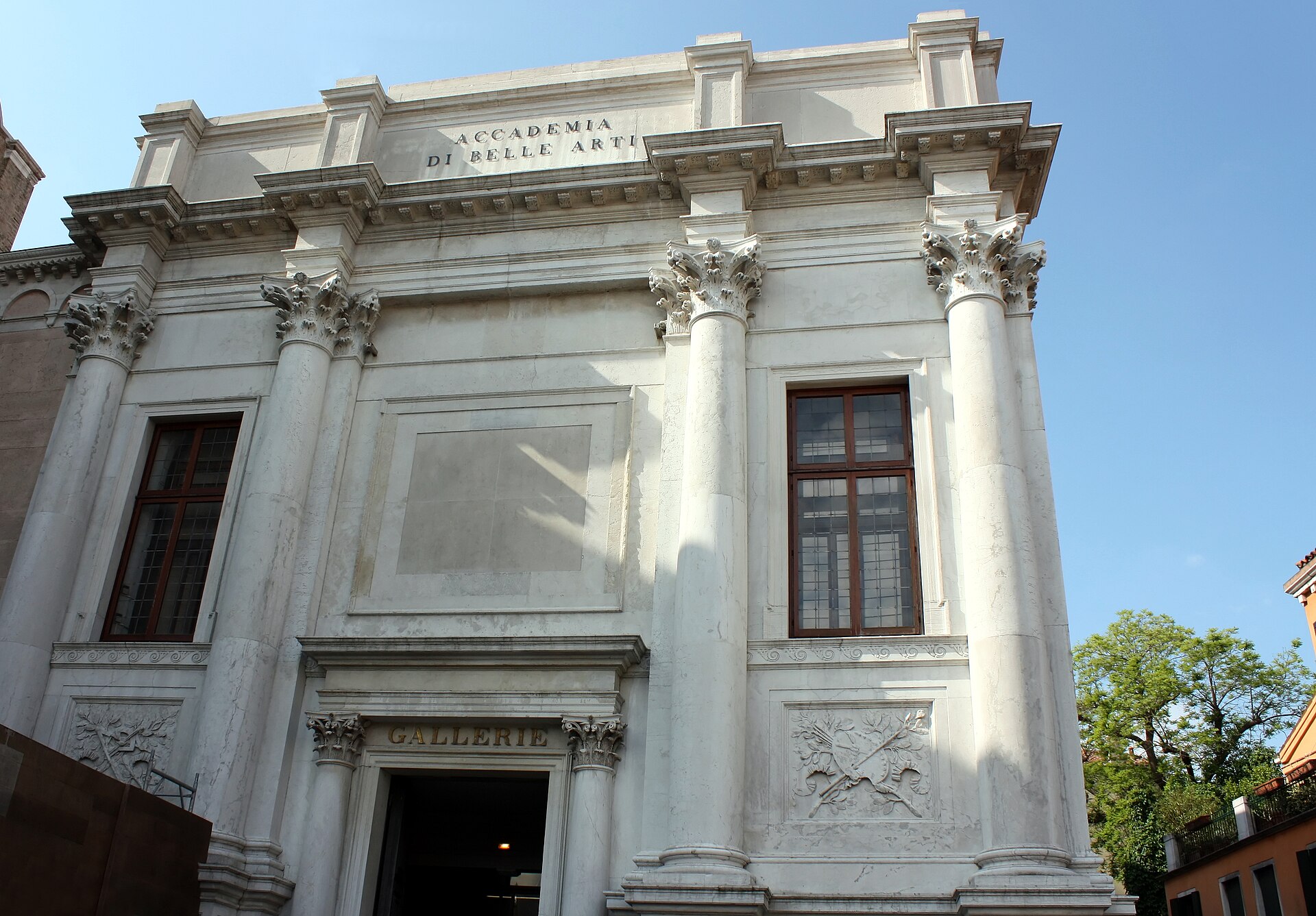
The museum occupies a historic complex near the Accademia Bridge, including the former church and monastery of Santa Maria della Carità. The architecture is not an incidental shell. Its scale, historic surfaces, and changing gallery spaces affect how paintings are encountered. A large altarpiece can feel quite different in a museum from the devotional environment for which it was originally made.
Before concentrating on individual works, take a moment to notice the rooms themselves. Consider ceiling height, the distance between paintings, and the way natural or artificial light is managed. Museum design shapes interpretation. Some works are best seen from across a room, where their composition becomes clear; others reward close attention to small gestures or the handling of paint. Allow the architecture to help determine your pace.
Venetian painting and the city of water
Venetian painting is frequently associated with color and atmospheric light, but those words can become empty clichés if they are not connected to actual observation. Venice’s relationship with reflected light, humid air, and changing surfaces offers a useful way to think about how artists organized their images. Painters developed distinctive ways of using color to establish mood, volume, and relationships among figures.
It would be simplistic to claim that every Venetian painting looks a certain way because the city has canals. Artistic choices also reflect training, patronage, materials, and exchanges with other regions. Still, a day spent walking beside the lagoon can sharpen your sensitivity to the paintings. Notice how light changes a stone facade outdoors, then look for the different ways artists suggest illumination on skin, silk, clouds, or architecture.
Begin with the questions, not the masterpieces
Many visitors arrive carrying a list of names: Bellini, Giorgione, Titian, Tintoretto, and Veronese. These are important artists, but a checklist can flatten the experience. A more revealing first question is what the painting was made to do. Was it intended for a church altar, a public hall, a private residence, or a confraternity? Its original function can explain its scale, imagery, and emotional tone.
Next ask who was expected to see it. A work designed for a devotional setting may guide the viewer toward prayer, while a painting made for an institutional setting may emphasize civic values or collective identity. These functions are not mutually exclusive. Venetian patrons often combined religious, social, and political aims. Thinking about purpose before style makes the collection feel connected to real lives rather than isolated from history.
Giovanni Bellini and the art of attention
Giovanni Bellini occupies a central place in the history of Venetian Renaissance painting. His work is celebrated for its emotional restraint, luminous color, and thoughtful relationships between figures and landscape. Rather than searching only for dramatic gestures, notice the quieter decisions: the inclination of a head, the spacing between figures, or the way a background creates a sense of stillness.
Bellini’s paintings can teach visitors to slow down. A composition that seems simple at first may reveal careful balances between human presence and surrounding space. Look for the transitions between shadow and light and for the emotional effect of color. You do not need to identify every saint immediately. Begin with the visual relationships, then use the label to understand the subject and historical context.
The San Giobbe Altarpiece
Bellini’s San Giobbe Altarpiece is one of the museum’s great works. Originally created for the church of San Giobbe, it presents sacred figures within an architectural setting that seems to extend beyond the painted surface. Its spatial organization and rich color demonstrate how an altarpiece could transform the viewer’s experience of a religious interior.
Stand far enough away to see the complete composition. Then approach to study the figures, surfaces, and illusionistic architecture. Think about how the painting would have related to its original church setting and how the museum changes that relationship. This is a useful example of why a masterpiece is more than an image reproduced in a guidebook: its scale and physical presence are essential parts of its meaning.
Giorgione and the mystery of interpretation
Giorgione’s small surviving body of work has inspired centuries of discussion. His painting The Tempest, housed at the Accademia, is famous partly because its meaning remains debated. The figures, landscape, and approaching storm resist a single universally accepted explanation. That uncertainty is not a flaw to be solved as quickly as possible.
Spend time describing what you can actually see before reading competing interpretations. Notice the relationship between the human figures and the landscape, the charged atmosphere, and the role of architecture. What seems calm, and what seems unsettled? The Tempest demonstrates that art history is not always a process of uncovering one hidden answer. Sometimes the richness of a work lies in the questions it continues to generate.
How to look at The Tempest
Start with the painting’s overall atmosphere. The sky suggests changing weather, while the landscape contains signs of human habitation. Figures occupy the scene without explaining their relationship to one another. The viewer is left to connect elements that may or may not form a straightforward narrative.
After a few minutes, shift attention to composition. How does the eye travel between foreground figures and distant buildings? What role does the stream play? Why does the landscape feel so important? Then read the museum’s interpretation and compare it with your own observations. A good encounter with an enigmatic painting leaves room for curiosity rather than replacing it with a single confident story.
Titian and the power of color
Titian’s career spans an extraordinary period of artistic development. His paintings demonstrate the expressive possibilities of color, brushwork, and the human figure. At the Accademia, his work helps visitors understand how Venetian painting could combine monumental religious subjects with intensely physical and emotional effects.
When studying a Titian, look beyond the subject to the construction of the image. How do warm and cool colors interact? Which passages are carefully defined, and which seem more fluid? How does the composition direct attention? Remember that paintings age and may have undergone conservation. The surfaces visible today are the result of both the artist’s work and the passage of centuries.
The Presentation of the Virgin
Titian’s Presentation of the Virgin at the Temple is a major work associated with the Accademia’s historic complex. Its large scale and narrative arrangement invite the viewer to move across a richly populated scene. Architecture, figures, and the small central protagonist contribute to an image that is both ceremonial and human.
The painting rewards a slow reading from left to right and from foreground to background. Look at the social variety of the figures and the architectural setting. Ask how the artist creates a sense of public spectacle while keeping the central event legible. The work also illustrates how Venetian painting could use grand narrative to connect sacred history with the visual culture of its own city.
Tintoretto and dramatic movement
Tintoretto’s work is often associated with bold composition, energetic figures, and theatrical light. These qualities can make his paintings immediately striking, but they also demand attention to the way a viewer’s eye is directed through the scene. The drama is frequently constructed through perspective, gesture, and contrasts of illumination.
Rather than standing directly in front of a painting and taking a photograph, move slightly to one side if space permits. Notice whether diagonal lines create momentum and whether the figures seem to occupy a stable or unstable world. Consider how such compositions might have worked in the original spaces for which they were commissioned. Venetian painting was often designed for architecture, not for the neutral white walls of modern galleries.
The Miracle of the Slave
Tintoretto’s Miracle of the Slave is among the museum’s celebrated works. Its complex movement and dramatic intervention demonstrate the painter’s ability to organize a crowded scene around a moment of extraordinary action. The picture can feel almost cinematic, though that modern comparison should not obscure its historical devotional purpose.
Begin by identifying the principal event, then follow the gestures of surrounding figures. How does Tintoretto make the miracle visible within the crowd? How does the light affect the hierarchy of attention? The painting is a useful counterpoint to Bellini’s measured calm. Seeing them within one museum reveals the range of expressive strategies developed in Venice.
Paolo Veronese and the social world
Paolo Veronese is celebrated for elaborate compositions, splendid fabrics, and architectural settings. His paintings can offer a vivid impression of Venetian social display, even when the subject is biblical. Yet it is important to distinguish the historical scene being represented from the contemporary details the painter introduced.
Look closely at costumes, columns, table settings, and the arrangement of figures. Such details may tell you as much about the artist’s own world as about the narrative. Veronese’s work encourages visitors to ask how religious painting could also become a theater of wealth, sociability, and spectacle. These questions connect the galleries to the palaces and ceremonial traditions visible elsewhere in Venice.
The Feast in the House of Levi
Veronese’s monumental Feast in the House of Levi has a particularly revealing history. Originally painted as a Last Supper, the work became the subject of questioning by the Venetian Inquisition over details deemed inappropriate to the sacred subject. The artist ultimately changed the painting’s title rather than fundamentally repainting its crowded scene.
The episode illustrates the negotiation between artistic invention and religious expectations in sixteenth-century Venice. Standing before the painting, examine the scale of the architectural setting and the abundance of figures. Then consider how a change of title could alter the way an image was understood. It is a memorable example of how art, authority, and interpretation intersect.
Carpaccio and narrative detail
Vittore Carpaccio’s paintings are especially rewarding for visitors interested in the texture of Venetian life. His narrative scenes often contain architecture, clothing, objects, and social interactions that invite prolonged examination. These details are not transparent documentary photographs, but they can reveal how a Renaissance artist imagined the relationship between sacred stories and a recognizable urban world.
Try selecting one small area of a composition and studying it independently. Notice doors, windows, boats, animals, and the arrangement of people. Then return to the whole image and ask how those details support the story. This method is useful for anyone who enjoys Venice’s lesser-known corners: it trains the eye to find meaning in elements that initially seem peripheral.
The Saint Ursula cycle
Carpaccio’s cycle of paintings devoted to Saint Ursula is a highlight of the Accademia. The works once belonged to a confraternity setting and unfold as a sequence of narrative episodes. Their richness lies partly in the combination of legendary subject matter and detailed depictions of architecture, ceremony, and human activity.
A cycle should be experienced as a sequence rather than as unrelated individual masterpieces. Follow the story, then look for recurring visual themes. How does Carpaccio distinguish different places? How do costumes and gestures establish social roles? The paintings also open a window onto the culture of Venetian scuole, institutions that played significant roles in the city’s religious and civic life.
What were the Venetian scuole?
Venetian scuole were confraternities and associations with religious, charitable, and social functions. Some became wealthy institutions capable of commissioning major works of art and architecture. Their artistic patronage helped shape the city’s visual identity and created settings in which large narrative paintings could communicate shared values.
Understanding the scuole adds context to the Accademia’s collections. Paintings now encountered as museum objects were once part of collective environments with specific audiences and rituals. If you later visit a historic scuola in Venice, compare the experience of seeing art in an institutional interior with seeing related works in a museum. The change of setting can transform the emotional effect.
Gentile Bellini and the public city
Gentile Bellini’s narrative painting offers another way to study Venice as a public space. Processions, ceremonial architecture, and crowds reveal the city’s interest in representing itself through shared rituals. Such images are carefully constructed works of art, not neutral records, but they remain invaluable for thinking about civic identity.
Look for the organization of public space. Where do participants stand? How does architecture frame the event? Which figures seem central and which are part of the wider community? These questions connect painting to the actual urban spaces travelers encounter. The city outside the museum becomes easier to read once you recognize the importance of ceremony in Venetian culture.
The Miracle of the Relic of the Cross
Gentile Bellini’s Miracle of the Relic of the Cross at the Bridge of San Lorenzo is famous for its depiction of a Venetian setting and public gathering. The narrative is religious, yet the detailed urban environment attracts as much attention as the miraculous event itself.
Observe the relationship between water, buildings, and crowds. How does the painter organize movement through a city where canals function as streets? This is a particularly engaging work for first-time visitors because it connects historical art to the practical geography of Venice. It also reminds us that the city’s waterways have long been central to public life, not merely scenic features for tourists.
Lorenzo Lotto and individual expression
Lorenzo Lotto’s career intersected with Venetian artistic culture while taking him to other centers in northern Italy. His portraits and religious works are often appreciated for psychological nuance and inventive detail. He offers a useful contrast to artists whose reputations are dominated by monumental civic commissions.
When looking at a portrait or a smaller devotional work, consider how expression is conveyed through subtle decisions. The tilt of a head, the position of hands, and the relationship between a figure and surrounding objects may carry emotional weight. Such details can be more revealing than grand gestures. They also demonstrate the diversity of approaches within the broader Venetian artistic world.
The challenge of seeing too much
The Accademia contains enough material to occupy a serious art lover for much of a day. Most travelers, however, will benefit from a more selective approach. Trying to absorb every room can produce a blur of similar subjects and names, especially when several large altarpieces follow one another.
Choose an organizing question before you begin. You might focus on how Venetian painters handled light, how artists represented the city, or how religious commissions changed across centuries. Select six to eight works for close observation and allow other paintings to form a supporting context. This method creates a coherent experience without requiring exhaustive knowledge.
A two-hour visit with a clear structure
For a focused visit, begin with the early Renaissance and Giovanni Bellini, continue to Giorgione and Titian, then explore the more dramatic language of Tintoretto and the elaborate world of Veronese. If time allows, include Carpaccio’s narrative cycles to connect art with the city’s social institutions.
The sequence is conceptual rather than a promise about the museum’s current room arrangement. Galleries may close temporarily or works may be moved for conservation and loans. Consult the museum map on arrival and adapt. The objective is to understand relationships between artists, not to follow a rigid itinerary that collapses when a room is unavailable.
A longer visit for art enthusiasts
Visitors with three or four hours can move beyond the best-known masterpieces. Give attention to lesser-known artists, smaller panels, and works that illustrate transitions in style. Compare how different painters approached similar subjects and how workshop practices shaped artistic production.
Take a break rather than pushing continuously through the galleries. Museum fatigue is real, and the quality of attention often declines before visitors notice it. Returning to a favorite painting after a pause can reveal details missed on the first encounter. A longer visit should mean deeper observation, not simply more objects checked off a list.
Understanding conservation
Old paintings are fragile objects. Changes in temperature, humidity, light exposure, and past restoration can affect their condition. Conservation professionals study materials and intervene carefully to preserve works for future generations. Their decisions may also influence how visitors perceive colors and surfaces.
Avoid assuming that every visible crack or dark passage reflects the artist’s original intention. Likewise, a recently conserved painting may appear unexpectedly vivid compared with a familiar reproduction. Museum labels and official conservation materials can help explain such differences. Respect photography and distance rules: protecting artworks is part of the responsibility shared by institutions and visitors.
Photography and the temptation to rush
A quick photograph is useful for remembering a painting, but the camera can also interrupt close looking. Try spending at least a minute with a work before taking out your phone. Notice one compositional decision and one small detail that interests you. Then photograph only if current museum rules permit.
Flash restrictions and photography policies should always be followed. Avoid standing in front of a painting for extended periods while arranging a picture, particularly when the gallery is crowded. Remember that some of the Accademia’s most memorable works are large and complex; a phone image will rarely capture the experience of their physical scale.
How to read a wall label
A museum label typically identifies the artist, title, approximate date, materials, and sometimes the work’s original location. These details are valuable, but they are best used after initial observation. First ask what you see. Then use the label to test or expand your understanding.
If an attribution is qualified or a date is approximate, that uncertainty reflects responsible scholarship. Art history develops through technical research, documentary evidence, and interpretation. A label is not a final verdict on every question. Treat it as a concise guide to an ongoing field of study, and do not feel obliged to remember every name or date.
The Accademia and the Grand Canal
The museum’s location near the Accademia Bridge makes it easy to connect a gallery visit with a walk along the Grand Canal. The bridge itself offers one of Venice’s celebrated views, while nearby streets reveal a quieter network of residential buildings, workshops, and small squares.
Allow time to experience this transition. After studying paintings of Venetian architecture and public life, look at the real city with fresh attention. Notice how buildings address the water, how bridges organize movement, and how light changes the appearance of stone and plaster. The museum can sharpen the eye for Venice outside its walls.
Dorsoduro as a cultural neighborhood
Dorsoduro contains several major cultural institutions, but it is also a lived-in district with shops, cafés, and ordinary routines. A thoughtful itinerary combines the museum with time in the neighborhood rather than treating the area as a corridor between attractions.
The Peggy Guggenheim Collection is one possible companion visit for travelers interested in comparing Venetian painting with modern art. But two major museums in a single day can be demanding. If you choose that combination, plan a meal or quiet walk between them. The contrast is most rewarding when you have enough mental space to reflect on what you have seen.
Practical arrival advice
The Accademia is accessible on foot from many central areas of Venice, but travel times vary according to bridges, crowds, and your starting point. Public water buses can be helpful, particularly for visitors coming from the railway station or more distant hotels. Always consult current ACTV routes and service notices.
Venice’s pedestrian map can be misleading. A short straight-line distance may involve several bridges, while a water-bus route can be more convenient for some travelers and slower for others. If mobility is a concern, evaluate the entire route, including the distance from the stop to the entrance. The museum’s official accessibility guidance should be checked in advance.
Tickets, hours, and reservations
Opening hours, ticket categories, temporary closures, and reservation rules can change. The museum’s official website is the authoritative source for current details. Before your visit, confirm the date, admission conditions, and any special arrangements affecting the galleries.
Tour Leader Venice also provides information about Gallerie dell’Accademia tickets. Review exactly what a booking includes and whether it matches your intended visit. A timed admission can help structure a day, but it does not eliminate the need to plan realistic walking and viewing time.
Families and younger visitors
Children do not need an art-history lecture to enjoy the Accademia. Invite them to look for animals, unusual clothing, or a detail that tells a story. Large narrative paintings can become visual puzzles, while portraits encourage questions about expression and personality.
Keep the visit manageable. A short, engaged encounter with a handful of paintings is more valuable than forcing a child through every room. Respect gallery rules and other visitors. If the museum offers family materials or educational activities during your dates, consult the official website for current information rather than relying on older guides.
Travelers with limited mobility
Historic Venice requires careful accessibility planning. Bridges, uneven paving, and the location of transport stops can be more challenging than the museum itself. Visitors should check the Accademia’s current accessibility information, including any temporary changes to entrances, lifts, or galleries.
It is also worth considering the rest of the day’s itinerary. A museum visit followed by a long walk across multiple bridges may be exhausting. Choosing nearby stops and allowing flexible time can make the experience more comfortable. Do not assume that a venue is fully step-free because it appears in a general accessible-travel guide; confirm the details that matter to your situation.
The value of a private art-focused visit
A private visit can be especially useful for travelers who want to connect a few major paintings with the city’s history rather than absorb an exhaustive chronology. A knowledgeable guide can help explain original commissions, visual symbolism, and the relationships between the works and places encountered outside.
Tour Leader Venice draws on local expertise, including Igor Scomparin’s experience as a licensed guide since 1997. The most rewarding approach is flexible: choose the subjects that interest you, allow time for questions, and resist turning the museum into a race. A guide should make looking easier and more meaningful, not replace your own response to the art.
Venice beyond the museum
The Accademia can serve as the starting point for a wider exploration of the city. After studying paintings that represent ceremonies, buildings, and waterways, you may notice historical details that previously seemed insignificant. A carved stone, a former confraternity building, or a canal-side entrance can become part of a larger story.
For additional context, read Tour Leader Venice’s guide to ten hidden details that reveal Venice’s history. It complements the museum by shifting attention from painted representations to the physical city. The goal is not to find direct illustrations of every artwork, but to recognize that Venice’s visual culture developed in a distinctive urban environment.
Understanding the city without cars
Many paintings in the Accademia feature boats, bridges, and waterside architecture. These elements are not simply picturesque decorations. They reflect a city whose movement and commerce have long depended on waterways and pedestrian routes.
Tour Leader Venice’s article explaining why Venice has no cars offers a practical counterpart to the museum experience. Reading it can change the way you interpret historic urban scenes and observe the working city today. The past and present are not identical, but the continuing importance of waterborne movement creates a powerful connection.
An October afternoon after the galleries
October weather in Venice can range from mild sunshine to rain and wind. A museum visit provides a useful anchor for a day that remains flexible. If the weather is pleasant, continue through Dorsoduro; if it turns wet, slow down and enjoy a café or another indoor stop.
Do not overfill the schedule. The Accademia deserves sustained attention, and the neighborhood is best experienced without constant clock-watching. A few minutes on a bridge or beside a quiet canal can be the moment when a painting’s architectural detail or color returns to mind. Travel becomes richer when there is room for those connections.
A contemporary comparison for another day
If Venetian painting makes you curious about how artists use materials and arrange bodies in space today, read our introduction to Chiara Camoni’s sculpture at the Italian Pavilion. The comparison can sharpen your questions without implying that the two institutions share one program or admission ticket. Plan it for another day if you want to give both encounters proper attention.
For practical October packing, use the day’s forecast rather than assuming a museum visit eliminates outdoor weather. A 12°C (54°F) morning and a 20°C (68°F) afternoon call for different layers; these are examples, not predicted conditions. Bridges, boat waiting areas, and the walk from your hotel remain part of the visit.
A final way to look
The Gallerie dell’Accademia offer a remarkable opportunity to see how Venetian artists transformed religious stories, civic ceremonies, and individual human experience into paintings of extraordinary visual intelligence. Their achievement cannot be reduced to famous names or beautiful colors.
Choose a few works and give them time. Look before reading, compare rather than collect, and carry what you notice into the streets outside. Venice is a city where art and urban life have shaped one another for centuries. The Accademia makes that relationship visible, and a thoughtful visit can change how you see the city long after you leave the museum.
Frequently Asked Questions
How much time should I allow for the Gallerie dell’Accademia in Venice?
Allow approximately two hours for a selective visit focused on major works. Art enthusiasts may prefer three or four hours, depending on gallery access and personal interests.
Which famous paintings are at the Gallerie dell’Accademia?
Highlights include Giorgione’s The Tempest, Tintoretto’s Miracle of the Slave, Veronese’s Feast in the House of Levi, and works by Bellini, Titian, and Carpaccio. Check current displays before visiting.
Where can I find tickets for the Gallerie dell’Accademia?
Consult the museum’s official website for current opening hours and tickets. Tour Leader Venice also provides a dedicated Accademia ticket-information page.