By Igor Scomparin, founder of Tour Leader Venice.
San Sebastiano Venice is a church for travelers who want to understand how paintings work in a space. In Dorsoduro, behind an understated exterior, Paolo Veronese’s art invites you to look upward, turn around, and consider the building as a connected visual experience.
It is a particularly rewarding stop if you have already visited one of Venice’s larger museums. Instead of moving from gallery to gallery, you can spend time with a setting in which much of the art belongs to the architecture around it.
This guide focuses on the church itself: what to notice, how to approach the paintings without specialist knowledge, and how to fit a respectful visit into a relaxed day in Dorsoduro.
Where is the Church of San Sebastiano?
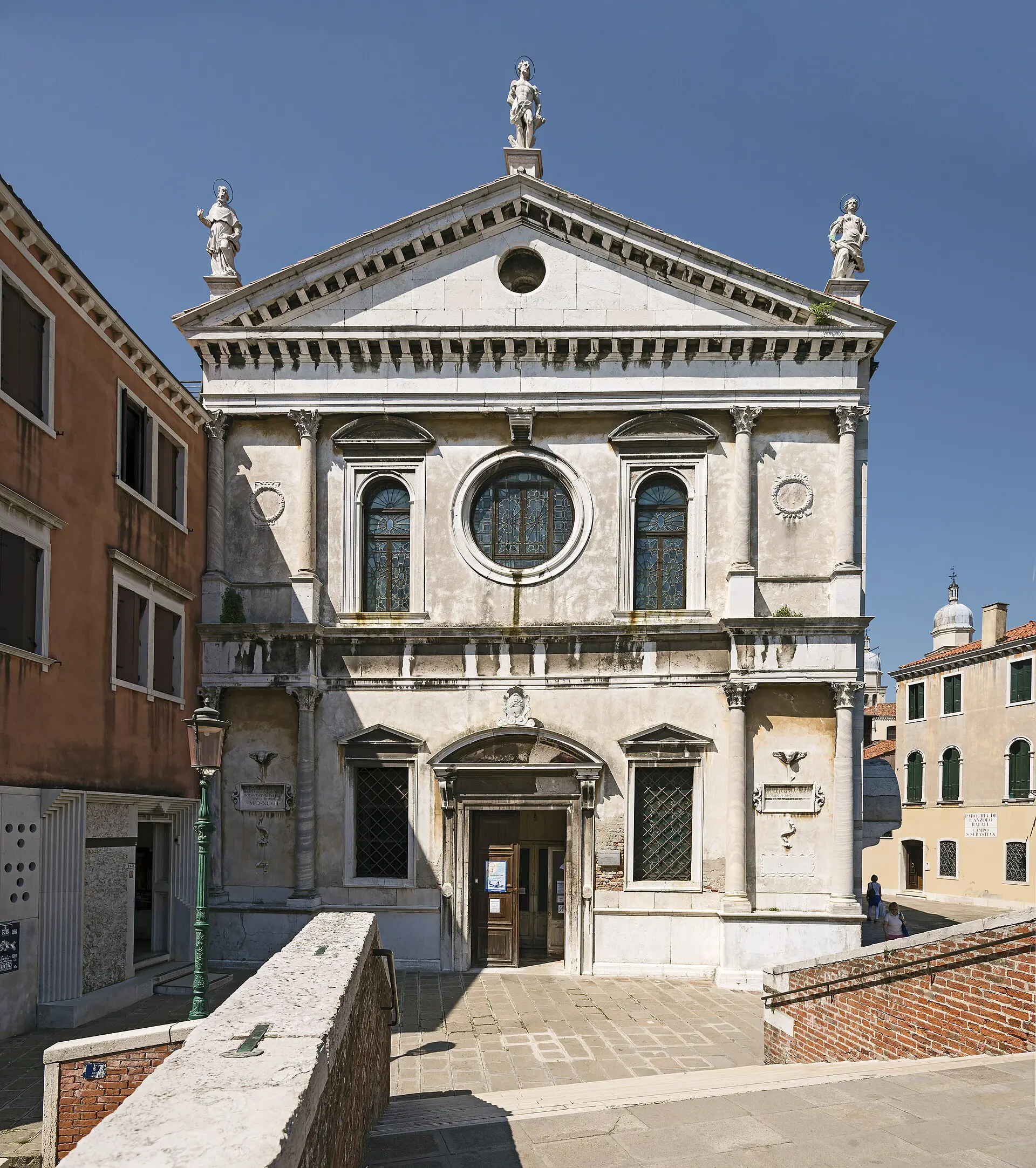
The church stands at Campazzo San Sebastian in Dorsoduro. Save the full name and location when planning your walk. Venetian church names can sound similar, and an itinerary becomes much easier when everyone knows the exact destination.
Approach the neighborhood with enough time to enjoy the streets and canal views on the way. Avoid allocating only the map’s estimated walking time if you will be stopping, photographing, or navigating with a larger family.
A private guide can include the church within a tailored Dorsoduro walk, but interior access must remain subject to the church’s arrangements and religious use.
Why Veronese matters here
The church’s importance lies in the concentration and relationship of its decoration. The church association Chorus identifies San Sebastiano as one of the key places for experiencing Paolo Caliari, known as Veronese.
Think of the visit as an opportunity to follow one artist’s visual imagination through different positions in a building. A picture on a ceiling addresses the viewer differently from a work near an altar. Scale, viewpoint, and the distance from your eyes all become part of the experience.
You do not need to rank Veronese against Titian or Tintoretto to enjoy the church. Begin with what you can see: the organization of people, the direction of movement, and the relationship between color and architectural framing.
A little history before you enter
Official visitor information associates the church’s development with the religious community of San Girolamo and its early sixteenth-century rebuilding with Antonio Abbondi, known as Scarpagnino. It also identifies Bernardo Torlioni as the patron behind Veronese’s major painted cycle.
Those facts help turn an attractive interior into a human story. Someone commissioned the work, someone planned the building, and an artist had to respond to a real architectural setting and a religious purpose.
Instead of imagining decoration as something added after the “real” building was finished, consider how images can shape the way a place is understood. At San Sebastiano, that relationship is the central reason to visit.
Begin by looking at the whole interior
When you enter, pause before moving toward individual pictures. Let your eyes adjust and take in the main direction of the space. Notice where the architecture draws your attention and which surfaces immediately ask you to look up.
This is a useful habit in any historic church. If you go directly to a famous detail, you can miss the arrangement that gives the detail its force. The room is not a neutral background.
Ask three questions: Where am I expected to look first? What is visible from the entrance? What changes when I move farther into the nave? These questions work without a guidebook or an art-history degree.
The ceiling and the stories of Esther
Save Venice’s conservation documentation identifies three large ceiling paintings narrating the story of Esther. Their elevated position makes the act of viewing part of the encounter.
Look for how figures and architectural forms direct your attention across the composition. You may notice a gesture before recognizing a character. Follow that gesture, then step back and see how it participates in the larger scene.
Do not strain your neck for a long, uninterrupted examination. Alternate short periods of looking upward with time studying lower parts of the interior. A comfortable visitor usually notices more than an exhausted one.
If you are with a guide, ask for the story before the detailed interpretation. Knowing the central situation often makes the composition easier to follow than hearing a long list of names first.
Saint Sebastian and the church’s visual identity
The dedication gives you another thread to follow through the visit. Rather than assuming that every work repeats the same theme, ask how individual scenes and figures contribute to the church’s wider identity.
Distinguish what is actually depicted from what you are inferring. A gesture might look triumphant, anxious, or solemn to a modern viewer; the story and original setting can complicate that first impression.
This is one of the pleasures of looking at religious art with a knowledgeable guide. Interpretation becomes a conversation between what you notice and the historical meaning of the image.
Veronese’s burial: a personal connection
The official city visitor page notes that Veronese’s remains are preserved in the church, to the left of the presbytery, in accordance with his wish to be buried there. That adds a personal dimension to the place.
You are visiting more than a collection of works associated with an artist. The church also connects his artistic legacy with his memorial presence.
Treat that connection quietly. There is no need for a dramatic story or an invented legend to make the visit meaningful. The relationship between a painter, a place, and the work left behind is already compelling.
Why conservation belongs in the story
Save Venice describes a long conservation campaign that included examination, structural work, and treatment of painted surfaces and architectural elements. Its documentation explains how cleaning addressed discolored varnish and later overpainting.
For visitors, the lesson is that the appearance of an old work is not fixed forever. Materials change, environments affect them, and conservators have to decide how to preserve surviving evidence while making the work legible.
When a painting looks luminous today, that experience depends partly on the care that allowed it to survive. Looking carefully is one way of recognizing that effort.
If restoration interests you, read the Save Venice project record before your visit. It provides a documented alternative to vague claims that an interior has simply been “brought back to its original glory.”
A practical way to spend 45 to 60 minutes
As a suggested pace, allow approximately 45 to 60 minutes for a focused visit if access and your interests permit. This is a planning estimate, not a church rule.
- First five minutes: absorb the interior and identify the main viewing areas.
- Next fifteen minutes: concentrate on the ceiling and its narrative organization.
- Next fifteen minutes: follow the relationship between paintings and the surrounding architecture.
- Final minutes: revisit the detail that interested you most and allow a quiet moment before leaving.
You can shorten or extend this outline. The point is to give your attention a rhythm rather than trying to read every label and photograph every surface.
Visiting with children or teenagers
A focused activity is usually more effective than a long explanation. Ask younger visitors to find one gesture that seems to tell a story. For teenagers, try a question about viewpoint: how would the image change if it were displayed at eye level?
Keep the exercise respectful and optional. A church is not an indoor playground, and the most successful family visit may be a brief one with a single memorable observation.
Plan a break afterward rather than immediately asking everyone to absorb another major interior. Art appreciation grows more easily when the wider day is comfortable.
Opening hours, admission, and respectful access
The city visitor information checked for this guide lists daytime cultural visiting from Monday through Saturday and Sunday opening for services. Before setting out, verify the current arrangements through the Chorus church page or the official city visitor page.
Ticketing and access information can differ across web pages and change over time. Confirm the current admission arrangement rather than relying on a copied price or an old pass description.
Religious services take priority. Dress appropriately, speak quietly, and follow local instructions about photography. Do not enter a restricted area because it offers a better camera angle.
If someone in your party has limited mobility, ask specific questions about the entrance and the areas you hope to see. A route described as easy on a map may still involve bridges before you reach the church.
Build a Dorsoduro visit around one main idea
San Sebastiano works well as the cultural anchor of a slower neighborhood walk. You might begin with the surrounding streets, visit the church, and then allow time for a relaxed stop before continuing.
Avoid adding every Dorsoduro attraction simply because it appears nearby. Venice is a city where a short distance can contain a great deal to notice. One carefully chosen interior often creates a stronger memory than several rushed entries.
If your interest is painting, ask your guide to connect the church with the broader question of how Venetian artists used architecture and light. If you prefer everyday city life, make the church one concentrated moment within a walk focused on the neighborhood.
Frequently asked questions
Why visit San Sebastiano in Venice?
For the opportunity to experience a major concentration of Veronese’s art within its architectural and religious setting. It is especially rewarding for travelers interested in how paintings relate to a whole interior.
Is Veronese buried in San Sebastiano?
Yes. The official city visitor information identifies his burial in the church, to the left of the presbytery.
Can I visit San Sebastiano during a private Dorsoduro walk?
The church can be considered for a tailored private itinerary, subject to cultural visiting hours, services, admission arrangements, and your group’s needs.
Explore our private Venice tours, browse private lagoon experiences, or see the full selection of Tour Leader Venice experiences to build a visit around your interests.
Sources: Chorus, Venezia Unica, and Save Venice’s San Sebastiano conservation documentation, linked above. Practical information checked October 29, 2026.
Featured photograph: Didier Descouens, “San Sebastiano (Venice) Facade,” Wikimedia Commons, CC BY-SA 3.0. Real photograph; displayed at reduced resolution.