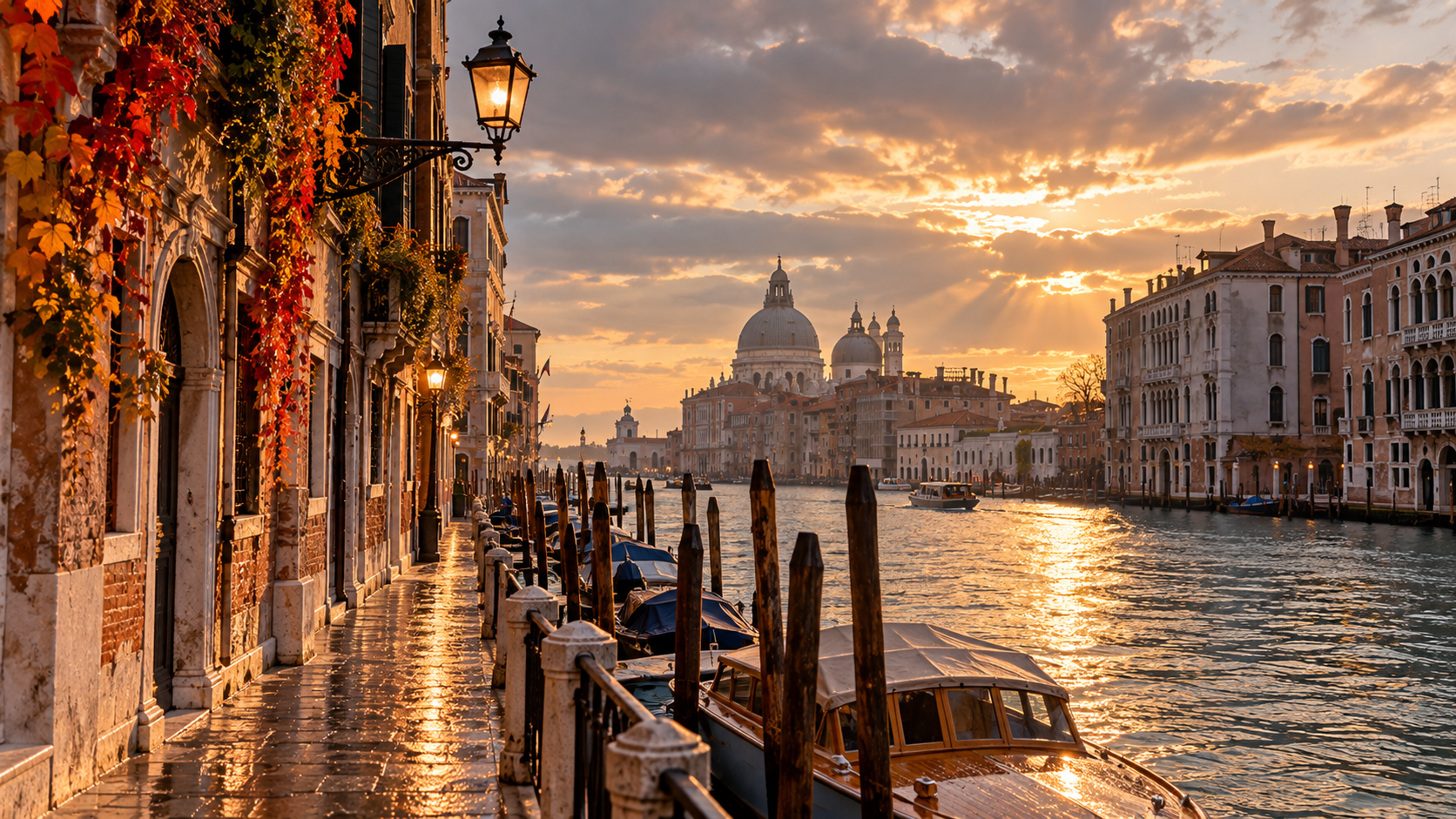
Why Venice looks different in October
October changes Venice less by repainting it than by changing the angle from which we see it. The city is built from pale stone, red brick, colored plaster, green shutters, and water that never holds still. When the sun moves lower across the sky, these familiar materials respond differently. A façade that looked flat at midday in July acquires depth in the late afternoon. A narrow canal that seemed dark in summer catches a brief ribbon of reflected sky. A white marble church can look almost luminous beneath a bank of gray cloud.
For travelers interested in Venice October photography, the essential advice is to watch the light rather than chase a fixed list of viewpoints. October offers a shorter day, a lower solar path, and often a greater contrast between warm direct sunlight and cool shadow. None of this guarantees a spectacular sunset or empty streets. It does, however, reward the visitor who notices how the same place changes over an hour.
This is a cultural story as well as a photographic one. Venice’s buildings were designed in conversation with water and light. Its painters understood reflections, atmosphere, and the instability of appearances. Its streets are still used by residents going to work, children heading to school, and delivery boats moving through the canals. The city’s beauty is not a stage set that turns on at golden hour. It emerges from the interaction between an extraordinary built environment and ordinary daily life.
In this guide, the focus is deliberately narrow: autumn light, color, reflections, and thoughtful photography. It is not another general October itinerary, a rainy-day activity guide, or a ranking of the city’s most famous photo spots. The aim is to understand what you are seeing and how to photograph it with care.
The science behind the softer-looking sun
The most important seasonal change is astronomical. As the Northern Hemisphere moves away from summer, the sun follows a lower path across the sky. At the same clock time, its angle is different from that of midsummer. Daylight hours shorten through October, and the direction and length of shadows change. These are predictable features of the season, although actual brightness depends on clouds, haze, and local weather.
Photographers often describe low-angle sunlight as warm, especially around sunrise and sunset. That warmth is partly associated with the longer path sunlight travels through the atmosphere, which changes the balance of light reaching the eye and camera. The effect is not exclusive to October. You can see beautiful golden light in any season. What changes in autumn is how conveniently low light interacts with buildings during more of the day.
A canal-facing palace may catch sunlight at a different time than it does in June. A courtyard can remain shaded for longer. A bridge can cast a more pronounced silhouette across water. These differences are not universal because Venice’s canals point in many directions and its buildings vary in height. That is why advice promising a single perfect hour for every location is misleading.
Cloud cover complicates the picture in a productive way. A thin layer of cloud can soften harsh contrasts, helping you photograph plaster, stone carving, and painted surfaces without bright highlights overwhelming the image. A gap in the clouds can then create a short, dramatic shaft of sunlight. Some of the most compelling October images are made during these transitions rather than under an entirely clear sky.
The practical lesson is to keep your schedule flexible. If the light looks interesting, stop. If a scene is dull, move slowly and observe rather than forcing a photograph. Venice rewards patience more consistently than rigid timing.
How water doubles the city
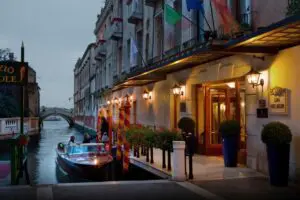
The canal is not simply a foreground element in a Venetian photograph. It is a moving second version of the city. Buildings, sky, mooring poles, and boats appear again in broken patterns beneath the real skyline. A reflection may be recognizable for an instant and abstract a moment later. The effect changes with wind, boat traffic, water level, and the direction of light.
On a still October morning, a narrow canal can resemble dark glass. A passing boat breaks the reflection into moving bands of color. Later, when the sun reaches the surface at a low angle, the same canal may glitter too brightly to show much detail. Neither condition is better in absolute terms. They simply produce different kinds of photographs.
To work with reflections, first decide what the photograph is about. If you want a recognizable building mirrored in water, wait for calmer conditions and include enough of the actual façade to anchor the composition. If you want abstraction, move closer to the reflection and allow the shapes to fragment. A red wall and a green shutter can become a striking pattern even when the building itself is outside the frame.
A useful technique is to photograph the same reflection three times: before a boat passes, as the wake moves through, and after the surface begins to settle. The images can look radically different. This is a more revealing exercise than taking ten nearly identical photographs from the same position.
Remember that the canals are working waterways. Do not lean dangerously over parapets or step onto private landings to reach a reflection. Boat operators need room to maneuver, and residents need access to their homes. A photograph is never worth obstructing a landing or risking a fall.
Why Venetian façades seem to change color
Venice’s architecture is famously colorful, but those colors are not fixed visual facts. A plaster wall can appear honey-colored in late sunlight, gray under overcast skies, and pink when it reflects a nearby façade. Brick absorbs and reflects light differently from pale limestone. Weathering, salt exposure, restoration, and the age of a surface all influence what the eye perceives.
The contrast between Istrian stone and colored plaster is especially expressive in autumn. Pale stone can hold a cool brightness while surrounding brick appears warmer. Deep windows and carved arches produce shadow lines that help the eye read the building’s structure. A façade that seems decorative in flat light may reveal its geometry when illuminated from the side.
Photographers should resist the temptation to exaggerate every orange and red tone in editing. Excessive saturation can make Venice look less like a city and more like an illustrated fantasy. Subtle adjustments to exposure, white balance, and contrast often preserve more of the actual atmosphere.
Try including a neutral reference in your composition: a patch of pale stone, a gray sky, or a familiar white surface. It can help you judge whether the camera has shifted the colors too far toward orange or blue. Smartphones sometimes apply strong automatic processing, especially when bright sky and dark buildings share the frame. Review the result before accepting it as a faithful representation.
The point is not to eliminate interpretation. Photography always involves choices. It is to make those choices knowingly and avoid presenting heavily transformed colors as the natural appearance of a specific October day.
Morning light: when the city begins to reveal itself
Early morning is often a rewarding time to explore Venice, although there is no promise of deserted streets. Residents, workers, deliveries, and commuters are already moving. In fact, including traces of ordinary life can make a photograph more meaningful than waiting for an empty canal.
The morning sky can be cool and muted before direct sunlight reaches the lower parts of narrow streets. Look for the first bright edge on a rooftop, a window catching light above a shaded canal, or a boat moving between buildings. These small moments tell a more specific story about the city than a generic skyline.
Because October sunrise becomes later as the month progresses, do not rely on a single fixed clock time for every date. Check the sunrise for the exact day you plan to photograph, then allow for the delay created by surrounding buildings. The sun may technically have risen while your chosen canal remains in shadow.
A light mist can add atmosphere, but it should never be treated as a guaranteed October feature. Visibility and haze vary. If mist does appear, avoid trying to sharpen away every trace of it in editing. Atmospheric depth can be the subject of the photograph rather than an imperfection.
One practical approach is to choose a single neighborhood for the morning. Explore its canals at walking pace and revisit a promising corner when the light changes. You will learn more from observing one place carefully than from racing across the city to collect a list of famous images.
The Grand Canal as a moving study in light
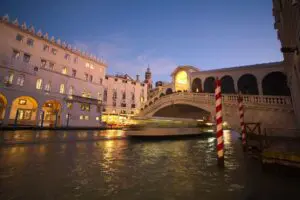
The Grand Canal is a broad, active waterway where sunlight, architecture, and boat movement constantly interact. Its scale creates possibilities different from those of narrow residential canals. You can photograph long layers of palaces, reflections broken by wakes, and the contrast between open sky and richly detailed façades.
The best angle depends on the position of the sun, the direction you are facing, and the amount of traffic. A scene that looks spectacular from one side may be strongly backlit from the other. Backlighting can create silhouettes and sparkling water, but it can also hide architectural details. If your aim is to show the carving on a palace, you may prefer a different position or a moment when the light is more even.
Avoid assuming that the Rialto Bridge is always the best place to stand. It is famous, crowded, and often difficult to use comfortably for a long photographic session. Other public viewpoints may offer a quieter angle, although conditions vary and no location should be described as reliably empty.
For additional viewpoints along the water, explore our guide to Venice’s most beautiful waterfront promenades. A vaporetto ride can give you changing perspectives, but movement introduces practical challenges. Boats vibrate, windows may reflect interior lights, and other passengers need space. Keep your equipment secure and do not block doors or boarding areas. A clear photograph is not worth making transport less safe or comfortable for others.
If you use a private boat, discuss the route and photographic priorities in advance. Water traffic, weather, and navigation rules still determine what is possible. Boats are not floating tripods: a moving platform requires faster shutter speeds and a willingness to accept some motion.
The overlooked beauty of small canals
Our self-guided Dorsoduro walking route can help you explore one neighborhood at a thoughtful pace. A narrow canal may be the most revealing place to study October light. Buildings rise close to the water, producing strong contrasts between illuminated upper floors and shadowed lower walls. A strip of sky becomes a bright ribbon. Mooring ropes, shutters, and stone steps give the scene a human scale.
These canals are not necessarily more authentic than famous places; they are simply different. Their value lies in showing how the city’s architecture functions at intimate distances. A doorway opens directly onto a landing. A window sits above the waterline. A small bridge changes the viewpoint by only a few feet but completely rearranges the composition.
Try photographing a canal from both ends of a bridge. The angle of the light and the position of reflections can make the two images feel unrelated. Then turn away from the water and look at the street behind you. Sometimes the most interesting photograph is a sunlit wall, a shadow across a doorway, or a figure moving through a patch of light.
Be considerate in residential areas. Keep your voice down, do not obstruct a bridge while setting up equipment, and avoid photographing people through their windows. Private life continues behind the beautiful façades. Respecting that reality is part of understanding Venice.
For photographers, the discipline of working in a small area can also be liberating. Rather than seeking constant novelty, you begin to notice changes in color, texture, and movement. October makes those changes particularly legible because the light shifts noticeably across the day.
Dorsoduro and the relationship between openness and shadow
Dorsoduro contains both exposed waterfront spaces and narrow interior streets. That contrast makes it useful for understanding how the same October sun behaves in different settings. Along open water, the sky occupies a larger part of the image and the light can feel expansive. A few minutes away, a tight street may be almost entirely in shadow.
The Zattere waterfront can be beautiful when conditions are calm, but it is exposed to wind and weather. A low sun over water can create intense glare. If you want to preserve detail in both the sky and the buildings, adjust your position or expose carefully rather than relying on dramatic editing afterward.
Near the Accademia area, the changing angle of light can emphasize façades and the movement of the Grand Canal. The bridge is a celebrated viewpoint, but it is also a busy pedestrian crossing. Take photographs without blocking people. If the bridge is crowded, wait for a calmer moment or choose another public location.
The district’s quieter canals reward slower work. Look for the contrast between ochre walls and green shutters, or the way a bright reflection appears beneath an otherwise shaded building. These are small, place-specific details that can give an image more character than a wide panorama.
Cannaregio: reflections of a lived-in Venice
Cannaregio offers a rich variety of light conditions, from broad canal views to shaded passages. It is also a residential district, and that everyday character matters. Laundry, delivery boats, shutters, and ordinary street life may tell a more revealing story than a postcard-perfect empty canal.
In October, a low sun can catch upper façades while the water remains dark. This creates a natural separation between layers of the image. If you expose only for the bright sky, the street may disappear into shadow. If you expose only for the street, the sky may lose detail. Decide which part of the scene matters most.
Try photographing at different focal lengths. A wider view shows the relationship between buildings and water; a tighter frame can isolate a reflection, a row of windows, or a boat’s wake. Do not assume that a more expensive camera produces a more meaningful image. Composition and patience remain decisive.
The Jewish Ghetto and its surroundings deserve respectful attention as places of history and continuing community life. Avoid treating religious sites or residents as anonymous scenery. Photography rules may differ inside individual buildings, and visits should follow the guidance of the relevant institutions.
A strong photographic essay about Venice needs more than monuments. Cannaregio can help you show the city as a place where people live, not merely a destination visitors consume.
San Marco after the bright summer season
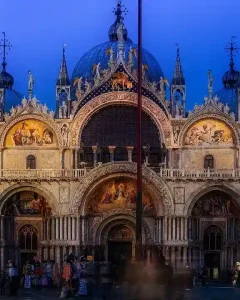
St. Mark’s Square is one of Venice’s most recognizable spaces, yet its appearance changes markedly with the weather and angle of light. The basilica’s mosaics, the pale surfaces of the surrounding architecture, and the rhythm of the arcades respond differently to direct sun and overcast skies.
In October, the square may be brilliantly lit, softly gray, or dramatic beneath passing clouds. Do not assume that lower sunlight always produces better photographs. Harsh contrast can still occur, especially when the sky is bright and the arcades are dark. Sometimes the most effective image is made by concentrating on one architectural detail rather than attempting to include the entire square.
Look for the relationship between columns and shadows. A sequence of arches can create visual rhythm; a single figure crossing an illuminated patch of paving can establish scale. Reflections after rain can be attractive, but they should not be confused with exceptional high water. Ordinary wet paving is not the same as flooding.
Caffè terraces and historic interiors can add a human dimension to the scene, but always respect the privacy of customers and the rules of individual businesses. Do not assume that photography is welcome inside every venue.
The square’s fame can make photographers impatient. They want the perfect empty view, and they become frustrated when people enter the frame. An alternative is to accept the city as it is. People walking, talking, and working can reveal more about Venice than an artificially deserted scene.
The role of clouds, haze, and rain
Autumn weather introduces variety, but it should not be romanticized as a constant mist. October can bring clear skies, rain, cloud, and periods of calm. Each condition offers a different visual language. A bright day emphasizes edges and shadows; an overcast day emphasizes color and texture; a brief shower can deepen the tones of stone and plaster.
Clouds are especially useful when they act as a large natural diffuser. The light becomes less directional, which can make it easier to photograph a façade evenly. This is not necessarily the best condition for every image. Strong shadows can reveal depth, and a dramatic sky can add tension to a wide view. The point is to match your subject to the light available.
After rain, reflections appear on paving stones and the surfaces of bridges. Be careful: wet stone can be slippery, particularly on worn steps. Do not position yourself in the middle of a busy crossing for a low-angle photograph. Move to a safe place and let other pedestrians pass.
Fog and haze can simplify complex backgrounds by reducing contrast in distant buildings. If the atmosphere is present, use it. If it is absent, do not invent it in editing and then describe the image as documentary evidence of October conditions.
For practical rain planning, consult our rainy-day Venice itinerary. That article focuses on sheltered places, transport, and safety. This one is about what changing weather does to the visual experience of the city.
The history of Venetian painting and atmospheric color
It is tempting to say that Venetian painters invented the beauty of reflected light. The reality is more complex and more interesting. Venice developed a celebrated painting tradition in which color, material, and atmosphere became central expressive tools. Artists including Giovanni Bellini, Giorgione, Titian, and later Tintoretto and Veronese approached light in different ways.
Their works cannot be reduced to a single technique or a single Venetian quality. Yet looking at the city after spending time with its paintings can sharpen your awareness of warm and cool contrasts, luminous surfaces, and the relationship between figures and setting. The city becomes a place to observe the problems painters worked to solve.
The term colorito is often associated with discussions of Venetian painting, particularly in contrast to traditions emphasizing drawing or disegno. Such contrasts can be oversimplified, but they provide a useful starting point for understanding why color and the handling of paint mattered so much in Renaissance debates.
A photograph is not a Renaissance painting, and there is no need to imitate one literally. The more valuable connection is attentiveness. Watch how a pale wall changes beside a dark canal. Notice how a figure in a red coat can alter the balance of an image. Observe how reflected light reaches surfaces that direct sunlight cannot.
For a closer encounter with the art itself, our article on the Frari and Titian</a explores an important Venetian artistic setting. The city outside and the art inside can enrich one another without being treated as interchangeable.
Photography with a smartphone in October
You do not need professional equipment to photograph October light well. Modern smartphones are capable of excellent results, especially when you pay attention to exposure and composition. The most important habit is to pause before pressing the shutter and decide what you want the image to communicate.
Tap on the subject to control focus and, where your phone allows, adjust exposure to preserve highlights. Bright sky and dark canals can exceed the range of a single exposure. Automatic processing may help, but it can also produce unnatural halos or overly bright shadows. Review the image and decide whether it still resembles the scene you saw.
Clean the lens. It sounds trivial, but a fingerprint can turn a beautiful low sun into a muddy flare. Hold the phone steadily, particularly in shaded streets. If you are photographing from a moving boat, take several frames and expect some blur.
Try placing the horizon or canal line deliberately rather than letting the phone tilt. Venetian buildings are not always perfectly straight, and perspective distortion is inevitable when you point a wide-angle lens upward. Small corrections can help, but aggressive straightening can make façades look unnatural.
Avoid digital zoom when it noticeably reduces quality. Move closer only when it is safe and publicly accessible. A bridge, quay, or landing is not an invitation to step into a restricted area. The best photograph is one you can take without disturbing the city around you.
A camera, a lens, and the problem of carrying too much
Photographers using interchangeable-lens cameras face a different challenge: equipment can distract from observation. A wide-angle lens is useful for architecture and narrow streets, but it can exaggerate perspective. A normal focal length encourages selective framing. A short telephoto lens can isolate details and compress layers along a canal.
There is no universal ideal kit for Venice. A small camera and one versatile lens may be more enjoyable than a heavy bag filled with equipment. Remember that you will be walking across bridges, sometimes through crowds, and possibly in changeable weather. Comfort affects how patiently you photograph.
If you use a tripod, consider whether the location allows it and whether you can set it up without obstructing pedestrian movement. Many of Venice’s best viewpoints are also narrow public crossings. Tripods can create hazards, particularly after dark. Rules may differ in churches, museums, and other managed spaces.
Protect your camera from rain and salt spray. A simple weather cover and a dry cloth can be more useful than an additional lens. Do not change lenses carelessly beside open water, where a dropped cap or accessory may be impossible to recover.
The goal is not to return with the maximum number of files. It is to create a coherent record of what the city felt like during your visit.
A small photographic exercise: one bridge, three visits
Here is an exercise that reveals more about October light than a list of famous viewpoints. Choose a public bridge near your accommodation that you can revisit without making a special journey. Photograph the same canal in the morning, around midday, and in the late afternoon.
Keep your framing approximately consistent. Notice which windows catch sunlight, how the color of the water changes, and whether reflections are sharp or broken. Observe where shadows fall and how the sky’s brightness affects the balance of the image. Do not worry if one of the three photographs looks less impressive.
Compare the images afterward. You may find that the strongest picture was taken when you least expected it. Perhaps the midday version reveals architectural details that disappear in golden light. Perhaps the afternoon version is more atmospheric but less informative. Both are valuable.
Then make a fourth photograph that deliberately changes the composition. Turn around, include a passerby at a respectful distance, or isolate the water. This final image tests whether you are responding to the place rather than repeating a formula.
The exercise also encourages a slower relationship with Venice. You begin to recognize one corner as a living environment that changes throughout the day, not simply a point on a sightseeing map.
The ethics of photographing a living city
Venice is one of the most photographed cities in the world, but it is also home to residents, workers, and communities whose daily lives are not performances. A respectful photographer considers the impact of their presence. Do not block bridges, doorways, boat landings, or narrow streets while composing a picture.
Avoid intrusive photographs of people at close range without their consent. Be especially considerate around children, religious spaces, private homes, and moments of personal significance. If someone indicates that they do not want to be photographed, respect that request.
Drones are subject to aviation rules, restrictions, and local requirements. Do not assume that a small consumer drone may be flown over Venice simply because aerial photographs look appealing online. Check the relevant Italian aviation and airspace rules and obtain necessary permissions before any operation.
Commercial photography, filming, or equipment setups may require additional authorizations depending on the location and activity. A casual traveler with a phone and a production crew occupying public space are not necessarily subject to the same practical arrangements. Verify requirements with the competent authorities.
Ethical photography can produce better work. When you stop treating residents as obstacles to an empty image, you begin to see the relationship between architecture and life. That relationship is one of the most distinctive things Venice offers.
When the sun sets earlier
October’s shorter days change how visitors organize their time. Late afternoon arrives sooner than in midsummer, and the light can shift rapidly behind buildings. For photographers, this means planning a manageable final location rather than attempting to cross the entire city at the last minute.
Check sunset for your exact date. Remember that the sun may disappear behind a palace well before the astronomical sunset visible from an open waterfront. A narrow canal can be in deep shadow while the sky remains bright. Conversely, a rooftop or upper façade may hold the last light after the street below has darkened.
The period after sunset can be beautiful, when lamps begin to glow and the sky retains some color. But low-light photography brings practical challenges. Moving boats and pedestrians blur at slow shutter speeds. Smartphone night modes may brighten scenes beyond their natural appearance. Use these tools deliberately rather than automatically.
Safety matters more than the photograph. Watch wet paving and bridge steps, keep equipment secure, and do not stand in exposed places during severe weather. A good October evening ends with a comfortable walk home, not a hurried scramble through unfamiliar streets.
If you have only one evening, choose a viewpoint near where you will eat or stay. The most useful planning principle is proximity. Venice is better experienced with enough time to observe than with a race against the clock.
What an October photograph can—and cannot—tell us
A photograph captures one instant, not an entire season. A dramatic sunset does not prove that October always has spectacular skies. A misty canal does not mean Venice is perpetually foggy. An empty square at dawn does not represent the usual level of activity throughout the day.
This matters in an era of heavily edited and generated travel imagery. Beautiful pictures can inspire a journey, but they should not be mistaken for evidence of specific weather, exact architectural relationships, or current access conditions. When an image is an illustration rather than a documentary photograph, it should be labeled accordingly.
The most persuasive travel photography is honest about its circumstances. Include the date and location when they are known. Avoid presenting a photograph from another month as proof of a particular October event. Do not remove every boat, pedestrian, or sign simply to create an imagined version of the city.
A compelling October photo essay might include an unremarkable gray morning, a sudden burst of sun, a quiet canal, and a busy waterfront. Together they convey something more truthful than a sequence of flawless golden-hour images.
The goal is not to diminish Venice’s beauty. It is to recognize that its beauty does not require fiction. The real city offers more complexity than any single postcard can hold.
How a local guide reads the light
Years of working in Venice teach a practical lesson: the most memorable view is not always the most famous one. A knowledgeable guide pays attention to the group’s position, the weather, the time available, and the way sunlight reaches a particular street. Sometimes a short pause beside an ordinary canal is more rewarding than another crowded viewpoint.
Tour Leader Venice’s experience in guiding since 1997 provides a foundation for this kind of flexible exploration. That does not mean anyone can guarantee a specific sunset or a deserted square. It means an itinerary can be adjusted when the sky changes, when a canal is backlit, or when a visitor would benefit from slowing down.
A photographic walk should leave room for surprise. Rather than promising a series of identical images, it can help travelers understand how architecture, water, and daily life interact. This is particularly valuable for first-time visitors who may know Venice only through famous photographs.
Ask yourself what you want to remember. Is it the outline of a palace, the way a reflection broke when a boat passed, or the color of the sky above a familiar bridge? Your answer will determine where you stop and what you photograph.
The strongest images often emerge when you are attentive enough to recognize a moment but relaxed enough not to force it.
A final way to see October Venice
October does not transform Venice into a different city. It changes the light that reveals the city already there. The sun sits lower, shadows travel differently, and water reflects a sky that can shift from silver to gold within minutes. The façades remain, but their colors seem to move. The canals remain, but their reflections never repeat.
For visitors planning Venice October photography, the most useful approach is simple: choose a neighborhood, study the light, return to one promising place, and let weather and daily life contribute to the story. Bring equipment you can carry comfortably, respect residents, and avoid treating every scene as a competition for the perfect image.
You may return home with a photograph of a famous monument. You may also find that your favorite picture shows only a wall, a shutter, and a brief ribbon of sunlight on dark water. Both can be unmistakably Venetian.
The difference lies in how carefully you looked.
Frequently Asked Questions
Is October a good month for photography in Venice?
Yes. The lower autumn sun, shorter days, changing shadows, and reflections can make October rewarding for photography. Weather varies, so clear skies, mist, and golden sunsets are possibilities rather than guarantees.
What time is best for Venice photography in October?
Early morning and late afternoon often offer interesting low-angle light, but the best time depends on the canal’s direction and surrounding buildings. Check sunrise and sunset for your exact date and allow for shadows from tall façades.
Where can I photograph Venice’s autumn reflections?
Look along public canal edges and bridges in neighborhoods such as Dorsoduro and Cannaregio, or observe the Grand Canal from safe public viewpoints. Wind, boat wakes, and light direction change reflections, so patience matters more than a single famous location.
Featured image: original atmospheric digital illustration inspired by Venice’s autumn light; not a documentary photograph of a specific place or date.