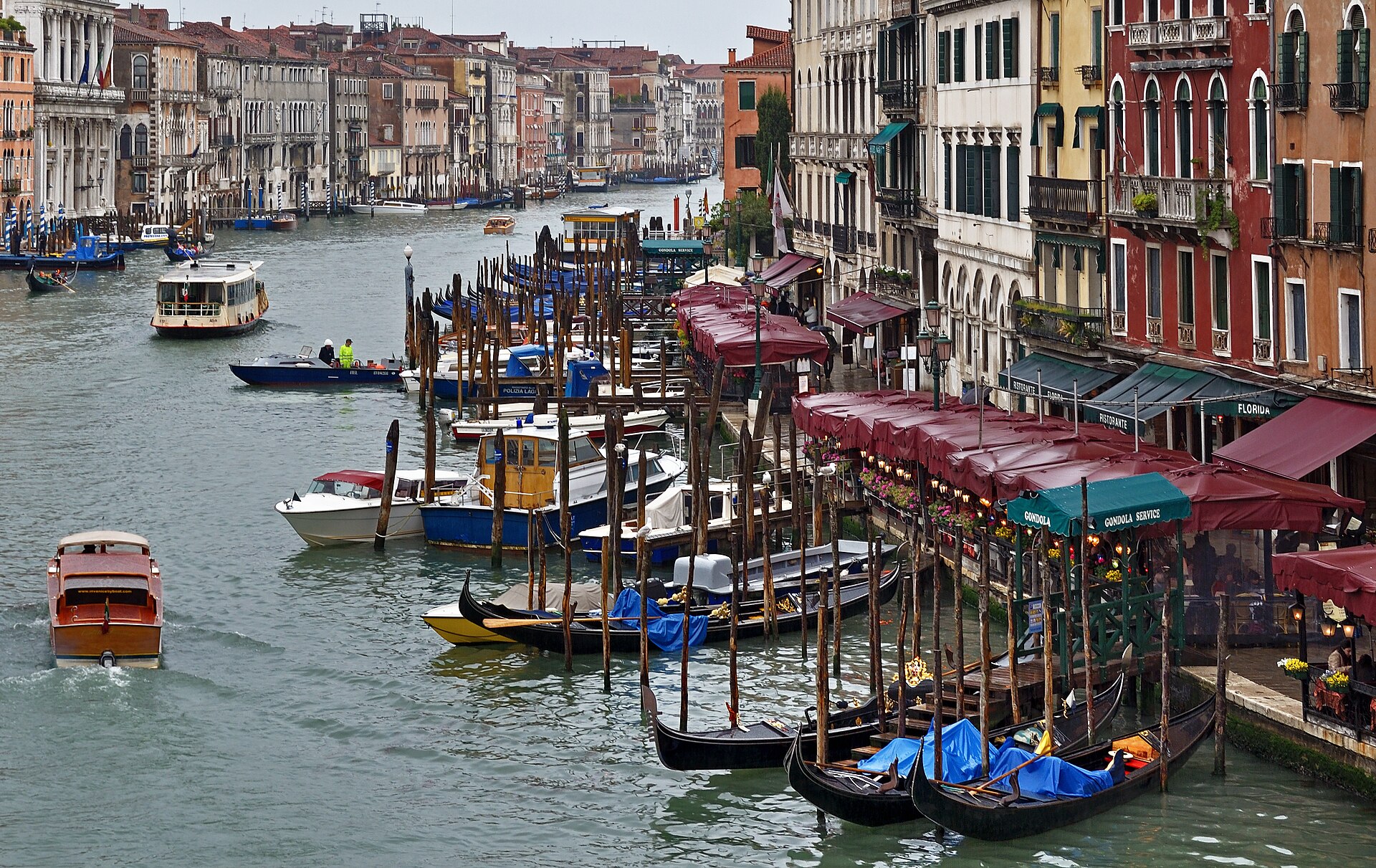
Quick answer: For a rainy day in Venice, Italy, choose one compact neighborhood rather than a citywide sightseeing circuit. Around San Marco, use the Procuratie arcades, pause at a historic café and visit San Zaccaria if open. Around San Polo, pair the Frari with a nearby indoor stop. For heavy rain, avoid long exposed waterfront walks and slippery bridge steps; for high water, check official tide alerts separately.
How to use this guide: This is a weather-contingency itinerary for October, not a general list of Venice attractions or a guide to museums. Start with your hotel’s neighborhood, then adapt the route to the intensity of the rain and your group’s mobility.
A rainy October day in Venice is not a lost day
Rain changes the rhythm of Venice, but it does not erase the city. In October, a gray sky can turn stone façades silver, deepen the colors of old brick, and bring an unexpected intimacy to streets that feel almost theatrical in bright summer sunshine. The sensible response is not to rush from one museum to another. It is to design a day around short walks, sheltered pauses, extraordinary churches, historic cafés, and places where the weather becomes part of the atmosphere.
If you are searching for things to do on a rainy day in Venice, Italy, start with a simple rule: stay in one part of the city for longer. Venice looks compact on a map, yet its bridges, canals, dead ends, and crowds can make a seemingly short crossing tiring in persistent rain. A thoughtful route saves time, reduces slippery steps, and gives you more of what you came for: the chance to experience the city.
This itinerary focuses on October, when conditions can shift from a brief shower to a wet afternoon, and when temperatures may feel cooler near open water. It deliberately goes beyond the standard advice to “visit a museum.” You will find churches, arcades, atmospheric cafés, and practical alternatives for different levels of rain. All visits depend on current opening hours, religious services, access conditions, and weather alerts; none should be treated as guaranteed access on a specific date.
Why rain feels different in Venice
Venice has no cars in its historic center, so rain is experienced on foot or from a boat. You hear water striking the paving stones, feel wind moving along canals, and notice the way umbrellas compete for space on narrow bridges. The city is unusually exposed in some places and unexpectedly sheltered in others. A short stretch beside the Grand Canal may be windy, while a nearby street can feel calm.
The October atmosphere is not the same every day. Early in the month, temperatures may still be comfortable, while later days can be damp and chilly. Packing for variability is wiser than assuming that October means constant storms. A light waterproof layer, comfortable shoes with good traction, and a compact umbrella will serve most visitors better than bulky equipment. On windy days, a hood is often more useful than an umbrella.
Rainfall and acqua alta are not synonyms. Heavy rain can occur without high water, and high tide can affect low-lying places even when the sky is clear. The lagoon’s water levels are driven by several factors, including tides and meteorological conditions. For any potential flooding, consult official tide forecasts and current municipal guidance rather than treating puddles in a photograph as proof of a citywide emergency.
This distinction matters because tourists sometimes cancel an entire day based on an alarming forecast. A wet Venice can still be navigable and beautiful. But safety comes first: when authorities warn of severe weather, strong winds, exceptional tides, or dangerous conditions, follow their advice and change plans accordingly.
Begin around St. Mark’s Square, but use the arcades intelligently
Piazza San Marco is one of the few places in Venice where monumental architecture offers an obvious sense of enclosure. The arcades around the square provide stretches of shelter and the opportunity to observe details that disappear in a crowd. You can study shopfronts, stone columns, the rhythm of arches, and the way light changes as clouds move overhead.
The Procuratie buildings frame the square, but the arcades are not a weatherproof indoor corridor. Wind-driven rain can blow beneath them, and entrances, corners, and crossings remain exposed. Move slowly, especially where wet stone becomes polished by constant foot traffic. Avoid stopping suddenly in the middle of a narrow passage to photograph a reflection; other people may be trying to pass.
If the rain is light, spend a few minutes looking toward the basilica from under cover. The façade’s mosaics and sculptural details reward patient observation, although individual views can be affected by restoration work or temporary barriers. Rather than rushing toward a queue, decide whether an indoor visit suits the conditions and your available time.
The Basilica di San Marco is a place of worship with its own entry procedures, security rules, and periods of restricted access during religious services. If you plan to go inside, check official admission information in advance. Wet-weather crowds may concentrate at a few famous attractions, so an apparently sensible “rainy day activity” can also become a long wait. A timed booking, where offered, may help, but it is not a promise of immediate entry.
For a relaxed morning, consider the arcades themselves as the first experience rather than merely a path to somewhere else. Look up at the ceilings, observe how historic commercial spaces relate to the public square, and allow the changing weather to set the pace.
A historic café as a destination, not an emergency shelter
Venice’s historic cafés can be particularly evocative when rain taps against the windows. Caffè Florian, established in 1720, is one of the best-known names in St. Mark’s Square. Its interiors and history make it a cultural stop as much as a place to drink coffee. The setting, however, comes with premium pricing, and guests should read the current menu carefully before ordering.
For more ideas about choosing a comfortable pause, see our guide to places to take a break in Venice. A historic café is not the only valid choice. In a nearby neighborhood, a modest bar may provide exactly what you need: a hot drink, a pastry, and twenty minutes to let a shower pass. The difference is one of purpose. Choose an elaborate café when you want the experience of the setting; choose a neighborhood bar when you want a practical break without committing much time or money.
American visitors sometimes expect coffee shops to function as informal workspaces where they can sit for hours. In Italy, the rhythm can be different. Many people drink espresso quickly at the counter. Table service, especially in prominent locations, may cost more. Prices can vary according to whether you stand or sit, and there may be additional charges associated with certain services or settings. Check before ordering rather than being surprised later.
On a rainy day, do not treat a café as a free waiting room. Buy something, respect the staff, and be considerate if the room is busy. The most satisfying pause is one in which you have time to enjoy the atmosphere without creating inconvenience for others.
If you are traveling with children, a café can also be a useful reset: a warm drink for adults, something simple to eat, and a chance to reassess the route. It is often better to make one thoughtful stop than to keep walking until everyone is wet, cold, and frustrated.
San Zaccaria: a beautiful church within reach of San Marco
A short walk east of St. Mark’s brings you toward the area around San Zaccaria. The church is one of Venice’s significant religious and artistic sites, and its architecture rewards attention even before you step inside. The façade combines elements from different periods, while the interior is associated with major Venetian painting.
This is an excellent example of a rainy-day stop that does not require treating every building as a museum. A church can offer art, history, quiet, and a sense of the city’s spiritual life. It remains a place of worship, however, so visitors should dress respectfully, speak softly, and follow any photography restrictions or instructions from staff.
Do not assume that every section is freely accessible. Some churches have separate admission arrangements for particular areas, and opening times can change for services or maintenance. San Zaccaria is especially interesting because its historic spaces have layers of history, but access to particular rooms or the crypt should always be confirmed on the day.
The route from San Marco to San Zaccaria includes outdoor stretches. There is no continuous covered walkway between them. On a day of steady rain, choose a brief dry interval or use a waterproof jacket rather than trying to shelter under every doorway. The beauty of this neighborhood lies partly in its compactness: a few minutes can take you from one extraordinary setting to another.
If your group has limited mobility, note that the approach may include uneven paving and bridges depending on the exact route. Venice requires route-specific planning; a distance measured in meters does not tell the whole story.
The quiet art of choosing a church over another attraction
Churches are among Venice’s most rewarding rainy-day interiors, but they are not interchangeable. Some are grand and richly decorated, others intimate and almost austere. Some contain celebrated paintings; others reveal the history of a parish or confraternity through architecture, monuments, and small devotional details.
The advantage of a church-focused day is that you can see Venetian art in the setting for which much of it was created. A painting in a chapel interacts with the architecture, the altar, the light, and the movement of worshippers. That context is different from viewing the same artist in a gallery. It can make the experience more powerful, even for visitors who do not consider themselves religious.
The practical challenge is opening hours. Churches are not always open continuously, and midday closures are common in parts of Italy. Services take precedence over tourism. Before setting out, verify the specific church’s current schedule and whether a ticket or church pass is required. If a church is closed, do not regard the day as ruined; nearby streets, cafés, and another open church can provide a good alternative.
For a deeper look at the relationship between art and religious spaces, our existing article on Venice’s hidden oratories explores smaller sacred interiors. This rainy-day itinerary is not intended to repeat that guide; its purpose is to help you decide what to do when the weather changes.
A respectful visit also means putting the camera away sometimes. Sit for a few minutes, let your eyes adjust to the light, and notice the atmosphere. In October, when rain softens the light outside, that transition from wet streets to a quiet interior can become one of the day’s strongest memories.
A compact alternative in San Polo: the Frari and its surroundings
If you are staying near Rialto, Santa Lucia station, or the western side of the historic center, it may make little sense to cross to San Marco just because a guidebook begins there. The San Polo and Santa Croce areas offer a different rainy-day strategy, centered on the Basilica di Santa Maria Gloriosa dei Frari and nearby streets.
The Frari is one of Venice’s great churches. Its vast interior, artistic treasures, and funerary monuments make it an absorbing place to spend time when the weather is unpleasant. Titian’s celebrated Assumption of the Virgin is a compelling reason to visit, but the church’s overall scale and atmosphere deserve equal attention. It is not simply a substitute for a museum: it is a historic religious building in which art, devotion, and civic memory intersect.
Allow enough time to appreciate the space rather than treating it as a five-minute refuge. Entry conditions, ticket arrangements, and opening hours should be checked before you go. A church can be busy, and it may close or restrict visitor access during religious services.
The surrounding neighborhood has small streets and places to stop for a drink or lunch. Rather than setting a rigid route through every nearby landmark, choose one or two indoor destinations and allow for a flexible break. The aim is to reduce exposed walking, not to maximize the number of addresses in a single afternoon.
Our separate article on the Frari church and Titian’s masterpieces gives more historical detail. Here, the practical takeaway is simpler: if you are already nearby, this is a strong anchor for a rainy half-day without crossing the entire city.
San Rocco and the problem of overplanning
A short distance from the Frari is the Scuola Grande di San Rocco, associated with an extraordinary cycle of paintings by Tintoretto. If you want to compare it with other remarkable historic confraternity buildings, consult our guide to Venice’s Scuole Grandi. Technically, this is a historic confraternity building with major artworks, rather than the kind of conventional museum many travelers imagine when they hear the word. It can be an excellent wet-weather option for visitors who want a powerful interior experience.
But be realistic about energy and attention. If you spend meaningful time at the Frari, then visit San Rocco, and then add several more attractions, you may end up exhausted. Rain makes even a short walking day feel more demanding. Good planning means knowing when to stop.
San Rocco also has its own ticketing and opening arrangements. Check current information before visiting. Do not assume that a rainy afternoon automatically means space will be available or that the building will be open at the moment you arrive.
One useful strategy is to choose a primary indoor visit and one backup. If the first is crowded or closed, move to the second. Avoid maintaining a list of eight “must-see” interiors that requires repeated detours. The best rainy-day itinerary is resilient, not ambitious.
Venice rewards attention. One room explored slowly can leave a stronger impression than six buildings visited at speed. That is particularly true when the weather encourages you to remain indoors a little longer than usual.
A warm lunch without crossing the city in the rain
A rainy October lunch is not merely a pause between attractions. It can become the center of the day. Venice and the wider Veneto have dishes suited to cooler weather: soups, risotto, polenta, seasonal vegetables, and carefully prepared fish. What is available depends on the restaurant and the market, so ask about daily specials rather than assuming a fixed seasonal menu.
Choose lunch near the area you are exploring. If you are around San Marco, stay in that district or a neighboring one rather than trekking across the city for a restaurant recommended online. If you are near the Frari, eat in San Polo or Santa Croce. The logistics of a wet day matter as much as the culinary reputation of a single address.
A restaurant with a small menu and clear explanations of ingredients may be a better choice than a place advertising dozens of dishes with photographs. But no single sign guarantees quality. Check the menu, confirm the prices, and ask whether fish is priced by portion or by weight. If you have dietary restrictions, communicate them clearly.
October may be an appealing time for mushroom or pumpkin preparations, although seasonal availability changes. A good risotto often takes time, so do not order it if you must leave for a timed entry in fifteen minutes. Let lunch be relaxed rather than another deadline.
For families, this is a chance to dry coats, recharge, and make the afternoon manageable. For couples, a comfortable lunch can be one of the most memorable parts of the day. Neither requires a famous view or a luxury setting; warmth, good service, and a thoughtful kitchen are enough.
A rainy-day route through Cannaregio
Cannaregio is another excellent base for a slower October day, especially if you are staying near the train station or the northern part of the city. It has a different feel from the St. Mark’s area, with residential streets, neighborhood bars, and canals that can be particularly atmospheric under gray skies.
The district does not provide a continuous network of covered arcades. That is an important practical point. A walk through Cannaregio still means outdoor exposure, bridges, and sometimes narrow routes. The value of the area is not that you can stay dry every minute, but that you can build a compact experience around short distances and frequent pauses.
Depending on your interests and the day’s access arrangements, you might focus on a historic church, a quiet canal-side street, or a café. The Jewish Ghetto is a historically significant area that deserves more than a hurried photo stop. Its religious and cultural sites have their own visitor rules, and some require advance arrangements. Respect residents and worshippers, particularly around active religious spaces.
When rain becomes heavy, choose one indoor destination and remain there until conditions improve. A neighborhood is not a scavenger hunt. You do not need to cross every bridge to feel that you have explored it.
For visitors who dislike crowded tourist corridors, Cannaregio can offer a welcome change of pace. It is still a lived-in district, not a secret attraction staged for travelers. Keep voices down in residential passages, avoid blocking doorways, and do not treat private entrances as sheltered photo studios.
Dorsoduro in the rain: beauty without a museum marathon
Dorsoduro offers a compelling alternative if your hotel is near the Accademia Bridge, Zattere, or Campo Santa Margherita. Its churches, historic façades, and quieter streets make it rewarding even when the weather is unsettled. But the waterfront promenades can be exposed to wind, so choose your route with care.
A light drizzle can make the colors of Dorsoduro particularly vivid. The surfaces of old walls deepen, and the narrow canals take on a softer appearance. When the rain intensifies, however, the priority should shift from photography to shelter and safe footing. The Zattere waterfront is lovely in calm weather but is not a sheltered walking route in a windy downpour.
The Basilica della Salute is an important landmark at the eastern tip of the district, although reaching it may involve exposed walking. As with other churches, access depends on services and visitor arrangements. If you are already in the area, it can be a meaningful stop. If you are on the opposite side of Venice during a storm, it is not worth crossing the city solely to tick it off a list.
A better approach is to let the neighborhood guide your decisions. Stay near the streets and cafés that suit your group, and use a dry interval for the next short walk. If a museum is on your itinerary, enjoy it—but do not feel obliged to turn the entire day into a museum marathon.
The real danger is not rain; it is rushing on wet stone
One of the most useful local observations about Venice is that the combination of wet paving, bridge steps, and hurried crowds creates avoidable risks. Historic stone can be smooth and slippery, especially where thousands of feet have polished it over time. Painted surfaces, metal covers, temporary ramps, and damp wooden structures can also require care.
Wear shoes with reliable grip. Smooth leather soles, worn trainers, and shoes chosen only for photographs are poor companions for a long wet walk. Take smaller steps on bridges and hold a handrail where one is available. Do not rush to catch a vaporetto by running down wet steps. A missed boat is inconvenient; a fall can spoil the trip.
Umbrellas create another problem. Narrow streets and bridges leave little space, and the points of large umbrellas can end up at face height for other pedestrians. Close or lower your umbrella when passing through especially tight spaces. On windy waterfronts, a waterproof hood may be safer and more practical.
Be careful with photography. The best reflection may be visible from a bridge, but standing still in the middle of a busy crossing can block traffic. Move to a safe position before taking out your phone. Do not lean over parapets or step onto slippery edges for a better angle.
If someone in your party has mobility limitations, plan routes in advance. Many bridges have steps, and not all alternative routes are straightforward. A private boat may help in some circumstances, but boarding still involves moving vessels, steps, and weather-dependent access. Never assume that a boat automatically eliminates all accessibility difficulties.
Should you take a vaporetto in the rain?
A vaporetto can be useful when the weather is wet, but it is not a universal solution. Stops may be exposed, boarding areas can be crowded, and you may need to wait outside. On some services, outdoor seating is exposed to rain and wind; covered areas can become busy. Routes and frequencies vary, and disruptions are possible during severe weather.
Before deciding, compare the full journey rather than just the boat ride. How far must you walk to the stop? How long is the wait? Is there a bridge between the stop and your destination? Will you have to change lines? A twenty-minute walk with one sheltered break may be more comfortable than a long wait followed by another walk.
Ticket rules also matter. Validate or use your ticket according to the operator’s current instructions, and check prices and passes on official transport channels. Do not rely on outdated blog prices or screenshots. A multi-day pass may make sense for some visitors, but not everyone needs one.
Private water taxis offer a different experience and may reduce some walking, but they are more expensive and remain subject to weather, tide, route restrictions, and safe boarding conditions. Not every hotel has usable direct boat access at every water level. Ask about the actual boarding and drop-off points before booking.
In persistent rain, the best transport decision is often the one that minimizes uncertainty. Sometimes that means a boat; sometimes it means staying in the neighborhood where you already are.
What to do when the forecast turns severe
There is a difference between an ordinary October shower and a serious weather warning. If strong winds, thunderstorms, unusually high water, or other hazardous conditions are forecast, adjust your plans. Outdoor waterfronts, exposed boat stops, and long walks may become uncomfortable or unsafe. Official instructions take priority over any itinerary.
For tide information, consult Venice’s official tide forecasting service and current local notices. For transport, check the operator’s latest updates. For a church or café, verify its opening hours directly. A website article can explain how to plan, but it cannot guarantee real-time conditions.
If severe weather is expected, consider staying close to your accommodation and postponing unnecessary crossings. Choose a nearby indoor activity that does not depend on a complicated transfer. If you have prepaid reservations, contact the provider to understand their weather policy. Do not assume that rain alone entitles you to a refund, or that a boat excursion will always operate in rough conditions.
The MOSE flood-barrier system and other measures are part of Venice’s broader response to exceptional high-water events, but visitors should not interpret that as a promise that every street will always remain dry. Conditions can vary by location and event. Avoid simplistic claims that Venice is either completely flooded or completely protected.
For most visitors, the useful skill is not predicting the weather perfectly. It is keeping a flexible plan, knowing where to find official updates, and recognizing when an enjoyable wet day should become a quieter indoor day.
A realistic itinerary from morning to evening
Here is a practical framework rather than a rigid schedule. Start around 9:30 or 10:00 a.m. in the neighborhood where you are staying. Have coffee, check the forecast, and decide whether the morning’s first stop is a church or a sheltered walk. If you are near San Marco, use the arcades and consider San Zaccaria. If you are near San Polo, the Frari may be the better choice.
Around midday, move toward a nearby restaurant. Reserve if you have a specific place in mind, but do not build a day that requires crossing Venice in the rain for lunch. Allow a generous meal break. October is an ideal time to slow down rather than race through a long checklist.
In the early afternoon, choose one meaningful indoor destination. That might be a historic church, a scuola, or a café where the setting itself is part of the experience. If the weather improves, take a short walk to see the reflections in a canal. If it worsens, stay indoors longer.
Late afternoon can be especially atmospheric when the lamps begin to glow against damp stone. Yet the light fades earlier than in summer, so allow enough time to return comfortably. Do not rely on unfamiliar narrow routes after dark if anyone in your group is tired or unsure on wet steps.
For dinner, choose somewhere within a manageable distance of your hotel. A rainy-day plan succeeds when it ends with everyone warm, comfortable, and pleased—not when it has squeezed in the maximum number of sights.
Rainy Venice for couples, families, and older travelers
Different travelers need different versions of the same itinerary. Couples may enjoy a slow café stop, one beautiful church, and a relaxed dinner. Families with younger children may prefer shorter walks and more frequent breaks, with clear expectations about what each indoor visit involves. A long art-historical explanation is not necessarily the best way to keep a tired child engaged.
For older travelers, the key is minimizing bridges and long waits. Ask your accommodation about the most practical nearby attractions, and consider whether an accessible route exists. A location that seems close on Google Maps may involve steps or uneven paving. The weather can make those obstacles more demanding.
Travelers with strollers should also be realistic about bridges. A compact stroller can be easier to manage than a heavy one, but lifting may still be required. Do not assume that every church or historic building has step-free access. Contact venues directly when accessibility is essential.
If you are traveling with a group, agree on one or two priorities in advance. Not everyone needs to visit the same café or church. A simple plan with an optional alternative prevents frustration when rain changes everyone’s mood.
Above all, resist the idea that an excellent day requires a perfect forecast. Venice’s appeal is not confined to postcard sunshine. The experience becomes richer when you adjust your expectations and make thoughtful choices for the people traveling with you.
Photography in the rain without creating a fictional Venice
Rain can produce remarkable photographs, but the most compelling images are often understated. Look for reflections in a quiet canal, warm light spilling from a doorway, the texture of stone after a shower, or a small umbrella crossing a bridge. The best images do not need a famous monument in every frame.
Protect your equipment and be aware of other pedestrians. Use a lens cloth, keep your phone secure, and step aside before composing a shot. Avoid photographing people closely without consideration for their privacy. Do not enter private property or block residential entrances in search of a dramatic angle.
A common problem with travel imagery is that atmospheric illustrations can be mistaken for documentary photographs. If an image has been generated or substantially altered, it should be described honestly. A beautiful imagined Venetian arcade is not evidence of a particular café’s actual position, entrance, or waterfront view.
For a real trip, location accuracy matters more than visual drama. Do not navigate by an illustrative image. Use current maps, official venue addresses, and clear directions. Venice is beautiful enough without inventing architectural connections that do not exist.
When the rain stops, take one final slow look. Puddles settle, footsteps return, and the city shifts again. A single scene may feel completely different within ten minutes.
Why October can make a rainy day especially memorable
October sits between the brightness of summer and the quieter atmosphere of winter. That transition is visible in the city, but it is not uniform. Some days are warm; others invite a scarf and a longer coffee. Some mornings begin with drizzle and end in sunshine. The unpredictability can be frustrating when you have only two days in Venice, yet it can also make the experience feel less staged.
The changing season encourages attention to interiors and everyday life. A church that you might have skipped in summer becomes a welcome place to pause. A café is no longer just a quick espresso stop. The sound of footsteps on wet stone and the glow of a lamp become part of your memory.
This is not an argument for seeking bad weather. It is a reminder that travel becomes more rewarding when you stop fighting conditions you cannot control. A city like Venice has layers of experience, and rain reveals some of them.
For visitors who value local guidance, the advantage is practical as well as cultural. A knowledgeable guide can adjust a route to the weather, the group’s walking ability, and the opening hours of nearby places. Tour Leader Venice’s guiding experience, dating to 1997, is particularly relevant to these small logistical decisions: knowing when a bridge is an unnecessary detour, when a waterfront will feel exposed, and when a quiet interior is worth the pause.
The best rainy-day plan is not a secret list. It is an intelligent way of moving through a real city.
Final thoughts: do less, see more
If October rain arrives during your Venice trip, do not automatically abandon the day or retreat into the nearest museum. Begin where you are. Find a sheltered arcade, visit a church whose history interests you, enjoy a proper café stop, and build lunch into the route. Keep walks short, check current opening hours, and treat wet bridges with respect.
The route through St. Mark’s Square and San Zaccaria works well for travelers staying in the eastern center. The Frari and San Rocco provide a strong alternative around San Polo. Cannaregio and Dorsoduro reward visitors who are already nearby and prefer to stay in one district. None of these options requires crossing the whole city in bad weather.
A rainy October day in Venice can be beautiful precisely because it slows you down. Let the light change. Notice the details. Make room for a warm table and a quiet interior. And when the clouds lift, step outside again: the city will have changed while you were inside.
Frequently Asked Questions
What can you do in Venice on a rainy day besides visiting museums?
Explore the arcades around St. Mark’s Square, visit historic churches such as San Zaccaria or the Frari when open, enjoy a café, and choose a relaxed lunch close to your accommodation. Keep outdoor walks short and check current opening hours.
Is Venice safe to walk around when it rains in October?
Usually, ordinary rain does not prevent sightseeing, but wet paving and bridge steps can be slippery. Wear shoes with good grip, avoid rushing, and follow official warnings during severe weather or exceptional high-water conditions.
Should I take a vaporetto or walk in Venice when it rains?
Compare the whole journey, including walking to the stop, waiting outdoors, and bridges at your destination. A vaporetto can help on some routes, but a short walk with a sheltered stop may be more comfortable. Check current ACTV service information.
Featured photograph: Volodymyr Vlasenko, “Rainy. The Grand Canal near the Rialto Bridge. Venice,” Wikimedia Commons, CC BY-SA 3.0. Cropped or resized for web display where applicable. Photograph taken in April 2009; it illustrates rainy conditions, not the weather on a specific October 2026 date.