The working waterfront behind the postcards
Venice depends on vessels for functions that other cities assign to trucks, vans, cranes, and service vehicles. Passenger transport is only one part of that system. Freight boats, work barges, emergency craft, waste-collection vessels, and boats used by tradespeople all require maintenance. A shipyard is therefore not a quaint survivor of a maritime past; it is part of the city’s present-day infrastructure. The central question is not whether Venetians still know how to build a gondola. It is how an inhabited city can continue operating when nearly everything must move across water.
A useful distinction is between what a visitor can observe during a brief stay and what the daily operation of the city requires. The most visible scenes are not always the most important ones. Behind them are choices about time, space, money, and professional responsibilities that shape everyday life.
A boat is a working vehicle
A water taxi may look elegant in a photograph, but its owner needs dependable engines, steering, electrical equipment, safe boarding arrangements, and a hull capable of regular service. Commercial use introduces wear that tourists rarely see. Maintenance can be routine or urgent, planned around bookings, tides, and workshop availability. A working boat cannot be treated solely as an object of design. It is a vehicle whose downtime affects passengers and livelihoods. That distinction helps explain why modern yards have survived alongside the more famous traditional gondola workshops.
Local conditions also change. Water levels, weather, transport arrangements, and the availability of skilled people can make a routine task straightforward one day and complicated the next. It would be misleading to describe any single route or schedule as universal. Practical knowledge means knowing when to verify conditions.
What a yard actually does
A functioning marine workshop may inspect a hull, repair damage, service propulsion equipment, replace fittings, apply protective coatings, or prepare a vessel for a new operating season. Not every Venetian yard offers every service, and some specialize in particular boat types. Owners may also use separate technicians for engines, electrical systems, upholstery, or metalwork. The result is a network of skilled businesses rather than a single all-purpose craftsperson. Understanding this specialization is essential before describing any yard as capable of building or repairing every kind of boat.
The wider significance is cultural as well as practical. Venice survives as a living place because people continue to work, maintain equipment, care for homes, and use shared spaces. Appreciating that ordinary effort adds depth to the monuments and canals that first draw travelers here.
The difference between a squero and a modern yard
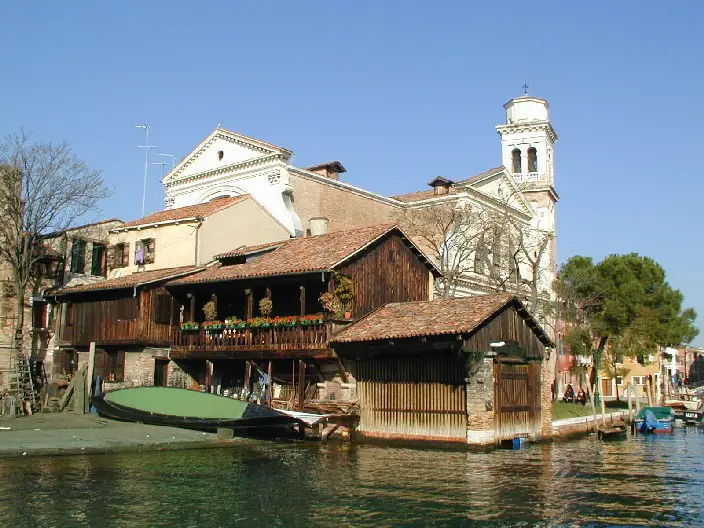
A squero is strongly associated with traditional wooden craft and the historic techniques used for gondolas and other lagoon boats. Modern marine facilities may handle different materials, machinery, and service requirements. The categories can overlap, but they should not be collapsed into one. Our separate article on the traditional squero explains the historic craft setting. Here the emphasis is the wider repair economy supporting commercial and municipal navigation, including vessels that are neither gondolas nor heritage exhibits.
A useful distinction is between what a visitor can observe during a brief stay and what the daily operation of the city requires. The most visible scenes are not always the most important ones. Behind them are choices about time, space, money, and professional responsibilities that shape everyday life.
Why the lagoon makes repairs unusual
Water levels change, canals have limited width and depth, and access to suitable shorelines is scarce. Bringing a vessel into a workshop requires more than driving through a gate. The owner must consider tides, navigation rules, lifting capacity, mooring space, and the size of the boat. Some facilities are better suited to small craft than heavy workboats. A practical repair plan begins with these constraints rather than with a romantic image of an artisan sanding timber. In Venice, reaching the workshop is itself part of the logistics.
Local conditions also change. Water levels, weather, transport arrangements, and the availability of skilled people can make a routine task straightforward one day and complicated the next. It would be misleading to describe any single route or schedule as universal. Practical knowledge means knowing when to verify conditions.
The challenge of lifting a boat
A vessel that needs attention below the waterline must be lifted, hauled out, or otherwise made accessible using appropriate equipment. The method depends on its weight, hull shape, and the facilities available. This is a technical operation requiring trained personnel, not an improvised tourist spectacle. The lifting process also occupies valuable waterfront space and equipment. For a commercial operator, a delay can affect several days of service. The unseen scheduling of haul-outs is one reason the city’s marine infrastructure matters economically.
The wider significance is cultural as well as practical. Venice survives as a living place because people continue to work, maintain equipment, care for homes, and use shared spaces. Appreciating that ordinary effort adds depth to the monuments and canals that first draw travelers here.
Salt, moisture, and everyday wear
Venetian boats operate in brackish lagoon water and often encounter exposed conditions near the inlets. Moisture, salt, sunlight, mechanical vibration, and contact with docks can all contribute to maintenance needs. Different hull materials react differently, so there is no universal repair formula. Wood, metal, and modern composite structures require distinct expertise. Protective coatings and inspections must be appropriate to the vessel and its intended use. A boat may appear spotless to a passenger while technicians know that unseen components need regular attention.
A useful distinction is between what a visitor can observe during a brief stay and what the daily operation of the city requires. The most visible scenes are not always the most important ones. Behind them are choices about time, space, money, and professional responsibilities that shape everyday life.
The engine behind the scenery
Visitors notice the polished cabin of a water taxi; operators must also think about propulsion, cooling, fuel systems, steering, and reliability. A breakdown can interrupt transport and create safety risks. Engine servicing may involve specialist mechanics and replacement parts sourced from outside the historic center. Those parts must then reach the correct waterfront location. The process connects Venice’s workshops to suppliers on the mainland and beyond. Marine maintenance is therefore a supply-chain activity as well as a craft, shaped by the same geography that makes the city beautiful.
Local conditions also change. Water levels, weather, transport arrangements, and the availability of skilled people can make a routine task straightforward one day and complicated the next. It would be misleading to describe any single route or schedule as universal. Practical knowledge means knowing when to verify conditions.
Freight boats keep shelves stocked
Venice’s shops, restaurants, hotels, and households depend on deliveries. Goods often arrive from the mainland and then continue through the canal network aboard suitable boats. The vessels themselves need repairs and inspections. When a freight boat is unavailable, the disruption can ripple through loading schedules and customers. This is one reason working yards serve residents even when residents never set foot inside them. To understand the broader transport chain, read how deliveries work in a city without cars.
The wider significance is cultural as well as practical. Venice survives as a living place because people continue to work, maintain equipment, care for homes, and use shared spaces. Appreciating that ordinary effort adds depth to the monuments and canals that first draw travelers here.
Waste collection has a marine side
In a city without ordinary street access for trucks across much of the historic center, waste removal relies on adapted collection systems and boats. Those vessels must operate reliably through narrow waterways while interacting with pedestrian collection points. Maintenance is not glamorous, but it is indispensable. Hydraulic systems, engines, deck equipment, and hulls all require attention according to vessel design. The next time a traveler sees a workboat early in the day, it is worth remembering that the visible crew depends on an equally important group of technicians working elsewhere.
A useful distinction is between what a visitor can observe during a brief stay and what the daily operation of the city requires. The most visible scenes are not always the most important ones. Behind them are choices about time, space, money, and professional responsibilities that shape everyday life.
Emergency services depend on boats
Ambulances and other emergency services in Venice may use watercraft suited to the local environment. Reliability is especially important because an out-of-service vessel affects operational planning. Specialist maintenance, replacement parts, and safe handling procedures are therefore part of public-service resilience. This article does not claim that one particular yard maintains every emergency boat. The important point is structural: when roads are absent, marine engineering becomes essential to services that are normally imagined on wheels. That dependence makes repair capacity a civic concern.
Local conditions also change. Water levels, weather, transport arrangements, and the availability of skilled people can make a routine task straightforward one day and complicated the next. It would be misleading to describe any single route or schedule as universal. Practical knowledge means knowing when to verify conditions.
Construction needs floating equipment
Renovating buildings in Venice can involve transporting stone, timber, scaffolding, machinery, and debris by boat. Work barges and specialized vessels must be capable of carrying loads and operating safely near historic structures. Their upkeep supports the building trades and the preservation of the city itself. A picturesque facade may be restored only after materials and equipment have been delivered across water. The relationship between construction and boat maintenance is easily overlooked because visitors see the finished palace, not the logistical chain that made the work possible.
The wider significance is cultural as well as practical. Venice survives as a living place because people continue to work, maintain equipment, care for homes, and use shared spaces. Appreciating that ordinary effort adds depth to the monuments and canals that first draw travelers here.
Woodworking remains relevant
Traditional woodworking is still part of Venice’s marine heritage, but contemporary boat maintenance includes many additional skills. A timber component may need careful replacement, while another vessel requires composite repair or mechanical work. No single technique can solve every problem. The value of skilled boatbuilders lies partly in understanding how a particular hull was designed and used. The famous craftsmanship of gondola construction is a related but distinct subject, covered in our guide to gondola building.
A useful distinction is between what a visitor can observe during a brief stay and what the daily operation of the city requires. The most visible scenes are not always the most important ones. Behind them are choices about time, space, money, and professional responsibilities that shape everyday life.
The invisible trades around a hull
A vessel may pass through the hands of mechanics, electricians, painters, metalworkers, upholsterers, and marine surveyors. Each specialty addresses different safety or operational needs. A yard can coordinate some of that work without employing every specialist directly. This interconnected economy supports apprenticeships and small businesses beyond the workshop gate. It also explains why losing a marine trade can have wider consequences. A missing technician is not simply one less artisan; it may mean longer delays and higher costs for multiple operators.
Local conditions also change. Water levels, weather, transport arrangements, and the availability of skilled people can make a routine task straightforward one day and complicated the next. It would be misleading to describe any single route or schedule as universal. Practical knowledge means knowing when to verify conditions.
Why workspace is so valuable
Waterfront land in Venice has competing uses. Homes, hospitality businesses, cultural institutions, moorings, and public access all place demands on limited space. A working yard needs room for equipment, materials, safe movement, and access to navigable water. Those needs are difficult to reproduce inside an ordinary building. Once a suitable marine site changes use, replacing its practical function may be challenging. This is not an argument against every other use of the waterfront, but it is a reminder that a functioning city needs spaces that do not look picturesque.
The wider significance is cultural as well as practical. Venice survives as a living place because people continue to work, maintain equipment, care for homes, and use shared spaces. Appreciating that ordinary effort adds depth to the monuments and canals that first draw travelers here.
Noise, dust, and neighbors
Boat repair can involve machinery, sanding, lifting operations, deliveries, and other activities that are not always quiet. Workshops operate within an inhabited landscape where residents and businesses have legitimate expectations about safety and disturbance. Rules and working practices must reconcile these interests. A yard cannot be understood only as a charming attraction for photographers. It is a workplace with hazards, deadlines, and neighbors. Respect for those realities is part of preserving the marine economy rather than turning it into a performance.
A useful distinction is between what a visitor can observe during a brief stay and what the daily operation of the city requires. The most visible scenes are not always the most important ones. Behind them are choices about time, space, money, and professional responsibilities that shape everyday life.
The question of apprenticeships
Young workers need practical training to become competent in marine trades. They must learn materials, tools, safety, diagnostics, and the habits of experienced technicians. The challenge is not unique to Venice, but the city’s geography and cost pressures add complexity. Training requires real work, supervision, and enough commercial demand to sustain a business. This article does not repeat our scheduled feature about succession among gondola builders. The focus here is the broader mix of modern mechanical and technical skills required by working fleets.
Local conditions also change. Water levels, weather, transport arrangements, and the availability of skilled people can make a routine task straightforward one day and complicated the next. It would be misleading to describe any single route or schedule as universal. Practical knowledge means knowing when to verify conditions.
What happens when a boat is unavailable
For a visitor, a canceled water-taxi transfer is an inconvenience. For an operator, an unexpected repair can affect schedules, staff, and revenue. A delivery company may need to reorganize its routes, while a service provider may need another vessel. The availability of repair facilities and spare parts can therefore influence the resilience of everyday transport. The most important function of a yard is sometimes preventing a breakdown through scheduled maintenance rather than producing a spectacular new boat.
The wider significance is cultural as well as practical. Venice survives as a living place because people continue to work, maintain equipment, care for homes, and use shared spaces. Appreciating that ordinary effort adds depth to the monuments and canals that first draw travelers here.
Regulation and navigation safety
Commercial boats operate within a framework of navigation, licensing, and safety requirements. Specific obligations vary by vessel type and use, so travelers should not assume that a gondola, private pleasure craft, and passenger water taxi follow identical rules. Inspections and professional maintenance support safe operation. The details of individual certifications should be checked with the competent authorities rather than inferred from appearances. Responsible reporting avoids presenting an attractive vessel as automatically safe or compliant simply because it looks traditional.
A useful distinction is between what a visitor can observe during a brief stay and what the daily operation of the city requires. The most visible scenes are not always the most important ones. Behind them are choices about time, space, money, and professional responsibilities that shape everyday life.
The Arsenale is a different story
Venice’s historic Arsenale was a major center of state shipbuilding and naval power. Its legacy is monumental, but it should not be confused with the contemporary network of private and specialist marine workshops serving everyday lagoon traffic. The two histories illuminate different aspects of the city’s relationship with boats. Our guide to the Arsenale explores the historic complex and its cultural role. This feature follows the more practical question of how working vessels are maintained today.
Local conditions also change. Water levels, weather, transport arrangements, and the availability of skilled people can make a routine task straightforward one day and complicated the next. It would be misleading to describe any single route or schedule as universal. Practical knowledge means knowing when to verify conditions.
The lagoon beyond the historic center
Marine facilities may operate across the broader lagoon and nearby mainland-connected areas, not only beside the tourist routes of Venice’s central islands. That distribution reflects the need for space, equipment, and transport connections. A visitor who sees few shipyards during a short walk should not conclude that Venice has no working marine industry. Much of its essential infrastructure is located away from famous landmarks. The geography of the trade makes more sense when Venice is understood as a lagoon-wide system rather than a compact museum city.
The wider significance is cultural as well as practical. Venice survives as a living place because people continue to work, maintain equipment, care for homes, and use shared spaces. Appreciating that ordinary effort adds depth to the monuments and canals that first draw travelers here.
Environmental responsibility
Maintenance operations can involve paints, oils, cleaning products, and waste materials that require appropriate handling. Good environmental practice matters because a workshop operates close to sensitive waters. Regulations and approved disposal procedures should guide work; this article does not certify the environmental performance of any individual business. The broader point is that keeping vessels in service must be compatible with protecting the lagoon. Environmental responsibility is part of modern marine professionalism, not an optional decorative feature.
A useful distinction is between what a visitor can observe during a brief stay and what the daily operation of the city requires. The most visible scenes are not always the most important ones. Behind them are choices about time, space, money, and professional responsibilities that shape everyday life.
What visitors may actually see
A visitor might notice a boat lifted onto supports, a mechanic working on an engine, or a craftsperson repairing timber. Those glimpses can reveal more about Venice’s everyday economy than another souvenir shop. However, yards are private industrial spaces and can be hazardous. An open gate does not grant permission to enter, and a working crew should not be interrupted for photographs. Where visits are offered, arrangements should be authorized in advance. The best way to appreciate the trade is to respect it as work.
Local conditions also change. Water levels, weather, transport arrangements, and the availability of skilled people can make a routine task straightforward one day and complicated the next. It would be misleading to describe any single route or schedule as universal. Practical knowledge means knowing when to verify conditions.
A guide’s practical insight
One overlooked detail is that a boat’s usefulness depends on its entire route, not just its mechanical condition. Even a fully serviced vessel may be unable to reach a particular hotel landing when water levels or bridge clearances make access difficult. This is why a boat operator needs both maintenance expertise and local navigation judgment. The distinction is familiar to people who work on Venice’s waterways but often surprises visitors expecting road-like predictability. It illustrates how infrastructure, tides, and service planning interact every day.
The wider significance is cultural as well as practical. Venice survives as a living place because people continue to work, maintain equipment, care for homes, and use shared spaces. Appreciating that ordinary effort adds depth to the monuments and canals that first draw travelers here.
Why the yards still matter
Venice continues to have working shipyards because it continues to have working boats. The vessels may carry tourists, residents, supplies, construction materials, or public-service crews, but they all need skilled attention. Preserving repair capacity helps sustain employment, navigation safety, and the ordinary functions of an inhabited city. Igor Scomparin, a licensed guide since 1997, and the Tour Leader Venice team approach this subject as a story of living infrastructure rather than nostalgia. The city’s future depends not only on protecting beautiful buildings but also on maintaining the practical systems that keep them usable.
A useful distinction is between what a visitor can observe during a brief stay and what the daily operation of the city requires. The most visible scenes are not always the most important ones. Behind them are choices about time, space, money, and professional responsibilities that shape everyday life.
Frequently Asked Questions
Are there still working shipyards in Venice?
Yes. Venice and the wider lagoon still need marine repair facilities for working boats, passenger craft, and other vessels. The type of service depends on the individual yard.
Do Venetian shipyards only build gondolas?
No. Traditional squeri are famous for gondolas and wooden craft, but the broader marine economy also involves engines, hull repairs, electrical systems, and maintenance for modern working boats.
Can tourists visit a working Venice shipyard?
Most working yards are private industrial spaces. Enter only with explicit authorization, and never interrupt repairs or cross safety barriers to take photographs.
Further Reading and Practical Verification
Consult the City of Venice for local rules and Italian Coast Guard for relevant navigation and maritime safety information. Specific workshop services and visitor access must be confirmed directly with the operator.