
Why is living in Venice so expensive? The answer goes far beyond tourist prices. Homes compete for limited space, deliveries require boats and handcarts, historic buildings are costly to maintain, and ordinary errands take time. Residents also face pressure on housing, neighborhood shops, transport, and essential services. This guide explores the hidden cost of everyday life in Venice, Italy, without confusing a visitor’s vacation budget with what local families actually spend.
Behind the famous palaces is a working city whose expenses are shaped by geography. The beauty that makes Venice irresistible also complicates the most ordinary tasks. To understand the cost of living, follow a loaf of bread, a broken refrigerator, a school commute, or the journey of a small shopkeeper opening for the day.
The price of living in a city without roads
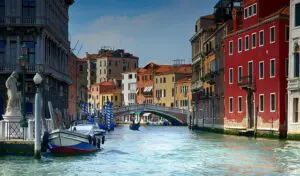
The first cost is not a bill but a constraint. Venice’s historic center is a network of islands and bridges, with no ordinary road access to most homes. Everything from a washing machine to a bag of cement must travel through a different delivery chain. The final stretch may require a boat, a handcart, stairs, and someone paid to carry the load. For a visitor, this is part of the city’s charm; for a household, it can be an extra line in the budget.
A resident cannot simply park a car outside the apartment and unload groceries, furniture, or a stroller. A supplier may deliver to a mainland depot or a boat landing rather than to the actual door. The difference between delivery to Venice and delivery upstairs is substantial. Even when an online retailer advertises shipping to Italy, its terms may exclude complicated final-mile delivery or charge extra for islands.
The relevant comparison is not whether Venice is uniquely expensive in every category. It is whether routine tasks require more coordination, labor, and transport than they would in an ordinary mainland neighborhood. That distinction explains why the costs of living in Venice are structural, not merely a reflection of tourist demand.
Housing: the hardest calculation for many residents
Rent is the most obvious financial pressure, although no single average describes every apartment in the historic center. Prices vary by district, condition, floor, accessibility, contract type, and whether a property is offered for residential or visitor use. A beautifully photographed apartment may have limited storage, no elevator, damp walls, and complicated access for repairs. Housing affordability depends on income as much as on the advertised monthly rent.
Tourist accommodation can compete with long-term residential uses for some properties. The relationship is complex: owners face maintenance expenses, regulations, taxation, and market incentives, while residents need stable contracts and homes suited to year-round life. It would be misleading to claim that every holiday rental directly replaces a resident household, yet the availability of suitable long-term housing is a central issue in debates about the city’s future.
The real question for a young worker is often whether an apartment near employment, schools, or relatives can be rented on predictable terms. A lease that looks manageable at first may become difficult once heating, condominium charges, maintenance, and transportation are included. A city cannot preserve its daily life through spectacular architecture alone; it needs homes ordinary households can afford.
Buying an apartment: beauty and the maintenance bill
Property ownership brings a different set of expenses. Historic buildings may need specialized roof repairs, masonry work, window restoration, damp treatment, and interventions compatible with heritage protections. Contractors must work within the city’s logistical constraints. Materials cannot always arrive on a truck, and scaffolding or canal-side access may require careful organization and permissions.
Not every building is protected in the same way, and not every repair requires a special permit. Still, the age and construction of the urban fabric mean owners must assess structural condition and recurring maintenance rather than judging an apartment by its view. Ground-floor properties can face distinct moisture and flood-related challenges, while upper-floor homes may involve many stairs and no elevator.
A sensible buyer asks about condominium accounts, planned works, water access, previous flood damage, energy performance, and the true cost of moving materials into the building. A bargain purchase price can be misleading when the building needs major work. In Venice, the cost of the address and the cost of keeping that address habitable are two separate calculations.
Why a simple repair can become complicated
Imagine a refrigerator fails in a mainland apartment. A technician arrives by van with tools and replacement parts. In Venice, the same visit may require a vaporetto journey or boat transport, walking with equipment, and navigating stairs. If the technician discovers a missing part, the return trip adds time. The invoice reflects both skilled labor and the journey required to provide it.
The difficulty increases for bulky items: appliances, boilers, doors, windows, kitchen cabinets, or furniture. Delivery schedules may be constrained by canal access, permitted loading areas, and working hours. A replacement that is inexpensive to buy online can become expensive to install in a fourth-floor apartment reached only by narrow stairs.
These examples are not universal surcharges. Some local firms are exceptionally efficient because they know the city, have equipment nearby, and coordinate deliveries. But the underlying lesson remains: comparing retail prices alone misses the labor required to move and install goods. For residents, reliable local tradespeople are not a luxury; they are essential infrastructure.
Groceries: what visitors see and what households need
A visitor may notice expensive snacks near St. Mark’s Square and conclude that every grocery item in Venice is overpriced. That is too simple. Prices vary among supermarkets, neighborhood shops, markets, and specialized retailers. Residents compare quality, convenience, and the effort of carrying purchases home. A cheaper product across town may not be cheaper after time and transport are considered.
A weekly shopping trip can involve crossing several bridges with heavy bags. For an older person, a family with young children, or someone with limited mobility, the physical effort can determine where they shop. Small neighborhood stores provide convenience and social contact, but they also face higher operating costs and limited storage. A supermarket offers range and predictable prices, yet may require a longer walk.
The disappearance of ordinary services is as important as the price of tomatoes. If a neighborhood loses a butcher, hardware store, pharmacy, or affordable food shop, residents must travel farther for daily needs. An inhabited Venice requires a network of useful businesses, not only attractive storefronts aimed at visitors.
The Rialto market is a working place, not a museum
The Rialto area has been associated with trade for centuries, and its food market remains a powerful symbol of everyday Venice. Fish, seasonal vegetables, conversations with sellers, and the practical movement of goods reveal a city that still works. But the market should not be romanticized as if every household shops there daily or every stall offers the same prices.
For a resident, the value of a market includes the ability to buy suitable quantities, ask about freshness, and plan meals around the season. A household budget depends on habits: cooking at home, choosing seasonal produce, limiting waste, and comparing vendors. Visitors photographing a fish display should remember that people are trying to conduct business around them.
The market also connects the city to a broader supply network. Not every item is grown on the lagoon islands or caught nearby. Food reaches Venice through regional wholesalers, boats, and logistics systems. Understanding that chain helps explain why the picturesque final stall is only the visible end of a much larger operation.
The quiet importance of Sant’Erasmo and local food
Sant’Erasmo, one of the lagoon’s cultivated islands, reminds travelers that Venice has never been only stone and water. Agricultural production and trade have historically linked the urban center to its surroundings. Vegetables grown in the lagoon landscape offer a vivid example of how food culture depends on land, boats, and people.
Local produce can be valued for freshness, tradition, and seasonal identity, but it is not automatically the cheapest choice for every family. Small-scale production faces labor, transport, and distribution costs. A product’s cultural importance and its household affordability are different questions. Both deserve attention in a serious account of local life.
Our related story about Sant’Erasmo, Venice’s garden island explains why the city’s food story extends well beyond restaurant menus. When you encounter seasonal produce in a Venetian market, you are seeing one part of a larger relationship between the city and its lagoon.
Transport: no car does not mean no transport bill
In the historic center, many residents walk extensively, but they also rely on public water transport for journeys that cannot be made easily on foot. A commute may involve crossing the Grand Canal, reaching the islands, or traveling between the historic center and the mainland. Tickets, resident concessions, passes, and eligibility rules matter, so a tourist single-ticket price should never be used as a proxy for every resident’s daily transport cost.
Residents may also need rail or bus connections for work, medical appointments, education, or shopping outside the historic center. A family can have several overlapping transport needs even if it does not keep a car in central Venice. When a trip requires a boat plus a train or bus, time and coordination become part of the expense.
The practical lesson is to separate the visitor’s cost of a day pass from a resident’s annual mobility budget. The city has specific fare arrangements that can change; anyone comparing costs should consult the current official ACTV or Venezia Unica information rather than relying on a fixed figure copied from an old article.
Time is money when every errand takes longer
A mainland errand might combine a supermarket, hardware store, and pharmacy in a single car trip. In Venice, the same sequence can mean several walks, bridges, and boat connections. Many Venetians are extraordinarily efficient at organizing routes, but the city does not remove the need for time. It makes planning more important.
Time has an economic value even when nobody sends an invoice. A parent leaving work to collect a child, a resident waiting for a delivery, or a worker returning to the mainland after a late shift may spend time that could otherwise be used for paid work, rest, or family. This burden falls differently on people according to their age, job, mobility, and household structure.
The hidden cost is particularly visible when something goes wrong. A missed connection, a delayed technician, or a boat service interruption can change the entire day. The same logistics that visitors admire from a canal-side café can be exhausting when repeated year after year.
Families, schools, and the cost of staying
For families, affordability is not simply rent plus groceries. It is the ability to find childcare, schools, activities, pediatric care, and a support network within a practical journey from home. A neighborhood with fewer year-round households may have fewer children of similar ages, and the viability of everyday services becomes a concern.
Parents must think about bridges, strollers, school schedules, weather, and the location of after-school activities. Some journeys are manageable for an adult walking alone but much harder with small children, sports equipment, or several shopping bags. Household budgets must account for transport and time as well as formal fees.
The decision to remain in Venice may be emotional and practical at once. A family can love the city deeply while finding that a larger apartment, easier access to schools, or a more predictable commute is available on the mainland. Leaving is not necessarily a rejection of Venetian identity; sometimes it is the outcome of a difficult financial calculation.
Aging in Venice: independence has a price
Venice’s pedestrian environment offers benefits: walking is part of daily life, traffic noise is limited in the historic center, and neighborhoods can feel intimate. Yet stairs and bridges can become serious obstacles for residents with mobility limitations. A journey that once took ten minutes may require assistance or a more circuitous route.
An older resident may need grocery delivery, home maintenance, medical visits, or help transporting belongings. These services are not merely conveniences. They can determine whether someone can continue living independently. When local shops and neighbors disappear, the cost is social as well as financial.
Accessibility cannot be judged by a map showing two places close together. Bridges, steps, landing conditions, and boat accessibility matter. For visitors, this is a reason to plan carefully; for residents, it is a recurring factor in the possibility of aging at home.
Healthcare and the geography of appointments
Venice has healthcare facilities and professionals, but residents may need to travel for particular services, specialists, or appointments. The exact journey depends on where someone lives, which provider they use, and where care is available. It would be wrong to imply that Venice has no healthcare or that every medical appointment requires a mainland trip.
The issue is practical access. An early appointment can require a sequence of walking, boat transport, and onward connections. For someone recovering from surgery or accompanying an elderly relative, a routine journey may become demanding. A missed connection can matter more when the appointment cannot easily be rescheduled.
Healthcare costs in Italy also depend on eligibility, public services, exemptions, and private choices. This article does not attempt to quote a universal monthly healthcare expense. Instead, it highlights the less visible price of distance and mobility within an urban environment where the most direct route is not always the easiest.
Workers who keep the city alive
Before visitors begin sightseeing, Venice needs deliveries, cleaning, waste collection, repairs, food preparation, transport, and maintenance. These jobs often begin early and involve demanding physical work. The people performing them may live in the historic center, on other lagoon islands, or on the mainland.
A business may pay more for specialized delivery, waste handling, or maintenance because the work requires water transport and manual labor. Some of those costs appear in prices charged to customers; others are absorbed by business owners or workers. The exact distribution differs by sector and cannot be reduced to a single percentage.
To understand the city behind the postcard, explore the workers who keep Venice moving before sunrise. The story helps explain why apparently simple services can require remarkable coordination, and why a living city depends on people whose work tourists rarely see.
The changing balance between shops and visitors
A shop selling household necessities depends on regular local customers. A shop selling souvenirs may depend on visitor foot traffic. Both are legitimate businesses, but they serve different needs. When commercial streets tilt heavily toward short-stay consumption, the everyday shopping network can become thinner.
Tourism can sustain employment and bring revenue to Venice. It can also create strong incentives for retail formats, menus, and property uses aimed at travelers rather than residents. These effects vary by neighborhood, and the solution is not to treat every visitor as the problem. The more useful question is whether the city can support a balanced mix of uses.
Visitors have choices. Spending at independent workshops, neighborhood food businesses, and year-round services can support the local economy, although no single purchase solves structural housing or population challenges. Respectful tourism begins with recognizing that the street outside a famous monument is also part of somebody’s daily routine.
What it costs to run a small Venetian business
A neighborhood café, workshop, or repair shop faces rent, utilities, insurance, labor, taxes, and inventory like businesses elsewhere. In Venice, those expenses may be complicated by access, storage, and deliveries. A small shop cannot always accept a large truckload of goods or keep extensive stock behind a narrow storefront.
Seasonality adds another challenge. Some businesses see large fluctuations in customers throughout the year. A shop focused on residents may have a steadier but smaller market, while one aimed at visitors can depend heavily on tourism flows. Both need to cover fixed costs during quieter periods.
The result is a delicate ecosystem. If a useful local business closes, the impact extends beyond lost employment. Residents may lose an essential service, and other businesses may become less viable because the neighborhood attracts fewer year-round customers. Economic sustainability is therefore linked to the broader question of whether people can continue living in the city.
The workshop that cannot afford its own address
Venetian craftsmanship is admired internationally, but admiration does not automatically pay a workshop’s rent. A craftsperson needs a suitable workspace, tools, materials, apprentices, storage, and customers who value the time involved in skilled production. The cost of a central address can be difficult to justify when sales are irregular.
Tourist demand can help artisans, yet it may favor small, easily carried souvenirs over labor-intensive pieces. Meanwhile, the cost of transporting raw materials and finished work remains. A workshop with a beautiful storefront can still struggle to recruit younger people if training takes years and earnings are uncertain.
The preservation of craft traditions requires more than nostalgia. It requires viable business models, access to premises, and customers willing to distinguish genuine work from mass-produced merchandise. When a master retires without a successor, Venice loses knowledge as well as a commercial address.
Flooding, damp, and the expenses people do not photograph
Acqua alta and ordinary damp conditions are different phenomena, but both remind residents that water is a permanent consideration. A ground-floor property may require careful choices about storage, materials, electrical systems, and maintenance. Some buildings face particular vulnerabilities depending on elevation, construction, and past alterations.
It would be misleading to claim that every Venetian home floods or that every resident pays the same flood-related costs. The city has substantial variation in levels and exposure, and protective infrastructure has changed the risk profile. Yet long-term maintenance in a saline, humid environment remains an important part of ownership and tenancy.
For a household considering a move, questions about previous water entry, building repairs, insurance terms, and planned work deserve as much attention as the view from the windows. An apartment’s romance and its resilience are not always aligned.
Why comparing Venice with Mestre is not simple
Mestre and the historic center are part of the wider municipality but offer very different daily logistics. Mainland housing may provide easier road access, more conventional deliveries, and different apartment sizes. Yet a person working in Venice may face commuting costs and time that offset part of the housing savings.
The relevant comparison is household-specific. Someone working remotely may value mainland space differently from a guide whose day starts at a hotel in central Venice. A family with children, an older couple, and a hospitality worker on split shifts have different priorities. A headline rent difference tells only part of the story.
A proper budget includes housing, utilities, transport, time, school arrangements, medical access, and quality of life. There is no universal answer to where a Venetian should live. The point is that remaining in the historic center increasingly requires a deliberate calculation rather than simply inheriting a familiar way of life.
Salaries and the affordability gap
The phrase expensive city has little meaning without considering local earnings. A price that feels modest to a traveler with a strong dollar income may be significant to a worker paid a local salary. Venice’s hospitality and service sectors employ people in different contract types and wage bands, so broad generalizations about what every Venetian earns are unreliable.
The affordability problem emerges when essential spending consumes a large share of predictable income. Housing, transport, childcare, and maintenance can combine to leave little room for savings. Irregular seasonal earnings make that calculation harder. A city can appear prosperous to visitors while ordinary workers experience considerable pressure.
This is why we avoid presenting invented sample monthly budgets as official averages. Anyone assessing a move should gather current listings, utility estimates, transport fares, and employment information relevant to their own circumstances. Realistic decisions require dated, comparable data, not an attractive but unsupported total.
The cost of losing neighbors
There is another cost that does not fit neatly into a spreadsheet. When year-round households leave, a building or street can lose the informal networks that make daily life manageable. Neighbors notice when someone needs help, share practical information, and support local shops. The loss of those relationships can make living in the city more difficult for those who remain.
Population change is influenced by many forces: aging, household size, housing availability, employment, and tourism among them. It would be simplistic to attribute every departure to a single cause. Yet the cumulative effect can be visible in fewer familiar faces, changing shopfronts, and the disappearance of routines that once defined a neighborhood.
For travelers, this is an invitation to see Venice as a community rather than a set. For policymakers and businesses, it raises a harder question: what conditions would allow young people, families, workers, and older residents to remain? The city’s future depends on answers that extend well beyond visitor numbers.
How to travel in a way that respects local life
Visitors do not need to feel guilty for coming to Venice. Tourism supports livelihoods and creates opportunities for cultural exchange. But the way a trip is organized can reduce friction with the people who live here. Walking in small groups, respecting residential entrances, keeping bridges clear, and avoiding crowded landings are simple forms of consideration.
Choose businesses for the quality of their work rather than for the cheapest mass-produced souvenir. Take time to understand neighborhoods beyond the busiest routes. If you book a private experience, look for knowledgeable guides who can explain not only monuments but the realities of everyday life. A meaningful visit need not be extravagant to be respectful.
For a broader discussion of the city’s cultural future, read whether Venice can protect its living traditions. Responsible tourism cannot solve the housing market, but it can support a more thoughtful relationship between visitors and the city.
A practical cost checklist for people considering a move
Before renting, ask whether the contract is intended for stable residential use, what condominium charges cover, how utilities are billed, and whether heating and insulation meet your needs. Check the route from the nearest boat stop, the number of stairs, and whether bulky furniture can physically enter the apartment. Ask about previous moisture or water problems without assuming every building is the same.
For a household with children, map school journeys and essential services. For a worker, test the actual commute at the hour it must be made, not only on a quiet Sunday afternoon. For an older resident, assess accessibility in bad weather and whether home delivery or support is realistically available. These questions can reveal costs that an apartment listing never mentions.
Keep a contingency allowance for unexpected repairs, appliance replacement, and transport disruptions. The amount will depend on your property and finances; there is no responsible one-size-fits-all figure. The most useful budget is a personal one built from verified current prices and the practical realities of the specific address.
Why this matters to American travelers
American visitors sometimes arrive with an understandable misconception: if Venice has no cars, everyday life must be simpler and perhaps cheaper. The absence of traffic does make the city extraordinary, but it does not remove the need to transport goods, maintain homes, and reach essential services. It simply changes how those needs are met.
The exchange rate can also distort impressions. A traveler converting a restaurant bill into dollars may judge a price very differently from a local worker balancing a monthly salary. Looking at Venice through a resident’s perspective adds depth to familiar sights. A handcart on a bridge, a delivery boat at dawn, or a modest hardware store becomes evidence of a complex urban economy.
Tour Leader Venice’s approach to private guiding emphasizes the working city as well as its celebrated art and architecture. Igor Scomparin has been a licensed guide since 1997. That long perspective is valuable when interpreting how tourism, transport, neighborhoods, and everyday routines intersect, while current numerical claims should always be checked against up-to-date sources.
The future of a city that people can still call home
Venice’s greatest challenge is not simply to remain beautiful. It is to remain inhabitable. A successful city needs affordable homes, dependable transport, useful shops, schools, healthcare, workshops, and jobs that support a stable population. These needs are less photogenic than a sunset over the Grand Canal, but they determine whether the city remains a living place.
There is no single policy capable of reversing every pressure. Housing regulation, public services, business support, heritage protection, and tourism management interact in complicated ways. Good solutions require evidence, attention to unintended effects, and the participation of people who live and work in Venice.
For a visitor, understanding the hidden costs of living here is a way to see beyond the postcard. The price of Venice is measured not only in euros but also in time, physical effort, community ties, and the ongoing labor required to sustain an extraordinary city. Its survival depends on making room for ordinary life alongside the wonder that draws the world to its canals.
Frequently Asked Questions About the Cost of Living in Venice
Is Venice more expensive to live in than mainland Italy?
Many everyday expenses in Venice’s historic center can be higher or harder to manage because of housing pressure, boat-based deliveries, building maintenance, and access constraints. Actual costs vary by household, neighborhood, and housing contract.
Why are groceries and deliveries expensive in Venice?
Goods often need a final delivery stage by boat, handcart, or on foot across bridges. Prices differ by shop, and not every grocery item costs more, but the logistics add time and labor for businesses and residents.
Can people still afford to live in historic Venice?
Some households remain successfully, but affordability depends on income, stable housing, family circumstances, and access to services. Rising housing pressure and the cost of maintaining historic properties can make staying difficult for others.