Venice Biennale Giardini pavilions are best experienced without a frantic checklist. During Biennale Arte 2026, titled In Minor Keys, the Giardini bring contemporary art into conversation with national pavilion architecture, tree-lined paths, and the history of an international exhibition. This October guide explains how to look slowly, plan realistically, and make the most of a first visit.
Why the Giardini deserve a slower visit
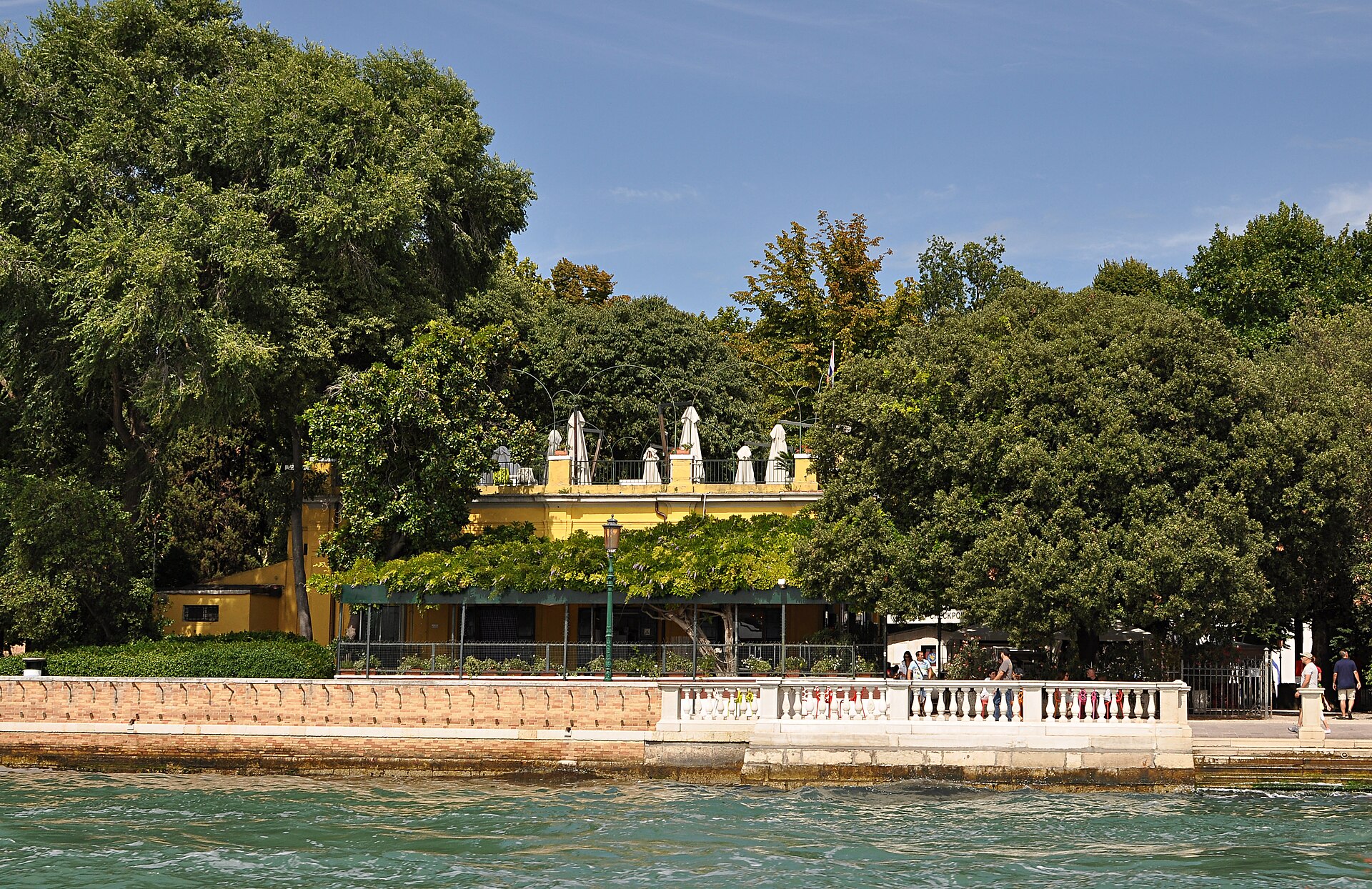
The Giardini are not simply a collection of exhibition rooms. They are a landscape in which architecture, national representation, art, and public space have developed together over more than a century. Walking through the grounds means moving between different eras of building design and different ideas about how a country might present its cultural identity. The buildings themselves can be as revealing as the works temporarily installed inside them.
For a first-time American visitor, this makes the Giardini a rewarding place to slow down. Rather than trying to see every pavilion in one continuous sweep, choose a few encounters and give them enough attention to register. Look at the entrance before stepping inside, notice how a room controls light, and consider how the surrounding trees change your perception of the exhibition. These observations create a richer memory than a checklist of national names.
Biennale Arte 2026 in context
The 2026 International Art Exhibition of La Biennale di Venezia is titled In Minor Keys. Its announced run extends from May 9 through November 22, 2026. October therefore falls within the exhibition period, although the daily schedule, individual access arrangements, and special events should always be checked with the organizer. The Giardini and Arsenale are the two principal exhibition areas, and they offer very different physical experiences.
A useful way to approach the theme is not to search for one definitive interpretation in every work. Contemporary art often invites multiple responses, including uncertainty. The title can encourage visitors to pay attention to quieter gestures, overlooked voices, intimate scales, and the atmosphere of a space, but individual installations must be understood on their own terms. Avoid assuming that every national pavilion follows the central exhibition theme in the same way.
How the Giardini became an exhibition landscape
The Biennale began in the late nineteenth century, and the Giardini gradually became associated with a distinctive international pavilion system. Over time, participating nations developed permanent exhibition buildings in a garden setting. The result is neither a conventional museum campus nor a single architect’s master plan. It is an evolving landscape shaped by politics, architecture, curatorial ambitions, and the practical needs of temporary exhibitions.
This history matters because a pavilion’s façade may communicate one era while the exhibition inside belongs to another. A building can express the assumptions of its construction period even when contemporary artists challenge those assumptions. That tension is part of the experience. Take time to distinguish the architecture’s historical message from the current artistic project rather than treating both as one seamless statement.
The first ten minutes: resist the urge to rush
When you enter the Giardini, the temptation is to move immediately toward a familiar national pavilion or the first building with a short line. Instead, take a few minutes to understand the layout. Look at the paths, the spacing between buildings, the tree canopy, and the way visitors distribute themselves. This initial pause can help you choose a sensible direction and reduce unnecessary backtracking.
Consider your energy level and the weather. A warm afternoon, a sudden shower, or a crowded entrance can change the experience. Keep your phone map available, but do not let navigation dominate every moment. The Giardini are best understood through the relationship between buildings and open space. A short pause outside can be as useful as another hurried interior.
What slow looking actually means
Slow looking is not a requirement to stand silently before every work for a fixed number of minutes. It is a method of noticing before judging. Begin with what is physically present: scale, material, sound, color, movement, or absence. Then ask how the work changes as you move. Does it invite you closer, ask you to look upward, or depend on the surrounding architecture? Only after these observations should you turn to the wall text for context.
This order can be especially liberating for visitors who worry that they do not know enough about contemporary art. You are allowed to be puzzled. You can admire a work’s construction without accepting its premise, or appreciate an idea without enjoying the result. The purpose is to make an independent observation and then place it in conversation with the artist’s explanation.
A practical five-minute exercise
Choose one artwork that initially catches your attention and give it five undistracted minutes. During the first minute, look without reading. During the second, identify the materials and arrangement. During the third, notice how the room affects the work. During the fourth, read the artist or curator’s description. During the fifth, look again and ask what changed in your understanding.
You may discover that the wall text opens a new layer, or that your first impression remains stronger. Both are legitimate outcomes. Repeat the exercise with two or three works during the day rather than trying it at every stop. It turns a large exhibition into a series of encounters you can actually remember.
Read the pavilion before reading the label
A national pavilion can be approached as an architectural object before it is approached as an exhibition venue. Notice the height and proportions of its entrance, the transition from garden to interior, and whether the building feels monumental, intimate, transparent, or enclosed. Consider what kind of visitor movement the design encourages.
Once inside, ask whether the exhibition works with the architecture or deliberately resists it. A temporary wall may hide a historic feature; an installation may draw attention to an overlooked window or corridor. This dialogue between old structure and new artistic intervention is one of the distinctive pleasures of the Giardini. It also prevents the visit from becoming a sequence of isolated rooms.
National identity is part of the story
The pavilion system emerged in a world where nations often used cultural exhibitions to express prestige and identity. Contemporary artists and curators may engage with, complicate, or reject those inherited narratives. A national label does not mean the work represents a single shared opinion or aesthetic. It identifies an institutional framework with its own history.
For American visitors, this offers a useful question: who is speaking in a pavilion, and on whose behalf? Is the exhibition focused on one artist, several voices, a community, or an idea that crosses borders? Avoid reducing the work to a national stereotype. The most interesting encounters often challenge the expectation that a country should present a tidy portrait of itself.
The Central Pavilion and the broader exhibition
The Central Pavilion has a different institutional role from individual national pavilions. Its displays belong to the larger curated exhibition framework rather than simply functioning as another country’s contribution. That distinction helps visitors understand why the artistic experience may change as they move between buildings.
Give the Central Pavilion enough time to understand its curatorial rhythm. Some sections may require reading, listening, or watching rather than quick visual scanning. If you feel overwhelmed, choose a smaller number of works and return to them after a break. An exhibition’s argument often emerges through relationships among works, not through a single spectacular installation.
Sound, video, and time-based work
Contemporary art is not limited to objects that can be understood at a glance. A film may unfold slowly; a sound installation may change as you move; a performance may take place at scheduled intervals. Visitors who rush from room to room can miss the structure of such works and conclude that they are less engaging than paintings or sculpture.
Check whether a work has a stated duration. If a video runs for twenty minutes, decide consciously whether to watch the full cycle rather than stepping in halfway and assuming you have understood it. Carrying headphones may not be appropriate for installations that provide their own sound environment. Follow the venue’s guidance, and allow yourself to skip some works so you can engage deeply with others.
When photography helps—and when it does not
A photograph can preserve a detail you want to revisit, such as the relationship between an installation and a pavilion’s roofline. But photographing every work can become a substitute for looking. Before reaching for your phone, ask what you want to remember. One carefully composed image accompanied by a short note may be more useful than dozens of nearly identical snapshots.
Photography rules can vary by installation. Some works prohibit flash, filming, or photography entirely, and visitors should follow posted instructions. Do not block doorways or narrow circulation routes while framing an image. If people are part of your photograph, respect their privacy. The exhibition is a shared space, not a private photo studio.
The garden itself is an exhibition partner
The Giardini’s paths and trees are not incidental scenery. They provide changes of scale, light, and pace between interiors. After an intense installation, a short walk outdoors can help you process what you have seen. Notice how the garden changes your mood and how the buildings appear from different distances.
In October, light and weather may shift noticeably during the day. The garden can feel warm in direct sun and cool in shade or wind. Dress in layers and carry rain protection when forecasts suggest it. A slower visit is easier when you are comfortable enough to pay attention to your surroundings rather than concentrating on cold hands or tired feet.
An October visit is not automatically crowd-free
Travelers sometimes imagine that the end of summer means Venice has returned to a quiet off-season. October can indeed be more comfortable than peak summer, but the Biennale attracts visitors throughout its run. Weekends, holiday periods, and special events may be busy. Individual pavilion queues are unpredictable, and popularity can change with reviews or social media attention.
A practical strategy is to arrive with priorities but not a rigid sequence. If a pavilion has a long line, consider returning later. Start with an area where movement is easier, and take advantage of quieter moments when they appear. Do not assume an advertised opening hour guarantees immediate admission to every installation; capacity controls and operational changes can occur.
How much time should you allow?
For a meaningful Giardini visit, a half-day can be a reasonable starting point if you are selective. A longer day allows more pavilions and substantial breaks, but even then it is impossible to give every work equal attention. The right duration depends on your interest in contemporary art, tolerance for standing, and willingness to read or watch time-based pieces.
If you are combining the Giardini with the Arsenale, recognize that these are separate sites with their own scale and demands. Trying to cover both thoroughly in a short afternoon often leads to fatigue. Consider assigning a different day to each, especially if the Biennale is a major reason for your trip.
A suggested first hour
Begin with a short orientation walk through the grounds, noting the buildings you most want to enter. Choose one pavilion with an inviting entrance or manageable queue and explore it without a stopwatch. Take a few minutes outside to reflect, then visit a contrasting building. Comparing two very different spaces can be more instructive than visiting five in rapid succession.
At the end of the first hour, ask what kind of art is holding your attention. Are you responding to architecture, moving images, sculpture, or research-based installations? Let that answer guide the next part of your day. Your original plan is a starting point, not a contract.
A second-hour strategy for architecture lovers
If architecture is your main interest, spend part of the second hour observing the exteriors and transitions between pavilions. Look for differences in building mass, roofline, materials, and the treatment of entrances. Consider how a pavilion sits among trees and paths and how its design anticipates visitors.
Inside, pay attention to the ways temporary exhibition construction changes circulation. Some installations use the entire building as a medium; others occupy a single room while leaving the rest of the structure visible. This comparison is particularly valuable at the Giardini because the pavilion buildings belong to different architectural generations.
A second-hour strategy for art newcomers
If you are new to contemporary art, choose variety rather than reputation. Try one installation that uses sound or moving images, one sculptural environment, and one presentation with a strong textual or archival component. You may discover a preference you did not expect.
Do not measure success by whether you immediately understand each work. Contemporary art often asks questions rather than delivering explanations. Write down one question after each visit: what surprised you, what seemed unresolved, or what detail you would like to research later? This simple habit can make the day feel coherent without requiring specialist knowledge.
When to take a break
Breaks are part of a successful art visit, not evidence that you are losing momentum. After several intense rooms, your attention may flatten and the next work can feel less interesting than it deserves. Sit when seating is available, drink water, and step outdoors if conditions permit. Avoid scheduling lunch so late that hunger becomes the dominant feature of your afternoon.
Food and refreshment services may vary, so check the official visitor information rather than assuming every venue has the same facilities. Carry water where permitted and respect rules about eating and drinking inside exhibition spaces. A brief rest can restore your curiosity more effectively than another rushed pavilion.
Reading wall texts without becoming trapped by them
Curatorial texts can be valuable, particularly when works address unfamiliar histories or technical processes. Yet reading every panel before looking at the art can make a visit feel like an exam. Try alternating between observation and explanation. Notice what you see, then use the text to test or deepen that impression.
If the language is dense, identify a single concrete claim: what material is being used, what event is being referenced, or what question the artist is asking? You do not need to absorb every theoretical term. The goal is understanding, not performance. For visitors whose first language is English, confirm which texts or guides are available in English at the venue.
The relationship between Giardini and Arsenale
The Giardini’s distinctive character comes from its garden setting and the concentration of national pavilions. The Arsenale offers a different architectural experience, rooted in Venice’s historic shipbuilding infrastructure and large industrial spaces. The contrast is one reason the two sites should not be treated as interchangeable.
At the Giardini, the rhythm often alternates between separate buildings and outdoor paths. At the Arsenale, visitors may experience long sequences through connected halls. The Giardini encourages comparison among architectural identities; the Arsenale can emphasize continuity and scale. Knowing this difference helps you decide where to spend your limited time.
Why the neighborhood outside matters
The Giardini sit in the eastern part of historic Venice, near residential areas and waterfront routes that reveal another side of the city. If your energy allows, a walk beyond the exhibition can provide valuable context. You move from the international language of contemporary art into streets shaped by everyday Venetian life.
Do not treat residential lanes as a secret attraction to be consumed. Keep voices low, leave entrances clear, and remember that locals are moving through the neighborhood for ordinary reasons. A thoughtful walk can connect the exhibition’s ideas to the living city without turning the neighborhood into a backdrop for photographs.
Getting there without overcomplicating the day
Venice has no road network for cars in its historic center. Most visitors reach the Giardini on foot or by public waterbus, depending on their starting point. A map may show a short straight-line distance across water that does not correspond to a walkable route. Plan with actual pedestrian bridges and vaporetto stops in mind.
Allow extra time for ticket machines, waiting, crowded boats, and walking from the stop to the entrance. If you are coming from a hotel on the opposite side of the city, ask whether the walk itself is part of the day’s pleasure or whether a boat transfer would conserve energy for the exhibition. The most efficient choice depends on where you start.
Tickets and opening hours: verify the current rules
The exhibition’s published dates do not automatically establish every daily opening time, admission category, or special-event arrangement. Check La Biennale di Venezia’s official ticketing and visitor pages before departure. Verify whether your ticket covers the sites you plan to visit, whether timed entry applies, and whether any concession requires documentation.
Buy through official channels or clearly authorized sellers. Be cautious about third-party descriptions that promise special access without explaining the terms. If you plan to use a guide, confirm whether guiding arrangements or group rules apply. An itinerary should be built around confirmed admission, not an assumption that tickets can always be purchased at the gate.
Accessibility and physical comfort
The Giardini contain outdoor paths and historic exhibition buildings whose accessibility features may differ. Visitors with limited mobility should consult current official accessibility information and identify which entrances, ramps, elevators, and rest areas are available. Do not assume that every pavilion has the same level of access.
Venice’s bridges also affect the journey to the site. If a traveler uses a wheelchair, walker, or cane, plan the full route from accommodation to entrance, not just the exhibition itself. A private guide may help organize a suitable approach, but historic infrastructure imposes real constraints. Clear advance information is more useful than vague promises of an effortless visit.
What to bring in October
Wear comfortable shoes with good grip for walking and standing. Carry a lightweight waterproof layer if rain is possible, and consider a warmer layer for wind near the lagoon. Temperatures vary, and 59°F is approximately 15°C—a useful reference for American visitors who are planning what to pack.
Keep your bag manageable. Large bags may be subject to venue restrictions or security procedures, and carrying them through crowded rooms is tiring. A small notebook or phone note can help you remember the names of artists and works you want to revisit. Bring a charged phone for navigation, but give yourself intervals when it stays in your pocket.
Visiting with children or teenagers
Families can enjoy contemporary art when the visit is paced around curiosity rather than endurance. Younger children may respond to color, sound, scale, and unusual materials, while teenagers may enjoy discussing the ideas or politics behind a work. Choose a few accessible encounters and allow the conversation to follow what interests them.
Explain that some installations may contain challenging imagery, loud sounds, or darkened rooms. Preview official descriptions where available and decide what suits your family. Check age guidance and any restrictions on strollers. A short, engaged visit is more valuable than insisting that everyone see every pavilion.
Visiting as a couple or with friends
An art visit can be more interesting when people disagree. Instead of asking only whether someone liked a work, ask what they noticed first or what question the installation raised. Different responses often reveal details one person missed. Allow each other time to explore at slightly different speeds if the layout permits.
Set a meeting point before separating, since reception can be unreliable in some interiors and busy spaces. Choose one or two works to discuss over lunch rather than reviewing the entire day as a list. The conversation after the exhibition is part of the experience and often determines what remains memorable.
A thoughtful photography itinerary
If photography is important to you, concentrate on the relationship between pavilion exteriors, pathways, and light. Architectural photographs can reveal contrasts in proportion and materials without intruding on artworks whose photography rules may be restrictive. Early or later daylight can change the appearance of a façade, but access times must still be respected.
Avoid standing in narrow entrances to frame a perfect symmetrical image while other visitors are trying to pass. Look for details that tell a story: a threshold, a roofline against trees, or the way a contemporary intervention meets an older wall. These images are often more distinctive than generic shots of crowded exhibition rooms.
How to avoid Biennale fatigue
Biennale fatigue is the moment when one ambitious artwork begins to blur into the next. It happens to experienced museumgoers as well as first-time visitors. The remedy is not greater determination. It is selectivity. Decide in advance that you will miss some things and that this is acceptable.
Use a simple rhythm: one demanding pavilion, one lighter or shorter visit, then a break. If a work stays with you, return to it rather than moving forward out of obligation. Slow looking is an editorial choice about what deserves attention. It can transform a crowded international exhibition into a personal sequence of discoveries.
What not to assume about a national pavilion
Do not assume that a pavilion is open every minute of the advertised exhibition day, that a work will be the same throughout the season, or that the artist will be present. Installations can require maintenance, and access may be temporarily limited for operational reasons. Special performances often have separate schedules.
Likewise, do not assume a pavilion’s architecture reveals the content of the current exhibition. An austere building may contain playful work; a monumental entrance may lead to an intimate presentation. The contrast between expectation and reality is one of the reasons to approach each pavilion with an open mind.
A half-day route without a checklist
Start with the landscape and the first pavilion that genuinely interests you. Spend time with the exhibition, then step outside and observe the building from a different angle. Visit a second pavilion with a contrasting architectural character. Take a break and consider whether you want to deepen your understanding of the central exhibition or explore another national presentation.
This is a method rather than a fixed route because crowd patterns and access change. The goal is to finish with several clear impressions and a sense of how the Giardini work as a place. If you have extra time, choose one final stop based on what you have learned about your own interests.
A full-day plan for art enthusiasts
Use the morning for two or three priority pavilions while your attention is fresh. Spend late morning or early afternoon in the Central Pavilion, with time for longer works. Take a proper break. In the afternoon, revisit one favorite installation or explore buildings you initially passed by.
End with a walk through the garden that connects the separate experiences. Think about how the architecture framed the art and how your understanding changed. Avoid adding the Arsenale as a compulsory final sprint unless you have confirmed that your schedule and energy genuinely allow it.
What an experienced local guide can add
A local guide can help place the Giardini within Venice’s urban history and explain the practical relationship between exhibition sites, neighborhoods, and transportation. That is different from claiming specialist knowledge of every artwork. The strongest guiding approach combines verified information with questions that encourage visitors to look for themselves.
Tour Leader Venice draws on local guiding experience, including Igor Scomparin’s work as a licensed guide since 1997. That experience is especially useful for realistic pacing, routes across bridges, and choosing how to combine art with the rest of a Venice stay. A good guide knows when to provide context and when to let an artwork speak without interruption.
Why this approach matters beyond 2026
A slow-looking visit offers a skill that remains useful after you leave Venice. You learn to distinguish immediate reaction from considered observation, to notice how architecture shapes an encounter, and to accept that not every artwork must deliver a clear message. Those habits can enrich visits to museums and galleries anywhere.
The Giardini are particularly suited to this kind of attention because the experience unfolds across buildings, paths, trees, and shifting light. In October 2026, the Biennale provides the occasion. The deeper reward is learning to look carefully at a place where international artistic ambitions meet the everyday landscape of Venice.
Further reading and planning
Explore Venice’s hidden historical details, understand how Venice works without cars, and read the stories of Venetian women artisans for cultural context beyond the exhibition. For official tickets and updated hours, consult La Biennale di Venezia.
Frequently Asked Questions
How much time should I spend at the Giardini during Biennale Arte 2026?
Allow at least a half-day for a selective visit. A full day is better if you want to spend meaningful time in several pavilions and the Central Pavilion without rushing.
Is October a good month to visit the Venice Biennale Giardini?
October falls within the announced May 9–November 22, 2026 exhibition period. Weather can be comfortable for walking, but crowds and opening arrangements vary, so check official visitor information.
Can I visit the Giardini and Arsenale in one day?
It may be possible to sample both, but they are large, separate sites. Art-focused visitors often benefit from visiting on different days or choosing clear priorities.