Venice is easy to recognize and surprisingly difficult to read. Millions of photographs have taught us to look for gondolas, palaces, and the glittering sweep of the Grand Canal. Yet the city’s more revealing stories often sit at ankle height, above a doorway, or in the name painted on a wall. The secret is not to find a place nobody has photographed. It is to notice what an ordinary Venetian street is trying to tell you.
This guide explores ten small clues to Venice’s working past and present. It is designed for curious travelers who want more than a checklist of landmarks. None requires trespassing or access to private property. Most can be noticed while walking respectfully through public streets. Take your time, leave room for residents, and remember that Venice is a home as well as a destination.
1. The white stone street names are a map of vanished trades
A Venetian street name is often a miniature archive. Look for Calle del Forno, the street of the oven, or names referring to smiths, boatbuilders, merchants, and inns. These names were not invented to entertain visitors. They grew out of everyday geography: people needed to know where work happened, where bread was baked, and which family or workshop occupied a corner. Even when the trade has disappeared, the name can survive. Read these signs slowly rather than treating them as directions alone. Their spelling and placement can vary, and a single name is not proof that a particular workshop occupied the exact building beside it. The more interesting question is what kind of neighborhood once needed that trade.
2. The stone wellheads reveal how a city surrounded by water found fresh water
In a Venetian campo, the carved stone structure that resembles a well is often a vera da pozzo, a wellhead. Venice is surrounded by saltwater, so traditional drinking-water systems depended on collecting and filtering rainwater through carefully constructed underground cisterns. The visible wellhead was only the elegant tip of an infrastructure system beneath the paving. Imagine a square not simply as a meeting place but as a water catchment. The design of the surface, the placement of drains, and the surrounding buildings all mattered. Many historic wellheads no longer supply drinking water. They remain reminders that the city survived through engineering as much as art.
3. The raised doorway threshold tells a story about tides
Look down before looking up. A doorway may have a raised stone threshold, a removable flood barrier, or a modern protective track. These details belong to the ongoing negotiation between buildings and water. Venice experiences acqua alta, unusually high tides that can flood low-lying places, although the severity differs dramatically from one street to another. A barrier is not necessarily a sign that a home floods every week; it is evidence that someone has planned for the possibility. Visitors often imagine water levels as a uniform sheet across the city. In reality, elevation, drainage, wind, and tidal conditions create a more complicated patchwork. A local guide learns to think in routes and access points, not only distances.
4. The small religious shrines make a neighborhood feel inhabited
At a street corner, a tiny image of the Madonna or a saint may be protected by glass, framed in stone, or accompanied by a small lamp. These shrines are known as capitèli. Some are modest and easily overlooked; others have been maintained or restored over generations. They reflect a city where religious practice once extended far beyond the doors of monumental churches. Their importance is not limited to art history. They mark thresholds, crossroads, and the scale of neighborhood devotion. Do not assume every shrine is ancient or untouched. A repaired frame or newly placed flowers may tell a more interesting story: a continuing relationship between residents and the place.
5. The carved doorbell and family crest hint at the people behind the facade
Venice rewards close looking at doors. Above an entrance you might notice a coat of arms, a sculpted relief, a carved stone frame, or a later brass nameplate. A palazzo can contain layers of ownership and adaptation, and the most dramatic facade is not always the most revealing. Family emblems need careful interpretation: a crest may have been moved, restored, reused, or associated with a building only during one phase of its history. Instead of guessing an illustrious owner, observe how the entrance addresses the street or canal. Does it face a narrow pedestrian route or a landing for boats? That question often tells you more about how the building functioned.
6. The boat landing is Venice’s second front door
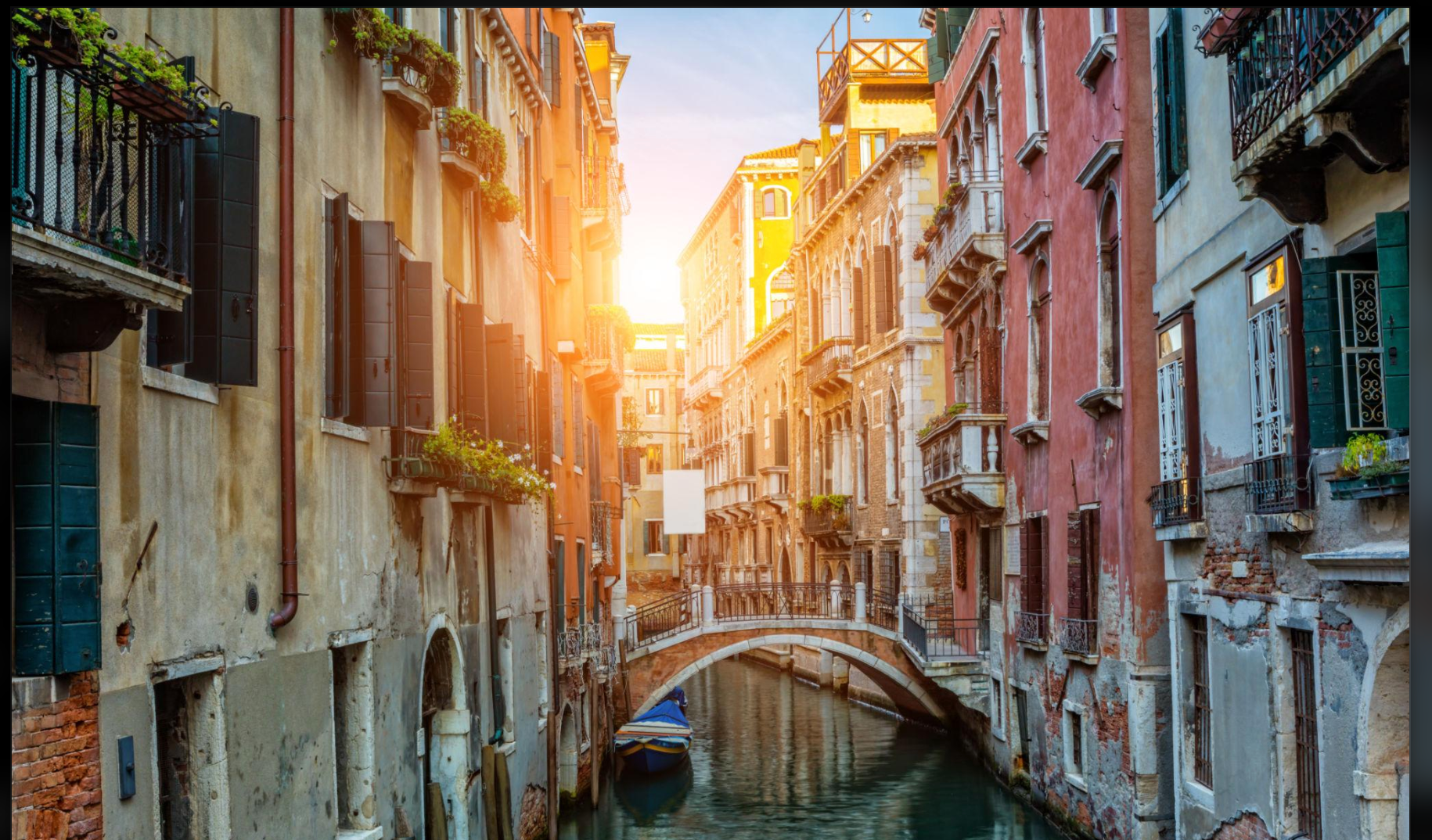
A water entrance changes how you read the city. What appears to be a back wall from a pedestrian lane may have been a principal arrival point for goods or guests. Look for steps descending into a canal, iron mooring rings, protective stonework, and doors positioned at water level. These are working architectural details, not just picturesque decorations. Their usability changes with water level and boat size. Some canals are difficult to navigate at high tide because bridges leave too little clearance; at low tide, shallow water can create a different problem. This is why a hotel described as having a private water entrance is not automatically reachable by every boat at every hour.
7. The uneven paving records repairs, not carelessness
Venetian paving is a visual patchwork. You may find stone slabs, narrow strips, replaced blocks, and surfaces that slope subtly toward drains. These variations are the result of maintenance, shifting use, utility work, and long adaptation. It is tempting to label every irregularity medieval, but Venice has been repaired continuously. A modern repair can sit beside an older piece of stone. Pay attention to where rainwater goes and how the street meets the building wall. These quiet engineering choices explain more about everyday resilience than a photograph of a perfectly empty canal.
8. The little bridge without a grand view may be the important one
Some of Venice’s most useful bridges are small and uncelebrated. They connect short pedestrian routes across canals that once separated communities, workshops, and parish territories. Bridges also shape the way visitors move: a destination that looks nearby on a map can require a substantial detour to reach the next crossing. The steps can be awkward for wheelchairs, strollers, and heavy luggage. When planning a walk, count bridges rather than measuring distance alone. This practical habit changes how you understand the city. The network was built around water and islands, not around the straight-line logic of a modern road grid.
9. The traces of former workshops survive in plain sight
A broad ground-floor opening, a sturdy lintel, or a building set beside a small canal may hint at an earlier commercial use. Venice’s economy depended on workshops, warehouses, and specialized labor as well as maritime trade. But architecture is not a guessing game: not every large door belonged to a warehouse, and buildings often changed purposes. Look for clusters of clues rather than one dramatic detail. A street name, nearby landing, and unusually practical entrance together can suggest a neighborhood’s former role. The city becomes richer when you see labor and craft alongside churches and palaces.
10. The quiet campo is still a living room, not an attraction
A small square can seem like a secret discovery, especially when there is no souvenir shop and no crowd. Yet it may be the daily meeting place of residents, children, and neighbors. The benches, laundry, shop shutters, and conversations are not performances for travelers. Enjoy the atmosphere without treating private doorways or windows as photo sets. Keep voices down in residential lanes, make room for people carrying groceries, and avoid blocking bridges for pictures. The most meaningful hidden detail is sometimes not a historic object at all. It is the evidence that Venice remains a lived-in city.
How to explore these details respectfully
Choose one neighborhood and spend an hour there rather than racing across the city. Stop where pedestrian traffic can pass, look up at the street names, and examine the relationship between buildings, water, and paving. Avoid entering private courtyards or photographing residents through their windows. If a passage is marked private, treat it as private. A quiet street is not an invitation to occupy it.
Going Deeper: How to Read Venice Like a Local
Read the city from the ground up
A Venetian street can be read almost like a layered document. Begin with the paving, then look at the bottom of the walls, the doors, the first-floor windows, and finally the roofline. Each level answers a different question. Paving tells you how people move; thresholds suggest how buildings meet the street; openings hint at former uses; and rooflines reveal repairs and changing domestic needs. Resist the temptation to assign a precise century to every stone. Venice has been rebuilt repeatedly, and materials were often reused. The point of looking closely is not to collect dates but to understand how a settlement on islands remained adaptable. This is especially useful in a modest campo where there is no famous monument to distract you. Stand to one side, let pedestrians pass, and spend two minutes observing the physical relationships between buildings, canals, and walking routes.
Why a short walk can reveal more than a long itinerary
Distances on a Venice map are deceptive. A direct-looking route may cross several bridges, pass through a narrow bottleneck, or end at a canal without a crossing. That inconvenience is also a historical lesson: the pedestrian network grew around waterways and neighborhood connections rather than a modern street grid. Instead of racing between six landmarks, choose a compact area and follow its internal logic. Look for a church, a wellhead, a small shopfront, and a water landing within a few minutes of one another. Together they reveal how a neighborhood supplied its daily needs. For families, this makes an excellent observational game: ask children to find the next bridge, a mooring ring, and a carved emblem. The exercise works without trespassing or disturbing anyone, and it turns a walk into a way of noticing how the city functions.
The practical meaning of a water-facing entrance
A door opening onto a canal can appear romantic to a visitor, but its historical value was often straightforward. Water was the route for moving heavy objects, fuel, food, and merchandise. A landing connected a building with the working transportation system, while the land entrance connected it with the pedestrian neighborhood. The relative importance of those entrances changed according to the building’s function and its occupants. Not every canal door belonged to a noble palace; commercial premises and ordinary houses also needed access. Today, a landing may still be used for deliveries, maintenance, or private boats. If you see workers unloading, give them space. Never step onto a private landing for a photograph. Observing from a public bridge can reveal how carefully a boat must be positioned while people carry goods across the small gap between moving vessel and fixed stone.
What a campo reveals about neighborhood organization
Venetian campi were not designed merely as scenic places to sit with a gelato. They helped organize community life. A church might provide a recognizable center, a cistern helped address the need for fresh water, and surrounding premises accommodated homes, workshops, and commerce. The arrangement differs from square to square, which is why generalizations should be cautious. In some places the old functions are legible; elsewhere centuries of alteration have blurred them. Look for the way pedestrians enter and leave. Does a narrow passage lead toward a bridge? Does a larger route pass the church? Are there traces of older openings at ground level? Such questions are more revealing than simply asking whether a campo is ‘hidden.’ Even the quietest square is part of somebody’s routine. Keep conversations at a reasonable volume and avoid photographing residents through their windows.
How rainwater shaped ordinary architecture
One of the city’s great practical paradoxes is that Venice was surrounded by water yet had to work hard to secure drinkable supplies. Rainwater-collection systems beneath public and private spaces helped meet that need. The carved stone wellhead was the visible endpoint of a larger arrangement involving drainage, filtration, and storage. Visitors often notice the sculptural form but overlook the surrounding surface, where subtle slopes could help direct rainfall. These structures needed maintenance and protection against contamination, and their presence reflects sustained investment rather than a miraculous solution. The precise construction varied, so a wellhead should not be treated as a universal engineering diagram. Today, historic wellheads are not drinking-water sources. Admire the workmanship from the ground, and look nearby for modern public fountains where drinking water is explicitly available.
Signs of work that survive after the workshop has gone
Venice’s economy was never confined to the monumental buildings shown in guidebooks. It depended on countless smaller trades: people repairing vessels, handling textiles, preparing food, storing merchandise, and supplying households. A street name may preserve the memory of an occupation long after the workshop has disappeared. An unusually wide ground-floor opening might suggest former commercial use, although such clues are not proof on their own. A careful guide will distinguish what can be observed from what is documented. That distinction matters because old cities invite attractive but unreliable stories. The most rewarding approach is to pair visible details with historical maps, archival research, or trustworthy local interpretation. The result is richer than a list of colorful legends: it reveals the working systems that made the celebrated art and architecture possible.
How to interpret a family emblem without inventing a story
A carved shield above a doorway can make a building feel instantly connected to the republic’s aristocratic past. Yet emblems can be moved, reused, restored, or added during later renovations. Some belong to institutions or religious patrons rather than the family currently associated with the property. A name attached to a palace in a modern guidebook may reflect only one chapter of its history. Treat the carving as an invitation to investigate, not a complete biography. Notice its placement, the material, and whether it seems integrated with the surrounding masonry. If you want a confident identification, consult a reliable architectural history or ask a qualified local guide who can explain the evidence. This modest discipline makes the city more interesting: it acknowledges how many generations altered the same buildings to meet different needs.
The soundscape is part of the evidence
Venice’s absence of ordinary street traffic changes what you hear. In residential areas, footsteps, conversation, bells, water against stone, and the sound of boats can be unusually distinct. But it would be misleading to call the city silent. Delivery engines, maintenance equipment, crowded bridges, and early-morning work are part of everyday life. Listen for the difference between a main water route and a narrow side canal. A boat passing under a bridge may temporarily dominate the sound of an otherwise quiet neighborhood. This is not merely atmosphere: sound helps reveal the transportation network and the timing of local routines. Early mornings can be rewarding, but do not approach working boats or block their mooring points. The aim is to notice the city without interfering with it.
A responsible route for first-time visitors
A good first exercise is to leave a busy landmark and walk into one neighboring district without trying to cover everything. Choose a public square as your starting point, identify its church and wellhead, then follow a pedestrian route toward the nearest canal. On the way, look for a traditional street-name inscription, a low doorway, and a bridge whose steps show signs of wear. Spend time at each stop rather than accumulating photographs. Use an offline map if needed, because the labyrinth can be confusing even for experienced travelers. Allow extra time if anyone in your party finds bridges difficult; Venice’s repeated steps can be tiring. When you finish, pause at a café rather than rushing to the next attraction. The small discoveries will be easier to remember when they form a coherent neighborhood story.
What local expertise adds to the experience
A knowledgeable guide does more than identify an object. The most valuable explanations connect an apparently minor detail to larger questions: where did drinking water come from, how were goods unloaded, why did a street carry a particular name, and how did families adapt buildings over centuries? Good interpretation also admits uncertainty. Some legends are delightful, but not every popular claim can be supported by records. Visitors should feel comfortable asking what historians know, what they infer, and what remains debated. That approach respects both the city and the people who have studied it. Venice rewards curiosity because its historical systems are still visible in fragments. Once you begin recognizing those fragments, even a short walk between two famous attractions can become a meaningful encounter with the city’s past.
Final thoughts
The most rewarding Venice is not necessarily hidden behind a locked door. It is visible to anyone willing to slow down and ask better questions. A wellhead becomes an engineering story; a threshold becomes a lesson in tides; a mooring ring becomes evidence of a second street system. Together, these details reveal a city made by work, ingenuity, belief, and daily routines.
Frequently Asked Questions About Hidden Venice
What are some hidden details to look for in Venice?
Look for traditional Venetian street-name signs, stone wellheads, raised door thresholds, old mooring rings, and architectural traces of former trades. These small details reveal how Venice adapted to water, commerce, and daily life.
Can you discover Venice’s hidden history without a guided tour?
Yes. Many historical clues are visible from public streets and squares. Explore one neighborhood slowly, observe details without entering private property, and use reliable historical sources to understand what you see.
What is the best way to explore authentic Venice away from crowds?
Visit residential neighborhoods at a relaxed pace, especially earlier in the day, and avoid blocking narrow bridges or doorways. A licensed local guide can help explain historical details while respecting the people who live there.