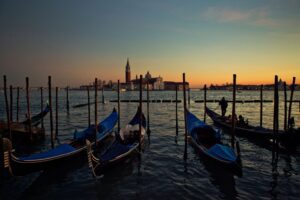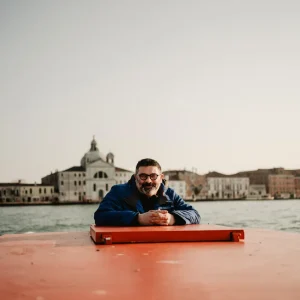
Guests often ask me how to get past the postcard version of Venice — the version defined by St. Mark’s Square, gondola photos, and a rushed afternoon of sightseeing. My honest answer isn’t about finding hidden streets, though that helps. It’s about timing your visit, even slightly, around the living rituals Venetians still keep. This city’s oldest traditions aren’t museum pieces. They’re active, ongoing, and open to anyone willing to show up. Here’s how I’d point a curious traveler toward that version of Venice.
The Festa del Redentore: Venice’s Most Emotional Night
If I had to pick one festival that reveals something real about Venetian identity, it would be the Festa del Redentore, held every year on the third weekend of July — in 2026, on July 18th and 19th. The origins are genuinely moving: the celebration commemorates the end of a devastating plague that killed roughly 50,000 Venetians in 1576, after the city’s Senate vowed to build a church dedicated to Christ the Redeemer if the epidemic ended. Andrea Palladio designed that church, which still stands on Giudecca island today.
What makes the Redentore unforgettable isn’t just the fireworks over St. Mark’s Basin, spectacular as they are. It’s the temporary votive bridge, over 300 meters long, built each year to connect the Zattere in Dorsoduro directly to the church on Giudecca — a pilgrimage thousands of Venetians still make on foot, exactly as their ancestors did. On Saturday evening, the lagoon fills with thousands of decorated boats, families sharing traditional dishes like sarde in saor while waiting for the fireworks to begin around 11:30 p.m. Locals call it la Notte Famosissima — “the most famous night” — and many consider it more emotionally significant than Carnevale itself.
The Regata Storica: A Republic’s Pageantry, Still Performed
Held every year on the first Sunday of September — September 6th in 2026 — the Regata Storica is Venice’s grand historical procession and rowing competition, with origins reaching back to the 13th century. The Grand Canal transforms into a genuine stage: an elaborate historical parade featuring a reconstructed bucintoro, the ceremonial state barge of the Doge, followed by fiercely contested races between traditional Venetian rowing boats.
What I find most striking about the Regata Storica is how it collapses the distance between Venice’s past and present. This isn’t a costumed reenactment performed for tourists — it’s a genuine competition, with real stakes and real local pride, that happens to be staged in period regalia because that’s simply how Venice has always done it. Watching from along the Grand Canal, surrounded by Venetians shouting encouragement to specific rowers by name, gives a far more visceral sense of the city’s maritime identity than any museum exhibit could.
Festa della Salute: A Quieter, Deeper Ritual
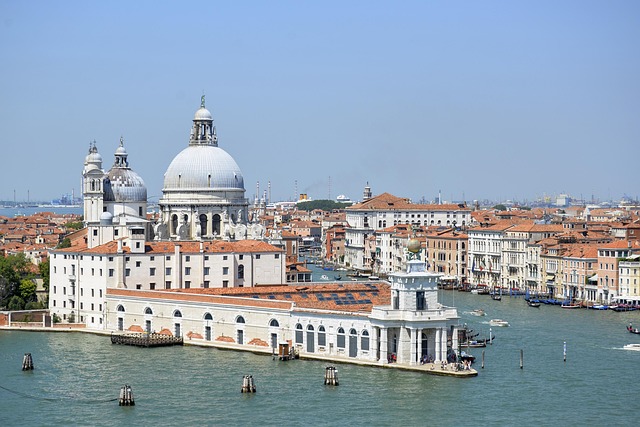
Less spectacular than the Redentore or Regata Storica, but arguably more moving, is the Festa della Madonna della Salute, held every November 21st. Like the Redentore, its origins trace back to a plague — this time the outbreak of 1630-1631 — and it centers on a pilgrimage across a specially built votive bridge spanning the Grand Canal, connecting San Marco directly to the Basilica di Santa Maria della Salute.
This is the festival I most often recommend to guests who want to witness Venetian tradition without the crowds and spectacle of summer events. It’s quieter, more contemplative, and genuinely intimate — thousands of Venetians crossing the bridge to offer thanks and light a candle, a ritual maintained continuously since the seventeenth century. Visiting during the Salute gives a very different, more reflective sense of the city’s relationship with its own history than the fireworks-and-celebration atmosphere of July.
Living Rituals That Happen Every Week, Not Just Once a Year
Beyond the major festivals, Venice keeps smaller, weekly rhythms that most visitors never notice simply because no one points them out. The erbaria and pescheria markets near Rialto run a genuine daily commercial rhythm that predates tourism by centuries — arrive early enough and you’ll see restaurant owners and home cooks doing the same negotiating their grandparents did. Cicchetti hour in a bacaro, standing at the bar rather than seated at a table, is itself a daily ritual worth participating in rather than simply observing. Sunday morning Mass at a neighborhood church, even for non-religious visitors willing to observe respectfully, offers a glimpse of parish life that has structured Venetian sestieri for centuries.
Why Timing Your Trip Around These Rituals Changes Everything
A Venice trip built purely around sightseeing hours — museums open, landmarks photographed, checklist completed — inevitably produces the postcard version of the city. A trip that happens to overlap with the Redentore’s votive bridge, or the Regata Storica’s procession, or even just a Sunday morning market, produces something categorically different: a glimpse of Venice functioning as itself, rather than performing for visitors.
I don’t think every trip needs to be built around a festival date. But I do think knowing these rituals exist, and understanding what they mean to the people who keep them, changes how a visitor experiences even an ordinary day in the city. Once you know the Redentore commemorates a plague that nearly emptied Venice, the Palladian church on Giudecca stops being just a beautiful building and becomes a four-hundred-year-old promise, renewed every July.
Bringing This Into Your Trip
If your travel dates happen to align with one of these festivals, I’d strongly encourage building your itinerary around it rather than treating it as an inconvenience to work around. If they don’t, seek out the smaller weekly rituals instead — an early morning at the markets, a cicchetti crawl through a neighborhood bacaro, an unhurried Sunday walk through a quiet sestiere. The goal isn’t to check off a “traditional Venice” box. It’s to notice that the city’s oldest rhythms are still running, quietly, underneath the tourist routes, and to let your trip intersect with them rather than only with the landmarks.
If you’d like a Venice trip built around its living traditions — timed to a festival, or simply attuned to its daily rhythms — I’d be glad to help design it. You can learn more about my private tours or get in touch to start planning your visit.
When does the Festa del Redentore take place in 2026?
The Festa del Redentore takes place on Saturday, July 18, and Sunday, July 19, 2026, with the fireworks display over St. Mark’s Basin beginning around 11:30 p.m. on the Saturday.
What is the Regata Storica and when is it held?
The Regata Storica is Venice’s historic rowing competition and processional pageant on the Grand Canal, held every year on the first Sunday of September — September 6, 2026 — with origins dating back to the 13th century.
Is Festa della Salute worth attending compared to Venice’s more famous festivals?
Yes, particularly for travelers seeking a quieter, more reflective experience — it’s less crowded than the Redentore or Carnevale, but offers a genuinely moving glimpse of a centuries-old Venetian ritual of gratitude and remembrance.