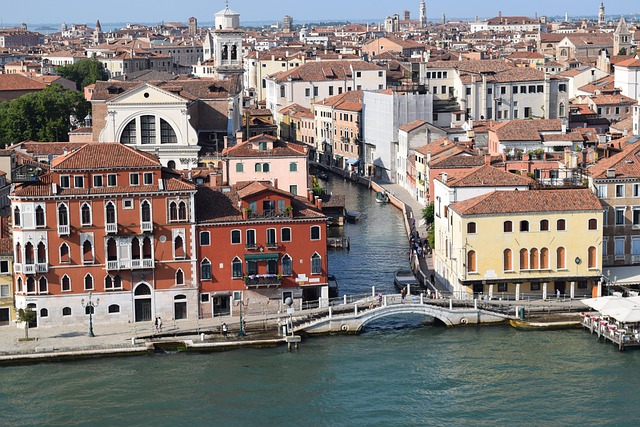
I’ve had this conversation with guests hundreds of times: they’re choosing between three or four European cities for a trip, Venice is on the list, and they ask me, honestly, whether it’s worth prioritizing over Paris, or Rome, or wherever else is competing for their limited vacation days. My answer, after nearly thirty years living and guiding here, isn’t really about Venice being more beautiful than those cities, though I’d argue it often is. It’s that Venice is the one city on that list where waiting has a cost the others don’t.
This Isn’t a City That Will Look the Same in Twenty Years
Paris will still be Paris in two decades. Rome will still be Rome. Venice is different, and not in a comfortable, romantic way. The city sits on 118 islands in a lagoon, and rising sea levels combined with land subsidence mean its relationship with water — already precarious enough to require its own flood-warning siren system — is only becoming more fragile. The population within the historic center has been declining for decades, and current estimates put it well under 50,000 residents, a number that continues to shrink each year even as the city becomes more central to global tourism.
I’m not saying Venice is disappearing tomorrow. It’s not, and it has weathered centuries of existential threats before. But this is genuinely one of the only major European destinations where “I’ll get to it eventually” carries real risk. The Venice your grandparents may have visited, and the Venice your grandchildren might visit, are not guaranteed to be experientially the same place.
It’s the Only City Where the Journey Itself Is the Attraction
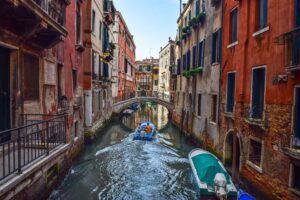
In most European cities, you arrive, then you go see things. In Venice, arriving is seeing something. Stepping out of Santa Lucia station directly onto the Grand Canal, with no road, no car, no transition period between “travel” and “destination,” is an experience genuinely unavailable anywhere else on this list. Every other great European city eases you in gradually. Venice doesn’t ease you in at all.
You Cannot Have This Kind of Trip Anywhere Else in Europe
A guest once told me that Venice was the first city she’d ever visited where she never once looked at a street to check for traffic. That’s not a small thing. An entire mode of moving through a city — walking without vigilance, without the low-grade background stress of vehicles — is something most travelers don’t realize they’re missing until it’s suddenly, completely absent. Combined with the fact that Venice simply cannot be rushed (there’s no ride-share to speed up a delay, no shortcut that isn’t another set of bridges and narrow calli), the pace of a Venice trip ends up fundamentally different from a trip to any other European capital.
It Rewards a Single Visit More Than Almost Anywhere Else
Some cities need repeat visits to click — you have to learn them, build familiarity, know where to go. Venice, in my experience, delivers a genuinely complete, moving experience on a first visit, provided the time is used well. A single well-planned Venice trip — a few days, unhurried, guided by someone who knows where the quiet corners are — tends to leave a stronger impression than a rushed week spread across three other cities. This isn’t a knock on Rome or Paris. It’s a reflection of how differently Venice is built: dense, walkable, and compact enough that meaningful depth is achievable in a way it simply isn’t in a sprawling capital.
The Legal Protection Around Its Monuments Is Unusual, and It Matters
One detail that consistently surprises first-time visitors: Italian law restricts leading groups inside Venice’s major monuments to licensed guides. This isn’t bureaucratic friction — it’s a genuine safeguard for how these spaces are experienced, ensuring the person interpreting St. Mark’s Basilica or the Doge’s Palace for you has real expertise rather than a script memorized the week before. Few other European cities regulate this so specifically, and it noticeably changes the quality of guided experience available here compared to destinations where anyone can lead a tour group through a cathedral.
What Makes This Different From Every Other “Bucket List City”
Venice tends to get filed under “romantic getaway” or “honeymoon destination” in a lot of travel writing, which undersells it. It’s a genuinely serious art and architectural destination, a living case study in how a city adapts (or doesn’t) to environmental pressure, and one of the only places in the world where an entire major population center still functions without automobiles. If you want the deeper case for exactly what makes it structurally, historically unlike anywhere else, I’ve laid that out in detail separately. But the short version, for anyone still weighing whether to prioritize Venice on a European itinerary, is this: it’s not competing with Paris or Rome for the same kind of experience. It’s offering something categorically different, and it’s offering it on a timeline that isn’t guaranteed to hold indefinitely.
If Venice has been on your list for a while, I’d encourage treating that instinct seriously rather than saving it for “someday.” I’d be glad to help you plan a first visit that actually does the city justice. You can learn more about my private tours or get in touch to start planning.
Is Venice worth visiting if I’ve already been to Rome or Florence?
Yes — Venice offers a fundamentally different kind of experience, built around water, car-free movement, and a pace of travel unavailable in any other major Italian or European city, making it a genuinely distinct addition rather than a repetitive one.
Why do people say Venice should be visited sooner rather than later?
Venice faces ongoing environmental pressure from rising sea levels and land subsidence, along with a steadily declining resident population, meaning the city’s character and daily rhythms may shift more noticeably over time than in most other European destinations.
How many days should I spend in Venice on a first visit?
Most first-time visitors do well with a minimum of two to three full days, which allows enough time to see the essential sights while also experiencing the slower, unhurried pace that makes Venice distinct from other European cities.