Three days is, in my experience, the sweet spot for a Venice visit. It’s enough time to see the essential sights properly, without rushing through the Basilica the way day-trippers have to, but short enough that you won’t run out of things that feel fresh. Here’s how I’d structure it if you were one of my clients.
Day 1: The Historic Core — San Marco and Castello
Morning: St. Mark’s Basilica and the Doge’s Palace
Start early — genuinely early. St. Mark’s Basilica typically opens to visitors around 9:30am on weekdays, and the crowds build fast; arriving right at opening, or booking an early-access slot before the general public is admitted, is the single biggest thing you can do to improve this day. The Doge’s Palace is open daily, generally from 9am to 6pm with last admission an hour before close, and a full visit — including the Bridge of Sighs and the palace’s former prison cells — takes about two to three hours.
This is where I’d strongly encourage going with a licensed guide rather than alone. Beyond the legal requirement for anyone leading tours inside the monument, a guide’s context transforms the visit: the Basilica’s gold mosaics were assembled over centuries and the building itself quietly incorporates treasures brought back after the sack of Constantinople in 1204 — details easy to miss walking through alone with an audio guide. Budget roughly half a day for both sites together, plus a coffee break in between for the security line reset.
Dress note: shoulders and knees covered for the Basilica, no exceptions — pack a light scarf even in summer heat.
Afternoon: Riva degli Schiavoni to Castello
After lunch, walk east along the Riva degli Schiavoni, the wide lagoon-facing promenade that gives you one of Venice’s great open views — the Doge’s Palace behind you, San Giorgio Maggiore across the water. Keep walking into Castello, Venice’s largest and least crowded sestiere. This is where you start to feel the city breathe a little — fewer tour groups, more actual Venetians going about their day. Wander toward Via Giuseppe Garibaldi, one of only two streets in the city technically called “via,” for a sense of everyday local life.
Evening: Cicchetti in a Quiet Corner
For your first dinner, skip the restaurants directly on St. Mark’s Square — they’re priced for tourists passing through once, not for a meal you’ll actually remember. Instead, find a bacaro for a cicchetti-style dinner: small plates, a glass of wine, standing at the bar or at a small table, the way Venetians actually eat on a Tuesday night.
Day 2: Grand Canal, a Gondola, and the Lagoon Islands
Morning: Rialto Market and Ruga degli Orefici
Start at the Rialto Market, ideally before 10am while the fish and produce stalls are still in full swing — this is the Erbaria and Pescheria, and it’s one of the few places in Venice where you’ll watch the city functioning as a working port rather than a stage set. From there, walk through Ruga degli Orefici, the goldsmiths’ street that’s been Venice’s jewelry trade center since the Middle Ages, and cross the Rialto Bridge itself for the classic Grand Canal photo.
Midday: Murano
Take the vaporetto out to Murano — about 20 minutes from the Fondamente Nove stop. This island has been the seat of Venetian glassmaking since 1291, when the Republic ordered the furnaces relocated here, both for fire safety and to keep the techniques contained. Watch a glassblowing demonstration if you can — a maestro shaping molten glass freehand in under a minute is genuinely one of the most impressive craft demonstrations you’ll see anywhere. If time allows, have lunch on the island rather than rushing back.
Afternoon: A Gondola Ride Through the Back Canals
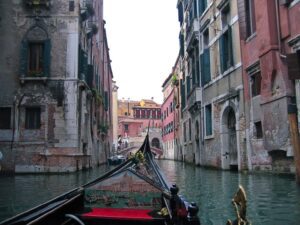
Back in central Venice by mid-afternoon, this is the moment for your gondola ride. The city sets a fixed official rate — €90 for a 30-minute daytime ride, per gondola, holding up to five passengers — so splitting it among your group brings the cost down considerably. Ask specifically for a route through Dorsoduro or Cannaregio’s quieter canals rather than the crowded stretch near San Marco; you’ll get the same magic without fighting for space against a dozen other boats.
Evening: Dorsoduro
Wind down in Dorsoduro, Venice’s most artistic, least touristy central neighborhood. Walk the Zattere promenade facing the Giudecca Canal at golden hour — it’s one of the best sunset spots in the city and where Venetians themselves go for an evening gelato. Dinner here tends to be more relaxed and better value than around San Marco.
Day 3: Beyond the Center — Choose Your Own Adventure
Your third day is where I’d branch depending on what you’re actually drawn to. I typically give clients two strong options.
Option A: Burano and Torcello — Color and Quiet
If you want lagoon islands with a completely different character than Murano, take the vaporetto (about 45 minutes) out to Burano, famous for its rainbow-painted houses — originally colored so fishermen could spot their own homes through lagoon fog — and its centuries-old lace-making tradition. Pair it with a short hop to nearby Torcello, Venice’s original settlement, now nearly empty apart from its extraordinary Byzantine cathedral. This is the slower, more contemplative version of a lagoon day.
Option B: The Prosecco Hills — Wine Country in an Afternoon
If you’d rather trade water for hills, a day trip to the Prosecco Hills — about an hour from Venice — takes you into a UNESCO World Heritage vineyard landscape completely unlike anything in the city. Small family wineries here produce genuine DOCG Prosecco, a regulated designation far removed from the generic Prosecco on most American restaurant menus. This is consistently the day my clients describe as the surprise highlight of their whole Italy trip, precisely because it’s such a contrast from the density of central Venice. I run a private Prosecco Hills day trip built specifically around this contrast.
Evening: A Proper Last Dinner
Whichever you choose, come back into Venice for a final evening in a neighborhood you haven’t yet explored — San Polo is a good pick, with its own quieter calli once the day-trip crowds thin out after 6pm. This is the night to book somewhere a little more special than a quick cicchetti stop.
A Few Practical Notes for Fitting This Into Real Life
On the Venice Access Fee: if any of your three days fall on one of the city’s designated peak dates between April and July, and you’re not staying overnight within Venice, you’ll need to register for the day-tripper access fee. If you’re sleeping in the city — which a proper three-day visit almost certainly requires — you’re exempt from the fee itself, though you still need to register for an exemption QR code. I’ve written a complete walkthrough of exactly how this works if you want the full detail.
On timing your monument visits: book Basilica and Doge’s Palace tickets in advance regardless of season — even with timed entry you’ll pass through a security line, and without pre-booking during peak months you can lose an hour or more standing outside.
On pacing: resist the urge to add a fourth or fifth sight to any single day. Venice punishes over-scheduling more than most cities — the distances look short on a map but the walking is slow, the bridges add up, and the whole point of three days here is not doing it at day-trip speed.
Making It Personal
This itinerary is a strong default, but it’s not the only way to spend three days here — some travelers want more time in museums, some want a food-focused version, some are traveling with kids and need a gentler pace. As a licensed guide, I build each client’s three days around their actual interests rather than handing over the same fixed script every time, and I’m with you across all three days rather than a different local host each morning. If you’d like help shaping this around your dates, get in touch directly and we’ll put together something specific to you.
Is three days enough time to see Venice properly?
Yes, for the essential sights and a genuine feel for the city — St. Mark’s Basilica, the Doge’s Palace, the Grand Canal, a gondola ride, and at least one lagoon island or day trip. It’s not enough time to explore every neighborhood in depth, but it avoids the rushed, checklist feeling of a one-day visit.
Should I book Doge’s Palace and St. Mark’s Basilica tickets in advance?
Yes, especially between April and October. Both sites use timed entry, and pre-booking — ideally with a guide who can secure early or skip-the-line access — saves significant time compared to walking up and queuing.
Is it better to do Murano or the Prosecco Hills on day three?
It depends on what you want from the day. Murano and Burano keep you within the lagoon and are easier logistically, ideal if you want to stay close to Venice. The Prosecco Hills require a car and about an hour of travel each way, but offer a genuinely different landscape and pace — better if you want a real break from the city rather than another island.