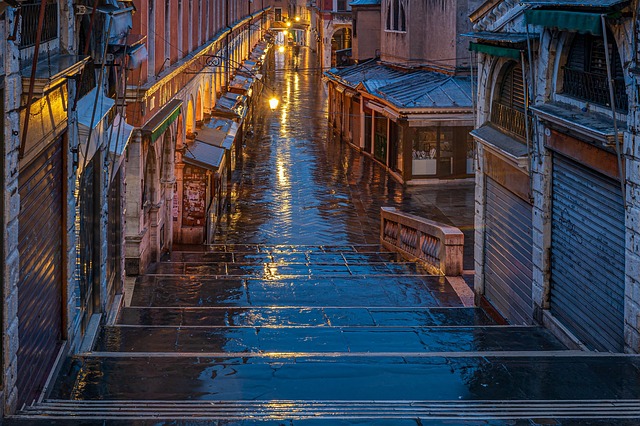
Ask most visitors what they bought in Venice, and you’ll hear about Murano glass trinkets and Carnival masks made in a factory somewhere far from the lagoon. Ask a Venetian the same question, and you’ll get a completely different answer: artichokes from Sant’Erasmo, cuttlefish from the Adriatic, radicchio still tangled with morning dew. Venice has a working food culture that most itineraries never touch. Here’s where I actually take clients who want to see how this city really eats.
Rialto Market: The 1,000-Year-Old Heart of Venetian Food
The Rialto Market has been Venice’s commercial center since the 11th century, and remarkably, it still functions almost exactly as it always has — not as a tourist attraction, but as where local chefs and residents genuinely shop.
It’s really two markets in one. The Erbaria is the open-air fruit and vegetable market, running Monday through Saturday, roughly 7:30am to 1pm. Right next to it, under a neo-Gothic loggia along the Grand Canal, sits the Pescheria — the fish market, open Tuesday through Saturday during similar hours (closed Mondays, since boats don’t go out fishing on Sundays). Here you’ll see cuttlefish, soft-shell crabs in season, whole Adriatic fish, and eels laid out on ice by fishermen who’ve been doing this for generations.
Timing matters enormously here. By 10am, tour groups start filtering through and the working rhythm of the place shifts. Arrive before 9am, ideally closer to 8, and you’ll see it as it’s meant to be seen: porters moving crates, vendors calling out prices in Venetian dialect, chefs from nearby restaurants picking out the day’s ingredients. Look for stalls with handwritten signs reading “Nostrano” or “Sant’Erasmo” — that’s how you spot genuinely local produce among the imported stock.
A word of guidance I give every client: don’t touch the produce unless you’re buying it. Vendors take real pride in their displays, and handling fish or artichokes just for a photo is a fast way to get an earful of Venetian dialect you won’t need translated.
The Floating Boat at Campo San Barnaba
In the quieter Dorsoduro sestiere, at the foot of the Ponte dei Pugni, there’s a genuine curiosity: a working produce shop set up permanently on a boat, moored in the canal below Campo San Barnaba. It’s been there in one form or another for decades, selling fruit and vegetables straight off the water to residents who live nearby.
This isn’t staged for visitors — it long predates Venice’s tourism boom, and it survives today because the neighborhood still uses it. What makes it worth a stop isn’t just the novelty, though that’s real; it’s the setting. Campo San Barnaba is one of the calmer, more residential corners of the city, and standing at that canal edge watching a produce sale happen entirely from a boat is a small, quiet reminder of just how differently this city solved ordinary problems.
A similar floating market operates in Castello along Via Garibaldi, one of the widest and most local streets in Venice — worth combining with a walk through a part of the city most day-trippers never reach.
Via Garibaldi: Castello’s Everyday Market Street
Speaking of Via Garibaldi — this is where I send clients who want to feel like they’re simply living in Venice for an afternoon rather than sightseeing. It’s a wide, sunny promenade in Castello, well east of San Marco, lined with produce stalls, small grocers, and the kind of unglamorous local shops that don’t survive in more tourist-heavy sestieri. There’s a boat market here too, and the atmosphere is unmistakably residential: kids on bikes, neighbors stopping to talk, none of the choreography you’ll find near the Rialto Bridge.
It’s not a place with a single headline attraction. It’s a place to slow down, buy a coffee, and watch a neighborhood that has nothing to prove to anyone.
Campo Santa Margherita: Market by Day, Life by Night
Campo Santa Margherita, in Dorsoduro near the university, runs a lively morning market with fish, produce, and household goods, set within one of Venice’s largest and most social squares. What makes it different from Rialto is context — this square doubles as one of the city’s best spots for evening life, so a morning market stop pairs naturally with an aperitivo here later in the day. It’s popular with students and residents rather than cruise-ship crowds, which keeps prices honest and the pace unhurried.
Why This Matters More Than It Seems
I always tell clients that markets are the fastest way to understand a place that photographs can’t capture — the rhythm of a city, what people actually eat, how neighborhoods differ from one another. Venice’s markets in particular carry real historical weight: the Rialto wasn’t just a market, it was the financial engine of the Venetian Republic, home to the city’s first banks and exchange houses centuries before Wall Street existed. Walking through it isn’t a shopping errand. It’s walking through the same commercial heart that built the city’s wealth in the first place.
This is also exactly the kind of morning I like to build into a private walking tour — starting at the Rialto before the crowds arrive, then threading through Dorsoduro or Castello to see how differently Venetians actually live once you’re a few streets from the postcard views. If markets, food history, and the quieter side of the city interest you, reach out and I’ll build a morning around it that goes well beyond anything a group tour or app-based guide could offer.
What time should I visit the Rialto Market to see it at its best?
Arrive before 9am, ideally closer to 8. By mid-morning, tour groups arrive and the working atmosphere shifts noticeably — the earliest hours are when local chefs and residents are still shopping
Is the Rialto Market open every day?
The produce side (Erbaria) runs Monday through Saturday, roughly 7:30am to 1pm. The fish market (Pescheria) is open Tuesday through Saturday during similar hours and is closed on Mondays.
Are Venice’s local markets good for buying food to take home?
Fresh fish and produce aren’t practical for travel, but many stalls near the Rialto sell shelf-stable local products — olive oil, dried pasta, spices — that make for a far more authentic souvenir than anything from a shop near St. Mark’s Square.