“What makes the Frari Church special beyond being just another Venice church? Is the Titian collection really worth a dedicated visit? Why do people say it’s one of Venice’s must-see locations?”
These questions appear from travelers recognizing the Frari’s reputation, understanding it houses important Titian paintings, wanting to know whether it justifies time investment versus other Venice attractions, curious whether the famous tombs and artworks warrant purposeful navigation to San Polo neighborhood, seeking to understand what genuinely distinguishes this church from Venice’s abundance of impressive religious buildings.
The honest answer: The Frari Church (Basilica di Santa Maria Gloriosa dei Frari) represents one of Venice’s most significant artistic and architectural achievements — a monumental Gothic basilica housing Titian’s masterpiece Assumption (arguably his greatest painting and one of Renaissance art’s defining works), multiple other Titian paintings creating concentrated collection rivaling museums, extraordinary sculptures and artworks from multiple Renaissance masters, the actual burial tomb of Titian himself (rare honor, unusual for artists), Canova’s neoclassical cenotaph (architectural sculptural masterpiece), and other notable interments, creating convergence of architectural grandeur, artistic mastery, historical significance, and spiritual power that genuinely justifies dedicated visiting and warrants the journey across Venice.
After 28 years guiding Venice — understanding which churches genuinely merit extended visits versus those valuable primarily for passing observation, recognizing how Titian’s paintings create different experience in original church context versus museum display, knowing why the Frari generates consistent enthusiasm from visitors who intentionally visit versus casual tourist pass-throughs, working with art enthusiasts who discover the Frari’s significance and report profound encounters exceeding expectations — I know that the Frari deserves consideration as essential Venice destination, representing convergence of religious, artistic, architectural, and historical importance rarely achieved in single building.
The fundamental realities most travelers miss:
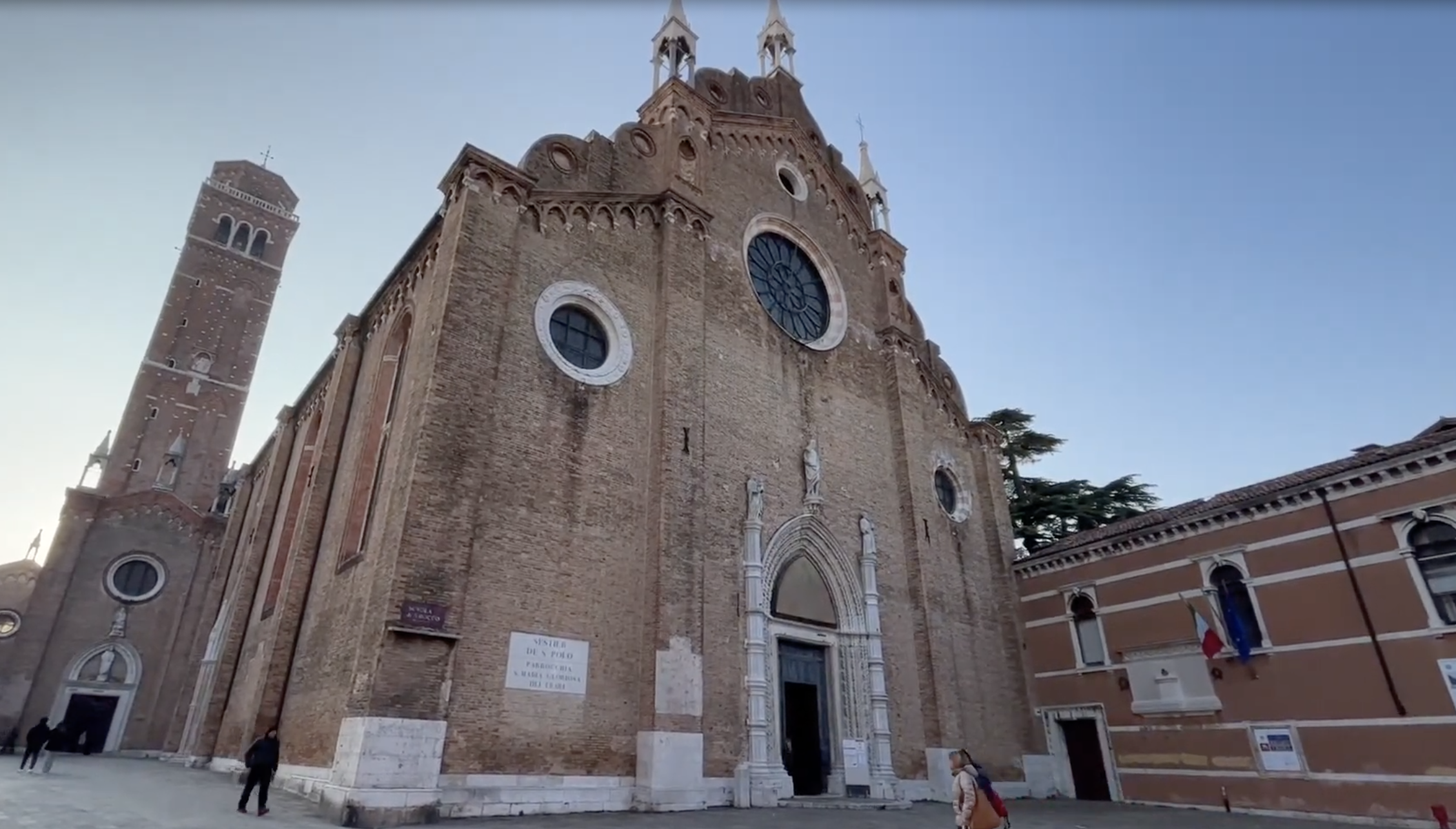
The Frari isn’t simply “another church with art” but represents architectural masterpiece in its own right — the Gothic basilica’s scale, proportions, engineering achievement represent achievement equivalent to the artworks it houses, the building itself deserving appreciation alongside its contents
Titian’s Assumption in the Frari isn’t merely famous painting but represents genuine artistic revolution — the monumental scale (22+ feet tall), revolutionary composition, spiritual intensity, technical mastery mark it as watershed moment in Renaissance art, not simply excellent work but transformative achievement
The church’s original context creates fundamentally different artwork experience than museum viewing — Titian’s Assumption occupies the actual architectural position it was created for (altar wall dominating the entire basilica), light conditions and spatial relationships match artist’s intentions, the religious/spiritual setting provides meaning unavailable in secular galleries
Understanding that many serious art travelers specifically prioritize the Frari alongside Academia and major monuments, recognizing its importance through repeated visiting (unlike casual tourists seeing it once), returning multiple times to experience it in different light conditions and seasonal contexts
The actual tombs (Titian’s genuine burial, Canova’s cenotaph) represent rare examples of artistic privilege and commemoration — burial in churches typically reserved for clergy or nobility, artist tombs even rarer, creating historical significance beyond aesthetic appreciation
This is the completely honest Frari Church guide — explaining the basilica’s architectural and historical significance, describing Titian’s masterpieces and revolutionary achievement, revealing what other artworks and artists the church houses, addressing the famous tombs and their meaning, providing practical visiting information and optimal engagement strategies, and helping you understand why this church deserves purposeful time investment as essential Venice artistic and spiritual destination.
The Frari Church: Architecture, History, and Significance
Understanding the basilica’s importance beyond its artworks.
Historical Context and Foundation:
The church’s origins:
The Frari (Santa Maria Gloriosa dei Frari) — “Glorious Mary of the Friars” — was founded 1250 by Franciscan friars, representing major religious order’s Venice establishment, built incrementally over centuries with construction continuing into 16th century
Franciscan context:
The Franciscans (order founded by Saint Francis emphasizing poverty, humility, service to poor) represented significant spiritual force in medieval Venice, their church becoming major religious institution alongside Dominicans (at Santi Giovanni e Paolo) representing two primary mendicant orders’ Venice presence
The architectural evolution:
Initial 13th-century construction (Gothic style beginning), 14th-15th century expansion, 16th-century additions and modifications, creating palimpsest of architectural periods while maintaining coherent Gothic character throughout
The institutional significance:
The Frari functioned as major Franciscan institutional center, housing administrative functions, maintaining extensive library, serving as spiritual center for Franciscan order’s Venice activities, accumulating wealth and resources enabling monumental construction and artistic patronage
The Gothic Architectural Masterpiece:
The scale and proportions:
The basilica represents monumental Gothic architecture — the nave soars approximately 100+ feet high, the proportions create sense of spiritual elevation, the interior volume conveys transcendent aspiration characteristic of Gothic design
The structural innovation:
The Gothic basilica structure (pointed arches, ribbed vaults, flying buttresses) represents architectural engineering achievement — spanning vast interior space without intermediate supports, creating open unified volume enabling congregation viewing of altar despite crowd size, demonstrating Renaissance understanding of structural mechanics
The material and craftsmanship:
Constructed from Venetian brick (not stone like Continental cathedrals), faced with white and gray marble creating distinctive color patterns, decorative Gothic details throughout carved with precision, the complete structure representing sustained high-quality craftsmanship across centuries
The spatial experience:
Upon entering, visitors encounter overwhelming scale and vertical emphasis — the soaring ceiling, pointed arches, vertical ribbing all directing attention upward, creating spiritual atmosphere through architectural means, the physical space itself communicating transcendence before encountering individual artworks
The light quality:
Large Gothic windows flood the basilica with natural light creating changing conditions throughout day, the light quality emphasizing the architectural grandeur, colors of marble and stone shifting with light angle, creating dynamic spatial experience rather than static unchanging interior
The Artistic Patronage Context:
Why wealthy Venetians commissioned art here:
Burial in major churches represented ultimate status achievement — prominent merchant families commissioned elaborate tombs and altarpieces establishing permanent commemoration within Venice’s most important religious spaces, the Frari’s significance attracting Venice’s elite patronage
The artistic accumulation:
Over centuries, major artists (Titian, Bellini, Donatello, Canova, others) received commissions creating progressive artistic enrichment — rather than single period’s patronage, the church accumulated masterworks across Renaissance and later periods
The competitive prestige:
Both Frari (Franciscan) and Santi Giovanni e Paolo (Dominican) competed for prestigious commissions, major families choosing between them, creating artistic rivalry spurring quality and innovation — the two churches represent highest concentrations of Renaissance art in Venice religious buildings
Titian’s Masterpieces: The Assumption and Beyond
Understanding why Titian’s work in the Frari represents world-class artistic achievement.
The Assumption: The Masterwork
The revolutionary painting:
The Assumption (1516-1518), positioned above the main altar, represents Titian’s early masterpiece — monumental scale (approximately 22.6 x 11.5 feet), depicts Virgin Mary’s ascension into heaven surrounded by apostles below, God the Father receiving her at summit
What makes it revolutionary:
Compositional drama: Rather than serene balanced Renaissance composition, Titian employs dynamic diagonal thrust — Mary ascends upward in swirling movement, apostles below react with dramatic gestures (pointing, reaching, wonder-expressing), creating psychological intensity and emotional power
Color and light: The painting glows with extraordinary color intensity — warm golds and reds in heavenly realm, darker earth tones below, dramatic light contrasts creating spiritual luminosity, the color temperature itself suggesting divine transcendence
Technical mastery: The painting demonstrates unprecedented technical skill — the foreshortened figures (Mary viewed from below, God from above) show sophisticated understanding of perspective, the brushwork creates convincing drapery and flesh, the complete execution exhibits masterful control
Spiritual intensity: Beyond technical achievement, the painting conveys genuine spiritual power — the ascending Mary’s peaceful acceptance, the apostles’ awed response, the divine light receiving her, creating sense of genuine transcendent moment, not merely technically impressive representation
The artistic impact:
The Assumption revolutionized religious art — its dramatic composition and spiritual intensity influenced subsequent artists, established Titian as major master (he was still relatively young), created standard for how sacred moments could be depicted with psychological and emotional power exceeding previous conventions
The contextual importance:
Positioned above the altar where liturgy occurs, the painting occupies intended architectural space, the priest celebrating Mass positioned beneath Mary’s ascending figure, creating visual theology where artistic vision reinforces spiritual meaning, the relationship between artwork and religious function creating comprehensive experience
The Pesaro Madonna (1519-1526):
The second masterwork:
Positioned on a lateral chapel wall, the Pesaro Madonna depicts Virgin enthroned with Christ Child receiving members of Pesaro family (prominent Venetian merchant family) as donors
The compositional innovation:
Rather than traditional centered composition, Titian positions figures asymmetrically — Virgin off-center, throne angled, St. Peter and other saints positioned dynamically, creating diagonal thrust similar to Assumption but adapted to wall placement, demonstrating compositional flexibility
The donor integration:
Members of Pesaro family depicted as equal importance to saints, the painting celebrating their piety and status simultaneously, the composition integrating donors into sacred narrative rather than isolating them as secondary figures
The luminous color:
The painting glows with characteristic Titian color richness — reds, blues, golds creating sensuous visual experience, the color itself communicating divine presence and heavenly realm’s splendor
Other Titian Works:
Entombment of Christ: Dramatic nocturnal scene with torch-lit figures lowering Christ’s body, exemplifying Titian’s ability to convey spiritual meaning through light and movement
Madonna with Saints: Multiple versions and smaller works demonstrating Titian’s sustained engagement with religious subjects throughout career
The collection significance:
The Frari contains approximately 4-5 major Titian works visible, creating concentrated collection exceeding most museum galleries’ Titian holdings, demonstrating artist’s sustained relationship with church over decades
Why Titian’s Frari Works Matter Artistically:
Career-defining paintings: The Assumption especially represents Titian at artistic peak, demonstrating technical mastery, compositional innovation, spiritual power simultaneously — few paintings achieve this convergence
Artistic revolution marker: Titian’s revolutionary approach (dramatic composition, color intensity, spiritual power) marks transition from High Renaissance toward subsequent artistic periods, his innovations establishing new possibilities for religious art
Influence on subsequent art: Artists throughout Europe studied Titian’s Frari works, the paintings becoming reference points for how sacred subjects could be depicted, his compositional solutions and technical approaches adopted and adapted by followers
The original context advantage: Experiencing these paintings in the church where created provides understanding unavailable in museums — the scale relationships, light conditions, spiritual atmosphere, architectural integration all contribute meaning
The Tombs and Commemorations
Understanding why these burials represent historical significance.
Titian’s Burial (c. 1490-1576):
The extraordinary honor:
Titian was buried in the Frari church — itself remarkable privilege for artist (typically reserved for clergy, nobility, or exceptional figures), his actual remains interred creating permanent commemoration
The historical context:
Titian lived to approximately 86 years old (extraordinary longevity), died during plague (1576), received ecclesiastical burial despite plague preventing normal ceremonies, indicating his exceptional status and Venice’s determination to honor him
The tomb monument:
The tomb is modest (reconstructed in 19th century after earlier destruction), located in the basilica but not prominently positioned, yet the actual burial remains profoundly significant — actual physical remains of the master resting in Venice’s greatest church
The symbolic meaning:
Titian’s burial in the Frari represents institutional recognition of artistic genius — burial location indicates Venice’s valuing him as equivalent to saints and nobility, creating permanent physical memorial to his achievement
Modern pilgrimage:
Art enthusiasts and Titian scholars often visit the tomb as pilgrimage site, paying respects to the master, the burial becoming destination itself for those deeply engaged with his work
Antonio Canova’s Cenotaph (Monument, no actual burial):
The neoclassical masterpiece:
Canova (1757-1822), major neoclassical sculptor, designed his own tomb/cenotaph as monumental sculptural composition — a pyramid-shaped marble structure with allegorical figures representing Art and Virtue
The architectural presence:
The cenotaph occupies prominent position in the Frari (opposite Titian’s tomb location), commanding attention through its scale and refined sculptural execution, representing neoclassical aesthetic in contrast to Gothic and Renaissance surrounding
The artistic paradox:
Though Canova designed the monument for himself, he isn’t actually buried there (his remains are in his birthplace), making it cenotaph rather than true tomb, yet the monument operates as powerful commemorative presence
The sculptural quality:
The marble figures demonstrate Canova’s mastery of neoclassical form — idealized human figures, elegant proportions, refined carving technique, creating artwork that functions simultaneously as tomb monument and sculptural masterpiece
The broader significance:
Canova’s cenotaph represents 18th-19th century artistic practice where major artists designed their own memorials, the monument becoming final artistic statement, Canova’s presence in the Frari honored despite not actual burial
Other Notable Tombs:
Donatello’s pupil and associates: Various Renaissance sculptors and artists buried in the Frari, creating accumulation of artistic talent
Venetian nobles and merchants: Prominent families commissioned elaborate tomb monuments establishing permanent family presence in Venice’s greatest church
The collective effect:
Walking through the Frari, you encounter multiple tomb monuments, epitaphs, memorial plaques creating sense of historical accumulation — centuries of Venice’s elite commemorated in stone and marble, the church functioning as Venice’s pantheon
Other Masterworks and Artistic Treasures
Understanding the broader artistic collection beyond Titian.
Bellini’s Works:
The Triptych and Madonna paintings: Giovanni Bellini (Titian’s predecessor, major influence) represented in the church with altarpieces and devotional paintings, his serene Renaissance aesthetic contrasting with Titian’s dramatic innovation
The artistic genealogy: Viewing Bellini alongside Titian reveals artistic development — Bellini’s classical balance and gentle spirituality compared to Titian’s revolutionary drama shows stylistic progression
Donatello’s Sculpture:
St. John the Baptist: Wooden sculpture by Renaissance sculptor Donatello, the figure’s emotional intensity and anatomical accuracy demonstrating sculptural mastery, representing non-painted artistic tradition
The spiritual intensity: Donatello’s work conveys ascetic spirituality through sculptural form, the figure’s expressive face and gesture communicating psychological states alongside physical accuracy
Architectural Sculptures and Reliefs:
Portal decorations and capitals: Throughout the basilica, sculptural details (capitals, corbels, doorway sculptures) demonstrate sustained high-quality craftsmanship across centuries
The accumulated beauty: The combination of architectural sculptures, painted altarpieces, free-standing monuments creates comprehensive artistic experience surpassing any single artwork
The 16th-17th Century Accumulation:
Later additions and modifications: Beyond Titian and Bellini, the church acquired works by subsequent artists representing later Renaissance and baroque periods, creating chronological artistic survey
The institutional collecting: The church systematically acquired significant works over centuries, positioning itself as major art repository alongside its religious function
The Spiritual and Religious Dimensions
Understanding the church’s meaning beyond artistic appreciation.
The Franciscan Spirituality:
The order’s mission: The Franciscans emphasized poverty, service to poor, spiritual humility, creating different spiritual atmosphere than more institutional church traditions
The artistic expression: The church’s artworks communicate spiritual truths while serving Franciscan mission — the magnificent art paradoxically expressing poverty through beauty, wealth channeled toward spiritual education
The working monastery: The Frari maintains active monastic community, functioning as genuine religious institution not merely museum, creating spiritual presence alongside artistic riches
The Liturgical Function:
The altar positioning: The Assumption positioned above the altar creates visual theology — during mass, priest’s actions beneath Mary’s ascending figure, creating visual connection between earthly liturgy and heavenly realm
The religious calendar: The church observes liturgical seasons, special feast days creating different experiences throughout year, the artworks gaining additional meaning through religious context
The prayer and meditation: Many visitors approach the church as prayer space, using the artistic beauty and spiritual atmosphere for personal devotion rather than purely aesthetic appreciation
The Pilgrimage Tradition:
Historical pilgrimage destination: The church attracted pilgrims across centuries, particularly those devoted to Virgin Mary, creating continuous tradition of spiritual visitation
Modern pilgrimage: Contemporary visitors often experience pilgrimage dimension alongside art appreciation, the spiritual atmosphere creating openness to transcendent experience
The Visitor Experience: How to Engage with the Frari
Understanding the practical and aesthetic dimensions of visiting.
Entering and Initial Impression:
The threshold moment: Upon entering the basilica, visitors experience architectural overwhelm — the soaring height, dramatic scale, the interior vastness creates immediate sense of transcendence
The light quality shift: Entering from bright Venice streets into the basilica’s filtered light creates sensory transition, the eye adjusting to interior illumination reveals the spatial grandeur progressively
The orientational moment: First-time visitors require moments to orient — understanding the space’s layout, locating major artworks, adjusting to scale and complexity
The Assumption Encounter:
The focal point: The Assumption dominates the basilica visually — the eye naturally drawn to the monumental painting above the altar, the composition’s upward thrust directing attention toward the figure of ascending Mary
The initial impact: Most visitors experience powerful response to the Assumption — the color intensity, spiritual power, technical mastery creating immediate aesthetic and emotional impression
The sustained contemplation: Full appreciation develops through extended viewing — observing compositional details, color relationships, the apostles’ individual responses, the heavenly realm above, noticing new aspects with continued observation
The physical vantage points:
Central nave viewing: Standing in the nave allows viewing the Assumption at designed distance and angle, experiencing the monumental scale and compositional impact intended by Titian
Closer lateral approaches: Moving closer reveals technical details, brushwork, specific figure expressions, understanding artistic technique
Seated observation: Sitting in pews allows extended viewing, the body rest enabling sustained contemplation impossible while standing, creating meditative engagement
The Spatial Progression:
Navigating the basilica: The church invites exploration — walking toward the altar, observing lateral chapels, discovering tomb monuments, artworks revealed progressively as you navigate
The Pesaro Madonna: Located on lateral chapel wall, requires intentional discovery, rewarding close observation with compositional sophistication and color richness
The sculpture encounters: Donatello’s St. John and other sculptural works discovered while navigating, the three-dimensional forms creating different encounter than paintings
The tomb monuments: Walking through reveals accumulated commemorations, creating sense of historical layering and artistic accumulation
Light and Seasonal Variation:
Morning light: Early morning (before 10:00 AM) provides clear natural light from eastern windows, illuminating the basilica’s architectural details and artworks with clarity
Late afternoon light: Evening light (4:00-6:00 PM) creates more dramatic conditions, warmer tones, longer shadows creating atmospheric quality particularly affecting the Assumption’s color
Overcast days: Diffused light from cloudy conditions reduces glare, creates softer illumination sometimes preferrable for sustained viewing
Seasonal changes: Winter provides lower angle light creating different effects, summer direct overhead light creating different spatial impressions, returning across seasons reveals new dimensions
Time Requirements:
Minimal visit: 30-45 minutes (walking through, viewing major works, experiencing spatial grandeur)
Substantial visit: 90 minutes-2 hours (extended viewing of Assumption, observing compositional details, exploring lateral chapels, appreciating sculptural works)
Contemplative visit: 2-3 hours (slow meditative engagement, multiple viewings from different positions, prayer and reflection time, experiencing spiritual atmosphere)
Return visits: Many visitors return multiple times, each visit revealing new aspects, different light conditions creating fresh experiences
Practical Visitor Information
Understanding how to access and experience the Frari.
Location and Navigation:
Address: Campo dei Frari, San Polo district (near Scuola Grande di San Rocco, Rialto area)
Getting there:
From Rialto Bridge area, navigate northwest through San Polo neighborhood, approximately 10-15 minute walk, multiple routes possible; ask locals if uncertain
Landmark proximity: Near Scuola Grande, making combination visit logical
Vaporetto option: Lines serving San Polo/Rialto area (Line 1, 2, N) with stops 5-10 minute walk from church
Hours of Operation:
General hours: 9:00 AM-6:00 PM Monday-Saturday, 1:00-6:00 PM Sunday (subject to seasonal variation; verify before visiting)
Possible closures: Active church may close for religious services or special observances; asking ahead prevents wasted journey
Best visiting times:
Early morning (9:00-10:30 AM): Quietest conditions, excellent natural light, fewer tourists, contemplative atmosphere
Late afternoon (4:00-6:00 PM): Dramatic light conditions, reduced crowds, golden-hour illumination affecting colors
Avoid: Peak midday (11:00 AM-2:00 PM) for quietest experience, though church remains accessible
Admission and Fees:
Entrance fee: Approximately €3 (modest charge for church maintenance)
Reduced rates: Students, seniors, Venice residents typically receive discounts
Free worship: Attending services may allow entry without ticket charge (typically early morning weekday masses)
Accessibility Considerations:
Physical access: Ground-level entrance, generally wheelchair accessible to main basilica (though may have minor steps or thresholds — verify specific access)
Photography: Non-flash photography typically permitted (check current policy); respectful documentation encouraged
Dress code: Modest clothing appropriate for religious space (covered shoulders and knees), no disruptive behavior during services
Respectful engagement: Active church with regular worship, silence and respect for religious functions essential
Audio Guidance and Information:
Wall descriptions: Italian and English descriptions of major artworks provided, offering basic context
Audio guides: May be available for rent (check current offerings)
Expert guidance: Our specialized art history guides available for Frari-focused tours combining spiritual and artistic understanding
Church staff: Canons and staff sometimes available for questions, knowledgeable about church history and artworks
Integration with Venice Exploration
Understanding how the Frari fits within broader visiting strategy.
The San Polo Neighborhood Approach:
The location advantage: The Frari’s San Polo location enables combined visiting with nearby attractions:
Scuola Grande di San Rocco (directly adjacent): Tintoretto’s 56-painting collection creating natural pairing with Titian’s Frari works, same morning visit possible
Secondary churches and chapels: Multiple smaller churches in San Polo neighborhood offering additional artworks and religious architecture
Rialto Market and neighborhood: Authentic Venice surrounding the church, providing cultural context and local life observation
Artisan workshops: Nearby craftspeople and traditional trades maintaining centuries-old techniques
Strategic Visiting Sequence:
Morning approach:
- Early visit Frari (9:00-10:30 AM for quiet light)
- Adjacent Scuola Grande di San Rocco visit (10:30 AM-12:00 PM)
- Lunch at neighborhood restaurant
- Afternoon neighborhood walking and artisan discovery
Full-day San Polo immersion:
- Rialto Market exploration (early morning before 11:00 AM)
- Frari visit (mid-morning)
- Lunch at quality trattoria
- Scuola Grande San Rocco (afternoon)
- Evening aperitivo at neighborhood bacari
Comparative Positioning with Other Venice Venues:
vs. Academia:
- Academia: broader survey (multiple artists, centuries of art)
- Frari: single location concentrated masterworks (Titian especially), architectural grandeur, religious context, living spiritual function
vs. Doge’s Palace:
- Doge’s Palace: historical government function, broader artistic survey
- Frari: artistic mastery concentration, spiritual atmosphere, genuinely active religious institution
vs. Basilica di San Marco:
- San Marco: iconic Venice symbol, Byzantine mosaics, overwhelming crowds, tourist destination
- Frari: quieter artistic contemplation, Renaissance/Gothic beauty, working monastery maintaining spiritual purpose
The non-choice: Serious Venice visitors do both San Marco and Frari, experiencing iconic versus contemplative Venice, Byzantine grandeur versus Gothic soaring, crowded fame versus discovered significance
Our Expert Guidance Services
If you want deep understanding of Titian’s artistic revolution and the Frari’s comprehensive artistic and spiritual significance — contextualizing paintings within Renaissance development, explaining compositional innovations, connecting spiritual meaning to artistic expression — we provide specialized Renaissance art and spirituality-focused guidance.
What We Provide:
Titian expertise:
- Explaining the Assumption’s revolutionary significance and artistic innovation
- Contextualizing within Renaissance artistic traditions
- Understanding technical mastery and compositional drama
- Identifying Titian’s influence on subsequent art
- Comparing Titian’s work across different venues
Frari Church context:
- Architectural history and Gothic significance
- Franciscan spiritual mission and institutional context
- Religious iconography and theological meaning
- Historical accumulation of artworks and tombs
- The church’s evolution across centuries
Spiritual and artistic integration:
- Understanding how religious purpose shapes artistic expression
- The relationship between liturgy and visual theology
- Meditative and contemplative approaches to viewing
- The church’s functioning as active spiritual community
- How secular visitors can respectfully engage spiritual space
Comparative artistic analysis:
- Bellini and Titian stylistic comparison
- Understanding artistic influence and development
- Donatello’s sculptural contribution
- Architecture and sculpture integration with painting
- Renaissance artistic achievement comprehensively
Optimal viewing strategy:
- Positioning and timing for light conditions
- Extended contemplative viewing guidance
- Compositional analysis and detail observation
- Return visit suggestions for progressive understanding
San Polo neighborhood integration:
- Frari and Scuola Grande combined visiting
- Rialto Market context
- Neighborhood palazzo architecture
- Artisan workshop access
- Bacari and authentic dining
Understanding Complete Context
For artistic exploration: Scuola Grande di San Rocco, Academia collection, hidden masterpieces.
For neighborhood exploration: San Polo district, Rialto Market, artisan traditions.
For spiritual and cultural context: Authentic Venice experiences, discovery approaches.
For all experiences: Complete tour options.
The Frari Church Represents Renaissance Artistic Masterpiece and Spiritual Monument — Titian’s Revolutionary Assumption, Gothic Basilica Architecture, Monumental Scale, Multiple Renaissance Masterworks, Titian’s Actual Burial, Canova’s Neoclassical Cenotaph, Active Franciscan Monastery, Original Artwork Contexts, Concentrated Artistic Achievement Worth Dedicated Visiting
After 28 years guiding Venice and being featured by Rick Steves, NBC, and US Today, I recognize the Frari Church as genuinely essential Venice destination — the Basilica di Santa Maria Gloriosa dei Frari (1250-16th century) represents monumental Gothic architecture (100+ foot soaring nave, pointed arches, ribbed vaults, Venetian brick and marble construction demonstrating centuries of sustained high-quality craftsmanship) housing concentrated artistic masterpieces, particularly Titian’s revolutionary Assumption (1516-1518, ~22×11 feet) depicting Mary’s ascension with dynamic diagonal composition, extraordinary color intensity, spiritual power, technical mastery representing genuine artistic revolution and career-defining achievement. Titian’s Frari collection includes approximately 4-5 major works (Assumption, Pesaro Madonna, Entombment of Christ, others) spanning decades demonstrating sustained artistic vision, complemented by Bellini paintings, Donatello sculpture (St. John Baptist), sculptural tombs including Titian’s actual burial (rare honor for artist) and Canova’s neoclassical cenotaph (architecturally and sculpturally masterpiece), representing accumulated artistic treasures across centuries. The church maintains active Franciscan monastery function (not merely museum), creating authentic spiritual atmosphere alongside artistic grandeur, artworks occupying original architectural contexts and light conditions Titian intended, the complete experience transcending isolated artwork appreciation. The Frari remains relatively less crowded than San Marco or Academia despite comparable or superior artistic importance, offering contemplative encounter with Renaissance mastery in functioning spiritual community. Practical visiting: located Campo dei Frari, San Polo district (near Scuola Grande di San Rocco, Rialto area), ~€3 admission, 9:00 AM-6:00 PM weekdays, 1:00-6:00 PM Sundays, early morning (9:00-10:30 AM) optimal for quiet conditions and light quality, 90 minutes-2 hours recommended for substantial engagement. We provide expert Titian and Renaissance art guidance, Frari Church context, spiritual-artistic integration, optimal viewing strategy, San Polo neighborhood coordination, Scuola Grande pairing. Contact us for Frari Church experiences revealing Renaissance masterpiece deserving dedicated Venice visiting. Let’s explore Titian’s revolutionary vision in its intended spiritual home.
Contact us for expert Frari Church guidance — Renaissance mastery, Titian expertise, spiritual and artistic integration.
Frequently Asked Questions
Is the Frari Church worth visiting if I’m already going to see the Academia, or would I be seeing too much Renaissance art in one trip?
Visiting both is worthwhile despite potential art-viewing fatigue concerns — they serve distinctly different purposes; choosing one over the other represents false choice for any multi-day Venice visit. The Frari’s distinctive value (vs. Academia): (1) Architectural mastery — the Gothic basilica itself represents achievement equal to artworks, the soaring scale and structural engineering creating spiritual experience independent of paintings. (2) Original artistic contexts — Titian’s Assumption remains where he created it, positioned above the altar within the basilica’s religious function, creating viewing experience fundamentally different from decontextualized museum display. (3) Concentrated single-artist achievement — while Academia surveys multiple artists across centuries, the Frari demonstrates Titian’s mastery intensely (approximately 4-5 major works spanning career), showing artistic development and consistent excellence. (4) Spiritual dimension — the church functions as active Franciscan monastery with ongoing religious services, creating authentic spiritual atmosphere and meditation possibility unavailable in secular museums. (5) Tomb significance — Titian’s actual burial and Canova’s sculptural cenotaph create historical and commemorative dimensions beyond aesthetic. (6) Serenity and quietude — relative lack of crowds (compared to Academia’s perpetual jostling) enables contemplative engagement impossible in major museums. Academia’s continued value: Broader artistic survey spanning centuries and multiple masters, curatorial organization, iconic masterpieces by Bellini, Carpaccio, Veronese, others, museum accessibility and familiar visiting structure. Time-management approach: (1) Multi-day visit (3+ days): Absolutely visit both — allocate 2-3 hours Academia (morning, crowded major works), 90 minutes-2 hours Frari (mid-morning quiet conditions), experiencing breadth plus depth, survey plus focus. (2) Two-day visit: Choose based on priorities — Academia if wanting Renaissance survey foundation, Frari if prioritizing single-artist mastery and architectural-spiritual dimension. (3) One-day absolute maximum: Frari take precedence (Titian’s Assumption alone justifies dedicated trip, achievable in concentrated 90-minute visit), Academia skippable if time impossible. The realistic perspective: Renaissance art fatigue is rare — serious visitors find themselves energized by masterpieces rather than exhausted, the variety between Titian’s drama and Bellini’s serenity, between paintings and sculptures, between institutional museums and working monasteries prevents monotony. Many report their most profound art experiences spanning both venues. Strategic recommendation: Include Frari in any Venice visit allowing 3+ days total (it’s that significant); prioritize it alongside Academia as essential cultural foundation. The two aren’t redundant but complementary — Academia teaches Renaissance art broadly, Frari demonstrates single master’s genius within integrated spiritual-architectural context.
Will I find the Frari spiritually moving even if I’m not religious, or is it primarily valuable for art lovers?
The Frari offers meaningful experience for non-religious visitors alongside art appreciation, though your engagement depends on openness to spiritual dimension independent of religious belief. What non-religious visitors can experience spiritually (without religious commitment): (1) Transcendent architecture — the soaring Gothic space creates sense of elevating beyond ordinary existence through purely architectural means (vertical emphasis, scale, light quality), producing psychological/emotional shift many experience as spiritual regardless of religious framework. (2) Artistic spiritual expression — the paintings (especially Assumption) convey genuine spiritual vision and aspiration, you can appreciate the artist’s attempt to express transcendence even without sharing religious doctrine, understanding Titian’s spiritual intent creates engagement. (3) Historical spiritual accumulation — centuries of people seeking transcendence in this space creates atmospheric layering, the accumulated prayers and devotion creating palpable sense of meaning even for secular visitors. (4) Meditative possibility — the quiet atmosphere and beauty invite contemplation and slowing pace unavailable elsewhere, natural human openness to meaning-making in sacred spaces. (5) Human spiritual universals — confronting themes of suffering, redemption, divine aspiration, mortality (the tombs) speaks to universal human concerns beyond specific religious doctrine. What explicitly religious engagement provides (if you practice Christianity): Specific theological meaning, sacramental dimension during services, personal prayer and devotion, community with other believers, the space activating religious identity and practice. Practical approaches for non-religious visitors: (1) Aesthetic appreciation focus — approach as art history student, architectural enthusiast, analyzing composition and technique, the intellectual engagement rich without spiritual openness. (2) Anthropological curiosity — understand how religious communities create meaning and beauty, observing human spirituality without requiring personal belief. (3) Meditative openness — allow the space to affect you emotionally without requiring intellectual commitment to theology, the beauty and quiet creating natural contemplative shift. (4) Respectful curiosity — read wall descriptions explaining theological meanings, understand what imagery represents, appreciate without necessarily believing. (5) Personal meaning-making — many non-religious people report genuine transcendent experiences in sacred spaces, the architecture and accumulated human intention creating openness to meaning larger than daily concerns. The honest perspective: The Frari absolutely has something to offer non-religious visitors — the artistic mastery alone justifies visiting, the architecture creates genuine psychological elevation, the historical human meaning-making layer creates palpable atmosphere. Whether you experience it as “spiritual” depends on your openness to contemplation and meaning-making outside religious doctrine, not on whether you hold specific beliefs. Many secular visitors report the Frari as most moving Venice experience regardless of religious orientation. My recommendation: Visit with openness to whatever experience emerges — whether that’s artistic appreciation, architectural awe, historical reflection, or something more transcendent doesn’t matter. The church rewards genuine engagement regardless of your religious framework or lack thereof.
Is Titian’s Assumption really as revolutionary and important as people claim, or is it overhyped as a famous painting everyone says you must see?
The Assumption’s revolutionary significance is genuine, not hype — it legitimately represents watershed moment in Renaissance art, though appreciating why requires understanding artistic context and what it revolutionized. Why the Assumption is genuinely revolutionary (not overhyped): (1) Compositional drama breakthrough — prior to Titian, altarpiece compositions typically used stable balanced arrangements (figures symmetrically positioned, calm orderly space), Titian employs dynamic diagonal thrust with swirling movement, emotional intensity, psychological drama creating revolutionary visual language. The painting essentially invents “dramatic energy” as compositional principle. (2) Spiritual intensity expression — previous religious paintings conveyed reverence through serene beauty (Bellini’s approach), Titian conveys spiritual transcendence through visual drama, movement, mystical intensity, creating fundamentally different way of expressing sacred themes. (3) Technical mastery demonstration — the painting demonstrates unprecedented technical skill simultaneously with innovation — the foreshortened figures, complex perspective, convincing drapery and flesh, the complete execution shows mature mastery enabling revolutionary conception. (4) Artistic permission granting — Titian’s success essentially told subsequent artists “you can use dramatic composition, spiritual intensity, revolutionary technique for sacred subjects,” enabling entire traditions following from his precedent. (5) Scale and impact — the monumental size (22+ feet tall), positioned above altar in major basilica, meant thousands of viewers experienced the revolutionary approach over centuries, the influence extending far beyond art-world cognoscenti. What makes this different from other “famous paintings”: The Assumption isn’t famous because famous people said it’s famous (circular hype), it’s significant because it demonstrably changed how art was made — subsequent artists copied Titian’s approaches, his compositional solutions became standard, his technical innovations became learning models. The influence is empirically measurable through art history’s documentation of artistic development. Why people might perceive “hype”: (1) Tourist repetition — guidebooks repeatedly list it, creating sense of mandatory viewing that can feel like marketing versus genuine importance. (2) Expectation gap — arriving with manufactured “must-see” pressure sometimes disappoints if you don’t immediately feel revolutionary impact, the work requiring engaged observation rather than instant transcendence. (3) Art-historical literacy prerequisite — appreciating why it’s revolutionary requires understanding Renaissance art conventions and Titian’s departures from them, casual viewers unfamiliar with prior approaches may not recognize the innovation. (4) Photography flattening — images of the painting don’t convey the monumental scale, original light conditions, architectural integration creating full experience. The actual viewing experience for non-experts: Most visitors experience powerful response to the Assumption even without art-historical background — the color intensity, spiritual power, compositional dynamism create immediate aesthetic impact independent of theoretical understanding. The intellectual appreciation of revolutionary significance adds layers to the emotional response but doesn’t determine whether the painting moves you. My honest recommendation: Approach the Assumption with low preconceptions and high openness — don’t burden yourself with “I must have a transcendent experience” pressure, simply observe the painting, notice the color, the movement, the spiritual emotion it conveys, allow your own response rather than performing expected reaction. The revolutionary significance is genuine, but your personal encounter matters more than confirming historical importance — if it moves you aesthetically/emotionally, that validates the painting’s power regardless of art-historical frameworks.