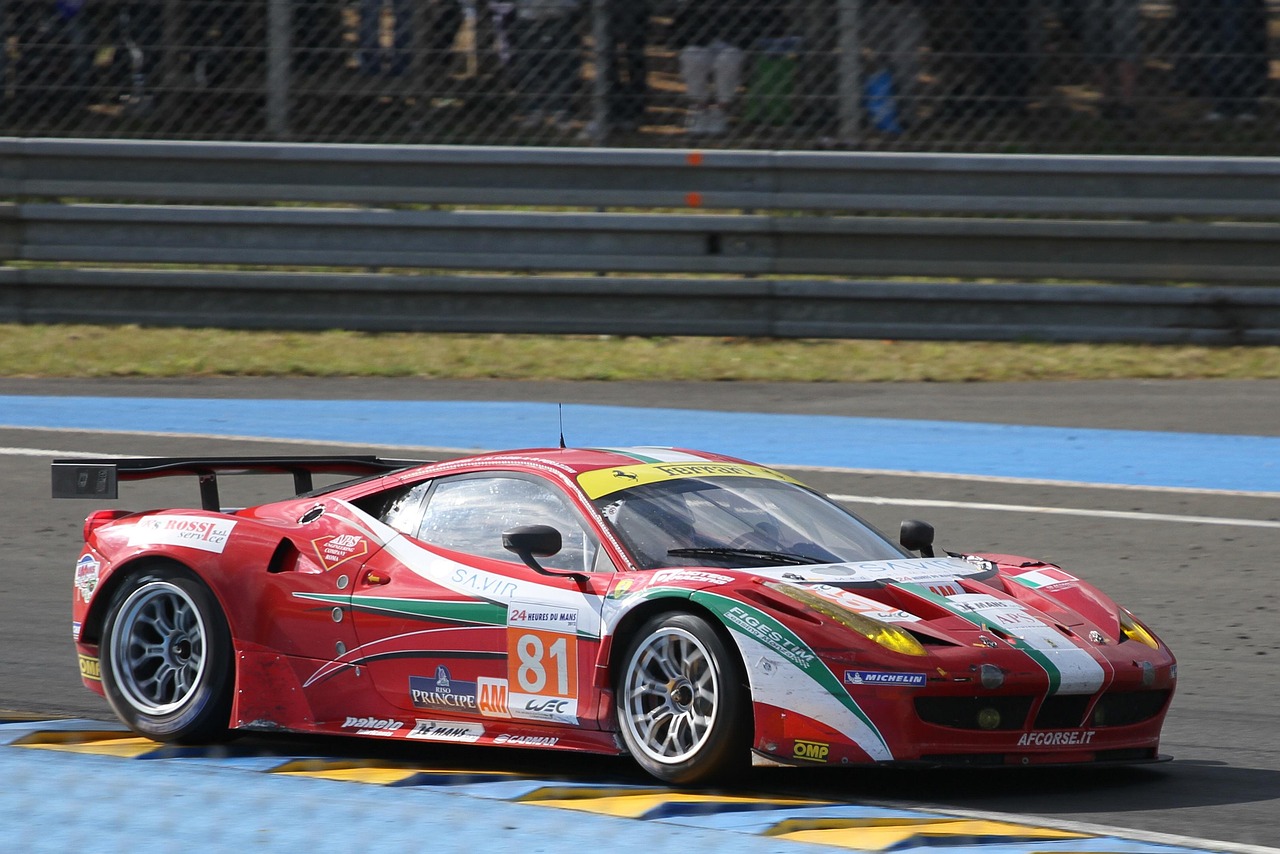
Most people who dream about driving a Ferrari imagine open roads through Italian countryside, wind in their hair, the V8 roaring through tunnels carved into mountain passes.
But the real Ferrari experience — the one that shows you what these cars were actually designed to do — happens on a circuit.
Not public roads where speed limits apply and oncoming traffic limits what you can attempt. Not rental-car cautiousness where you’re managing someone else’s expensive property with nervous restraint. A real circuit where professional instruction, safety systems, and purpose-built environment allow pushing a Ferrari toward its actual capabilities rather than tiptoeing through a fraction of what the car can do.
After 28 years organizing experiences throughout Italy for visitors who want more than standard tourism, I’ve arranged circuit driving at Italy’s legendary tracks — including the Modena Autodrome where Ferrari tests its own cars, where factory engineers validate performance, and where racing drivers prepare for competition.
This isn’t Las Vegas tourist attraction or Dubai mall experience. This is driving a Ferrari on the same tarmac where automotive history gets made, with professional instruction that transforms intimidating performance into accessible thrill, in the region where Ferrari was born and where the passion for automotive excellence defines local identity.
The question isn’t whether you can do this (you can — we organize everything). The question is whether you understand what circuit driving actually delivers, how it differs from road experiences, and whether this matches what you’re actually seeking from your time in Italy.
This is the honest account — what circuit Ferrari driving feels like from the moment you arrive to the moment you exit the car trembling with adrenaline, what we arrange to make this seamless rather than stressful, and how to know whether this extraordinary experience enhances or distracts from your broader Italian journey.
Understanding how to approach Italy beyond standard tourism changes everything.
What the Modena Autodrome Actually Is
Before understanding what driving there feels like, knowing what the Modena Autodrome represents helps appreciate why this matters beyond generic supercar experiences available worldwide.
The Modena Autodrome (Autodromo di Modena) is Ferrari’s official test track — located minutes from the Maranello factory where every Ferrari has been built since 1943. This isn’t public racetrack that happens to offer Ferrari experiences. It’s Ferrari’s private facility where factory testing, racing development, and driver training happen alongside the controlled-access experiences we can arrange for visitors.
The track opened in 2011, replacing Ferrari’s older Fiorano test circuit for certain development work. The 2.1-kilometer (1.3-mile) layout includes 14 corners combining high-speed sections, technical curves, and heavy braking zones that showcase different aspects of Ferrari performance.
You’re literally driving where Ferrari’s engineers work. The same corners where technicians test suspension settings. The same straightaway where acceleration data gets collected. The track surface where prototype tires get validated before being approved for production.
The facility exists in Maranello because geography matters. Enzo Ferrari built his factory here in 1943 (in a small town that barely existed before he arrived). Everything Ferrari-related concentrated around this location — the factory, the museum, the test facilities, the suppliers, the craftsmen who specialize in Ferrari components. The Autodrome isn’t randomly located tourist attraction. It’s part of Ferrari’s operational infrastructure that happens to be accessible for carefully managed visitor experiences.
Compare this to generic track-day experiences: Most “drive a supercar” offerings use rental racetracks, generic instruction, and cars that might be Ferraris but exist primarily as revenue generators rather than expressions of automotive passion. The Modena Autodrome is Ferrari’s space, serving Ferrari’s purposes, allowing visitors to participate in something genuine rather than consume something manufactured for tourism.
The First Moments: Arrival and Orientation
Understanding what circuit driving actually feels like begins before you touch the car.
We arrange private transportation from your Venice accommodation to Modena — roughly 2-2.5 hours in luxury vehicle with professional driver. You arrive at the Autodrome facility rested rather than stressed from highway navigation and parking complications. The approach builds anticipation rather than burning energy on logistics.
The facility itself is purpose-built and modern — clean, organized, professional. This isn’t gritty racing paddock or improvised tourist setup. It’s designed for exactly what you’re about to do: experience serious performance in controlled environment with professional supervision.
The briefing begins before you see the cars. Professional instructors — often with racing backgrounds, always with extensive Ferrari experience — explain what you’re about to do and what the car can do. The tone is confident but not cavalier. These are powerful machines. The track allows exploring that power safely. But safety requires understanding, respect, and following instruction without argument.
The briefing covers:
The specific Ferrari model you’ll drive (usually 488 GTB, F8 Tributo, or current models depending on availability). The controls, particularly how paddle shifters work if you’ve never used them. The racing line — the optimal path through corners that maximizes speed while maintaining control. Braking points — where to slow down before corners, using landmarks rather than improvising. Safety protocols — what happens if you lose control, how instructors communicate, when to abort rather than push through.
Then you see the cars. Multiple Ferraris lined up, engines warm, ready. The visual impact matters even if you’re not serious enthusiast. These are objects of extraordinary beauty — sculptural forms that happen to contain 600+ horsepower engines.
Your instructor assigns you a specific car. You’re not choosing model based on preference — the assignment depends on availability and sometimes on your size (taller drivers might get specific models with better headroom, for example).
The first moment sitting in the driver’s seat: Everything is lower than normal cars. The seating position is aggressive — reclined, legs extended toward pedals. The steering wheel is thick, wrapped in leather or Alcantara, smaller diameter than regular cars. The paddle shifters behind the wheel are positioned exactly where your fingers rest naturally.
The view through the windscreen is longer, lower, faster-looking than any normal car provides. Even stationary, the car communicates purpose. This isn’t transportation. It’s a machine designed for one thing: going extremely fast with precision and control.
The First Lap: Following the Instructor
Most circuit experiences begin with you as passenger while the instructor demonstrates the track.
This isn’t wasted time or boring formality. It’s essential education that transforms intimidating performance into accessible experience.
The instructor drives at pace that demonstrates the racing line without attempting maximum speed. You’re watching which corners require heavy braking, which can be taken flat-out, where the track surface changes texture, where the ideal line differs from the obvious path.
The G-forces begin immediately. Acceleration pushes you into the seat harder than any street car delivers. Braking — with carbon-ceramic brakes designed for racetrack use — creates deceleration that would feel violent in normal context but which the car handles with complete composure.
The cornering forces are what transform understanding. Modern Ferraris generate grip levels that seem impossible. The instructor enters corners at speeds that feel reckless until you realize the car is barely working. The tires grip. The suspension manages weight transfer. The car rotates precisely where the steering indicates. What should feel like loss of control feels instead like absolute precision.
The instructor narrates throughout: “Braking at the 100-meter marker… turning in here… apex here… back on power smoothly… feeling the car settle… accelerating out.” The commentary transforms abstract track map into specific, executable actions.
The engine sound matters. Inside the cabin, the V8 behind you creates mechanical symphony — not just loud but complex. The exhaust note changes with rpm. The intake howl layers over the exhaust. The transmission whine adds another frequency. This isn’t noise. It’s information. Experienced drivers use sound to judge engine speed, gear selection, and when to shift without ever looking at the tachometer.
After one or two demonstration laps — typically about 3-4 minutes total — the instructor brings the car to pit lane and stops. Time to switch positions. Now you drive.
Your First Lap Behind the Wheel: Managing Adrenaline and Uncertainty
The instructor moves to the passenger seat. You’re in the driver’s seat. The car is running, hot, ready. The track stretches ahead.
The first emotion is typically anxiety rather than excitement. The briefing provided information. Watching the demonstration lap provided context. But now you’re responsible for controlling 600+ horsepower machine worth several hundred thousand dollars on a racetrack you’ve never driven before.
The instructor provides constant guidance: “Easy throttle out of pit lane… build speed gradually… we’re not racing yet, we’re learning the track.”
The first acceleration onto the main straight: You press the accelerator — gently at first, testing response. The car surges forward with intensity that makes powerful street cars feel leisurely. The acceleration is linear, relentless, urgent. The speedometer climbs absurdly quickly. 100 km/h (62 mph) arrives in under 3 seconds. 150 km/h before you’ve properly processed that you’re accelerating.
“Braking for turn one — brake NOW, hard brake, all the way down!”
Your instinct is to brake earlier and more gently than necessary. The instructor corrects this immediately. Modern Ferrari brakes require hard pressure. Gentle braking means less stopping power and longer braking distances. You need to trust that the car can decelerate as violently as it accelerates without losing control.
The first corner: You turn the wheel. The car responds more directly than street cars — less steering input produces more directional change. The front end bites immediately. The rear follows precisely. The car rotates through the corner maintaining composure that seems impossible given the speed you’re carrying.
“Good, now back on power… squeeze the throttle… don’t stab it, be smooth.”
The exit acceleration demonstrates traction control working. You apply more throttle than the tires can manage. The system intervenes transparently — cutting power, maintaining grip, allowing you to accelerate hard without spinning the rear wheels and losing control.
The first lap is about survival rather than performance. You’re managing too much information simultaneously: steering, braking, throttle control, gear selection, racing line, speed, instructor commands, physical G-forces, sensory overload from speed and sound.
The lap time doesn’t matter. Nobody expects competence. The goal is simply completing the circuit without terrifying yourself or damaging the car. Most first laps are slow, tentative, and characterized by missed braking points, conservative corner speeds, and general uncertainty.
Then you arrive back at the start-finish straight. One lap complete. The instructor is relaxed, encouraging: “Good first lap. Now let’s go again and work on specific corners.”
Subsequent Laps: Building Confidence and Speed
The magic of circuit driving happens during laps two through ten as fear transforms into confidence and confidence transforms into genuine performance.
Each lap teaches specific skills:
Lap two focuses on braking points. The instructor identifies markers: “Brake at that blue sign. Every time. Not before, not after. Trust me, you can carry more speed than you think into this corner.”
You brake later than feels safe. The car decelerates hard. The corner arrives faster than comfortable. But the grip is there. The car handles the speed. What felt reckless becomes normal.
Lap three works on corner entry speed. “You’re braking too much. We’re scrubbing off speed we don’t need to lose. Brake later, brake less hard, carry more speed into the turn.”
The lap times drop. Not because you’re driving aggressively but because you’re driving efficiently — less wasted braking, smoother transitions, better racing line.
The confidence builds exponentially. The car that felt terrifying during lap one feels increasingly manageable. The track that seemed impossibly fast feels increasingly navigable. Your inputs become smoother. The instructor’s corrections become less frequent. You’re beginning to actually drive rather than simply not crashing.
Lap four, five, six — the instructor addresses specific corners. “This one you can take flat-out in third gear. Don’t lift off the throttle. Trust the grip.” You follow instructions. The corner that previously required braking now gets taken full throttle. The car handles it without complaint. The rush of maintaining full power through curve that seems too fast is addictive.
The sensory experience intensifies as fear decreases. Initially, anxiety blocks awareness. As confidence builds, you begin actually experiencing what’s happening: the precision of the steering, the immediacy of the brakes, the seamless gear changes from the dual-clutch transmission, the grip levels that seem to defy physics.
The sounds become enjoyable rather than overwhelming. The engine note rising and falling. The transmission precisely selecting gears during hard braking. The subtle tire sounds communicating grip levels. The whole car becomes instrument you’re learning to play.
By lap seven or eight, you’re actually having fun. The focus required means complete presence — no room for thinking about anything except the next corner, the next braking point, the next gear. This total absorption creates mental state that regular life rarely provides. Everything else disappears. Only this moment, this corner, this car exists.
The instructor allows slightly more freedom: “This lap, I want you to focus on smooth inputs. Don’t worry about speed. Focus on being gentle with steering, progressive with brakes, smooth with throttle. Let’s make the car dance rather than fighting it.”
You comply. The lap feels slower but more controlled. The car responds better to smooth inputs than to aggressive corrections. The lap time often improves even though you felt like you were going slower — proof that smooth beats fast when smooth allows maintaining momentum that harsh inputs scrub off.
The Final Laps: Approaching the Car’s Capabilities
Most circuit experiences provide 8-12 laps total. The final laps are where everything culminates.
By now you’ve internalized the track. The braking points are automatic. The racing line is instinctive. The corner sequences flow. You’re not consciously thinking “brake here, turn in there, apex here” — your body executes without conscious direction.
The instructor recognizes this: “Okay, this lap, I want you to push. Find the limits. If you’re comfortable, go faster. If something feels wrong, back off. This is YOUR lap.”
You push. Later braking. Higher corner speeds. More aggressive throttle application. The car responds. The lap time drops noticeably. The difference between cautious driving and committed driving is enormous — perhaps 5-10 seconds per lap depending on track length and driver skill.
The satisfaction is profound. You’re not driving timidly. You’re actually using this extraordinary machine for what it was designed for. The engineering becomes apparent — the way the brakes never fade despite repeated hard stops, the way the engine delivers power instantly regardless of rpm, the way the chassis maintains composure under forces that would overwhelm lesser cars.
The instructor might demonstrate one more time. “Let me show you what’s possible. Hold on.”
The pace is completely different. Professional drivers extract performance casual drivers can’t approach. The braking is later, harder. The corner speeds are higher. The throttle application is more aggressive. The lap time is 10-20 seconds faster than your best effort.
But here’s the remarkable part: the car’s capability exceeds even professional driving on this track. The Ferrari could go faster still with different tires, no speed limits, and racing driver skill. What you’ve experienced is perhaps 60-70% of the car’s actual capability. The remaining 30-40% requires professional racing skills and conditions that public experiences can’t provide.
This realization is simultaneously humbling and extraordinary. The car you struggled to control during lap one has reserves you haven’t approached. The engineering excellence that allows this creates appreciation beyond mere speed.
After the Driving: Physical and Emotional Reality
You complete your final lap. Return to pit lane. The instructor brings the car to complete stop. Engine off. Silence.
You’re trembling. The adrenaline that carried you through the experience dissipates, leaving physical aftermath. Your hands shake slightly. Your legs feel weak when you exit the car. This is normal. The combination of G-forces, adrenaline, intense focus, and physical effort (controlling high-performance car requires genuine physical effort despite power steering and modern assists) creates exhaustion that hits when the activity stops.
The grin is involuntary. Everyone who completes circuit driving wears identical expression — pure joy mixed with disbelief at what just happened. The instructor has seen this thousands of times but still smiles at your reaction. This never gets old for people experiencing it first time.
The other participants — if this is group experience — compare notes: “Did you take turn seven flat-out? I tried but lifted.” “My best lap time was X seconds.” “I couldn’t believe how hard those brakes work.”
The camaraderie is instant. Shared extraordinary experience creates bonds. People who were strangers 90 minutes ago are now connected through having done something genuinely remarkable together.
The physical exhaustion is real. Your neck muscles ache from G-forces your daily life never approaches. Your forearms hurt from gripping the steering wheel harder than necessary (a beginner mistake — experienced drivers maintain looser grip). Your core is fatigued from bracing against lateral forces during cornering.
The mental fatigue is equally real. The concentration required for 8-12 laps of maximum-effort driving exceeds what office work or normal tourism demands. Your brain is tired. Many people nap during the return drive to Venice — not from boredom but from genuine exhaustion that quality sleep addresses.
What We Actually Arrange: Making This Seamless
When you contact us about circuit Ferrari experiences, here’s what we handle so you focus on driving rather than logistics:
Transportation from Venice: Private luxury vehicle with professional driver collects you from your accommodation. The 2-2.5 hour journey to Modena is comfortable, allowing rest before the physical demands of circuit driving. Return journey provides decompression time where adrenaline settles and exhaustion allows sleep.
Circuit reservations and coordination: We handle all booking with the Autodrome — specific time slots, car assignments, instructor coordination. These experiences require precise scheduling. We ensure you arrive at correct time, properly prepared, without confusion about where to go or what’s expected.
Customization for your group: If you’re traveling with companions who don’t want to drive, we coordinate museum visits at the nearby Museo Ferrari or Museo Enzo Ferrari, allowing everyone productive use of time while you’re on track. Alternatively, we arrange photography packages where professional captures your driving for shareable memories.
Integration with broader day: Circuit driving typically consumes 2-3 hours including briefing, driving, and decompression. We coordinate lunch at traditional Emilian trattoria, visits to Modena’s historic center, or stops at balsamic vinegar producers or Parmigiano dairies. The Ferrari experience anchors the day rather than being isolated activity with awkward gaps before and after.
Professional photography/video: If you want documentation beyond cell phone photos, we arrange professional packages capturing you in the car, action shots during driving, and edited video of your laps. These transform memory into shareable content that justifies the expense through proof of extraordinary experience.
Honest consultation: If circuit driving doesn’t actually match your interests or if alternatives would serve you better, we tell you. Our goal is matching you with right experience, not selling specific product regardless of fit. Sometimes Prosecco Hills wine tours or Venice cultural depth serves visitors better than automotive experiences, and we’re honest about this.
Who This Actually Serves
Circuit Ferrari driving isn’t universally appealing or valuable. Understanding who benefits most helps determine whether you should pursue this.
Circuit Driving Excels For:
Car enthusiasts who want to understand Ferrari performance beyond straight-line acceleration. Circuit driving reveals handling, braking, chassis balance, and engineering excellence that road experiences can’t demonstrate due to legal and safety constraints.
Adrenaline seekers comfortable with high-performance driving. If you love roller coasters, extreme sports, or activities that push physical and mental limits while remaining controlled, circuit driving delivers this combination perfectly.
Photographers and content creators who value dramatic visual documentation. Professional photos and videos of you driving Ferrari on Italian racetrack create content that generic tourism doesn’t produce.
Groups celebrating major milestones where splurge experiences make sense. Retirement, significant birthdays, career achievements — circuit driving marks occasions with memories that standard activities can’t match.
Return Italy visitors who’ve already covered major cultural sites and specifically seek experiences beyond standard tourism circuits.
Circuit Driving Disappoints:
First-time Venice visitors with limited time who should prioritize understanding Venice’s cultural depth rather than dedicating full day to automotive tangent hours away.
Nervous drivers who find regular cars stressful. Ferrari’s performance intensifies everything. If you’re anxious about normal driving, adding 600 horsepower and racetrack speeds creates terror rather than enjoyment.
Budget-conscious travelers for whom the cost represents substantial portion of total trip budget. If paying for circuit experience means sacrificing other activities or creating financial stress, the anxiety undermines enjoyment.
Travelers whose companions have zero interest in cars. If your partner or family will be miserable during the day, the relationship tension costs more than the experience delivers.
Plan Your Circuit Ferrari Experience
For initial consultation: Contact us with your dates, group size, specific interests, and questions. We’ll discuss whether circuit driving fits your trip and design customized proposal or honestly suggest alternatives.
For Venice cultural foundation first: Private walking tours establish understanding of why you’re in Italy before adding automotive experiences. If you haven’t yet grasped Venice, Maranello might mean missing the point.
For broader context: Day trips to Padua, Verona, Prosecco Hills provide alternatives that might serve your interests better. We organize these too — our goal is matching you with right experience, not selling specific product.
For food culture integration: Market tours and cooking classes combine with Maranello days when properly structured. Emilia-Romagna’s legendary food culture complements automotive passion rather than competing with it.
For timing assessment: Understanding how many days you need in Venice helps determine whether your stay allows time for Modena without sacrificing what brought you to Italy.
Experience Ferrari Where It Was Meant to Be Driven — On a Real Circuit With Professional Instruction
After 28 years organizing exceptional experiences throughout Italy and being featured by Rick Steves, NBC, and US Today, I know exactly how to coordinate circuit Ferrari driving that creates genuine thrill rather than expensive disappointment. This isn’t for everyone — but for car enthusiasts, adrenaline seekers, or travelers celebrating extraordinary occasions, circuit driving delivers something standard tourism simply cannot match. Contact us. We’ll discuss your specific interests and either design the perfect circuit day or honestly suggest alternatives that serve you better. Let’s figure out what genuinely enhances your Italian journey.
Contact us for customized circuit Ferrari experiences — from Venice to Modena and back, with everything handled.
Frequently Asked Questions
Do I need racing experience to drive on the circuit?
No. The experiences we arrange are designed for normal drivers without racing backgrounds. Professional instruction, progressive skill building across multiple laps, and modern safety systems (stability control, traction control, ABS) make circuit driving accessible to anyone comfortable with normal car operation. That said, you should have genuine driving competence — if you’re nervous driver who struggles with highway merging or parking, adding 600 horsepower and racetrack speeds will feel overwhelming rather than enjoyable. The middle ground works best: confident normal driver without racing experience who’s willing to follow instruction and push beyond comfort zone.
What happens if I crash or damage the Ferrari?
Comprehensive insurance is included in properly organized circuit experiences. You’ll typically be responsible for deductible (often substantial — in the range of several thousand euros) but won’t face catastrophic financial liability if accident occurs. The professional instruction and modern safety systems dramatically reduce crash likelihood — instructors intervene before situations become dangerous, and the cars’ electronic aids prevent most loss-of-control scenarios. The vast majority of participants complete experiences without incident. That said, the deductible alone represents significant cost if something goes wrong, so insurance that covers this deductible (available through some travel insurance policies or credit card benefits) provides additional peace of mind.
How does circuit driving compare to road driving experiences?
Circuit driving provides higher speeds, more aggressive cornering, and better demonstration of the car’s actual capabilities because safety environment and professional supervision allow pushing toward limits that public roads cannot safely accommodate. Road driving provides scenic beauty, Italian landscape context, and feeling of actually traveling somewhere rather than circulating a track. The choice depends on priorities: if you want maximum performance experience and understanding of what the car can actually do, circuits deliver decisively. If you want romantic Italian driving experience with beautiful backdrop, road routes serve better. We can arrange both and help you decide which actually matches what you’re seeking.