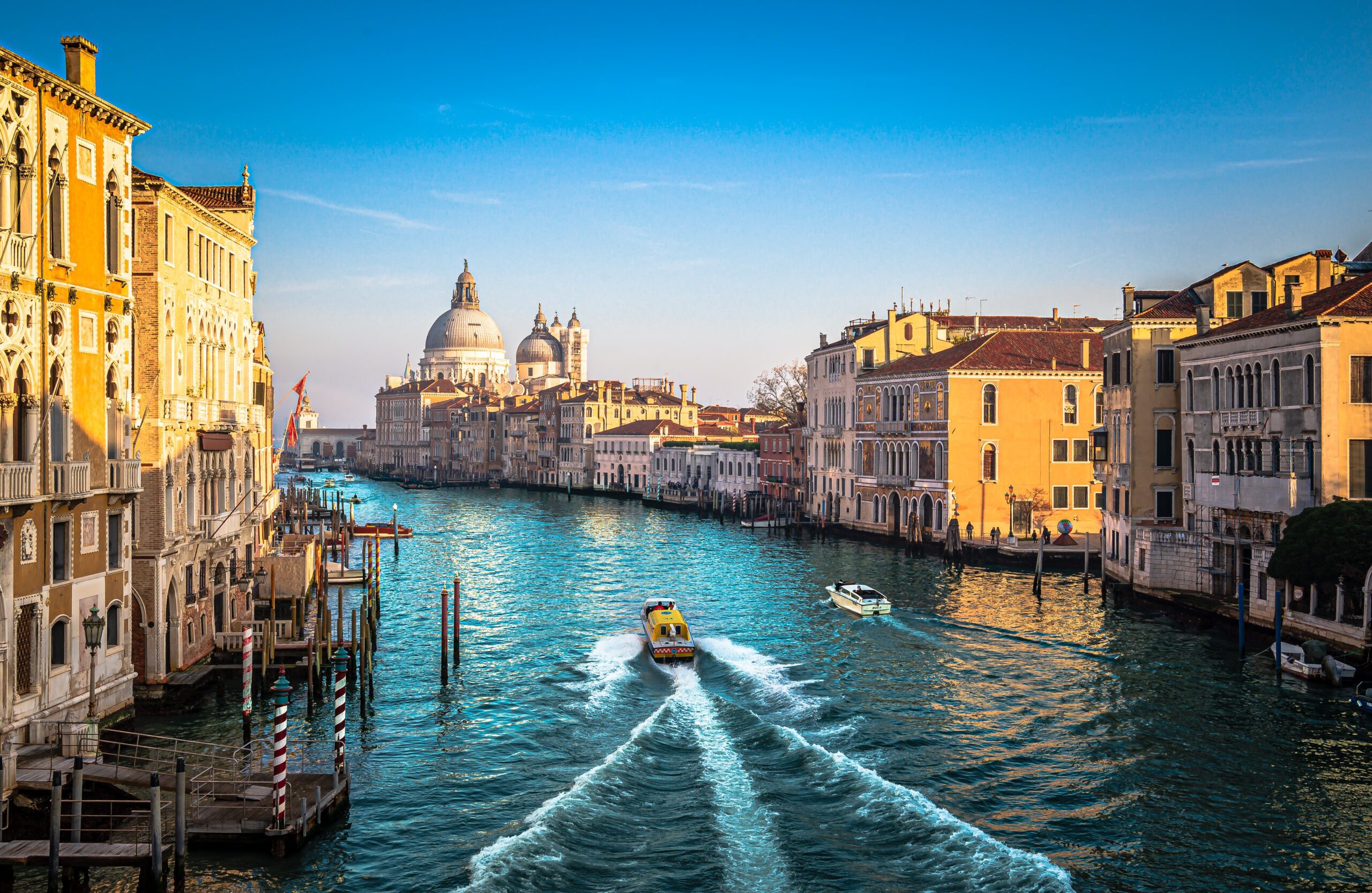
Venice is one of the most photographed cities on Earth, and also one of the most misunderstood. Most visitors walk through it seeing beautiful surfaces, gold mosaics, marble facades, water everywhere, without ever learning why any of it exists in the form it does. That’s not a criticism of travelers; it’s simply what happens when a UNESCO World Heritage Site this dense gets compressed into a two-day visit with no context attached.
I’ve spent nearly thirty years as a licensed Venice guide, and the single biggest difference I see between guests who leave loving the idea of Venice and guests who leave genuinely understanding it comes down to one thing: whether someone explained what they were actually looking at. This article walks through the five experiences I consider essential to understanding UNESCO Venice properly, Doge’s Palace, St. Mark’s Basilica, a gondola ride, a private boat on the Grand Canal, and the hidden city beyond the main tourist route, and why a local guide changes each one.
Why a Local Guide Actually Matters Here
I’ll be direct about something structural, not just a sales pitch: Italian law requires that anyone leading a paid guided tour inside major state monuments like the Doge’s Palace or St. Mark’s Basilica hold an official Italian tour guide license, earned through rigorous exams covering art history, Venetian history, and the sites themselves. This isn’t a formality. It means the difference between someone reciting Wikipedia facts and someone who can actually explain why Venice built its most sacred church to look Byzantine, or why the Doge’s private apartments sit exactly where they do relative to the Senate chamber.
Beyond the legal side, a good guide also solves the practical problems that eat into a first-time visitor’s day: skip-the-line access instead of standing in a queue for an hour, a route planned around actual opening hours and crowd patterns instead of guesswork, and the ability to answer the specific question that comes up mid-visit rather than leaving you to look it up later. None of this means you can’t enjoy Venice independently, plenty of guests do exactly that, but for the sites that carry the most layered history, the difference in what you actually take away is significant.
Doge’s Palace: The Brain of the Venetian Republic
For over a thousand years, the Doge’s Palace was the political and judicial heart of one of history’s most successful maritime republics, not a monarch’s private residence, but the seat of an entire government system: the Doge himself, the Great Council, the feared Council of Ten, and a labyrinth of chambers, archives, and prison cells behind it all. Walking through on your own, you’ll see stunning ceilings by Tintoretto and Veronese. Walking through with a guide, you’ll understand what the Hall of the Great Council actually did, why the Bridge of Sighs earns its name, and how Venice’s unique system of checks on power let the Republic survive for a millennium without a single successful foreign conquest until Napoleon.
Book skip-the-line access: Discover the Majesty of Doge’s Palace, or read the complete history first in The Full Story of the Doge’s Palace.
St. Mark’s Basilica: A Church Built to Look Byzantine, on Purpose
St. Mark’s Basilica exists because of a relic theft, Venetian merchants smuggling Saint Mark’s remains out of Alexandria in 828 AD, and everything about the building that followed was a deliberate political statement. Venice modeled its most sacred church on Byzantine architecture specifically to claim itself heir to the authority of the Eastern Roman Empire. Roughly 8,000 square meters of gold mosaic cover the interior, and behind the altar sits the Pala d’Oro, a gold reliquary studded with over 1,900 gems reworked by generations of doges. Free entry means long, slow queues most of the day; skip-the-line access with a guide means you’re inside understanding the Pala d’Oro’s iconography instead of standing outside in the heat.
Book skip-the-line access: Experience the Splendor of St. Mark’s Basilica, or combine both landmarks in one visit with Doge’s Palace and St. Mark’s Basilica: Skip-the-Line Private Tour. The full history is in The Full Story of St. Mark’s Basilica.
A Gondola Ride: Engineering Disguised as Romance
Most visitors treat the gondola as a simple photo-op, but it’s genuinely one of the more remarkable pieces of small-boat engineering in maritime history: an intentionally asymmetrical hull, built from eight types of wood, designed to let a single standing oarsman propel and steer a 700-pound boat with no rudder. Licensed gondoliers train for months and pass a formal city exam; the profession is capped at roughly 425 licenses total. Knowing this changes how the ride feels, less a tourist cliché, more a living piece of Venetian craftsmanship you’re sitting inside of.
Choose your route: The Best Places for a Gondola Ride in Venice walks through Grand Canal versus quiet back-canal routes, and the full story of the boat itself is in The Full Story of the Venice Gondola.
The Grand Canal by Private Boat: Five Centuries of Architecture in One Ride
The Grand Canal isn’t scenery, it’s Venice’s original main street, lined for nearly four kilometers with the competing palace facades of the Republic’s wealthiest families, each generation building grander than the last because the canal functioned as the city’s stage for public status. A crowded vaporetto shows you the highlights in a rush. A private boat lets you actually slow down at the Ca’ d’Oro’s Gothic tracery, or the Salute’s Baroque dome, with a guide explaining which family built what and why, rather than reading a placard from thirty feet away.
Book the private experience: Private 1-Hour Boat Tour – Grand Canal & Hidden Canals combines the Grand Canal’s grandest stretch with the quieter waterways a public vaporetto can’t reach. Full history in The Full Story of the Grand Canal.
Hidden Venice: The Ninety Percent Most Visitors Never See
Venice has six districts, and most tourism concentrates in slivers of just two of them, St. Mark’s and the Rialto corridor. A few streets away, Cannaregio’s Jewish Ghetto, Castello’s genuinely residential backstreets, and Dorsoduro’s quiet canals hold the Venice locals actually live in: working bacari instead of tourist-menu restaurants, artisan workshops that have operated for generations, and courtyards no guidebook names. This is the part of a Venice trip a guide adds the most value to, not because these streets are hidden or restricted, but because knowing which unmarked doorway leads somewhere worth seeing is exactly the kind of knowledge that only comes from decades of walking the same city.
Explore it with a guide: Our signature Venice Walking Tour moves through hidden alleyways and neighborhood life far from the main route. Full guide in The Full Story of Hidden Venice.
Putting It All Together
These five experiences aren’t meant to be rushed into a single exhausting day. In my experience, the combination that works best for most American travelers spending two to three days in Venice is: Doge’s Palace and St. Mark’s Basilica together on one morning, since they sit steps apart and share a common thread of Venetian political and religious history; a private Grand Canal boat tour or gondola ride on a separate afternoon or evening, when the light and the water traffic are both at their best; and a Hidden Venice walking tour on whichever day you want to slow down and see the city without a single major monument on the agenda.
None of this requires guessing at logistics on your own. If you’d rather have all five woven into a single, well-paced private itinerary instead of booking each piece separately, that’s exactly the kind of planning I do for guests every week, matched to how much time you actually have and what you care most about seeing.
Frequently Asked Questions
Do I need a guide to visit the Doge’s Palace and St. Mark’s Basilica?
No, both are open to independent visitors. But Italian law requires anyone leading a paid guided tour inside these state monuments to hold an official Italian guide license, so a licensed guide gives you context, skip-the-line access, and answers to specific questions that a self-guided visit or a generic audio guide can’t match.
How many days do I need to fit in all five experiences?
Two to three days is realistic without rushing. A good split is Doge’s Palace and St. Mark’s Basilica together on one morning, a private Grand Canal boat tour or gondola ride on a separate afternoon or evening, and a Hidden Venice walking tour on a day set aside for slower exploration.
Can these experiences be combined into one private tour instead of booking separately?
Yes. Most guests prefer a single, well-paced itinerary built around their actual schedule rather than piecing together separate bookings, and that’s something we can plan directly rather than leaving you to coordinate timing and routes on your own.