François Pinault transformed Venice’s contemporary art landscape by acquiring Palazzo Grassi in 2005 and opening it as an exhibition venue in 2006, then restoring Punta della Dogana, which opened in 2009. His son François-Henri Pinault is married to Salma Hayek, whose Venetian wedding in 2009 made international headlines. This guide separates the people, institutions, investments, and historical buildings behind the story.
Who is François Pinault?
François Pinault is a French entrepreneur, businessman, and art collector whose career began in the timber trade before expanding into major investments. His personal collection and its cultural institutions should not be confused with the separate management of the luxury group Kering by his son François-Henri Pinault.
That context is especially useful to American visitors because the names, dates, and buildings can blur together in a short city break. A more rewarding approach is to ask what existed before the investment, what changed afterward, and how the new use affects the experience of the historic city. The answer is usually more complicated than a simple story of a billionaire arriving in Venice.
The crucial family distinction
François Pinault is the collector behind Palazzo Grassi and Punta della Dogana. François-Henri Pinault is his son, a prominent business executive and the husband of actor Salma Hayek. This distinction matters because press coverage sometimes collapses the family’s art, business, and celebrity connections into one person.
One practical distinction deserves emphasis: a historic building can be open to the public without displaying a permanent collection in the conventional sense. Exhibition programs, special events, and access arrangements can change. The responsible traveler checks official information close to the visit and plans enough time to experience the architecture as well as the art.
Why Venice appealed to a collector
Venice has long attracted collectors, artists, and patrons because its architecture and cultural calendar place historic art in direct dialogue with contemporary work. The Biennale is an important part of that ecosystem, but the Pinault Collection operates its own institutions and exhibition programs.
Venice has a long history of private patrons funding public-facing artistic projects. Modern collecting is different from the patronage of the Republic, yet the comparison is revealing. The important questions are who chooses the art, how the building is conserved, and whether the public gains meaningful access. These are cultural questions, not simply financial ones.
Before Pinault: Palazzo Grassi’s long history
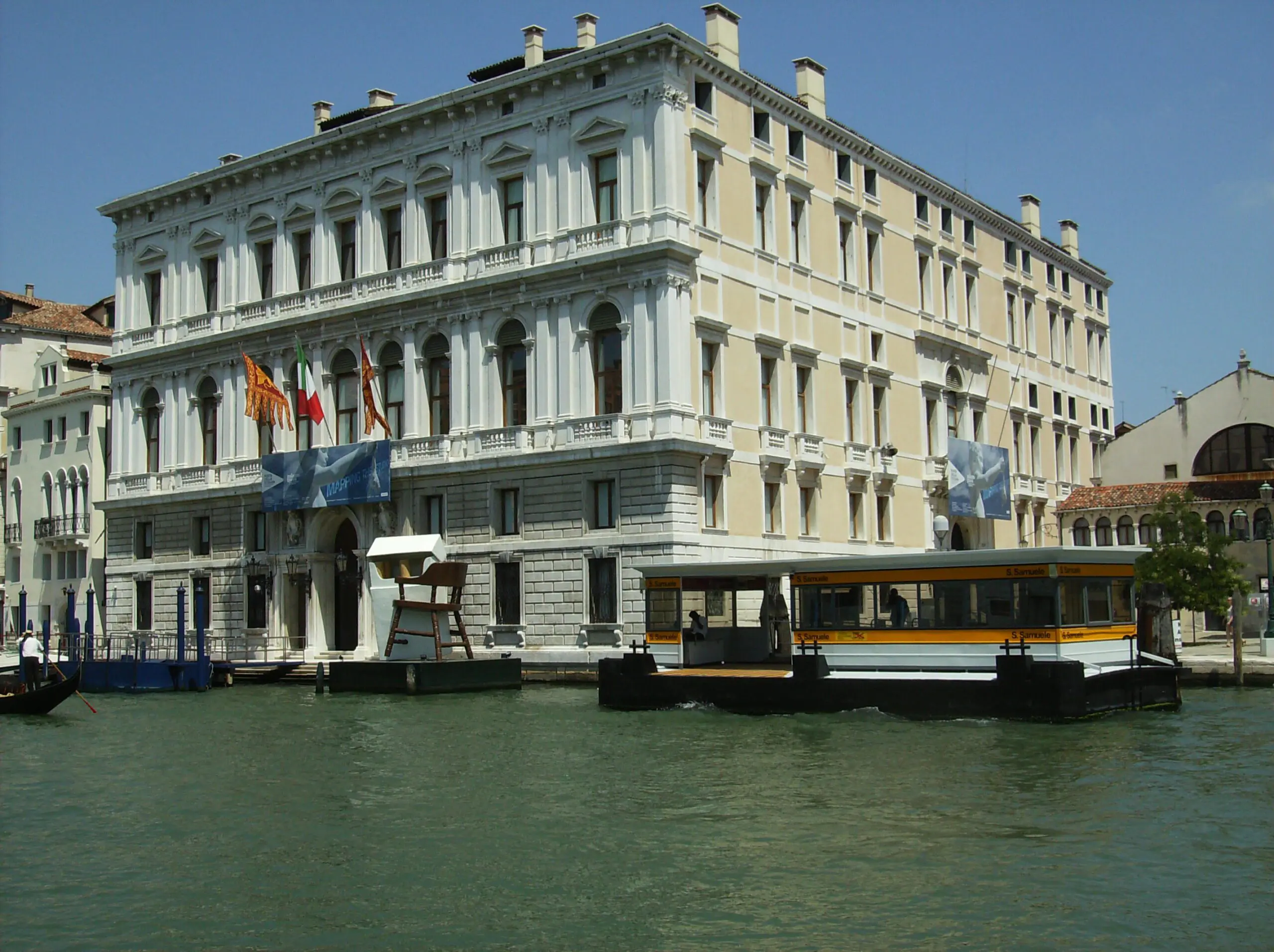
Palazzo Grassi was designed in the eighteenth century by Giorgio Massari for the Grassi family. Its monumental architecture reflects a late phase of Venetian aristocratic ambition. The building later passed through different owners and uses before becoming a major exhibition venue.
That context is especially useful to American visitors because the names, dates, and buildings can blur together in a short city break. A more rewarding approach is to ask what existed before the investment, what changed afterward, and how the new use affects the experience of the historic city. The answer is usually more complicated than a simple story of a billionaire arriving in Venice.
Fiat and the exhibition era
In the 1980s, Fiat acquired Palazzo Grassi and supported its restoration as a cultural venue. This history is important because Pinault did not discover an abandoned palace and invent its exhibition function from nothing. He inherited and transformed an already established cultural address.
One practical distinction deserves emphasis: a historic building can be open to the public without displaying a permanent collection in the conventional sense. Exhibition programs, special events, and access arrangements can change. The responsible traveler checks official information close to the visit and plans enough time to experience the architecture as well as the art.
The 2005 acquisition
François Pinault acquired Palazzo Grassi in 2005, marking a decisive commitment to Venice as a permanent international setting for his art collection. The purchase was not merely a private real-estate transaction: it laid the foundation for a long-running public exhibition program.
Venice has a long history of private patrons funding public-facing artistic projects. Modern collecting is different from the patronage of the Republic, yet the comparison is revealing. The important questions are who chooses the art, how the building is conserved, and whether the public gains meaningful access. These are cultural questions, not simply financial ones.
2006: the museum opens
Palazzo Grassi opened under the Pinault Collection in 2006. Rather than display the same works permanently in fixed rooms, its model emphasizes changing exhibitions and different curatorial conversations. Visitors should always check what is on view during their particular dates.
That context is especially useful to American visitors because the names, dates, and buildings can blur together in a short city break. A more rewarding approach is to ask what existed before the investment, what changed afterward, and how the new use affects the experience of the historic city. The answer is usually more complicated than a simple story of a billionaire arriving in Venice.
Tadao Ando’s architectural approach
Japanese architect Tadao Ando worked on the adaptation of Pinault’s Venetian spaces. His interventions are known for restrained contemporary materials and clear geometries that allow historic fabric and new art to coexist. The point is not to disguise the new work as eighteenth-century Venice.
One practical distinction deserves emphasis: a historic building can be open to the public without displaying a permanent collection in the conventional sense. Exhibition programs, special events, and access arrangements can change. The responsible traveler checks official information close to the visit and plans enough time to experience the architecture as well as the art.
A second Venetian landmark
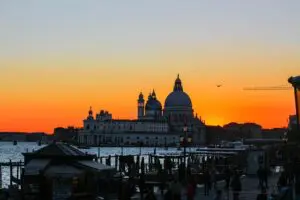
After Palazzo Grassi, the project expanded to Punta della Dogana, the former maritime customs complex at the entrance to the Grand Canal. The location is one of Venice’s most dramatic urban viewpoints, between the Grand Canal and the Giudecca Canal.
Venice has a long history of private patrons funding public-facing artistic projects. Modern collecting is different from the patronage of the Republic, yet the comparison is revealing. The important questions are who chooses the art, how the building is conserved, and whether the public gains meaningful access. These are cultural questions, not simply financial ones.
The maritime customs house
Punta della Dogana served Venice’s commercial world, where goods and ships were regulated at a strategically important waterfront location. Its present form dates largely from the seventeenth century, though the site has older institutional roots. The art museum occupies a building with a history of trade.
That context is especially useful to American visitors because the names, dates, and buildings can blur together in a short city break. A more rewarding approach is to ask what existed before the investment, what changed afterward, and how the new use affects the experience of the historic city. The answer is usually more complicated than a simple story of a billionaire arriving in Venice.
2009: Punta della Dogana opens
Punta della Dogana opened as a Pinault Collection exhibition venue in 2009 following restoration. The institution expanded the city’s contemporary art infrastructure and created a second destination that complements Palazzo Grassi rather than duplicating it.
One practical distinction deserves emphasis: a historic building can be open to the public without displaying a permanent collection in the conventional sense. Exhibition programs, special events, and access arrangements can change. The responsible traveler checks official information close to the visit and plans enough time to experience the architecture as well as the art.
Why the buildings matter
The two venues represent different architectural experiences. Palazzo Grassi is a grand urban palace with a ceremonial interior. Punta della Dogana is a former commercial complex of long spaces and a waterfront geometry shaped by its maritime purpose. The art changes; the architectural dialogue remains.
Venice has a long history of private patrons funding public-facing artistic projects. Modern collecting is different from the patronage of the Republic, yet the comparison is revealing. The important questions are who chooses the art, how the building is conserved, and whether the public gains meaningful access. These are cultural questions, not simply financial ones.
The Teatrino completes the network
The Teatrino di Palazzo Grassi opened in 2013 as a venue for talks, screenings, performances, and cultural events. This third component demonstrates that the project is not limited to purchasing buildings and hanging paintings. It also supports discussion and public programming.
That context is especially useful to American visitors because the names, dates, and buildings can blur together in a short city break. A more rewarding approach is to ask what existed before the investment, what changed afterward, and how the new use affects the experience of the historic city. The answer is usually more complicated than a simple story of a billionaire arriving in Venice.
A collection of approximately ten thousand works
The official Pinault Collection describes a collection of approximately 10,000 works assembled over more than fifty years. Not all of these are in Venice at one time. The difference between the size of a collection and the number of works on display is important for planning a museum visit.
One practical distinction deserves emphasis: a historic building can be open to the public without displaying a permanent collection in the conventional sense. Exhibition programs, special events, and access arrangements can change. The responsible traveler checks official information close to the visit and plans enough time to experience the architecture as well as the art.
The role of temporary exhibitions
Temporary exhibitions allow different artists, themes, and historical questions to take center stage. They can be monographic or group presentations. This approach encourages repeat visits but also means a traveler should never assume that a particular artist will be exhibited on a given date.
Venice has a long history of private patrons funding public-facing artistic projects. Modern collecting is different from the patronage of the Republic, yet the comparison is revealing. The important questions are who chooses the art, how the building is conserved, and whether the public gains meaningful access. These are cultural questions, not simply financial ones.
The Biennale connection
The Venice Biennale is a separate institution, with its own national pavilions and curated exhibitions. Pinault’s museums are part of the broader cultural landscape that becomes especially visible during Biennale years. They are not simply annexes of the Biennale.
That context is especially useful to American visitors because the names, dates, and buildings can blur together in a short city break. A more rewarding approach is to ask what existed before the investment, what changed afterward, and how the new use affects the experience of the historic city. The answer is usually more complicated than a simple story of a billionaire arriving in Venice.
Investment beyond the purchase price
The word investment includes acquisitions, restoration, architectural commissions, operations, conservation, staffing, exhibitions, and public programs. Public reports often cite particular transactions, but a single aggregate total for everything Pinault has spent in Venice should not be invented without verified accounting.
One practical distinction deserves emphasis: a historic building can be open to the public without displaying a permanent collection in the conventional sense. Exhibition programs, special events, and access arrangements can change. The responsible traveler checks official information close to the visit and plans enough time to experience the architecture as well as the art.
The benefits for Venice
Restored cultural buildings, international exhibitions, jobs, and additional reasons to visit beyond the busiest landmarks can benefit the city. Contemporary art institutions also attract audiences interested in architecture and living culture rather than only famous Renaissance paintings.
Venice has a long history of private patrons funding public-facing artistic projects. Modern collecting is different from the patronage of the Republic, yet the comparison is revealing. The important questions are who chooses the art, how the building is conserved, and whether the public gains meaningful access. These are cultural questions, not simply financial ones.
The debate about private patronage
Private investment in a historic city raises legitimate questions about access, influence, real-estate prices, and who determines cultural priorities. Supporters emphasize restoration and cultural vitality; critics may question the growing role of wealthy private actors. Both perspectives deserve attention.
That context is especially useful to American visitors because the names, dates, and buildings can blur together in a short city break. A more rewarding approach is to ask what existed before the investment, what changed afterward, and how the new use affects the experience of the historic city. The answer is usually more complicated than a simple story of a billionaire arriving in Venice.
François-Henri Pinault and Kering
François-Henri Pinault belongs to the next generation of the family and is closely associated with the luxury business Kering. His role is distinct from his father’s founding vision for the Venetian art venues. This is essential context when connecting the family’s cultural and commercial activities.
One practical distinction deserves emphasis: a historic building can be open to the public without displaying a permanent collection in the conventional sense. Exhibition programs, special events, and access arrangements can change. The responsible traveler checks official information close to the visit and plans enough time to experience the architecture as well as the art.
Salma Hayek enters the Venetian story
Mexican-American actor and producer Salma Hayek married François-Henri Pinault in 2009. The couple celebrated their wedding in Venice, drawing international media attention. That event is a genuine connection between the Pinault family, celebrity culture, and the city.
Venice has a long history of private patrons funding public-facing artistic projects. Modern collecting is different from the patronage of the Republic, yet the comparison is revealing. The important questions are who chooses the art, how the building is conserved, and whether the public gains meaningful access. These are cultural questions, not simply financial ones.
The 2009 wedding and La Fenice
The couple’s Venetian wedding celebrations in April 2009 included a ceremony at the historic Teatro La Fenice, according to contemporary reporting. The location linked the family’s private milestone to one of Venice’s most famous cultural landmarks.
That context is especially useful to American visitors because the names, dates, and buildings can blur together in a short city break. A more rewarding approach is to ask what existed before the investment, what changed afterward, and how the new use affects the experience of the historic city. The answer is usually more complicated than a simple story of a billionaire arriving in Venice.
What Salma Hayek does not own
It would be inaccurate to describe Salma Hayek as the founder of Palazzo Grassi or the owner of the Pinault Collection’s Venetian museums. Her public connection is through her marriage to François-Henri and her own career and philanthropic activities, not a documented role as founder of those institutions.
One practical distinction deserves emphasis: a historic building can be open to the public without displaying a permanent collection in the conventional sense. Exhibition programs, special events, and access arrangements can change. The responsible traveler checks official information close to the visit and plans enough time to experience the architecture as well as the art.
Venice’s international image
The Pinault family illustrates how Venice functions simultaneously as a living city, historic setting, contemporary art center, and destination for global cultural events. These identities can reinforce one another, but they also create tensions about tourism and public space.
Venice has a long history of private patrons funding public-facing artistic projects. Modern collecting is different from the patronage of the Republic, yet the comparison is revealing. The important questions are who chooses the art, how the building is conserved, and whether the public gains meaningful access. These are cultural questions, not simply financial ones.
A museum visit without confusion
For a practical art day, choose one or both venues based on the current exhibitions. Palazzo Grassi and Punta della Dogana are not next door to each other, so allow time to travel between them. Check official opening hours, ticketing, and any combined admission offers.
That context is especially useful to American visitors because the names, dates, and buildings can blur together in a short city break. A more rewarding approach is to ask what existed before the investment, what changed afterward, and how the new use affects the experience of the historic city. The answer is usually more complicated than a simple story of a billionaire arriving in Venice.
Punta della Dogana’s extraordinary location
Even visitors who do not enter the museum can appreciate the architecture from the waterfront around the Salute. The point offers a rare sense of how the Grand Canal, Bacino di San Marco, and Giudecca Canal connect. The setting helps explain why the old customs house mattered.
One practical distinction deserves emphasis: a historic building can be open to the public without displaying a permanent collection in the conventional sense. Exhibition programs, special events, and access arrangements can change. The responsible traveler checks official information close to the visit and plans enough time to experience the architecture as well as the art.
The local insight for travelers
A useful way to understand Pinault’s contribution is to compare the former function of each building with its current cultural role. Palazzo Grassi once displayed aristocratic status; Punta della Dogana regulated maritime trade. Their reuse tells a story about Venice reinventing inherited architecture.
Venice has a long history of private patrons funding public-facing artistic projects. Modern collecting is different from the patronage of the Republic, yet the comparison is revealing. The important questions are who chooses the art, how the building is conserved, and whether the public gains meaningful access. These are cultural questions, not simply financial ones.
How to verify current programs
The official Pinault Collection website is the authoritative starting point for exhibition dates, opening hours, accessibility, and tickets. Do not rely on old travel articles naming exhibitions that have closed. A changing program is part of the institutions’ identity.
That context is especially useful to American visitors because the names, dates, and buildings can blur together in a short city break. A more rewarding approach is to ask what existed before the investment, what changed afterward, and how the new use affects the experience of the historic city. The answer is usually more complicated than a simple story of a billionaire arriving in Venice.
What the story means in 2026
By 2026, Pinault’s Venetian cultural project has operated for two decades at Palazzo Grassi and seventeen years at Punta della Dogana. Its importance lies not in one celebrity wedding or one expensive purchase but in sustained institutional activity across several historic sites.
One practical distinction deserves emphasis: a historic building can be open to the public without displaying a permanent collection in the conventional sense. Exhibition programs, special events, and access arrangements can change. The responsible traveler checks official information close to the visit and plans enough time to experience the architecture as well as the art.
Further Venice reading
Understand the hidden stories behind Venice’s historic buildings, discover Venice’s forgotten female artisans, and explore the working city beyond its cultural landmarks.
Official sources and photo
The official Pinault Collection overview confirms the museum openings and collection size. See also the official history of Punta della Dogana. The featured image is an authentic exterior photograph of Palazzo Grassi by Abxbay, released into the public domain on Wikimedia Commons.
Explore the wider story
For related perspectives, discover contemporary art at the Giardini; the Italian Pavilion’s contemporary sculpture; Venice’s historic Scuole Grandi. These articles add historical and practical context to this subject.
Frequently Asked Questions
Who is François Pinault and what museums does he have in Venice?
François Pinault is a French collector and entrepreneur behind the Pinault Collection. Its Venice venues include Palazzo Grassi, opened in 2006, Punta della Dogana, opened in 2009, and the Teatrino cultural venue opened in 2013.
Is François Pinault married to Salma Hayek?
No. Salma Hayek is married to François-Henri Pinault, François Pinault’s son. The couple celebrated their marriage in Venice in 2009, including events connected with Teatro La Fenice.
How much has François Pinault invested in Venice?
His project includes purchasing and restoring historic properties, architectural work, exhibitions, staffing, and ongoing operations. There is no single verified total for all these expenditures in the sources used here, so a precise overall investment figure should not be assumed.