Does Venice have a hospital when the city has no cars? Yes. Ospedale Civile SS. Giovanni e Paolo is a functioning public hospital in the historic center, near Campo Santi Giovanni e Paolo. Patients arrive on foot or by public transport, while emergency responders use specialized water ambulances and a protected hospital landing. This is healthcare adapted to the extraordinary geography of Venice.
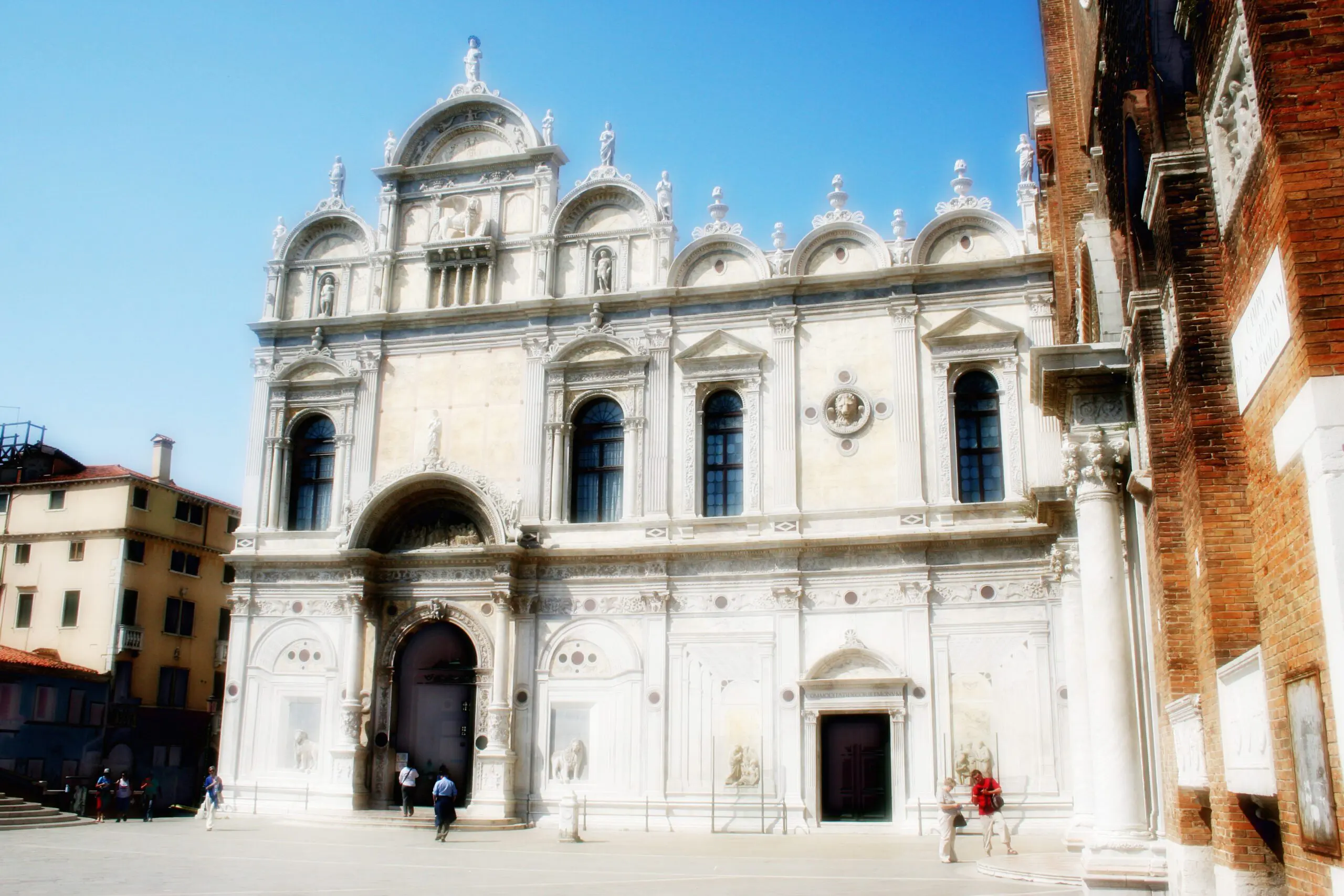
For American visitors, the hospital is a reminder that Venice is a living city, not just a beautiful destination. Behind the famous Scuola Grande di San Marco facade are clinicians, patients, medical logistics, and everyday challenges shaped by canals, bridges, and tides.
The hospital behind a Renaissance facade
The Civil Hospital of Venice occupies a remarkable complex near Campo Santi Giovanni e Paolo, incorporating the former Scuola Grande di San Marco. Its monumental facade can make visitors forget that patients, clinicians, and support staff work behind it every day.
The institution is known as Ospedale Civile SS. Giovanni e Paolo, at Castello 6777, and forms part of ULSS 3 Serenissima. It is a functioning public hospital, not a historical display or a clinic exclusively for tourists.
For travelers, this is more than an unusual logistical detail. It changes how a place should be understood and how plans should be made. The city looks compact, yet a practical journey depends on the location of bridges, waterbus stops, suitable landings, and the destination within a large building. The sensible approach is to check the actual route rather than assume that a short map distance means an easy trip.
Why geography changes healthcare
Most hospitals in American cities depend on streets, ambulances, parking facilities, and loading docks. Venice’s historic center has no conventional road network, so patients and staff navigate a mixture of walking routes and water transport.
The distinction matters when someone is unwell. A hospital may look close on a map yet require a longer walk around canals or a suitable waterbus connection. The appropriate entrance also depends on the service being visited.
The difference between a memorable sightseeing experience and a workable daily service is especially important here. Residents cannot choose to avoid essential appointments merely because the weather is inconvenient. Public infrastructure must function on ordinary weekdays, in winter, and when tourist crowds are present. That continuing need is why the details of access and coordination deserve attention.
What a water ambulance actually does
A Venetian medical water ambulance is an emergency craft operated within a professional medical response system, not an ordinary taxi converted for visitors. Its crew must manage medical priorities while navigating channels, landings, and local conditions.
Responders may also need to reach patients on foot, move equipment, or arrange a transfer between a building and a boat. Emergency dispatchers coordinate the appropriate response; travelers should never try to replace that system by booking their own private boat.
A visitor may notice the architectural beauty first, but the more revealing story is the human one. People working in healthcare must balance professional duties with a distinctive environment. This does not make Venetian medicine exotic or less serious. It shows how a modern public service adapts to a historic city without ordinary roads.
The protected emergency landing
Regional health authorities have described a sheltered water-ambulance arrival facility at Venice’s hospital. The cavana allows patients arriving by medical boat to be transferred toward clinical care without the unnecessary exposure associated with an ordinary public landing.
This is an unusually revealing detail of Venetian infrastructure. A dedicated water entrance supports privacy, patient handling, and continuity of care. It should never be treated as a sightseeing stop or photographed while emergency personnel are working.
For travelers, this is more than an unusual logistical detail. It changes how a place should be understood and how plans should be made. The city looks compact, yet a practical journey depends on the location of bridges, waterbus stops, suitable landings, and the destination within a large building. The sensible approach is to check the actual route rather than assume that a short map distance means an easy trip.
What to do in a medical emergency
For a life-threatening emergency in Venice, call 112 immediately and follow the operator’s instructions. Describe the symptoms, your location, nearby identifiable landmarks, and a callback number. If you are in a hotel, ask staff to help identify the address while emergency services are contacted.
Do not delay the call to search for a hospital entrance, consult a tide forecast, or negotiate a boat fare. Medical dispatchers are responsible for determining an appropriate response. This article explains local infrastructure and cannot replace medical assessment or instructions.
The difference between a memorable sightseeing experience and a workable daily service is especially important here. Residents cannot choose to avoid essential appointments merely because the weather is inconvenient. Public infrastructure must function on ordinary weekdays, in winter, and when tourist crowds are present. That continuing need is why the details of access and coordination deserve attention.
Nonurgent medical help
Not every concern belongs in an emergency department. A pharmacy, local clinician, or designated nonurgent medical service may be more appropriate for minor problems. The right choice depends on symptoms, urgency, and available professional advice.
ULSS 3 and the Municipality of Venice have publicized 116117 for nonurgent medical assistance within the local territory. Check current service arrangements through official channels. The nonurgent number does not replace 112 when immediate emergency care is needed.
A visitor may notice the architectural beauty first, but the more revealing story is the human one. People working in healthcare must balance professional duties with a distinctive environment. This does not make Venetian medicine exotic or less serious. It shows how a modern public service adapts to a historic city without ordinary roads.
Walking to the hospital
Residents and visitors may reach the hospital on foot from surrounding neighborhoods. Venice’s pedestrian network is often pleasant for healthy walkers, but bridges and steps can become significant obstacles for someone with pain, reduced mobility, or an injury.
A short route on a smartphone may not be the most accessible route. Before a planned appointment, check the specific building and entrance rather than navigating only to the historic facade. Allow time for the realities of Venice’s streets.
For travelers, this is more than an unusual logistical detail. It changes how a place should be understood and how plans should be made. The city looks compact, yet a practical journey depends on the location of bridges, waterbus stops, suitable landings, and the destination within a large building. The sensible approach is to check the actual route rather than assume that a short map distance means an easy trip.
Arriving by vaporetto
Public water transport is an essential part of access to the hospital district. The city’s official accessibility information describes routes to the Santi Giovanni e Paolo area, while ULSS 3 maps identify connections on the Fondamente Nove side.
Lines, stops, accessibility arrangements, and schedules can change. A patient should confirm the current ACTV service and the hospital entrance appropriate for their appointment. An ordinary vaporetto is transport, not a substitute for an emergency ambulance.
The difference between a memorable sightseeing experience and a workable daily service is especially important here. Residents cannot choose to avoid essential appointments merely because the weather is inconvenient. Public infrastructure must function on ordinary weekdays, in winter, and when tourist crowds are present. That continuing need is why the details of access and coordination deserve attention.
Several entrances, different purposes
The hospital complex is not a single door. ULSS 3 identifies entrances around Campo Santi Giovanni e Paolo, Fondamenta dei Mendicanti, and the northern side of the complex, with distinct arrangements for different functions and times.
An appointment letter may indicate a building or department that is not reached most conveniently through the main monumental entrance. Patients should rely on the hospital’s current map and instructions rather than a travel photograph or an old blog post.
A visitor may notice the architectural beauty first, but the more revealing story is the human one. People working in healthcare must balance professional duties with a distinctive environment. This does not make Venetian medicine exotic or less serious. It shows how a modern public service adapts to a historic city without ordinary roads.
The emergency department versus the hospital
Pronto soccorso is the Italian term for emergency department. It is one component of a larger hospital that also supports scheduled care and other services. Confusing the two can send a visitor to the wrong entrance or create unnecessary delays.
The health authority advises that emergency departments should serve emergency and urgent needs rather than replace ordinary community care. If you have a scheduled test, follow your appointment directions. If a serious medical emergency develops, contact emergency services.
For travelers, this is more than an unusual logistical detail. It changes how a place should be understood and how plans should be made. The city looks compact, yet a practical journey depends on the location of bridges, waterbus stops, suitable landings, and the destination within a large building. The sensible approach is to check the actual route rather than assume that a short map distance means an easy trip.
Venice and mainland healthcare
Historic Venice and Mestre belong to a wider healthcare geography but have different transport conditions. Road vehicles can serve mainland facilities, whereas boats and pedestrian access are central to the historic center.
Some patients may need services elsewhere in the regional network. The appropriate destination depends on clinical requirements and the health system’s arrangements. It would be misleading to claim that every specialty is available at one hospital or that all patients must travel to Mestre.
The difference between a memorable sightseeing experience and a workable daily service is especially important here. Residents cannot choose to avoid essential appointments merely because the weather is inconvenient. Public infrastructure must function on ordinary weekdays, in winter, and when tourist crowds are present. That continuing need is why the details of access and coordination deserve attention.
The Scuola Grande di San Marco
The Scuola Grande di San Marco facade is a major piece of Venetian architectural heritage. Its sculptural details and grand composition belong to a history of confraternities, patronage, and civic life that long predates today’s hospital operations.
Its continued connection with healthcare is especially striking because the surrounding square still looks like the Venice of art books. Visitors should distinguish public cultural spaces from working hospital areas and respect patient privacy.
A visitor may notice the architectural beauty first, but the more revealing story is the human one. People working in healthcare must balance professional duties with a distinctive environment. This does not make Venetian medicine exotic or less serious. It shows how a modern public service adapts to a historic city without ordinary roads.
A place of medical history
Parts of the complex are associated with the history of medicine and the Scuola Grande’s cultural heritage. Exhibitions and historic rooms can help explain the relationship between Venetian institutions, art, and healthcare over time.
Museum access is separate from medical access. Opening times and permitted areas should be checked with the relevant institution. An opportunity to see a historic room is never permission to enter a ward, treatment area, or restricted corridor.
For travelers, this is more than an unusual logistical detail. It changes how a place should be understood and how plans should be made. The city looks compact, yet a practical journey depends on the location of bridges, waterbus stops, suitable landings, and the destination within a large building. The sensible approach is to check the actual route rather than assume that a short map distance means an easy trip.
How supplies reach a hospital without cars
Hospitals require food, medicines, linens, equipment, maintenance materials, and many other supplies. Delivering them in Venice involves the same fundamental logistical challenges faced by other businesses, though healthcare adds demanding requirements for reliability and handling.
The precise procedures are managed by professionals and should not be guessed at in a travel article. The broader point is clear: behind every clinical appointment lies a network of workers, transport arrangements, and maintenance systems adapted to a city built around canals.
The difference between a memorable sightseeing experience and a workable daily service is especially important here. Residents cannot choose to avoid essential appointments merely because the weather is inconvenient. Public infrastructure must function on ordinary weekdays, in winter, and when tourist crowds are present. That continuing need is why the details of access and coordination deserve attention.
The tide and medical transport
High and low tides affect the navigability of certain waterways in different ways. Low water may reduce depth in shallow canals; high water may reduce bridge clearance. Professional crews account for the relevant conditions and choose workable routes.
Visitors should never interpret a tide forecast as a promise that a particular emergency boat can or cannot reach them. Dispatchers and crews have operational information that a tourist map cannot supply. For planned travel, checking current transport notices remains sensible.
A visitor may notice the architectural beauty first, but the more revealing story is the human one. People working in healthcare must balance professional duties with a distinctive environment. This does not make Venetian medicine exotic or less serious. It shows how a modern public service adapts to a historic city without ordinary roads.
Why bridges can become barriers
Venice is celebrated for walking, but accessibility is uneven. A bridge with several flights of steps can be difficult for wheelchair users, people with crutches, and anyone recovering from treatment. A route’s practical difficulty matters more than its straight-line distance.
Patients should discuss accessibility needs with the relevant service before traveling. Official maps distinguish entrances and some accessible routes. Broad claims that Venice is either completely accessible or impossible to navigate are both unhelpful.
For travelers, this is more than an unusual logistical detail. It changes how a place should be understood and how plans should be made. The city looks compact, yet a practical journey depends on the location of bridges, waterbus stops, suitable landings, and the destination within a large building. The sensible approach is to check the actual route rather than assume that a short map distance means an easy trip.
The role of pharmacies
Neighborhood pharmacies are important to everyday healthcare and can provide regulated services and professional advice within their scope. For travelers, they may be a useful first contact for nonurgent questions, though serious symptoms always warrant appropriate medical attention.
Medication brands and prescription rules can differ between Italy and the United States. Travelers should carry generic medication names and essential medical information. For cultural context, read the history of Venice’s remarkable pharmacies.
The difference between a memorable sightseeing experience and a workable daily service is especially important here. Residents cannot choose to avoid essential appointments merely because the weather is inconvenient. Public infrastructure must function on ordinary weekdays, in winter, and when tourist crowds are present. That continuing need is why the details of access and coordination deserve attention.
Preparation for American visitors
Before traveling, review your insurance coverage, emergency assistance contact, and rules for medical reimbursement. Keep important information available offline as well as on your phone. If you use prescription medication, bring suitable documentation and enough supply within applicable rules.
Do not assume that a US insurance card guarantees direct billing at an Italian hospital. Emergency care, routine visits, and private treatment can involve different procedures. The insurer and the provider are the appropriate sources for payment and coverage questions.
A visitor may notice the architectural beauty first, but the more revealing story is the human one. People working in healthcare must balance professional duties with a distinctive environment. This does not make Venetian medicine exotic or less serious. It shows how a modern public service adapts to a historic city without ordinary roads.
Hotels, water doors, and real access
A hotel may advertise a water entrance without guaranteeing that every boat can use it at every tide. Steps, narrow canals, and landing geometry can affect ordinary transfers. A beautiful waterfront doorway is not necessarily an accessible medical arrival point.
For mobility needs, ask hotels about bridges, steps, elevators, and nearby public transport before booking. Emergency crews make their own access decisions. A private guide or concierge can help with routine logistics but should never direct an emergency response.
For travelers, this is more than an unusual logistical detail. It changes how a place should be understood and how plans should be made. The city looks compact, yet a practical journey depends on the location of bridges, waterbus stops, suitable landings, and the destination within a large building. The sensible approach is to check the actual route rather than assume that a short map distance means an easy trip.
What this hospital means to residents
For Venetians, the hospital is part of the infrastructure that makes year-round life possible. People attend appointments, visit relatives, work shifts, and depend on healthcare services regardless of tourist seasons.
A city that preserves its monuments but loses essential public services becomes less livable. The hospital reminds visitors that Venice has families, older residents, workers, and everyday medical needs. It is a community rather than a beautiful set of buildings.
The difference between a memorable sightseeing experience and a workable daily service is especially important here. Residents cannot choose to avoid essential appointments merely because the weather is inconvenient. Public infrastructure must function on ordinary weekdays, in winter, and when tourist crowds are present. That continuing need is why the details of access and coordination deserve attention.
The people behind the service
Emergency medicine relies on dispatchers, clinicians, nurses, boat crews, technicians, and support staff. The demands of working in a lagoon city add logistical complexity to already challenging professions.
There is no need to invent a dramatic rescue story to appreciate this work. The documented sheltered emergency landing and the routine existence of specialized medical boats are compelling enough. Visitors should not film patients or obstruct crews.
A visitor may notice the architectural beauty first, but the more revealing story is the human one. People working in healthcare must balance professional duties with a distinctive environment. This does not make Venetian medicine exotic or less serious. It shows how a modern public service adapts to a historic city without ordinary roads.
Where to verify current information
For hospital appointments, department contacts, and entrances, consult the official ULSS 3 Serenissima website. For an emergency, call 112; for nonurgent care, verify current information about 116117.
For a separate practical reference, see our Venice emergency numbers guide. This article instead focuses on the hospital’s geography, architectural heritage, and the way healthcare operates on water.
For travelers, this is more than an unusual logistical detail. It changes how a place should be understood and how plans should be made. The city looks compact, yet a practical journey depends on the location of bridges, waterbus stops, suitable landings, and the destination within a large building. The sensible approach is to check the actual route rather than assume that a short map distance means an easy trip.
What the hospital reveals about Venice
The hospital captures a central paradox of Venice. Its celebrated Renaissance architecture belongs to the city’s artistic history, while its modern operations serve people with immediate, practical needs. Boats here are not only romantic experiences; they are part of essential public infrastructure.
Igor Scomparin, a licensed Venice guide since 1997, and the Tour Leader Venice team encourage visitors to understand this working city alongside its famous monuments. The hospital is one of the clearest examples of how Venetian ingenuity continues to support everyday life.
The difference between a memorable sightseeing experience and a workable daily service is especially important here. Residents cannot choose to avoid essential appointments merely because the weather is inconvenient. Public infrastructure must function on ordinary weekdays, in winter, and when tourist crowds are present. That continuing need is why the details of access and coordination deserve attention.
Frequently Asked Questions About Venice’s Hospital
Does Venice, Italy, have a hospital in its historic center?
Yes. Ospedale Civile SS. Giovanni e Paolo is a public hospital at Castello 6777, near Campo Santi Giovanni e Paolo, operated within ULSS 3 Serenissima.
How do ambulances work in Venice without cars?
Emergency services use specialized medical water ambulances and coordinated responders. In an emergency call 112 and follow dispatch instructions instead of arranging a private boat.
What number should US tourists call for medical help in Venice?
Call 112 for emergencies. ULSS 3 also provides information about 116117 for nonurgent medical assistance; check official guidance for current arrangements.
Photo credit: Roberto Picco, Venice hospital, Wikimedia Commons, CC BY 2.0.