Ca’ Pesaro is Venice’s International Gallery of Modern Art, housed in a monumental Baroque palace on the Grand Canal. Designed by Baldassare Longhena and shaped by the legacy of Felicita Bevilacqua La Masa, the building brings together Venetian architecture, modern painting and sculpture, and the Museum of Oriental Art. Here is how to understand the palace and plan a rewarding October visit.
A palace built to be seen from the water
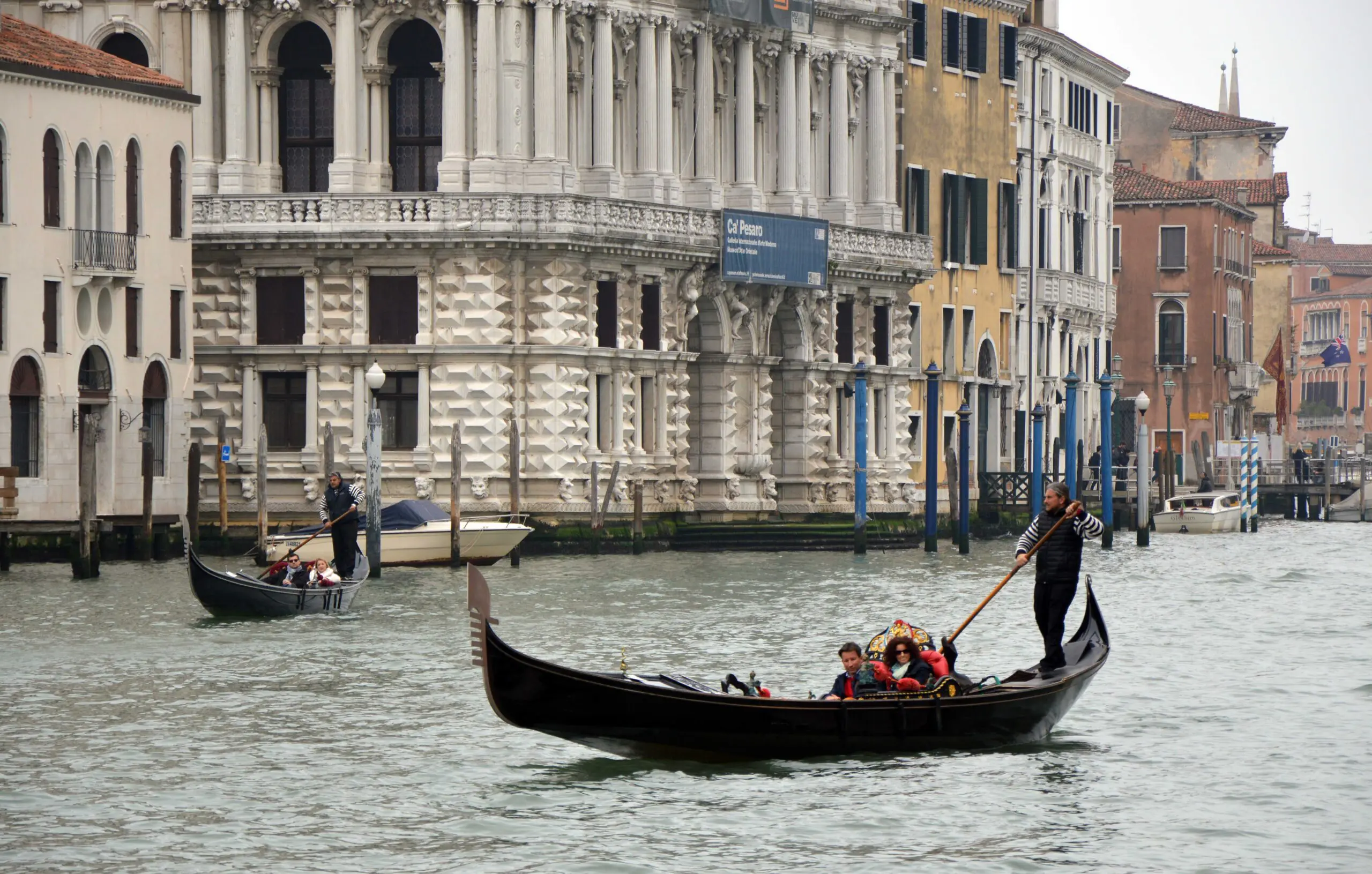
Ca’ Pesaro occupies a commanding position on the Grand Canal in the Santa Croce district. Its monumental façade belongs to a period when wealthy Venetian families used architecture to express their position within the Republic. The most revealing first encounter is often from a boat: the structure announces itself before a visitor knows anything about its museum collections.
The building itself offers a valuable historical clue. Venetian palaces were designed around movement between water and interior spaces, and around distinctions between public display and private life. Today visitors experience those spaces under museum conditions. Recognizing the difference prevents the historic setting from becoming an anonymous backdrop.
The Pesaro family and Venetian power
The Pesaro family belonged to Venice’s patrician class, whose members could participate in the political institutions of the Republic. A grand palace served as residence, social theater, and material evidence of the family’s resources. Understanding that original function makes the later transition to a public art museum much more significant.
Travelers from the United States may be accustomed to museums in purpose-built buildings with relatively predictable layouts. In Venice, inherited architecture often shapes the visit. Allowing extra time for navigation and observing the rooms as carefully as the objects can transform the experience.
Baldassare Longhena and Baroque Venice
Baldassare Longhena designed the palace. He is also known for Santa Maria della Salute, one of the most recognizable architectural landmarks on the Venetian skyline. His work embraced scale, rhythm, and theatricality, qualities that distinguish the city’s Baroque architecture from its earlier Gothic palaces.
The most responsible practical advice is to separate enduring history from changing visitor information. Architectural origins and institutional development can be explained with confidence; exhibition schedules, ticket conditions, and accessible routes require a current official check. That distinction helps travelers make reliable plans.
Construction that outlived its architect
The building campaign stretched across generations. Work continued after Longhena’s death, with Gian Antonio Gaspari associated with the completion. That extended chronology matters: major Venetian palaces were rarely finished in a single uninterrupted burst, and their final appearance could reflect multiple patrons and builders.
The building itself offers a valuable historical clue. Venetian palaces were designed around movement between water and interior spaces, and around distinctions between public display and private life. Today visitors experience those spaces under museum conditions. Recognizing the difference prevents the historic setting from becoming an anonymous backdrop.
Reading the stone façade
The lower level has a powerful rusticated treatment, while the upper floors use classical columns and large windows. The architectural language creates a sense of weight and hierarchy. From the canal, the façade is legible as a unified composition rather than simply a sequence of ornate details.
Travelers from the United States may be accustomed to museums in purpose-built buildings with relatively predictable layouts. In Venice, inherited architecture often shapes the visit. Allowing extra time for navigation and observing the rooms as carefully as the objects can transform the experience.
Why the Grand Canal mattered
The Grand Canal was a commercial route and a prestigious urban address. Boats brought people, materials, and goods to its waterfront buildings. A palace designed for this setting therefore had to work as a recognizable public face, even though much of the activity inside remained private.
The most responsible practical advice is to separate enduring history from changing visitor information. Architectural origins and institutional development can be explained with confidence; exhibition schedules, ticket conditions, and accessible routes require a current official check. That distinction helps travelers make reliable plans.
The ceremonial floor
The piano nobile, or principal noble floor, contained important reception spaces. In Venetian architecture, these rooms were associated with hospitality, display, and family life. Modern museum visitors experience them differently, but their scale still hints at the building’s original social purpose.
The building itself offers a valuable historical clue. Venetian palaces were designed around movement between water and interior spaces, and around distinctions between public display and private life. Today visitors experience those spaces under museum conditions. Recognizing the difference prevents the historic setting from becoming an anonymous backdrop.
The changing fortunes of noble houses
After the end of the Venetian Republic, many aristocratic residences passed through new owners and uses. The transformation of Ca’ Pesaro belongs to this wider process. Historic architecture survived not because society stood still, but because buildings found new roles in a changing city.
Travelers from the United States may be accustomed to museums in purpose-built buildings with relatively predictable layouts. In Venice, inherited architecture often shapes the visit. Allowing extra time for navigation and observing the rooms as carefully as the objects can transform the experience.
Felicita Bevilacqua La Masa
Felicita Bevilacqua La Masa left a lasting legacy by linking the palace to artistic opportunity. Her bequest helped support young artists and made the building part of a broader cultural mission. This story is important because it highlights a woman’s agency in reshaping Venice’s artistic institutions.
The most responsible practical advice is to separate enduring history from changing visitor information. Architectural origins and institutional development can be explained with confidence; exhibition schedules, ticket conditions, and accessible routes require a current official check. That distinction helps travelers make reliable plans.
A new home for modern art
Ca’ Pesaro became the home of Venice’s International Gallery of Modern Art in the early twentieth century. Its new identity connected the historic palace with artistic developments that had not existed when its first stones were laid. The contrast is one of the museum’s defining pleasures.
The building itself offers a valuable historical clue. Venetian palaces were designed around movement between water and interior spaces, and around distinctions between public display and private life. Today visitors experience those spaces under museum conditions. Recognizing the difference prevents the historic setting from becoming an anonymous backdrop.
The Biennale connection
The Venice Biennale, founded in 1895, encouraged international artistic exchange and collecting. Works acquired through the broader Biennale environment helped shape the city’s modern art holdings. Ca’ Pesaro therefore offers a way to see how temporary cultural events can contribute to a lasting civic collection.
Travelers from the United States may be accustomed to museums in purpose-built buildings with relatively predictable layouts. In Venice, inherited architecture often shapes the visit. Allowing extra time for navigation and observing the rooms as carefully as the objects can transform the experience.
Art in rooms built for another century
A painting or sculpture looks different when displayed in a historic palace rather than a neutral contemporary gallery. Windows, ceilings, proportions, and architectural decoration influence the viewer’s attention. At Ca’ Pesaro, the building should be understood as an active part of the museum experience.
The most responsible practical advice is to separate enduring history from changing visitor information. Architectural origins and institutional development can be explained with confidence; exhibition schedules, ticket conditions, and accessible routes require a current official check. That distinction helps travelers make reliable plans.
The breadth of the modern collection
The gallery encompasses Italian and international developments in painting and sculpture. Rather than treating the museum as a checklist of famous names, visitors can follow questions about how artists responded to modernity, changing society, and new visual languages.
The building itself offers a valuable historical clue. Venetian palaces were designed around movement between water and interior spaces, and around distinctions between public display and private life. Today visitors experience those spaces under museum conditions. Recognizing the difference prevents the historic setting from becoming an anonymous backdrop.
Italian art beyond the Renaissance
Venice is strongly associated with Titian, Tintoretto, and Veronese, yet Italian artistic history did not stop with the Renaissance. Ca’ Pesaro offers an opportunity to explore later movements and understand how artists challenged inherited conventions.
Travelers from the United States may be accustomed to museums in purpose-built buildings with relatively predictable layouts. In Venice, inherited architecture often shapes the visit. Allowing extra time for navigation and observing the rooms as carefully as the objects can transform the experience.
International perspectives
Modern artistic movements crossed national borders through exhibitions, collectors, publications, and travel. A museum such as Ca’ Pesaro reveals those exchanges within a Venetian setting. This makes the gallery particularly useful for international visitors who already know the city’s older masterpieces.
The most responsible practical advice is to separate enduring history from changing visitor information. Architectural origins and institutional development can be explained with confidence; exhibition schedules, ticket conditions, and accessible routes require a current official check. That distinction helps travelers make reliable plans.
Sculpture and the body
Sculpture rewards a different pace from painting. Walking around an object can reveal changes in balance, silhouette, and surface. Visitors should observe how sculptural works occupy space within the palace’s historic rooms rather than considering them only from a single frontal viewpoint.
The building itself offers a valuable historical clue. Venetian palaces were designed around movement between water and interior spaces, and around distinctions between public display and private life. Today visitors experience those spaces under museum conditions. Recognizing the difference prevents the historic setting from becoming an anonymous backdrop.
The Museum of Oriental Art
Ca’ Pesaro also houses the Museum of Oriental Art. Its collections have a distinct history and include objects associated with Asian artistic traditions. A visitor interested in both museums should recognize that they offer very different subjects and require separate attention.
Travelers from the United States may be accustomed to museums in purpose-built buildings with relatively predictable layouts. In Venice, inherited architecture often shapes the visit. Allowing extra time for navigation and observing the rooms as carefully as the objects can transform the experience.
How the Asian collection came together
The Asian holdings are linked to the collecting activities of Prince Henry II of Bourbon-Parma during his travels. Their history invites questions about nineteenth-century European collecting, cultural exchange, and the original contexts of objects now displayed far from where they were made.
The most responsible practical advice is to separate enduring history from changing visitor information. Architectural origins and institutional development can be explained with confidence; exhibition schedules, ticket conditions, and accessible routes require a current official check. That distinction helps travelers make reliable plans.
Looking beyond labels
Museum labels are useful starting points, not substitutes for close observation. Notice materials, techniques, scale, and evidence of use. Decorative objects can reveal practical skills and cultural values just as powerfully as monumental paintings.
The building itself offers a valuable historical clue. Venetian palaces were designed around movement between water and interior spaces, and around distinctions between public display and private life. Today visitors experience those spaces under museum conditions. Recognizing the difference prevents the historic setting from becoming an anonymous backdrop.
October and the museum rhythm
October can be an appealing month for a museum visit as daylight hours shorten and the weather becomes less predictable. However, crowds vary with exhibitions, weekends, and events. A traveler should not assume that every autumn afternoon will be quiet.
Travelers from the United States may be accustomed to museums in purpose-built buildings with relatively predictable layouts. In Venice, inherited architecture often shapes the visit. Allowing extra time for navigation and observing the rooms as carefully as the objects can transform the experience.
Temporary exhibitions in 2026
Ca’ Pesaro presents changing exhibition programs alongside its collections. Because exhibition dates and room arrangements can change, the official museum calendar is the reliable place to confirm what will be on view on a particular October date.
The most responsible practical advice is to separate enduring history from changing visitor information. Architectural origins and institutional development can be explained with confidence; exhibition schedules, ticket conditions, and accessible routes require a current official check. That distinction helps travelers make reliable plans.
A thoughtful first visit
Begin with the building itself. Observe the Grand Canal setting, the façade, and the character of the interior before concentrating on individual works. This simple sequence provides a historical framework for everything that follows.
The building itself offers a valuable historical clue. Venetian palaces were designed around movement between water and interior spaces, and around distinctions between public display and private life. Today visitors experience those spaces under museum conditions. Recognizing the difference prevents the historic setting from becoming an anonymous backdrop.
When you have ninety minutes
A shorter visit works best with a deliberate selection. Choose a few rooms, read introductory panels, and spend meaningful time with a handful of works. Rushing to cover every floor can leave visitors remembering little beyond the staircase.
Travelers from the United States may be accustomed to museums in purpose-built buildings with relatively predictable layouts. In Venice, inherited architecture often shapes the visit. Allowing extra time for navigation and observing the rooms as carefully as the objects can transform the experience.
When you have half a day
With more time, explore both the modern and Asian collections and take breaks between sections. The subjects and historical contexts differ substantially. A pause helps prevent the second museum from becoming an afterthought.
The most responsible practical advice is to separate enduring history from changing visitor information. Architectural origins and institutional development can be explained with confidence; exhibition schedules, ticket conditions, and accessible routes require a current official check. That distinction helps travelers make reliable plans.
Arriving by public boat
A vaporetto journey along the Grand Canal gives a useful architectural introduction. The route passes buildings from different periods, helping visitors compare Gothic, Renaissance, and Baroque façades before they enter Ca’ Pesaro.
The building itself offers a valuable historical clue. Venetian palaces were designed around movement between water and interior spaces, and around distinctions between public display and private life. Today visitors experience those spaces under museum conditions. Recognizing the difference prevents the historic setting from becoming an anonymous backdrop.
Approaching on foot
Venice’s pedestrian routes can be indirect because canals interrupt the street network. A museum that appears close on a map may require several turns and bridges. Check the official directions rather than assuming a straight line.
Travelers from the United States may be accustomed to museums in purpose-built buildings with relatively predictable layouts. In Venice, inherited architecture often shapes the visit. Allowing extra time for navigation and observing the rooms as carefully as the objects can transform the experience.
Exploring Santa Croce
The neighborhood around Ca’ Pesaro includes residential streets, shops, and canals that operate independently of the museum. A short walk before or after a visit can show the everyday city behind the Grand Canal’s monumental façades.
The most responsible practical advice is to separate enduring history from changing visitor information. Architectural origins and institutional development can be explained with confidence; exhibition schedules, ticket conditions, and accessible routes require a current official check. That distinction helps travelers make reliable plans.
Tickets and opening times
Opening days, prices, and admission arrangements can change. Check the official MUVE website for current information, including temporary exhibition access and any combined ticket offers. Avoid relying on a printed guidebook for precise 2026 schedules.
The building itself offers a valuable historical clue. Venetian palaces were designed around movement between water and interior spaces, and around distinctions between public display and private life. Today visitors experience those spaces under museum conditions. Recognizing the difference prevents the historic setting from becoming an anonymous backdrop.
Accessibility in a historic palace
Historic buildings can involve level changes and circulation constraints. Visitors with limited mobility should verify accessible entrances, lifts, and temporary restrictions with the museum before arriving. A little advance planning can make the visit considerably easier.
Travelers from the United States may be accustomed to museums in purpose-built buildings with relatively predictable layouts. In Venice, inherited architecture often shapes the visit. Allowing extra time for navigation and observing the rooms as carefully as the objects can transform the experience.
Photography and visitor etiquette
Museum photography rules may differ by room, exhibition, or lender requirements. Follow posted instructions, avoid flash where prohibited, and respect other visitors. A few carefully chosen photographs are more useful than documenting every object.
The most responsible practical advice is to separate enduring history from changing visitor information. Architectural origins and institutional development can be explained with confidence; exhibition schedules, ticket conditions, and accessible routes require a current official check. That distinction helps travelers make reliable plans.
What a local guide notices
Igor Scomparin has worked as a licensed Venice guide since 1997. A useful interpretive approach is to connect the palace’s original aristocratic purpose with the civic and artistic mission it acquired later, rather than presenting architecture and artworks as unrelated subjects.
The building itself offers a valuable historical clue. Venetian palaces were designed around movement between water and interior spaces, and around distinctions between public display and private life. Today visitors experience those spaces under museum conditions. Recognizing the difference prevents the historic setting from becoming an anonymous backdrop.
A comparison with other palaces
Ca’ Pesaro differs from Venetian Gothic buildings through its assertive Baroque composition. Looking at nearby Grand Canal façades reveals how styles evolved while the canal retained its importance as the city’s most prestigious thoroughfare.
Travelers from the United States may be accustomed to museums in purpose-built buildings with relatively predictable layouts. In Venice, inherited architecture often shapes the visit. Allowing extra time for navigation and observing the rooms as carefully as the objects can transform the experience.
Why the Bevilacqua La Masa story matters
The museum’s identity is not limited to collecting established masterpieces. The Bevilacqua La Masa legacy emphasizes support for artistic development and the possibility of new work. This gives the palace a living connection to creativity in Venice.
The most responsible practical advice is to separate enduring history from changing visitor information. Architectural origins and institutional development can be explained with confidence; exhibition schedules, ticket conditions, and accessible routes require a current official check. That distinction helps travelers make reliable plans.
An October itinerary without rushing
Pair Ca’ Pesaro with a relaxed walk in Santa Croce or San Polo rather than trying to cross the city repeatedly. Allow time for bridges, photography, and unexpected discoveries. Venice is easier to appreciate when travel time is treated as part of the experience.
The building itself offers a valuable historical clue. Venetian palaces were designed around movement between water and interior spaces, and around distinctions between public display and private life. Today visitors experience those spaces under museum conditions. Recognizing the difference prevents the historic setting from becoming an anonymous backdrop.
The value of returning
Collections and temporary exhibitions evolve. Someone who visited Ca’ Pesaro years ago may encounter different works or a new curatorial arrangement today. Returning can reveal aspects of the palace that were overlooked on a first visit.
Travelers from the United States may be accustomed to museums in purpose-built buildings with relatively predictable layouts. In Venice, inherited architecture often shapes the visit. Allowing extra time for navigation and observing the rooms as carefully as the objects can transform the experience.
A city that reuses its heritage
The transformation of a private palace into a public museum illustrates a defining Venetian pattern: historic buildings acquire new functions without entirely losing their earlier identity. The resulting layers make the city intellectually richer than a static open-air museum.
The most responsible practical advice is to separate enduring history from changing visitor information. Architectural origins and institutional development can be explained with confidence; exhibition schedules, ticket conditions, and accessible routes require a current official check. That distinction helps travelers make reliable plans.
What to remember after leaving
Ca’ Pesaro tells several stories at once: patrician ambition, Baroque architecture, philanthropy, international art, and changing museum practice. Its importance comes from the relationship among these stories, not simply from one famous painting or room.
The building itself offers a valuable historical clue. Venetian palaces were designed around movement between water and interior spaces, and around distinctions between public display and private life. Today visitors experience those spaces under museum conditions. Recognizing the difference prevents the historic setting from becoming an anonymous backdrop.
Continue exploring Venice
Discover the hidden details behind Venice’s historic architecture, learn how the city works before sunrise, and read why Venice has no cars.
Official visitor information
For exhibition schedules, tickets, and accessibility consult the official Ca’ Pesaro museum website. The featured image is an authentic photograph of the palace on the Grand Canal.
More to explore in Venice
For additional context, explore the art of the Biennale’s Giardini; contemporary art at the Italian Pavilion; Venice’s historic Scuole Grandi. These stories expand on the places, people, and traditions discussed above.
Frequently Asked Questions
What is Ca’ Pesaro in Venice?
Ca’ Pesaro is a historic Baroque palace on the Grand Canal housing the International Gallery of Modern Art and the Museum of Oriental Art.
What should I see at Ca’ Pesaro in October?
Explore the modern art galleries and historic architecture, and check the official museum calendar for temporary exhibitions and room availability.
How long should I spend at Ca’ Pesaro?
Plan approximately 90 minutes to two hours for a focused visit, or longer to explore both the modern and Asian art collections.