By Igor Scomparin, licensed Venice guide since 1997.
Venice concerts in October 2026 range from intimate Baroque evenings in historic churches to chamber music, jazz, and performances presented by major cultural institutions. The right choice depends on the music you want to hear, the actual venue, your seating preferences, and how you will return to your hotel. Start with those details, then enjoy the romance. A gilded room is a wonderful setting, but it is not a substitute for a confirmed program.
In Venice, an evening begins long before the musicians appear. You cross a bridge, pass a doorway glowing in a narrow street, and hear the city becoming more distinct as daytime crowds disperse. The walk is part of the pleasure. It can also be the part that travelers underestimate. This guide explains how to choose and plan a musical evening without confusing a theater visit with a performance ticket, or a famous institution with a single address.
Choose the experience before choosing the building
Ask yourself what you would most enjoy listening to for an hour or more. If the answer is familiar melodies played by a small string ensemble, a Baroque concert may be a comfortable introduction. If you love voices, look for opera or a clearly identified recital. Jazz and contemporary music offer different rewards, including improvisation and unfamiliar sounds. None is inherently more authentic because the audience includes visitors. What matters is the quality and character of the event you actually book.
Travelers sometimes choose solely from an image of an auditorium, then discover that the performance takes place in a smaller room or a different theater. Others expect a staged opera when they have purchased a concert of selected arias. Read the event description as carefully as you would a restaurant menu. Instrumentation, performers, repertoire, and duration tell you far more than phrases such as unforgettable evening or Venetian atmosphere.
October’s calendar is more varied than its postcard image
For October 2026, the official La Fenice calendar lists performances across several venues. Examples include The Telephone & Trouble in Tahiti at Teatro Goldoni, a Niccolò Castiglioni tribute by Ex Novo Ensemble on October 15, Marcin Wasilewski Trio on October 17, and Trio Hermes on October 20. These are examples from the published calendar, not a promise of remaining seats. Individual event pages should be checked for current times, prices, and conditions.
The calendar also illustrates an easily missed detail: a performing institution can present events outside its principal auditorium, and even outside Venice. A touring engagement is not a local concert. When browsing a monthly program, check the city and room associated with each date. This is especially useful if you see the La Fenice name and assume every listing means an evening inside the famous opera house.
La Fenice, its smaller rooms, and other theaters
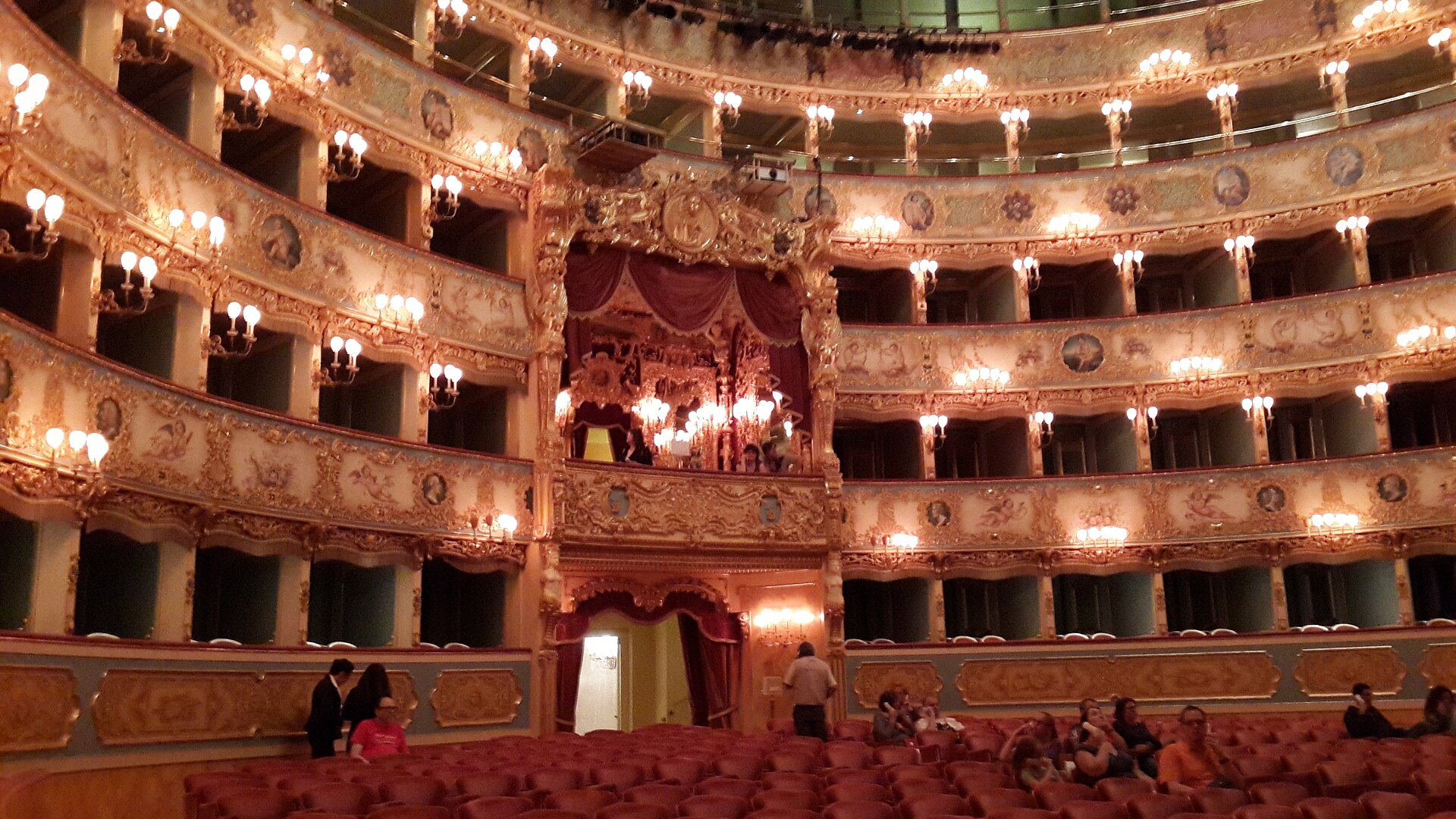
La Fenice is both a celebrated building and an active musical institution. Those identities overlap without being interchangeable. An auditorium tour provides access to architecture under the visitor arrangements in force that day. A performance ticket gives admission to a particular event and seating category. Neither should be assumed to include the other. A theater may also restrict sightseeing during rehearsals or performances, so daytime access requires its own check.
For context about another theater in the city’s musical life, read our guide to an evening at Teatro Malibran. Use that article to understand the venue rather than to infer this month’s schedule. Once you select an event, copy its exact venue name and address into your travel notes. That small habit prevents a beautifully planned evening from beginning at the wrong door.
What a church concert offers
A church concert can bring performers and audience into close proximity. Without a deep orchestra pit or extensive stage machinery, attention often settles on the physical act of making music: the bow changing direction, a breath before a phrase, the exchange of glances within an ensemble. For visitors unfamiliar with classical music, this visible coordination can make the experience immediately engaging. You do not need to recognize every composition to appreciate it.
Church interiors differ in sightlines, temperature, seating, and acoustics. Stone, vaults, and reflective surfaces can give sound a lingering quality, but not every seat hears identically. A column or a person in front of you may affect the view. If comfort matters, ask about seat type and whether places are numbered. Do not assume that a photograph of a magnificent interior describes the view from every ticket category.
San Vidal: make the venue part of a sensible evening
San Vidal is a useful option to investigate when your itinerary already includes the Accademia area or central San Marco. Tour Leader Venice offers a San Vidal Vivaldi concert ticket page with a booking link. Open the booking calendar to check your date, the actual performance, and the admission conditions. A product page describing a recurring concert does not establish that every evening has identical repertoire or remaining capacity.
Build your dinner plans around the confirmed start time. A relaxed meal before a concert can work well, provided the restaurant knows when you need to leave. If you prefer dinner afterward, confirm that the kitchen will still be serving. The best restaurant for this evening is often one within a comfortable walking radius, rather than a celebrated table requiring another journey across the city.
The Pietà: keep history and today’s ticket separate
The Pietà name connects strongly with Venice’s musical heritage and Vivaldi’s work for the institution. Today’s concert is nevertheless a contemporary performance with its own performers and program. Avoid treating promotional descriptions as proof that a particular composition was written inside the exact room you enter. Historic institutions, buildings, and performance traditions can have different timelines. You can appreciate the connection without compressing it into an unsupported anecdote.
Our Pietà concert ticket page provides another option to compare. Check the date-specific booking information and the exact entrance instructions. The waterfront setting may make the approach appealing, but allow for wind, bridge crossings, and pedestrian traffic. A concert chosen for its atmosphere should still fit the practical geography of your hotel and dinner.
How to compare two concerts fairly
Compare what each ticket actually includes. One may provide assigned seats, another admission with seating selected on arrival. One program may concentrate on Vivaldi, while another combines several composers. A longer advertised experience can include entry and waiting time rather than uninterrupted music. Look for the actual running time, any intermission, and whether the repertoire is fixed or described as subject to change.
Then consider your priorities. A musician may value the ensemble and program above the room. A family may prioritize an earlier start and shorter duration. A couple planning a special evening may want comfortable seating and an easy dinner nearby. Price is meaningful only after those factors are understood. The cheapest ticket becomes poor value if a restricted view or difficult journey undermines what you hoped to enjoy.
Reading a program when the names are unfamiliar
A concert program is a map of the evening. Notice whether it contains one extended work or several shorter pieces. Look at the instruments involved and whether vocal selections appear. If you recognize only one composer, listen briefly to a representative recording beforehand. You are not studying for an examination; you are giving yourself a familiar point of entry.
At the performance, follow the changes you can hear. Does a melody pass from one instrument to another? Does the ensemble move from bright, quick figures into a quieter passage? Can you hear the contrast between a soloist and accompanying players? These observations provide enjoyment without specialist vocabulary. If the program includes multiple movements, let the musical shape develop before deciding whether a piece has ended.
Baroque music without the intimidating vocabulary
In a small Baroque ensemble, different musical lines often work together with remarkable clarity. A solo instrument may seem to step forward, then return to the shared texture. Repeated rhythmic patterns create momentum, while changes in harmony or instrumentation alter the mood. Listening for these relationships can make a familiar composition feel newly alive. Watch the musicians’ communication as well as their hands.
You do not need to identify a historical instrument on sight or distinguish every stylistic convention. Let curiosity come first. Read the performers’ information if you want to understand their approach, and avoid assuming that costumes, decoration, or the age of a venue guarantee a particular performance practice. The essential encounter is between skilled musicians, the music, and your attention.
Opera, recitals, and concert excerpts
A staged opera usually combines music with a dramatic production. An opera recital or selections concert may present arias and ensembles without the complete theatrical narrative. Both can be rewarding, but they create different expectations. If you want costumes, scenery, and a story unfolding across an evening, verify that the ticket is for a staged work. If you want a shorter introduction to celebrated vocal pieces, a recital may fit better.
For a full opera, read a short synopsis before attending and check whether translations or surtitles are available. Knowing the basic relationships among characters lets you concentrate on the performance. Do not assume an English translation is included simply because tickets are sold to international visitors. A little preparation is especially helpful when a production uses a language you do not speak.
Contemporary music belongs to today’s Venice
Venice’s musical identity continues beyond its historic repertoire. Contemporary programs may ask you to listen differently: to texture rather than melody, to electronic sound, to silence, or to the spatial relationship between performers and audience. Some evenings are experimental; others are immediately approachable. The description of the individual work matters more than a broad label such as modern music.
If that interests you, our introduction to Venice’s October contemporary music festival offers a complementary starting point. Keep festival tickets separate from recurring church concerts when comparing your options. Different organizers, venues, and booking systems may apply. Choosing one adventurous performance can bring a fresh dimension to a trip otherwise devoted to historic art.
A local planning detail: the institution is not the entrance
When organizing evenings in Venice, one useful habit is to verify three names: the presenting institution, the performance venue, and the entrance indicated on the ticket. They are not always the same. A familiar institution may use several buildings, and an event in a complex may have a particular access point. A saved address is more reliable than asking a map to find the institution’s best-known landmark.
This matters most when you are running late. A wrong turn near a canal can mean returning to a bridge rather than crossing directly to the door you can see. Tour Leader Venice’s practical perspective, informed by Igor Scomparin’s work as a licensed guide since 1997, treats routes and entrances as part of the cultural experience. Clear logistics protect the time you came to spend listening.
Choosing seats for comfort and visibility
In an opera house, seating categories can reflect floor level, box position, distance, and visibility. Some seats may have limited sightlines, and a box is not automatically an unobstructed private balcony. Read the seating plan and any restrictions before purchase. If seeing the stage matters as much as hearing, ask specifically about visibility rather than relying on a category name that sounds prestigious.
At a smaller concert, seating may be less elaborate but still important. Travelers with back discomfort should ask whether chairs have support and whether stairs are required to reach the assigned area. Tall audience members, pillars, or a flat floor can change the view. If early arrival determines seat choice, factor that waiting period into your dinner and walking plans.
Accessibility means the whole journey
Venue accessibility and access from your hotel are separate questions. An auditorium can provide suitable seating while the pedestrian route includes several stepped bridges. A nearby vaporetto stop can reduce walking without eliminating steps, changes in boat level, or distance from the landing. Discuss your actual needs with the organizer, including wheelchair dimensions where relevant, and ask for a clear description of the entrance route.
A water taxi is not automatically a step-free solution. Boats move, boarding points vary, and water levels affect the difference between vessel and landing. If a guest needs assistance, confirm how it will be provided before booking. Plan the return as carefully as the outward journey, especially when fatigue after an evening of sitting makes bridges and boarding harder than they seemed earlier.
What to wear in October
For many concert evenings, tidy, comfortable clothing is a sensible starting point, subject to the organizer’s stated dress code. If you are attending a special opening or formal event, check whether different expectations apply. Avoid sacrificing walking comfort for shoes that feel elegant for five minutes but painful after several bridges. You can dress attractively and still prepare for Venetian paving.
Carry a light layer for the journey and for interiors whose temperature you cannot predict. As a packing example, an evening forecast of 12°C (54°F) calls for a different outer layer than 20°C (68°F); those figures are examples, not this month’s forecast. Check current conditions on the day. An umbrella or compact rain jacket may be useful, but keep wet items away from other people’s seats.
Dinner before or after the performance
Work backward from the event’s requested arrival time rather than its advertised musical start. If you need to be seated early, leave the restaurant with enough time for the walk and entry. Tell the restaurant that you have tickets, but do not assume that a busy kitchen can compress a multi-course meal to your schedule. Choose a simpler dinner if time is tight.
Afterward, make sure a late table is genuinely available. Reservations should account for the expected end, any intermission, cloakroom collection, and the walk. Some travelers prefer a substantial lunch and a lighter meal before the concert, which avoids the pressure of late dining. The right arrangement is the one that lets you enjoy both experiences without repeatedly checking your watch.
A balanced museum-and-music day
A major museum followed by another dense exhibition and then a long performance can overload even an enthusiastic traveler. Leave an afternoon break, particularly if your morning involved considerable standing. The point is not to prove how much culture you can fit into one date. Resting at your hotel or taking a short, unhurried walk may make the evening much more memorable.
For a different daytime perspective, our article on small historical details in Venice’s streets encourages observation at a gentler pace. A neighborhood walk can complement music without duplicating a gallery visit. Choose a route near your evening venue, then pause before changing clothes or having dinner. Geography can give the day a natural rhythm.
Photography, applause, and shared attention
Follow the event’s photography and recording rules, even when other audience members appear to ignore them. A bright phone screen can distract both performers and people behind you. Recording music may also be prohibited. Take any permitted photographs before or after the performance, and put the phone away when the evening begins. The pleasure of live music includes giving something your undivided attention.
If you are uncertain when to applaud, let the performers’ gestures and the audience guide you. A pause between movements does not always mark the end of a work. You need not be anxious about an honest mistake, but avoid talking through quiet passages or rustling wrappers. Small acts of consideration help an intimate room feel like a shared listening space.
Concerts with children and teenagers
Choose according to the child, not a general assumption that classical music is either unsuitable or automatically educational. A shorter instrumental concert with visible performers can be engaging. A late, lengthy opera may be difficult after a day of walking. Check age restrictions, ticket requirements, and whether leaving and re-entering is permitted. Seating children comfortably matters more than selecting the most famous name.
Before the evening, explain a few simple expectations: listen quietly, save questions for a break, and notice how musicians work together. Let a teenager help choose the program. A small amount of involvement gives them a reason to pay attention. If your family is unsure, start with one manageable event and leave room for the experience to surprise you.
Booking details worth saving
Keep the confirmation, exact date, local start time, venue, entrance instructions, and organizer’s contact details accessible offline. Check whether a mobile voucher is sufficient or must be exchanged. If the booking is made through a partner, identify who handles changes and cancellations. Read those terms before paying, because a travel delay does not necessarily create a right to a refund.
For several travelers, verify whether the tickets place everyone together. If names are required, enter them accurately. Take care with dates displayed in different formats: October 11 and November 10 can be confused when day and month order changes. A written date with the month spelled out is useful in your own travel notes, even if the booking system uses numbers.
The journey home deserves its own plan
Save a walking route while you are still in daylight, particularly if your hotel entrance sits in a narrow lane. Venice after dark can be beautiful without being easy to navigate from memory. Map instructions may suggest an inconvenient sequence of bridges. A slightly longer familiar route can be more comfortable than a shortcut through streets you have never seen.
If you depend on public transport, consult the current evening timetable and the direction of travel. Boats heading from the same area can serve different destinations. A hotel on the Giudecca, Lido, or mainland changes the plan substantially. If arranging a private transfer, confirm the meeting point and realistic timing instead of assuming a boat will wait outside the concert entrance.
When weather changes the evening
Rain need not spoil a concert, but it can slow the approach and make paving slippery. High water conditions can affect some walking routes and water entrances, while strong wind can make exposed waterfronts uncomfortable. Check local updates and give yourself more time. Keep the organizer’s contact information ready if you need clarification about access or a schedule change.
A flexible plan might move dinner closer to the venue or replace a waterfront stroll with a shorter sheltered route. Avoid making the evening depend on three precisely timed connections. The music remains the anchor; everything around it should support a calm arrival. Good planning is often invisible once the lights dim, which is exactly how it should feel.
A final choice that feels like your Venice
The finest musical evening for your trip may be a renowned theater, a church concert, a jazz performance, or an unfamiliar ensemble in a smaller room. Choose the music with curiosity, check the practical details carefully, and leave enough space around the event to enjoy the city. Venice is richer when its cultural life feels present and active, rather than preserved behind a photograph.
Use Tour Leader Venice’s booking pages to compare the relevant ticket options, then confirm your date and conditions in the live calendar. For institutional programs, consult the official La Fenice website; for San Vidal’s ensemble information, see Interpreti Veneziani. You will arrive with the essentials settled and your attention free for the first note.
Frequently Asked Questions
Where can I book Venice concert tickets for October 2026?
Tour Leader Venice offers booking pages for concerts at San Vidal and the Pietà. Check the date-specific calendar, program, start time, and conditions before purchasing. For La Fenice’s events, consult its official program.
Does a La Fenice theater visit ticket include a concert?
A sightseeing visit and a performance are separate products unless the ticket explicitly includes both. Check the event’s exact venue, because La Fenice presents performances in several spaces.
How should I plan the trip back to my hotel after a concert?
Save your walking route and check the current evening boat timetable before the performance. If your hotel is on another island or you need mobility assistance, arrange the return in advance.