South of Padua, the flat, unbroken Po Valley plain suddenly rises into something entirely unexpected: a compact cluster of 81 conical hills, volcanic in origin, rising 300 to 600 meters straight out of farmland that stretches flat in every other direction. The Euganean Hills, Colli Euganei, are one of the most geologically distinctive landscapes in the entire Veneto, and one of the most consistently underrated by American travelers, who tend to drive straight past them on the way to somewhere else without ever realizing what they’re passing.
An Ancient People Gave the Hills Their Name
The name “Colli Euganei” entered common use relatively late, sometime between the 13th and 16th centuries, and it deliberately memorializes an even older story: the Euganei, an ancient population who inhabited this exact territory between roughly the 10th and 3rd centuries BC, well before the Veneti people who would later give their own name to the entire surrounding region. Archaeological finds documenting this deep local history, spanning prehistoric settlement through the Roman era, are preserved today at the Atestino National Museum in the nearby town of Este, one of the richest archaeological collections in the entire Veneto for anyone interested in the region’s pre-Roman past.
Volcanoes That Erupted Underwater, Twice
The hills themselves owe their existence to a genuinely unusual geological history, unfolding in two distinct volcanic phases separated by millions of quiet years. The first eruptions occurred during the Upper Eocene epoch, roughly 40 million years ago, explosive and effusive underwater eruptions releasing fluid basalt lava directly onto what was then an ancient seafloor, the basalt mixing with other eruptive material to form thick banks of tuff. After a lengthy quieter period, volcanic activity returned decisively during the Early Oligocene epoch, roughly 30 million years ago, this time producing extremely viscous magma of a different chemical composition, rich in silicon dioxide, which formed the distinctive lava domes of rhyolite, trachyte, and latite rock that still define the hills’ characteristic shapes today. The highest of these hills, Monte Venda, reaches 601 meters, and remains the traditional high point for anyone looking to take in a genuine 360-degree panorama over the surrounding plain.
Thermal Water That Has Nothing to Do With the Volcanoes
Here’s a detail that surprises most visitors once they learn it: the Euganean Hills’ famous thermal springs aren’t actually connected to the area’s volcanic history at all. The volcanic activity that shaped the hills is simply too ancient to still function as an active heat source underground. Instead, the thermal water forms through an entirely separate process: rainwater slowly infiltrates deep underground, is heated naturally by the earth’s own geothermal gradient over the course of a genuinely long underground journey, and then rises back toward the surface relatively quickly, pushed upward through fractures in the rock, many of them created by the same ancient lava masses that shaped the hills millions of years earlier. At their hottest, these springs and wells can reach temperatures up to 87 degrees Celsius, carrying a genuinely striking mineral concentration, up to 56 grams per liter, rich in sodium, potassium, chlorine, magnesium, sulfur, bromine, iodine, and silica.
That mineral-rich water has been recognized and used for its therapeutic properties since at least the 7th century BC, an extraordinarily long continuous tradition of thermal bathing culture. Today, four dedicated spa towns anchor the Euganean Hills’ thermal tourism industry: Abano Terme, Montegrotto Terme, Battaglia Terme, and Galzignano Terme, together ranking among the most significant thermal destinations anywhere in Europe. The area’s signature treatment, mineral mud, or fango, is produced through a genuinely unique natural process: thermal water is combined with clay in dedicated pools, where microscopic algae spontaneously mineralize over a period of weeks, producing the dense, therapeutic mud that remains the defining treatment across the region’s spa hotels.
A Genuinely Rich Landscape for Its Size
Beyond the thermal water, the Euganean Hills support a remarkably diverse range of plant life for such a compact area, home to more than 1,700 recorded botanical species, roughly one-sixth of all plant species found anywhere in Italy. That diversity stems from a combination of factors packed into a relatively small footprint: varied soil chemistry between the volcanic and sedimentary rock formations, the genuinely bumpy, irregular shape of the individual hills, the area’s relative isolation from other mountain groups, and a range of small-scale climatic variation across different slopes and elevations. Sedimentary rock formations found throughout the hills, built up over millions of years from calcareous mud and microorganism deposits, frequently contain fossilized marine remains, adding a genuine paleontological dimension to what’s already a geologically unusual landscape.
A Protected Landscape Since 1989
The Euganean Hills Regional Park, established in 1989, was the very first regional park created anywhere in the Veneto, and it remains one of the region’s most significant protected areas today, spanning roughly 187 square kilometers across an elliptical perimeter encompassing fifteen separate municipalities: Abano Terme, Arquà Petrarca, Baone, Battaglia Terme, Cervarese San Croce, Cinto Euganeo, Este, Galzignano Terme, Lozzo Atestino, Monselice, Montegrotto Terme, Rovolon, Teolo, Torreglia, and Vo’. Roughly 50,000 residents live within the park’s own boundaries, making it a genuinely inhabited, working landscape rather than an empty nature reserve, a distinction that earned the area a significant further honor in 2024, when the Euganean Hills formally joined UNESCO’s World Network of Biosphere Reserves under the Man and the Biosphere Programme, recognizing the ongoing, sustainable relationship between the area’s communities and their surrounding natural environment.
The Villages Worth Knowing
Beyond the spa towns, several of the park’s fifteen municipalities reward a dedicated stop. Arquà Petrarca, the Renaissance poet Francesco Petrarca’s final home and one of Italy’s officially recognized most beautiful villages, sits at the heart of the hills’ southern reaches, a genuinely essential stop for anyone interested in the deeper literary layer of this landscape. Este, home to the Atestino National Museum, anchors the archaeological story of the pre-Roman Euganei and Veneti peoples, alongside its own medieval castle walls. Monselice, crowned by its own hilltop Rocca, holds the Via delle Sette Chiese, a pilgrimage route of seven small chapels climbing the hillside toward Villa Duodo, a genuinely striking devotional walk worth combining with the town’s medieval center. And Valsanzibio, a small hamlet within the municipality of Galzignano Terme, is home to the elaborate Baroque gardens of Villa Barbarigo, complete with an intricate boxwood labyrinth, one of the most celebrated historic gardens anywhere in the Veneto.
Hiking the Hills
The Euganean Hills Regional Park maintains an extensive network of more than 40 marked and equipped hiking trails, along with scenic panoramic roads well suited to a slower drive through the landscape. Monte Ceva, at a modest 255 meters, rewards a relatively easy climb with a genuine 360-degree panorama over the surrounding hills, often paired with a walk through the roughly 316,000-square-meter park surrounding Villa Draghi in Montegrotto Terme, from which the popular “Villa Draghi e Monte Ceva” trail sets out, a roughly 10-kilometer route through chestnut and oak woodland, wide meadows, patches of Mediterranean maquis, and vineyard-covered slopes. Toward Monte Venda itself, a route past Corno del Venda at 510 meters leads eventually to the ruins of the Olivetani Monastery, founded around 1197, a genuine reminder that these hills have drawn hermits and religious communities seeking isolation and quiet for the better part of a millennium, well before modern hikers began seeking out the same peaceful trails for entirely secular reasons.
Wine From Volcanic Soil
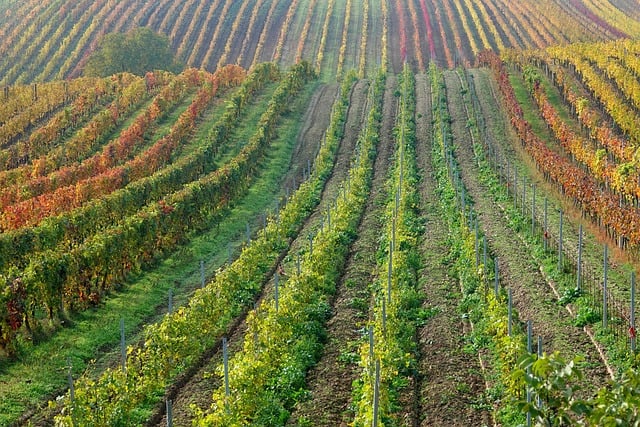
The same volcanic geology that shaped the hills’ distinctive landscape also produces a genuinely distinctive wine region, the Colli Euganei DOC, covering red, white, and sparkling wines grown on slopes with a mineral character considerably different from the flatter vineyard land found elsewhere in the Veneto. It’s a far less internationally famous wine zone than nearby Valpolicella or the Prosecco Hills, which is exactly the appeal for travelers who’ve already sampled the region’s better-known reds and whites and want something genuinely local and comparatively undiscovered.
Why the Euganean Hills Deserve More Than a Drive-By
I’ll be direct about who this landscape actually serves well: if you want a genuinely slower, quieter alternative to Venice’s crowds, thermal spa relaxation, hiking through a landscape with real geological and botanical substance, and a handful of villages carrying real historical weight without any of the tourist infrastructure built up around the Veneto’s more famous names, the Euganean Hills are one of the most rewarding, least crowded regions in the entire Veneto to spend a slower day or two. If you’re purely chasing monumental architecture or major UNESCO landmarks in rapid succession, this is likely not where you should spend your limited time; the hills reward patience and a willingness to move slowly rather than checking off a list.
Visiting the Euganean Hills
The Euganean Hills sit a short drive south of Padua, easily combined with a Padua day trip from Venice for travelers with a full day to spare, or treated as a standalone half-day or full-day excursion focused specifically on Arquà Petrarca, one of the thermal spa towns, or a hike through the hills themselves.
Plan your visit: Padua Day Trip from Venice: Why Visit and What to See covers how to combine Padua’s UNESCO sites with a wider Euganean Hills excursion, and reaching out through our customized private tours page lets us build a dedicated itinerary through the hills, spa towns, and villages matched to your own pace and interests.
Frequently Asked Questions
Are the Euganean Hills’ thermal springs connected to their volcanic origin?
No, despite the common assumption. The volcanic activity that shaped the hills is far too ancient to still generate underground heat. The thermal water instead forms when rainwater infiltrates deep underground, is heated by the earth’s natural geothermal gradient, and rises back to the surface through fractures in the rock, some of them created by the same ancient volcanic activity.
How far are the Euganean Hills from Padua and Venice, and can they be visited in a day?
The hills sit a short drive south of Padua, roughly 40 to 45 minutes from Venice combined with Padua itself, making a combined Padua-plus-Euganean-Hills day trip entirely realistic, though a dedicated half-day or full day focused purely on the hills, a spa town, or Arquà Petrarca allows for a considerably more relaxed pace.
What makes the Euganean Hills different from the rest of the flat Veneto countryside?
The hills are volcanic in origin, formed through two distinct eruption phases roughly 40 and 30 million years ago, rising sharply out of the otherwise flat Po Valley plain. That volcanic geology, combined with genuinely rich biodiversity and renowned thermal spring water, gives the area a landscape and microclimate unlike anywhere else in the surrounding region.