After nearly thirty years of walking this city with visitors from every corner of the world, I still get asked the same question at the start of almost every trip: “If we only have time for a few things, what should we absolutely not miss?” It’s a fair question, and it deserves an honest answer rather than a list of forty items nobody could realistically see in a week, let alone a weekend.
So here it is — the three places in Venice that earn their reputation, the ones I’d take my own family to see if they’d never set foot here before. These aren’t hidden secrets. They’re famous because they deserve to be. But knowing how and when to experience them makes all the difference between fighting a crowd and actually falling in love with this city.
1. Piazza San Marco and the Basilica di San Marco
There’s a reason Napoleon supposedly called this square “the drawing room of Europe.” Piazza San Marco is the only genuine piazza in Venice — every other square in the city is technically a campo — and it’s been the political, religious, and social heart of the Venetian Republic for over a thousand years.
The star of the square is the Basilica di San Marco, and no photograph prepares you for walking inside it. The interior holds roughly more than 8,000 square metres of mosaic covering the walls, vaults, and cupolas (Basilica San Marco) , built up over some eight centuries of the basilica’s history (Basilica San Marco) . The mosaics depict scenes from both the Old and New Testaments, along with the life of Saint Mark himself, and the gold tesserae were deliberately set at slight angles so that shifting daylight makes the entire ceiling seem to shimmer and move.
The story behind the basilica is as good as the art. In 828 AD, Venetian merchants smuggled the relics of Saint Mark out of Alexandria, Egypt, reportedly hiding the body under layers of pork to discourage inspection by the guards, since pork was considered unclean. That daring theft is actually depicted in one of the mosaics above the basilica’s doorways — a detail most visitors walk straight past without ever noticing.
My insider tip: the basilica opens to the public in the morning, but the real trick is timing your visit for the first hour after opening or the last hour before closing, when the tour groups thin out and the light through the windows is at its most dramatic. As a licensed guide, I can also arrange skip-the-line entry and walk you through exactly which mosaics tell which stories — something almost impossible to piece together from a printed guidebook while craning your neck at a golden ceiling.
2. The Rialto Bridge and the Grand Canal
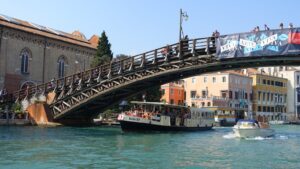
If Piazza San Marco is Venice’s living room, the Grand Canal is its main street, and the Rialto Bridge is where the whole city seems to cross paths at once. This was the first area of Venice ever settled, centuries before the Rialto became the Republic’s financial and commercial engine — its markets were, in effect, the Wall Street of the medieval Mediterranean.
What makes the Rialto worth your time isn’t just the view, though the view is genuinely spectacular in both directions along the canal. It’s standing at the exact point where Venice was born, then walking down into the Rialto Market, still selling fish and produce the way it has for nearly a thousand years, just a few steps from where merchants once traded silk, spices, and glass with the entire known world.
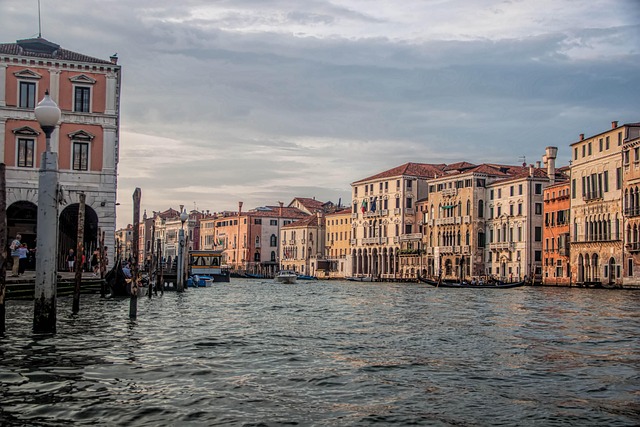
Most visitors photograph the bridge from the water and move on. Few realize you can experience it properly on foot at sunrise, when the market stalls are just setting up and the crowds haven’t arrived, or by gondola or traghetto in the early evening, when the light on the water turns the palazzi along the canal a warm gold. I always tell my guests: the Rialto is spectacular in a photo, but it’s unforgettable when you understand what you’re actually looking at.
3. Doge’s Palace
The third stop is the political heart of the old Republic: the Palazzo Ducale, or Doge’s Palace, seat of power for over 900 years of Venetian government. This isn’t just an ornate building — it’s where the Republic’s elaborate and famously paranoid system of checks and balances actually played out, from the Doge’s private apartments to the courtroom where the Council of Ten decided matters of state and espionage.
The palace connects to the notorious Bridge of Sighs, the enclosed bridge prisoners crossed on their way from the courtroom to the cells, supposedly named for the sighs of the condemned catching their last glimpse of Venice through the small stone windows. Standing inside that corridor, looking out at the same view those prisoners saw centuries ago, is one of those moments that tends to go quiet even in a group of chatty American travelers.
As of 2026, standard entry runs €35 with reduced tickets at €15, though advance online booking offers cheaper options (Weimar) , and the palace gets genuinely crowded by mid-morning. This is a place where a private, licensed guide earns their keep — not because you can’t read the wall placards yourself, but because the palace’s real story is political intrigue, secret staircases, and a system of government that inspired constitutional thinkers for centuries, and that story rewards being told, not read.
Why These Three, and Why Not More
I could easily give you a list of fifteen places. But if I’m honest with the American travelers I work with — many of whom have three or four days in Venice as part of a longer Italian trip — trying to check off too many “must-see” sights usually means rushing through all of them and genuinely experiencing none. These three places, done properly and without a rushed itinerary, give you the full arc of Venice: its spiritual life, its commercial soul, and its political power.
Once you’ve seen these three well, you’ll have earned the right to explore further — and that’s when Venice gets even more interesting. If you have extra time, I’d point you toward the city’s quieter squares beyond San Marco, or a half-day trip out into the Prosecco Hills for a completely different side of the Veneto.
Why See Them With a Licensed Guide
Italian law actually restricts guided tours inside Venice’s major monuments to licensed professionals — it’s not a marketing claim, it’s a legal requirement. Beyond that, when you book through a platform like GetYourGuide or Viator, you’re often assigned whichever guide is available that day, and the platform keeps 20–30% of what you pay. When you book directly with me, you know exactly who’s meeting you at the Rialto, you can talk through your interests before you even land in Venice, and if your trip includes multiple days, you get the same guide the whole way through rather than a rotating cast of strangers.
If you’d like help turning these three stops into a properly paced, private day in Venice, have a look at my private tours or get in touch directly and we’ll plan it together.
How much time should I set aside to see the Piazza San Marco, Rialto Bridge, and Doge’s Palace properly?
A full day is realistic if you want to actually absorb each site rather than rush through it — roughly two to three hours at the basilica and palace combined, with the rest spent around the Rialto market and Grand Canal. Doing all three well in half a day is possible with a private guide managing timing and skip-the-line access, but as a self-guided visit it tends to feel hurried.
Do I need to book tickets in advance for the Basilica and Doge’s Palace?
Yes, especially between April and October. Doge’s Palace tickets run €35 standard and €15 reduced as of January 2026, with cheaper rates available through advance online booking (Weimar) , and the basilica sells timed entry that helps you skip the general queue.
Is it worth visiting these three sights if I’m only in Venice for one day?
Yes — these three are the strongest single-day itinerary Venice offers, since they’re within easy walking distance of each other and together tell the full story of the city’s religious, commercial, and political life. If your Venice visit is genuinely limited to one day as part of a longer Italy trip, this trio is exactly where I’d focus your time.