Everyone who comes to Dorsoduro sees the same three names: the Guggenheim, the Accademia, Ca’ Rezzonico. They deserve their fame. But after this many years guiding here, the places I actually get excited to show people are the ones almost nobody asks about — art collections tucked behind unmarked doors and a corner of the neighborhood so quiet it feels like a different city entirely.
Palazzo Cini: The Museum Most Visitors Walk Past
Just steps from the Accademia Bridge, in Campo San Vio, sits the Galleria di Palazzo Cini — and it is, without exaggeration, one of the most underrated small museums in Italy. Industrialist Vittorio Cini purchased the palazzo in 1919, and since 1984 it has held his private collection of Tuscan and Ferrarese Renaissance art, alongside porcelain, furniture, and decorative pieces that recreate what his residence actually looked like. The undisputed masterpiece is Botticelli’s Judgement of Paris — and unlike the Botticellis crowding the Uffizi, you can stand in front of this one entirely alone.
The gallery is small by design — a handful of rooms on the second floor — which is exactly why it works as a hidden gem rather than a checklist stop. Combine a Palazzo Cini visit with the Accademia or the Guggenheim, and most museums along the Dorsoduro Museum Mile offer small ticket discounts for doing so.
The Scuola Grande dei Carmini’s Tiepolo Ceiling
A short walk from Campo Santa Margherita stands the Scuola Grande dei Carmini, the last of Venice’s great lay confraternities to earn official Scuola Grande status, in 1767. Most visitors walk right past its restrained Istrian stone façade without a second glance. Inside, upstairs in the Sala Capitolare, is one of Giambattista Tiepolo’s finest ceiling cycles anywhere in Venice — nine painted compartments completed between 1739 and 1743, glowing with the same airy, theatrical light he later brought to palaces across the Veneto. The building survived Napoleon’s suppression of the confraternities almost entirely intact, which means what you’re seeing is close to what an 18th-century Venetian would have seen.
San Nicolò dei Mendicoli: Venice’s Working-Class Cathedral
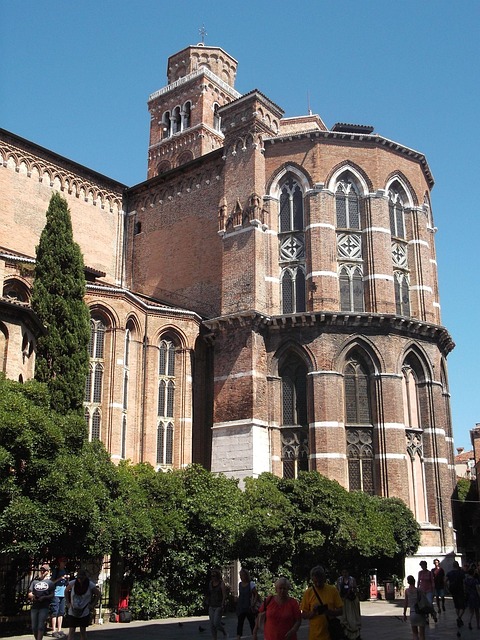
Push further west, past where most guidebooks stop looking, and you’ll reach San Nicolò dei Mendicoli — one of the oldest churches in Venice, with roots possibly reaching back to the 7th century. Its name, “Saint Nicholas of the Beggars,” comes from the fishing community that built and maintained it; those residents became known as the Nicolotti, the same faction whose rivalry with the Castellani produced the fistfights once staged on the Ponte dei Pugni. From the outside, the church is deliberately humble. Step inside, though, and you’ll find a nave lined with gilded 16th-century wooden statues, a Byzantine-rooted structure, and a ceiling cycle from Veronese’s school depicting the life of Christ — a working church, still consecrated, still quietly stunning, that most Venice itineraries never reach.
The Western Edge: Where Dorsoduro Goes Silent
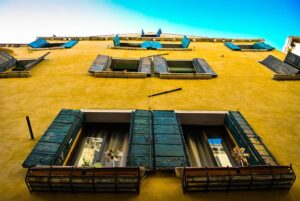
This whole western pocket of the sestiere — the streets around San Nicolò, out toward Campo Santa Marta — is where Dorsoduro’s density of tourists simply stops. There are no souvenir shops here, no crowds angling for the same photo. What you’ll find instead is a neighborhood still organized around its own rhythms: laundry strung between buildings, actual working-class Venice going about its day, canals with barely a boat on them. It’s not “hidden” in a gimmicky sense — it’s simply the part of the map most visitors never have a reason to open.
Why This Corner Rewards a Guide
None of these sites are secret, exactly — they’re on maps, they have opening hours, they welcome visitors. What they lack is context: knowing that the Cini’s Botticelli is worth the detour, or that the Carmini’s ceiling deserves fifteen quiet minutes rather than a walk-through, or which hour San Nicolò is actually open and empty. On a private Venice tour, this is the layer I add — not access to something exclusive, but the judgment of what’s actually worth your limited time in a city that never runs short of things demanding it.
Is San Nicolò dei Mendicoli open to casual visitors?
Yes, it’s a working parish church with regular opening hours and free entry, though hours are limited — checking ahead is worth it.
Can I combine Palazzo Cini and Scuola Grande dei Carmini in one afternoon?
Easily — they’re roughly a 15-minute walk apart, and neither requires more than an hour.
Is the western end of Dorsoduro safe and easy to navigate alone?
Completely — it’s simply quiet, not remote; a phone map and comfortable shoes are all you need.