After nearly thirty years guiding people through this city, I’ve noticed something consistent: the things guests remember most vividly rarely show up on a checklist. It’s not always the Basilica or the Doge’s Palace, as extraordinary as both are. It’s a sound, a stretch of light, an unplanned five minutes that happened to land somewhere quiet. Here are the moments I watch shape people’s memory of Venice, again and again.
The First Glimpse of the Grand Canal
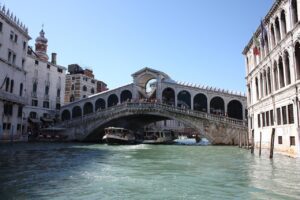
No matter how many photographs someone has seen beforehand, nothing quite prepares a first-time visitor for stepping out of Santa Lucia train station and seeing the Grand Canal in person for the first time. I’ve watched hundreds of guests stop mid-stride, genuinely stunned, at a scene they thought they already knew. There’s something about the scale, the movement of the water taxis and vaporetti, the palazzi rising straight out of the canal with no street in front of them, that photographs simply cannot convey. This moment — the first ten seconds of actually being here — is one almost every guest brings up again, unprompted, days or even years later.
The Sound of Bells Across the Rooftops
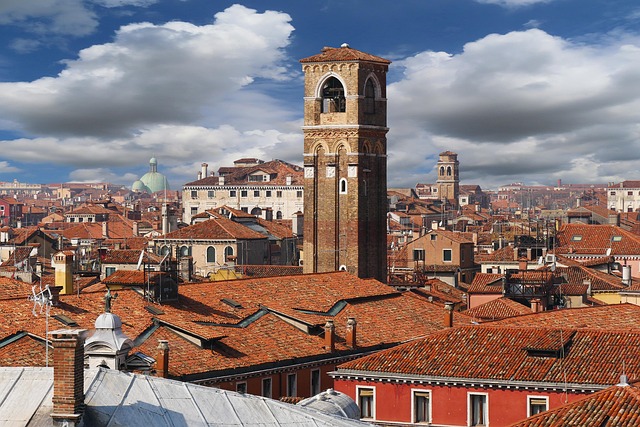
Venice is a city defined as much by sound as by sight, and nothing captures that better than its bells. The bronze figures atop the Torre dell’Orologio in Piazza San Marco still strike the hour by hand, a detail that delights children and adults equally when they realize what they’re watching. But it’s the layered sound of church bells ringing across the rooftops from different sestieri, slightly out of sync with one another, that guests tend to describe as almost otherworldly — a sound with no real equivalent in a car-filled city, where mechanical noise would otherwise drown it out entirely.
Getting Genuinely, Happily Lost
I rarely hand guests a rigid itinerary, and there’s a reason: the moment someone stops trying to reach a specific destination and just follows a calle because it looks interesting is often the moment Venice actually opens up to them. A wrong turn leads to an empty campo with a single café table. A dead end reveals a doorway with three centuries of carved stone detail no guidebook mentions. Nearly every guest who’s traveled with me multiple times tells me the same thing: their favorite memory from their first trip was something they never planned to see at all.
Cicchetti Hour in a Quiet Bacaro
There’s a particular kind of memory that forms around food shared standing up, glass of wine in hand, in a bacaro with no tourist menu and no rush to turn the table. Cicchetti hour — small plates eaten the way Venetians actually eat them, mid-afternoon or early evening, standing at a worn wooden bar — tends to stick with guests far more than any formal dinner, precisely because it feels like being let in on something rather than served something.
The Acqua Alta Siren, If You’re Lucky Enough to Hear It
This one surprises people. Guests who happen to be in Venice during a high-water event, particularly between October and January, often describe the moment the acqua alta siren sounds — a rising, slightly eerie tone sequence broadcast from speakers hidden in bell towers across the city — as one of the strangest and most memorable sounds of their entire trip. Each tone signals a different expected water level, and while it’s a practical warning system for residents, for a visitor experiencing it for the first time, it’s an unmistakable, almost cinematic reminder that you’re in a city that has an entirely different relationship with water than anywhere else you’ve been. Piazza San Marco partially flooding, with reflections of the basilica rippling across the paving stones, is a strange and genuinely beautiful sight if you’re prepared for it with the right boots.
The View From a Bridge at Golden Hour
I’ve mentioned certain viewpoints to guests hundreds of times over the years — the Ponte dell’Accademia looking toward Santa Maria della Salute, the Fondamenta delle Zattere facing Giudecca — but it’s not really the view itself guests remember afterward. It’s the specific quality of light at that particular hour, the way the whole city seems to shift color in the span of about twenty minutes. I’ve had guests email me months later, describing not a landmark but a color: the exact gold of the water at 7:40 on a particular evening.
A Meal That Wasn’t Rushed
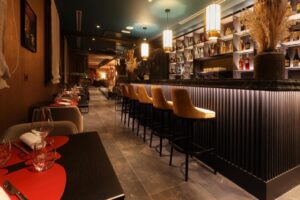
Related to the cicchetti moment but distinct from it: guests almost universally remember the one dinner on their trip where nobody rushed them. Venice’s better restaurants, once free of the pressure to turn tables for day-trippers on a schedule, allow a meal to unfold the way a European dinner is meant to — slowly, over multiple courses, with real conversation in between. This is one of the strongest arguments I make for staying overnight rather than day-tripping; the unhurried dinner is very often the single moment guests point to as “when the trip really started.”
Watching a Gondola From Somewhere Other Than One
Riding in a gondola is memorable in its own right, but I’ve noticed something almost as strong in guests who simply watch one glide past from a quiet fondamenta — the particular sound of the oar moving through water, the gondolier’s posture, the way the boat’s asymmetric hull lets it turn in spaces that seem impossibly narrow. There’s something about witnessing the craft rather than only experiencing it as a passenger that seems to lodge in memory just as deeply.
An Empty Campo After Dark
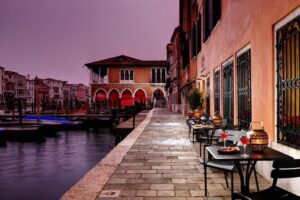
Nearly every guest who stays past the day-trip crowds tells me some version of the same story: walking through a campo late in the evening, completely alone, hearing nothing but their own footsteps and maybe a distant conversation drifting from an open window. It’s such a simple moment, and such a stark contrast to the crowded version of Venice most visitors expect, that it tends to reframe how people talk about the entire trip afterward.
Why These Moments Matter More Than the Itinerary
I’ve come to believe that the difference between a good Venice trip and a genuinely memorable one has very little to do with how many sights get checked off, and almost everything to do with whether there was room left for moments like these to happen. A rigid, over-scheduled day leaves no space for the wrong turn that becomes the best five minutes of the trip. This is a large part of why I build unstructured time into every itinerary I plan, and why I encourage guests, gently, to resist the instinct to fill every hour.
If you’d like a Venice trip designed with this in mind — enough structure to see what matters, enough openness to let the unplanned moments happen — I’d be glad to help build it. You can learn more about my private tours or get in touch to start planning your visit.
What is the best way to experience Venice beyond the main sights?
Allowing unstructured time to wander without a fixed destination tends to produce the most memorable experiences, since many of Venice’s most striking moments happen unplanned, in quiet campi or narrow calli away from the main routes.
What does the Venice acqua alta siren sound like, and when might I hear it?
It’s a rising, multi-tone alert broadcast from speakers hidden in bell towers, typically heard between October and January several hours before a high-water event, with the number of tones indicating the expected flood level.
Is it worth staying in Venice past a typical day-trip visit?
Yes — many of the moments travelers remember most, like quiet evening campi, unhurried dinners, and golden-hour light on the canals, are only available to those staying overnight, after the day-trip crowds have left the city.