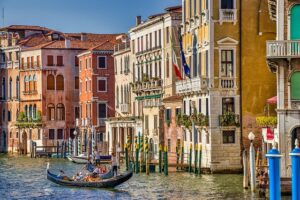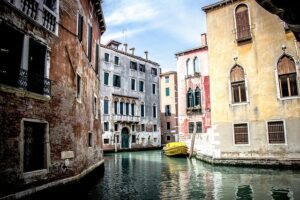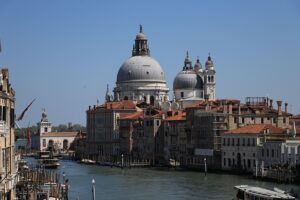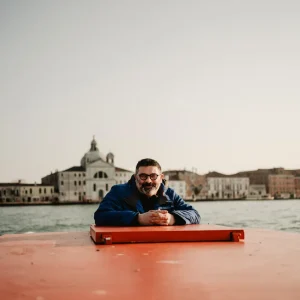
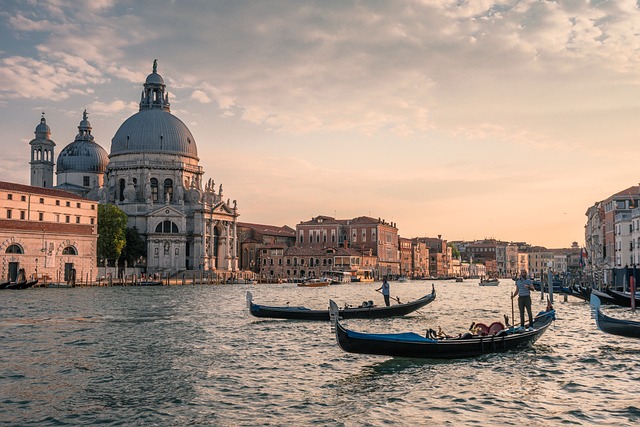
I’ve been walking these same stones for nearly thirty years, and I still find corners of Venice that stop me mid-step. That’s the strange gift of this city: it never fully reveals itself, no matter how many times you cross it. Most visitors see Venice through the narrow funnel between the train station, the Rialto Bridge, and St. Mark’s Square — three points connected by the same crowded arteries everyone else is walking too. But the real Venice, the one I fell in love with as a young guide and still love today, lives in the calli, rughe, and fondamente just one or two turns off that path.
This is my personal list of the 25 streets I most love showing people — not ranked, but organized by sestiere (Venice’s six historic districts) so you can actually use it while wandering. A quick vocabulary note before we start: in Venice, we don’t really have “streets” in the conventional sense. A calle is a narrow lane between buildings — there are roughly 3,000 of them. A fondamenta runs alongside a canal. A ruga is a wider, once-commercial thoroughfare. A salizada was among the first streets paved in stone. A rio terà is a filled-in canal turned into a street. Knowing these terms alone will make you feel like less of a tourist.
San Marco: Grandeur and Glamour
1. Calle Larga XXII Marzo — Venice’s answer to Fifth Avenue, lined with the flagship boutiques of Italian fashion houses, named for the date of the 1848 uprising against Austrian rule. Even if shopping isn’t your thing, the architecture along here is worth the walk.
2. Frezzeria — One of my favorite “hidden in plain sight” streets, just steps from St. Mark’s Square but somehow overlooked by the crowds rushing toward the basilica. The name comes from the arrow-makers who once worked here.
3. Calle dei Fabbri — Named for the blacksmiths who lined it centuries ago, this is one of the main pedestrian arteries connecting Rialto to San Marco, and it’s packed with small workshops and family-run shops that have survived the tourist tide.
4. Campo Santo Stefano and the calli feeding into it — Technically a campo, but the network of narrow lanes spilling into this square just past the Accademia Bridge is some of the most photogenic in the city, especially at golden hour.
San Polo: Venice’s Beating Commercial Heart
5. Ruga degli Orefici — The goldsmiths’ street, and it’s been exactly that since the Middle Ages. This fascinating street in the San Polo district has been the center of Venice’s gold and jewelry trade since the Middle Ages, attracting skilled craftsmen from all over Europe (guidetourism) . I love bringing guests here to watch artisans still practicing a trade unchanged in six centuries.
6. Ruga Rialto — Runs parallel to Orefici and connects the Rialto Bridge to the market area; expect fishmongers’ cries in the morning and a completely different rhythm by evening.
7. Calle dei Boteri — Named for the barrel-makers (boteri) who once worked here supplying Venice’s booming wine trade. Today you can find a variety of skilled artisans creating everything from leather goods to bespoke jewelry (guidetourism) along this charming, narrow lane.
8. Calle Stretta — One of the narrowest passages in the entire city, connecting Calle Luganegher to Campiello Albrizzi. It measures roughly 65 centimeters wide (Visit Venezia) at its tightest point. I always warn taller guests to turn sideways.
9. Rio Terà San Vio area (Dorsoduro border) — One of the earliest examples of a canal filled in to create a street, dating from just before 1408 (Wikipedia) , it’s a fascinating piece of urban history hiding in plain sight.
Cannaregio: Where Venetians Actually Live
10. Strada Nova — One of Venice’s few streets to actually carry the word “strada,” this vital pedestrian artery connects Santa Lucia train station to the Rialto (Visit Venezia) , and it’s where you’ll see daily Venetian life in full motion: grocery runs, school pickups, neighbors chatting.
11. Fondamenta della Misericordia — My go-to recommendation for evening cicchetti crawls. Wide, canal-side, lined with bacari (wine bars), and blissfully free of the San Marco crowds.
12. Calle Varisco — Widely considered the narrowest calle in the entire city. At its tightest point it measures just over 50 centimeters wide (Colosseumandvaticantours) , and local legend holds it was built deliberately narrow to control movement through the neighborhood.
13. Ghetto Vecchio and Ghetto Nuovo — The original Jewish Ghetto (the word itself originates here), a quiet, contemplative quarter with tall buildings and a weight of history you feel in your chest.
14. Fondamenta degli Ormesini — An extension of the Misericordia strip, less discovered still, running alongside a peaceful canal favored by Venetians over tourists.
Castello: Venice’s Largest, Least-Crowded District
15. Via Giuseppe Garibaldi — One of only two streets in Venice actually called “via” rather than calle. This wide, elegant promenade is lined with excellent shops and restaurants, near the Arsenale and the Naval History Museum (Viator) .
16. Salizada San Lio — A lively street filled with shops, cafes, and galleries, named after the nearby Church of San Lio, offering a delightful mix of history and modernity (guidetourism) .
17. Calle Varisco’s neighboring sotoportego passages — Castello is riddled with covered passageways (sotoporteghi) that duck beneath buildings; wandering them at dusk is one of my favorite ways to spend an hour with guests who want to feel like locals.
18. Riva degli Schiavoni — Technically a riva (a wide walkway along open water), this sweeping promenade facing the lagoon offers one of the great postcard views of Venice — the Doge’s Palace behind you, San Giorgio Maggiore across the water.
19. Campiello del Remer — Perhaps the most famous of Venice’s small courtyard squares (Visit Venezia) , tucked into the Rialto side of Castello, easy to miss and worth seeking out deliberately.
Dorsoduro: Artistic and Serene
20. Fondamenta Zattere — A long, sun-drenched promenade facing the Giudecca Canal, popular with Venetians for an evening gelato walk. I bring almost every guest here at least once.
21. Calle Lunga San Barnaba — Runs through one of Dorsoduro’s most local, unpretentious corners, past the boat-vendor selling produce from the canal itself.
22. Campo Santa Margherita and surrounding calli — The university district’s social hub, lively with student life by night and a genuine produce market by day.
23. Rio Terà Canal / Calle della Toletta — A quiet route connecting the Accademia area to Campo San Barnaba, favored by art students from the nearby academies.
Giudecca and Santa Croce: The Overlooked Sixth
24. Fondamenta delle Zitelle (Giudecca) — A ten-minute vaporetto ride from San Marco puts you on an entirely different island, with wide fondamente, sweeping lagoon views, and almost no tourists.
25. Fondamenta dei Tolentini (Santa Croce) — Located near Piazzale Roma (Visit Venezia) , this is one of the first streets visitors cross without knowing it — most rush straight past toward the bridges without noticing how lovely it is at quiet hours.
Why Wandering These Streets Is Best With Someone Who Actually Knows Them
Here’s something worth knowing before you set off with a map: Venice’s nizioleti, the painted street signs on building corners, are written in Venetian dialect, not standard Italian, and even GPS apps regularly fail here because the city predates any grid logic entirely. The lagoon capital is divided into six sestieri, and the names of calli and campi are written on these small painted signs you have to look up to see (Visit Venezia) . Getting lost is part of the charm — but getting lost productively, with context about what you’re looking at, is a different experience entirely.
This is really the heart of what I do differently from the big platforms. As a licensed guide who has walked these calli for nearly three decades, I’m legally permitted to lead you inside Venice’s major monuments — something no unlicensed platform host can do. And because you’re booking directly with me rather than through a commission-taking marketplace, we can actually talk beforehand about which streets and neighborhoods genuinely match your interests, whether that’s photography, food, architecture, or quiet corners away from the crowds. If you’d like to build a private walking route through some of these streets, get in touch directly and we’ll design something personal rather than a fixed script. If you’re planning a longer stay, pairing a street-by-street wander through Venice with a day trip to the Prosecco Hills makes for a wonderful contrast — the intimacy of Venice’s alleys against the open vineyard landscapes just an hour away.
What’s the difference between a calle, a ruga, and a fondamenta in Venice?
A calle is a narrow lane flanked by buildings on both sides — the most common Venetian street type, with roughly 3,000 in the city. A ruga is a wider, historically commercial street, often lined with shops. A fondamenta runs alongside a canal, with water on one side and buildings on the other.
Is it safe to get lost wandering Venice’s smaller streets?
Yes — Venice is one of the safest major tourist cities in Europe, and getting pleasantly lost in the calli is practically a rite of passage. That said, having a guide along means you get the historical context behind what you’re seeing rather than just a scenic walk.
Which Venice neighborhood has the most beautiful, least crowded streets?
Castello and Dorsoduro tend to offer the best balance of beauty and quiet, since most tour groups stay concentrated around San Marco and Rialto. Cannaregio’s Fondamenta della Misericordia is also excellent, especially in the early evening.