Every city in Europe claims to be “walkable.” Venice is the only one where it’s not a marketing phrase — it’s a structural fact. There are no cars, no motorbikes, no bicycles in the historic center. Walking isn’t the pleasant option here; it’s the only option, and that single constraint has shaped this city into one of the most rewarding places in the world to explore purely on foot.
A City Built Entirely Without Cars
Venice’s historic center is genuinely car-free — not “pedestrianized” in the way a shopping street might close to traffic on weekends, but structurally incapable of holding vehicles at all. The city sits across roughly 118 small islands, connected by a dense web of more than 400 bridges, almost all of them stepped, which makes wheeled traffic of any kind close to impossible. Groceries, furniture, luggage, even ambulances all move by boat or by hand. The result is a soundscape unlike anywhere else in Europe: footsteps, water, church bells, conversation — and almost nothing else.
For a walker, this changes everything. There’s no need to watch for traffic, no crossing at intersections, no sharing narrow sidewalks with delivery vans. The entire historic core, a compact area of roughly three square miles, belongs to pedestrians alone.
A Street Network Built for Discovery, Not Speed
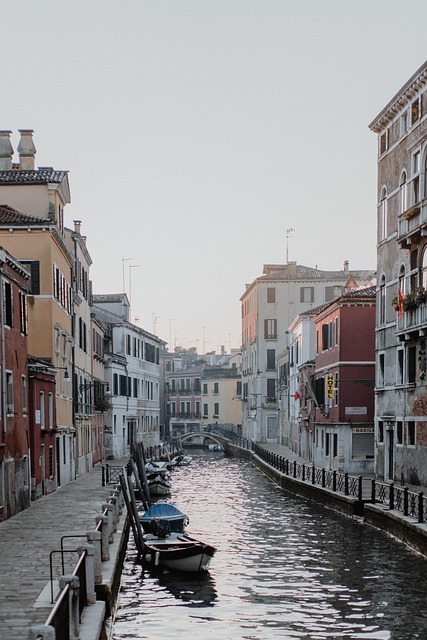
Venice has around 3,000 calli — the narrow lanes that serve as its streets — ranging from grand thoroughfares to passages barely wide enough for two people to pass. There’s no grid system here. Streets curve, dead-end at canals, tunnel briefly under buildings through covered passages called sottoporteghi, then open unexpectedly into a sunlit campo. It’s disorienting by design, and that’s exactly what makes it extraordinary for walking. You’re not moving efficiently from point A to point B; you’re moving through a city that rewards wandering more than any other in Europe.
This is something I tell every client on their first morning with me: getting slightly lost in Venice isn’t a failure of navigation, it’s the actual experience. Some of the best small churches, hidden courtyards, and quiet bacari I know were found this way, not by following a map.
Every Neighborhood Has Its Own Walking Character
Part of what makes Venice special for walkers is how differently each sestiere feels underfoot. San Marco is grand and monumental, its calli opening into wide, stone-paved spaces built for spectacle. Cannaregio, where most Venetians actually live, has long straight fondamente running beside canals, wide enough for locals to sit out with a spritz in the evening. Dorsoduro moves at a university pace — bookshops, small campi, the long open walk along the Zattere with the Giudecca Canal stretched out beside you. Castello, the largest and least visited sestiere, has some of the widest and quietest streets in the city, including Via Garibaldi, one of the few places in Venice that feels genuinely residential rather than curated for visitors.
Walking through all of them in a single day, which is entirely possible given the city’s compact size, is one of the best ways to understand how varied Venice actually is beneath its single postcard image.
Bridges as Landmarks, Not Just Crossings
Venice’s 400-plus bridges aren’t incidental infrastructure — they’re some of the city’s most social spaces. Locals stop on them to talk, to watch the water, to take a break mid-walk in a way that simply doesn’t happen on a bridge over a car-filled road. The four bridges crossing the Grand Canal itself — Rialto, Accademia, Scalzi, and the modern Calatrava bridge — each offer a completely different framing of the city, and walking between them, rather than taking a vaporetto, is often the better choice: you’ll cross a dozen smaller, quieter bridges along the way, each with its own small view.
Why This Makes Venice Different From Every Other Walkable European City
Plenty of European cities are pleasant to walk — Paris, Florence, Prague. But all of them still share their streets with vehicles at some level. Venice is the only major European city where walking isn’t competing with anything. There’s no traffic noise to talk over, no need to time a crossing, no exhaust fumes drifting through a historic square. It’s the closest thing Europe has to a city frozen in a pre-automobile pace of life, and it’s precisely why a walking-based private tour works so well here — there’s no vehicle logistics to plan around, no parking, no traffic delays. Just the city, on foot, exactly as it was designed to be experienced for the better part of a thousand years.
This is the foundation of how I guide in Venice. A private walking tour here isn’t a workaround — it’s the ideal way to see a city built entirely around the pedestrian. If you’d like a walking route built around your specific interests, whether that’s art, history, food, or simply the quiet corners most visitors never find, reach out and I’ll put together a plan suited to how you actually like to explore.
Is it possible to get around Venice without walking much?
To a degree — vaporetti (water buses) and water taxis cover the Grand Canal and major routes — but most of the city’s interior, including many of its best sights, is only reachable on foot.
How much walking should I expect on a typical day in Venice?
Most visitors comfortably walk several miles a day without realizing it, since distances between sights look short on a map but wind through narrow, indirect calli. Comfortable, broken-in shoes matter more here than in almost any other European city.
Are Venice’s bridges difficult for people with mobility issues?
Yes, this is worth planning around — the vast majority of Venice’s 400-plus bridges have steps and no ramps, though some key routes and vaporetto stops offer step-free alternatives with advance planning.