Most people visiting Italy’s Motor Valley know Ferrari and Lamborghini.
They’ve heard about these legendary brands since childhood. They understand what the prancing horse and the raging bull represent. They know that driving or even just visiting these manufacturers represents automotive pilgrimage.
Then there’s Pagani — a name that serious car enthusiasts whisper with reverence but that casual tourists often don’t recognize at all.
And that obscurity is precisely the point. Pagani doesn’t build cars for mass recognition or broad market appeal. The company produces roughly 40 cars annually — total, worldwide — each one a bespoke mechanical sculpture costing millions of dollars and requiring months or years from order to delivery. Ferrari builds 10,000+ cars per year. Lamborghini produces thousands. Pagani builds dozens.
After 28 years organizing experiences throughout Emilia-Romagna for visitors seeking Italy’s automotive soul, I’ve watched the Pagani mystique grow from complete unknown (when Horacio Pagani founded the company in 1992) to the absolute pinnacle of supercar exclusivity — the manufacturer that makes Ferrari owners feel like they’re driving mass-market vehicles.
This isn’t about whether Pagani is “better” than Ferrari or Lamborghini. It’s about understanding what defines true automotive exclusivity, how one Argentine immigrant in a small Italian town created the world’s most desirable hypercars, and whether experiencing Pagani (if you even can) enhances your Venice-based Italy trip or represents automotive obsession beyond what normal travelers should pursue.
This is the completely honest explanation — what makes Pagani genuinely different, how their exclusivity manifests practically, whether you can visit their facility from your Venice base, and how to think about Pagani in context of broader Italian automotive culture.
Understanding Italy beyond surface tourism means discovering obsessions that define the culture.
What Pagani Actually Is (And Why Most People Don’t Know)
Before understanding Pagani’s exclusivity, knowing the company’s origins reveals why they operate so differently from Ferrari and Lamborghini.
Horacio Pagani: The Obsessive Argentine
Horacio Pagani was born in Argentina in 1955, growing up fascinated by Leonardo da Vinci’s fusion of art and engineering. He taught himself automotive design and composite materials, eventually moving to Italy in the 1980s to pursue his dream of building the perfect supercar.
He worked for Lamborghini for years — designing, engineering, pushing carbon fiber technology forward — before leaving to establish Pagani Automobili in 1992 in Modena, the heart of Italy’s automotive region.
The founding philosophy was radical: Build the absolute best possible cars regardless of cost, production volume, or market demands. No compromises. No mass production. No dilution of vision to increase sales. Every car would be artwork, every detail obsessed over, every customer relationship personal rather than transactional.
This approach meant intentionally limiting production to what Horacio and his small team could personally oversee. The exclusivity wasn’t marketing strategy — it was operational necessity born from refusing to compromise quality for volume.
The Numbers That Define Exclusivity:
Pagani produces roughly 40 cars per year. Some years slightly more, some slightly fewer, but annual production never exceeds what the Modena facility can build while maintaining standards.
Total Pagani production since 1999 (when the first Zonda delivered) is under 1,500 cars worldwide across all models. Ferrari builds that many cars in six weeks.
Current models: The Huayra (introduced 2011) and its variants. Previous model was the Zonda (1999-2017), which continues receiving special editions and bespoke commissions despite official production ending.
Base price: Starts around $3 million USD and climbs dramatically from there for special editions or bespoke requests. Many Paganis exceed $5-7 million.
Waiting lists: Orders placed today might deliver in 2-3 years. Some limited editions sell out before public announcement, allocated to existing Pagani owners before anyone else even knows they’re being built.
This scarcity is intentional. Pagani could expand production, hire more craftsmen, build larger facility. They choose not to. The exclusivity maintains the brand’s mystique and allows continued personal oversight that mass production would destroy.
What Makes Pagani Different From Ferrari and Lamborghini
Visitors often ask: “How is Pagani better than Ferrari?” This question misunderstands what Pagani represents.
Ferrari and Lamborghini Are Manufacturers. Pagani Is Atelier.
Ferrari produces thousands of cars annually across multiple model lines, operates Formula 1 racing team, maintains global dealer networks, and functions as luxury automotive corporation selling road cars, merchandise, and brand licensing.
Lamborghini similarly produces thousands of vehicles including the Urus SUV that now represents majority of sales, operates as VW Group subsidiary, and maintains commercial infrastructure serving global luxury market.
Pagani produces dozens of bespoke hypercars with no model lineup (just variations of single platform), no racing team, minimal dealer network, and operates as privately-held company where founder still personally approves every significant decision.
The Manufacturing Philosophy Difference:
Ferrari/Lamborghini approach: Design cars that balance performance, usability, production efficiency, and profit margins. Build what the market wants at scale that generates sustainable revenue.
Pagani approach: Design the single best possible car regardless of market research, usability compromises, or financial optimization. Build only what can be built properly with available craftsmen and personal oversight.
Ferrari asks: “What do customers want that we can build profitably?” Pagani asks: “What would Leonardo da Vinci build if he designed a car in 2025?”
The Aesthetic Difference:
Ferrari design: Evolution of racing heritage, functional aerodynamics, Italian style tempered by engineering constraints and brand continuity.
Lamborghini design: Radical geometric shapes, aggressive stance, shock value prioritized alongside performance.
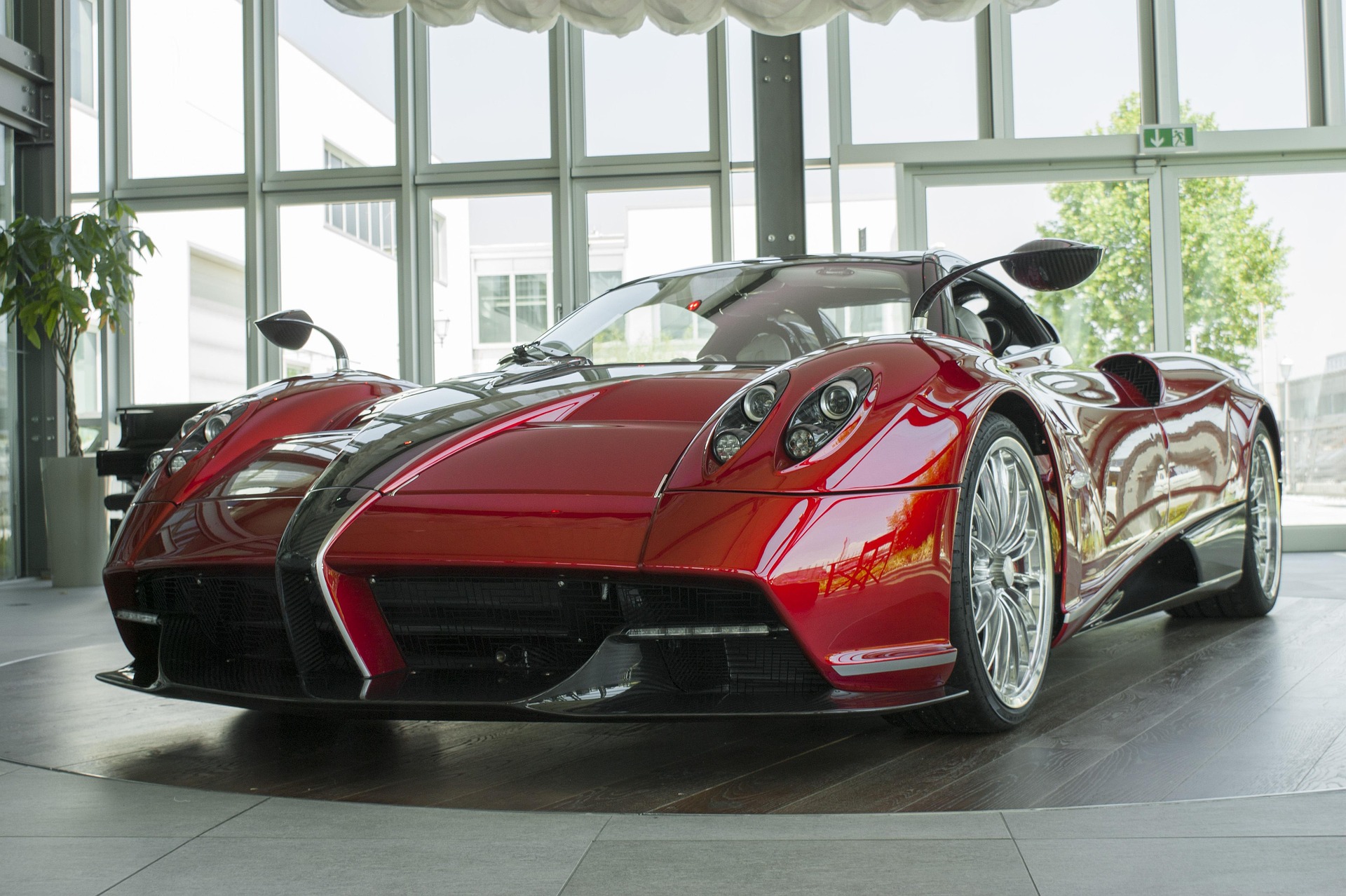
Pagani design: Sculpture that happens to function as vehicle. Every component is design object — exposed titanium hardware that’s hand-polished, gear linkages that’re works of art, interiors combining carbon fiber with leather and metal in ways suggesting jewelry more than automobile.
Walking around a Pagani reveals hundreds of details that serve no functional purpose beyond beauty. The exposed pagani gearshift mechanism. The hand-numbered plaques. The way carbon fiber weave patterns align across panels. This obsessive aestheticism costs time and money that mass production can’t accommodate.
The Ownership Experience Difference:
Ferrari/Lamborghini owners: Purchase through dealers, select from option packages, take delivery through standard processes, interact with corporation through service centers and official channels.
Pagani owners: Work directly with the factory and often with Horacio personally on bespoke specifications. Visit Modena during construction to make decisions. Take delivery at the factory where craftsmen who built the car personally hand it over. Maintain ongoing relationship with the company that resembles patronage more than commerce.
Many Pagani owners commission multiple cars over years, each one incorporating learnings from previous ownership and pushing boundaries of what’s possible. This iterative relationship between creator and patron more closely resembles Renaissance artist-patron dynamics than modern automotive retail.
Can You Actually Visit Pagani From Venice?
The exclusivity that makes Pagani fascinating also makes visiting complicated compared to Ferrari or Lamborghini’s developed tourist infrastructure.
The Museo Pagani (Pagani Museum):
Located in San Cesario sul Panaro, roughly 10 kilometers from Modena center (about 2.5-3 hours from Venice by car).
The museum is small, intimate, and spectacular: Perhaps 10-15 cars displayed at any time (compared to Ferrari’s 40-50 or Lamborghini’s 20-25), but the quality of presentation and the cars themselves create impact that larger collections often don’t match.
What you’ll see:
Original Zonda prototypes and significant production variants showing the model’s evolution across nearly two decades.
Huayra models including special editions that never reach public roads in normal circumstances.
Concept studies and one-off commissions created for specific collectors.
Manufacturing exhibits showing carbon fiber construction, titanium components, leather work, and other craftsmanship elements.
Design philosophy documentation explaining Horacio’s Leonardo da Vinci inspiration and his fusion of art and engineering.
The experience is fundamentally different from Ferrari or Lamborghini museums:
Smaller scale creates intimacy rather than overwhelming comprehensiveness. Focus on craftsmanship and design process rather than racing heritage or brand chronology. Presentation emphasizes each car as unique artwork rather than production model variants.
Visiting requires advance reservations — walk-up access is limited or unavailable. The museum maintains intentionally low visitor numbers preserving exclusive atmosphere rather than maximizing traffic.
Factory Tours:
Pagani offers extremely limited factory tours to see actual production areas where cars are being assembled. These are:
Much harder to arrange than Lamborghini’s regular factory tour schedule Often require Pagani ownership, serious purchase intent, or industry credentials Sometimes possible for serious automotive enthusiasts willing to provide context about their interest Never guaranteed — the factory reserves right to decline tour requests without explanation
When factory access is possible, you’re seeing:
Hand layup of carbon fiber body panels Metal workshops producing custom titanium components Leather shops creating bespoke interiors Assembly areas where complete cars come together The scale and intimacy that distinguish atelier from factory
The factory tour experience is profoundly different from Lamborghini: Where Lamborghini’s tours show industrial production using advanced manufacturing, Pagani’s tours reveal workshop environment where skilled craftsmen hand-build vehicles using processes that haven’t changed fundamentally in decades despite advanced materials.
Should You Actually Try to Visit Pagani?
Understanding that Pagani exists and what visiting entails leads to practical question: does pursuing this serve your Venice-based trip or represent automotive obsession beyond what normal travelers should attempt?
Visit Pagani If:
You’re serious hypercar enthusiast who understands what distinguishes Pagani from Ferrari/Lamborghini and specifically wants to experience the ultimate expression of automotive exclusivity.
You’ve already visited Ferrari and Lamborghini during previous trips and want to complete comprehensive Motor Valley experience at highest level.
You have genuine interest in craftsmanship and design beyond just “fast cars” — Pagani rewards those who appreciate process and aesthetics as much as performance.
You’re willing to dedicate significant effort to securing museum reservations or potential factory access that Pagani’s limited infrastructure makes more complicated than Ferrari/Lamborghini visits.
You have multi-day Motor Valley focus allowing comprehensive automotive immersion rather than trying to fit Pagani into already-packed single-day excursion.
Skip Pagani If:
You’re first-time automotive tourist who should start with Ferrari’s comprehensive museums and established visitor infrastructure before pursuing Pagani’s obscurity.
You have limited time — single automotive day from Venice serves you better at Ferrari where driving experiences, extensive museums, and developed tourist amenities deliver more complete package.
You can’t distinguish Pagani from Ferrari and are pursuing this because someone told you Pagani is “the best” without you personally understanding or caring why.
The museum-only format doesn’t interest you — Pagani offers no driving experiences for tourists, making visits purely observational rather than participatory.
Your traveling companions will be bored — Pagani’s small museum requires less time than Ferrari but also provides less for non-enthusiasts to engage with.
How Pagani Fits Into Broader Motor Valley Context
Pagani represents extreme point on exclusivity spectrum that includes multiple manufacturers concentrated in Emilia-Romagna.
The Motor Valley Hierarchy:
Mass Luxury (Ferrari, Lamborghini): Thousands of cars annually, global brand recognition, extensive dealer networks, developed tourist infrastructure. These are “attainable” supercars for wealthy enthusiasts willing to wait and pay.
Ultra-Exclusive (Maserati, certain Ferrari special editions): Hundreds or low thousands annually, more selective allocation, premium pricing, but still within realm of wealthy automotive enthusiasts.
Hypercar Extreme (Pagani): Dozens annually, multi-million dollar pricing, personal factory relationships, allocation by invitation rather than money alone. Represents absolute pinnacle of exclusivity.
Motorcycle Parallel (Ducati): Two-wheel performance passion with similar Italian obsessiveness applied to motorcycles rather than cars.
How Serious Enthusiasts Approach Motor Valley:
Single-day tourists: Visit Ferrari only, experience most famous brand, return to Venice satisfied with automotive pilgrimage.
Dedicated enthusiasts with 2-3 days: Ferrari comprehensive visit (museums plus driving), Lamborghini factory tour and museum, possibly Maserati or Ducati depending on interests.
Hypercar obsessives with 3-5 days: Ferrari, Lamborghini, Pagani museum, potentially other manufacturers, overnight in Modena allowing deeper regional exploration, integration with food culture making automotive focus part of broader Emilian experience.
Industry professionals or collectors: Multi-day immersion including private factory access where possible, meetings with designers or engineers when arranged, comprehensive documentation for professional purposes.
For Venice-based visitors, Pagani represents optional premium addition to Motor Valley exploration rather than essential experience. The value depends entirely on whether hypercar exclusivity specifically interests you versus being satisfied with Ferrari and Lamborghini’s more accessible offerings.
What We Can Arrange (And What We Honestly Can’t)
When travelers contact us about Pagani experiences, here’s what’s actually possible versus what remains beyond even our local connections:
We Can Arrange:
Pagani Museum visits with advance reservations ensuring access rather than hoping for walk-up availability. We coordinate timing with your broader itinerary and transportation from Venice.
Transportation and logistics to San Cesario sul Panaro integrated with other Modena-area activities (Ferrari, Lamborghini, food experiences, historic center exploration).
Integration with comprehensive Motor Valley days combining Pagani with other manufacturers when multi-brand exploration makes sense for your interests and schedule.
Expert context explaining Pagani’s significance, the craftsmanship details to observe, how Pagani relates to broader Italian automotive culture.
Realistic expectations about what museum-only visits provide versus what factory tours (if achievable) would add, helping you decide whether pursuing Pagani access serves you.
We Usually Cannot Arrange:
Guaranteed factory tours — these require Pagani approval that even long-term local connections can’t force. We can request, explain your interest, advocate for access. But “no” is possible answer.
Driving experiences — Pagani doesn’t offer tourist driving programs the way Ferrari does. The cars are too valuable, too rare, and too specialized.
Personal meetings with Horacio Pagani or senior design staff — occasionally possible for industry professionals or serious collectors, essentially never available for casual tourists.
The honest limitation: Pagani’s extreme exclusivity means even professional organizers with decades of local relationships face limits on what we can access. We maximize what’s possible while being honest about what remains restricted.
Alternatives That Might Serve You Better
Before pursuing Pagani, considering whether the investment of time and effort delivers value proportional to what you’re actually seeking:
For Comprehensive Automotive Experience:
Ferrari museums and circuit driving provide more complete package combining observation with participation, history with performance, at facilities designed specifically for tourist access.
For Craftsmanship Appreciation:
Venice itself offers extraordinary craftsmanship through glassmaking, lace production, gondola building, mask creation — Italian artisan traditions that preceded and influenced automotive culture.
For Food Culture Obsession:
Emilia-Romagna’s culinary heritage — Parmigiano-Reggiano, traditional balsamic vinegar, prosciutto di Parma, tortellini — represents parallel obsession with perfection through traditional methods.
For Design and Art:
Venice’s museums, architecture, and artistic heritage provide design education that automotive enthusiasts often find surprisingly relevant to understanding what makes Pagani special.
The question isn’t whether Pagani is worthwhile (it is, for appropriate audience). It’s whether pursuing it serves your specific interests better than alternatives that same time and effort could provide.
Contact Us About Motor Valley Experiences
Whether you’re specifically interested in Pagani, want comprehensive Ferrari-Lamborghini-Pagani coverage, or simply want honest guidance about which automotive experiences serve your Venice-based trip:
Contact us for consultation discussing your specific interests, available time, budget parameters, and what you’re actually hoping to gain from automotive experiences.
We’ll design custom itinerary matching your reality — sometimes that includes Pagani, sometimes it focuses on Ferrari and Lamborghini, sometimes it recommends against automotive tourism entirely in favor of cultural depth, food immersion, or wine country.
Our goal is your satisfaction — which means honest assessment of what serves you rather than maximizing automotive tour sales regardless of fit.
Plan Your Motor Valley Experience
For Venice cultural foundation: Private walking tours and skip-the-line museum access ensure Venice receives attention it deserves before adding automotive tangents.
For Ferrari comprehensive experience: Circuit driving, museums, and Maranello context provide most complete single-manufacturer experience from Venice base.
For Lamborghini alternative: Factory tours and museum offer different perspective than Ferrari’s racing heritage focus.
For food culture: Market tours and cooking classes create lasting knowledge rather than single-day automotive thrills.
For realistic assessment: Understanding how many days you need in Venice reveals whether automotive excursions fit without sacrificing cultural essentials.
Pagani Represents Absolute Automotive Exclusivity — But Whether You Should Pursue It Depends Entirely on Your Specific Interests
After 28 years organizing Motor Valley experiences for Venice-based visitors and being featured by Rick Steves, NBC, and US Today, I know that Pagani fascinates hypercar enthusiasts while remaining irrelevant to travelers who’d find greater satisfaction in Ferrari’s comprehensive offerings or in skipping automotive entirely for cultural immersion. There’s no universal answer. Only the answer matching your specific passion and available time. Contact us. We’ll discuss honestly what serves you, then design accordingly. Let’s figure out what genuinely enhances your Italian journey.
Contact us about Motor Valley experiences — whether that includes Pagani or focuses elsewhere based on your actual interests.
Frequently Asked Questions
Why is Pagani so much more expensive than Ferrari or Lamborghini?
The pricing reflects fundamentally different production philosophy. Ferrari and Lamborghini achieve some economies of scale through thousands of annual units sharing platforms, components, and development costs. Pagani builds dozens of cars annually, each requiring hundreds of hours of hand craftsmanship, with minimal component sharing and bespoke specifications. Additionally, the carbon fiber construction, titanium hardware, and obsessive finishing details cost dramatically more to execute than mass-produced alternatives. But the primary driver isn’t materials cost — it’s the refusal to compromise for efficiency. Every Pagani component receives attention that production economics would normally prohibit. You’re not paying for objectively “better” car in performance terms. You’re paying for the ultimate expression of craftsmanship where time and beauty matter more than cost optimization.
Can you actually drive a Pagani if you’re a regular tourist?
No. Pagani doesn’t offer driving experiences for tourists the way Ferrari provides circuit sessions or test drives. The cars are too rare, too valuable, and too specialized. Pagani ownership itself requires application and approval — you can’t simply order one with sufficient money. For tourists, Pagani experience is limited to museum observation and potential factory tours if access can be arranged. This limitation frustrates some visitors who want participatory experience. But it’s fundamental to what makes Pagani exclusive — these aren’t cars you rent for an afternoon. They’re automotive art that collectors commission and preserve. If driving matters more than observation, Ferrari’s comprehensive driving programs serve you far better than pursuing Pagani access that can’t include actually controlling the vehicle.
If I can only visit one automotive manufacturer from Venice, should it be Pagani?
No. Start with Ferrari. Pagani makes sense for dedicated enthusiasts completing comprehensive Motor Valley exploration or for return visitors who’ve already done Ferrari during previous trips. Ferrari provides more complete single-day experience through multiple museums, extensive collections, optional driving components, and infrastructure designed specifically for tourist access. Pagani’s museum is smaller, offers observation-only format, and requires more effort to access for less total content. The exclusivity is fascinating, but exclusivity alone doesn’t justify prioritizing Pagani over Ferrari’s comprehensive offerings when you have limited automotive time. Save Pagani for second or third Italy trip when Ferrari and Lamborghini foundations are already established.