Every March 8th, Venice does something extraordinary.
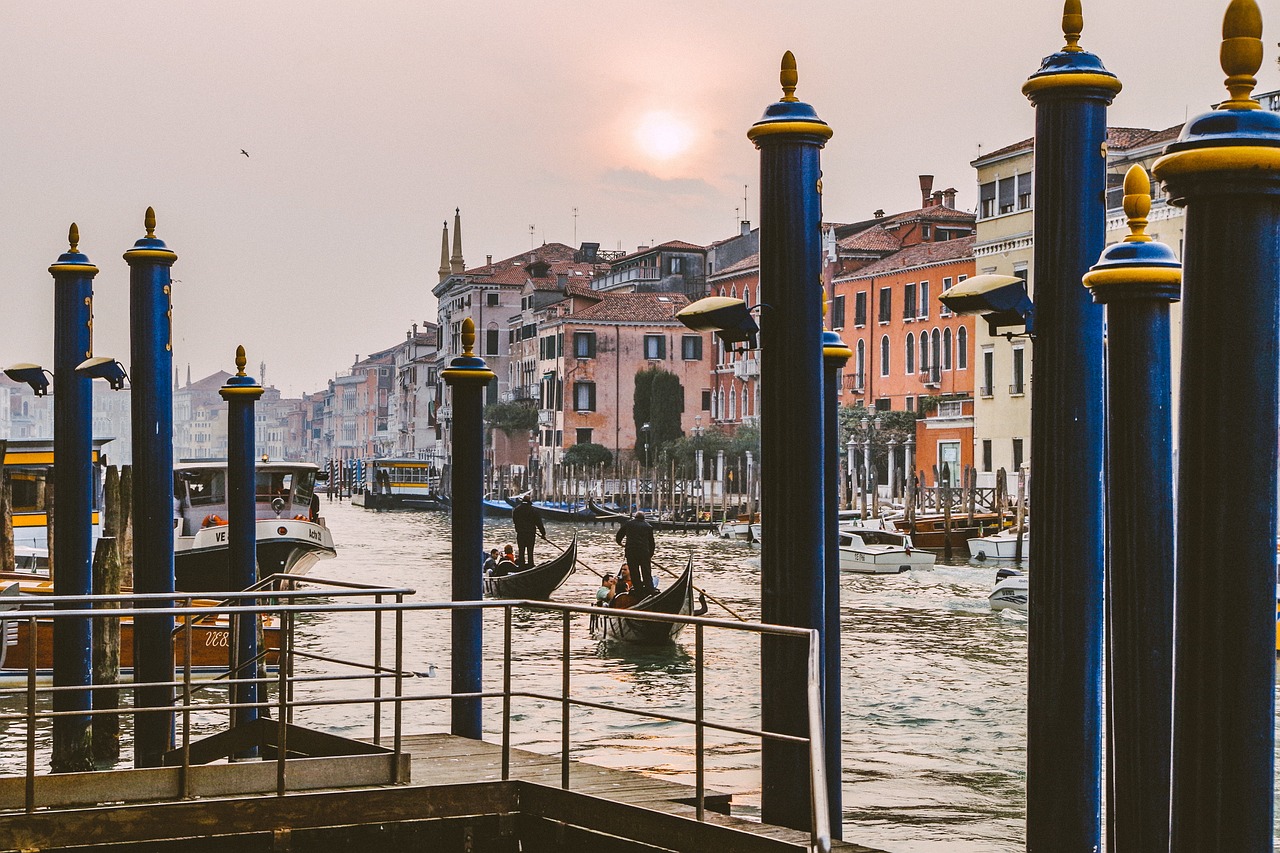
The state museums open free to women. The Grand Canal hosts a women’s rowing regatta — female rowers in traditional boats competing along the city’s main waterway. Exhibitions, lectures, and cultural events throughout the city celebrate women’s contributions to Venetian history and contemporary life.
International Women’s Day in Venice reveals something the standard tourist narrative carefully omits: women shaped this city profoundly, wielded power in ways medieval and Renaissance Europe rarely allowed, and left legacies that still define what Venice is today.
The standard Venice story emphasizes Doges, merchants, naval commanders — overwhelmingly male figures. The paintings show men. The palaces bear men’s names. The history books document male achievements. This narrative isn’t false. It’s simply incomplete.
Behind the public male power structure operated parallel networks of female influence, authority, and accomplishment that shaped Venetian culture, commerce, and politics for centuries. Noblewomen who controlled enormous wealth. Courtesans who influenced policy. Artists who competed successfully with male contemporaries. Businesswomen who operated independently in ways almost no other European city allowed.
After 28 years studying Venice’s complete history — not just the narrative convenient for tour guides to repeat — I know exactly where women’s contributions hide in plain sight, which female figures actually mattered, and how Venice’s treatment of women differed from the rest of medieval and Renaissance Europe.
This is the honest account. Not feminist revisionism pretending Venice was gender paradise. Not dismissive minimization claiming women didn’t matter. Simply the truth: women shaped Venice far more than the Doge’s Palace audioguide suggests.
Understanding Venice completely means understanding all the forces that shaped it.
The Peculiar Legal Status of Venetian Women
Venice operated under legal frameworks that differed significantly from both the rest of Italy and medieval Europe generally — and these differences created space for female autonomy that was genuinely unusual for the era.
Venetian women could own property independently. Not through fathers or husbands as intermediaries, but in their own names. Married women maintained control over their dowries — the wealth they brought to marriage — rather than transferring ownership to husbands.
This sounds mundane until you understand how radical it was. Throughout most of medieval Europe, married women’s property automatically transferred to husbands’ control. The concept of married women as independent legal entities barely existed.
Venice’s maritime economy created the legal necessity. Men departed on trading voyages lasting months or years. Wives needed legal authority to manage households, businesses, and property in husbands’ absence. The law evolved to accommodate this reality rather than forcing women into permanent legal childhood.
The practical effect: Venetian women managed commercial enterprises, bought and sold property, entered contracts, and operated with legal agency their contemporaries in Florence, Rome, or Paris simply didn’t possess.
But this independence had strict limits. Political participation remained entirely male. Women couldn’t vote, hold office, or participate in Venice’s complex republican governance. The Great Council — Venice’s primary governing body — was exclusively male throughout the Republic’s history.
The economic autonomy coexisted with political exclusion. Women could be wealthy, could manage businesses, could wield economic power — but couldn’t translate that power into formal political authority.
This creates complicated historical assessment. By medieval standards, Venetian women enjoyed remarkable freedom. By modern standards, they faced systematic exclusion from power. Both are true simultaneously.
The Convents: Where Noblewomen Wielded Actual Power
Venice’s convents weren’t simply religious retreats. They were power bases where noblewomen who couldn’t or wouldn’t marry exercised authority that secular life denied them.
Venetian noble families faced brutal mathematics. Marrying daughters required enormous dowries — the wealth transferred to new families as part of marriage agreements. Multiple daughters meant multiple dowries, potentially bankrupting families.
The solution was systematic: marry one daughter well, send the others to convents. This wasn’t necessarily forced (though it sometimes was). Convent life offered educated, ambitious noblewomen options that marriage often didn’t — education, artistic patronage, administrative authority, intellectual community.
The convents became centers of female cultural production. Music, art, literature, scholarship — all flourished in Venice’s wealthier convents where educated noblewomen had time, resources, and motivation to pursue intellectual interests secular life rarely allowed.
San Zaccaria — one of Venice’s most prestigious convents — held such wealth and independence that abbesses negotiated directly with the Doge. The convent owned enormous property throughout Venice and the Veneto. The abbess wielded authority rivaling secular noblewomen but with additional independence that marriage would have prevented.
Convent theaters produced performances written and performed by nuns for audiences including Venice’s elite. These weren’t amateur religious pageants. They were sophisticated theatrical productions that competed artistically with secular theaters and which some authorities occasionally banned as too worldly or provocative.
The musical education at convents like Santa Maria della Pietà became so renowned that composers including Vivaldi worked there. The female musicians — technically orphans being raised and trained by the institution — achieved performance levels that drew audiences from across Europe.
But romantic narratives about convent life require caution. Many women entered convents involuntarily, chosen by families to preserve wealth rather than pursuing religious vocations. The walls that protected women from unwanted marriages also imprisoned women in lives they hadn’t chosen.
The power that abbesses and educated nuns wielded was real. The restrictions and resentments were equally real. Both truths coexist.
Veronica Franco: The Courtesan Who Became Cultural Force
Veronica Franco (1546-1591) represents Venice’s most famous courtesan — and her life illuminates the strange space where female sexuality, artistic accomplishment, and social influence intersected in Renaissance Venice.
Courtesans (cortigiane) occupied peculiar position. Not respectable by conventional standards. Not purely sexual workers. Something between — educated, cultured women who provided intellectual and artistic company alongside sexual access, serving elite men who wanted more than wives’ domestic companionship could provide.
Franco wasn’t simply beautiful and sexually available. She was genuinely educated — literate in multiple languages, conversant in contemporary literature and philosophy, capable poet who published work under her own name, and correspondent with leading intellectuals including Montaigne.
Her poetry addresses female sexuality, male hypocrisy, and social double standards with directness that respectable women couldn’t publish. One famous poem responds to a male poet who criticized her appearance, systematically dismantling his arguments while asserting her right to sexual agency and artistic ambition.
She established salon where Venice’s intellectual elite gathered — artists, writers, philosophers, powerful men drawn by her beauty but retained by her intelligence and wit. This wasn’t brothel or simple entertainment. It was cultural institution that happened to center on a woman whose sexuality was part of but not the entirety of her social role.
Franco also established charitable foundation for courtesans’ children — addressing practical problem that women in her profession faced constantly. The foundation provided housing and education, operating for decades after her death.
The Catholic Church prosecuted Franco for practicing witchcraft (charges eventually dropped) — partly because her independence, education, and influence made male authorities uncomfortable. A woman who wrote poetry, engaged intellectuals as equals, controlled her own finances, and challenged male criticism violated every expectation of proper female behavior.
Her legacy is complicated. She achieved influence and accomplishment genuinely rare for women of her era. She did so through sexual availability and beauty that wouldn’t have gained attention without her other qualities but which were nonetheless essential to her access. Celebrating her as feminist icon requires acknowledging that her power came through patriarchal structures that simultaneously enabled and exploited her.
Modern Venice largely ignores Franco despite her historical significance. No statue commemorates her. No museum focuses on her life. She exists primarily in academic study and occasional cultural programming rather than standard tourist narratives.
Female Artists in Renaissance Venice: More Than You’ve Been Told
Art history emphasizes Titian, Tintoretto, Veronese — the male painters who defined Venetian Renaissance art. Female artists existed too, though you’d barely know it from museum labels or guided tours.
Marietta Robusti (1554-1590), daughter of Tintoretto, trained in her father’s workshop and produced portraits of sufficient quality that contemporaries sometimes couldn’t distinguish her work from his. She dressed as boy to study anatomy and live model drawing — necessary for serious painting but forbidden to respectable women.
Her career was brief. She married at 30, died at 36, produced limited surviving work. The portraits attributed to her show technical skill matching her father’s. But because female artists rarely signed works and because attributions often assumed male authorship unless proven otherwise, her actual output remains uncertain.
The systematic erasure wasn’t accidental. Guilds restricted membership to men. Training required access to nude models considered inappropriate for women. Commissions went to established (male) artists whose reputations and workshop systems could guarantee delivery.
Female artists who succeeded typically did so through family connections — fathers, brothers, husbands who ran workshops that women could join without violating guild restrictions. Independent female artists simply couldn’t access the institutional structure required for professional success.
Rosalba Carriera (1673-1757) — Venetian painter specializing in pastels and miniatures — achieved international reputation and financial independence genuinely unusual for female artists. She corresponded with intellectuals throughout Europe, traveled independently, never married, supported her family through her art.
Her work commanded high prices from European nobility and brought foreign visitors to Venice specifically to commission portraits. She achieved professional success as artist rather than as “female artist” — rare accomplishment that her contemporaries recognized as exceptional.
But her success came partly through specializing in pastels and miniatures — mediums considered less prestigious than large-scale oil painting that guild restrictions and social expectations made difficult for women to pursue. The freedom she achieved came through accepting constraints that male artists didn’t face.
Venice’s churches and museums hold work by these women and others whose contributions have been documented through recent scholarship. But the standard tourist narrative continues emphasizing male masters while treating female artists as interesting footnotes rather than integral parts of Venetian artistic production.
Businesswomen and Guild Breakers
Venice’s commercial economy created opportunities for female entrepreneurship that most European cities actively prohibited.
Widows inherited husbands’ businesses and frequently continued operating them rather than selling or transferring to male relatives. Guild restrictions that normally prevented women from practicing trades often granted exceptions for widows continuing dead husbands’ work.
This created perverse incentive — women gained economic authority primarily through husbands’ deaths — but nonetheless produced population of female business operators managing everything from bakeries to textile workshops to shipping concerns.
The lace industry on Burano was almost entirely female-operated. The intricate needlework required for Venetian lace demanded skill developed through years of practice. Women learned from mothers and grandmothers, trained apprentices, operated workshops, and maintained economic independence through their craft.
The lace wasn’t luxury hobby. It was major export generating substantial wealth. The women who produced and sold it operated with economic agency that guild-dominated industries elsewhere strictly prohibited.
Female textile workers throughout Venice produced everything from basic cloth to elaborate brocades. The work was poorly paid and physically demanding. But it allowed unmarried women and widows to support themselves without depending on male relatives — independence that poverty often made necessary but which social structures rarely accommodated willingly.
The economic opportunities shouldn’t be romanticized. Most female workers labored in poorly compensated industries producing basic goods. The wealthy female business operators were exceptional rather than representative.
But compared to cities where guilds completely excluded women from commercial activity, where married women couldn’t own property independently, where economic autonomy was simply unavailable regardless of circumstance — Venice offered marginally more space for female economic participation.
Marginal improvements over terrible baseline don’t constitute gender equality. But they created conditions where some women achieved economic independence that contemporaries elsewhere couldn’t imagine as possibility.
The Jewish Ghetto’s Hidden Female Power
The Venetian Ghetto — established 1516 as Europe’s first forced Jewish segregation — operated under its own internal governance that included female participation in ways Venetian Christian society didn’t allow.
Jewish women in the Ghetto operated businesses with fewer restrictions than Christian women faced. The community’s marginalized status paradoxically created space for female economic activity that Christian guild structures prevented.
Moneylending — one of few occupations Jews could legally practice — saw female participation. Widows inherited and continued operating lending businesses. Single women managed accounts. The restricted economic opportunities available to Ghetto residents made excluding half the potential workforce impractical.
The synagogues’ women’s galleries physically segregated female from male worshippers but didn’t prevent female participation in community religious life. Women maintained ritual observances, educated daughters, and preserved traditions that continued despite centuries of persecution.
The Ghetto’s internal governance — the council that managed community affairs and negotiated with Venetian authorities — was male-dominated. But the women’s role in maintaining cultural identity, managing households, and contributing economically allowed influence that formal exclusion from power structures obscures.
Holocaust history adds tragic dimension. The Ghetto’s women were among the 246 Venetian Jews deported to concentration camps in December 1943. Only eight survived. The memorial stones (Stolpersteine) marking deportation locations include women’s names — mothers, daughters, elderly women murdered for their identity.
The contemporary Ghetto maintains its diminished community. The women who live there, worship there, and preserve the neighborhood’s identity continue traditions that persecution nearly destroyed but couldn’t eliminate entirely.
Caterina Corner: The Noblewoman Who Became Queen
Caterina Corner (1454-1510) represents Venice’s most dramatic female political figure — though her story reveals how Venice used women as political instruments while simultaneously celebrating their accomplishments.
Corner married Jacques II of Cyprus in 1472, becoming Queen of Cyprus. Her husband died within a year. Her infant son died shortly after. Corner became sole ruler of strategically vital Mediterranean island — nominally independent, practically controlled by Venice.
Venice had arranged the marriage specifically to gain Cyprus access. When Corner became Queen, Venetian authorities “advised” her constantly, essentially governing through her. When continuing this fiction became inconvenient, they pressured her to abdicate and cede Cyprus directly to Venice.
She did so in 1489, receiving in exchange the town of Asolo and substantial income. She lived comfortably, maintained small court, patronized artists and poets including Pietro Bembo, and became symbol of noble sacrifice — Venetian noblewoman who surrendered kingdom for Republic’s benefit.
The celebration was propaganda. Corner was political tool used to acquire Cyprus, then discarded when direct control became preferable. But Venice transformed her into heroic figure whose “willing” abdication demonstrated both female virtue and Venetian patriotism.
Titian painted her portrait — now in the Uffizi — showing regal bearing and royal costume despite her surrender of actual power. Venetian art and literature celebrated her as ideal noblewoman: beautiful, educated, politically valuable, and ultimately obedient to male authority and state interests.
Her story illuminates Venice’s contradictory treatment of powerful women — celebrated when their power served Venetian interests, contained when it threatened those interests, romanticized after the fact to obscure how thoroughly they were manipulated.
March 8th in Contemporary Venice: What Actually Happens
International Women’s Day in Venice has evolved into genuine citywide celebration mixing serious cultural programming with festive public events.
State museums open free to women — the Doge’s Palace, Accademia Gallery, Ca’ Rezzonico, others. This isn’t token gesture. It’s genuine commitment to access that brings thousands of women (and families, since children accompanying mothers also enter free) into cultural institutions.
The free admission creates demographic shift. Families who might not otherwise visit museums make March 8th cultural outing. Women who love art but find ticket prices prohibitive take advantage of annual opportunity. The museums fill with visitors whose participation in Venetian culture otherwise faces financial barriers.
The Women’s Rowing Regatta on the Grand Canal showcases female athletes competing in traditional Venetian boats. Rowing is genuinely important Venetian sport — not tourist performance but actual athletic tradition with deep local significance.
Female rowers train year-round, compete throughout the season, and treat the March 8th regatta as major event. The competition is serious. The skill level is high. The crowds lining the Grand Canal aren’t watching novelty act — they’re watching legitimate athletic competition.
Cultural programming throughout the city includes lectures on women’s history, exhibitions featuring female artists, performances celebrating women’s contributions to Venetian culture. Universities, cultural institutions, and community organizations coordinate events that extend throughout the week surrounding March 8th.
Some programming is excellent — serious scholarship, important art, genuine engagement with women’s historical and contemporary roles. Some is performative — superficial celebration that satisfies institutional requirements without addressing substantive issues.
The mimosa tradition — giving yellow mimosa flowers to women on March 8th — occurs throughout Italy but takes particular form in Venice. Flower vendors throughout the city sell mimosa branches. Men give mimosa to wives, mothers, daughters, colleagues, friends. The gesture ranges from genuinely affectionate to perfunctory obligation depending on relationship and context.
Where to Find Women’s History in Venice Today
Venice’s official museums and standard tourist routes largely ignore female contributions. Finding women’s history requires knowing where to look.
Ca’ Rezzonico (Museum of 18th Century Venice) documents upper-class women’s lives through preserved apartments, clothing, and domestic objects. The museum doesn’t explicitly frame itself as women’s history, but the material culture it preserves reveals how wealthy Venetian women actually lived.
The private apartments, the clothing, the furnishings — these show spaces where women spent lives, exercised authority over domestic realms, and shaped family culture in ways political histories rarely acknowledge.
The Accademia Gallery holds work by Rosalba Carriera and occasional works attributed to Marietta Robusti, though identifying them requires knowing what you’re seeking. The museum labels rarely emphasize female authorship prominently.
The Ghetto’s Jewish Museum includes women’s stories in its documentation of community history. The deportation records, the family photographs, the domestic objects preserved in the museum — all these include female experiences of persecution, survival, and cultural preservation.
The churches throughout Venice often hold tombs or memorial plaques for notable women — abbesses, donors, benefactors whose wealth funded construction or renovation. Reading these plaques reveals female patronage that shaped religious architecture throughout the city.
The Marciana Library’s manuscript collections include correspondence and writing by educated women, though accessing these requires research permission and scholarly purpose rather than casual tourist interest.
Exploring Venice’s hidden neighborhoods sometimes reveals plaques or markers noting buildings where notable women lived — though these are rare and require local knowledge or guided tours to discover.
What This History Actually Means
Venice’s women’s history resists simple narratives. The city wasn’t feminist paradise. It wasn’t uniformly oppressive either.
Venetian women had unusual economic autonomy for medieval and Renaissance Europe but faced systematic political exclusion. They could own property, manage businesses, and exercise legal agency their contemporaries elsewhere couldn’t — but couldn’t vote, hold office, or participate in governance.
The convents provided intellectual and cultural spaces where talented women achieved accomplishments secular life rarely allowed. But many women entered convents involuntarily, chosen by families to preserve wealth rather than pursuing religious vocations.
Female artists existed and some achieved genuine success — but within constraints that made independent careers nearly impossible and ensured most female artistic production went unrecognized or was attributed to male workshop leaders.
Courtesans like Veronica Franco wielded cultural influence genuinely unusual for women — but accessed that influence through sexual availability and relationships with powerful men rather than through independent authority.
The honest assessment: Venice created slightly more space for female autonomy and achievement than most contemporary European cities. This limited progress should be acknowledged rather than dismissed. It should also not be exaggerated into claims that Venice was somehow enlightened about gender when it systematically excluded women from political power and constrained female ambition through legal, social, and cultural barriers.
Understanding this complexity matters more than celebrating superficial “girl power” narratives or dismissing women’s contributions as insignificant. The women who shaped Venice did so while navigating restrictions that modern perspective finds appalling. Their achievements matter precisely because they occurred despite systematic limitations rather than through supportive equality.
How Venetians actually live today includes women fully participating in contemporary life while the city’s history continues obscuring female contributions that shaped what Venice became.
Plan Your Women’s History Venice Visit
For March 8th museum access: Free admission to state museums makes International Women’s Day excellent opportunity for cultural visits that might otherwise strain budget. Arrive early — free admission brings crowds.
For understanding complete Venice history: Private tours can incorporate women’s history that standard tourist routes ignore. A knowledgeable guide can show you where notable women lived, explain their contributions, and reveal stories museums don’t emphasize.
For exploring the Jewish Ghetto: The neighborhood’s profound history includes women’s experiences of persecution, survival, and cultural preservation that standard Holocaust narratives sometimes oversimplify.
For discovering hidden Venice: Secret gardens and residential neighborhoods sometimes reveal plaques or buildings connected to notable women whose stories tourist routes don’t tell.
For honest Venice understanding: Reality beyond the myths includes acknowledging whose stories get told prominently and whose contributions remain hidden despite shaping the city profoundly.
Discover the Venice History That Standard Tours Carefully Omit — The Women Who Shaped La Serenissima
After 28 years studying Venice’s complete history and being featured by Rick Steves, NBC, and US Today, I know exactly where women’s contributions hide in museums, churches, and neighborhoods that tourist narratives overlook. Venice’s women wielded power in extraordinary ways while navigating systematic restrictions. Their stories deserve telling — not as feminist revision but as historical accuracy. Let me show you the Venice that acknowledges all the forces and all the people who made this impossible city function for centuries.
Book a women’s history-focused private tour or explore Venice’s museums on March 8th when admission is free — experience the complete history, not the sanitized version.
Frequently Asked Questions
Were Venetian courtesans really respected or is that romantic myth?
Neither fully accurate. Courtesans occupied complicated social position — not respectable by conventional standards but not purely marginalized either. The highest-level courtesans (cortigiane oneste) operated salons, published poetry, engaged intellectuals as near-equals, and wielded cultural influence genuinely unusual for women. But they remained fundamentally dependent on male patronage, faced constant social judgment, and couldn’t translate cultural influence into economic security or political power. They were also vastly outnumbered by lower-class sex workers who faced exploitation without any glamorous cultural position. The romantic myth about refined courtesans living fabulous lives ignores that only tiny fraction achieved Veronica Franco’s level of success — and even Franco died in relative poverty after losing beauty and influential patrons. The truth is more complicated than either “they were respected intellectuals” or “they were exploited victims” suggests.
Why doesn’t Venice do more to celebrate female historical figures?
Partly because institutional conservatism preserves traditional narratives emphasizing male power and accomplishment. Partly because acknowledging female contributions requires admitting how completely women were excluded from political power despite economic and cultural achievements. Partly because the tourism industry sells simplified historical narratives that emphasize Doges, merchants, and naval glory rather than complicated stories about women operating within and against patriarchal constraints. Recent scholarship has documented female contributions extensively, but translating academic research into museum exhibitions, tour narratives, and public consciousness requires institutional will that Venice hasn’t yet fully committed to. The March 8th programming shows some progress, but it remains annual exception rather than integrated approach to presenting complete history year-round.
Can I visit locations connected to famous Venetian women?
Some, but many are privately owned or no longer exist. Veronica Franco’s house is marked with plaque but remains private residence not open to tourists. The major convents including San Zaccaria are active religious institutions with limited public access. Caterina Corner’s palazzo exists but functions as office building. The Jewish Ghetto’s buildings where notable women lived or died are mostly residential. The practical reality is that experiencing women’s history in Venice requires knowledgeable guide who can point out unmarked locations and provide context rather than expecting obvious tourist sites dedicated to female figures. The lack of accessible women’s history sites reflects the larger problem — women shaped Venice profoundly but that contribution remains largely hidden rather than celebrated through museums, monuments, or tourist infrastructure.