This question arrives in my inbox constantly, and the answers floating around online are almost universally unhelpful.
“Stay in Venice for the experience!” says one forum. “Stay in Mestre to save money!” says another. “Stay in Treviso — it’s charming and affordable!” says a third. All three answers ignore the reality that matters most: the right choice depends entirely on what kind of trip you’re taking, how long you’re staying, and what you actually value.
There is no universally correct answer. But there is a clear framework for making the decision — one that removes the anxiety and lets you choose with confidence.
After 28 years living in Venice and watching visitors navigate this exact dilemma, I’ve seen all three choices work beautifully and all three choices fail badly. The difference was never the location itself. It was whether the choice matched the traveler’s actual needs.
What Mestre Actually Is
Before comparing options, it helps to understand what each location actually is — because most visitors have no idea.
Mestre is a real Italian city. Not a suburb. Not a satellite town existing solely to serve Venice tourists. It’s an independent urban center with its own history, its own residents, its own commercial and cultural life. Population around 30,000. A functioning train station, shopping districts, restaurants where locals eat, and a perfectly normal Italian city atmosphere.
Mestre sits on the mainland, connected to Venice by the Ponte della Libertà — the long causeway that carries both road and rail traffic across the lagoon. The journey from Mestre’s train station to Venice takes roughly 10-15 minutes by train, arriving at Venice’s Santa Lucia station. From there, the vaporetto network connects you to the rest of the city.
The total travel time from a Mestre hotel to Piazza San Marco is typically 30-45 minutes. This isn’t trivial. But it isn’t insurmountable either.
What Mestre offers that Venice cannot: space. Normal-sized hotel rooms at normal prices. Supermarkets. Chain restaurants alongside independent ones. The kind of comfortable, unremarkable urban infrastructure that exists in every Italian city except Venice.
What Mestre lacks: atmosphere. History. Beauty. The sense of being somewhere extraordinary. Mestre is a perfectly pleasant Italian city. It is not Venice.
What Treviso Actually Is
Treviso is something entirely different from both Venice and Mestre — and understanding what makes it special is essential before deciding whether it suits your trip.
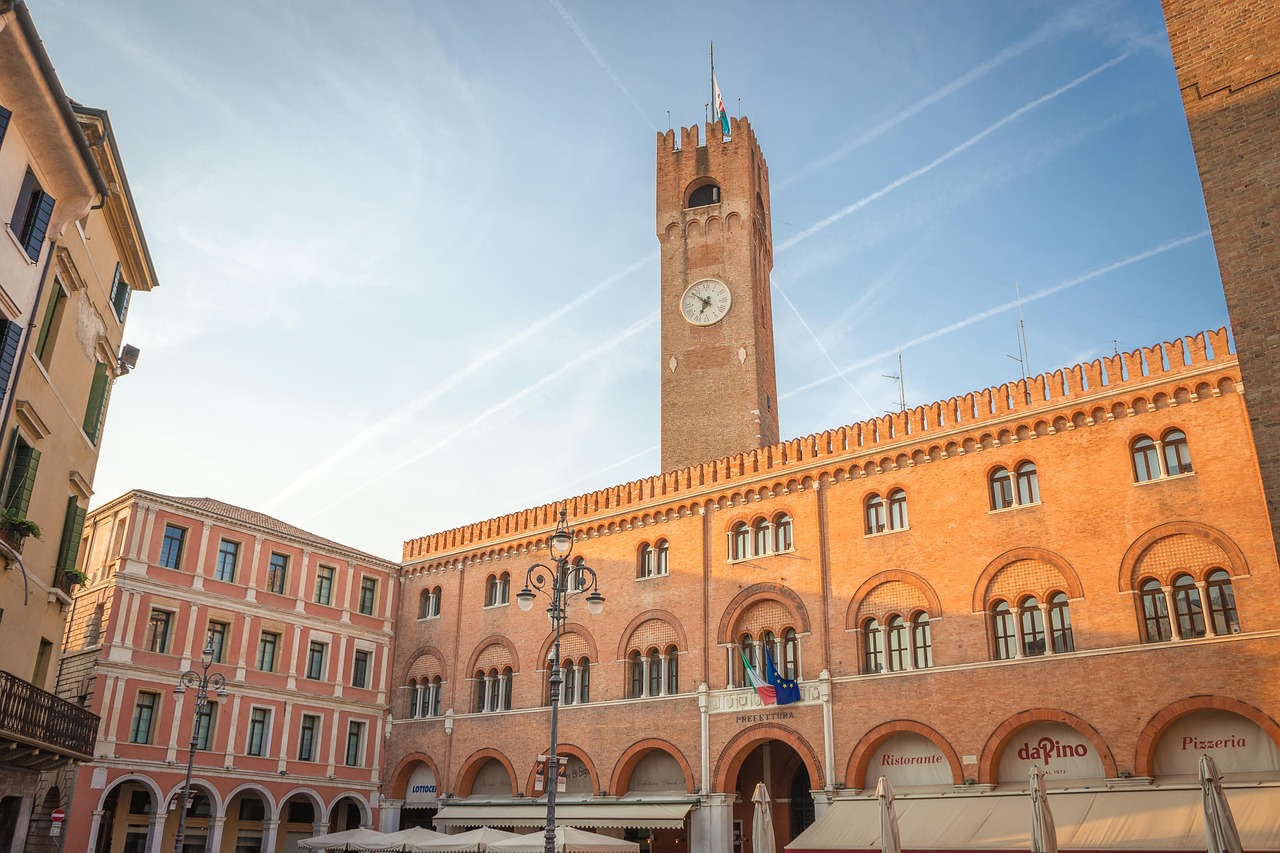
Treviso is a medieval walled city, roughly 30 kilometers northwest of Venice. Population around 55,000. It holds one of the most beautifully preserved historic centers in northeastern Italy — and almost no international tourists know it exists.
The city is built around waterways. Canals run through the historic center, remnants of a medieval water system that once served the city’s commerce and defense. Walking Treviso’s centro storico feels like discovering a quieter, more intimate version of Venice — one where the canals are smaller, the crowds are nonexistent, and the atmosphere belongs entirely to the people who actually live there.
Treviso has its own character, completely independent of Venice. Medieval churches holding important artwork. A functioning Rialto-style fish and vegetable market. Traditional restaurants serving dishes unique to the Treviso area — radicchio, bigoli, local wines from the surrounding hills. A university town atmosphere with young people, cafés, and genuine intellectual energy.
The historic center is compact enough to walk entirely in an afternoon. But Treviso rewards longer stays — the kind where you sit in a campo with a glass of local wine and simply watch the city live.
What Treviso offers that neither Venice nor Mestre can: an authentic Italian medieval city experience at prices significantly lower than Venice, combined with genuine charm and cultural substance. It’s not a compromise. It’s a genuinely different and genuinely excellent destination.
What Treviso lacks: Venice. The lagoon, the gondolas, the grand palaces, the unique atmosphere of a city built entirely on water — none of this exists in Treviso. If Venice itself is your primary goal, Treviso is a base, not a replacement.
What Venice Actually Costs to Stay In
Let’s address the price question directly, because it dominates this debate.
Venice accommodation costs more than both Mestre and Treviso. This is simply true and won’t change.
The reasons are straightforward. Venice has limited physical space for hotels. The island can only hold so many rooms. Demand from millions of annual visitors vastly exceeds supply. Basic economics dictates that prices rise when demand outstrips what’s available.
This means that for the same budget, you get significantly more space in either Mestre or Treviso. A hotel room in Venice that feels cramped and overpriced might buy you a spacious, well-appointed room in either mainland city with a view and breakfast included.
But price alone is a poor basis for this decision. The question isn’t whether Venice costs more — it does. The question is whether the additional cost buys you something worth paying for. And that depends entirely on how you plan to spend your time.
The Case for Staying in Venice
Venice rewards visitors who stay on the island in ways that mainland accommodation simply cannot replicate.
Proximity changes everything. When your hotel is in Venice, the city is always accessible. Stumbling out of a restaurant at 10:00 PM and wandering through lamplit streets back to your hotel — this experience exists only if you’re staying on the island. Waking up early and stepping outside into an empty Venice morning — this requires being there when the morning happens.
The experiences that make Venice genuinely extraordinary — the dawn light on empty campos, the late-night atmosphere of residential neighborhoods, the spontaneous discoveries that happen when you’re simply walking through the city — these experiences depend on being present at hours when visitors staying in Mestre or Treviso have already retreated to the mainland.
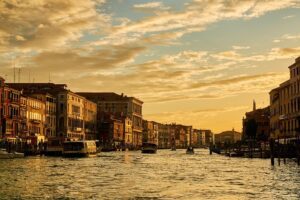
Venice at night is a completely different city than Venice during the day. The crowds thin dramatically after sunset. The atmosphere shifts from bustling tourism to something quieter, more atmospheric, genuinely magical. Experiencing this requires staying overnight on the island.
Similarly, Venice at dawn belongs entirely to residents and early-rising hotel guests. The empty campos, the fog-draped canals, the churches opening their doors to morning light — these moments disappear within an hour of the tourist day beginning. Catching them requires being there when they happen.
Staying in Venice also eliminates commuting stress entirely. No calculating train or vaporetto schedules. No worrying about last connections back to the mainland. No carrying bags through crowds to reach transportation. Your hotel is where you are. When you’re tired, you’re home. When you want to see something, you simply walk outside.
For visitors staying three or more nights with Venice as their primary destination, Venice accommodation almost always delivers better value than its price suggests — not because the rooms are exceptional, but because the access they provide to the city’s best experiences is worth the premium.
The Case for Staying in Mestre
Mestre makes genuine sense for specific types of trips — and pretending otherwise doesn’t help anyone.
Budget is the obvious factor. If Venice accommodation costs genuinely strain your finances, the stress of overspending undermines the entire trip. A comfortable Mestre hotel where you sleep well, have space to relax, and don’t feel financially anxious provides a better foundation for enjoying Venice than a stressed traveler in an overpriced Venice hotel.
Short stays favor Mestre. If you’re spending one night in Venice as part of a larger Italy trip — arriving from Florence, spending a day sightseeing, departing toward Milan the next morning — staying in Mestre makes logistical sense. You’re not missing Venice’s atmosphere because you weren’t planning to experience it anyway.
Families with young children sometimes find Mestre more practical. Venice’s narrow streets, limited space, and constant crowds can exhaust small children quickly. Returning to a spacious Mestre hotel with room to spread out, a nearby supermarket for snacks and supplies, and a quieter environment for evening wind-down addresses practical parenting needs that Venice hotels often can’t.
Travelers with mobility limitations may find Mestre’s flat, accessible infrastructure easier to navigate than Venice’s uneven cobblestones, narrow passages, and constant stair-climbing.
The Case for Staying in Treviso
Treviso represents the option most visitors never consider — and for certain trips, it’s genuinely the best choice of the three.
Budget-conscious visitors who want charm without compromise find Treviso extraordinary. The price difference between Treviso and Venice is dramatic. A boutique hotel in Treviso’s historic center — beautiful rooms, genuine character, excellent location — costs a fraction of comparable Venice accommodation. You’re not settling for a characterless budget option. You’re choosing a genuinely lovely Italian city at prices that feel almost impossibly reasonable after researching Venice.
Visitors combining Venice with regional exploration find Treviso’s location ideal. Treviso sits at the heart of the Veneto region. The Prosecco Hills are 20 minutes away. Padua is 30 minutes. Verona is under an hour. The Dolomites are accessible for day trips. Venice itself is reachable in roughly 40-50 minutes by train. Using Treviso as a regional base — visiting Venice for a full day, then exploring the Prosecco Hills the next, then Padua the day after — creates a richer overall experience than Venice alone could provide.
Food lovers find Treviso compelling in its own right. The city’s culinary traditions are distinct from Venice’s. Radicchio di Treviso — the bitter, purple-leafed vegetable that defines winter cooking in this region — originated here. Local wines from the surrounding hills are exceptional. Traditional restaurants serve dishes that have nothing to do with tourist-facing Venetian cuisine and everything to do with genuine regional cooking.
Travelers who want to experience an Italian city actually functioning as a city find Treviso delivers this in ways neither Venice nor Mestre can. Venice functions simultaneously as a city and a tourist spectacle — the tension between these two identities is constant. Mestre is pleasant but unremarkable. Treviso is a beautiful medieval city where tourists are rare, locals are welcoming, and the atmosphere feels genuinely, uncomplicatedly Italian.
The Commutes: What They Actually Feel Like
The commute from each mainland option to Venice is the single most debated aspect of this decision. Here’s what each actually involves.
Mestre to Venice
From a Mestre hotel near the train station, the train to Venice Santa Lucia runs frequently — roughly every 10-15 minutes during busy periods. The journey takes about 10 minutes. From Santa Lucia, the vaporetto connects you to the rest of Venice in another 10-20 minutes depending on destination.
Total door-to-destination time: approximately 30-45 minutes. This feels manageable in the morning. It feels less manageable at the end of a long, exhausting day. The commute works best when it’s simple and predictable — depart in the morning, return in the evening, no mid-day trips back.
A vaporetto pass makes commuting from Mestre affordable — combined with a multi-day train ticket, this creates a predictable daily transportation budget that removes the constant mental calculation of individual ticket costs.
Treviso to Venice
The train from Treviso to Venice Santa Lucia runs regularly throughout the day. Journey time is approximately 40-50 minutes, depending on the service. From Santa Lucia, the same vaporetto connections apply.
Total door-to-destination time: approximately 55-70 minutes. This is noticeably longer than Mestre’s commute. A full round trip consumes roughly two hours of your day — significant but not prohibitive if Venice is one destination among several rather than your sole focus.
The Treviso commute works best when Venice is part of a broader regional itinerary rather than your only destination. Visitors spending one full day in Venice, then a full day exploring the Prosecco Hills or Padua the next, barely notice the extra travel time. Visitors trying to visit Venice every single day from Treviso will feel the commute more acutely than from Mestre.
Train schedules from Treviso to Venice are reliable and well-organized. First trains depart early enough to reach Venice by mid-morning. Last trains return late enough to accommodate evening dining in Venice without rushing.
The Commute Becomes Genuinely Frustrating When:
From either mainland option, certain situations create real stress:
When you want to return to your hotel mid-afternoon for a rest and then go back out again. The round trip from Mestre consumes roughly an hour. From Treviso, closer to two hours. What should be a simple break becomes a significant time commitment.
When you’re carrying shopping bags, wet from rain, or simply exhausted beyond the point where public transportation feels bearable.
When Venice floods with acqua alta and transportation becomes unpredictable. Returning to the mainland during flooding means navigating disrupted services in difficult conditions.
When you miss the last reasonable connection back. This situation creates genuine stress and sometimes requires expensive taxi or water taxi alternatives.
The commute from either mainland option works best when your days follow a structured pattern. Morning departure, full day in Venice or regional destination, evening return. No mid-day trips back. No late-night complications. If your days follow this rhythm consistently, either mainland option works well. If your days are more flexible and spontaneous, the commute becomes a constraint that limits how freely you experience Venice.
Venice’s Least Expensive Neighborhoods: The Middle Ground
The Venice-versus-mainland debate sometimes ignores a fourth option: staying in Venice but choosing neighborhoods where accommodation costs less than the most expensive areas.
Venice’s price gradient is significant. Hotels near San Marco command the highest prices. Moving even slightly away from the most tourist-heavy areas reduces costs meaningfully.
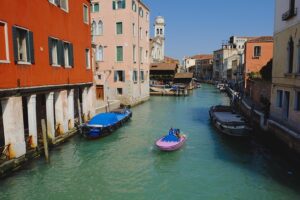
Cannaregio offers the best combination of affordable accommodation and genuine Venice atmosphere. Venice’s largest sestiere, it contains residential neighborhoods, local restaurants, and a quieter pace — while remaining firmly on the island.
Dorsoduro similarly provides Venice atmosphere at slightly lower prices than San Marco’s immediate vicinity. The neighborhood holds some of Venice’s best restaurants, quietest campos, and most beautiful waterfront walks.
Castello stretches eastward from San Marco and becomes increasingly residential and affordable as you move away from the center. Hotels in eastern Castello cost noticeably less than comparable properties near San Marco, while remaining within walking distance of major attractions.
These neighborhoods don’t eliminate Venice’s price premium entirely. But they reduce it enough that the gap between Venice and the mainland options narrows considerably — while keeping you on the island where atmosphere and spontaneous access matter most.
How to Decide: The Simple Framework
Stop agonizing. Ask yourself these questions and the answer becomes clear.
Question 1: How many nights are you staying, and what’s your primary goal?
One night as part of a larger Italy trip → Mestre is probably fine. You’re not missing Venice’s atmosphere because you weren’t planning to experience it anyway.
Two or more nights with Venice as your sole focus → Venice accommodation becomes worth the premium. The access to early morning and late evening experiences justifies the additional cost.
Multiple nights combining Venice with regional exploration → Treviso becomes genuinely compelling. The charm, the price, and the central location make it an excellent regional base.
Question 2: What’s your budget situation?
Venice accommodation genuinely strains your finances but Venice is your only destination → Mestre provides the most practical compromise. Close, simple, affordable.
You can afford Venice without it dominating your budget → Stay in Venice. The experiences the location provides are worth the cost.
You want genuine charm and character at mainland prices, and you’re open to exploring beyond Venice → Treviso delivers both at prices that feel almost shocking after researching Venice accommodation.
Question 3: How spontaneous do you want your days to be?
You’re comfortable with a structured daily routine — depart in the morning, return in the evening — → Either mainland option works.
You want freedom to wander Venice at dawn, return for a midday rest, go back out at sunset, stumble home at midnight → Venice accommodation is the only option that supports this lifestyle.
You want to mix Venice days with regional day trips, following interest rather than a fixed itinerary → Treviso’s central location and excellent train connections make this most practical.
These questions, answered honestly, resolve the debate for almost everyone. There’s no wrong choice. There’s only the choice that matches your actual trip.
Practical Tips for Whichever Option You Choose
If you stay in Venice:
Book early. Venice’s limited hotel inventory means popular properties fill months in advance. Choose your neighborhood deliberately — Cannaregio, Dorsoduro, and eastern Castello offer Venice atmosphere at lower cost than San Marco’s immediate vicinity. Accept the room size. Venice hotel rooms are small by American standards. Spend your time outside, where Venice’s beauty exists.
If you stay in Mestre:
Choose a hotel near the train station. Walking distance to the station saves time every morning and evening. Buy a multi-day train ticket in advance. Accept the atmosphere trade-off honestly — Mestre is comfortable and practical. It is not Venice.
If you stay in Treviso:
Stay in or very near the historic center. Treviso’s centro storico is compact and walkable, and the charm exists entirely within these medieval walls. The surrounding area, while pleasant, lacks the character that makes Treviso worth choosing. Research train schedules before each day — knowing departure and return times in advance removes the stress of figuring out connections on the fly. And spend at least one evening simply in Treviso itself. Walk the canals after dark. Eat dinner at a local restaurant. The city deserves to be experienced on its own terms, not merely as a convenient base for visiting Venice.
Start your stay right with a Venice orientation tour — whether you’re staying in Venice, Mestre, or Treviso, a private orientation tour on your first Venice day provides the geographic understanding, neighborhood knowledge, and practical tips that make every subsequent day more enjoyable. Knowing how Venice works — where to walk, where to eat, how to navigate, what to expect — removes the confusion and wasted time that first-day visitors inevitably experience regardless of where they slept the night before.
What Venetians Think About This Question
Venetians find this entire debate slightly amusing.
From their perspective, the question reveals something fundamentally tourist about how visitors approach the city. Venetians don’t commute to Venice from Mestre or Treviso. They live here. The idea of staying on the mainland and visiting Venice daily — like visiting a theme park — doesn’t map onto how residents experience their city.
This isn’t judgment. It’s simply a different relationship with the place. Venice is home for its residents, not a destination. The hotel-versus-mainland debate exists only because Venice functions simultaneously as a city and as a tourist attraction — and these two identities create tensions that residents navigate daily but visitors encounter for the first time.
The Venetian perspective offers useful guidance, though: if you want to experience Venice rather than simply visit it, being present when the city is actually living — early mornings, evenings, quiet afternoons — matters enormously. This presence is easiest when you’re staying on the island. Not impossible from the mainland, but significantly easier from Venice itself.
Plan Your Venice Region Stay
For transportation from the mainland: A vaporetto pass makes commuting from Mestre affordable — combined with a multi-day train ticket from either Mestre or Treviso, this creates a predictable, affordable daily commute that removes the financial uncertainty of paying as you go.
For making the most of your first Venice day: Start your stay right with a Venice orientation tour — a private orientation provides the geographic and cultural understanding that transforms confusing first impressions into confident navigation. This investment pays dividends for the entire trip, regardless of where you’re sleeping.
For understanding Venice’s real costs: Venice expenses make more sense with context. Understanding what actually costs money and what doesn’t helps you make smarter decisions about both accommodation and everything else during your stay.
For skip-the-line museum access: Venice museum tickets ensure that the time you spend in Venice goes toward actual experience rather than waiting in queues. Whether you’re commuting from the mainland or stepping out of a Venice hotel, skip-the-line access maximizes the hours you have.
Make the Right Choice for Your Trip — Not for Everyone Else’s Trip
After 28 years living in Venice and being featured by Rick Steves, NBC, and US Today, I’ve watched thousands of visitors agonize over where to sleep when the real question is how they want to experience the region. Venice, Mestre, and Treviso each serve different travelers perfectly. Let me help you plan a trip that matches what you actually want — starting with where you stay.
Book a private Venice orientation tour or secure your vaporetto pass and museum tickets — make every decision about your Venice region trip with confidence rather than guesswork.
Frequently Asked Questions
Can I experience Venice properly if I stay in Treviso?
Yes, but with a longer commute than Mestre and a different kind of trip. A full day in Venice — arriving by morning train, departing by evening train — provides enough time to see major attractions, walk neighborhoods, and enjoy the city’s daytime atmosphere. What you miss is Venice at dawn and Venice at night. For visitors whose primary goal is sightseeing and cultural experience, Treviso works well — particularly if you’re combining Venice with regional exploration. For visitors who want to genuinely feel what it’s like to live in Venice, even briefly, staying on the island matters more.
Is Treviso worth visiting on its own, or is it only useful as a base?
Treviso absolutely deserves visiting on its own merits. The medieval historic center, the canal system, the market, the churches holding important artwork, the food and wine culture — all of this exists independently of Venice. Visitors who spend an evening wandering Treviso’s canals, eating dinner at a local restaurant, and simply absorbing the atmosphere of a beautiful Italian city consistently describe it as an unexpected highlight of their trip. Using it only as a Venice base means missing most of what makes it special.
Which mainland option is better — Mestre or Treviso?
It depends on your trip structure. If Venice is your only destination and you want the shortest possible commute, Mestre wins on pure logistics — it’s closer, faster, and more directly connected. If you’re combining Venice with regional exploration, or if you want your mainland base to have genuine charm and character beyond serving as a transit point, Treviso is the better choice. The extra 20-30 minutes of commute time is offset by the quality of where you’re sleeping and the experiences available at your doorstep. Both are valid choices. Neither is wrong.