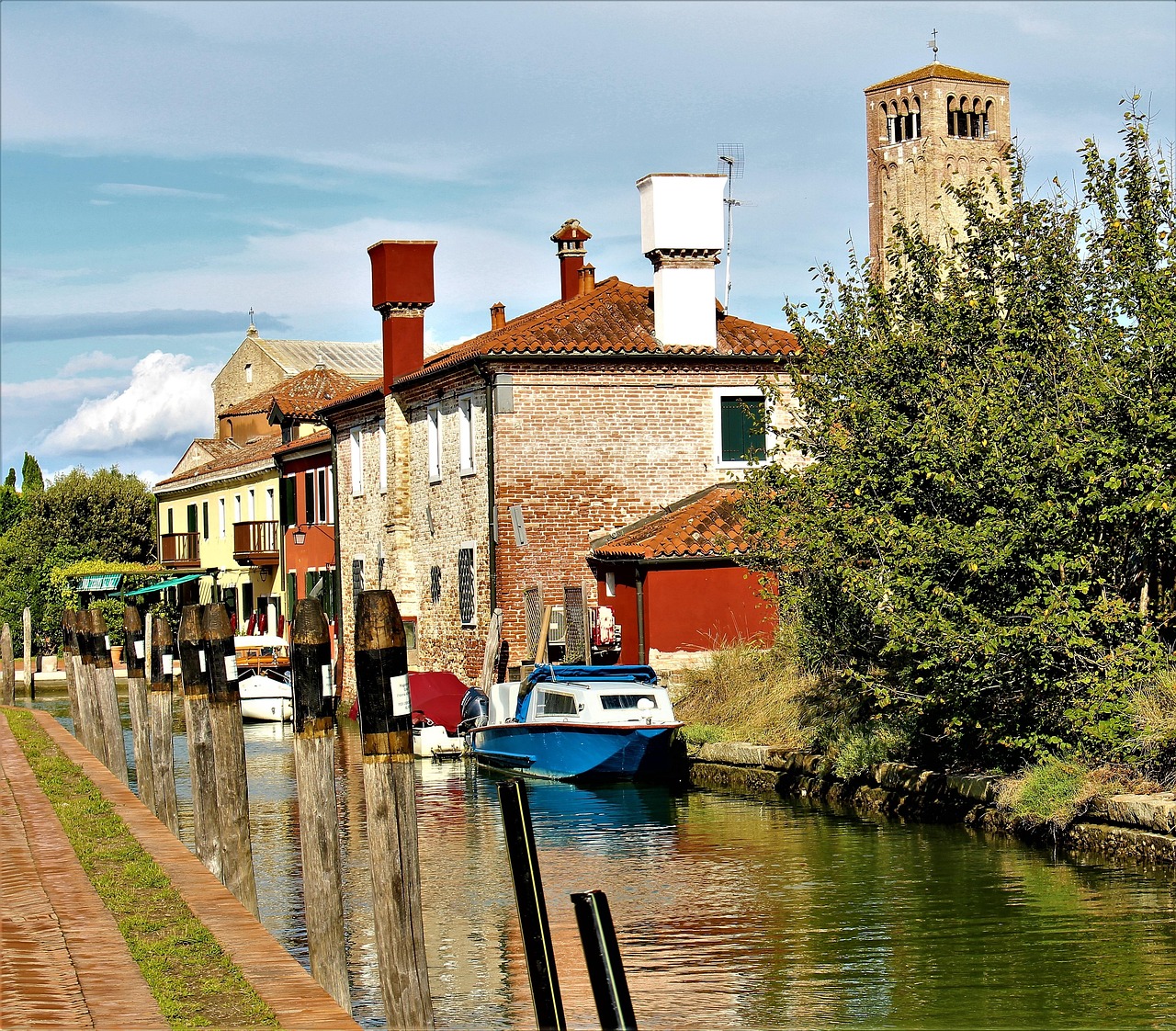
Most visitors to Venice never set foot on Torcello.
This is one of the great missed opportunities in all of Italian travel. The island sits quietly in the northern lagoon, forty minutes by vaporetto from Venice proper, and contains some of the most extraordinary art, architecture, and history in the entire Veneto region. Yet tourism infrastructure barely reaches it. Guidebooks mention it in passing. Most travelers skip it entirely.
Torcello isn’t a minor footnote in Venice’s story. It’s the beginning of it.
Before Venice existed as we know it today — before the grand palaces, before the Republic, before the Carnival and the gondolas — there was Torccello. This small, mostly abandoned island held the first significant settlement in the lagoon. What happened here shaped everything that came after.
After 28 years exploring every corner of the Venetian lagoon, I can tell you without hesitation: Torcello is one of the most important islands in Italy. Not because it’s spectacular in the way Venice is spectacular. Because it’s quietly, profoundly significant in ways most people never discover.
Understanding the lagoon means understanding how Venice actually began — and Torcello is where that story starts.
What Torcello Was
In the seventh century, Torcello was one of the most populated islands in the entire lagoon.
At its peak — roughly between the 11th and 13th centuries — historians estimate Torcello’s population reached around 20,000 people. The island was a thriving commercial center, a hub of trade connecting the Byzantine Empire to the rest of Europe. It had churches, markets, governance structures, and cultural life sophisticated enough to attract significant artistic patronage.
Venice, at that time, was a smaller, less important settlement. Torcello held more wealth, more influence, more cultural prestige. The lagoon’s power centered here, not on the mudflats where Venice would eventually rise.
Then something changed.
The exact reasons remain debated among historians, but the decline was dramatic and relatively swift. Malaria became endemic on the island. The lagoon’s water channels shifted, making Torcello’s harbor less navigable. Political power gradually moved to Venice as that city’s commercial position strengthened. Residents left — slowly at first, then more quickly — seeking better opportunities on Venice’s growing islands.
By the 15th century, Torcello’s population had collapsed. By the 18th century, it was nearly empty. Today, fewer than 20 people live here permanently. The island that once rivaled Venice in importance now holds more ghosts than residents.
Walking Torcello today means walking through the remains of a civilization that vanished. The churches still stand. The cathedral still contains art commissioned when 20,000 people called this place home. But the houses, the markets, the daily life — all of it disappeared so completely that the landscape has returned to marsh in places where streets once existed.
The Cathedral of Santa Maria Assunta: Venice’s Oldest Church
The cathedral on Torcello is not simply old. It is extraordinary.
Built originally in 639 AD — nearly four centuries before St. Mark’s Basilica in Venice — Santa Maria Assunta is one of the oldest churches in the entire Venetian lagoon. The current structure dates largely from the 11th and 12th centuries, when Torcello was at its cultural and economic peak. What survived from those centuries represents some of the finest Byzantine art in Italy.
The apse mosaic is the reason Torcello matters to art history.
This massive work — covering the entire semicircular apse behind the altar — depicts the Virgin Mary holding the Christ child, surrounded by angels. The gold background catches light in ways that change throughout the day, shifting from deep amber in morning to brilliant luminance at midday. The figures are rendered with extraordinary precision and emotional depth. The Christ child’s face, in particular, carries a gravity and intelligence that feels almost startling in a work this ancient.
The Last Judgment mosaic on the west wall spans the entire width of the church. This massive composition — depicting the separation of the saved from the damned — is one of the largest and most complete Byzantine mosaics in existence. The detail is staggering. Demons dragging souls downward. Angels lifting the blessed upward. Christ at the center, judging. The emotional range across hundreds of individual figures creates a narrative that pulls you into the composition rather than simply displaying it.
Standing in this cathedral, looking up at these mosaics, you’re seeing art that was created when Torcello was a thriving city. The wealth and sophistication required to commission work of this quality confirms how significant this island once was. This wasn’t a poor community decorating a humble church. This was a prosperous civilization investing in art that would endure.
The cathedral’s interior is austere by Venetian standards. No gilded ceilings. No elaborate decoration beyond the mosaics. This austerity makes the mosaics themselves more powerful — they command attention precisely because nothing else competes for it.
Visit in the morning if possible. The light enters from the east, illuminating the apse mosaic with a warmth and depth that afternoon light doesn’t replicate. Arrive before tour groups if timing allows. The cathedral’s atmosphere — ancient, quiet, genuinely sacred — deserves to be experienced without crowds.
The Church of Santa Maria dell’Assunta: The Devil’s Staircase
Standing beside the cathedral, a simple bell tower rises into the sky. Climb it and Venice spreads before you in every direction — the lagoon, the distant Alps on clear days, the green marshes stretching toward the horizon.
But the more interesting structure nearby is the Church of Santa Maria dell’Assunta — though visitors often confuse the two buildings. This smaller church contains something genuinely unusual: a marble altar screen known as the Pala d’Oro — no, that’s Venice. Here, the remarkable object is the marble throne traditionally called the Chair of Attila.
Legend says Attila the Hun sat on this throne when he visited Torcello in the fifth century. Whether this is historically accurate remains uncertain — but the throne itself is genuinely ancient, and the legend persists because it captures something true about Torcello’s history. This island existed before Venice. It received visitors, traders, and occasionally conquerors long before Venice became significant.
The throne sits in a small museum adjacent to the cathedral complex. The museum itself is modest — a few rooms containing archaeological finds, medieval artifacts, and objects recovered from Torcello’s long history. Nothing here rivals Venice’s major museums in scale. But the quality and significance of individual pieces is remarkable, precisely because they come from an island most people have forgotten.
The Locanda Cipriani: Venice’s Most Famous Restaurant Is Not in Venice
If you know one thing about Torcello beyond its churches, it’s probably the Locanda Cipriani.
This legendary restaurant — connected to the famous Harry’s Bar brand in Venice — occupies a quiet building near the cathedral. For decades, it has attracted wealthy visitors, celebrities, and anyone willing to pay extraordinary prices for a meal in an extraordinary setting.
The food is excellent but not the real reason people come. The experience is the point — dining in near-complete silence on an island where almost no one lives, surrounded by lagoon views, with Venice a distant silhouette across the water. The isolation, the quiet, the sense of having escaped Venice entirely while remaining within its orbit.
For most visitors, the Locanda Cipriani represents a special occasion expense rather than a regular dining choice. But if you’re celebrating something — an anniversary, a milestone, simply a day where luxury feels justified — the experience delivers something genuinely unique.
A more budget-conscious alternative exists. The island has a simpler restaurant and a small café near the landing point. These serve decent food at reasonable prices and provide the same lagoon atmosphere without the premium cost. The view doesn’t change based on what you pay for lunch.
The Lagoon Around Torcello: What You See on the Way
The vaporetto ride from Venice to Torcello passes through some of the lagoon’s most interesting geography — and most visitors sleep through it entirely.
Burano is the standard stop before Torcello — the island famous for its brightly colored houses and lace-making tradition. Most visitors spend their entire lagoon day here and never continue to Torcello. Burano is worth seeing. But treating it as the lagoon’s only destination means missing the island that actually matters historically.
The water between islands tells its own story. The lagoon isn’t deep — in many places, it’s barely navigable. Channels are marked and maintained because boats would ground on the mudflats without them. These channels represent centuries of human management of the lagoon environment. Venice exists because generations of residents learned to navigate, modify, and work within this shallow, shifting waterscape.
Watching the vaporetto navigate these channels — the water flat and green, islands appearing and disappearing, the sky enormous overhead — provides context for Venice that the city itself doesn’t offer. Venice is built on the lagoon. Torcello shows you what the lagoon actually is.
Use a vaporetto pass to explore Venice’s lagoon islands — the pass removes any hesitation about hopping between islands. Burano, Murano, Torcello, and the smaller stops between them each offer something different, and the freedom to move between them without worrying about individual ticket costs makes lagoon exploration genuinely enjoyable rather than logistically stressful.
Why Most People Skip Torcello — And Why They Shouldn’t
Torcello lacks what draws tourists to Venice. There are no grand palaces. No bustling markets. No nightlife, no shopping, no famous restaurants beyond the Locanda Cipriani. The island offers exactly two churches, a small museum, one legendary and one modest restaurant, and an atmosphere of profound quiet.
For visitors seeking stimulation, Torcello disappoints. There simply isn’t enough happening to fill a day the way Venice does. An honest visit takes two to three hours — arriving by vaporetto, visiting the cathedral and museum, walking the island’s single main path, having lunch or coffee, then departing.
But for visitors seeking something different — meaning, context, beauty without performance — Torcello delivers something Venice itself cannot.
Venice is overwhelming. The density, the crowds, the constant stimulation, the pressure to see everything and photograph everything. Torcello is the antidote. Here, the pace slows completely. The cathedral demands contemplation rather than rushing. The landscape invites sitting and watching rather than moving and doing.
Couples find Torcello romantic in ways Venice’s tourist-heavy romanticism rarely achieves. Families find it peaceful after Venice’s intensity. Solo travelers find it contemplative. The island simply asks you to be present rather than performing tourism.
The practical barrier is small but real. Getting to Torcello requires commitment — a forty-minute vaporetto ride each way, plus time on the island itself. Most visitors have full Venice days planned and can’t find room for this addition. But carving out half a day for Torcello — arriving in the morning, spending the late morning in the cathedral, having lunch, departing in early afternoon — creates one of the most meaningful experiences available in the entire lagoon.
Torcello in Different Seasons
The island’s character shifts dramatically with the seasons, and the experience changes accordingly.
Winter (December–February): Cold, often foggy, sometimes flooded with acqua alta. The cathedral is quieter than at any other time. Fog drifting across the lagoon creates an atmosphere of genuine mystery. Very few tourists visit. You may have the cathedral entirely to yourself. The trade-off is cold, damp conditions that require warm, waterproof clothing.
Spring (March–May): Pleasant temperatures, longer days, increasing visitors but still far fewer than Venice proper. The cathedral light is excellent in spring mornings. The lagoon vegetation begins greening. This is probably the best season for a balanced Torcello visit — comfortable weather, meaningful solitude, good light for photography.
Summer (June–August): Warmer, busier, but still far less crowded than Venice. The heat can be oppressive on an island with limited shade. Morning visits avoid the worst of both heat and crowds. The lagoon is at its most beautiful in terms of color and clarity, but the island’s quiet atmosphere diminishes somewhat as tour groups arrive.
Autumn (September–November): Beautiful light, comfortable temperatures, dramatically fewer visitors than summer. The cathedral’s mosaics catch autumn light magnificently. This season combines accessibility with atmosphere in ways spring and summer can’t quite match.
Plan Your Torcello Visit
For lagoon island exploration: Use a vaporetto pass to explore Venice’s lagoon islands — unlimited travel across the lagoon removes the logistical friction of visiting multiple islands. Torcello, Burano, and Murano each deserve time, and the pass makes combining them straightforward.
For guided island experiences: Visit Torcello and other hidden islands on a lagoon tour — a knowledgeable guide provides historical context that transforms the cathedral visit from passive sightseeing into genuine understanding. Knowing why Torcello declined, what the mosaics represent, and how this island connects to Venice’s origins makes every moment on the island more meaningful.
For Venice’s broader cultural context: Private tours throughout Venice can include lagoon island visits as part of a larger understanding of how the city developed — connecting Torcello’s ancient history to the Venice visitors see today.
For skip-the-line museum access: Venice museum tickets complement your lagoon exploration with access to the city’s major cultural sites — understanding Venice’s art and history alongside Torcello’s creates a complete picture of the region’s extraordinary heritage.
See Where Venice Actually Began — Before It Disappears Entirely
After 28 years exploring the Venetian lagoon and being featured by Rick Steves, NBC, and US Today, I know which islands most visitors miss entirely. Torcello is the most important of them. Let me show you what this quiet island holds and why it matters more than most people realize.
Book a private lagoon tour with a licensed guide or secure your vaporetto pass for unlimited island exploration — discover the story Venice was built on, one island at a time.
Frequently Asked Questions
How long should I spend on Torcello?
Two to three hours covers the island comfortably — arriving by vaporetto, visiting the cathedral and small museum, walking the main path, and having lunch or coffee before departing. Rushing through in under an hour misses the cathedral’s atmosphere entirely. Spending a full day feels excessive given what the island offers. The sweet spot is a relaxed morning visit, departing before early afternoon when the last vaporetto connections back to Venice become important to catch.
Is Torcello worth visiting if I’ve already seen Venice’s churches?
Absolutely. The cathedral’s mosaics are a completely different category from anything in Venice proper. St. Mark’s Basilica is magnificent, but it’s also overwhelming — gold everywhere, crowds everywhere, sensory overload. Torcello’s cathedral strips everything back to the mosaics themselves. The experience is quieter, more focused, and in many ways more powerful. Visitors who see both consistently describe Torcello as the more emotionally affecting experience, precisely because the setting doesn’t compete with the art.
Can I combine Torcello with Burano in one day?
Yes, and this is the most common lagoon day-trip structure. The vaporetto stops at Burano before continuing to Torcello, so visiting both requires no backtracking. A practical approach: arrive at Burano in the morning, spend an hour exploring the colored houses and lace museum, then continue to Torcello for the cathedral visit and lunch. Depart Torcello in early-to-mid afternoon to return to Venice with time to spare. The two islands complement each other well — Burano offers visual spectacle and craft tradition, Torcello offers historical depth and quiet contemplation.