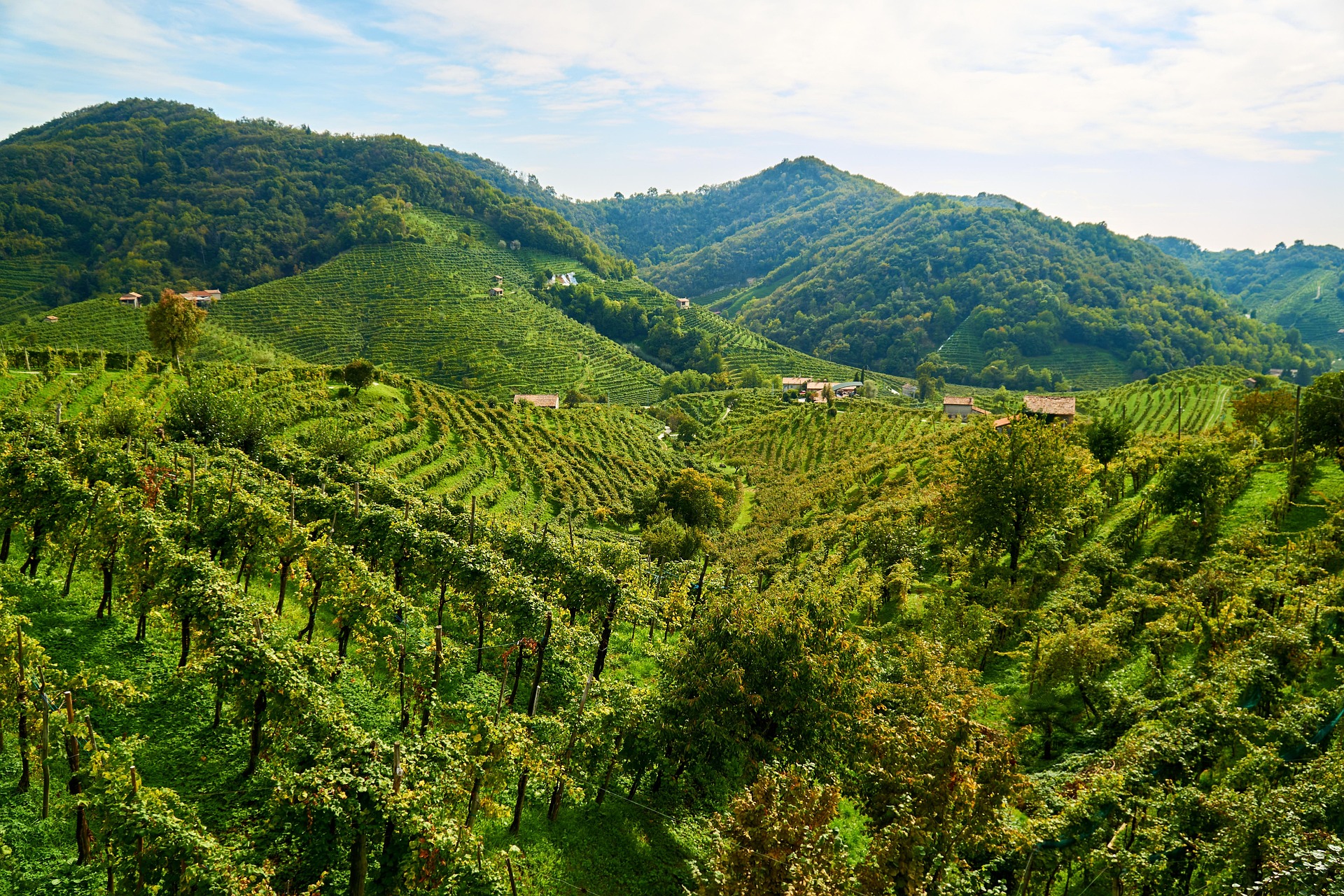
“We want to visit wine country near Venice. Where should we go?”
This question appears constantly from travelers who’ve heard that Italy produces extraordinary wine but don’t realize that some of the world’s most beautiful and delicious wine regions sit within an hour of Venice — closer than the Motor Valley automotive manufacturers, closer than Florence, more accessible than Tuscany’s famous Chianti zones.
Most visitors imagine Italian wine tourism means Tuscany exclusively. They picture rolling Tuscan hills, cypress trees, Brunello and Chianti — the images that dominate wine marketing and travel magazines.
But the Veneto region produces more wine than Tuscany and contains multiple DOC/DOCG zones that rival Tuscany’s fame among wine professionals despite remaining relatively unknown to casual tourists. The Prosecco Hills in particular — recently designated UNESCO World Heritage site — combine spectacular landscape, excellent wine, and convenient Venice proximity in ways that Tuscany simply can’t match for Venice-based visitors.
After 28 years organizing wine experiences throughout the Veneto for visitors who discover mid-trip that world-class wine country exists nearby, I know exactly which wine regions serve different traveler types, how wine days integrate with Venice cultural tourism, what distinguishes casual wine tasting from serious enological education, and how to structure experiences that satisfy genuine wine passion rather than simply checking “Italian wine tour” off bucket lists.
This is the completely honest guide — comparing Veneto’s major wine regions, explaining what makes the Prosecco Hills particularly special, and helping you decide whether wine country excursions enhance your Venice trip or represent tangent that cultural depth would serve better.
Understanding how to invest limited Italian time changes everything about satisfaction.
The Prosecco Hills: The Definitive Answer for Most Travelers
Before comparing alternatives, stating the conclusion upfront: for most Venice-based wine lovers, the Prosecco Hills (Valdobbiadene-Conegliano area) represent the single best wine day trip in terms of wine quality, landscape beauty, logistical convenience, and overall experience satisfaction.
This isn’t claiming Prosecco is “better” than other regional wines (though world-class Prosecco Superiore DOCG competes with any sparkling wine globally). It’s recognizing that the Prosecco Hills combine multiple elements that create genuinely extraordinary day-trip experience.
What Makes the Prosecco Hills Special:
UNESCO World Heritage designation (granted 2019) recognizing the landscape’s cultural significance — the steep hillside vineyards (“heroic viticulture”), the centuries-old viticultural traditions, the visual beauty created by human agricultural intervention.
60 minutes from Venice — the closest serious wine region, allowing full-day immersion without brutal transportation times that Tuscan alternatives require.
Spectacular scenery rivaling Tuscany’s famous landscapes but with distinctive character — sharp hills rather than gentle rolls, densely planted vineyards creating green corridors, medieval towns perched on ridges, the Dolomites visible in the distance.
World-class wine that professionals respect even though casual tourists sometimes dismiss Prosecco as “cheap celebration bubbles.” The Prosecco Superiore DOCG from this specific area differs fundamentally from industrial Prosecco produced elsewhere — more complex, better structured, capable of aging, produced by small family wineries rather than factories.
Authentic wine culture rather than tourist performance — the wineries primarily serve Italian and European markets, the restaurants cook for locals as much as visitors, the region maintains working agricultural identity rather than existing solely for tourism.
Food culture integration — the region produces exceptional cuisine matching the wine. Sausages, cheeses, mushrooms (when in season), traditional pasta, mountain-style cooking that complements rather than competes with the sparkling wines.
Multiple villages worth exploring — Valdobbiadene, Conegliano, Asolo, Follina — each with medieval architecture, historic centers, and distinct character beyond the wineries themselves.
What a Prosecco Hills Day Actually Includes:
Transportation from Venice (roughly 1 hour each direction) through increasingly beautiful landscape as you approach the hills.
2-4 winery visits depending on pace preferences — some visitors prefer extended time at fewer wineries with comprehensive tastings and vineyard walks, others prefer briefer visits at more locations.
Traditional lunch at agriturismo (farm restaurant) or osteria serving regional specialties — expect homemade pasta, local meats, seasonal vegetables, everything designed to pair with Prosecco and regional still wines.
Village exploration — brief stops in Valdobbiadene or Asolo for historic center walks, shopping at local food producers, seeing how the towns function beyond wine tourism.
Landscape appreciation — the driving routes through the hills are themselves experiences, with viewpoints providing panoramic vistas over vineyard-covered slopes.
Education about Prosecco production — understanding the Glera grape, the different production methods (Charmat versus traditional), the DOCG versus DOC distinctions, why this area produces superior Prosecco compared to industrial zones.
How the Prosecco Hills Compare to Alternatives
Understanding what other Veneto wine regions offer helps clarify why Prosecco Hills serves most travelers best while acknowledging alternatives that suit specific situations.
Soave (East of Verona):
Distance from Venice: 90 minutes to 2 hours
The wine: White wines from Garganega grape, ranging from light affordable bottles to serious age-worthy Soave Classico from hillside vineyards. Professionals respect top Soave but the wine lacks Prosecco’s immediate accessibility and celebration associations.
The landscape: Beautiful hillside vineyards around the medieval town of Soave (castello-topped town worth visiting independently), but less dramatic than Prosecco Hills’ steep slopes.
Best for: Serious wine enthusiasts specifically interested in Italian white wine diversity, travelers already planning Verona visits who can integrate wine touring efficiently.
Limitations: Less convenient than Prosecco Hills from Venice base, the wine requires more education to appreciate (Prosecco’s bubbles provide instant gratification that still whites don’t), smaller-scale tourism infrastructure.
Valpolicella (North of Verona):
Distance from Venice: 2-2.5 hours
The wine: Red wines including Valpolicella Classico, Ripasso, and the famous Amarone — powerful, concentrated, expensive wines made through partially drying grapes before fermentation. World-class at the top end.
The landscape: Beautiful hillsides north of Verona with historic villas and prestigious estates.
Best for: Red wine enthusiasts who want bold, structured wines rather than sparkling or light whites. Travelers combining with Verona cultural tourism.
Limitations: Distance from Venice makes day trips challenging. Amarone’s intensity and price point suit serious wine collectors more than casual tourists. The wines pair better with heavy foods than the light Venetian cuisine you’ll eat in Venice.
Bardolino and Lake Garda Wine Areas:
Distance from Venice: 90 minutes to 2 hours
The wine: Light reds and rosés from the eastern Lake Garda shores — pleasant, drinkable, but not particularly distinguished or worth traveling specifically to experience.
The landscape: Lake Garda provides spectacular scenery, but this is lake tourism with wine component rather than pure wine region.
Best for: Travelers prioritizing lake beauty over wine quality, families wanting swimming/outdoor activities alongside wine tasting.
Limitations: The wines don’t justify dedicated wine trip when Prosecco Hills or Valpolicella offer superior quality. Better approached as lake vacation with wine addition rather than wine pilgrimage.
Colli Euganei (Southwest of Padua):
Distance from Venice: 60-75 minutes
The wine: Diverse production including whites, reds, and sweet wines from volcanic hillsides. Quality ranges widely. Less international recognition than other Veneto zones.
The landscape: Distinctive volcanic cone hills rising from plains, quite beautiful and geologically interesting.
Best for: Visitors wanting uncrowded wine experience off typical tourist circuits, geology enthusiasts interested in volcanic terroir.
Limitations: The wines lack the clear identity and quality consistency that Prosecco Hills or Valpolicella provide. Tourism infrastructure is less developed. Harder to find English-speaking guides and winery staff.
Prosecco Hills Advantages Summary:
Closest to Venice among serious wine regions Most accessible wine through Prosecco’s immediate sparkling appeal Most spectacular scenery combining steep vineyards with Dolomite backdrop Best tourism infrastructure for international visitors UNESCO designation providing cultural validation beyond simple wine quality Food culture that integrates seamlessly with wine experiences
For 90% of Venice-based wine lovers, Prosecco Hills represents optimal choice. The alternatives serve specific situations (serious Amarone collectors, visitors with extra time, people seeking uncrowded obscurity) but don’t match Prosecco Hills’ combination of quality, beauty, and logistical convenience for most travelers.
What Actually Happens During a Prosecco Hills Day Trip
Understanding realistic day structure prevents disappointment from mismatched expectations while helping you decide whether this investment of Venice time serves you.
Typical Full-Day Structure:
8:30-9:00 AM: Departure from Venice accommodation. Private driver collects you in comfortable vehicle, begins journey toward the hills.
9:30-10:00 AM: Arrival at first winery. Introduction to the estate, vineyard walk (weather permitting, season dependent), explanation of Prosecco production methods and the specific site’s characteristics.
10:00-11:00 AM: First tasting — typically 3-5 Prosecco expressions ranging from basic DOC to premium DOCG Superiore, possibly including still wines the estate produces. Discussion of differences between styles, production methods, terroir influences.
11:00-11:30 AM: Travel to second winery through scenic routes, stopping at viewpoints for photographs and landscape appreciation.
11:30 AM-12:30 PM: Second winery visit and tasting, ideally showcasing different production philosophy or wine styles than first visit to avoid redundancy.
12:30-2:30 PM: Traditional lunch at agriturismo or local restaurant. Multi-course meal featuring regional specialties paired with Prosecco and local still wines. This extended meal represents cultural immersion as much as fuel — Italians don’t rush lunch, and neither should you.
2:30-3:00 PM: Village exploration — typically Asolo (called “Pearl of the Veneto” for its hilltop beauty and well-preserved historic center) or Valdobbiadene (the heart of Prosecco Superiore production).
3:00-4:00 PM: Optional third winery visit or extended village time depending on group energy and interest.
4:00-5:00 PM: Return journey to Venice, arriving early evening.
Variations on the Structure:
Morning-only half-day: Single winery visit with tasting, quick lunch, return to Venice by 2:00 PM. This compressed version works when time is extremely limited but sacrifices the immersive quality that makes wine days genuinely memorable.
Extended full-day with additional villages: Adding Follina (Cistercian abbey town), Mel (medieval village), or other hill towns extends the day to 6-7 PM return but provides more cultural context beyond pure wine focus.
Harvest season focus (September-October): Visiting during harvest allows seeing grape picking, crush operations, and beginning of fermentation — providing winemaking education beyond finished-product tasting.
Winter truffle season: November-December visits can include truffle hunting demonstrations and truffle-focused meals pairing with Prosecco in ways that reveal food-wine synergy.
How Wine Days Integrate With Venice Cultural Tourism
The practical question: if you’re primarily visiting for Venice’s art, architecture, and history, does wine country excursion enhance or distract?
The Cultural Complementarity:
Venice represents urban Italian culture — art, architecture, maritime commerce, concentrated historical experience. The Prosecco Hills represent agricultural Italian culture — land stewardship, seasonal rhythms, food production, dispersed rural life.
Experiencing both provides fuller understanding of Italian identity than either alone delivers. The same aesthetic obsession visible in Venetian painting appears in the carefully maintained hillside vineyards. The same attention to craftsmanship that created Murano glass shapes winemaking philosophy. The cultural continuities become visible when you experience urban and rural Italy during the same trip.
The Practical Integration:
For 3-4 day Venice visits: Wine day probably doesn’t fit without sacrificing cultural depth Venice deserves. Understanding Venice properly requires those days.
For 5-6 day Venice visits: One wine day creates variety without undermining Venice immersion. Day 4 or 5 works well — after establishing Venice understanding, before final departure preparations.
For week-plus Venice stays: Multiple wine days, overnight in Prosecco Hills, or comprehensive regional exploration becomes viable without forcing compromises.
For multi-city Italy trips: Prosecco Hills fits logically between Venice and Dolomites or between Venice and Verona/Lake Garda, creating geographic flow rather than backtracking detour.
Who Should Add Wine Days:
Wine enthusiasts for whom Italian wine represents primary trip motivation alongside cultural tourism.
Travelers seeking landscape variety from Venice’s urban density — the open hillsides and agricultural vistas provide psychological contrast that enhances rather than distracts from Venice experience.
Food and wine education pursuers who want lasting knowledge (understanding Prosecco production, learning food-wine pairing) rather than pure consumption.
Couples or groups celebrating special occasions where wine country romance and beauty create memorable experiences beyond standard tourism.
Return Venice visitors who’ve covered cultural essentials during previous trips and want fresh experiences.
Who Should Skip Wine Days:
First-time Venice visitors with limited days (under 5 total) who should prioritize Venice cultural depth over any day trips including wine country.
Non-wine-drinkers or people indifferent to wine beyond casual consumption — the educational component and appreciation development won’t interest you.
Travelers with mobility limitations uncomfortable with hillside terrain, vineyard walking, or extended vehicle time.
Budget-extremely-tight visitors for whom wine day costs force sacrificing other trip components or create financial stress.
What Prosecco Hills Wine Days Actually Cost
Understanding investment helps evaluate whether wine excursions enhance trip or strain budget beyond justification.
Cost Components:
Private transportation round-trip Venice to Prosecco Hills with professional driver (typically 8-9 hour day including waiting during visits)
Winery tastings at 2-3 estates (some wineries charge tasting fees, others provide complimentary tastings if you purchase bottles)
Traditional lunch at agriturismo or restaurant with wine pairings
Guide services if arranged (optional but enhances experience through wine education, winery relationship management, translation assistance)
Wine purchases to bring home (optional but most visitors buy bottles after tasting)
Total Investment Range:
Budget approach: Self-guided with rental car, selecting free-tasting wineries, casual lunch, minimal wine purchases — moderate expense comparable to nice dinner for two.
Standard private tour: Professional driver, 2-3 wineries with quality tastings, traditional multi-course lunch, guide services — substantial expense comparable to upgrading hotel category for 2-3 nights.
Premium experience: Extended day, prestigious estates, sommelier-guided education, exceptional meal, extensive wine purchases — genuinely expensive comparable to adding days to total trip.
The value calculation: Does wine experience deliver satisfaction proportional to investment for YOUR specific interests? For serious wine lovers, absolutely. For casual participants, sometimes Venice food culture immersion or additional cultural tours provide better return.
How We Actually Organize Prosecco Hills Experiences
When travelers contact us about wine days, here’s our customization process ensuring the experience serves your specific interests:
Initial Consultation:
We discuss your wine knowledge level (novice versus enthusiast), tasting preferences (dry versus sweet, quantity versus quality focus), food interests, desired pace (relaxed versus comprehensive), budget parameters, and whether you’re celebrating special occasions.
This consultation reveals whether standard wine tourism serves you or whether customization creates dramatically better experience. Sometimes serious collectors need access to prestigious small producers tourists never reach. Sometimes celebrations benefit from private vineyard picnics or special arrangements. Sometimes basic introduction to Prosecco suffices without intensive education.
Custom Day Design:
Winery selection matching your knowledge and interests — family estates versus prestigious producers, traditional versus innovative approaches, DOCG Superiore focus versus broader regional survey.
Pacing calibration — leisurely two-winery day with extended lunch versus efficient three-winery coverage, vineyard walks versus cellar tours, technical education versus casual appreciation.
Food component coordination — agriturismo traditional meals versus Michelin-level dining, emphasis on food-wine pairing education versus simply eating well, dietary restrictions accommodation.
Cultural additions if desired — Palladian villa visits, Asolo historic center guided walk, artisan food producers (cheese makers, salumi producers), integration making wine day about broader regional culture.
Complete Logistics:
All reservations at wineries (many require advance booking), restaurant arrangements, any special access or experiences beyond standard tours.
Professional transportation with drivers who know the region, the routes, the best viewpoints for photographs.
Guide services when beneficial — providing wine education beyond what winery staff deliver, managing language when English proficiency varies, ensuring smooth transitions between activities.
Flexibility allowing adjustments if weather affects outdoor plans, if you discover preferences mid-day, or if energy levels suggest modifying schedule.
Contact Us to Design Your Wine Country Experience
Whether you’re certain wine days serve you or uncertain if they fit your Venice trip, contact us for honest consultation revealing what actually makes sense for your specific situation.
We’ll discuss:
- Your actual wine interest level versus obligation to do “wine tourism” because Italy
- How wine days fit your total Venice time without forcing brutal compromises
- Budget realities and whether wine investment serves you better than alternatives
- Prosecco Hills versus other regions if specific wine interests suggest alternatives
- Whether wine focus serves you or food culture creates better experience
Then we’ll design itinerary matching your reality — sometimes comprehensive Prosecco Hills immersion, sometimes compressed half-day introduction, sometimes honest recommendation to skip wine entirely for Venice cultural depth or other day trips genuinely serving you better.
Our goal is satisfaction — which means sometimes talking travelers out of wine days in favor of experiences that limited time and genuine interests actually deserve.
Plan Your Complete Venice Experience
For Venice cultural foundation: Private walking tours and skip-the-line museum access ensure Venice receives attention before day trip additions.
For food culture alternative: Market tours and cooking classes create lasting culinary knowledge that wine days provide for enophiles.
For cultural day trips: Padua, Verona, Vicenza expand Renaissance understanding in ways wine touring doesn’t address.
For realistic assessment: Understanding how many days you need in Venice reveals whether day trips fit without sacrificing cultural essentials.
For seasonal food experiences: Spring market foods and regional cuisine complement wine understanding.
The Prosecco Hills Provide Italy’s Best Wine Day Trip from Venice — If Wine Genuinely Interests You
After 28 years organizing Prosecco Hills experiences for Venice-based visitors and being featured by Rick Steves, NBC, and US Today, I know that wine country excursions serve wine lovers exceptionally while disappointing travelers pursuing this because someone suggested it sounds Italian. There’s no universal answer. Only the answer matching your genuine wine interest and realistic schedule. The Prosecco Hills combine world-class wine, UNESCO-designated landscape, and convenient Venice proximity in ways alternatives can’t match — but only if wine days enhance rather than distract from what you’re actually seeking from Italy. Contact us. We’ll discuss honestly what serves you. Let’s figure out what genuinely enhances your Italian journey.
Contact us about Prosecco Hills wine experiences — or to discover what actually serves your Venice trip better.
Frequently Asked Questions
Can we visit the Prosecco Hills independently without a guide or driver?
Yes, but with significant limitations. Renting a car and self-navigating is theoretically possible — the region isn’t geographically complicated and GPS works reliably. However, challenges include: wine tasting while driving creates safety and legal concerns (Italy enforces strict drunk-driving laws), many prestigious small wineries require advance reservations and don’t accommodate walk-ins, language barriers at family estates where English isn’t universally spoken, missing context about wine production and regional culture that guides provide, and inefficient routing when you don’t know which wineries are actually worth visiting versus tourist traps. The alternative is hiring private driver (allowing you to taste without driving) but attempting to select wineries and coordinate logistics independently without local knowledge. This saves guide expense but sacrifices educational component and access to estates that only work with professional tour organizers. If budget absolutely requires independent approach, focus on larger, tourist-ready wineries with English information and casual visit policies rather than attempting to access prestigious small producers that our relationships and advance coordination make possible.
How does Prosecco from the hills compare to the cheap Prosecco we get at home?
Completely different wines despite sharing the same name. The industrial Prosecco flooding global markets (what you find for $10-15 per bottle in supermarkets) comes from massive DOC zone in the flat plains producing vast quantities through factory-scale operations prioritizing volume over quality. This is the Prosecco giving the wine its “cheap celebration bubbles” reputation. The Prosecco Superiore DOCG from the Conegliano-Valdobbiadene hills (the specific UNESCO-designated zone) comes from steep hillsides requiring hand-harvesting, from smaller family estates limiting yields for quality, and costs 2-4x the industrial versions reflecting the additional labor and quality focus. The flavor differences are dramatic — Superiore shows more complexity, better structure, subtle fruit flavors beyond simple sweetness, and ability to pair with food rather than just drinking as aperitivo. Think of the distinction as similar to mass-market California Chardonnay versus top white Burgundy — technically the same grape category but completely different quality levels and production philosophies. Tasting Prosecco Superiore in the hills where it’s produced reveals what the wine can be when crafted properly, ofte
Is a wine day trip appropriate if I don’t drink alcohol?
This depends on whether you appreciate the broader cultural, landscape, and food aspects versus viewing wine as the sole purpose. The Prosecco Hills offer genuinely spectacular scenery that hiking or photography enthusiasts enjoy independent of wine interest. The traditional meals at agriturismi showcase regional cuisine worth experiencing regardless of wine pairing. The historic villages like Asolo provide architectural and cultural interest. If you value these components and companions are the wine drinkers, participation makes sense even for non-drinkers. However, if you’re indifferent to landscape, food, and villages, spending a full day in wine country while not participating in the primary activity creates boredom and resentment. Better alternatives exist — Venice food culture through cooking classes, cultural day trips to art cities, simply more Venice time. Be honest about whether the non-wine components genuinely interest you rather than forcing yourself into companion’s wine passion while privately miserable.