The first time you step into St. Mark’s Square, the space can take you by surprise. A moment earlier, you were walking through a lane barely wide enough for two people to pass. Now there’s room to take in the Basilica’s domes, the arcades, and the sweep of stone paving. Head toward the waterfront and the view opens again, this time across the lagoon to San Giorgio Maggiore. In a few minutes, you’ve gone from one of Venice’s narrowest spaces to one of its broadest views.
The Venice Orientation Walk is a private, three-hour walking tour with a licensed local guide from Tour Leader Venice. It’s designed for people visiting for the first time who want to see the city’s famous landmarks, explore the smaller streets and canals, and get their bearings for the rest of their stay. Your guide is with you for the full three hours, and you can customize the route on the spot, even after the walk has started.
Three hours with a local guide
A first visit to Venice comes with plenty of choices. You might already know that you want to see St. Mark’s Square and the Rialto Bridge. You may also be wondering what lies between them, how much ground you can cover comfortably, and which areas you’d enjoy coming back to later. The orientation walk gives you time to find out with someone who knows the city on foot.
Your guide can use the landmarks as starting points for stories about trade, architecture, and daily life. The Grand Canal, for instance, makes more sense when you see where boats unload supplies and then look up at the palaces with entrances facing the water. In a smaller square, a stone wellhead can lead to a conversation about how Venetians collected fresh water in a city surrounded by salt water.
The route below is one way the three hours might unfold. Your starting point, interests, and pace help determine which places make sense together.
St. Mark’s Square and the lagoon waterfront
Give yourself a moment to see the Basilica as a whole. Then let your eye settle on the arches above the portals, where mosaics catch the light differently as you move across the square. From farther back, you can take in the domes. Closer to the façade, you can see how deeply the arches are set and how much color is worked into the stone and decoration.
A short walk brings you beside the Doge’s Palace. Its rows of arches give the lower levels an airy quality, even with a broad wall of patterned stone above them. Your guide can explain how the palace fit into the government of the Venetian Republic and why its position beside the lagoon mattered. Imagine coming to Venice by water and seeing that façade as you approached. The building’s place in the city makes immediate sense from that perspective.
If you continue to the waterfront, there’s a view across to San Giorgio Maggiore. Take a look at the amount of sky over the basin and then think back to the lane you came through on your way into the square. Those shifts in scale are one of the pleasures of walking Venice. They’re easy to miss when you’re following directions from one address to another.
Rialto and the Grand Canal
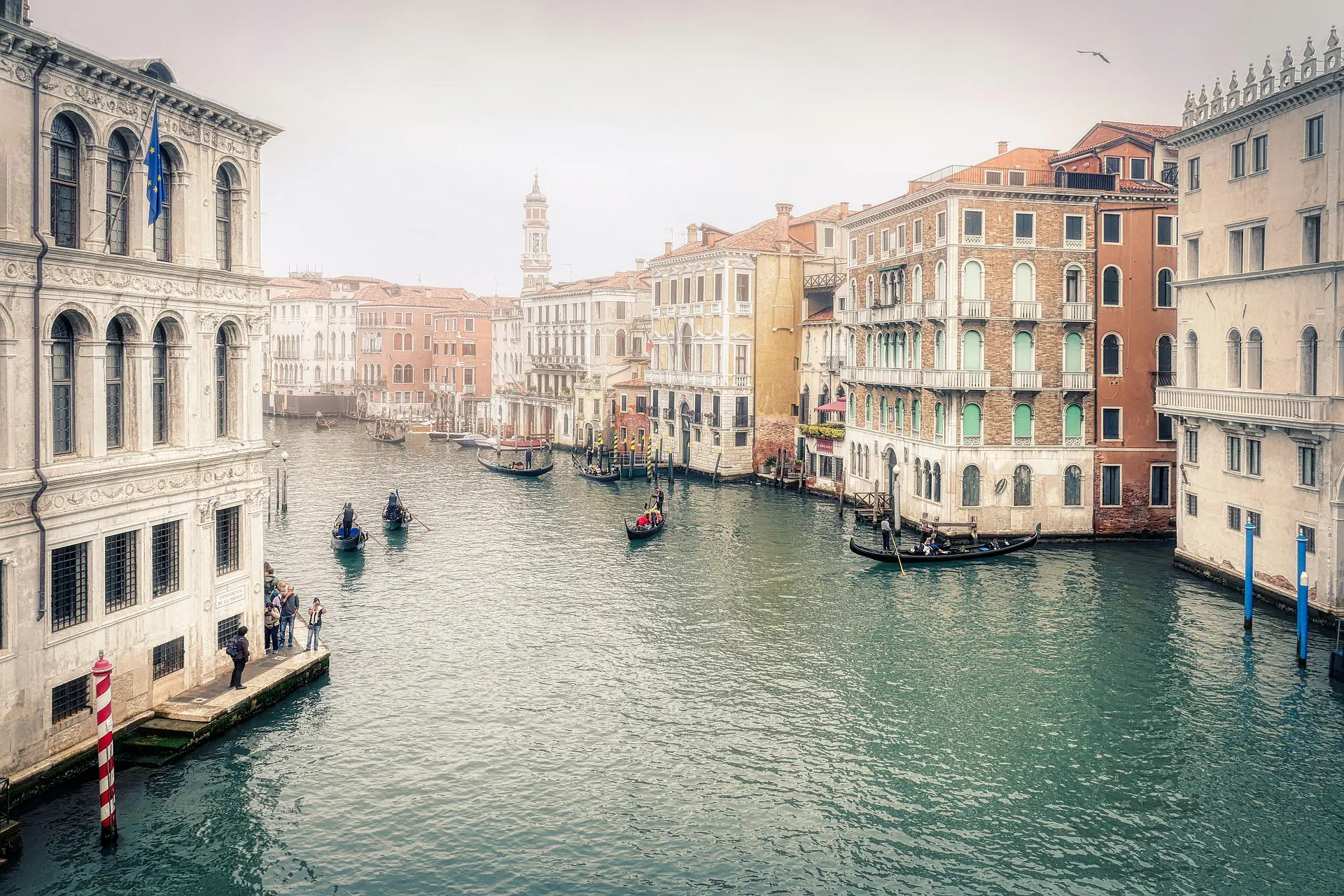
Rialto is a good place to watch the city at work. From a spot where there’s enough room to pause, you might see a vaporetto pulling in, a water taxi slipping through traffic, or a crew unloading supplies. Look across at the buildings while the boats pass. The grand entrances facing the canal belong to a city where the most natural way to arrive at a palace was often by water.
The bridge also gives you a useful lesson for the rest of your trip. Before heading to a restaurant or boat stop near Rialto, check which side of the Grand Canal it’s on. A place can appear a few steps away on your phone and still require a bridge crossing. The market side is in San Polo, while the other end of the bridge leads back toward San Marco. Your guide can point out both banks while you have them in view and show you how to approach a place you plan to visit later.
If the market is active and it fits your route, there’s time to see how closely the stalls, the bridge, and the waterfront sit together. Even when the stalls are quiet, their position beside the canal helps explain how goods could reach a busy trading district in the middle of the city.
The smaller canals and neighborhood squares
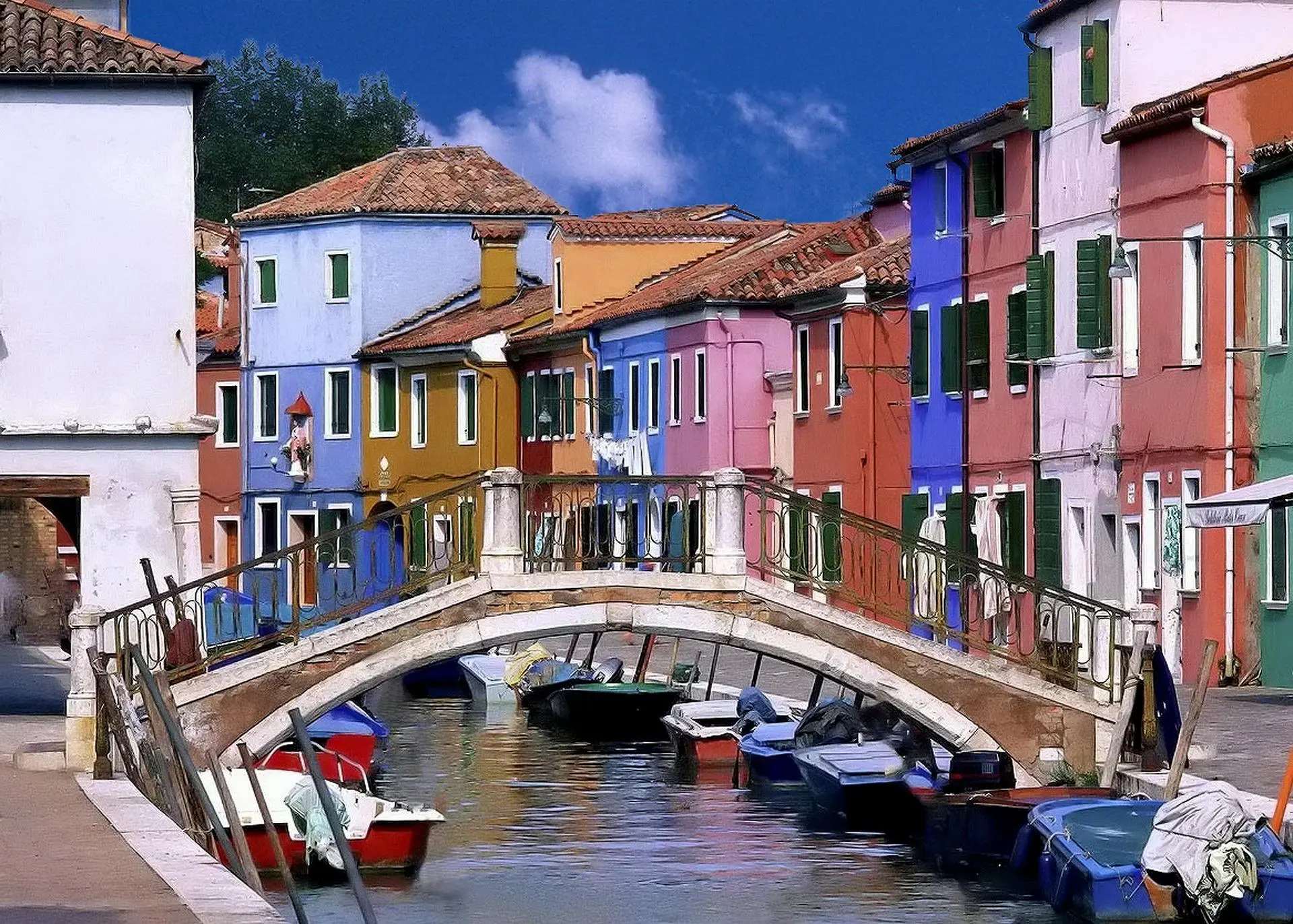
Between the famous stops, the walk might take you along a narrow canal where reflected light moves across a brick wall. A covered passage can open onto a campo, a neighborhood square with a church, a café, and upper-story windows facing the open space. A low bridge may offer a long view down a canal you’ll lose sight of as soon as you turn the corner.
If you pass a stone wellhead, look at the paving around it. Historic Venetian wells often gave access to underground cisterns supplied by rainwater. The paving helped direct water into the collection system. It’s a small detail that changes the way you see a square. The open space and its stone surfaces helped a neighborhood meet one of its everyday needs.
You’ll also see how closely the streets and canals work together. Steps at the water’s edge can serve as a landing. A door above the canal may have a street entrance on the opposite side of the building. A narrow bridge links two walking routes while allowing small boats to pass underneath. Once you start noticing these details, even a short walk back to your hotel can be more interesting.
Make the walk your own, even after it starts
You can decide what to focus on when you meet your guide and change your mind along the way. You may arrive expecting to spend most of your time around the landmarks, then discover that you’d like to linger in the smaller squares. You can ask for more time to take photographs, slow down for a family member, or follow a conversation about Venetian food or architecture into the next part of the walk.
For families, the guide might build part of the tour around things children can see and work out for themselves. How would a shop receive boxes from a delivery boat? Where would you enter a house if you arrived by water? What happens when two people carrying bags meet on a small bridge? For couples, it may be as simple as choosing a quieter viewpoint and giving yourselves time to enjoy it. If you’re especially interested in the Basilica’s exterior or the architecture along the Grand Canal, you can spend more of the three hours there.
The guide can also adapt the sequence to the day. If a crossing is crowded, there may be a more comfortable way into the next neighborhood. If you have a lunch reservation or a museum ticket afterward, share the location and time so the guide can plan a sensible place to finish. Mention any concerns about stairs or walking pace when you book, since many Venetian bridges have steps.
When to take your Venice Orientation Walk
The first full day of your stay is a good time to take the walk. You’ve had a chance to settle in, and you still have time to return to places that catch your attention. An arrival-day walk can also work if you leave room for the journey from the airport, train station, or cruise terminal and expect to feel comfortable spending three hours on foot.
Before you part ways with your guide, pick one place you want to revisit and ask how you’d get there from where you’re staying. If the route passes a small square or a distinctive bridge, look back after you cross it. That’s the view you’ll recognize on the return journey. Later that evening, when you find yourself turning into a square you remember from the morning, you’ll have a first sense of what it feels like to find your own way in Venice.
Frequently asked questions
Is the Venice Orientation Walk suitable for first-time visitors?
Yes. It’s designed as a first introduction to Venice, with a mix of famous sights, smaller canals, and practical pointers for getting around. You’ll have a private licensed local guide for the full three hours.
Can we change the itinerary once the tour has started?
Yes. The walk is customizable on the day, including during the tour. Tell your guide if you’d like to spend longer at a particular spot, explore quieter streets, or adjust the pace. Your guide will help fit those choices into the three hours.
Does the walk include admission to St. Mark’s Basilica or the Doge’s Palace?
The orientation walk introduces both landmarks from the outside when the route takes you through St. Mark’s Square. If you’d like to explore the interiors, set aside a separate part of your stay so you can give each building the time it deserves.