Discover three extraordinary masters of Italian art and architecture on a private journey through the Veneto countryside. From Carlo Scarpa’s moving Brion Memorial in San Vito d’Altivole to the Renaissance elegance of Villa Barbaro in Maser, the romantic hilltop town of Asolo, and Antonio Canova’s remarkable artistic legacy in Possagno, this experience brings together centuries of creativity, beauty, and architectural innovation.
An Extraordinary Journey Through Italian Architecture
Some journeys are about seeing beautiful places. Others change the way we look at the world.
Our Private Architecture Tour from Venice is designed for travelers who appreciate the relationship between architecture, art, history, and landscape.
Beyond Venice’s celebrated palaces and canals lies a region that has inspired some of Italy’s greatest creative minds.
Here, among the gentle hills of the Veneto countryside, three extraordinary figures left an architectural and artistic legacy that continues to fascinate visitors from around the world.
Andrea Palladio transformed the language of Renaissance architecture.
Antonio Canova became one of the most celebrated sculptors of the Neoclassical era.
And Carlo Scarpa, the visionary twentieth-century Venetian architect, developed an unmistakable architectural style through his extraordinary sensitivity to materials, light, water, and space.
This private excursion connects their stories through four remarkable destinations.
You’ll discover the Brion Memorial in San Vito d’Altivole, visit Villa Barbaro in Maser, explore the charming town of Asolo, and conclude your journey in Possagno, the birthplace of Antonio Canova.
The result is a fascinating experience where Renaissance harmony, Neoclassical beauty, and modern architectural innovation come together.
Your Private Journey Begins in Venice
Your excursion begins at Piazzale Roma in Venice, where your professional driver will meet you with a comfortable private sedan or van.
From here, you’ll travel through the Veneto countryside toward the beautiful hills surrounding Asolo and Monte Grappa.
The scenery gradually changes from the flat landscapes of the Venetian mainland to vineyards, historic villages, and picturesque foothills.
Optional Venice Hotel Meet & Greet
For guests who prefer a complete hotel-to-hotel experience, Tour Leader Venice can organize a private transfer service.
At the agreed time, one of our local hosts will meet you at your Venice hotel or Airbnb, or at the nearest accessible meeting point.
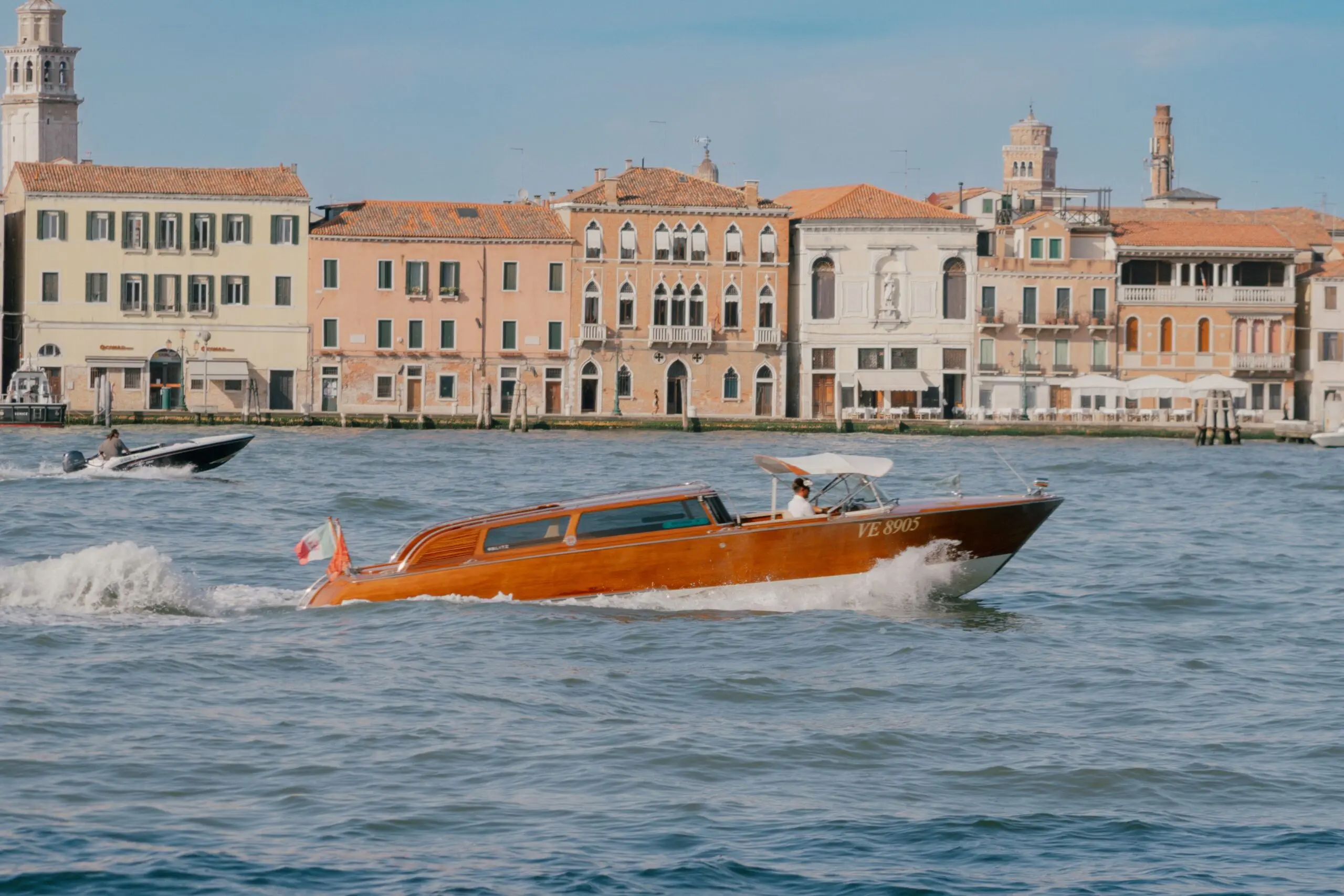
Your host will accompany you to a private water taxi.
You’ll travel through Venice’s canals to Piazzale Roma, where your professional driver and private vehicle will be waiting.
At the end of the excursion, your driver will bring you back to Piazzale Roma.
If requested, we can also arrange a private water taxi to take you back to your Venice hotel area.
These optional arrangements allow you to enjoy the day without worrying about transportation connections.
Choose Your Experience – Private Driver or Dedicated Licensed Tour Guide
We offer two different ways to discover the architectural heritage of Veneto.
Option 1 – Private Driver and Independent Visits
Enjoy the flexibility of a private vehicle and professional English-speaking driver throughout the day.
Your driver will take care of transportation between the different destinations, coordinate meeting points, and help organize the schedule.
At each stop, you’ll have time to explore independently, following the official visitor routes and admission arrangements.
This option is ideal for travelers who already have a strong interest in architecture or simply prefer discovering places at their own pace.
Option 2 – Private Driver with a Dedicated Licensed Tour Guide
For a more in-depth experience, we can arrange a professional driver and a separate licensed English-speaking tour guide.
Your guide will accompany you throughout the excursion, explaining the historical, artistic, and architectural significance of the places you visit.
From the symbolic details of Carlo Scarpa’s Brion Memorial to the architectural harmony of Villa Barbaro and the artistic genius of Antonio Canova, your guide will help connect the different periods and styles.
This option is particularly recommended for architects, designers, art historians, university groups, and travelers with a special interest in Italian cultural heritage.
Guided explanations inside individual properties are subject to their visitor regulations and any requirements for official on-site guides.
First Stop – The Brion Memorial by Carlo Scarpa
Your first destination is San Vito d’Altivole, a small village in the Treviso countryside.
Here, beside the local cemetery, stands one of the most extraordinary architectural works of the twentieth century.
The Brion Memorial was designed by Carlo Scarpa between 1969 and 1978 for the Brion family.
It is widely considered one of the architect’s most important masterpieces.
Unlike conventional funerary monuments, the memorial was conceived as a carefully composed architectural landscape.
Gardens, water, concrete, geometric forms, and symbolic details come together to create an atmosphere of reflection and extraordinary beauty.
Carlo Scarpa – Architecture as Poetry
Born in Venice in 1906, Carlo Scarpa developed an architectural language deeply influenced by Venetian craftsmanship, Japanese aesthetics, and his fascination with materials.
His work is characterized by meticulous detailing and an exceptional understanding of the relationship between architecture and its surroundings.
At the Brion Memorial, these qualities reach an extraordinary level of expression.
Concrete surfaces reveal carefully designed textures.
Water reflects architectural forms and changing light.
Steps, pathways, and openings guide visitors through a sequence of spaces, each revealing a different perspective.
The experience encourages visitors to slow down and observe.
The Interlocking Circles
One of the memorial’s most recognizable architectural details is the pair of intersecting circles at the entrance.
These geometric forms are commonly interpreted as symbols of love and the union between two people.
Their simplicity and precision reflect Scarpa’s ability to transform abstract ideas into powerful architectural expressions.
Water, Light, and Geometry
Water plays a central role throughout the memorial.
Reflecting pools, carefully positioned openings, and architectural details create an ever-changing relationship between solid surfaces and natural light.
The design also reflects Scarpa’s interest in Japanese gardens and the contemplative qualities of landscape architecture.
The result is a place that feels both modern and timeless.
The Tomb of Carlo Scarpa
Carlo Scarpa died in Japan in 1978.
He was buried at the cemetery of San Vito d’Altivole, beside the memorial he had designed.
His burial place adds another layer of meaning to this extraordinary site.
For architecture enthusiasts, visiting the Brion Memorial is an opportunity to encounter Scarpa’s work in one of its most complete and personal expressions.
Visiting the Brion Memorial
The memorial is managed by FAI, the Italian National Trust.
Visits follow the property’s opening hours, access conditions, and conservation requirements.
The site is a place of remembrance, so visitors are expected to behave respectfully.
We recommend comfortable walking shoes, as the route includes outdoor paths, steps, and uneven surfaces.
Second Stop – Villa Barbaro in Maser
From San Vito d’Altivole, continue through the countryside toward Maser.
Here, surrounded by the gentle hills of the Veneto region, stands Villa Barbaro, one of the most celebrated country residences of the Italian Renaissance.
Commissioned by the Barbaro family during the sixteenth century, the villa represents an extraordinary combination of architecture, painting, and landscape.
Designed by Andrea Palladio, it is recognized as part of the UNESCO World Heritage Site encompassing Vicenza and the Palladian Villas of the Veneto.
The Architectural Genius of Andrea Palladio
Palladio transformed Renaissance architecture through his interpretation of classical Roman principles.
His buildings are celebrated for their symmetry, proportions, and harmonious relationship with the surrounding environment.
Villa Barbaro demonstrates these principles beautifully.
The main residence is connected to elegant agricultural wings, creating a unified composition that reflects both the practical and cultural ambitions of the Venetian aristocracy.
The building was conceived not only as a country residence but also as part of a working estate.
The Frescoes of Paolo Veronese
One of the villa’s most remarkable features is its extraordinary interior decoration.
The rooms contain magnificent frescoes by Paolo Veronese, one of the great painters of the Venetian Renaissance.
His paintings create elaborate architectural illusions, elegant figures, and imaginative scenes that seem to extend beyond the physical walls.
The relationship between the building and its painted decoration makes Villa Barbaro particularly fascinating.
Architecture and painting work together to create a unified artistic experience.
A Renaissance Residence in the Countryside
Villa Barbaro also reveals the close relationship between architecture and landscape.
The building was carefully integrated into its rural setting, reflecting the Renaissance ideal of harmony between human activity and the natural environment.
Its elegant proportions and historic atmosphere offer a striking contrast to the modern architectural language of Carlo Scarpa.
Visiting Villa Barbaro
Interior visits depend on the property’s opening schedule, ticket availability, and visitor regulations.
We recommend confirming access in advance.
For architecture enthusiasts, the villa offers a fascinating opportunity to compare Renaissance design principles with the modern architectural ideas encountered earlier in the day.
Third Stop – Asolo, the City of a Hundred Horizons
Your journey continues to Asolo, one of the most beautiful hilltop towns in northern Italy.
Often called the City of a Hundred Horizons, Asolo is celebrated for its picturesque streets, historic buildings, and magnificent views across the surrounding countryside.
The town has attracted artists, writers, and travelers for generations.
Its intimate atmosphere makes it a wonderful place to pause between architectural visits.
Discover Asolo’s Historic Center
Asolo’s old town is a delightful network of narrow streets, elegant buildings, traditional shops, and inviting cafés.
Its compact historic center is particularly enjoyable on foot.
From its elevated position, the town offers beautiful views of the surrounding hills and countryside.
Asolo provides a different perspective on the architectural history of Veneto.
Rather than focusing on a single monumental building, the town reveals how architecture, urban life, and landscape have developed together over centuries.
Queen Caterina Cornaro
One of the most fascinating chapters in Asolo’s history is its connection with Caterina Cornaro, the former Queen of Cyprus.
After relinquishing her crown, she received Asolo from the Venetian Republic and established a celebrated Renaissance court there.
Her presence contributed to the town’s cultural prestige.
Asolo became associated with intellectual life, literature, and the arts.
A Town Loved by Writers and Artists
Asolo has inspired numerous cultural figures.
The actress Eleonora Duse spent time here, while the British explorer and writer Freya Stark made the town her home.
Their connections reflect Asolo’s long-standing reputation as a place of beauty and inspiration.
Optional Lunch in Asolo
Depending on your preferences and the available time, Asolo is a wonderful place to enjoy lunch.
We can arrange a reservation at a local restaurant where you can discover regional cuisine.
Alternatively, you may prefer a lighter lunch or coffee break before continuing toward Possagno.
Restaurant arrangements can be coordinated in advance.
Food and drinks are not automatically included unless confirmed in your proposal.
Fourth Stop – Possagno, the Birthplace of Antonio Canova
Your final destination is Possagno, a small town at the foothills of Monte Grappa.
Possagno is internationally associated with Antonio Canova, one of the greatest sculptors of the Neoclassical period.
Born here in 1757, Canova became celebrated throughout Europe for his extraordinary marble sculptures.
His works are admired for their elegance, idealized beauty, and remarkable technical precision.
In Possagno, you’ll discover two important sites connected with his legacy: the Tempio Canoviano and the Museo Gypsotheca Antonio Canova.
Together, they offer a fascinating encounter with Neoclassical art and architecture.
The Tempio Canoviano – Canova’s Monumental Temple
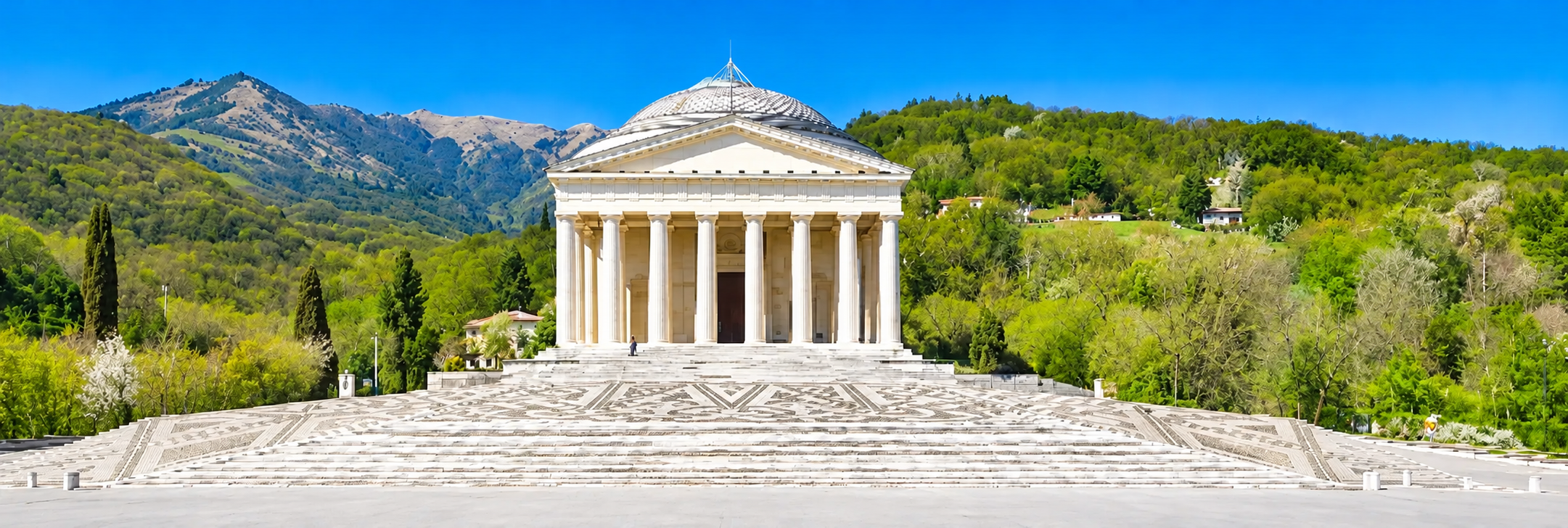
Overlooking Possagno from an elevated position, the Tempio Canoviano is one of the town’s most recognizable landmarks.
Its monumental appearance reflects Canova’s admiration for the architecture of ancient Greece and Rome.
The building combines a classical colonnade with a central structure inspired by the Pantheon in Rome.
Construction began in 1819.
The temple was conceived as a religious building and became closely associated with Canova’s memory.
A Dialogue with Classical Antiquity
The architecture of the Tempio Canoviano reflects the Neoclassical fascination with ancient civilizations.
Its monumental columns, geometric forms, and harmonious proportions create an atmosphere of dignity and solemnity.
The building also offers beautiful views of the surrounding landscape.
For visitors interested in architecture, it provides an opportunity to understand how classical ideas continued to influence European design long after the Renaissance.
The Resting Place of Antonio Canova
The Tempio Canoviano is also the burial place of Antonio Canova.
Its connection with the sculptor makes the building particularly meaningful.
The temple is both an architectural landmark and a monument to one of Italy’s greatest artists.
Access to the interior depends on opening arrangements and religious activities.
The Museo Gypsotheca Antonio Canova
One of the most rewarding cultural experiences in Possagno is a visit to the Museo Gypsotheca Antonio Canova.
The museum preserves an extraordinary collection of plaster models, sculptures, and works connected with the artist’s creative process.
For travelers interested in sculpture, it offers a fascinating opportunity to discover how Canova developed his masterpieces.
Discover Canova’s Original Plaster Models
Before completing many of his celebrated marble sculptures, Canova created models in plaster.
These works played an essential role in his artistic process.
At the Gypsotheca, visitors can admire an extraordinary collection of these models.
Their forms reveal the sculptor’s remarkable understanding of anatomy, movement, proportion, and idealized beauty.
The collection offers an intimate perspective on the creative process behind some of the most celebrated sculptures of the Neoclassical era.
Carlo Scarpa’s Architectural Extension at the Canova Museum
One of the most fascinating aspects of the museum is its connection with Carlo Scarpa.
Between 1955 and 1957, Scarpa designed an extension to the historic Gypsotheca.
The project was created to provide additional exhibition space for Canova’s works.
Rather than competing with the sculptures, Scarpa developed an architectural environment designed to enhance their beauty.
Architecture Designed Around Sculpture
Scarpa approached the museum extension with extraordinary sensitivity.
He carefully considered the position of each sculpture, the movement of visitors, and the relationship between natural light and the artworks.
The architecture is characterized by clean surfaces, carefully positioned openings, changes in floor level, and subtle spatial relationships.
The result is an exhibition space in which the building and the sculptures seem to belong together.
The Importance of Natural Light
Light is one of the defining elements of Scarpa’s museum design.
Carefully positioned windows and skylights introduce natural illumination into the galleries.
As the light changes, the sculptures reveal different details, shadows, and textures.
This creates an experience that is both architectural and artistic.
Visitors are encouraged to observe not only the sculptures themselves but also the way they interact with the surrounding space.
A Remarkable Connection Between Canova and Scarpa
The museum extension brings together two extraordinary creative personalities separated by more than a century.
Canova’s sculptures reflect the Neoclassical pursuit of ideal beauty.
Scarpa’s architecture reveals a modern understanding of materials, light, and spatial composition.
Together, they create a fascinating dialogue between different periods of Italian art.
For architecture enthusiasts, this is one of the highlights of the entire excursion.
The day begins with one of Scarpa’s most personal architectural masterpieces at the Brion Memorial and concludes with another important example of his work at the Canova Museum.
Three Masters, Three Different Visions of Beauty
One of the most rewarding aspects of this tour is the opportunity to compare three distinct approaches to art and architecture.
Andrea Palladio – Harmony and Proportion
Palladio’s architecture reflects the Renaissance belief in mathematical harmony, classical principles, and balanced proportions.
At Villa Barbaro, visitors can appreciate how architecture, painting, and landscape were brought together to create an elegant country residence.
Antonio Canova – The Ideal of Classical Beauty
Canova’s sculptures embody the Neoclassical fascination with the beauty of ancient Greece and Rome.
His works combine technical mastery with graceful forms and carefully controlled emotion.
At Possagno, visitors can discover both his artistic achievements and the architectural monument associated with his memory.
Carlo Scarpa – Light, Materials, and Space
Scarpa’s architecture is characterized by its extraordinary attention to detail.
At the Brion Memorial, architecture becomes a contemplative landscape.
At the Canova Museum, it becomes a carefully designed environment for experiencing sculpture.
These two works reveal different aspects of Scarpa’s creative vision while demonstrating his exceptional sensitivity to materials, light, and human experience.
A Local Tip – Why the Order of Visits Matters
This itinerary is particularly rewarding when organized around the opening schedules of the Brion Memorial, Villa Barbaro, and the Canova Museum.
These properties have different visitor arrangements, and not all are open every day.
For this reason, we recommend confirming the main architectural visits before finalizing the itinerary.
Once the appointments and admission arrangements are secured, we can coordinate transportation, sightseeing in Asolo, and an optional lunch stop.
This approach allows you to enjoy the most important experiences without unnecessary waiting.
It also provides a more comfortable balance between architectural visits and time spent discovering the surrounding countryside.
Suggested Private Architecture Tour Itinerary from Venice
Your excursion may follow this sequence:
- Venice Hotel Meet & Greet: Our local host meets you at your hotel when the complete transfer service is selected.
- Private Water Taxi to Piazzale Roma: Travel through Venice to meet your professional driver.
- Brion Memorial, San Vito d’Altivole: Discover Carlo Scarpa’s extraordinary architectural masterpiece.
- Villa Barbaro, Maser: Explore the elegance of Renaissance architecture and the magnificent frescoes of Paolo Veronese.
- Asolo: Enjoy a walk through the charming hilltop town, with an optional lunch stop.
- Tempio Canoviano, Possagno: Admire the monumental temple associated with Antonio Canova.
- Museo Gypsotheca Antonio Canova: Discover Canova’s sculptures and the remarkable museum extension designed by Carlo Scarpa.
- Return to Venice: Your private driver takes you back to Piazzale Roma.
- Optional Private Water Taxi: Return to your Venice hotel area when included in your arrangements.
The order of visits may change according to opening hours, traffic, and your preferences.
Your Private Architecture Tour at a Glance
Experience: Private Architecture Tour from Venice – Carlo Scarpa, Palladio & Antonio Canova.
Destinations: San Vito d’Altivole, Maser, Asolo, and Possagno.
Duration: Approximately 9–10 hours from Piazzale Roma, depending on the itinerary and confirmed visits. Hotel water taxi transfers may extend the total duration.
Departure: Piazzale Roma, Venice, or your Venice hotel with optional Meet & Greet assistance.
Transportation: Private sedan or van with professional driver.
Guiding Options: Choose between private transportation with independent visits or a private driver accompanied by a dedicated licensed English-speaking tour guide throughout the excursion.
Main Highlights: Brion Memorial, Villa Barbaro, Asolo, Tempio Canoviano, and Museo Gypsotheca Antonio Canova.
Admission Tickets: Subject to availability and confirmation.
Group Size: Private individuals, couples, families, and small groups, with transportation arranged according to the number of guests.
Availability: By advance reservation, subject to monument opening hours.
Customization: The itinerary can be adapted to your interests.
What’s Included
Depending on your selected arrangement, your private excursion may include:
- Private transportation from Venice to the Veneto countryside and back.
- Professional driver and comfortable sedan or van.
- Transportation between the main sightseeing locations.
- Coordinated itinerary and sightseeing schedule.
- Time to explore Asolo.
- Visits to the Brion Memorial, Villa Barbaro, Tempio Canoviano, and Canova Museum when confirmed.
- Dedicated licensed English-speaking guide when included in your selected option.
Optional Services
- Meet & Greet at your Venice hotel.
- Private water taxi transfer to Piazzale Roma.
- Return private water taxi transfer to your hotel area.
- Licensed tour guide for the entire excursion.
- Admission tickets and guided visits where required.
- Restaurant reservations.
- Additional sightseeing or extended tour duration.
Only services expressly confirmed in your personalized proposal are included.
Who Will Enjoy This Experience?
This private excursion is particularly appealing to:
- Architects and architecture enthusiasts.
- Interior designers and creative professionals.
- Art historians and museum lovers.
- Travelers interested in Carlo Scarpa’s work.
- Admirers of Renaissance and Neoclassical art.
- University groups and educational travelers.
- Couples seeking an unusual cultural day trip.
- Travelers who appreciate authentic Italian heritage beyond Venice.
Why Choose Tour Leader Venice?
Tour Leader Venice specializes in private cultural experiences designed around the interests of international travelers.
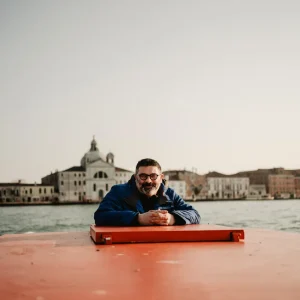
Founded by Igor Scomparin, a licensed guide whose professional experience dates back to 1997, our company combines local knowledge with personalized travel planning.
We can coordinate your private transportation from Venice, architectural visits, admission arrangements, and optional hotel transfers.
You can choose the flexibility of a private driver and independent sightseeing or the expertise of a dedicated licensed tour guide accompanying you throughout the day.
Our aim is to create a comfortable, informative, and memorable journey through the extraordinary artistic and architectural heritage of the Veneto region.
Discover More Cultural Experiences Beyond Venice
If you’d like to discover another side of the region’s history, explore our private Walled Towns and Historic Villages Tour.
For travelers interested in the artistic heritage of Bassano del Grappa, consider our private Bassano Art, History and Wine experience.
And for another fascinating journey into Italian Renaissance architecture, discover our private Palladio Tour of Vicenza and Villa La Rotonda, available on request.
Book Your Private Architecture Tour from Venice
Discover the extraordinary artistic legacy of Carlo Scarpa, Andrea Palladio, and Antonio Canova on a private journey through the Veneto countryside.
From the contemplative beauty of the Brion Memorial to the Renaissance elegance of Villa Barbaro, from the romantic streets of Asolo to the magnificent sculptures of Possagno, this excursion offers a fascinating encounter with centuries of Italian creativity.
Tell us your preferred date, number of guests, and where you’re staying in Venice.
Let us know whether you’d like private transportation only or a dedicated licensed tour guide accompanying you throughout the day.
We’ll help coordinate a personalized itinerary, with comfortable transportation and optional hotel transfers.
Three extraordinary masters. Four remarkable destinations. One unforgettable journey through Italian art and architecture.
Frequently Asked Questions
Can you arrange pickup directly from our Venice hotel?
Yes. We can arrange for a local host to meet you at your Venice hotel and accompany you by private water taxi to Piazzale Roma, where your professional driver will be waiting. At the end of the excursion, a return private water taxi to your hotel area can also be organized. These services are optional and must be confirmed in advance.
Can we take the architecture tour without a guide?
Absolutely. You can book private transportation with a professional driver and explore the architectural sites independently, subject to each property’s admission arrangements. Alternatively, we can organize a dedicated licensed English-speaking tour guide to accompany you throughout the day and provide detailed historical and architectural explanations.
Will we visit both Carlo Scarpa’s Brion Memorial and his extension at the Canova Museum?
Yes, both sites are central highlights of the proposed itinerary, subject to opening hours and admission availability. The Brion Memorial in San Vito d’Altivole is one of Scarpa’s most celebrated architectural works, while his extension to the Gypsotheca in Possagno offers a remarkable example of museum architecture designed around Antonio Canova’s sculptures.